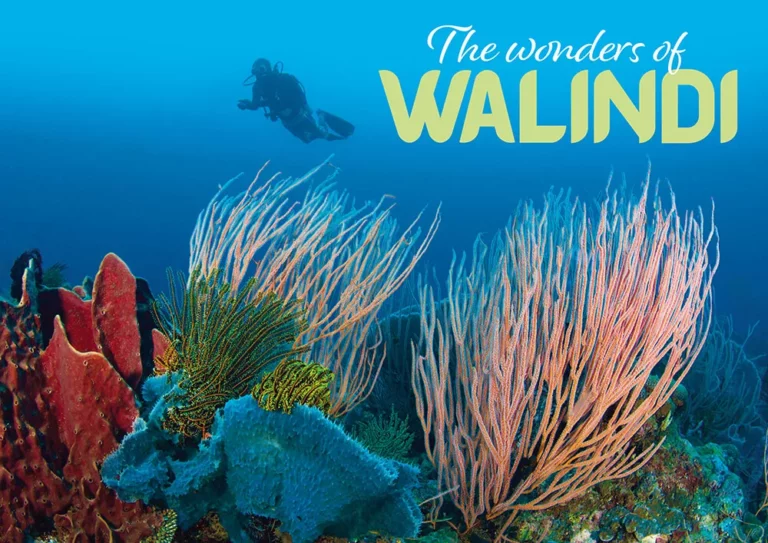
Adrian Stacey is blown away by the diverse waters of Kimbe Bay in Papua New Guinea
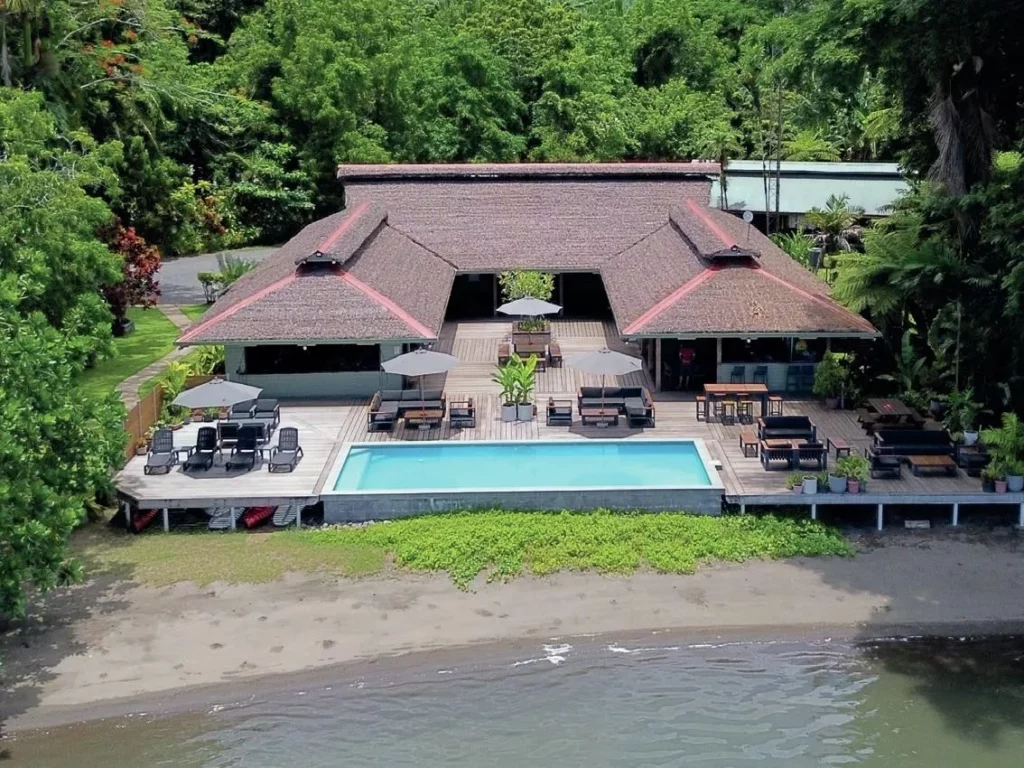
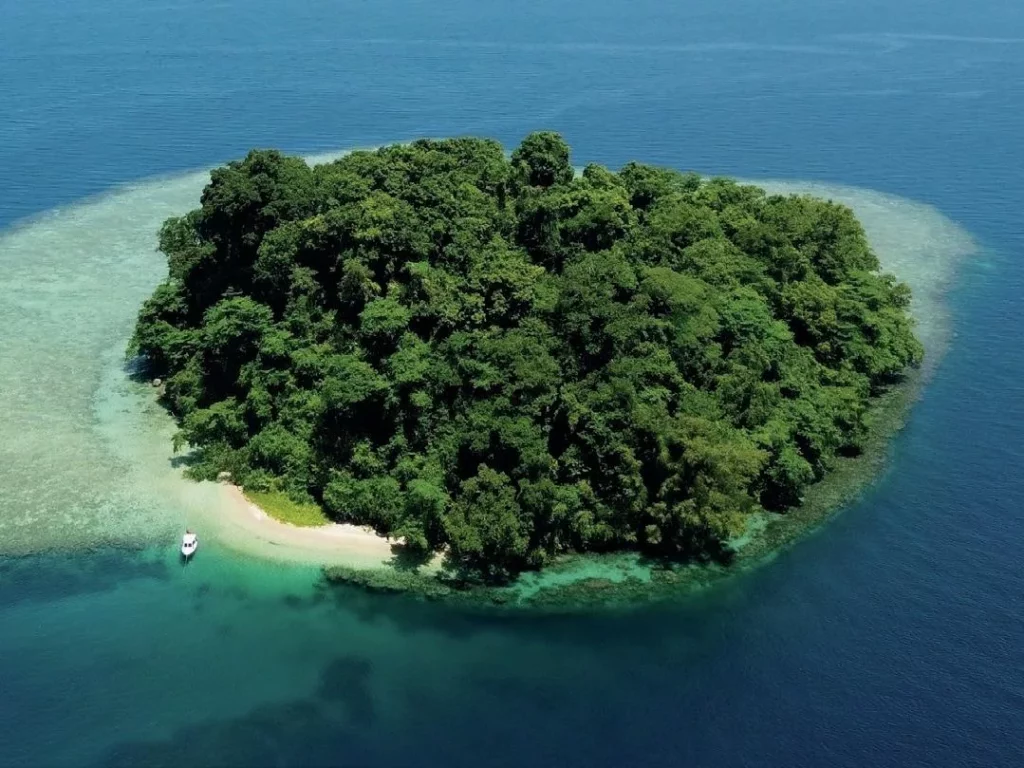
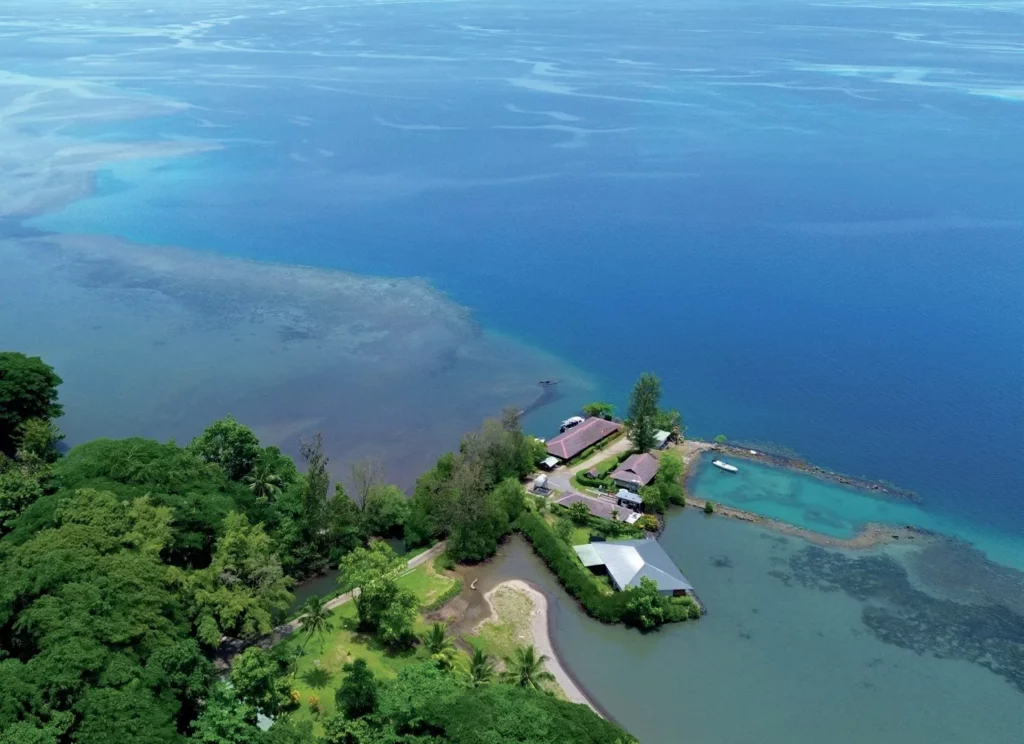
The stunning Walindi Plantation Resort is nestled in lush tropical gardens along the shores of Kimbe Bay, on the island of New Britain, Papua New Guinea. The resort was founded by Max and Cecilie Benjamin, who both worked as agricultural officers in the palm oil industry, a significant source of income for the local economy. Max originally purchased the 500-acre plot in 1969 as a palm oil plantation. In his spare time, he explored the surrounding reefs and soon fell in love with the stunning marine biodiversity on offer in these abundant waters. Later, Max became a dive instructor and helped train many locals.
Word of the exceptional diving soon spread among family, friends and local expats and in 1983, Max and Cecilie built two bungalows to accommodate guests eager to explore the area. From humble beginnings, this family-run resort now boasts 20 bungalows and employs around 130 staff, most of whom live at the resort with their families. The Benjamins operate two liveaboards from the resort, the MV Fabina and the more-recent MV Oceania. The spacious grounds also house a school, which the Benjamins built to support the local community, and a conservation centre.
Conservation
In 1996, Max and Celine established a marine conservation and education centre called Mahonia Na Dari (Guardians of the Sea). The main objective of this Marine Environment Education Programme (MEEP) is to train local students in marine conservation.
The centre also offers a research facility for visiting universities, and its conservation programmes have planted over 4,000 mangroves throughout the region.
Diving
Papua New Guinea lies in the fabled Coral Triangle, and Kimbe Bay is home to over 400 species of coral and over 860 species of reef fish. Pelagic fish, sharks and whales are also regular visitors to the area.
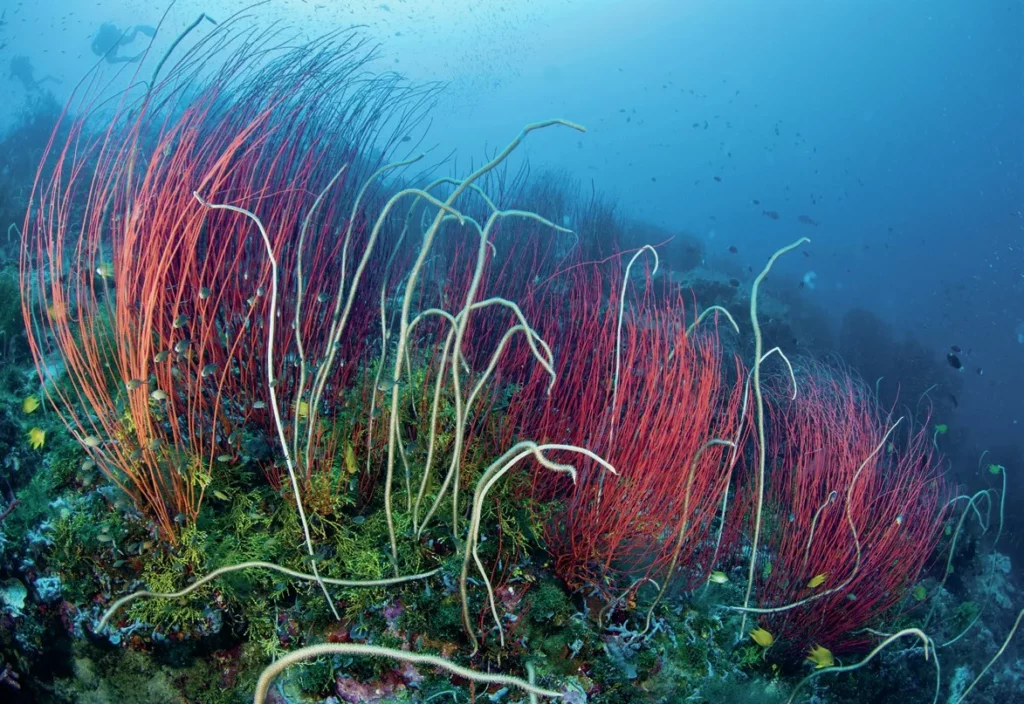
Like most reefs in the region, coral bleaching has taken its toll. The 2023 weather event that affected waters from Ningaloo through to the Solomon Islands, Indonesia, PNG, and beyond has caused damage to reefs across the whole region, and the sustained high sea temperatures of 2025 have not helped. While most of the reefs in the bay have been impacted, the good news is that the marine biodiversity is still incredible, the signature red whips and colourful sponges are still prolific, and the hard corals are starting to make a comeback.
Did you know
The best time to dive in Kimbe Bay is generally from May to November. For the calmest seas and best visibility, the optimal periods are May to June and September to November. Visibility can be lower during the wet season (December to April) due to potential rainfall, but diving is still great year-round.
Visibility can vary from ten to 30 metres, with sites further from land generally having clearer water. The underwater topography ranges from shallow fringing reefs to plunging walls and deep seamounts.
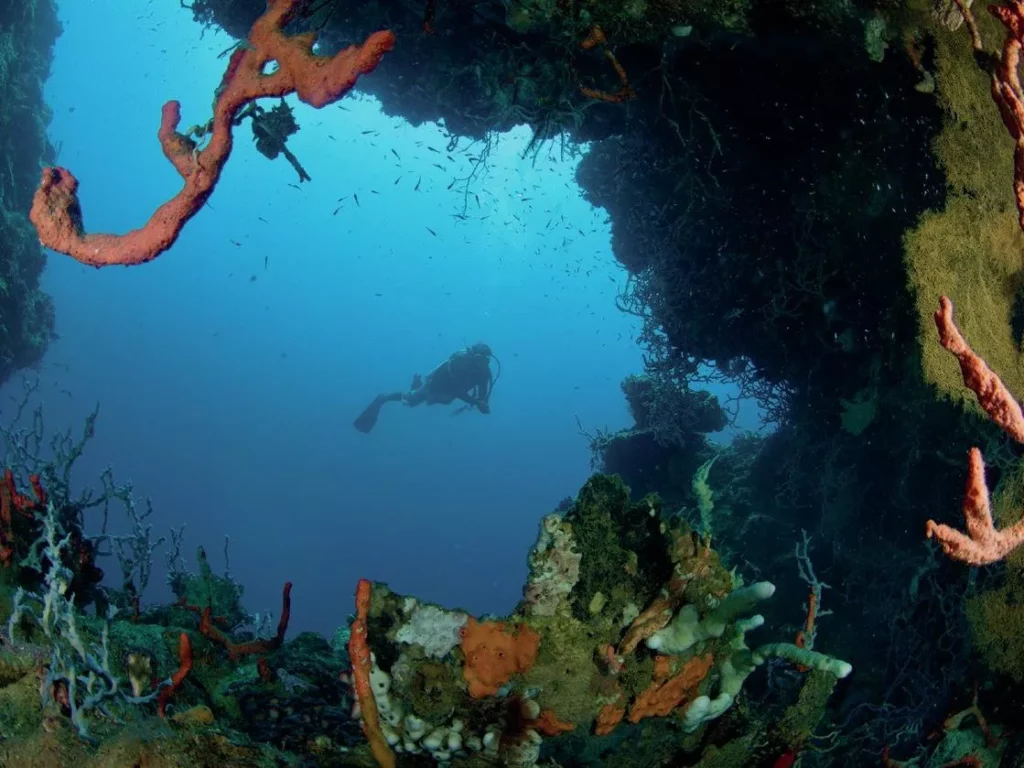
My first dive was at a local site just a few minutes from the resort called Hanging Gardens. The walls, overhangs, and cervices that dominate the underwater topography are dripping with blue sponges, which are home to a myriad of critters, including nudibranchs, shrimp and intricately decorated crabs. This was an enjoyable dive and a great way to ease into the trip, however, the following day, the diving moved up a few gears as we headed out to a chain of undersea mounts about an hour from the resort in the middle of the vast Kimbe Bay!
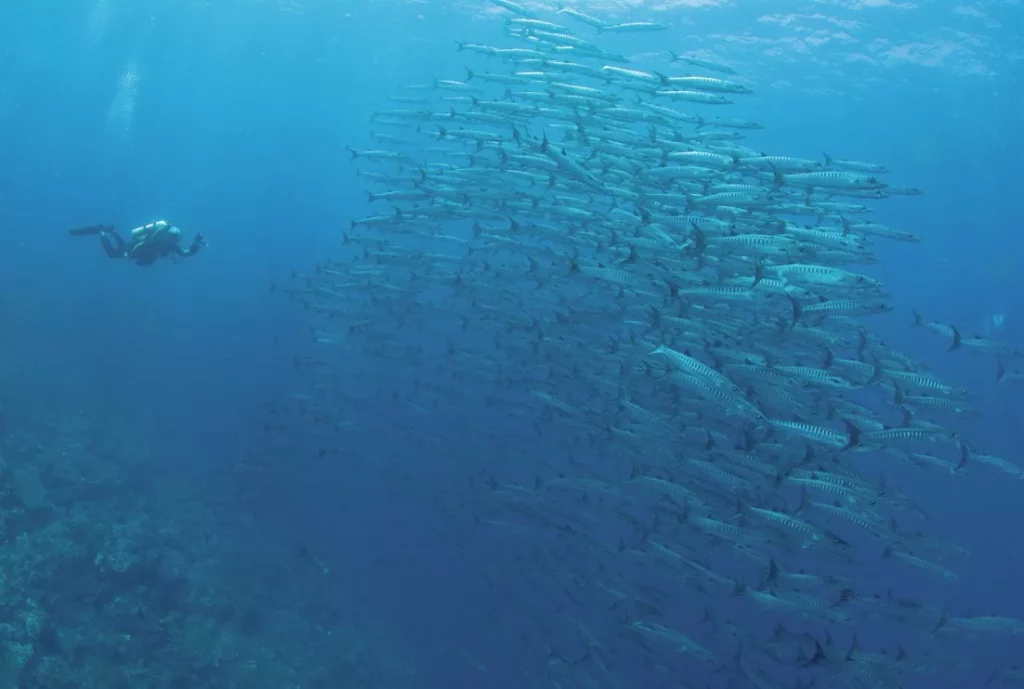
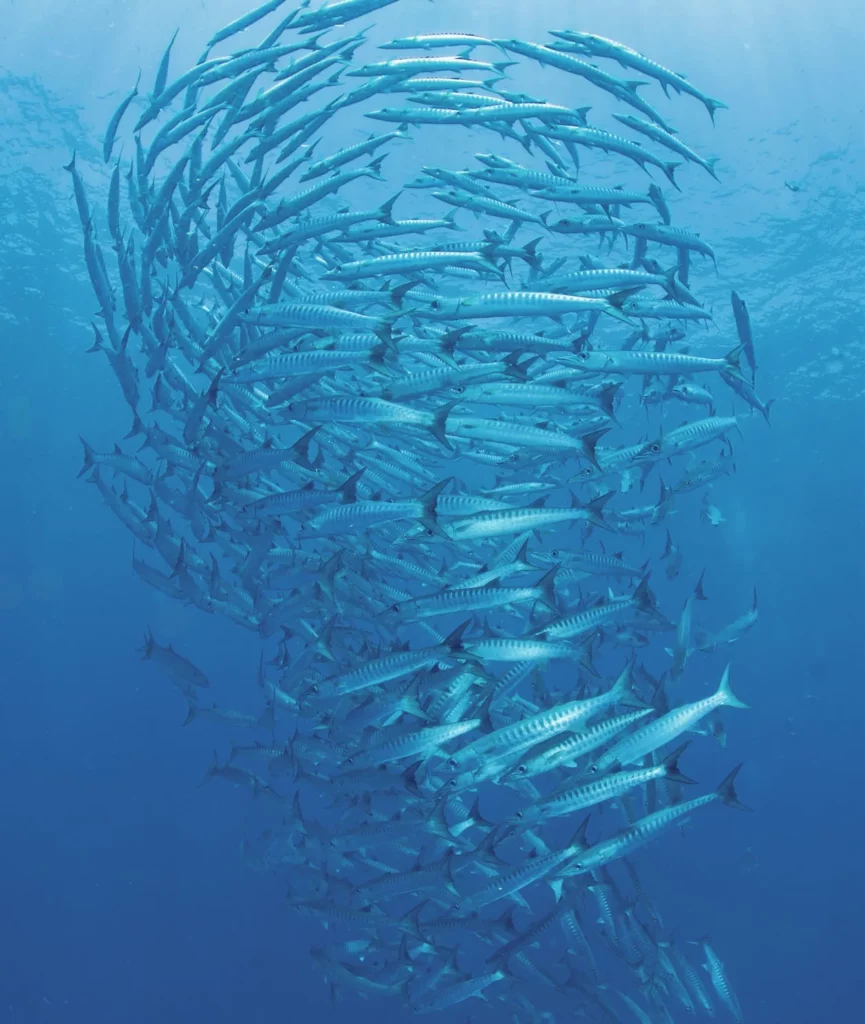
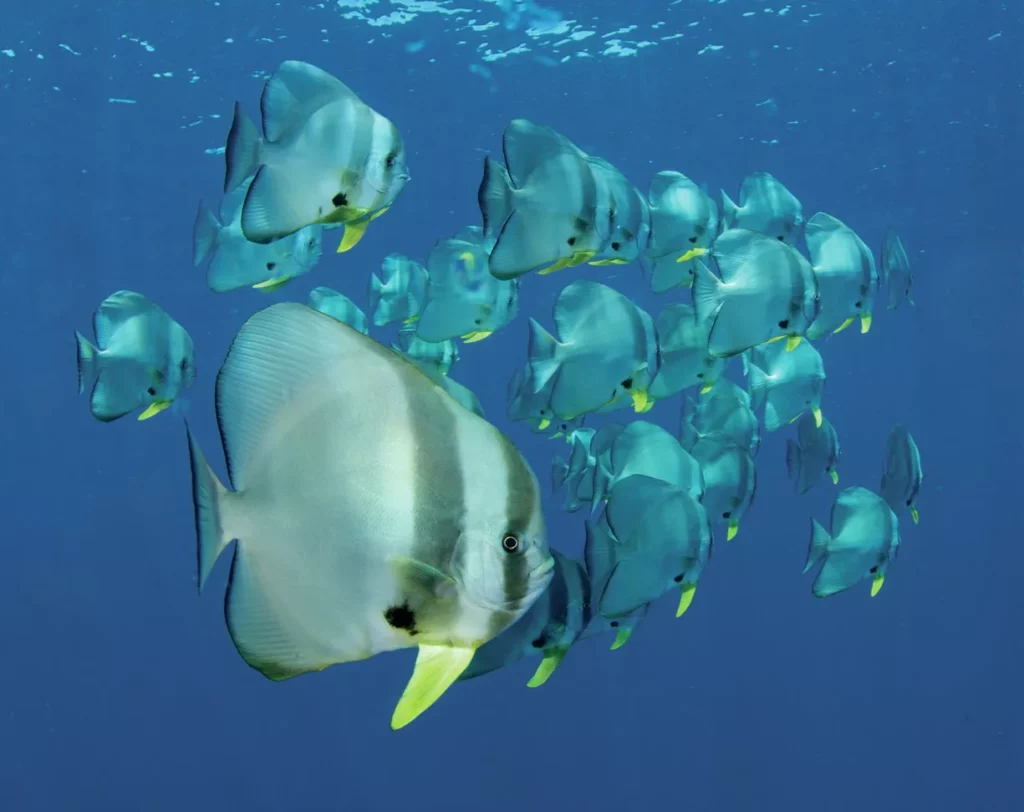
Bradford Shoal reaches from considerable depths to around 22m below the surface. Visibility was exceptional, and the reef was engulfed in reef fish and pelagic species. A huge school of barracuda created a swirling vortex in the blue, joined by a large school of batfish. Schools of jacks and mackerel, plus a couple of grey reef sharks, patrolled the walls around the reef’s summit, along with schools of fusiliers, surgeonfish and damsels. We even had a brief visit from the area’s resident bull shark.
Next up was another terrific seamount. Joelle’s is a little shallower and rises to around 16m from the surface. This was another excellent dive site with schooling barracuda and a thriving reef, with plenty of corals and colonies of energetic reef fish. However, a loose connection from the strobe cable to the camera bulkhead caused water ingress into the housing. Upon noticing a small pool forming in the dome port, I decided to abort the dive and sulk on the boat!
Day three started with a feeling of trepidation. After letting my housing and cable dry overnight, I nervously reassembled them and pleaded with the camera gods to let everything be OK. Trepidation soon turned to elation as everything functioned perfectly – phew! It was a good job the camera was in working order because the diving at two of the sites we visited was fantastic.
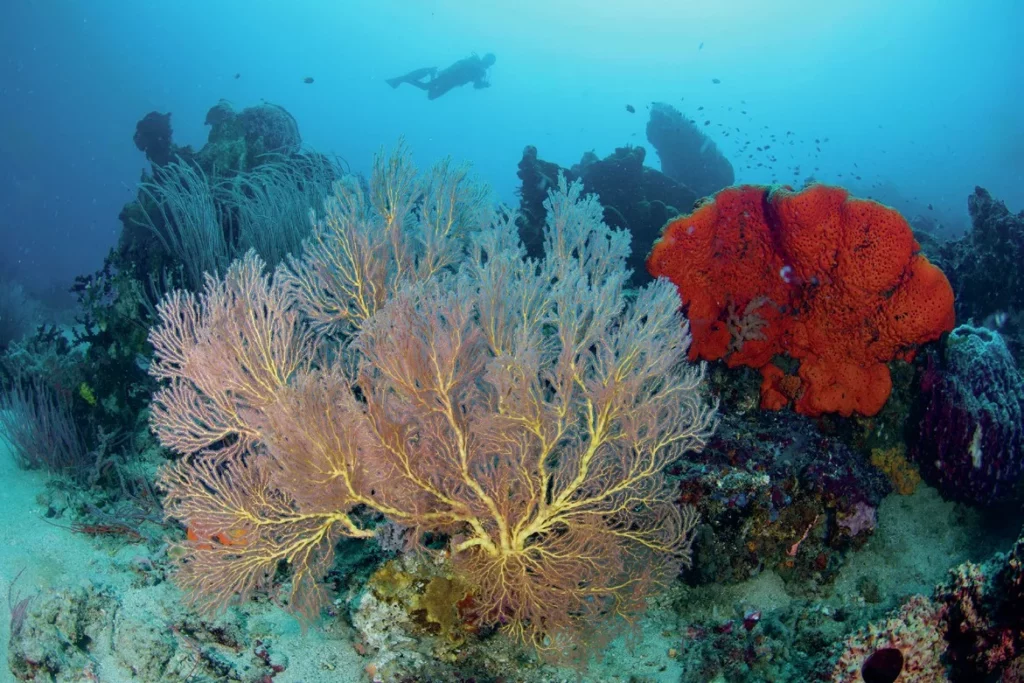
Vanessa’s and Christine’s are two submerged reefs about 30 minutes from the dive centre that lie just beneath the surface. The highlight of Vanessa’s is a plateau at 20m that is covered in huge tufts of the area’s signature red whip corals, a favourite hiding place for lemon damsels, plus elegant sea fans decorated with colourful crinoids, vivid sponges, giant leather corals, and vibrant soft corals. The topography at Christine’s is slightly different, with a sandy channel dissecting the reef and peppered with barrel sponges and sea fans. The coral coverage and abundant marine life were similar to Vanessa’s, especially on the shallow 10m plateau to the north of the site.
Day four provided a good dose of high-octane diving. After zipping out across the bay for over an hour, we finally arrived at Kimbe Bommie. Starting at 28m, it was clear that it would not be a long dive. However, this was a case of quality over quantity. Clumps of red whip corals and long, straggling white wire corals covered the top of the reef, which looked like it had just had a bad haircut. Around the periphery, schools of yellow-backed fusilier, red-tooth triggerfish, bannerfish, and surgeons swarmed, desperate to avoid the unsolicited attentions of marauding schools of jacks, small gangs of trevallies and solitary black tip and grey reef sharks. We also had two dives on the reefs of nearby Kimbe Island, and although very nice, with shallow hard coral gardens and schooling barracuda, they did not reach the heights, or should I say depths, of Kimbe Bommie!
The next day, we stayed a bit closer to the resort. The first dive was at another of the area’s signature dive sites, Malupa Reef. The visibility was not quite as good as the reefs further offshore, but this was still an excellent dive with beautiful coral gardens that included vast expanses of the ubiquitous red whip corals, along with sponges, leather corals, and good hard coral coverage with branching staghorn and intricate table corals. Like most of the sites we visited, the reef supports a bustling community of reef fish, including damsels, chromis, butterflyfish, angelfish, morays, scorpionfish, and more.
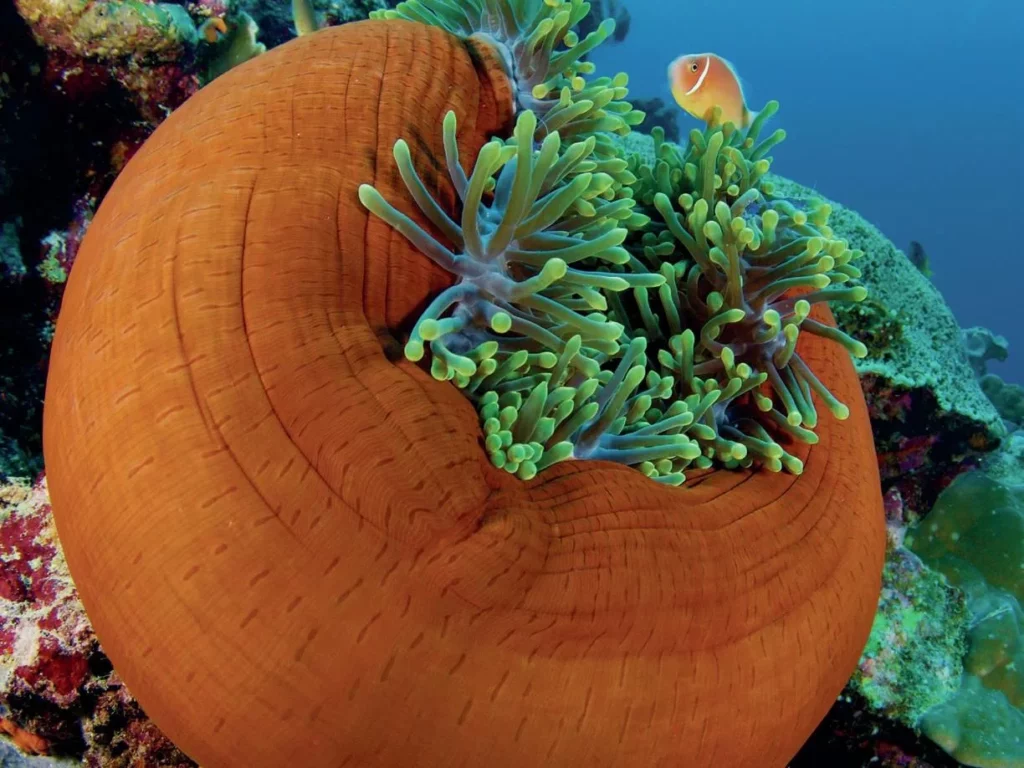
At Resorf Island, a sandy slope with large coral bommies gradually drops to the depths. Massive bushes of black corals sprout from the reef, and colourful anemones with resident clownfish hug the rocks. We encountered a white tip reef shark resting on the sandy bottom, which is also home to hundreds of timid garden eels.
Did you know
The closest airport to Walindi Plantation Resort is Hoskins, which is about an hour’s drive away. There are several domestic flights a day, but if you are diving from a liveaboard, arrive at least a day early, as flights are often cancelled with no warning.
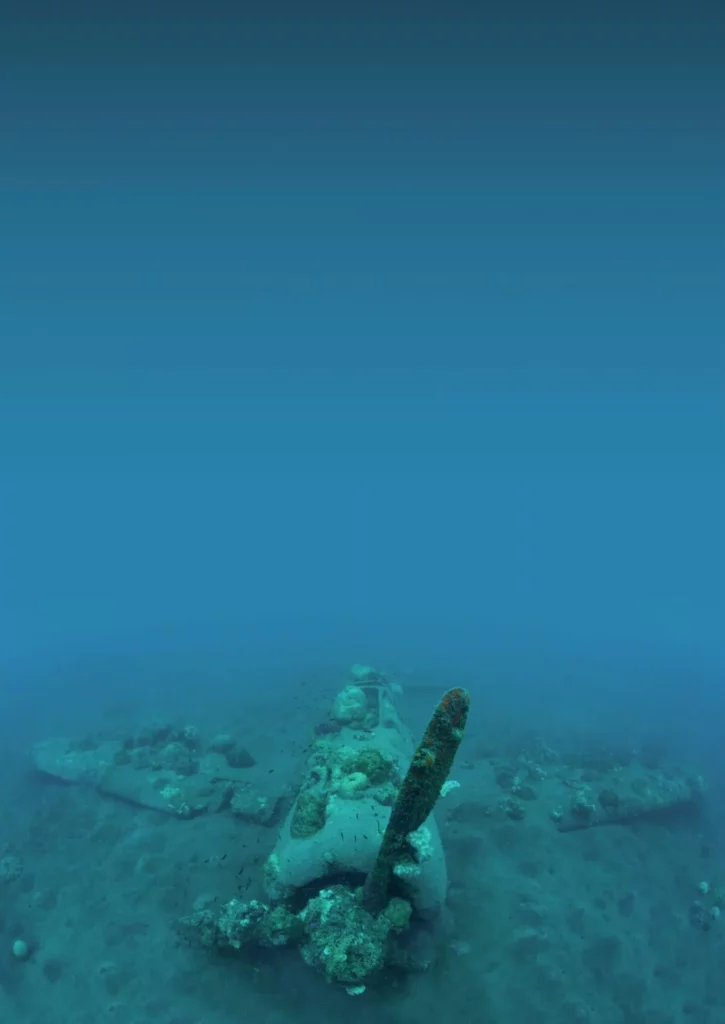
The final day of diving was at a busy reef called Ann Sophie’s. This extensive reef sits on the sandy ocean floor at around 23m and rises to just below the surface. Large schools of fusiliers swept across the site, chased by jacks and trevallies. The colourful sponges that typify diving in the region are abundant, scorpionfish hide in plain sight, and a variety of anemones and clownfish are dotted across the reef. The last dive was on the Japanese Zero wreck from World War Two. The pilot ditched the plane close to the shore, so the visibility can sometimes be murky. However, the well-preserved plane is in excellent condition, and it hosts a healthy collection of hard corals, making it a great way to finish an outstanding week of diving.
Tech diving
In addition to the fantastic recreational diving, Walindi is expanding into tech diving. A decommissioned tugboat sits at 15m in front of the resort, with deeper wrecks to follow. These new artificial reefs will not only attract marine life and coral growth but will also offer a safe environment for tech training dives. The deep reefs that pepper the bay’s underwater topography are also ideal for deeper exploration on twinsets or rebreathers. Being able to spend an extended dive on Bradford Shoal or Kimbe Bommie and getting closer to the stunning marine life is worth getting rebreather-certified on its own!
Topside at Walindi
Flights depart for the local airport early in the morning, so a dry day is required before travelling home or onward to another destination. Although I chose to remain at the resort, there are plenty of attractions for the more adventurous. These include hiking up the nearby volcano, village visits, a trip to a thermal river running through tropical rainforests, helicopter tours, and more.
Did you know
Due to the nature of diving in Kimbe Bay, it is recommended to be at least nitrox certified to get the most out of the deeper reefs.
Conclusion
I found my whole Kimbe Bay experience superb. The open, airy layout of the resort overlooking the bay is the perfect place to relax after a day of diving; the food is exceptional, and the staff are friendly and attentive. As Walindi Resort is the only operation in the region, we always had the dive site to ourselves, and in fact, I didn’t see another boat in the bay the entire time I was there. The dive staff sets up and washes your gear every day, which is the kind of service I am beginning to appreciate more and more in my advancing years. Plus, the reefs offer a rich variety of experiences. The deeper reefs, in particular, are absolutely stunning and teeming with marine life.
“Being able to spend an extended dive on Bradford Shoal or Kimbe Bommie and getting closer to the stunning marine life is worth getting rebreather-certified on its own!”
FAQs
What is the best time of year to dive in Kimbe Bay?
The optimal diving season is from May to November, offering the calmest seas and best visibility (up to 30 metres). While diving is possible year-round, the wet season from December to April may result in lower visibility.
What kind of marine life can I see at Walindi Plantation Resort?
Kimbe Bay is home to over 400 species of coral and 860 species of fish. Expect to see barracuda schools, grey reef sharks, hammerheads, pygmy seahorses, and the area’s signature red whip corals.
Are there wreck diving opportunities in Kimbe Bay?
Yes! A highlight of the region is a remarkably well-preserved Japanese Zero fighter plane from WWII, located in shallow water and encrusted in hard corals.
Is Walindi suitable for technical divers?
Absolutely. Walindi is expanding its tech diving offerings, including deep seamounts like Bradford Shoal and Kimbe Bommie, along with a decommissioned tugboat for training and deeper wreck exploration.
How do I get to Walindi Plantation Resort?
Visitors fly into Hoskins Airport (HKN) on New Britain Island. The resort is approximately a one-hour drive from the airport. It is recommended to arrive a day early if connecting to a liveaboard.
This article was originally published in Scuba Diver Magazine
Subscribe today with promo code DIVE1 — enjoy 12 months for just £1!
