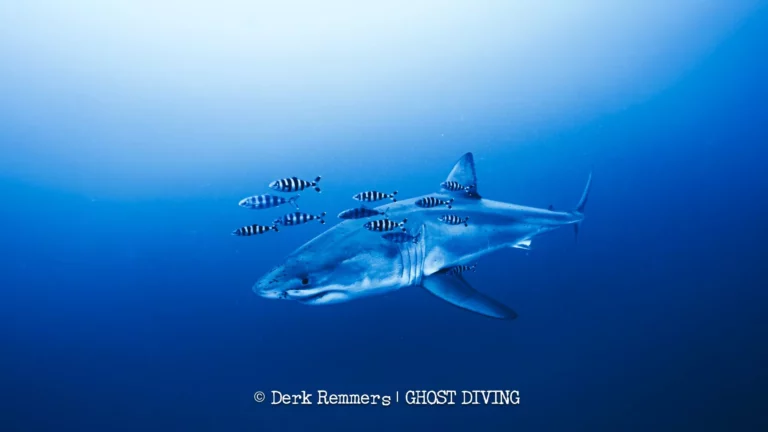
Technical divers clearing ghost-fishing gear from a shipwreck have documented what they believe to be the first-ever underwater footage of an adult great white shark in its natural habitat in the Mediterranean Sea.
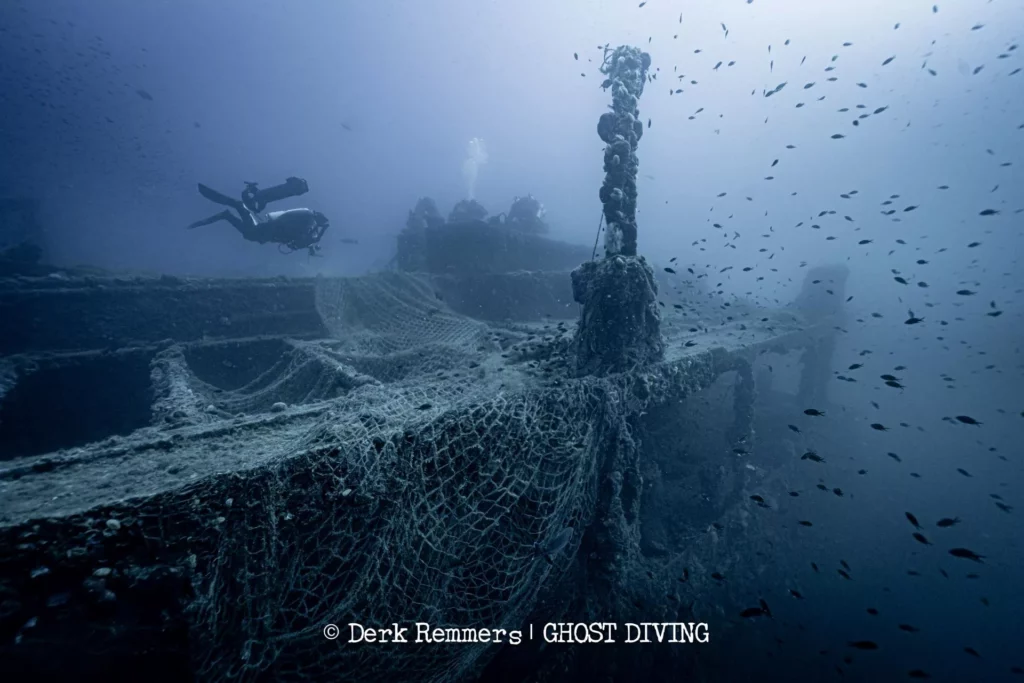
The unexpected encounter took place during a mission to remove nets that had been trapping marine life on and around a wreck between Sicily and Tunisia.
The operation had been organised by the Healthy Seas foundation, which is dedicated to removing ghost-fishing gear and marine litter through strategic partnerships.
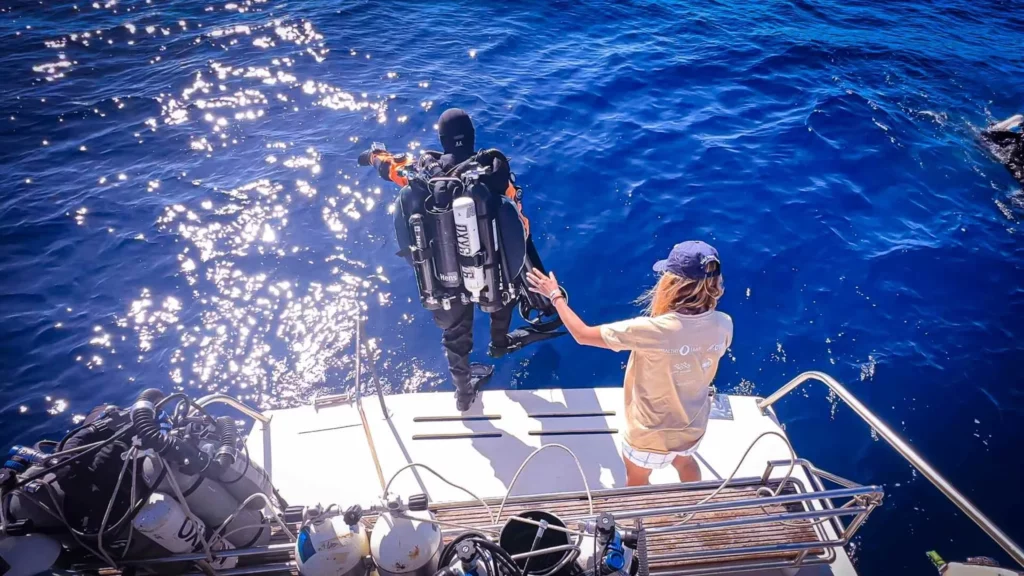
Divers from the Ghost Diving group carried out the underwater recovery operations while another Healthy Seas project partner, the Society for Documentation of Submerged Sites (SDSS), contributed historical shipwreck expertise and underwater documentation.
The Strait of Sicily, where the divers were working, is described by Healthy Seas as one of the most heavily fished parts of the Mediterranean. There had been only occasional surface sightings of what were taken to be white sharks there in the past.
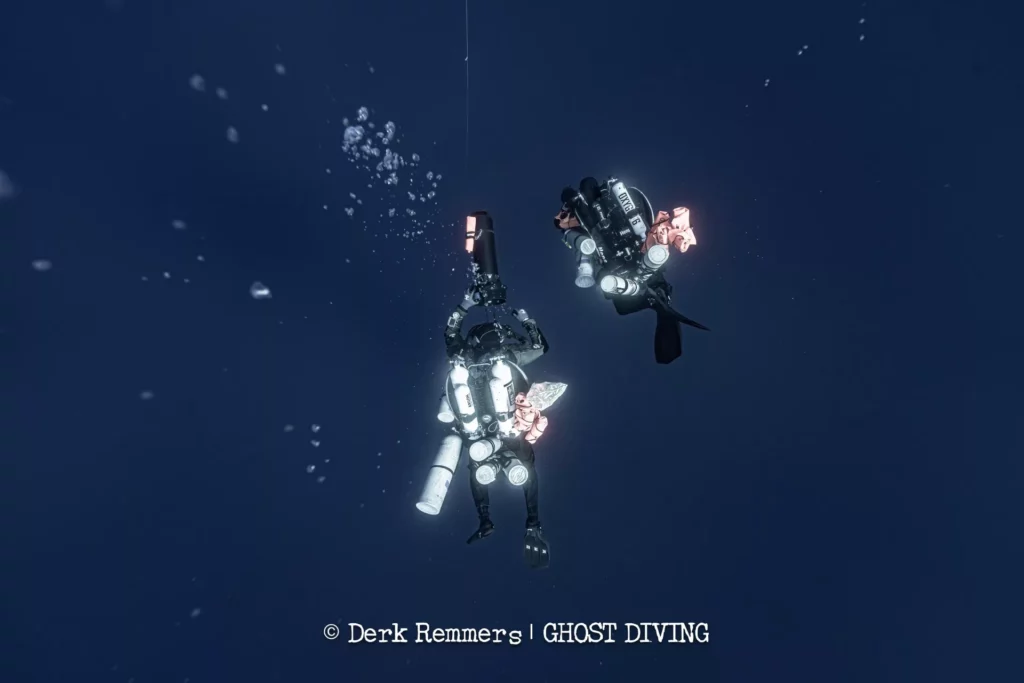
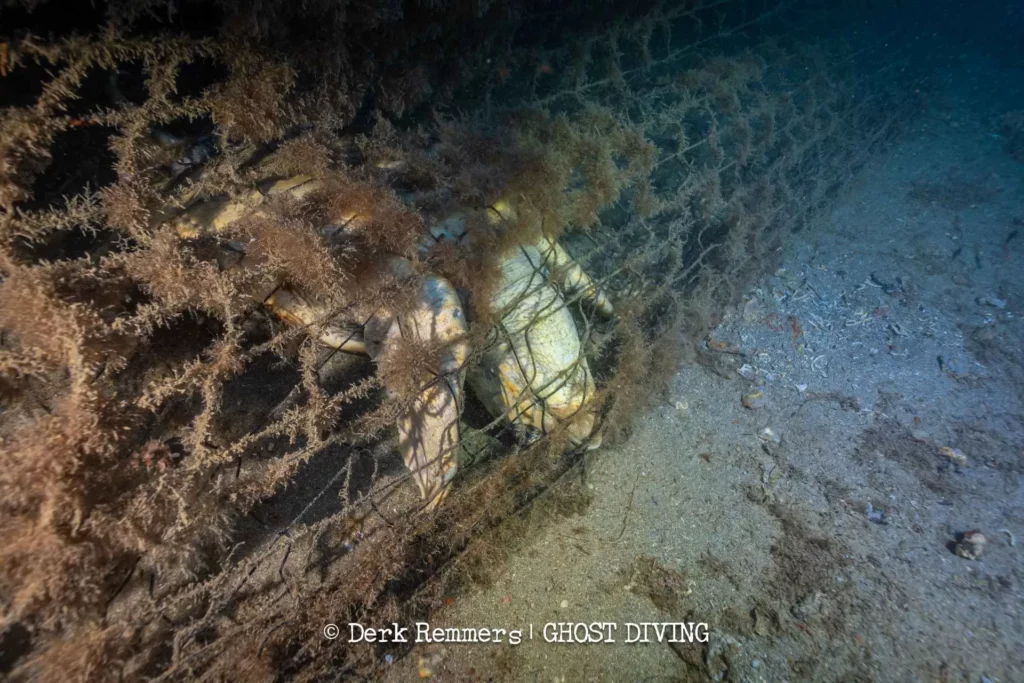
Previous dives at the site, the exact location of which has been kept secret, had documented marine animals trapped in fishing net, including several endangered loggerhead sea turtles and large fish.
The wreck lies at a maximum depth of 52m with its top at around 40m, which was where the divers saw the shark as they descended.
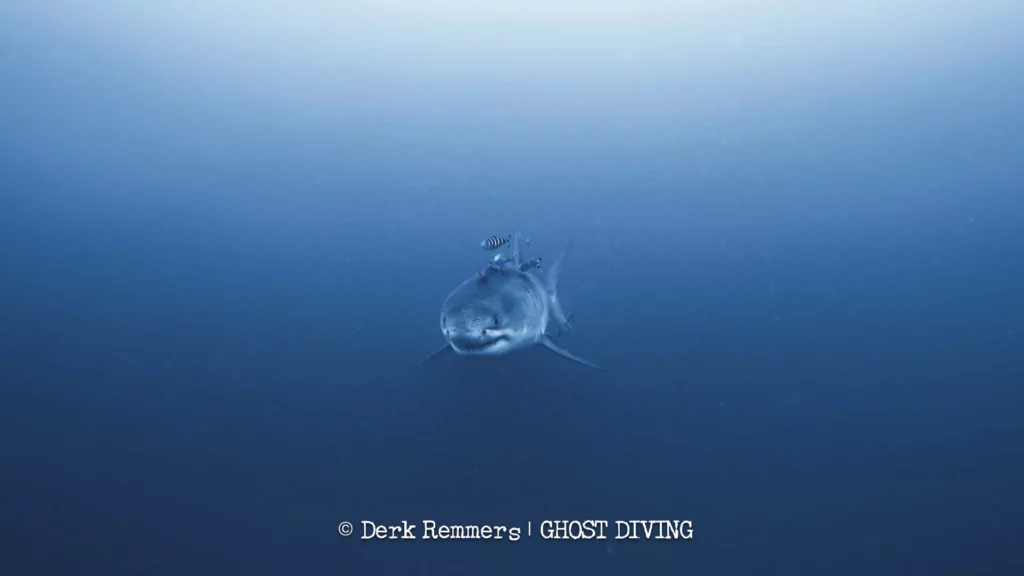
Volunteer Derk Remmers of Ghost Diving Germany captured the video footage, with the release of the imagery timed to coincide with World Oceans Day today (8 June).
“Statistically, it is way more likely to win the lotto jackpot than to meet such an iconic animal under water,” said Remmers. “You spend decades diving wrecks and removing ghost-nets, but nothing prepares you for a moment like this.
“An offshore underwater shark encounter in the Mediterranean is insane, yet we also went on with our diving plan to remove nets from the wreck, as this moment showed the importance of our work very clearly.”
‘Extremely valuable’
“Most of our knowledge on the white sharks in the Mediterranean Sea comes from records of dead specimens caught by fishing operations,” pointed out Dr Carlo Cattano, a researcher at the Sicily Marine Centre of the Stazione Zoologica Anton Dohrn.
“Observations like this are extremely valuable for improving our understanding of the distribution, habits and behaviour of this critically endangered species, whose survival is threatened by human activities.
“Our research on sharks has, over time, allowed us to identify several key hotspots for threatened species, and this sighting is particularly significant in validating the conservation value of this area.”
Alongside the clean-up, the mission also included environmental DNA sampling and underwater monitoring activities aimed at improving understanding of the various species present in the area. Additional analysis is set to continue in the coming months.
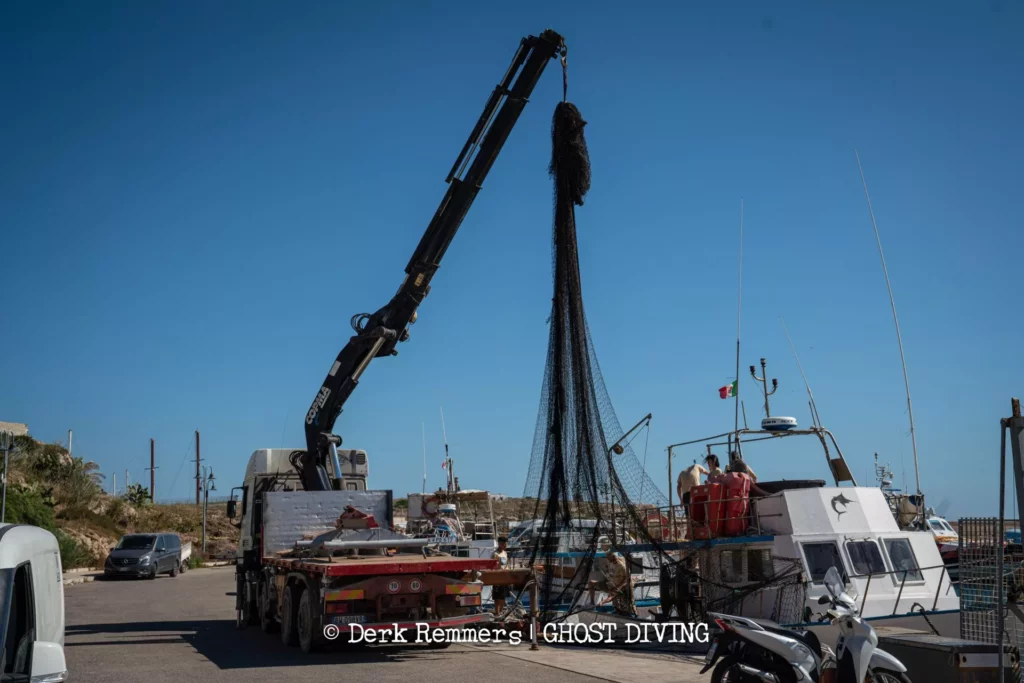
Most of the visual and scientific material collected, including footage of the net recovery, marine life around the wreck and the shark encounter, is to be released progressively in the coming weeks, says Healthy Seas.
“What makes this encounter so powerful is not only the shark itself, but the context in which it happened,” said the foundation’s director Veronika Mikos. “We were there to remove ghost-nets trapping marine life on a shipwreck ecosystem that is a hotspot for biodiversity.
“Moments like this remind us how much life can still exist in offshore Mediterranean waters, and how important it is to protect it from preventable threats like abandoned fishing-gear or overfishing.”
Also on Divernet: Ghost divers remove ‘floating scrapyard’ in Greece