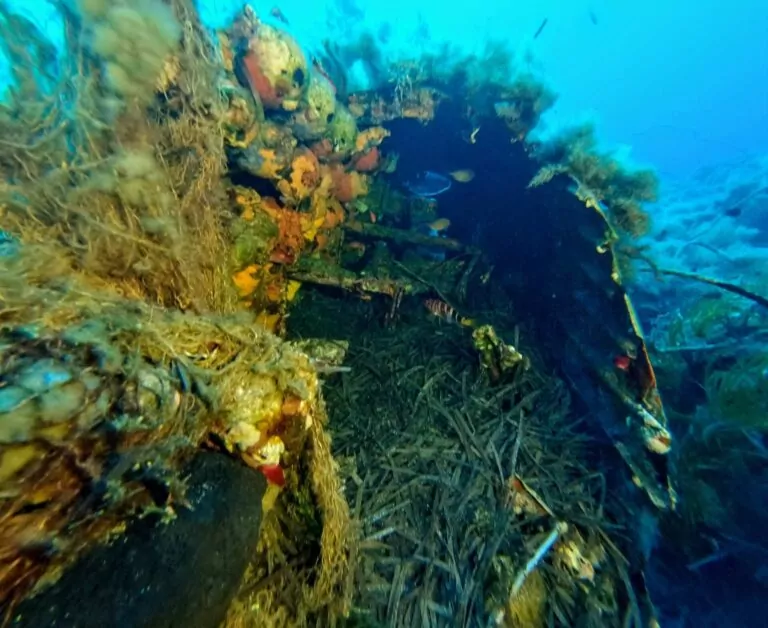
Two Greek divers unveil a hidden piece of history, a long-lost virgin Junkers Ju-88 plane wreck – ROSS J ROBERTSON tells the story based on research by NIKOLAOS SIDIROPOULIS who, with DR KIMON PAPADIMITRIOU, provides the images
“As I descended into the depths of the Aegean, the unmistakable outline of the Junkers Ju-88 emerged, suspended beneath me. Its fuselage and wingspan lay gracefully stretched across a sandy bed, cradled by swaying patches of seagrass. A surreal thrill coursed through me – Kimon and I were the first to gaze on this wreck up close in over 80 years!”
Nikolaos Sidiropoulos is describing the remarkable discovery of the seventh such aircraft found in Greek waters, this one sitting off the island of Psara at a depth of only 25m.
During World War Two the German Junkers Ju-88 was a successful twin-engined combat plane in multiple roles. Because of efforts made by Manolis Roxanas this particular plane’s history, including an account by the pilot found in a book by Peter Taghon, was already known – but the wreck itself had long eluded discovery.
Lost sheep
Leutnant Gert Winterfeld’s anxiety must have been palpable as he piloted his Ju-88 A4 L1+CK through the turbulent night sky on 13 December, 1943. The mission – a low-level bombing raid on Bari harbour in Italy – had quickly turned chaotic.
As the weather worsened and anti-aircraft fire intensified the aircrew managed to drop their bombs, though confirming any hits proved impossible. Two of the German aircraft were shot down in the mayhem before the remainder of Groups I and III of the 1st Squadron of Operational Training Wing 1 could get away.
The attack had left the raiders scattered as they navigated for home. While many of the aircraft landed in Albania, Winterfeld and his crew followed orders and headed back towards their base at Elefsina, near Athens.
Heavy clouds and poor visibility hindered their progress, however. Wireless operator Unteroffizier Erwin Kielhorn soon reported that they had lost all radio contact, and were left reliant on their compass and the hope of spotting familiar landmarks.
They had unknowingly flown too far east, crossing the Aegean Sea without sight of land. As their fuel dwindled and realisation of the inevitable set in, a small island miraculously appeared on the horizon. Out of options, Winterfeld decided to ditch the aircraft.
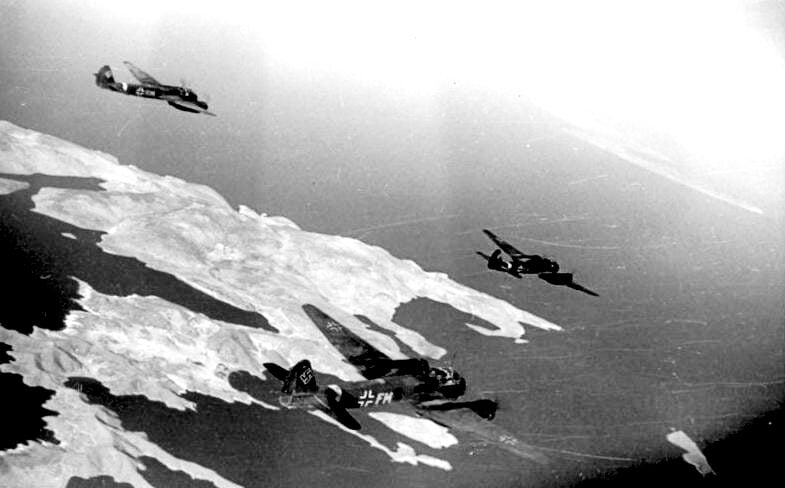
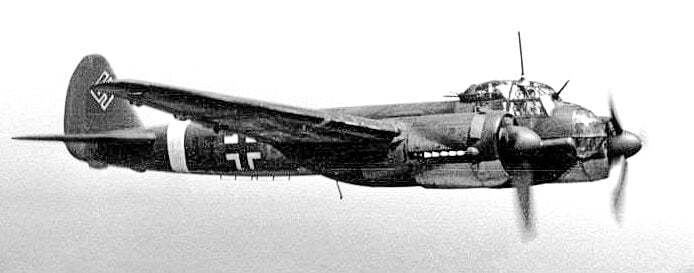
They soared over the island, launching red flares to signal for help, before Winterfeld began his approach. With intermittent moonlight, he fought to keep the Ju-88 level. At 80m, he commanded Kielhorn to release the canopy, but it tore away violently, smashing into the tail-fin and sending the aircraft plunging into the sea.
Miraculously, the crew emerged relatively unscathed, but waves crashed over them as they struggled to evacuate the plane. The life-raft failed to deploy, leaving them adrift in dark waters.
Winterfeld swam toward a rocky outcrop, clinging to hope. “My life-jacket hadn’t inflated which, in the end, was a blessing,” he recalled. After making it ashore, a local man guided him to the island’s mayor, where he found his gunner Alfred Raidt safe but learnt that the other two crew were missing.
“The four crew-members had survived the crash,” recalled islander Manolis Agapousis, whose father witnessed the events. “Two swam east, though they were near the shore and should have seen the mountain, Mavri Rachi, even at night. Sadly, they drowned,” he said sombrely. “The other two made it to the island.”
The airmen had no idea where they were but, according to Manolis, they spotted a church lantern and followed its light. His father, fluent in several languages, helped them to secure assistance from the local German garrison.
After the bodies of their comrades were found, Winterfeld and Raidt attended their burial on the neighbouring island of Chios before returning to their unit.
Reconnaissance dive
Nikolaos and Kimon of the Underwater Survey Team (UST), a group of volunteer shipwreck researchers and enthusiasts based in Greece, were on the island of Psara earlier this year for a TV documentary called Thalatta – Secrets of the Aegean when they heard rumours of a local aircraft wreck.
Insights from Manolis, alongside valuable information from local fisherman Spiros Louloudias, proved crucial. Spiros recalled stopping his fishing expeditions in a particular area in the 1970s after his gear had become ensnared. This helped Nikolaos and Kimon to pinpoint co-ordinates that aligned with the marked foul ground on nautical charts.
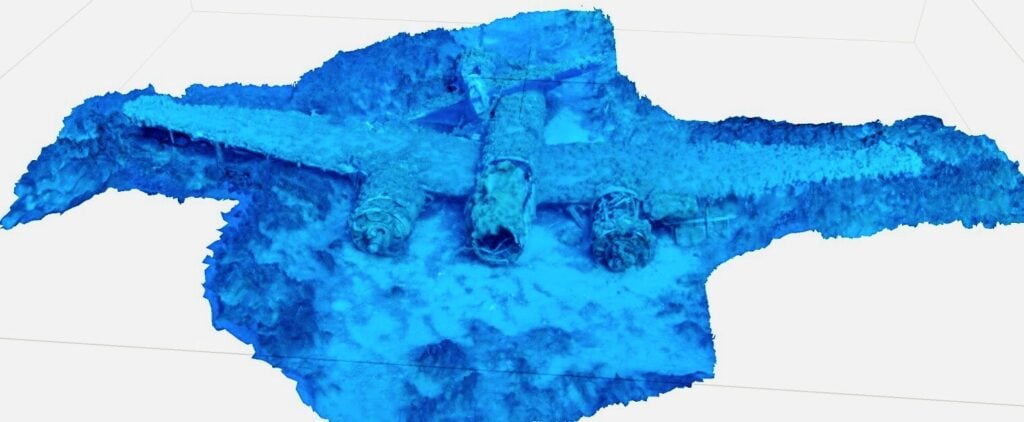
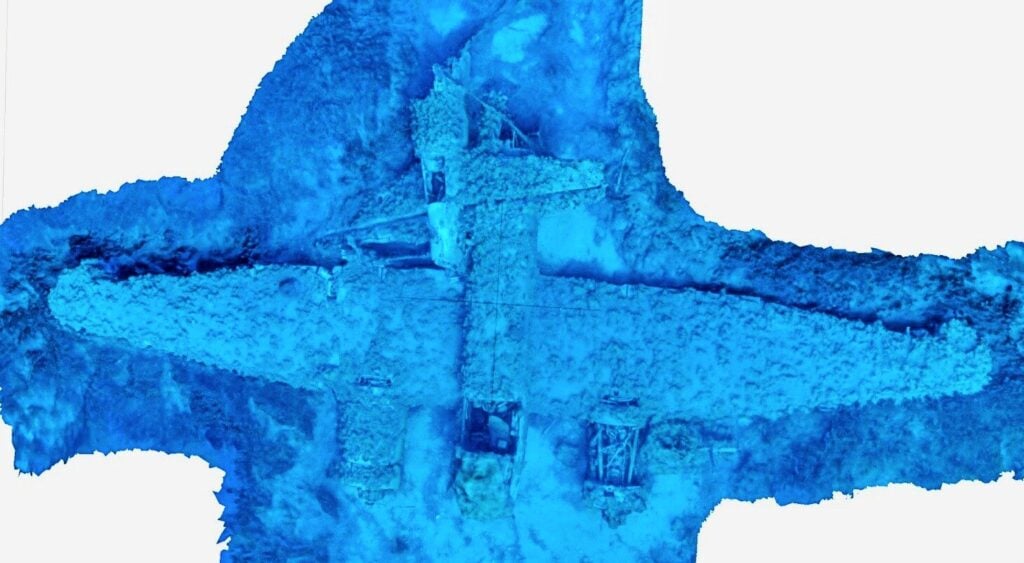
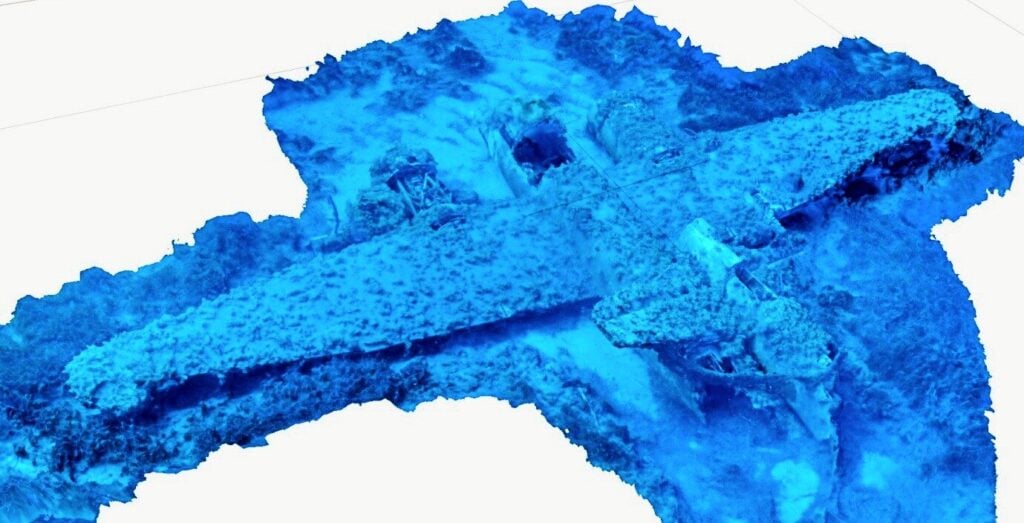
Armed with this knowledge, they prepared for a reconnaissance dive, hoping to document the wreck and create a detailed photogrammetric 3D model.
“The aircraft is remarkably well-preserved, though the tail section has been dislodged,” Nikolaos recalls. “It now lies inverted and facing in the wrong direction atop the fuselage, no doubt dragged there by fishing-nets.
“Fragments of these nets cling to the nearly intact horizontal stabilisers, clear evidence of unintentional disturbance to the wreck.
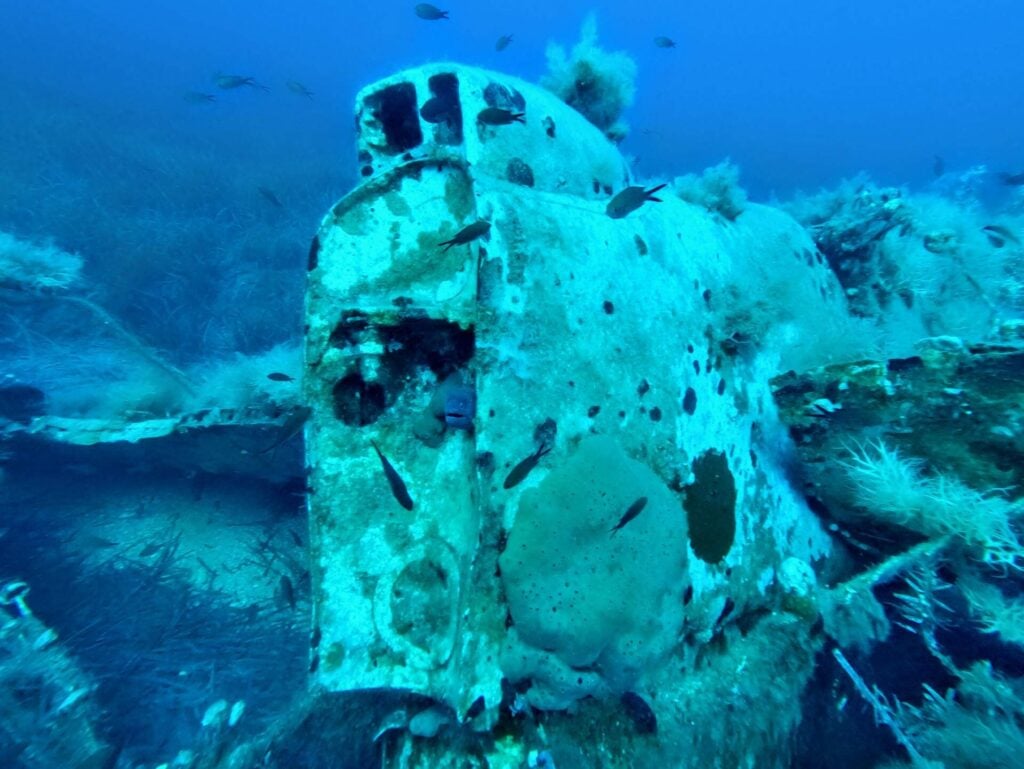
“Kimon and I circled the damaged tail section, each taking in the eerie scene. I peered through the open hatch and spotted the retracted tail-wheel and its mechanism. Further along, remnants of the rudder attachment-point piqued my curiosity, along with the jettison fuel holes embedded in a reinforced skid.
“The view into the fuselage from the break-point, looking forward, revealed structural ribs now concealed beneath a vibrant tapestry of marine growth. Inside, spherical oxygen bottles – still likely pressurised – remained securely strapped in place, a rare sight for a Ju-88, which typically featured cylindrical bottles.
“Also noticeable was the open hatch leading to the rear bomb-bay, its payload long since dropped over Italy.”
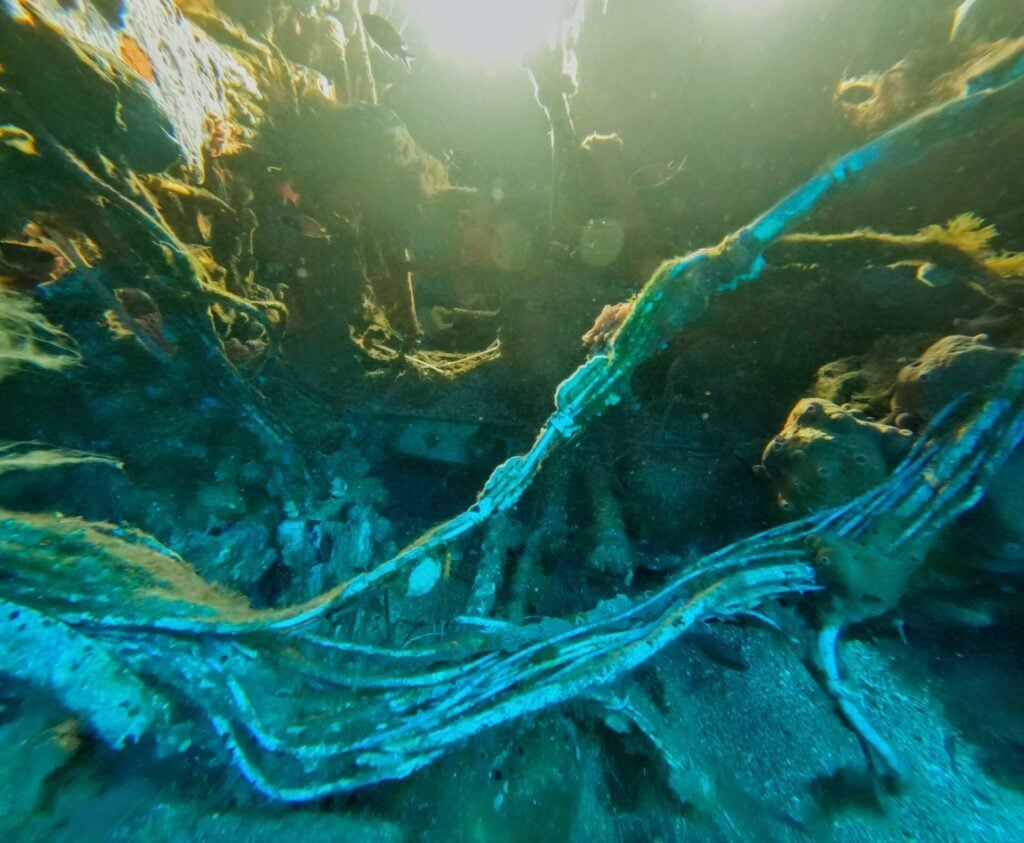
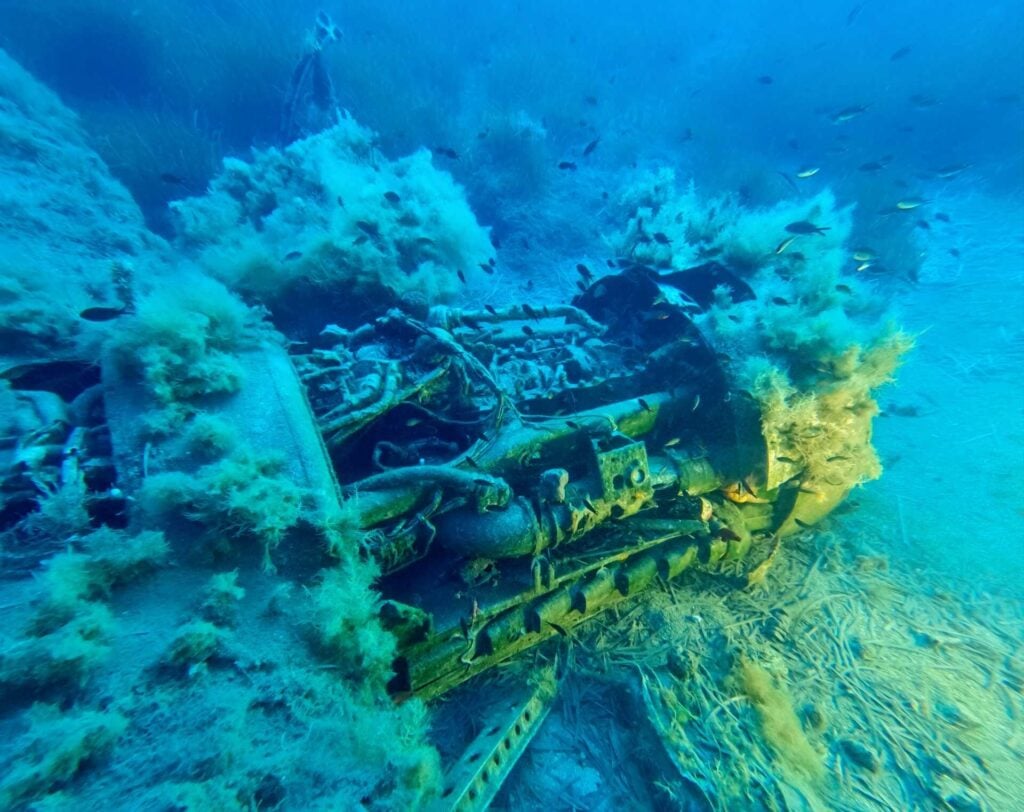
Both of the Jumo 211 engines remain mounted, though the wooden propellers have long since disintegrated. “One engine, missing its cowling, exposed oil pressure and temperature gauges that were once vital for the crew but are now opaque.
“I couldn’t help but imagine the pilot glancing over his shoulder at those very dials from the cockpit, depending on them to stay alive.

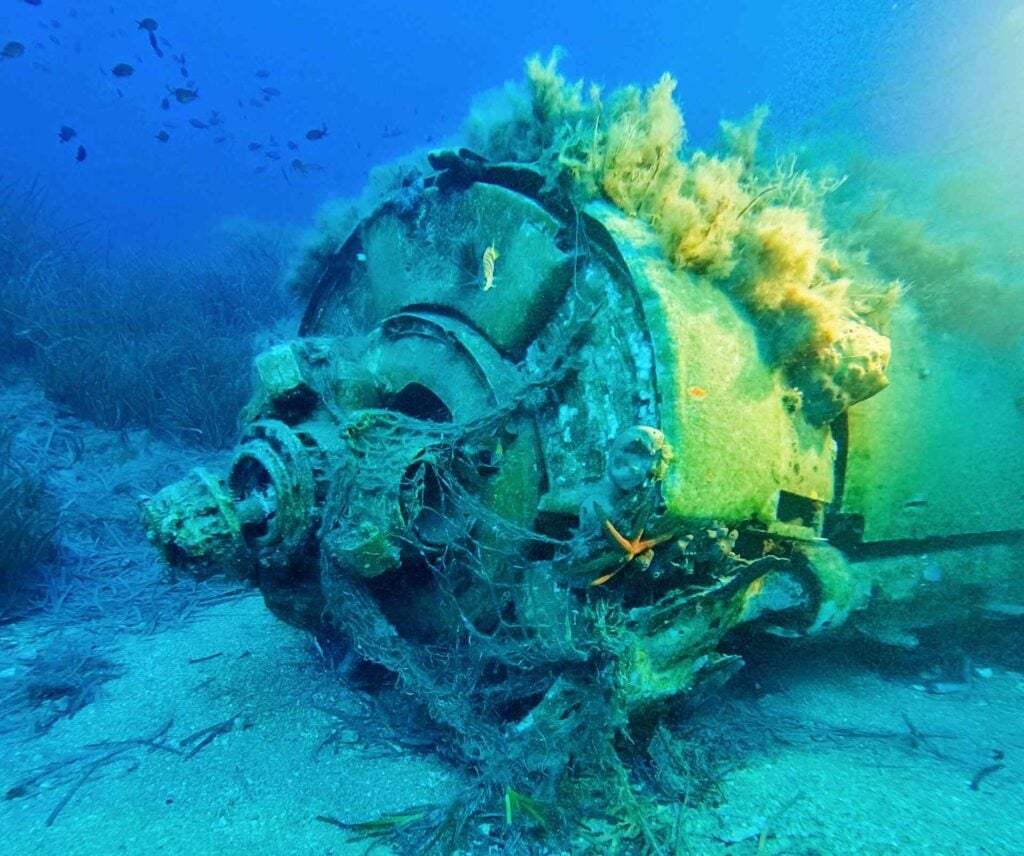
“As we moved closer, I noticed the collapsed port landing-gear beneath the wing, its tyre strangely intact, as though still holding air.
“The cockpit, its canopy long gone, exposed the pilot’s seat with its distinctive long neck designed for bullet protection. The positions of the other three crew-members are still discernible, though much of the cockpit has disintegrated, leaving only fragments of instruments and gauges.
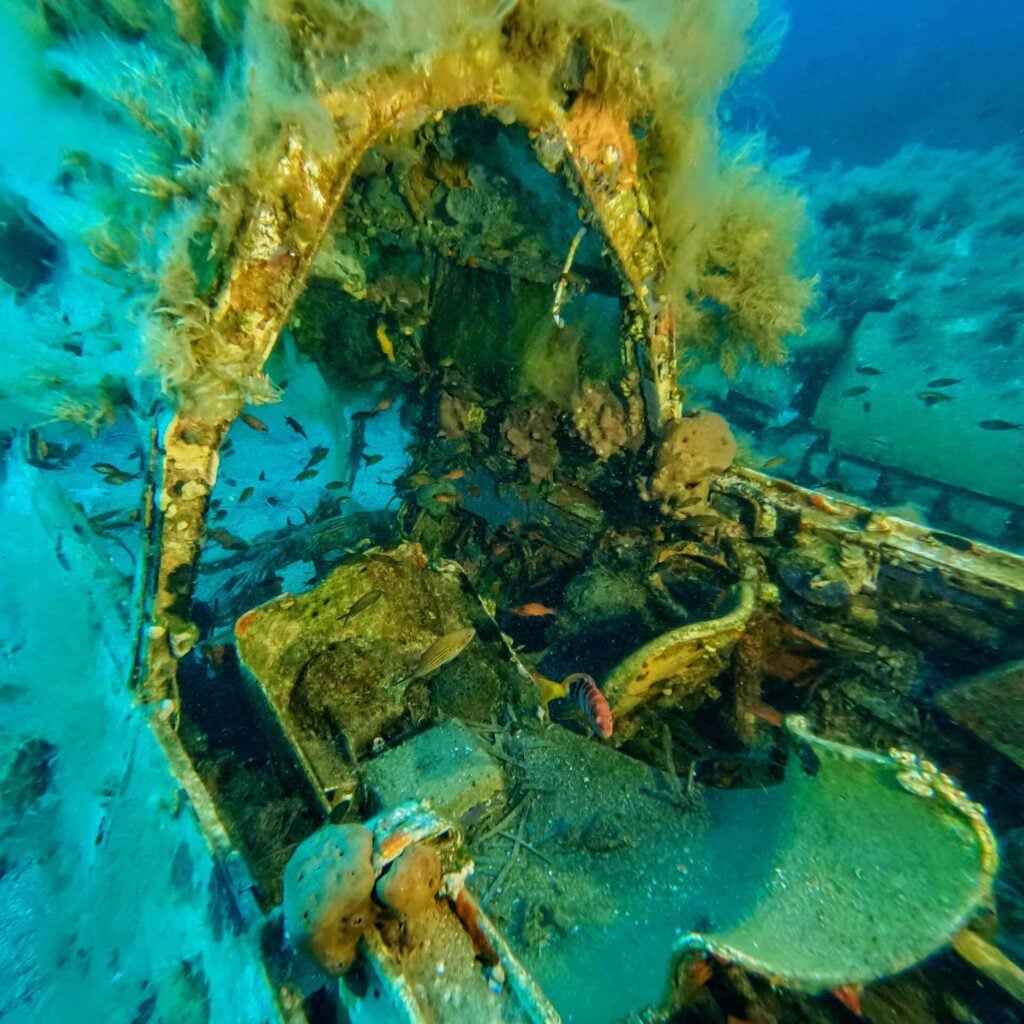
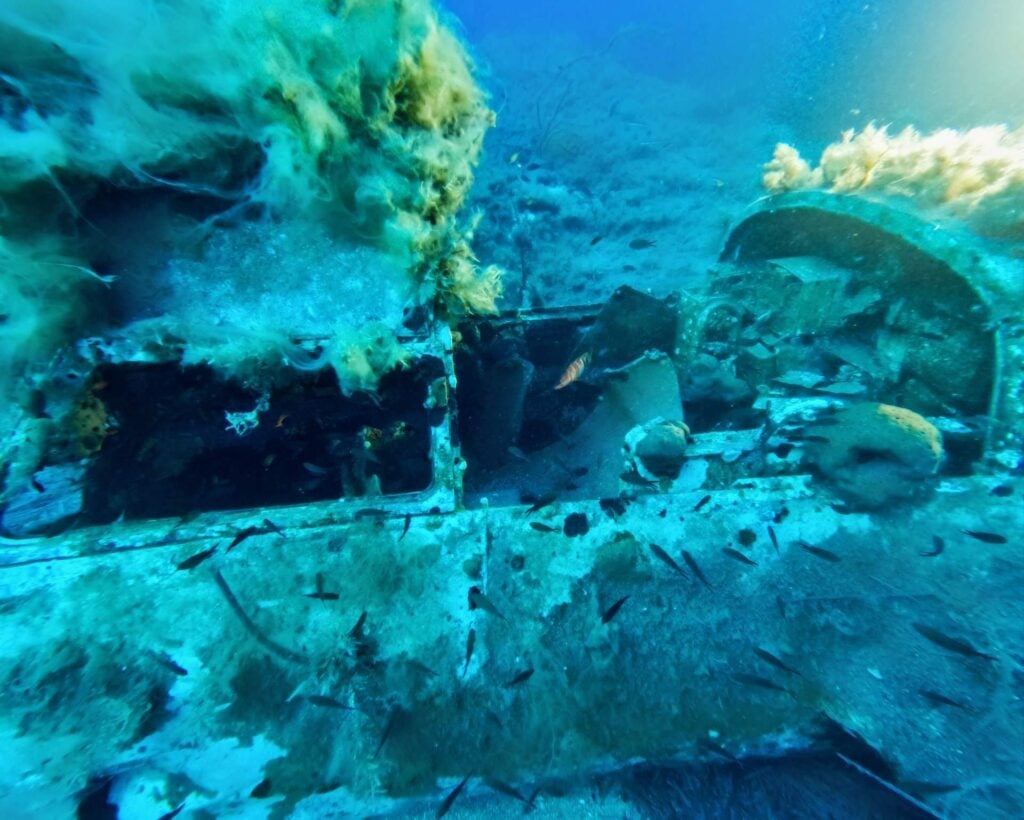
“I imagined the crew cramped in this confined space, gripped by desperation as they flew over the Aegean, lost and running out of fuel.”
Moment of awe
Hovering above the wreck, Nikolaos and Kimon shared a quiet moment of awe. “Now cloaked in a thin layer of green algae and home to vibrant marine life, this aircraft once soared proudly through the skies, its crew locked in battle against the Allies – yet they too had their own friends, families, dreams and aspirations.
“While their fates were known, their story had remained incomplete – until now. After decades of being lost to history, their aircraft lay before us and, at last, the full story could be told, waiting only for us to return to the surface.”
After all, every lost sheep deserves to be found.
The Underwater Survey Team thanks Manolis Agapousis for sharing his father’s account, Manolis Roxanas for providing aircraft and crew identification, Spyros Louloudias for indicating the location, and Thomas Panagiotopoulos, captain of the support vessel Arctic.
The pilot’s testimony was found in the book La Lehrgeschwader 1, l’Escadre au Griffon. Tome 2 by Peter Taghon.
NIKOLAOS SIDIROPOULOS is a passionate diver and co-founder of the UST. He started diving in 2002, achieving various certifications including TecRec 50, and conducts archival research on shipwrecks, writes articles, lectures and creates documentaries to promote the history and significance of maritime heritage.
ROSS J ROBERTSON, an Advanced Open Water and Nitrox Diver, is an author and educator with a keen interest in Aegean shipwrecks and Greek WW2 history. Bringing these elements together in numerous magazine and newspaper articles, he is also the curator of the site WW2Stories
Also by Ross Robertson on Divernet: A DEEP DIVE WITH KOSTAS THOCTARIDES, JUNKERS JU-88 BOMBER IS AEGEAN PLANE WRECK STAR, NAXOS BEAUFIGHTER STILL FLYING HIGH FOR DIVERS, UNYIELDING PURSUIT: THE FINDING OF WW2 SUB HMS TRIUMPH