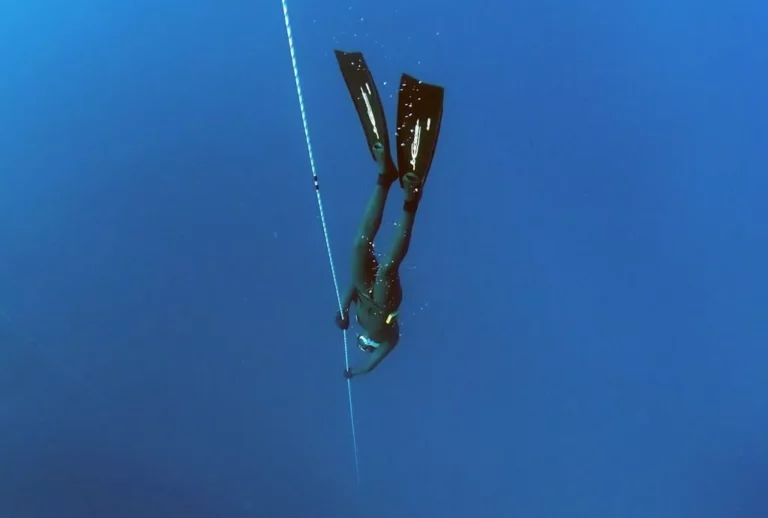
Recreational breath-hold diving has been gaining “remarkable traction” recently, with the estimated 4.6 million freedivers worldwide in 2021 soaring to more than 7 million last year, an expansion fuelled by eco-tourism and adventure travel.
That was the message from a review by Market Reports World in 2025 – and the growth figures might seem all the more surprising given the difficulty of obtaining information about freediver training reported to Divernet by the owners of a new online directory, Freedivingbase.
According to the MRW review, freediving training infrastructure had grown to include more than 4,000 certified freediving centres across 62 countries, almost two-thirds of them affiliated to international governing bodies AIDA and CMAS.
And in 2024 more than 600,000 newcomers had enrolled in app-based freediving courses, with 850+ freediving events and workshops held, 60% of them in South-east Asia and the Mediterranean.
Yet Thailand-based freedivers Pierre Cassier and Martin Finkel, who say they dive frequently in both Asia and Europe, set up Freedivingbase because they felt that beginners and existing divers alike needed help in locating and comparing schools and destinations.
“Information is scattered and many schools have little visibility, which makes it difficult for divers to choose where to train,” claims Cassier. “There was no single place to compare what actually matters for a training trip.”

He says that he and Finkel had needed to “piece together clues from Instagram posts, Google Maps reviews and scattered forum threads”.
“We’re bringing this together in one place, with detailed information on schools and locations, and it will keep growing over time… so freedivers can spend less time researching and more time in the water.”
Comparison tools
The free “community-driven” platform provides destination profiles covering elements such as water temperature, visibility, depth access, seasons and local logistics, while the schools directory includes course types, certifications offered, pricing signals and direct links.
Comparison tools enable users to filter by budget, certification body, region and training style, while a “learning hub” offers guides on certifications, course types and what to expect from training.
The two freedivers are now working “mostly full-time” on the project, though it is early days in terms of coverage. “We currently have about 80 schools on our platform and eventually aim to reference all the schools in the world,” says Finkel. “There are a lot of small islands and places with small communities that we have yet to add, but we’ll get there!”
The existing schools represent 19 countries in Europe and the Middle East, the Americas and Asia. Details are largely provided by the dive-centres, which can claim a basic free listing or pay for enhanced representation.
Coming soon will be an instructor jobs board, a remote coaching directory and freediving profiles with gamification – think Garmin badges – for members.
Freedivingbase is designed to serve athletes, instructors, school-owners and recreational freedivers alike, adds Cassier, who says he would welcome feedback from the freediving community on what would make the platform more useful (email hello@freedivingbase.com).
Also on Divernet: Try Freediving – Five Good Reasons Why Scuba Divers Should Try It