
Bruce Sudweeks heads into the frozen north to get up close and personal with charismatic beluga whales, in the chilly waters off the shores of Churchill in Canada, which is also a hotspot for polar bears
Journey to the Beluga Whale Capital of the World
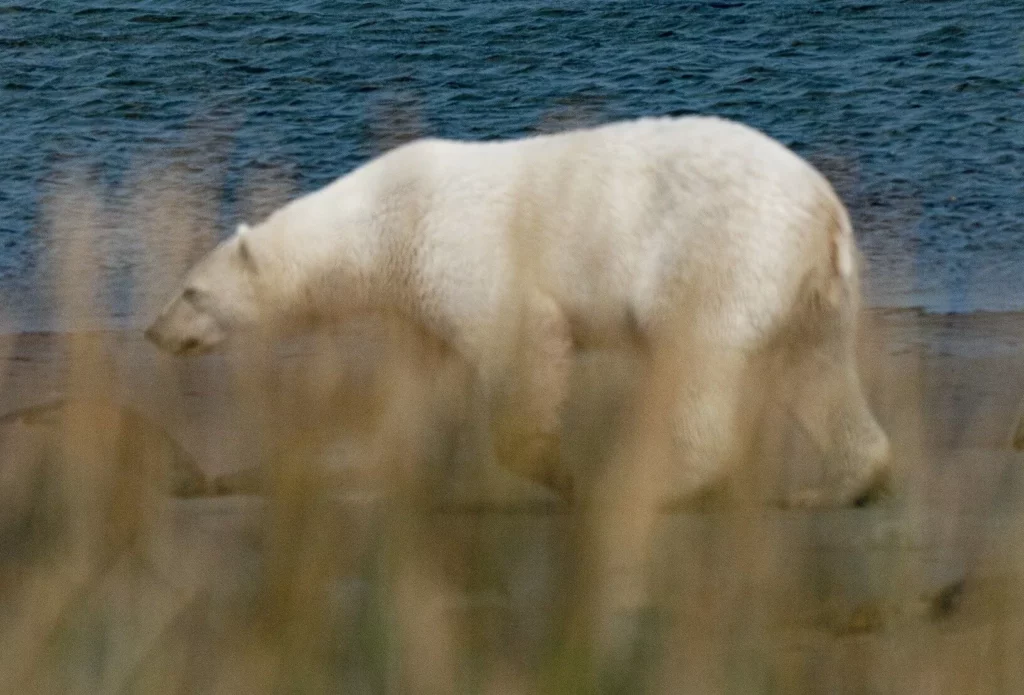
Churchill in Canada has the distinction of being known as the ‘polar bear capital of the world’. It is also one of the few places in which you can find black and brown (grizzly) bears as well as polar bears. Polar bears and grizzly bears are ‘polar’ opposites -grizzly bears spend the summer and autumn eating as much as possible in preparation for winter, when they hibernate, while polar bears spend the winter eating as many ringed and bearded seals as possible to get ready for starvation during summer and autumn.
Polar bears do not hibernate. Due to global warming, the bear’s summers are getting longer, so their starvation period is getting longer as well. If you want to see the largest concentration of polar bears, you should visit Churchill in the October to November time period, when it becomes a Mecca for the bears as it is the location in which the polar ice first forms. Before the ice forms, roughly 900 hungry polar bears congregate near the town waiting for the ice to appear. The moment the ice forms, the bears are gone, heading north in search of seals to eat.
Churchill also has a second distinction. It is also known as the ‘beluga whale capital of the world’. If you want to see the highest concentration of beluga whales, the best time to visit is July and August. During these two summer months, 60,000 beluga whales come to Hudson Bay to feed on capelin fish. The town of Churchill is located along the Churchill River, where it empties into the Hudson Bay. The beluga whales can be found in the river or the bay. We found that the water quality in the bay was a bit better than the river, but the river had a higher concentration of beluga whales. We looked for whales in both locations, but we had better success in the river. Finding whales was very simple and easy – if you scanned the water surface you would see white shapes that looked like whitecap waves.
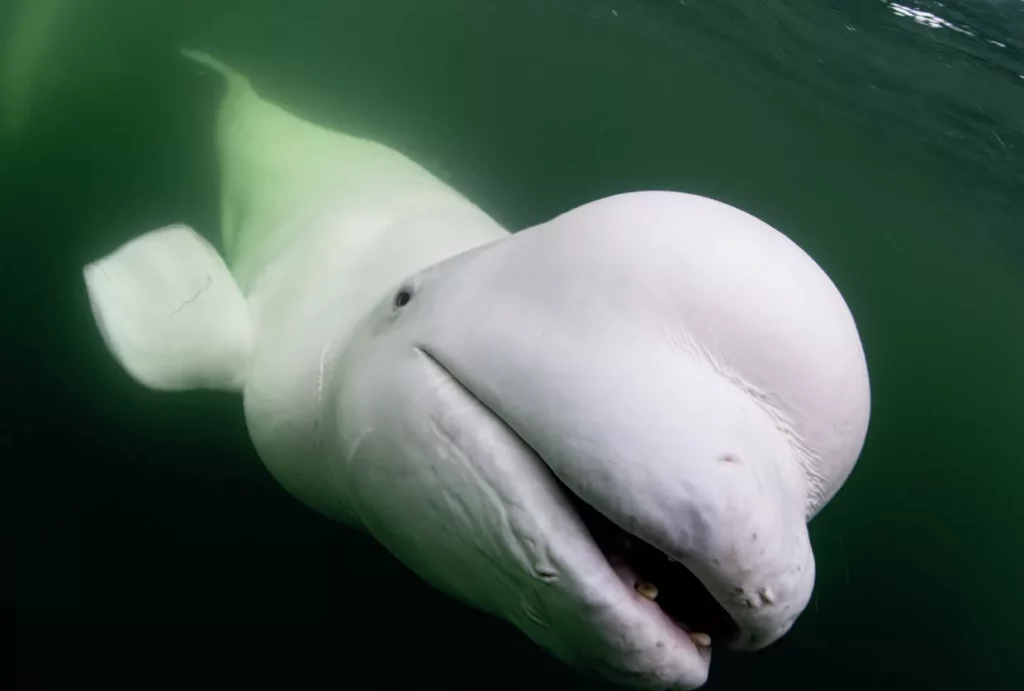
“Beluga whales are extremely curious and friendly. On the boat you could watch the whale pods purposely change their course and head straight for the humans”
If you looked closer, you would realize that the numerous ‘whitecaps’ were beluga whales. Adult beluga whales are white in colour with their young being grey in colour. They do not have a dorsal fin, which allows them to easily swim under the ice. Belugas travel about in small pods that average ten members. There are three types of pods -nursery (mothers and calves), bachelors (males), and mixed (both sexes).
Gentle Giants: Understanding Beluga Behavior and Pods
Beluga whales are extremely curious and friendly. On the boat you could watch the whale pods purposely change their course and head straight for the humans. Our interactions with the three pod types were noticeably different. The mothers in the nursery pods encouraged the calves to meet and greet the humans. The members of the bachelor pods seemed as if they were showing off by performing corkscrew maneuvers, opening their mouths, and blowing bubbles. The mixed pods had a variety of interaction behaviors. The whales are very gregarious and there is a lot of intermixing of pods.
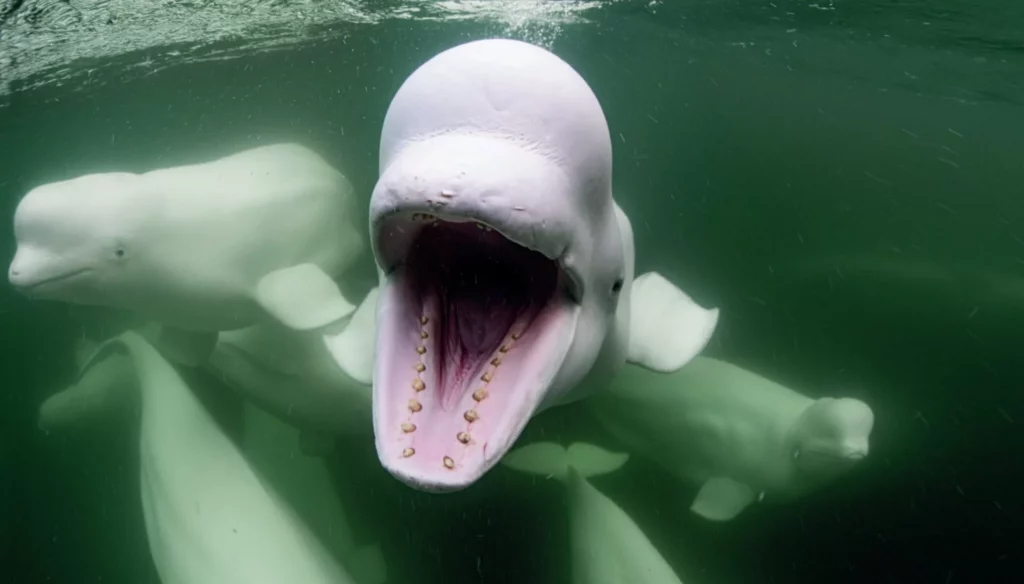
“During the human-beluga interactions, the whales would make trilling and squeaking noises. The humans would make squeaking, laughing, singing, and trilling noises. The humans would try to imitate the whales, and the whales would try to imitate the humans”
During the human-beluga interactions, the whales would make trilling and squeaking noises. The humans would make squeaking, laughing, singing, and trilling noises. The humans would try to imitate the whales, and the whales would try to imitate the humans. It was hilarious watching the human-beluga interactions. There was a lot of debate regarding the best way to attract belugas. I thought that squeaking was the best method. My wife had the opinion that trilling was the best technique. Our travelling companions were convinced that laughing produced the best results. Others thought that singing worked best.
Did you know?
The English name ‘beluga’ comes from the Russian word ‘belukha’, which translates into ‘white’. Belugas lighten with age, and upon reaching maturity attain the white colouration characteristic of adult belugas.

Beluga whales have a couple of unique physical characteristics that add to their already endearing appearance and behaviour. They have an enlarged forehead that is used for echolocation and for making sounds that are audible to humans. This structure is called a melon and the size and shape of the melon changes based on the sounds that are being produced. One of the beluga guides mentioned that they have heard beluga whales imitating the whistle that can be heard when trains approach the Churchill rail depot.
The other unique physical characteristic is that beluga whales do not have fused neck vertebrae like dolphins and other whales. This allows the belugas to be more agile in the water, which aids in catching prey and evading predators.
It also allows their faces to be more expressive (i.e. photogenic). The capelin fish were plentiful and the belugas were very adept at catching fish. They did not spend a lot of time hunting for food. This allowed for a lot of play time with each other and with the humans.
The Beluga Boarding Experience: Close Encounters in Churchill
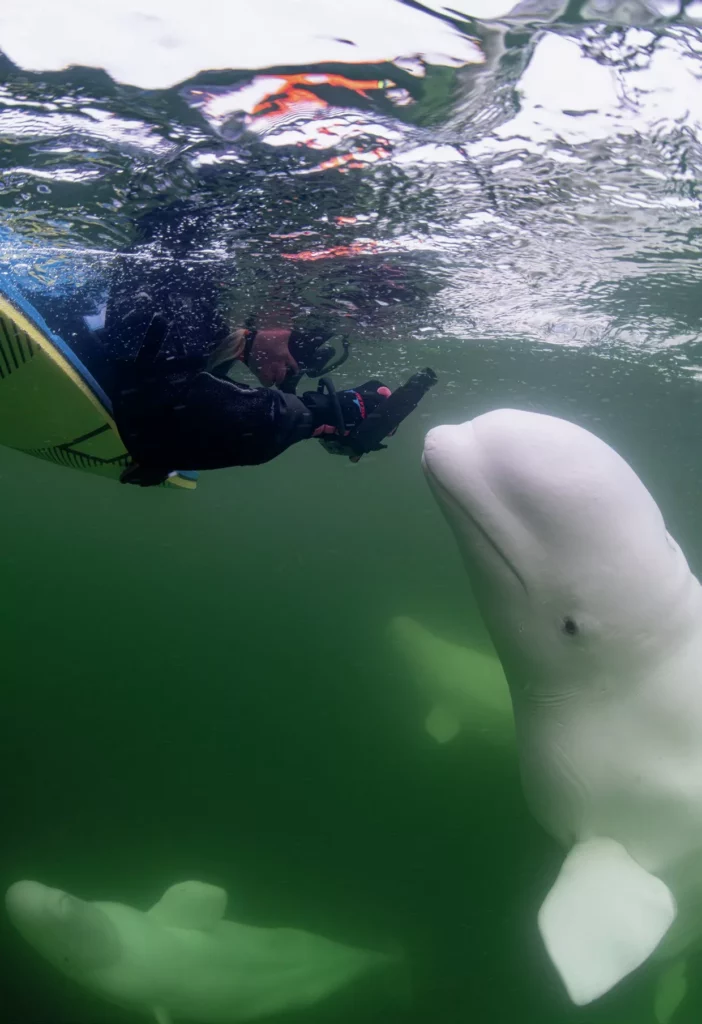
A few years ago, Canada revised their marine mammal regulations. At this time, the only human-beluga interaction allowed is called ‘beluga boarding’. Beluga boarding consists of towing a raft behind a boat that has two humans that have their faces in the water. The human-beluga interaction is completely controlled by the beluga. If the beluga wants to interact, it will approach the human – if not, it will stay away. The beluga whales are very aware of their surroundings. Our beluga boarding tour guide told us that he had never heard of a beluga-boat collision.
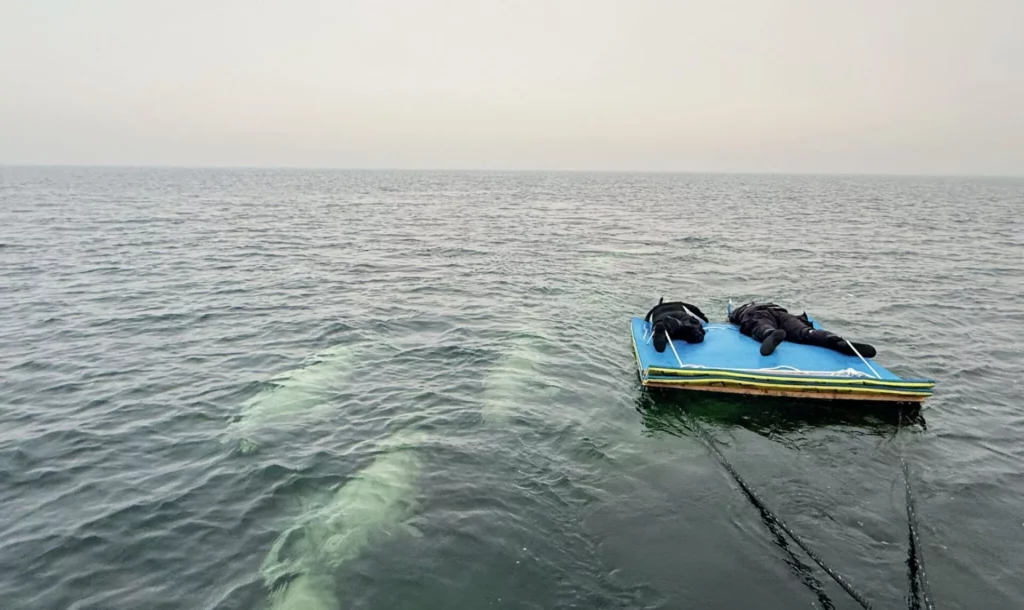
The water temperature was around 10 degrees C and visibility was one to three metres. Most of the beluga boarders wore drysuits and some wore 7mm wetsuits. It was fairly easy to stay warm since most of your body was on the raft, and only your face and arms were in the water. There are two companies that are licensed to run beluga boarding tours. We did our beluga boarding with Sea North Tours. They were great guides and loved being out on the water with the whales. Our overall tour package was put together by Big Fish Expeditions, who arranged for our lodging at the Polar Inn, arranged for the beluga boarding and kayaking with Sea North Tours, and guided our land-based excursions looking for bears, eagles, hares, foxes, and other wildlife. One night we were fortunate to get the right conditions for an aurora borealis display.
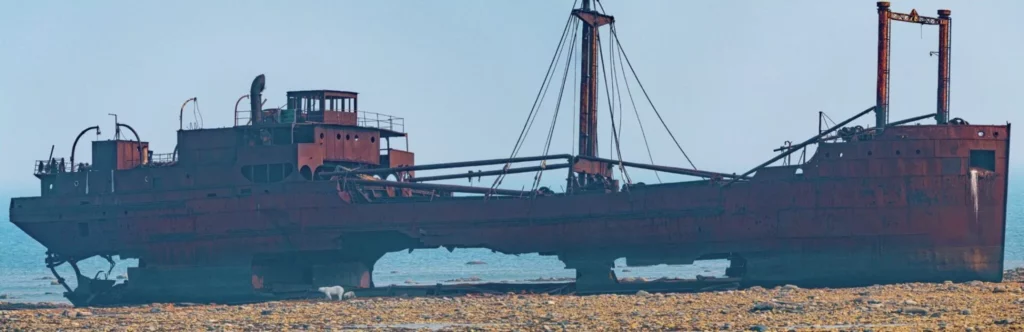
Our daily activities revolved around beluga boarding, which was dependent on the tides. The low/high tidal swing was rather large and during low tides, the beluga boarding zodiacs could not get in or out of the harbour. Our days consisted of either beluga boarding or kayaking with the whales, plus heading out looking for bears and other wildlife on a tundra safari. When we were not in the water with the belugas, we saw the whales all over town on the massive beautiful murals on many of the buildings in the town of Churchill. Our safaris took us past many murals and many of the local points of interest, including the Miss Piggy airplane wreck, the Ithaca shipwreck, the polar bear jail, the rocket research range, Cape Merry national historic site, and the Inukshuk monoliths. Our Churchill visit lasted a week and we did not find the time to visit Wapusk National Park, visit the Prince of Wales fort, or go paddle boarding with the belugas. In our spare time we visited the Itsanitaq Inuit museum, the Polar Bears International visitor centre, the gift shop at the Churchill volunteer fire station, and got polar bear passport stamps at the post office, rented electric bikes, and foraged for blueberries.


During our tundra safari excursions, our guide carried a shotgun. The first shell loaded into the shotgun was loaded with buck shot. If needed, the shotgun would be fired in front of the polar bear – the idea being to spray gravel at the bear. The second shell in the shotgun was a slug and it would be used if the noise and the gravel from the first shell did not deter the bear. Our guide told us that he has never had to fire at a bear. If bears become a problem in town, they get placed in the polar bear jail in solitary confinement. After being confined for a while, they get air lifted by helicopter to a new location. For the most part, loud noises are good enough to deter the bears.
There are no highways in or out of Churchill, so your travel options are Calm Air flights from Winnipeg or a multi-day train ride. We chose the air travel option. Overall, our trip was fantastic. The beluga whales were so charismatic and friendly (and so were the Canadians). The polar bears were a great bonus.
FAQs
Why is Churchill called the Beluga Whale Capital of the World?
Churchill earned this title because over 55,000 to 60,000 beluga whales migrate to the Hudson Bay and Churchill River estuaries every July and August to feed, socialise, and give birth.
Can you actually dive with whales in the Beluga Whale Capital?
Is Churchill also the Polar Bear Capital of the World?
Yes! Churchill holds both titles. It is the best place to see polar bears in the autumn (October/November) and beluga whales in the summer (July/August).
What is the water temperature in the Churchill River during summer?
How do you get to the Beluga Whale Capital?
There are no roads to Churchill. You must travel by air (Calm Air from Winnipeg) or take a multi-day train journey via VIA Rail to reach this remote Arctic outpost.
This article was originally published in Scuba Diver Magazine
Subscribe today with promo code DIVE1 — enjoy 12 months for just £1!
