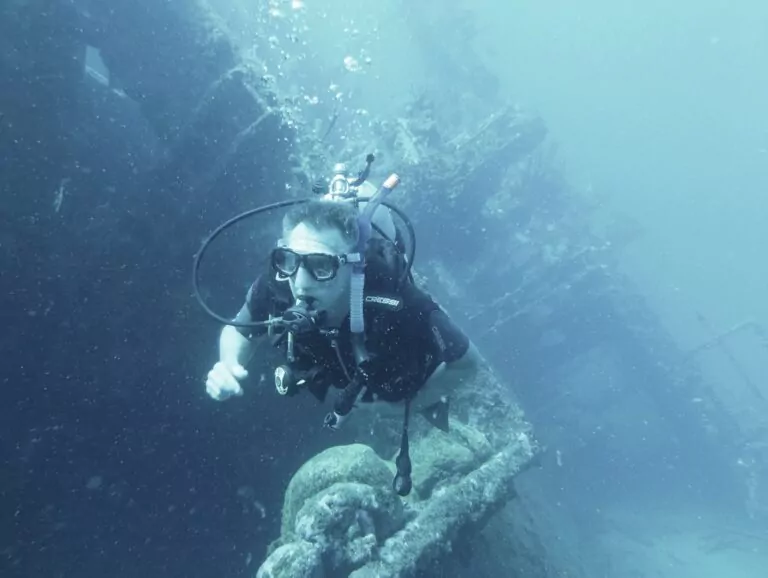
Marine biologist JOHN CHRISTOPHER FINE has been away scuba diving and snorkelling across no fewer than 15 Caribbean islands in recent months. Sounds nice – except that everywhere he checked out, he was shadowed by a depressing blight on the seascape
“What’s causing it?” That’s the question raised when I describe stony coral death to other divers and snorkellers. There is no fixed answer and no quick fix. In short, coral demise is related directly to there being too many people and our activities that pollute seas and oceans.
Also read: Larval boost for Bonaire’s ailing coral reefs
Burning fossil fuels and other emissions have damaged the Earth’s ozone layer, permitting more sunlight penetration and causing warming. Extreme ocean temperatures kills coral.
The fix: some advocate mixing penicillin with goo and smearing it on dying coral to save what has not already been affected by wasting disease. This is a labour-intensive remedial step but it has no long-term value in getting at the cause.
Also read: How the irrepressible Captain Slate lost his fingers
Stop rampant development on pristine Caribbean islands? Where big money is concerned, that will never happen. Keep population growth in check? Never.
Keep insecticides, pesticides, herbicides and fertilisers off golf-courses, grass and agriculture? Then there will be no plants except for those nature designed to live in tropical climates. Nothing wrong with that.
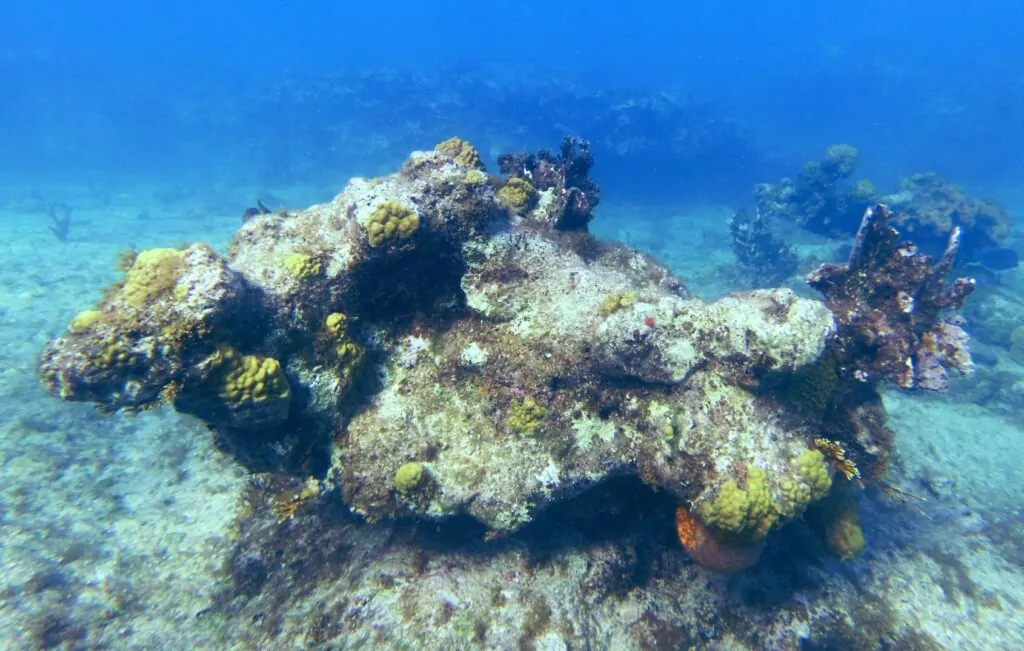
Without a steadfast answer, let’s look at the situation on some of the 15 islands I checked during December 2024 and into January 2025. There are no hard and fast statistics to deal with: coral is dead. It was alive one year ago in the same locations.
We’ll start with some good news. The Bahamas island of Eleuthera still has vibrant live brain coral growing at shallow depths.
Eleuthera is washed with wind and surf along its long shoreline. Rural development is minimal; while tourism is popular and resorts cater to visitors, and while cruise ships discharge thousands of guests onto Eleuthera’s beaches, the vastness of the island’s marine environment has been able to cope without experiencing significant stony coral death in the southern peninsula, as observed over several years.
Grand Turk, on the other hand, had no appreciable living stony corals. Long dead stands of elkhorn and staghorn coral are overgrown with algae. All brain and star corals were dead in the areas I visited.
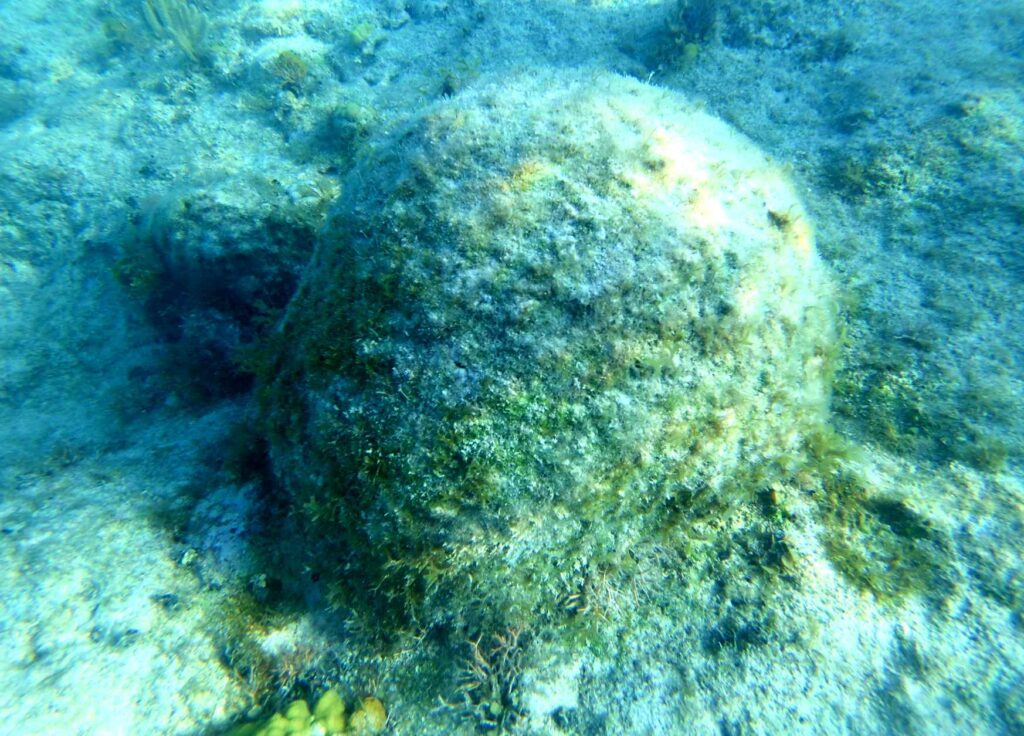
At the deep ledge drop-off where once pristine coral flourished, where brain coral predominated, observation revealed only dead coral heads. Shallow reaches around Horseshoe Reef also revealed only dead stony coral.
Not one live stony coral head was observed there, nor at a site called Library Reef where the wall descends deep. These reefs were once vibrant with living hard corals.
Awash with sunscreen
The US Virgin Islands reefs off St Thomas and St John, once pristine with abundant hard corals, had fared no better than Grand Turk.
Snorkel-boat operators make a point of indicating that no coral-killing sunscreen is sold on the islands, yet thousands of visitors smear themselves with whatever they have brought with them, and most of it is harmful to coral.
Perhaps it wouldn’t be if only a few people were snorkelling over the reefs, having just wiped themselves down with sunscreen, but these reefs see thousands of snorkellers and swimmers weekly.
Use of harmful sunscreens might be one explanation for coral demise, and certainly the volume of harmful chemicals released creates a slick on the water visible to the naked eye every day.
Diving on Champagne Reef off the island of Dominica, a beautiful volcanic island, again revealed dead stony coral as well as bleaching of coral heads. This had not been the case a year ago on the same reef.
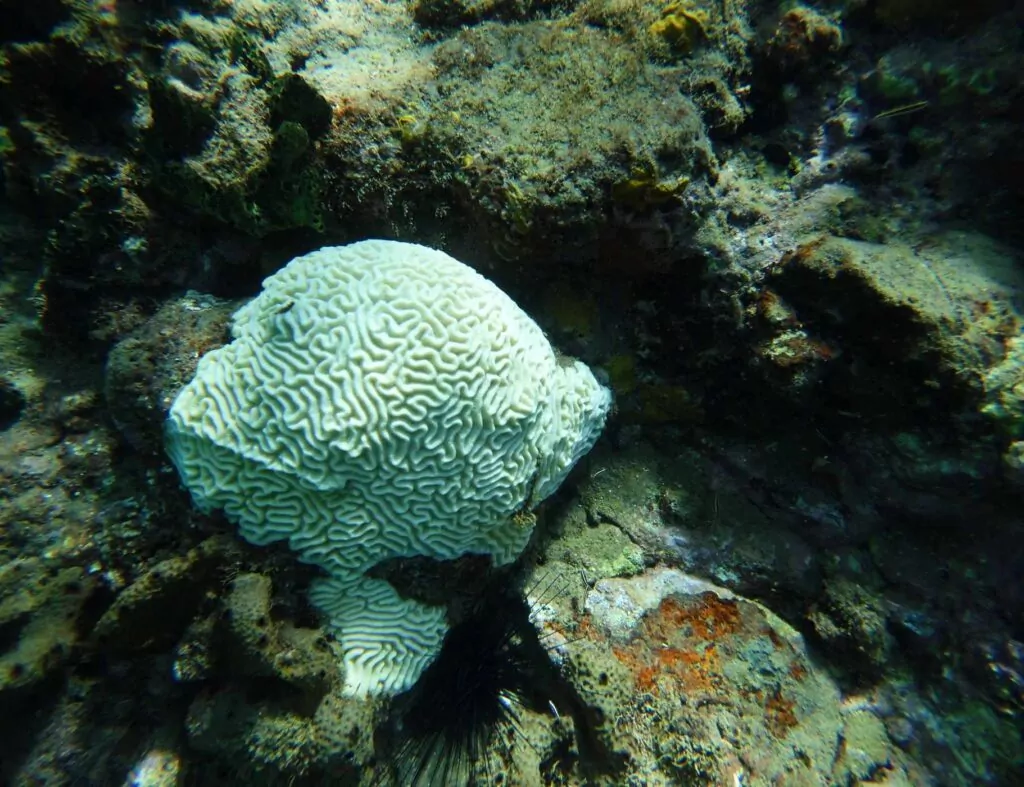
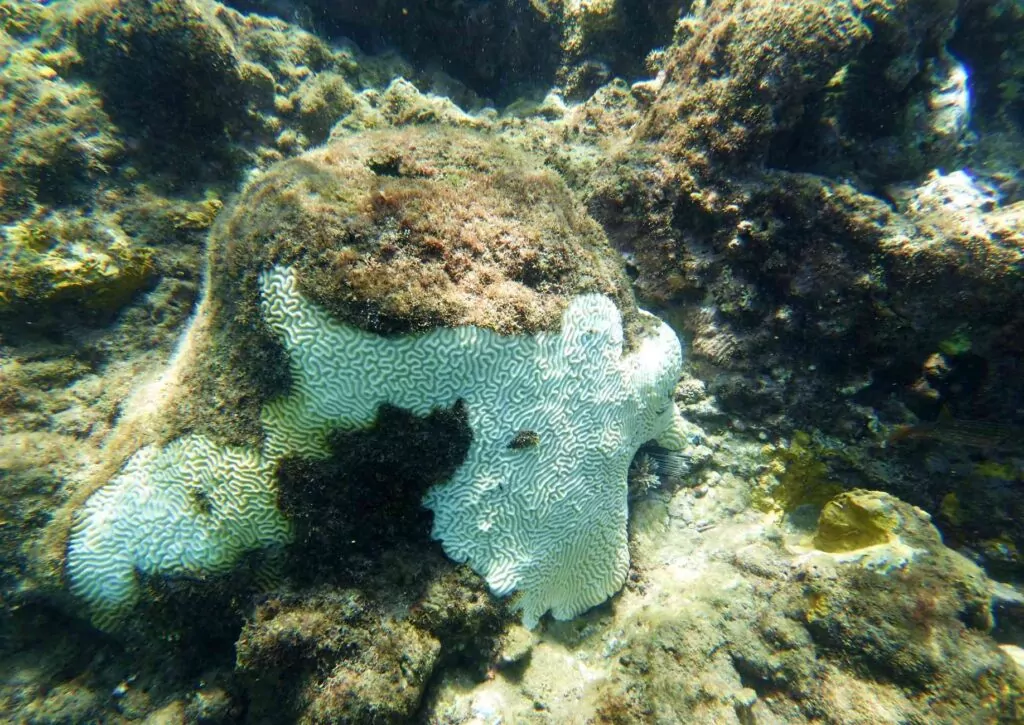
Whole coral heads were dead; others were in the process of bleaching. Demise was certain. Deep vents in the Earth create gas bubbles that attract divers and snorkellers to these rocky reefs near shore. Coral death was evident everywhere in the offshore area of these popular dive zones.
On the magnificent volcanic island of Martinique, coral death was also apparent. Green turtles devoured seagrasses that appeared healthy, despite the fact that stony corals were bleached white.
Martinique has set aside vast marine areas as preserves, an important step to assure conservation of resources. The same diseases that attack coral from Florida to South America are prevalent offshore.
Shipwreck corals
St Kitts and Nevis are magic isles and constitute an independent nation. Tourism is of great importance here and the offshore reefs are an asset the islanders need to cherish if that tourism is to be sustainable.
Dead-coral observations were prevalent, an indication that these islands are not exempt from the plague of coral death.
St Maarten’s surrounding reefs, which I visited at the same time last year, now show dead and bleached coral too. Madrepores bleached white on rocks that supported live coral.
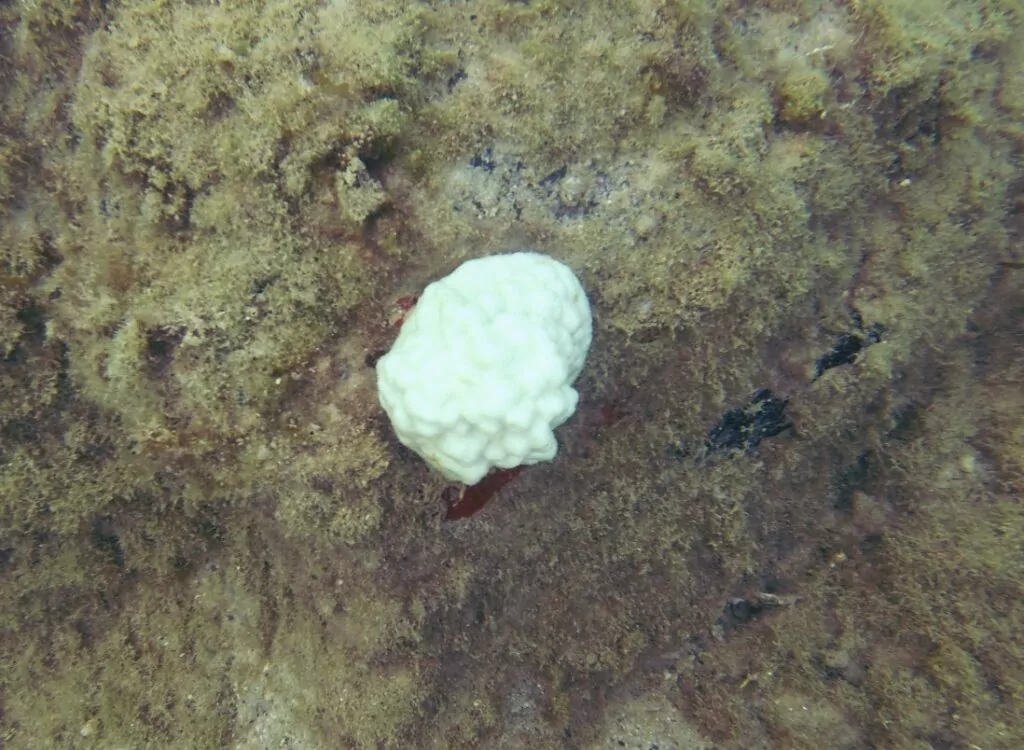
This Dutch-French island is charming and a favourite tourist destination. Gorgonian seafans remain healthy, yet hard coral has been affected to the point at which not a single live coral head was observed.
Snorkelling off Curaçao in the Dutch Caribbean, one of the three protected ABC islands that include the diver’s paradise Bonaire and popular tourist destination Aruba, I saw coral that had been grown and planted dead. Hard corals were dead.
A beautiful living branch of staghorn coral remained on the outside of a peninsula where it was exposed to ocean washing. This is a good sign, evidence that where the ocean can flush inshore areas effectively, the hard-coral environment is healthy.
Dives on Aruba on two famous shipwrecks revealed more dead stony coral. Coral growth on and around the wreck of the Antilla showed disease. Corals among the scattered shipwreck remains of the Pedernalis were dead. Soft corals were abundant and healthy.
Grenada is also a magnificent island, its reefs likewise in difficulty, as are the reefs off Barbados. One of the favourite tourist destinations in the Caribbean, Barbados has suffered from overfishing and coral-reef abuse for a long time.
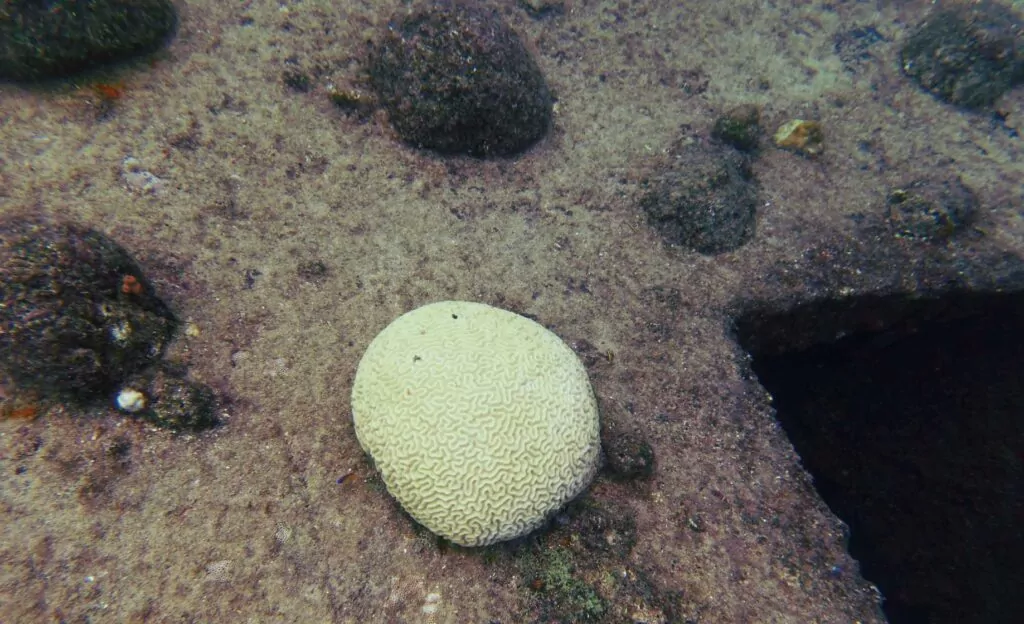
A sunken tugboat sported live coral last year, but it was dead and bleached white this year. Sad commentary on an island supported by its natural beauty and marine environment.
Mute testimony
St Lucia fared no better. Coral deaths on offshore shallow reefs offer mute testimony to what once was a thriving marine ecosystem. Only limited observation was made on a popular snorkelling and swimming beach, so no general conclusions can be drawn about the island’s overall coral health.
Antigua is another magnificent island that entices visitors to its sting ray city, an offshore sandbar where feeding of the rays brings them into close contact with tourists. Most tourists just swim, and some wear masks and bring cameras.
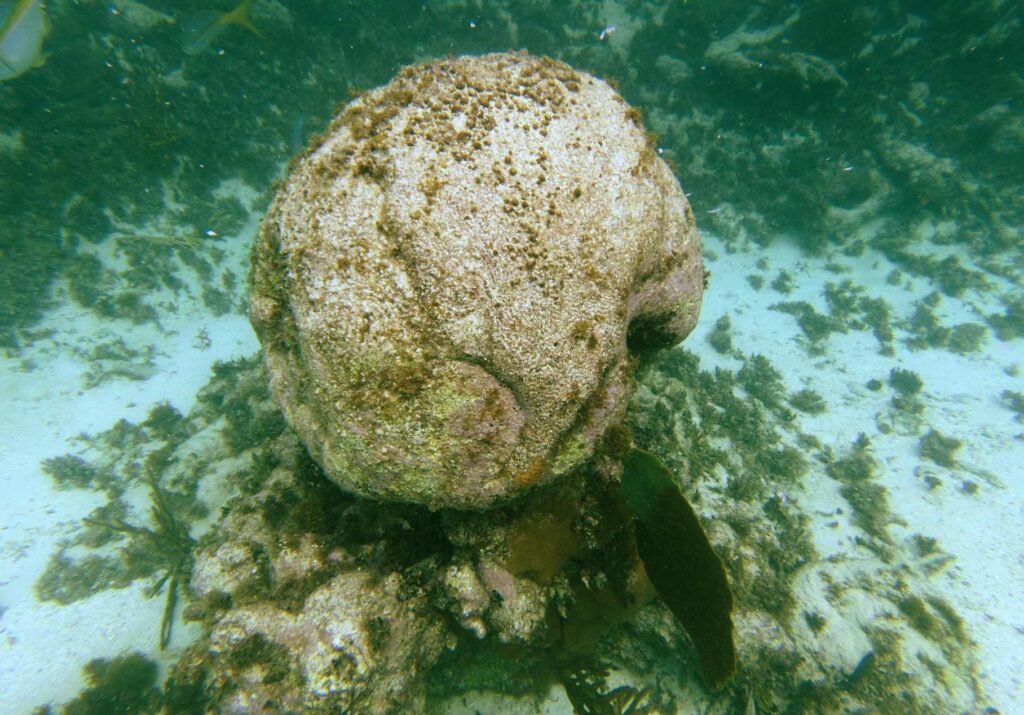
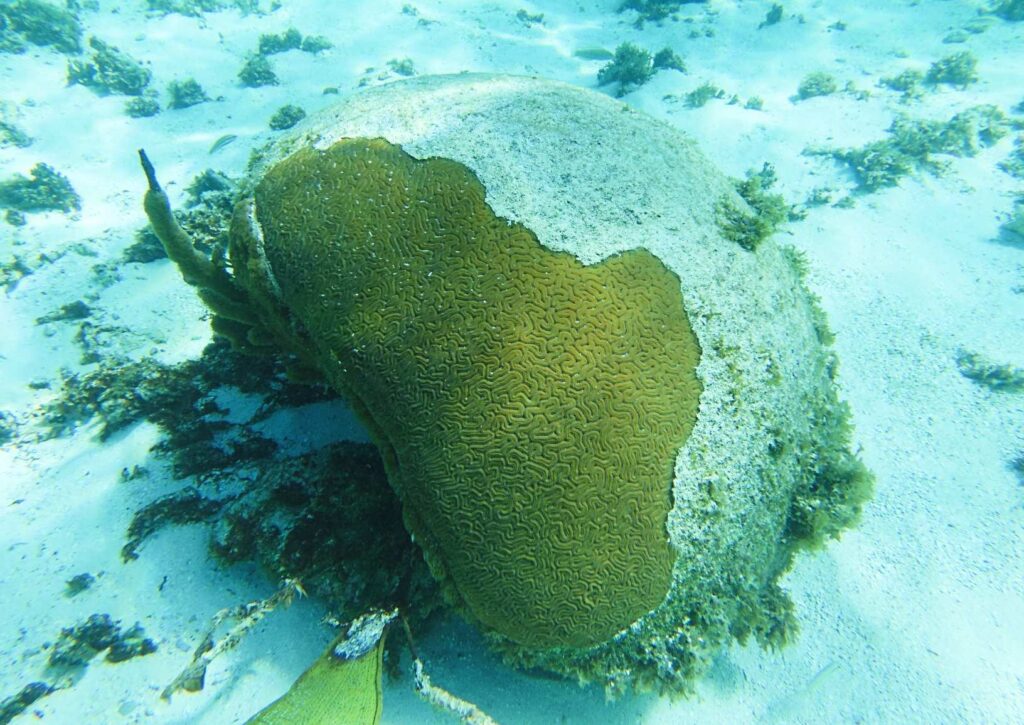
Boat operators bring thousands of visitors to the sandbar every week, and each group feeds the sting rays. Tourists lather themselves with sunscreen that washes off as soon as they enter the water, all toxic to corals on offshore reefs.
The reefs around the sandbar revealed dead coral. Algae covered some of it, with dead madrepores bleached white. Not enticing for this important tourist site.
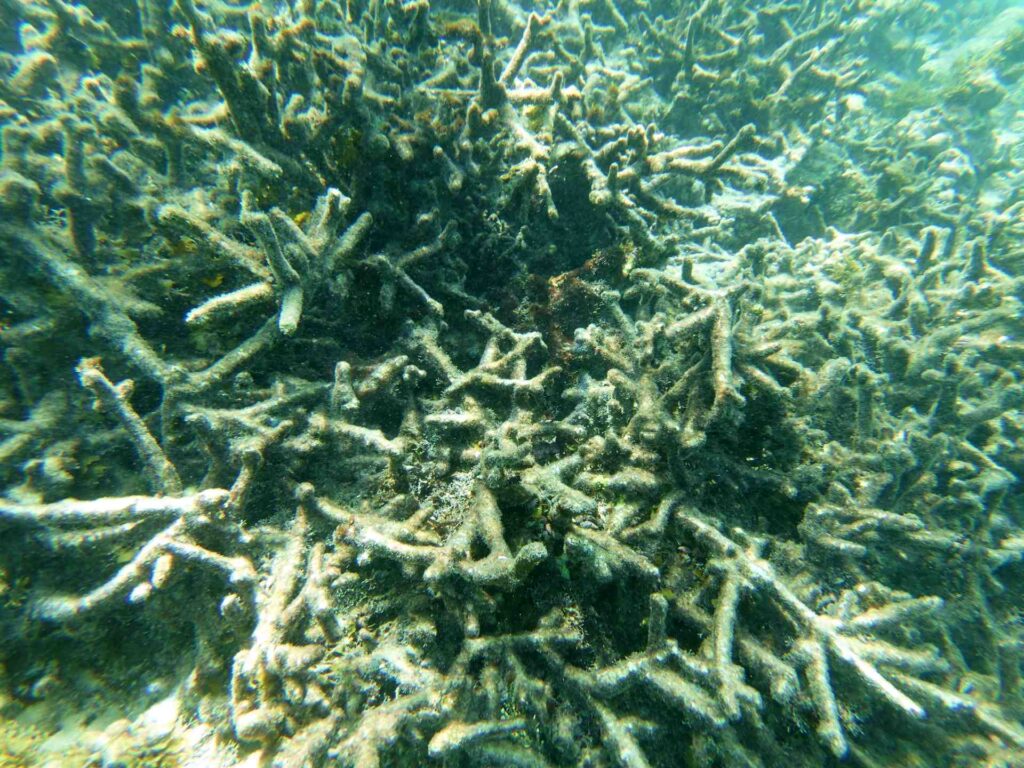
A quick survey of the same areas only a year ago had revealed diminished coral life. Diving and snorkelling tourism contributes substantially to island economy. Without a pristine marine environment, might visitors start to shun holidays in the Caribbean?
While growing coral in laboratories before out-planting it on reefs offers salutary hope; while good-intentioned researchers try to allay coral-tissue wasting disease by smearing antibiotic laced goo on diseased areas; while bacteriologists continue to try to determine exactly why coral-tissue wasting disease occurs, the combination of likely causes are plain enough to see.
Too much development, too many waste-streams from land, from dumping, evaporated chemicals that return to the ocean via rain: all of this is responsible for environmental damage. This is just one report added to many observations by scuba divers everywhere: coral reefs are in peril.
Also on Divernet: CORAL CRASH: CAN OUR REEFS BE SAVED?, CORAL FARMERS RESHAPING THE FUTURE, WHAT YOU CAN DO TO HELP CORAL REEFS, 10 WAYS TECH IS RESCUING CORAL

Wow it’s very convenient how you blame all this on the actions of tourism, overdevelopment localized pollution and basically lay the blame on Caribbean policies and actions that have led to this situation. While it is common knowledge that these are all factors in environmental decline the most die off since 2022 has been directly tied to 2 factors, climate change leading to coral bleaching due to a 2c change in Atlantic waters in ONE year and to Stony Coral Tissue loss disease that started in Florida in 2014 and has had terrible effect ever since. The loss of corals in Dominica is directly noted to these 2 events and has occurred since 2022. You visited ONE site that was also devastated by hurricane Maria in 2017. It was not sunscreen, overdevelopment or the other localize issues it hurricanes, thermal stress for climate change and SCTLD. You deride local efforts as “smearing” antibiotics onto coral as if the careful localized application of antibiotics had NOT save hundreds of corals in Dominica. Local efforts taking place to conserve corals by bio banking, selecting thermally tolerant genotypes, coral fragmentation, asexual and non sexual assisted fertilization are given zero respect by your article. Did you even talk to experts in restoration practices? Your doom and gloom article should reflect the role of industrialized nations in causing climate change, the role of individuals voting in parties that don’t even believe climate change is happening. Did you speak with tourism partners investing money time and people in protecting reefs?
So
Much more to say about this very disappointing article. There are reefs hundreds of miles from
Any development that were effected by bleaching and SCTLD, no sign of suntan lotion or other things you mention. Just a warning world that no one seems to worry about. Don’t get me wrong, there are plenty of issues that our local governments don’t control
With good environmental policies, there IS overdevelopment and people should never use sunscreen unless it’s recessed but you cannot lay the blame for recent die offs so squarely on shoulders and not recognize that the larger issue of the last few years are global and out of our control. What a shame this space was not used to that conversation.
You criticize but, all that is said by John is factual and interesting.
The overall premise “reefs are peril” is factual. Some of the localized issues he addresses are factual yes. But to blame the demise on the policies and lack of environmental protection is factual. There are many of us fighting for better protections, but even in places where tourism and development is NOT the problem have suffered with loss of live coral cover on reefs, Especially in the last 3 years. This due to SCTLD and oceanic temperatures being 2c hotter than normal, leading to bleaching.
Even if we had the best protections in place corals would be suffering due to global warming of the oceans. So my point is to stop blaming the individual islands for all the problems and address the larger issues.
Also some recognition of examples where tourism has played a huge role in protections despite Government support not being there. This way visiting divers to the Caribbean can choose to dive with an environmentally responsible operator. THAT would be helpful.
So, you’d argue that while his statements aren’t false that the two main TRUE causes aren’t any of the problems described while also asserting that any prescribed action by the author wouldn’t prevent the continued death and decline of coral… That said, how can you be certain?
If tourism is stopped, yes the locals would suffer. But you’d in effect put the non-reputable operators that tourists use out of business. These areas would be given time and space to heal. Less pollution, disturbance, less noise pollution which greatly affects life in all aquatic spaces more than most realise. You’d be removing the contaminants of sunscreen which some products contain benzophenone, a carcinogen that is found in homes, in fruit like grapes and while naturally occuring for life on land it isn’t something common under water and obviously something that is condensed and then released upon an unsuspecting ecosystem that is already taxed by conditions that are effectively destroying it… I’d argue that buddy is spot on. As a species that has no limits and no other species on this planet that can reason with us… We are effectively a petulant child who do not abide being told what we can and cannot do because of our entitlement and our collective position atop the animal kingdom. So often, we insert and assert ourselves as the caretakers and overseers of biomes and flora and fauna, whether we naturally occur there or not. We go to great lengths to decry wrongdoings and denounce stances and yet when a few speak up against the many about how we might affect change and given reasonable and insightful steps to take we shut them up because we feel we deserve to be there, we deserve to protect this natural place, we are entitled to continued interactions and studies…
If they came out and said that in order to save oceanic life and all of the blue whales, the coral, the fish, etc that humanity needed to cease and resist every and all activity in the seas and oceans for the next 10 years at least. What would happen? If they published a sourced and cited legitimate case that all oceanic life would disappear in less than 100 years unless we stopped all but the most necessary intrusions into the depths, do you think the global leaders would even give a moment of consideration for such a drastic and extreme action? Ha… Just like the illegal operators and legal alike who don’t insure that their tourist divers aren’t wearing toxic creams and lotions; just like the illegal fisheries and shark hunters who continue even with threat of being caught; as navies the world over continue using harmful sonar; like the cargo ships with huge containers packed with materials and crude oils won’t stop disturbing pods of whales or the risk of capsizing and contaminating hundreds of thousands of square kilometers of ocean and the life contained therein….
We are glorified posers who say one thing and continue to do another because we are — as a whole — a bratty infantile species who gratifies itself without a conscious thought to the world we shit on. They’d argue that if humanity does destroy other life, that it was likely too weak or wasn’t meant to survive and thrive. And maybe that is the case, but so often we never give the life around us that change to flourish without us.
A sign reads: warning, the following forest is off limits to all. A fragile ecosystem that cannot ensure human activity is beyond this point. Please, do not cross this barrier. Noise pollution and human waste/litter has been proven harmful to the rare species found within this area.
Some would listen. A great many, I would wager would disregard this sign and continue… It could warn of a fierce species of grizzly, or a deadly pathogen, a parasite that causes your genitalia to suddenly fall off without warning, and some of humanity would be all the more compelled to trespass. It’s as if telling people what not to do ensures that it will occur, and even if it’s a kept secret someone always finds a way to uncover it and share it with the thought that, “The people should know.”
I wonder… Will the day ever come when we are told without any ambiguity or careful language that we are indeed the disease and plight. That when they said X amount of years or decades ago that if we did not change our actions and our current course that we would cost the world countless species, will we finally start to see it and choose to enact real change in time for the remaining species that somehow survived us? Ha… I doubt it. The last 10 years have reaffirmed for me how completely useless and entitled we are as a proverbial bacterium taking over the literal pitre dish that is Earth and all the while knowing better… And not being victim to our nature, being a species capable of change through choices.
We choose not to change and we often choose convenience over complicated enforcement of what is actually necessary.
Trump has effectively overhauled the US in a way that every dem and Republican never would have and for his own benefit. A country that was once held as a superior and powerful nation is being brought low and all the while its people — whether they know it or not — are being played and are powerless to stop him from what I’ve seen. Now tell me, how is it that he could do that? How could this person turn the US upsidedown in a way never seen before and yet hundreds and thousands of experts and nature lovers continue to fight to be heard and are ignored… Because we are complacent and if you’re science is founded on fact then you’re extreme and if you’re passionate you are radical and if you’re of them masses you are status quo and if you are rich and against the system you are eccentric and if you’re poor you’re useless and if you’re a leader of a relevant nation you are hostile and seen as a possible threat and ostracized. In a world where passionate people are made into extremists; empathy is weakness; rulers who govern with scientific proof are weak; poor nations are prey…
You also exemplify this… While maybe he didn’t cite or source his facts, it doesn’t mean that through a quick bit of research you wouldn’t find truths in what he’s said. You argue and railed against someone who is trying to bring attention to something you yourself are passionate about. It seems pretty counterproductive to me. While you may not agree, you could’ve simply added to what the author has said here and provided unity to your cause in an effective way. I’m one of many random people who’ve never dived not seen an ocean that happened upon this page that could’ve been made aware of the plight in our oceans but instead I came across a bully trying to disprove and put down a fellow lover of the waters that you both so love…
You do your cause a disservice by being so brash and insistent in the author’s article. It is really sad to say that it you continue to fight amongst yourselves and hate on each other, seemingly reasonable and informed as you all are, that the coral you fight to heal will have been long dead by the time you all come to an agreed consensus.
Sorry for the scattered tangent. I was watching a diving horrors sort of video about Han Ting and clicked on this article and wrote my comment over the course of my early morning. Apologies.
Wishing you and yours the best and thank you for your insight. <3. Health, happiness and hearth.
Wow.
Ok I will keep this short. I am not bullying him, I am however insistent, as I live of the front lines of this battle. Every single day I am fighting to protect and preserve what is left. I am well respected in this space and doing all the good that I can and afford to do. My point was NOT that all his facts are wrong and I admit in my first response that there many of the problems he outlines. You do not have to tell me the dangers of mass tourism, sun tan lotion, coastal development. Just last week I had to relocate 50 huge corals away from a development project to a safer place. My time, my money my health went into the project along with 8 others volunteer’s. The point is that by far the biggest threat to corals is global. Climate change, ocean acidification more violent tropical storms etc. ALL this article pointed out was the terrible things being done on the local scene, placing ALL blame on the irresponsible actions of people. Nothing about the massive threats we face with coral bleaching due to extreme thermal events, nothing about the legions of good people working hard every singe day to save corals. So I simply ask for balance and accurate articles that reflect all the things going on not just ” Little Caribbean Islands are BAD”.
peace out.