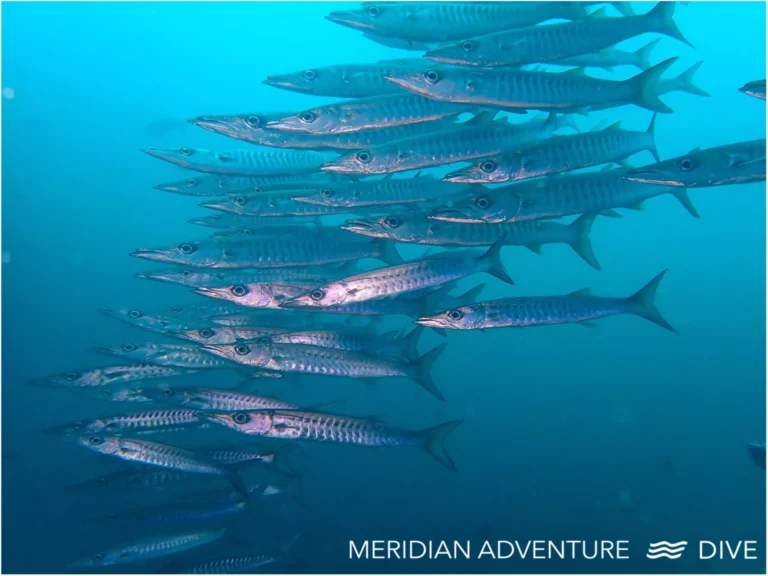
As they glide through the crystal-clear waters of Raja Ampat, barracudas stand out as some of the archipelago’s most iconic and mesmerising predators. Their sleek, silver bodies and rapid reflexes make them a captivating sight for divers, whether spotted swimming alone or in swirling schools along coral slopes and lagoons. More than just eye-catching, barracudas are essential for the health of Raja Ampat’s reefs, helping to balance fish populations and providing divers with unforgettable encounters with one of the ocean’s most graceful hunters.
Table of Contents:
Origins and Evolution
Appearance and Characteristics
Development and Life Cycle
Breeding Behaviour
Diet and Feeding
Predators and Survival
Life Span and Location
Fun Facts about Barracuda
Here is a fascinating look at some captivating facts about barracudas in Raja Ampat.
Fast Predators – Barracudas are incredibly quick, capable of reaching speeds up to 56 km/h, which makes them some of the ocean’s most efficient predators.
Silver Shadows have sleek, silver bodies that reflect light so well that their movement in a school creates a dazzling, mirror-like shimmer underwater.
Schooling Behaviour – In Raja Ampat, barracudas often form large schools, especially the great barracuda. These groups can number dozens, creating a mesmerising swirling spectacle for divers.
Curious but Cautious – Although they can seem intimidating, barracudas tend to be more curious than aggressive towards humans. Divers often observe them swimming nearby, watching movements carefully with interest.
Camouflage Experts – Despite their shiny appearance, barracudas can blend into their surroundings. Their colouration helps them ambush prey and avoid predators such as sharks.
Some barracudas in Raja Ampat can live up to 14 years and continue growing throughout their lives, sometimes exceeding 1.5 metres in length.
In the reef ecosystem, barracudas play a crucial role by helping to maintain fish populations, mainly by preying on smaller species like snapper and fusiliers.
Raja Ampat’s special attraction is often highlighted by dive guides, who note that barracuda schools near cleaning stations are particularly remarkable. These schools gather to be cleaned by wrasses, forming a lively underwater “spa.”
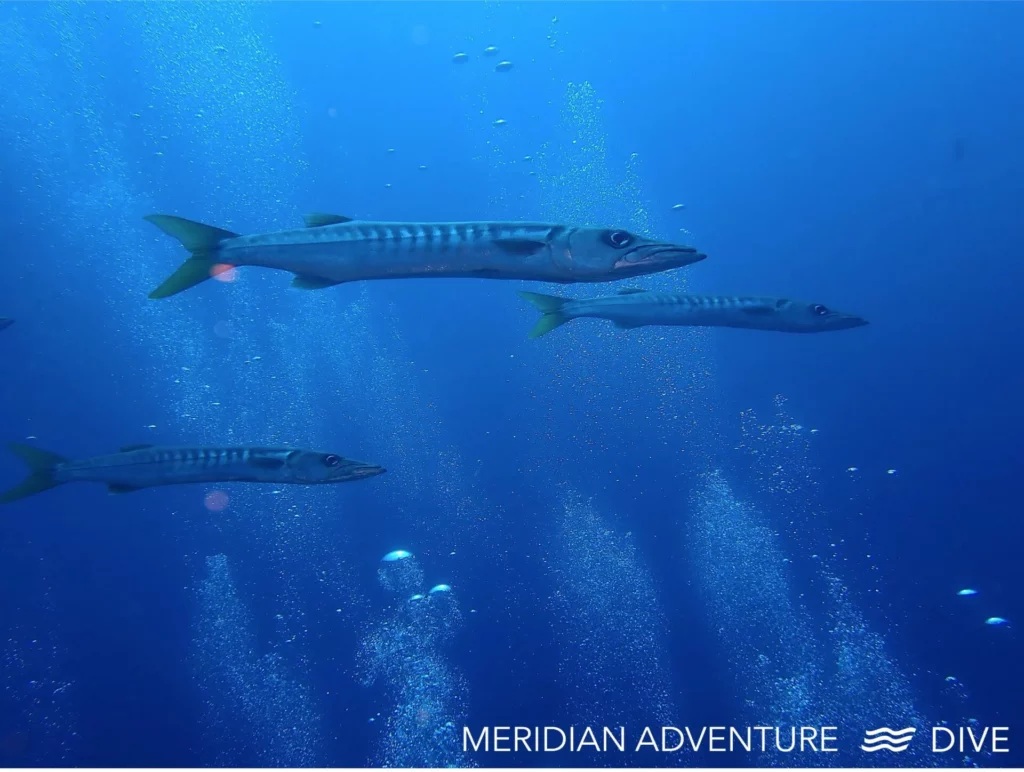
Origins and Evolution
Barracudas are part of the Sphyraenidae family, which has thrived in tropical and subtropical oceans for millions of years. Fossil records indicate these predatory fish have existed since at least the Eocene epoch, evolving to become streamlined hunters of reefs. In Raja Ampat, they contribute to the region’s diverse marine ecosystem, with behaviors and physical features that enable them to be effective predators in coral-rich waters.
Appearance and Characteristics
Barracudas are easily identifiable by their long, torpedo-shaped bodies, pointed heads, and strong jaws filled with sharp, fang-like teeth. Their shiny, silver appearance helps them blend into the sunlight-filtered waters, reflecting light and producing a bright, almost metallic gleam. In Raja Ampat, the most common species are the great barracudas, which can reach up to 1.5 meters in length, though smaller varieties are also present.
Their eyes are large and specially adapted for detecting prey in low-light conditions, providing them with excellent hunting skills at dawn, dusk, or within shaded coral channels. Although they have fearsome teeth and a predatory image, barracudas are curious but cautious around divers. Their agility and quick bursts of speed enable them to be effective predators, allowing them to ambush prey with a swift, explosive strike.
Development and Life Cycle
Barracudas start their life cycle as eggs, usually laid in open water and drifting with ocean currents until they hatch into small, transparent larvae. These larvae are highly vulnerable, depending on their camouflage and quick swimming to evade predators. As they mature, juvenile barracudas begin forming small schools, offering protection through safety in numbers and helping young fish learn hunting skills.
Juvenile barracudas seen in the Dampier Straits gradually move to coral reefs and lagoons rich in food. Their growth from small larvae to mature predators involves multiple stages, such as transitioning from feeding on plankton to active hunting. Once mature, these agile hunters can effectively dominate reef areas, patrolling coral slopes, channels, and open water hunting grounds.
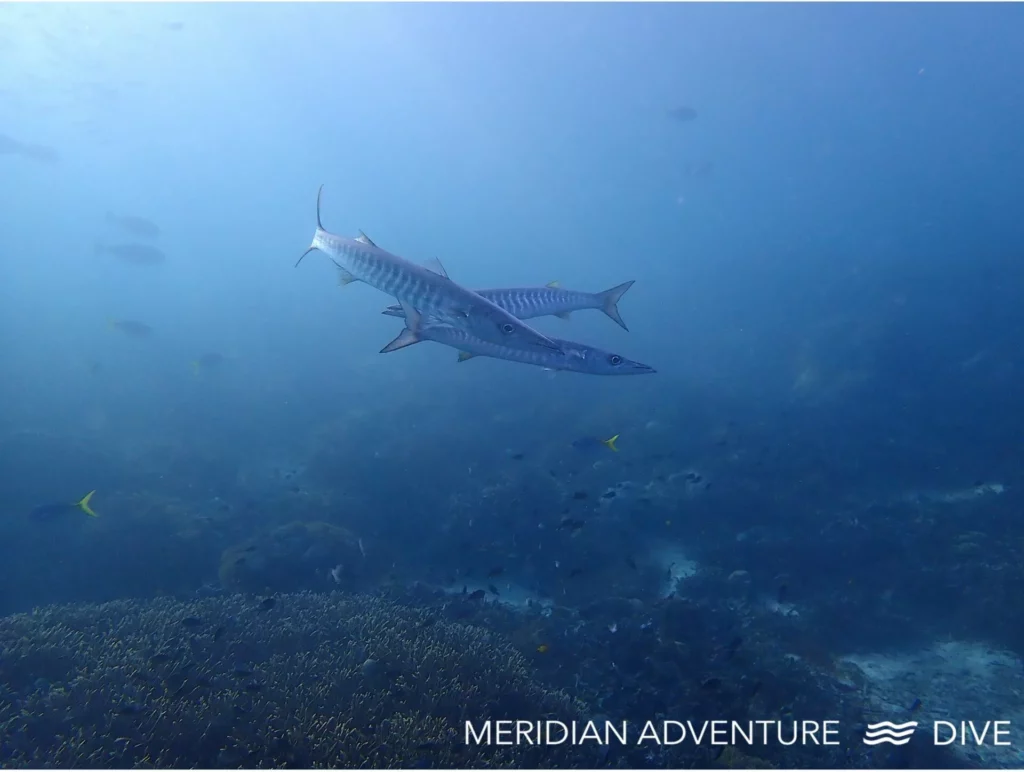
Breeding Behaviour
Barracudas typically spawn in open water, forming large groups during breeding season. This group spawning enhances fertilisation chances and lowers egg predation risk. The timing differs by region, but in tropical areas like Raja Ampat, barracudas often reproduce throughout the year, benefiting from warm waters and plentiful prey.
Mature females release thousands of eggs into the water, where males externally fertilise them. The eggs drift with the currents and hatch into tiny larvae within a few days. Although adult barracudas are usually solitary or found in small groups, this reproductive method helps disperse their offspring widely, supporting healthy populations throughout Raja Ampat’s reefs and deeper waters.
Diet and Feeding
Barracudas are predatory fish that mainly hunt smaller species like fusiliers, snappers, and anchovies. They typically stalk their prey carefully and then quickly accelerate to catch it. In Raja Ampat, these predators help control reef fish populations, preventing overpopulation and supporting ecological stability.
These predators are opportunistic eaters, sometimes scavenging or targeting schooling fish that drift away from the group. Their strong jaws and sharp teeth enable them to cut through flesh effortlessly. Divers in Raja Ampat frequently see barracudas patiently circling prey or lying in ambush among coral pinnacles, demonstrating both patience and accuracy in their hunting approach.

Predators and Survival
Although barracudas are skilled hunters, they are not invulnerable. Larger predators like sharks and groupers can threaten them, especially the younger or smaller ones. In Raja Ampat, besides natural predators, barracudas also encounter human-related threats such as overfishing. However, conservation initiatives are working to help stabilize their populations.
The survival of barracudas relies on a mix of speed, camouflage, and schooling behavior. Their shiny silver color reflects sunlight, helping to mislead predators, while their long, muscular bodies enable quick escapes. Additionally, their cautious nature and tendency to stay near coral reefs or deeper channels offer protection, allowing barracudas to flourish in the rich and diverse ecosystems of Raja Ampat.
Life Span and Location
Barracudas can live for up to 14 years in the wild and continue to grow throughout their lives. In Raja Ampat, they are primarily seen around coral reefs, seagrass beds, and lagoon channels, areas rich in prey and offering hiding spots among the complex reef structures from bigger predators.
These fish are highly adaptable, moving between shallow and deeper waters depending on food sources and seasonal changes. Divers often spot them near cleaning stations, where smaller fish like wrasses remove parasites, or swimming along reef slopes and drop-offs. Their widespread presence across Raja Ampat’s islands makes them a recognisable and striking feature of the underwater landscape for both snorkellers and divers.
