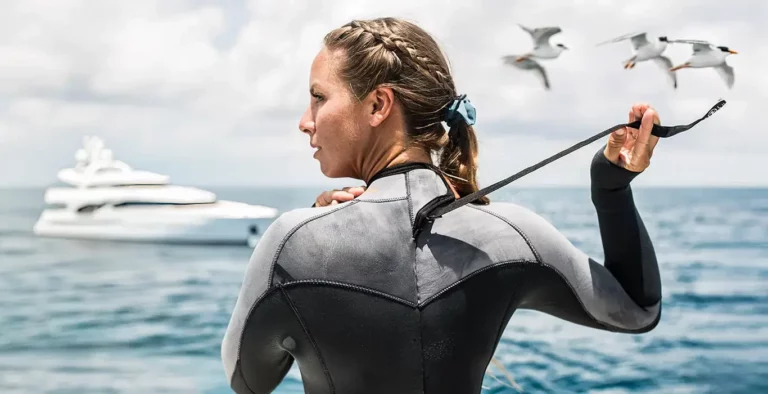
It’s 2025 and tropical diving gear has evolved beyond thick neoprene fuzziness. Vendors now offer sleek, lightweight, and UV‑blocking solutions suited for 26 °C (78 °F) and above water temperatures. These include short wetsuits (3 mm or less) beloved of tropical dive centres, “stinger‑style” one‑piece skinsuits, rash shirts or full‑body rash guards, and dive skins specifically engineered for sun and critter protection.
Historically, divers relied on full 3mm or 5 mm suits, even in warm seas, simply because that was what was available. Today, thermal protection in the tropics is less about warmth and more about preventing sunburn, abrasion, marine‑stinger injuries, or mild chill from long surface intervals. And looking cool of course. Most rash guards offer UPF50+ sun blocking; a stinger suit protects from jellyfish; and a light short wetsuit adds just enough insulation without overheating, even during long boat drips or night dives.
Our list of 2025’s Best Tropical Dive Wear
Our list of 11 current models spans across luxury and budget pricing, and focuses purely on protection (thermal, sun, stings), not buoyancy or serious cold‑water insulation. Prices range from £60 / $80 to over £300 / $350, covering snorkelling rash guards through full wetsuits. We’ll be considering features such as UPF rating, recycled fabrics, seam type, fit, or integrated hoods so you can get the right protection for the right dives.
To be clear, design trade‑offs are clear, even when we look at warm water. Long wetsuits give full warmth and abrasion shielding, but can be too hot and restrictive; shorties are easier to travel with but expose arms or legs; full body rash suits or one‑piece skins maximize coverage and are hugely packable, though they lack buoyancy or thermal bulk. So we’ll try and offer a ‘best of’ across various categories.
Fourth Element Hydro Stinger Suit – £80 / $110
Designed specifically for tropical diving and snorkelling, Fourth Element’s Hydro Stinger Suit is a one‑piece long‑arm, long‑leg dive skin with integrated hood, gloves and high UPF 50+ protection to guard against jellyfish, fire coral and sunburn. Part of their Ocean Positive range, it’s crafted from recycled post-consumer plastic, the fit is snug but flexible, and has flatlock seams that lie flat under a BCD harness.

It offers excellent abrasion resistance and sun protection while remaining ultra‑light and highly packable. While it provides minimal thermal insulation, it excels in reef safety and protection during long surface intervals. A favourite for tropical travels or as a super snug under suit in colder conditions.
Pros:
Full skin coverage and stinger guard
UPF 50+ sun protection
Very lightweight and travel‑friendly
Cons:
No real thermal insulation so you’ll feel those thermoclines
Tight fit can feel restrictive for some so may require a size up
Scubapro Definition 2.5 mm Shorty – £130 / $150
Scubapro’s Definition 2.5 mm shorty wetsuit is built for tropical waters, providing some core warmth and abrasion protection while allowing full arm and lower leg flexibility. Made of nylon‑2 neoprene with glued & sewn seams, its back‑zip entry is straightforward, and the material stretches to easily accommodate BCD harnesses.
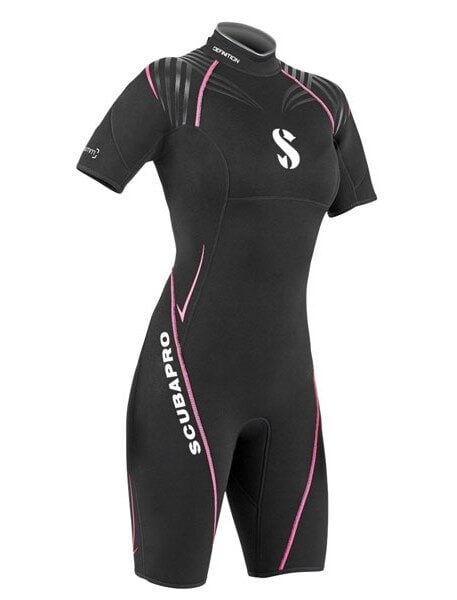
The torso receives modest insulation while shoulders and limbs remain agile. Ideal for night or early‑morning dives and brief day-time surface intervals. At this price it hits the sweet spot between protection and pack size for warm‑water travel.
Pros:
Light thermal layer
Durable seams
Easy don and off
Cons:
No sun or stinger coverage on arms/legs
Slightly heavier holiday pack
Aqualung Freeflex Freedive Wetsuit 2mm – £325 / $375
Aqualung’s Freeflex Freedive Wetsuit is specially designed for apnoea and tropical diving in warm seas. But there’s plenty of crossover in this area. The suit is crafted from ultra‑stretch, petroleum‑free 2mm Yamamotoneoprene, it offers exceptional flexibility and form‑fitting freedom while allowing maximum mobility underwater. The lower half features Glideskin finishing, designed to reduce drag and improve hydrodynamics.
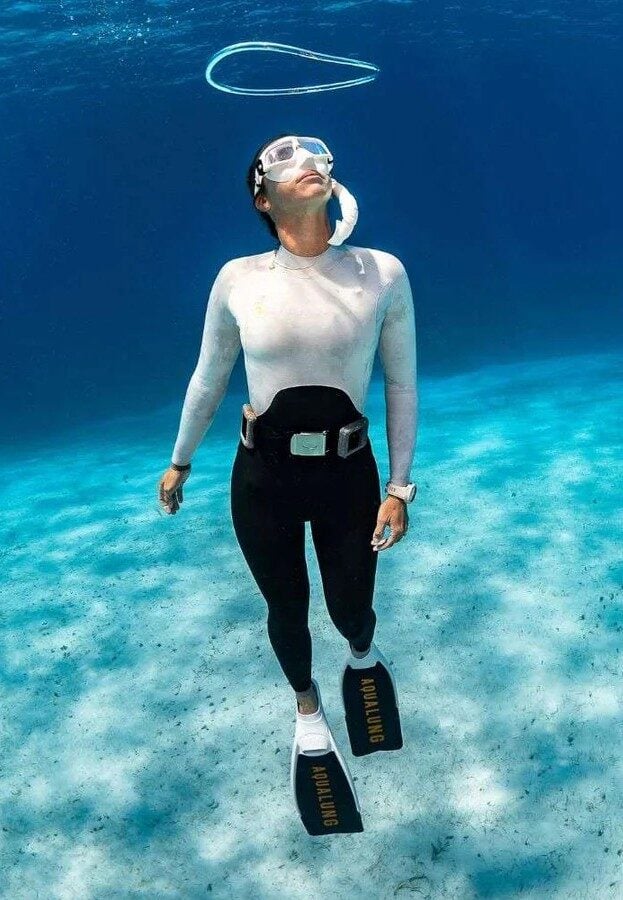
Its minimalist yet stylish aesthetic, combined with smooth seams and graphics, ensures comfort and elegance on the surface and below. While it’s not built for insulation-heavy diving, or carrying a BCD around, the 2mm neoprene does supply a light thermal layer plus decent abrasion protection over coral or rocky reef environments. This wetsuit serves as a high‑performance option for snorkelers and free divers who want modest warmth and sleek coverage with minimal bulk.
Pros:
Ultra‑stretch Yamamoto neoprene enhances freedom of movement
Glideskin lower panels improve hydrodynamics
Stylish, minimalist construction; good abrasion & UV shield
Cons:
Only light thermal protection, you might feel the cold if you’re sensitive
May show wear faster than expected from BCD straps
Premium price for lighter insulation
DynamicNord SH‑11 Warm‑Water Skin Suit – £100 / $130
DynamicNord’s SH‑11 is their warm‑water “skin suit” built from ultra‑thin 1 mm limestone neoprene, specifically aimed at tropical divers. With full‑length arms and legs, it delivers light abrasion and solid sun shielding with far better form‑fitting than Lycra, while minimizing bulk and buoyancy. Full suit design but minimal insulation makes it ideal for long surface intervals or sites with coral scrapes and stinging critters.

Flatlock seams and recycled neoprene make it travel‑friendly, and zippers at wrists/ankles ease donning. Available in both men’s and women’s cuts with the same price point.
Pros:
Full-body coverage
Lightweight neoprene offers warmth in tropical waters
Easy on packing size and weight
Cons:
Minimal insulation if temperatures slide under 26°C
Arms/legs may feel overly cool
Some restriction compared to rash suits or guards
SEAC Carezza 2mm Full‑Suit – £60 / $90
Designed for warm‑water diving, snorkelling, and paddle activities, the SEAC Carezza 2mm wetsuit is a lightweight, one‑piece suit crafted from double‑lined soft neoprene. Its 2mm thickness offers minimal thermal insulation while delivering excellent abrasion protection, ideal for warm tropical water where coral scrapes and mild chill at dawn may be a concern
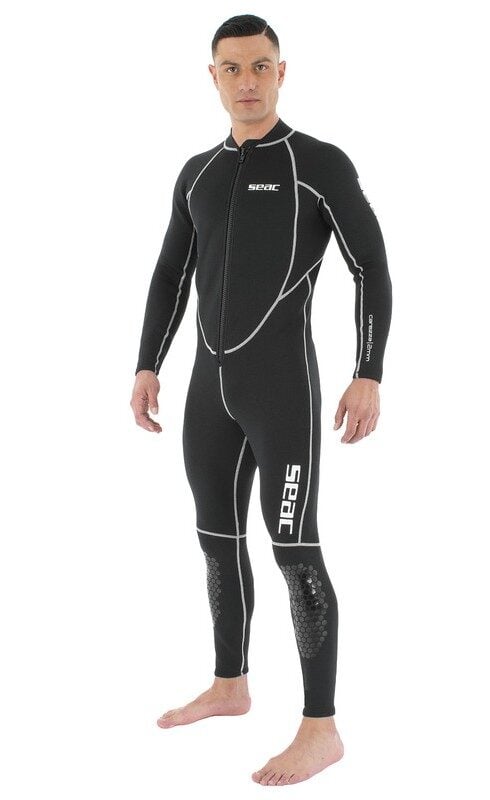
An easy front‑zip entry and flat‑lock stitching ensure comfort and freedom of movement, with a soft collar to prevent chafing. PU knee pads add durability without sacrificing mobility. This model is available in both men’s and women’s cuts, and in budget‑friendly pricing brackets across Europe and the US.
Perfect for divers seeking lightweight reef‑safe coverage without bulk, it balances modest thermal buffer with packability. While not intended for insulation-heavy use, it’s an excellent everyday choice in warm-water zones.
Pros:
Comfortable and breathable double‑lined 2 mm neoprene
Great price point
PU‑reinforced knee pads protect against reef abrasion when training
Cons:
Minimal thermal insulation if you feel the cold easily
Front‑zip water seals tend to not be as watertight as back‑zips
Mares Trilastic Steamer Rash Guard – £120 / $140
The Mares Trilastic Steamer is a one-piece, full‑length nylon and spandex “stinger suit” offering UPF 50+ sun protection and protection from jellyfish or light coral abrasion, ideal for very warm tropical water. It comes in both men’s and women’s cuts, and easily doubles as a lightweight layer under dive gear or rental suits.

Made from ultra-stretch Trilastic fabric (smooth outside, soft inside), the suit snaps into place using elastic thumb and foot stirrups to prevent ride-up. Flatlock seams minimize chafing and ensure comfort during surface intervals or snorkelling. Despite no neoprene, it’s breathable, quick-drying, highly packable, and offers excellent skin coverage without overheating. Its UPF 50+ rating and smooth form-fitting construction make it superb for sun- and singe-free tropical fun.
Pros:
Full-body UPF 50+ protection, minimal overheating
Lightweight, fast-drying, ultra-packable for travel
Flatlock seams and stirrups keep it comfortable and in place
Cons:
No thermal insulation, only minimal sun/chafe protection
Arms, neck and ankles snug can feel restrictive over long periods
Fourth Element 3mm Xenos Shortie – £165 / $225
The Fourth Element Xenos Shortie is a 3mm neoprene wetsuit tailored for warm-water diving and liveaboard travel. Its ultra-stretch construction and ergonomic design, including cut-away ankles and smooth lined arms/legs, make it one of the easiest wetsuits to pull on and off, a definite advantage on a dive heavy holiday! The suit features glued-and-blind-stitched seams, Thermoflex lining on the torso, Thermocore chest insulation, internal ankle seals, wrist “Hydrolock” seals, and a smooth zip-flap to minimize flushing.
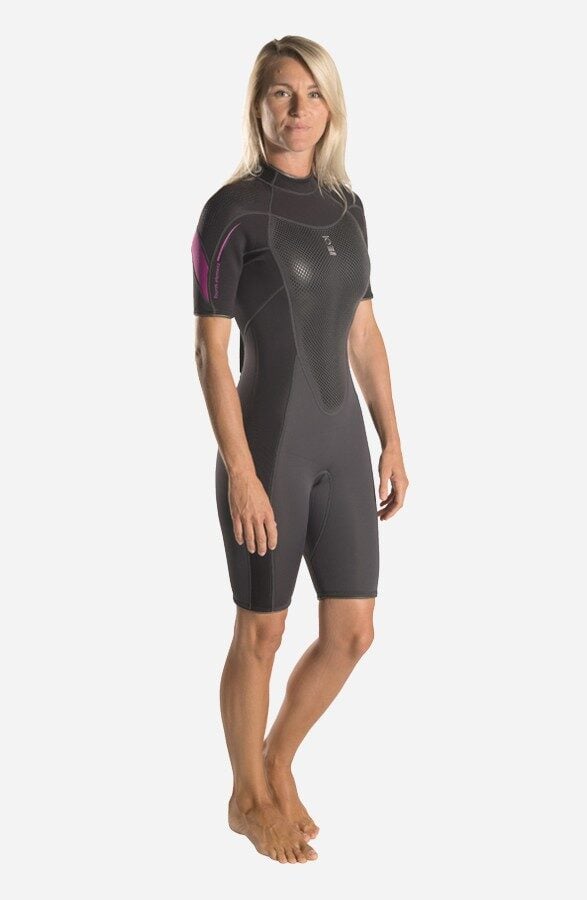
Perfect for tropical conditions, the Xenos balances packability, flexibility, and modest thermal buffering, far more than a rash suit but lighter than a full neoprene suit. The Hydrolock seals and snug fit also offer mild protection from sun, abrasion, or reef contact. Though it’s not built for sustained chilly dives, it excels in tropical water conditions for multi-dive days, with rapid drying between sessions.
Pros:
Super easy to put on and take off, great for liveaboard setups
Waterproof seams and seals minimize flushing and increase comfort
Light thermal core plus abrasion/sun protection in a shorty form
Cons:
No arm coverage so sun and jelly exposure for upper limbs remain possible
Slightly premium price relative to basic 3 mm shorties
Sharkskin Chillproof Rear Zip Full Suit – £280 / $340
With both male and female cuts, the Sharkskin Chillproof Rear Zip Full Suit is a full-body exposure suit that replaces or supplements neoprene in warm-water diving. Made from a proprietary 3‑layer composite “Chillproof” fabric, it offers thermal comfort equivalent to a 2.5 – 3mm neoprene suit, with excellent wind-proofing, moisture-wicking fleece lining, UV resistance (UPF 50+), and abrasion protection. All without the buoyancy or bulk of neoprene.
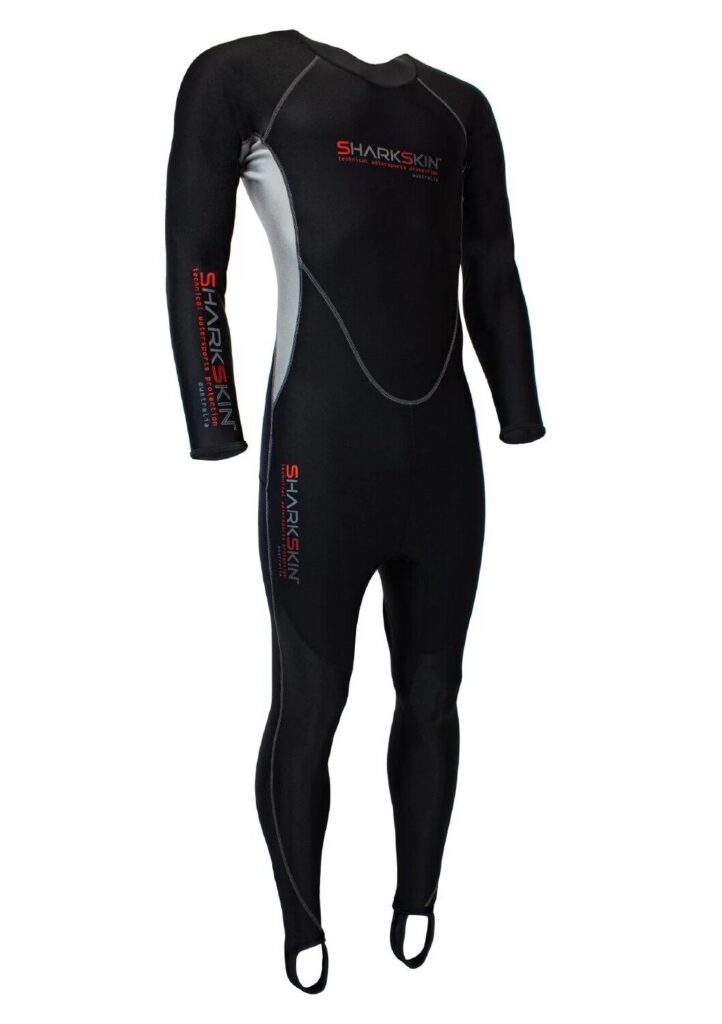
Lightweight and neutrally buoyant, it requires less weight for diving or snorkelling. The rear‑zip entry, ergonomic 4‑way stretch, thumb and ankle stirrups, and anti‑chafe seams make it comfortable and easy to layer or wear solo. Designed for warm-tropical sites, it excels during boat dives or windy surface intervals where standard shorties or rash suits can leave you chilled.
Pros:
Windproof, and quick-dry
Full-body sun, abrasion, and sting protection in a single layer
Neutrally buoyant, lightweight and travel-friendly
Cons:
Fit must be snug; even a slightly loose fit drastically reduces thermal efficiency
Rear-zip seal may be less watertight than neoprene alternatives
Mares Flexa Core Shorty – £225 / $295
The Mares Flexa Core is a premium ultra stretch shorty wetsuit with an integrated hood, crafted for adaptability in warm-water diving conditions. Built primarily from 3 mm Ultrastretch neoprene, with 4 mm panels across the torso and back where thermal retention matters most, it offers a little more insulation for those who feel the cold even in tropical environments. The hood zips seamlessly beneath Mares’ Flexa Steamer or serves solo for mild thermal buffering and sun protection
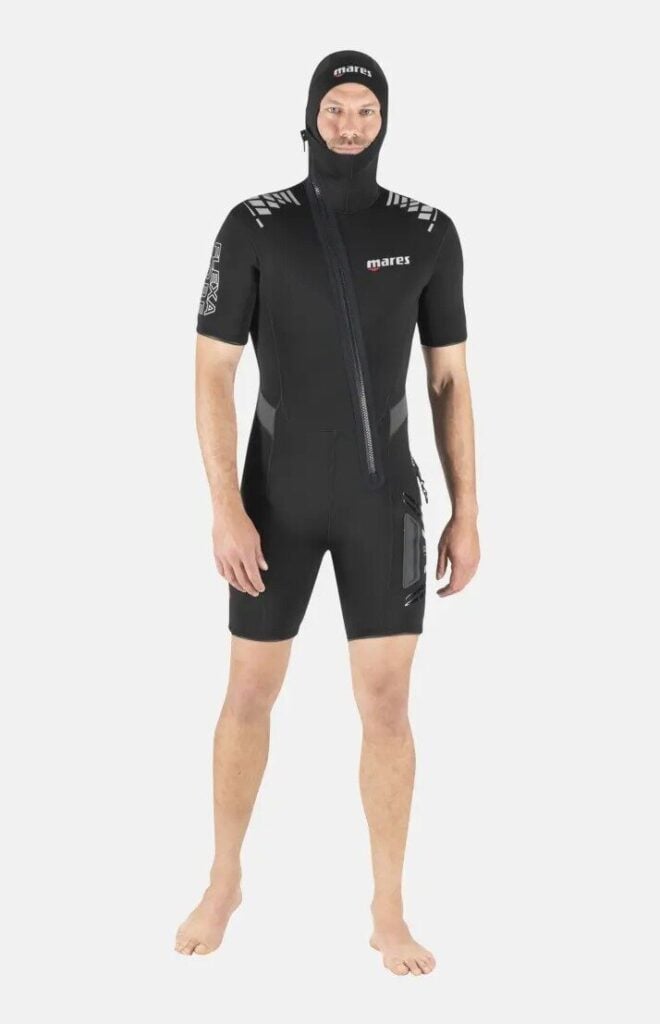
Glideskin seals at the wrists and thighs minimize flushing, ensuring better thermal retention during surface intervals. The Smart Pocket attachment on the thigh allows optional storage, and shoulder grip zones reinforce comfort under BCD straps. The Flexa Core is available in both men’s and women’s cuts.
Pros:
Strategic 3/4 mm neoprene for extra warmth
Integrated hood and Glideskin seals for minimal surface flushing
Optional thigh pocket attachment
Cons:
Arms and lower legs are open to sun and stings
Could be a little warm for some in the tropics
Waterproof NeoSkin 1mm Skin Suit – £150 / $190
The Waterproof NeoSkin is a 1 mm ultra-stretch neoprene skin suit offering full-body wind and splash protection in tropical conditions. Thicker than Lycra yet softer than traditional neoprene, this suit delivers a middle ground for tropical divers seeking minimal insulation, sun and abrasion shielding, and remarkable packability. Its super-stretch construction, anatomically tailored for both men and women, flatlock seams, YKK Vislon back-zip and thumb/ankle loops make it easy to don and doff.

Although not built for significant thermal insulation, the NeoSkin adds a gentle warmth that surpasses Lycra, all without buoyancy, and keeps your core protected during long surface stops or boat transfers. Ideal for reef environments, it provides essential skin coverage while sailing or snorkeling, and layers comfortably under thicker suits if needed. Waterproof’s plastic‑free packaging and fit range from 3XS to 3XL reinforce its eco-conscious, travel-friendly design.
Pros:
Lightweight and ultra-flexible
Easy to get on and off
Solid skin and sun protection
Cons:
Minimal thermal insulation
Flatlock seams not watertight; some flushing may occur during surface intervals
Aqualung Hydroflex 3 mm Shorty – £149 / $165
Aqualung’s Hydroflex 3mm shorty adds more insulation to torso and upper legs while keeping arms and lower legs free. Glued and blind‑stitched seams and wear panels make it durable, comfortable and diver‑friendly.
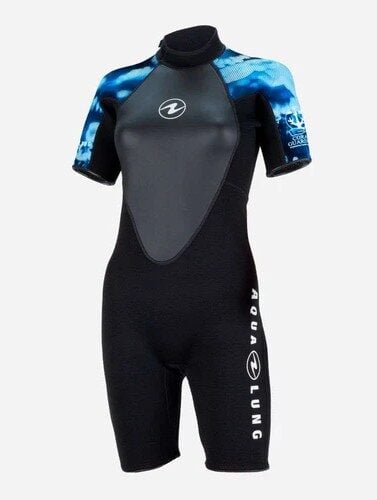
Ideal for tropical sites with early‑morning chill or where thermoclines might appear without warning, it protects against reef scrapes without overheating. Slightly heavier than rash and lycra options but still travel‑friendly.
Pros:
Modest thermal buffer
Durable build for under harness
Good reef protection
Cons:
Arms and legs bare
Bulkier than skinsuits
The Best Holiday Dive Wear
Best Overall Tropical Wetsuit 2025:
DynamicNord SH‑11 Warm‑Water Skin Suit
Soft, featherlight, and ultra-packable, this stinger suit takes up barely any room in your bag while offering just enough insulation to get you through a passing thermocline. Ideal for divers hopping between boats, beaches, and destinations without wanting to spend large.
Best for Minimal Protection:
Fourth Element Hydro Stinger Suit
Perfect for divers who run hot or snorkelers needing just UV and sting protection. Lightweight, fast-drying, and sleek enough to double as a base layer under thicker suits.
Best for Those Who Chill Easily:
Aqualung FREEFLEX Freedive Wetsuit 2mm
Designed for serious free divers but excellent for scuba too, this suit offers surprisingly robust thermal retention for its thickness, thanks to its snug fit and ultra-stretch neoprene.
Best for Travel:
Fourth Element 3mm Xenos Shortie
A brilliant all-rounder: warm enough for most tropical dives, ultra-comfortable, easy to get in and out of, and built to last. Liveaboard-friendly, dive-centre-approved, and stylish without being showy.
Best on a Budget:
Seac Carezza 2mm Full-Suit
At this price, it’s almost rude not to. Surprisingly flexible for a full suit, it gives good all-round skin and sun protection with mild thermal buffering. No frills but no nonsense.
Final Word
Choosing the right tropical wetsuit or rash guard is about matching function with conditions, as well as personal taste. In water at or above 26°C, insulation needs are normally relatively low, but skin protection from sun, abrasion, and marine stingers is high. A rash or stinger suit is ideal when dive sites expose you to jellyfish or lengthy surface waits or shore swims; short wetsuits give extra protection for those who might need it. Often, a combination is the real winner, with light but sun protective for the day and neoprene for later in the day. And a combo if it gets unexpectedly chilly. That makes your packing size all the more important!
Things to consider when buying are seam types (flatlock vs glued), UPF ratings, and material stretch for comfort under dive harnesses. With careful choice and care, you’ll stay protected, and stylish, on your 2025 dive holiday and beyond.
Frequently Asked Questions
Q1: What thickness wetsuit is best for tropical diving?
We’ll keep coming back to personal taste and comfort. A full rash guard or 1-2mm shorty is generally sufficient for most, but a 3mm may be useful at dawn, on night dives, or if you chill easily. If you don’t tend to feel the chill then a rash or stinger suit offers sun and abrasion protection with no thermal bulk.
Q2: Are UPF‑rated rash guards necessary when you’re underwater most of the time?
Yes is the short version, because you are rarely underwater for the whole of a dive cycle. Or indeed a dive day. Surface intervals, rib transfers, beach swims, and waiting for pick ups on the surface all put you in the way of UV rays. These can also be stronger at sea as they are reflected from water and so UPF 50+ or higher is strongly recommended.
Q3: How do I care for tropical dive skins and suits?
In the same way you look after all wetsuits. Rinse thoroughly in fresh water after each dive, air dry out of direct sun, store flat or lightly folded. For rashies, avoid bleach or tumble drying to preserve material integrity.