The nine category winners of the second annual underwater imaging competition focused on Australasia have been revealed on stage at the Go Diving Show ANZ in Sydney.
The Underwater Awards Australasia 2025 competition called for underwater photographers from around the world to submit what they considered their most captivating and compelling images and videos from the region. Plenty of international practitioners showed up among the runners-up and highly commended entries, though most of the category winners were Australians.
The judging panel comprised photographers Tobias Friedrich, Tanya Houppermans, Jayne Jenkins, Scott Portelli, Matty Smith and William Tan, with Philip Hamilton and Ross Long to assess the Reels Showcase video category.
Contest organisers DivePhotoGuide (DPG), Underwater Australasia and UW Images had lined up prizes of dive-trips and photo and video equipment donated by sponsors and valued at around A$70,000 (£34,000).
“Best of Show” with his open-mouthed leopard seal shot Wide Open was US photographer James Ferrara, who took top spot in the International Waters category.
“Known for their mix of curiosity and aggression, they’re a dream subject for any underwater photographer,” says Ferrara of the seals.
“While these powerful predators often rest on ice floes to conserve energy after a big meal, I was fortunate enough to spend time in the water with this one. At first, it was standoffish, keeping its distance but, as the encounter progressed, it became increasingly curious.
“By the end, it was opening its mouth and flashing its teeth – a clear display of dominance, a reminder of who’s in charge! Though I felt a jolt of nerves, the thrill of experiencing my dream scenario kept me focused, present and absolutely in awe.”
The other category winners were:
SHARKS winner: Vadim Belakhov (Australia) Sunbather In The Shallows

The Port Jackson shark (Heterodontus portusjacksoni) is an Australian endemic species with a blunt head and harness-like markings, commonly seen resting motionless during the day, often wedged between rocks or lying on algae-covered seabeds.
This one was captured calmly resting in a shallow patch of vibrant green macroalgae, fully exposed to the mid-day sun filtering through clear water in Port Phillip Bay, Melbourne, Victoria.
“The scene felt unusually serene and visually striking,” says Belakhov. “I approached slowly and took the shot. Ambient light defined the tones, while my strobe filled in subtle detail without disturbing the natural mood.
“These sharks pose no threat to humans and often allow a slow, careful approach, making them ideal subjects for close-focus wide-angle photography. This individual remained perfectly still, seemingly unfazed by my presence.”
Port Jackson sharks are nocturnal feeders, using strong jaws and molar-like teeth to crush sea urchins, molluscs and crustaceans. In winter, they return to the same coastal sites to breed, and divers frequently encounter their distinctive spiral egg cases lodged in rocky crevices. “This image reflects the quiet beauty of southern Australia’s overlooked urban-adjacent marine life,” says the photographer.
CONSERVATION winner: Neil Vincent (Australia) Crocodile And Plastic Bottle
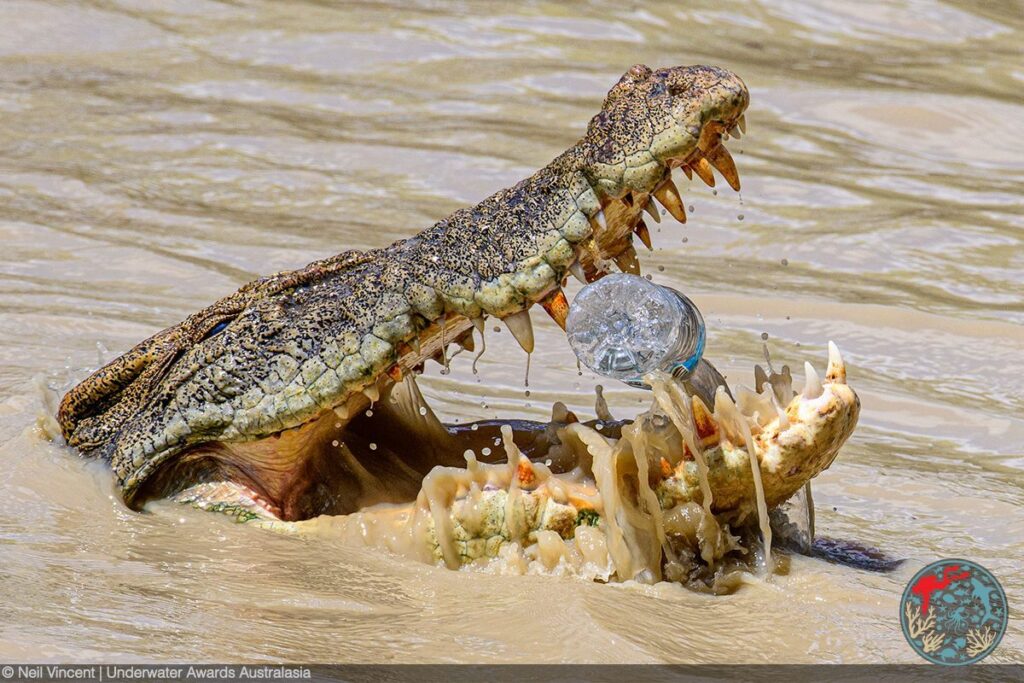
While watching the crocodiles catch diamond-backed mullet in Kakadu National Park at Cahill Crossing, Arnhem Land, Northern Territory, Vincent saw a tourist on the bank throw a water-bottle into the water near a crocodile. “Reflexively, it snapped at the bottle, crushed it a couple of times, and then swallowed it.
“In the heat of the hunt, crocodiles don’t understand plastic water bottles. I still don’t understand why people use plastic water bottles – and I certainly don’t understand the stupidity of people!”
SYDNEY winner: Talia Greis (Australia) The Conductor
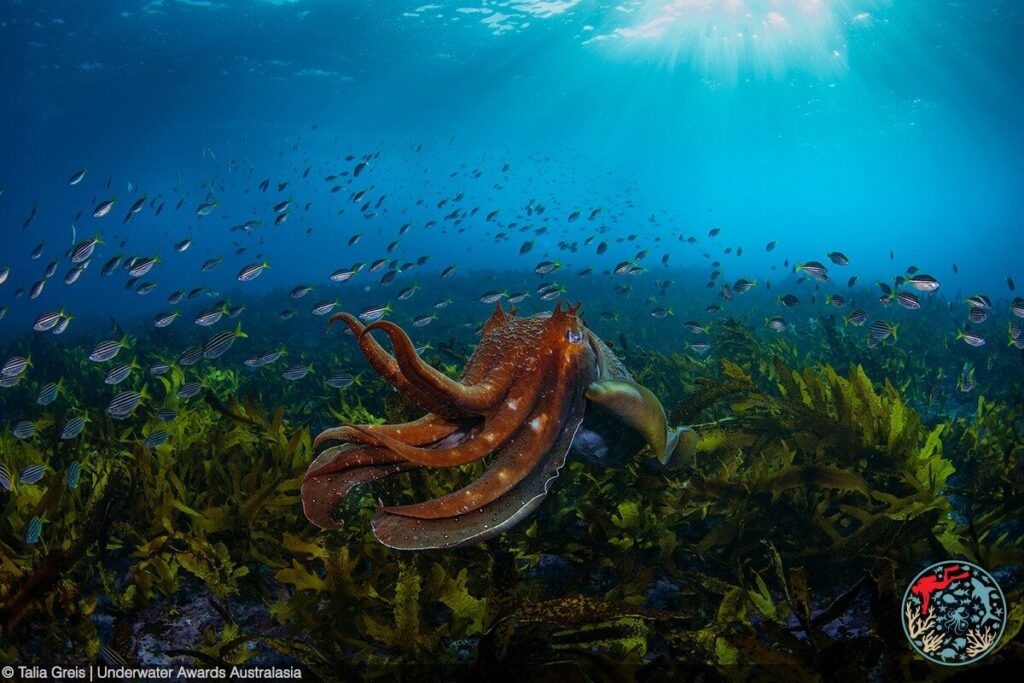
A giant cuttlefish drifts gracefully through the shallows of Shark Point, a stunning yet demanding shore-dive nestled in Clovelly. “These magnificent creatures make their seasonal debut in Sydney’s waters at the peak of winter, offering divers a rare chance to encounter them in crystal-clear visibility amid a thriving marine ecosystem,” says Greis. “With moments like these, who needs to travel all the way to Whyalla?”
AUSTRALIAN winner: Marcia Riederer (Australia) Minke Elegance

“The sea is calm, I cling to the mermaid line trailing behind the boat. Then, from the blue, a shadow begins to form,” says Riederer. “ It grows larger, clearer – sleek grey skin, a white blaze on the side – and suddenly I’m staring into the eye of a dwarf minke whale.
“It doesn’t rush. Instead, it glides in a slow, deliberate arc, as if weighing me up. I stay still. The whale draws closer, its presence filling the water around me. For a moment, I wonder, am I observing it, or is it studying me?
“Scientists still don’t know why minkes approach humans, but it feels like we are both simply curious about each other. It’s a rare and humbling privilege to share space with such a remarkable creature, a reminder that the ocean is full of wonders and we should take better care of it.” The encounter occurred at Ribbon Reefs on the Great Barrier Reef, Queensland.
PORTFOLIO winner: Jake Wilton (Australia) Ningaloo: A Living Tapestry
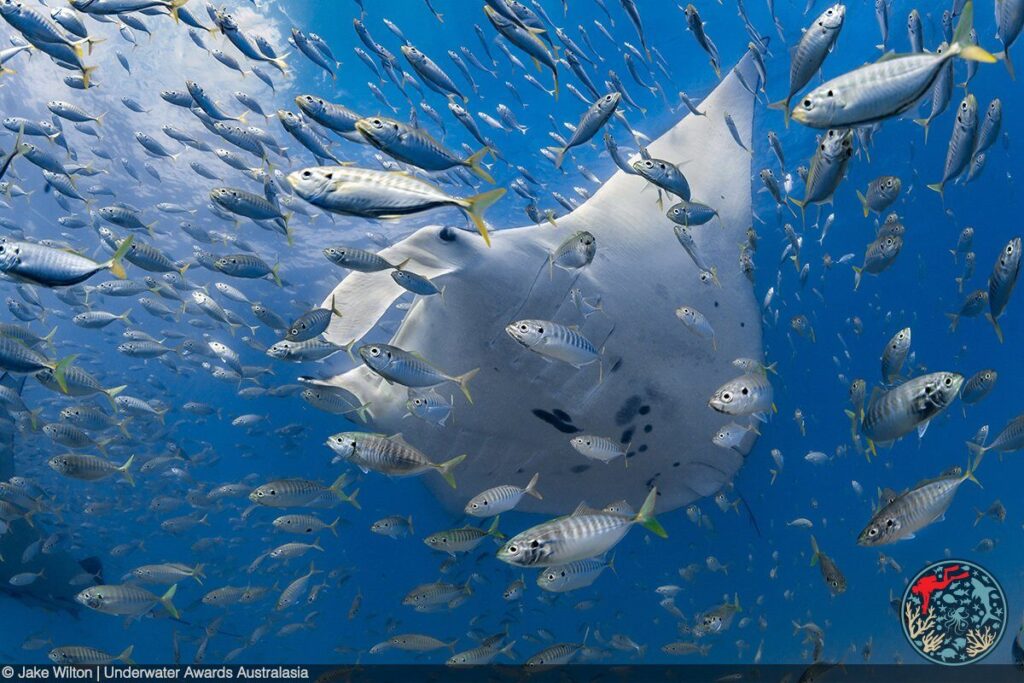

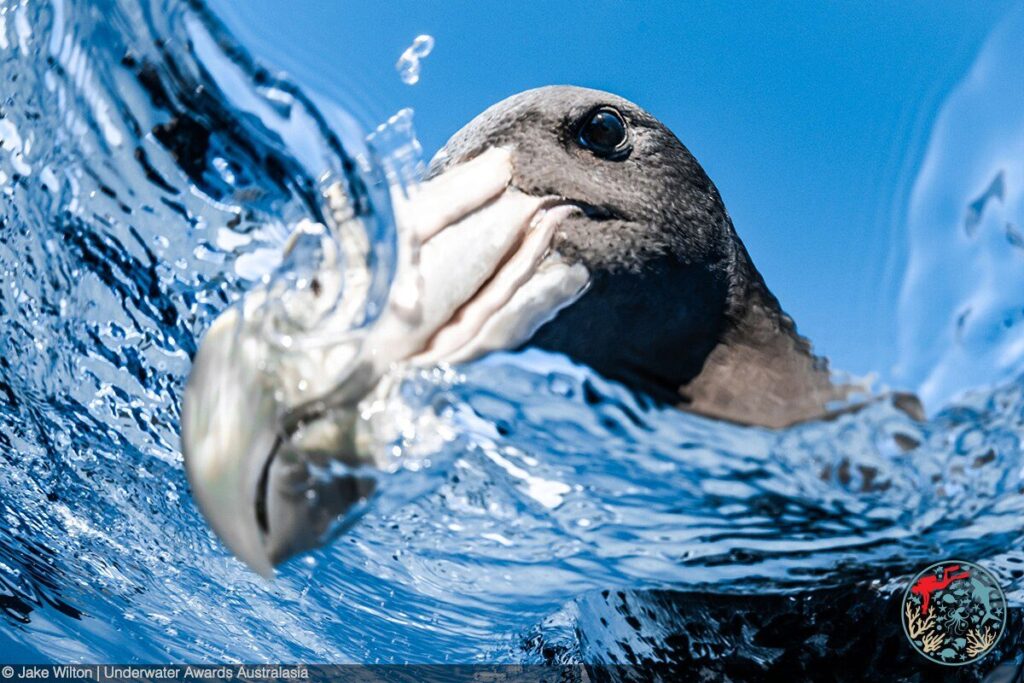
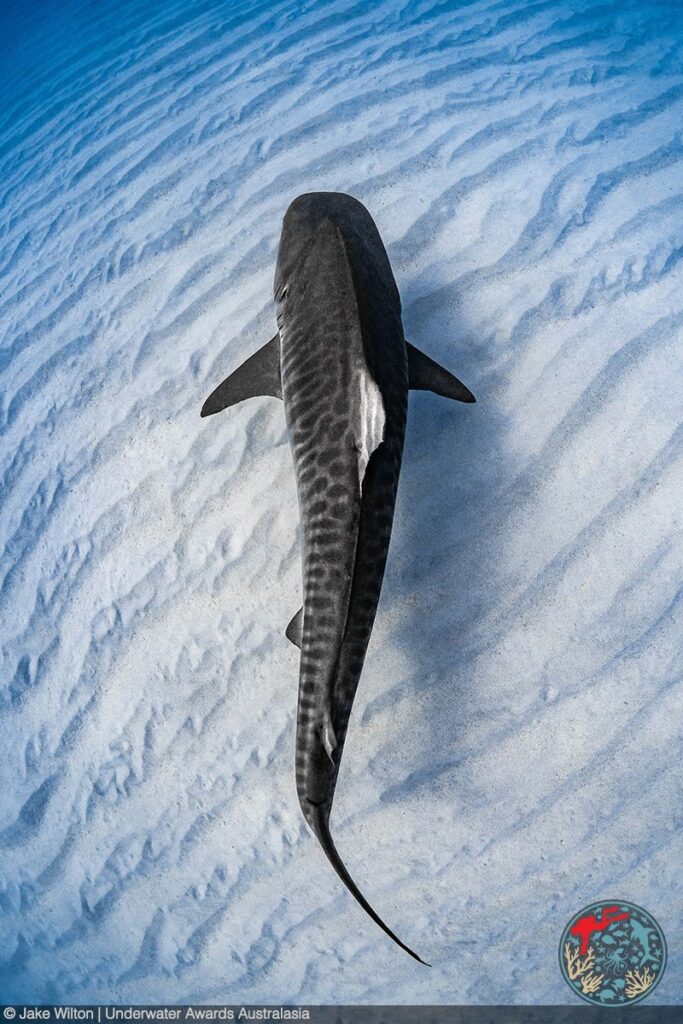
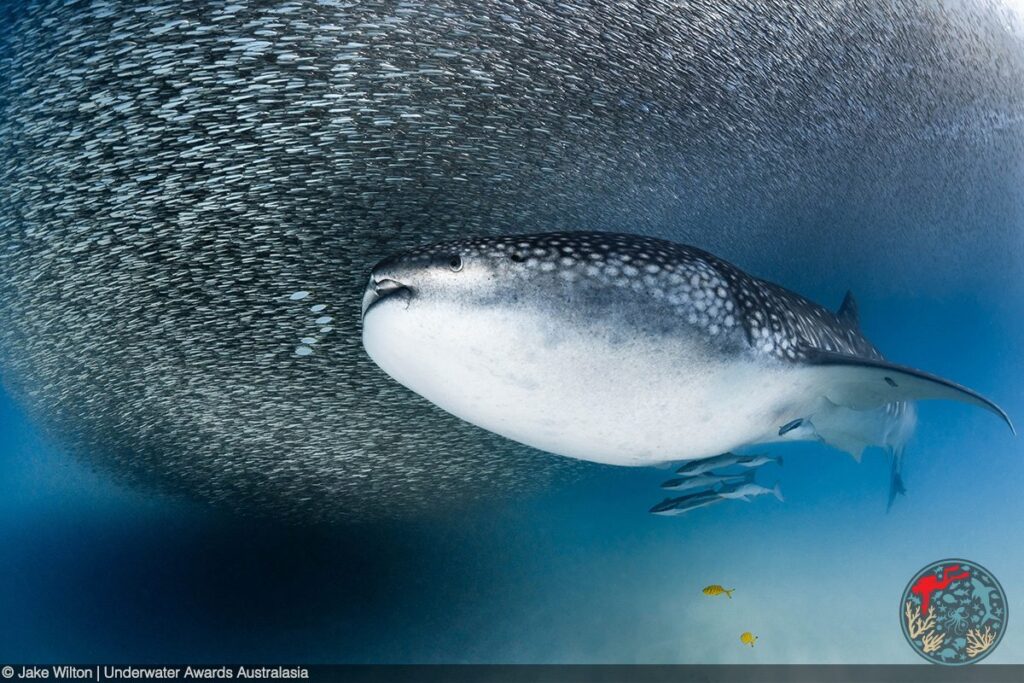
This portfolio showcases a series of extraordinary moments from Ningaloo Reef, Australia’s largest fringing reef and one of the world’s richest marine ecosystems, says Wilton.
“A freediver drifts among the haunting remains of a whale skeleton resting on the seafloor, while above, a manta ray glides through a living veil of schooling fish in the shallow lagoon. In Coral Bay, spangled emperors school tightly above the coral gardens, captured in a striking above-and-below perspective.
“A southern giant petrel – a rare visitor from the Antarctic – swoops in to inspect the camera, adding an unexpected encounter far from its usual range. On the sand flats, a tiger shark patrols with quiet precision, hunting for unsuspecting prey, while in deeper waters, a whale shark moves through a dense baitball, reliant on faster predators like tuna and sharks to break it apart. Together, these six images reveal the diversity, vitality, and raw drama of Ningaloo.”

SMARTPHONE / ACTION-CAM winner: Luciano Morales Corinaldesi (Argentina) Green Turtle Stack
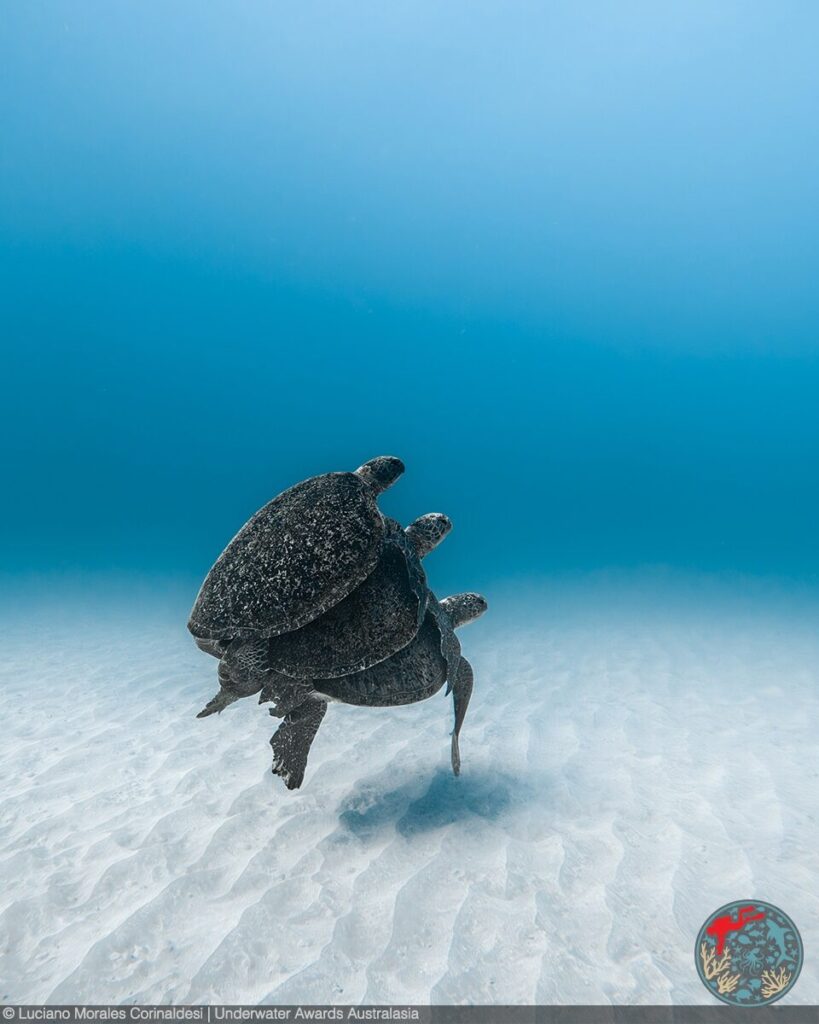
“Ningaloo Reef is a place of infinite possibilities, where anything and everything might appear,” says Corinaldesi. “Still, nothing prepared me for what unfolded in Lighthouse Bay, where I’d just visited a manta cleaning station.
“On my way back across 500m of sand-flats, I was stunned by the sight of three turtles stacked atop one another – a truly unforgettable moment. Since mating can be taxing for females, I paid close attention to any signs of disturbance and kept enough distance so as not to cause distress.
“How this story ended, I cannot say, but I’d like to think that, next season, green turtle hatchlings might carry the sequel forward.”
TOUGH TG winner: Imogen Manins (Australia) Mosely’s Glistening Brood
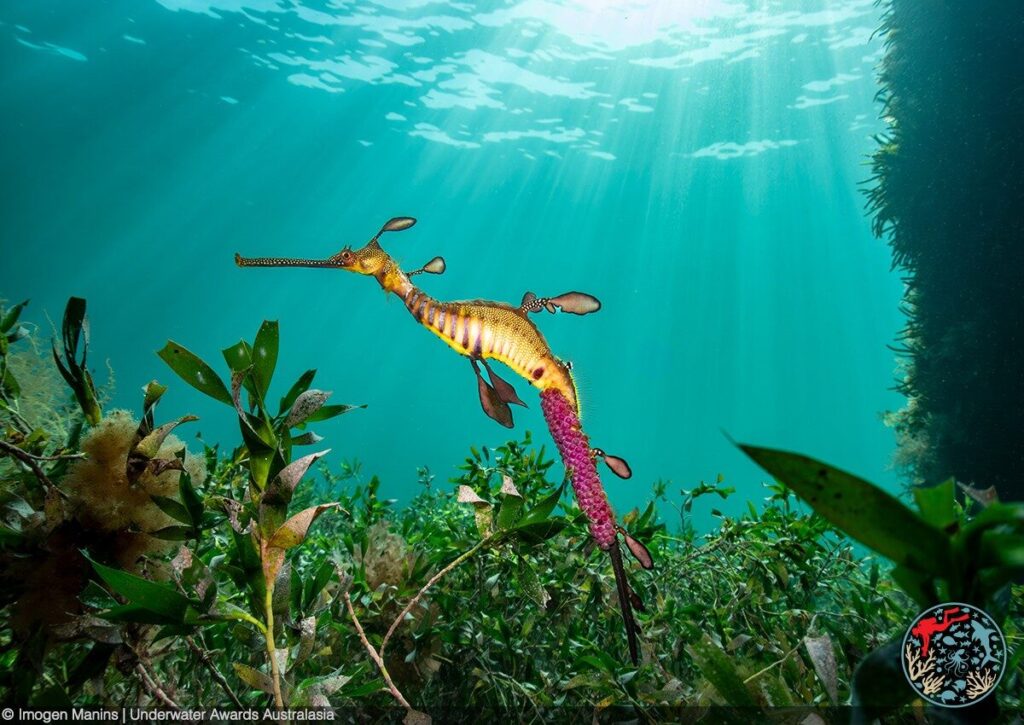
This category is for any image captured with an OM System or Olympus Tough compact. Known as ‘Mosely’ in the SeadragonSearch database, this weedy seadragon has returned to Flinders Pier in Western Port Bay, Victoria, each year since 2018 to court, mate and carry a precious brood of eggs, says Manins.
“On an early morning dive, I was delighted to encounter this very relaxed and photogenic seadragon once more, his freshly placed brood glistening as sunlight streamed through the water.
“In this image, I wanted to capture not only Mosely but also the thick meadow of sea nymph (Amphibolis antarctica), which forms such an important part of the habitat at Flinders.”
REELS SHOWCASE video winner: Laura Gourgas (Australia/France) The Coral Chain Reaction
“The Ningaloo Reef has given me countless unforgettable moments, but few compare to witnessing the annual coral spawning,” says Gourgas, another category winner whose entry was produced in this part of Western Australia.
“That single event sparks an entire web of life. Plankton blooms, krill gather, and soon the giants arrive – whale sharks and oceanic mantas, drawn here to feast. From turtles to reef sharks, and countless other species, every part of this ecosystem depends on the coral as its foundation.
“This reel is a collection of moments I’ve captured over the years, choosing those rare times when the spawning, the feeding and the life of the reef all aligned. Despite recent bleaching events, it’s a powerful reminder of the Ningaloo’s resilience – and why protecting it is so vital.” Gourgas used a Canon EOS R5 camera in an Isotta housing and a DJI Mavic 3 Pro drone.
Exhibited metal prints of the winning and runner-up entries were available for purchase at the show, with half of the proceeds donated to the competition’s environmental partners Australian Marine Conservation Society and Take 3 For The Sea.
Winners of last year’s event were also featured on Divernet. All the winners, runners-up and highly commended entries from the 2025 competition can be viewed at UnderwaterCompetition.com.
World Shootout
This year’s World Shootout, the Israel-based underwater photography contest, is themed “The Five Images of Two Decades”. The judging panel will select a top 100 list and 20 leading photos both from among 2025 digital entries and from submissions received over all 20 years of the competition.
New entries must be submitted by 15 October, with a public vote for the 20 leading photos as shown on the competition website leading to five winners being announced at the boot Düsseldorf exhibition in Germany. Entry fees are from 15 euros (£13) per image (amateurs).