Nicolas Remy describes the pros and cons of switching from a trusty DSLR to a more-compact mirrorless system for underwater photography
Photographs by Nicolas Remy
Over the last few years, camera manufacturers have progressively stopped investing in DSLRs and focused their innovation efforts on mirrorless technology.
This saw waves of top-side image-makers (professional and enthusiasts alike) adopting new cameras and lenses, as they found advantages for their photography and little-to-no downsides.
However, the underwater world offers extra challenges for cameras (think lower light, lower contrast and reduced colour palette) and high-end DSLRs have been known for keeping an edge over newer mirrorless cameras, when shooting in those specific conditions.
As a result, many underwater photographers – myself included – have stayed on the fence, waiting for the day mirrorless technology would truly outperform DSLRs for underwater use. I am writing this piece, because I think that day has finally come.
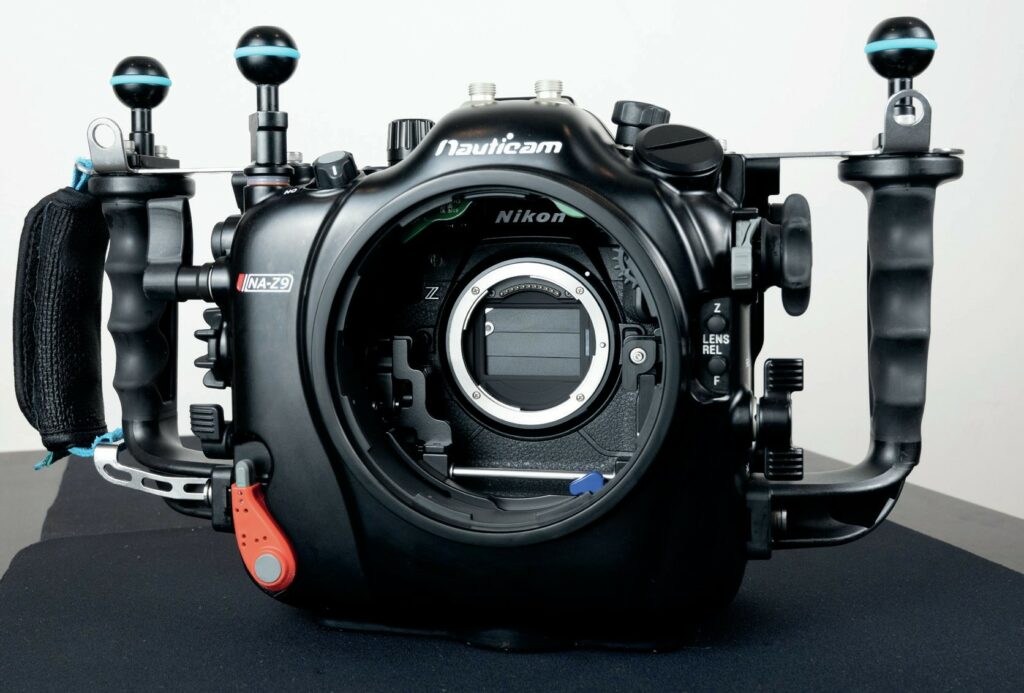
I am drawing these conclusions based on a five-week testing period, where I took Nikon’s flagship mirrorless camera – the Nikon Z9 – and the Nauticam NA-Z9 housing for over 20 hours of Sydney diving.
Sydney’s temperate waters offered the perfect testing grounds, featuring the low-light and low-visibility conditions where mirrorless cameras have traditionally fallen behind the best DSLRs.
I did some clear-water diving too (South West Rocks, Montague island), and my conclusions account for all these conditions too.
Let’s now delve into the three areas which are traditional DSLR’s strong-holds for underwater photography – autofocus performance, viewfinder experience and battery life.
Autofocus performance
The Z9’s autofocus offers clear improvements over the Nikon D500 and D850, which are arguably the most-popular DSLRs, with serious hobbyists and professional underwater photographers.
Firstly, the autofocus sensors cover 90% of the frame, compared to only 50% on the D500, and 21% on the D850. This alone makes it easier to track subject which are moving around the frame.
Secondly, all of the 493 focus detection points are sensitive to -7 EV, compared to -4 EV, for the D500/ D850’s best detection points. In layman terms, this means the Z9 can focus in conditions eight to 16 times dimmer than the DSLRs.
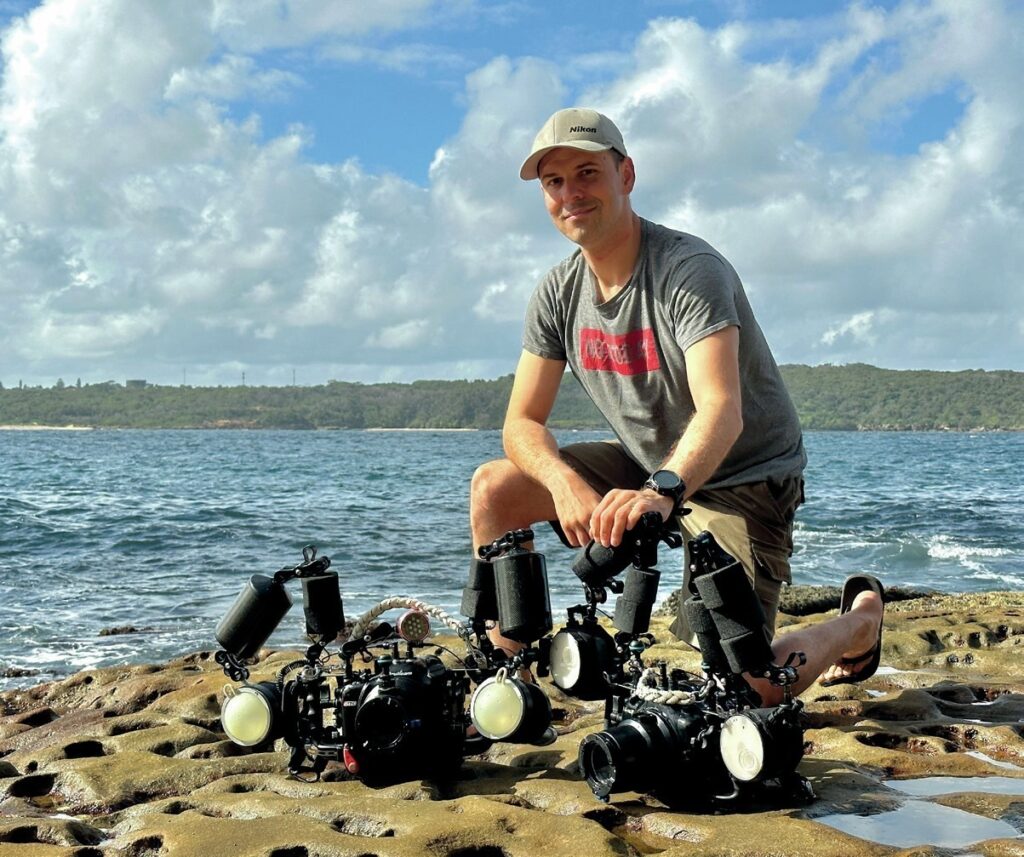
During my testing, I could confirm the lowlight performance was excellent: I was able to reliably focus and track macro subjects in four-metre visibility, at the end of a cloudy afternoon, without a focus light. I only had to switch-on my focus light when it became so dark that my own eyes struggled to find subjects.
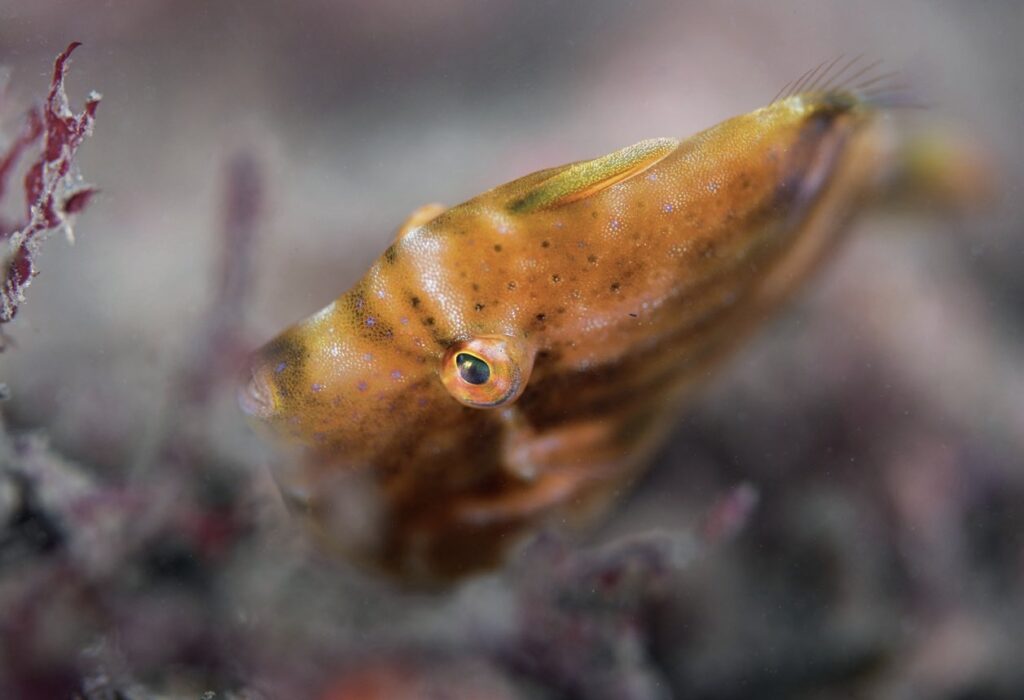
Thirdly, the autofocus tracking for moving subjects is much more ‘sticky’ than it was on DSLRs. Once it locks onto a fish’s eye it doesn’t let go, even if the fish turns-away – up to a 120-degrees angle, the eye is still tracked. Similarly, when a piece of algae temporarily obstructs the subject, again the Nikon Z9 doesn’t let go.
Did you know?
Seahorses are poor swimmers. They rely on their dorsal fin beating at 30-70 times per second to propel them along. Pectoral fins either side of the head help with stability and steering.
Fourth, the Z9 autofocus is very accurate: I was blown away to achieve a 89% success rate when using the Z-mount 105mm macro lens, to track erratic swimming fish (southern pygmy leatherjacket): 16 out of 18 shots were tack sharp on the eye, despite shooting at an open F/4 aperture.
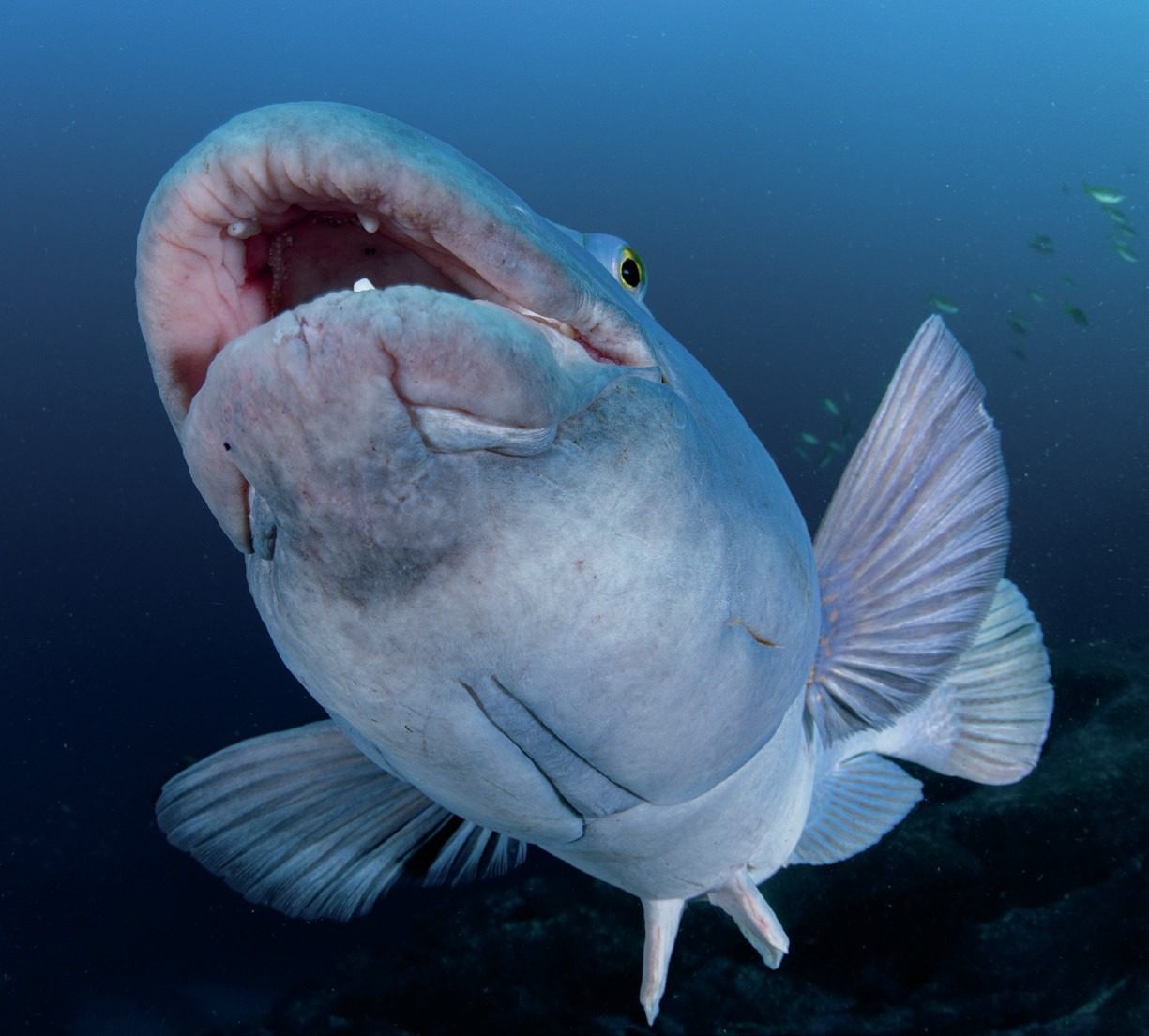
The same goes for wide-angle action: over 1,300 fast-swimming fur seals photos, the Z9 only had five out of focus images, which were due to bubbles stuck on the dome.
For most of the seal photos, I used a pair of powerful Ikelite DS230 strobes, which impressively kept up with short bursts at 20 frames per second, making for a fantastic fast-action/ wide-angle combo, when paired with the Z9.
All-in-one, the 90% frame coverage and the sticker autofocus meant I could work faster: I would overlay my focus point onto the subject and re-compose, being confident that the Z9 would keep track of the initial subject.
Another time saver is the animal detection feature, which would regularly identify fish and seahorses in particular. When it did, this spared me from having to select the subject myself, and it was particularly handy when there was surge, with both myself and the subject being in motion.
The only circumstances where I preferred the autofocus of my DSLRs was during night-dives, when using a red focus light. When everything turns to shades of red, the Z9 becomes noticeably slower to focus.
I am hearing this also impacts other mirrorless cameras, as they tend to rely on the blue and green sensor photosites for focusing purposes.
Viewfinder experience
Electronic viewfinders (EVF) technology has come a long way over years, and I found the Nikon Z9’s EVF a joy to use. Under bright ambient light, it does feel like a ‘real’ optical viewfinder, courtesy of its abundant resolution (3.69 M dots) and its fast refresh rate (120 frames per second), both of which stay constant during use.
As ambient light fades out, the experience becomes noticeably different from that of a DSLR viewfinder, mostly for the better. Indeed, the EVF brightens up dark sceneries and this helped me see better what was going on, when framing fish portraits below rocky ledges.
Also, the Z9’s EVF constantly displays the most-important shooting parameters in two rows, above and below the image, which saved me from pushing the ‘information’ button, when I needed to double-check my settings.
Another fantastic feature is the DX mode switch, which crops the full frame 46 Mpix resolution, producing 19 Mpix APS-C images, useful when working with shy subjects. This mode existed in DSLRs, but the Z9 makes it more usable, by expanding the DX zone to fill the whole EVF.
This way, it much easier to compose DX images than it was on the likes of the Nikon D850. Perhaps the most-desirable change is the ability to review photos in the EVF, as opposed to using the rear LCD screen. This means not having to move when checking your lighting, and less chances to spook a skittish subject or silt-up the scene.
On the negative side, all digital screens have a limit in how much contrast they can display (this is called dynamic range) and EVFs are no exception.
Alas, underwater we sometimes deal with extreme contrasts, typically when we shoot towards the sunball, with subject matter in the shadows. Historically, this has made wide-angle composition tricky on mirrorless cameras.
On this topic, I am quite happy with how the Z9’s EVF was dealing with high contrasts: there was visible detail loss in the brighter parts of the frame at times (sunball, shallow water) but in saying that, passing fish or seals remained visible as silhouettes.
Meaning, I was still comfortable composing my photos. Finally, I noticed the EVF wasn’t as ‘readable’ as a DSLR viewfinder when using a red focus light (night dives): I found it more difficult to locate my subject, and this is the only real negative I noticed with this EVF.
Battery life
Mirrorless cameras have notoriously had shorter battery life than DSLRs, but this is easily solved by carrying a spare battery, when working on land.
Obviously this isn’t an option when the camera is at depth, locked inside a housing! Fortunately, the technology has improved, and I didn’t feel constrained by the battery life of the Nikon Z9: one battery would last for six to seven hours of intense use underwater.
Interestingly, the number of shots taken seemed to have little impact on battery life: I took 1,300 seals photos in 1h40, consuming only 29% of the Z9’s battery.
The video switch
Shooting videos is much easier on a mirrorless camera, and for some of us this will be the number one reason to switch-over.
First of all, there are six years of video-related technological advances between the Nikon D850 and recent mirrorless cameras, so the resolution, frame rate and formats offered are much improved.
As a primarily stills shooter, I feel that I am under-utilizing these video features (I don’t need 8K ProRes footage) but ease of swapping between stills photography and video is something I value a lot.

While my eye is still on the viewfinder and I see a video opportunity, I only have to flick a lever (right thumb, on the Nauticam NA-Z9 housing) and I am ready to film in 4K/60p (my go-to video recording set-up).
Once I am done filming, I flick that switch again, and I am back taking stills photos, without taking my eye away from the subject.

If you’re a photographer wanting to grow a social media following, you know that reels are the way to go, and using a mirrorless camera will make it faster and easier to produce the required footage, in comparison to the juggling needed with a DSLR.
Nicolas and Lena Remy
For more images from Nicolas and Lena Remy visit their Website: www.nicolaslenaremy.com, or follow them on Instagram and Facebook @nicolaslenaremy For their online underwater photography courses, visit www.theunderwaterclub.com
Final thoughts
Although I knew that recent mirrorless cameras would do well for underwater photography in clear, sunny waters, I wasn’t sure what to expect, when taking the Nikon Z9 diving in more challenging temperate waters.
It turns out the Nikon Z9 is the first Nikon mirrorless camera which truly outperforms DSLRs for underwater stills photography, and makes video shooting much easier too. Its ‘sticky’ autofocus, combined with animal detection and a 90% frame coverage take continuous subject tracking to the next level.
The electronic viewfinder simplifies shooting in several ways, and this autofocus/viewfinder combination make it possible to work faster, with a higher keeper rate, when the conditions become challenging underwater.
I am expecting the Nikon Z8 to follow suit, offering a very similar performance in a smaller package, save for battery life, which is expected to be about half of the Z9’s.
FAQ: DSLR vs Mirrorless Underwater
Q: Why are underwater photographers switching from DSLR to mirrorless?
A: Mirrorless systems like the Nikon Z9 offer improved autofocus coverage, better low-light performance, advanced video features, and lighter, more compact builds compared to DSLRs.
Q: How does the Nikon Z9 perform in low-visibility diving conditions?
A: The Z9’s autofocus sensors are sensitive to -7 EV, making it effective in very dim conditions where DSLRs like the D500 or D850 would struggle.
Q: What are the main advantages of the Nikon Z9 for underwater use?
A: Key benefits include sticky autofocus tracking, an advanced electronic viewfinder, animal detection, strong low-light capability, and seamless stills-to-video switching.
Q: Are there any downsides of using a mirrorless system underwater?
A: Mirrorless cameras like the Z9 can struggle with autofocus when using red focus lights during night dives, and battery life, while improved, still requires attention.
Q: Is the Nikon Z9 better than DSLRs for underwater video?
A: Yes. The Z9 makes video capture easier with formats up to 8K and simple stills-to-video switching, making it ideal for photographers who also want to produce high-quality reels.
Q: Should I consider the Nikon Z8 instead?
A: The Nikon Z8 is expected to deliver similar performance in a smaller body, but with shorter battery life compared to the Z9.
This article was originally published in Scuba Diver Magazine
Subscribe today with promo code DIVE1 — enjoy 12 months for just £1!