We continue our chat with Women Divers Hall of Famer Dawn Kernagis, a NASA-trained NEEMO Aquanaut, Fellow of The Explorers Club and Director of Scientific Research at DEEP, about what drives her continued interest in our blue planet, and what the future holds for underwater living
Photographs by Dawn Kernagis / DEEP / NASA
Q: You are also an experienced cave diver, and were involved with a world-record-breaking underwater cave exploration team for many years. Tell us more about that time in Wakulla Springs and the surrounding cave systems.
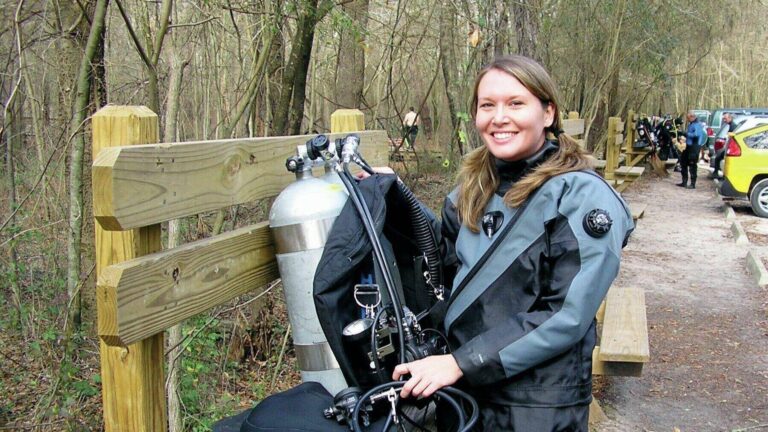
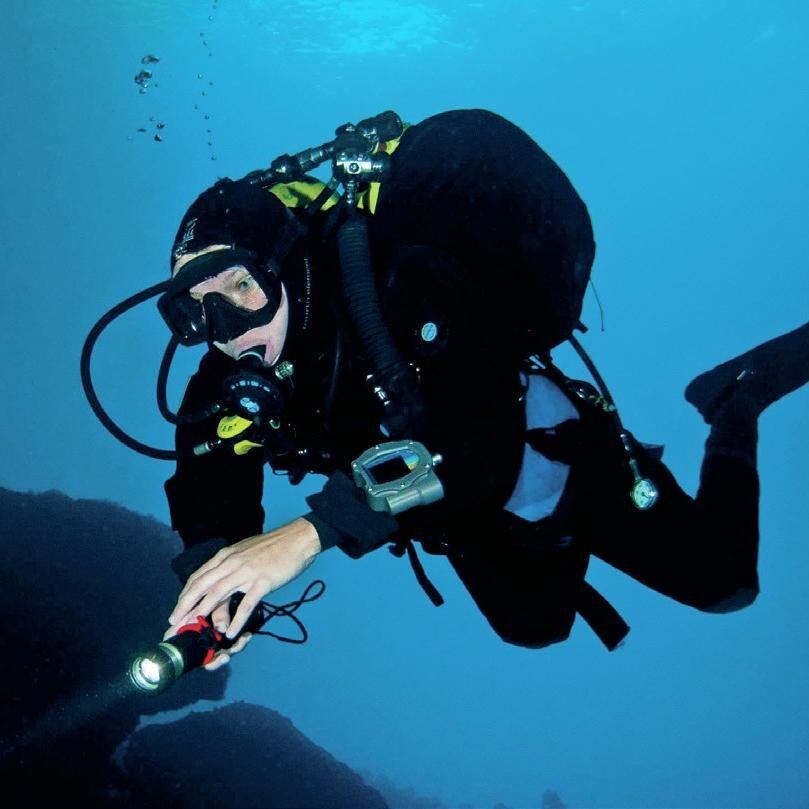
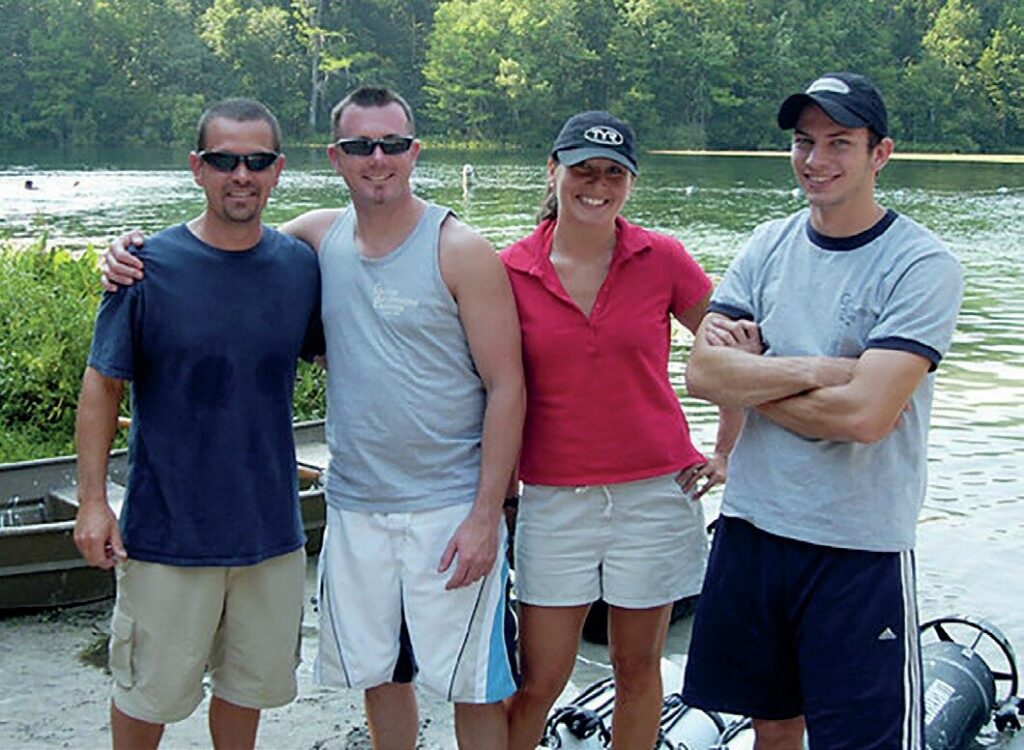
A: It was an honour to work with the Woodville Karst Plain Project (WKPP) and their drive to explore and map the deep underwater caves at and around Wakulla Springs in Florida. I had the opportunity to work with the WKPP as both a support diver and as Surface Manager for just over a decade. Over my 11 years with the WKPP, our divers set multiple world records in deep underwater cave exploration. We also supported a number of research projects led by partner universities, and we collected and presented data to inform local policy makers about the critical water supply in the panhandle of Florida.
It is incredible looking back at the evolution that took place within the WKPP with regards to training, team protocol, equipment, and decompression strategy. Many of the changes that the team made to increase safety and efficiency in the water have since been translated to the broader diving community, from recreational to technical and cave diving. Global Underwater Explorers (GUE) was also created as part of this diving evolution, and I joined GUE as its first operations manager over the first three years of its existence. It’s hard to believe that was over 20 years ago, but it is also amazing to see the global reach and impact of GUE over the last several decades.
Watching my WKPP teammates push the boundaries also drove me to ask questions about how we could better protect our divers in a high stress setting, which ultimately led to my PhD research at Duke University on identifying markers of decompression stress in divers. I am forever thankful for my time and experiences with the WKPP.
Q: You have been involved in many underwater exploration, research and conservation projects over the years – give us a brief run-down on some of these adventures.
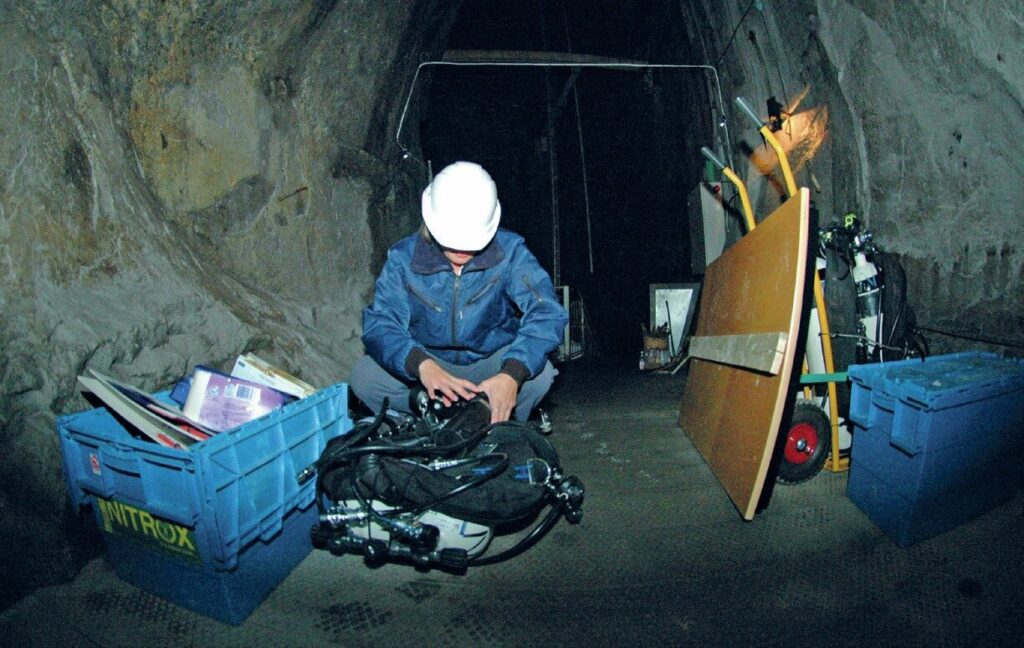
A: Before I joined the WKPP and GUE, I had the chance to work on a sump diving project in Nesbitt Springs Cave in 1996. This was my first cave diving project, and it was fun to learn more about dry caving and sump diving logistics as we mapped the cave and collected data for conservation efforts in the Ozark Mountains. I also had the chance to work with a number of international projects, including exploration of underwater caves around Merida (Mexico), working with the European Karst Plain Project (the European sister project to the WKPP), and diving with Project Ocean Discovery in the Baltic Sea. Throughout my undergraduate studies, I was also marine biology research assistant at North Carolina State University, where we studied coral reef ecology and fish behavior.
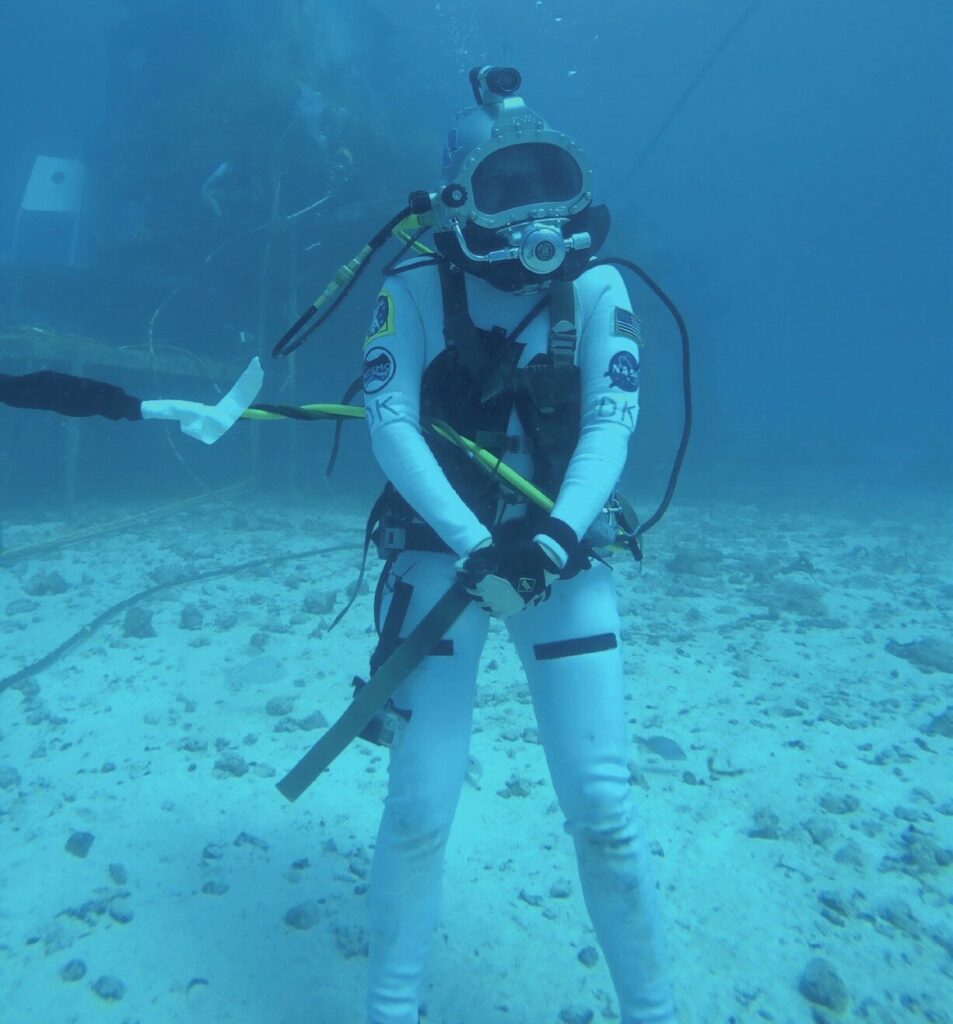
Since completing my graduate studies at Duke University, I have continued to study how humans response to extreme environments, from undersea to outer space. My previous research teams at the Institute of Human and Machine Cognition and the University of North Carolina focused on developing ways to protect humans working in extreme environments through advanced nutrition, improved sleep, and use of devices or supplements that improve resilience of the brain and nervous system. Being able to combine my love for diving with my research career has absolutely been one of the many adventures!

Q: In 2018, you received the Undersea and Hyperbaric Medical Society’s Young Scientist Award – what did it mean to gain this accolade?
A: It was a complete surprise when I received news of this award! I have always looked up to the leadership at the Undersea and Hyperbaric Medical Society, so it was an absolute honor to receive this recognition. The UHMS is expanding its reach to young scientists as we grow the field of undersea medicine research. This award, and other efforts within the UHMS, have been fantastic for supporting and encouraging new talent within our field.
”It is incredible looking back at the evolution that took place within the WKPP with regards to training, team protocol, equipment, and decompression strategy”

Q: What is your most-memorable diving experience?
A: I have so many memorable dives, but I will just describe one for this interview!
One amazing dive experience that still brings a smile to my face was a series dives with Dr Simon Mitchell at Poor Knights Marine Reserve. I consider Simon to be a career mentor and friend, so it was wonderful getting the chance to dive with him in his home country of New Zealand. The dives were spectacular. I can still see the bright colors and the distinctive coral and teeming life surrounding the distinctive caves and seawalls. It was also amazing getting to spend time in the water with someone who I look up to as a scientist, teacher, and diver. I also can’t overemphasize how amazing the Poor Knights Marine Reserve is for diving!
Q: On the flip side, what is your worst diving memory?
A: Fortunately, I don’t have many bad diving memories. I always consider dives where things don’t go well as teaching lessons; they also increase my appreciation for when everything does go well!

”Before I joined the WKPP and GUE, I had the chance to work on a sump diving project in Nesbitt Springs Cave in 1996”
In 1994 and about a year into my cave diving experience, I had a cave dive where my partner’s pressure hose separated from the tank. It was a lot of gas being lost very quickly! We immediately went through all of the responses as we had been trained to secure the gas supply and exited the cave safely, but I did initially feel a very high level of stress that I was ultimately able to get under control. That dive drove home the importance of practicing the drills we had been taught, being familiar with your partner’s equipment, and always having a mindset that is situationally focused.
Q: What does the future hold for Dawn Kernagis?
A: Being a part of DEEP’s mission to make humans aquatic! I am super excited about the future opportunities for divers, scientists, educators, and humanity as we expand access to living and working subsea. As we build out DEEP’s science program, I can see that the crossover between human health, marine science, and ocean conservation will emphasize how interconnected we are with the ocean. Giving humans the opportunity to experience what I and other aquanauts have experienced living underwater, and increasing undersea accessibility and research possibilities, makes for a thrilling adventure ahead!
You can read part one of this interview here.
Frequently Asked Questions
What is the Woodville Karst Plain Project (WKPP)?
The WKPP is a world-renowned cave exploration team based in Florida that has set multiple world records for deep underwater cave mapping and research.
How was Dawn Kernagis involved with the WKPP?
Dawn worked with the WKPP for over a decade as both a support diver and Surface Manager, helping the team achieve world records and pioneer safety protocols now used across technical diving.
What is GUE and how is Dawn connected to it?
Global Underwater Explorers (GUE) was founded out of the WKPP’s evolution in diving safety and efficiency. Dawn served as its first operations manager and helped shape its early development.
What are some of Dawn Kernagis’ most memorable dives?
Dawn recalls diving with Dr Simon Mitchell at New Zealand’s Poor Knights Marine Reserve as one of her most cherished underwater experiences.
What’s next for Dawn Kernagis?
Dawn continues to lead scientific research at DEEP, advancing underwater habitats that will expand human presence, research, and conservation beneath the ocean’s surface.
This article was originally published in Scuba Diver Magazine
Subscribe today with promo code DIVE1 — enjoy 12 months for just £1!
