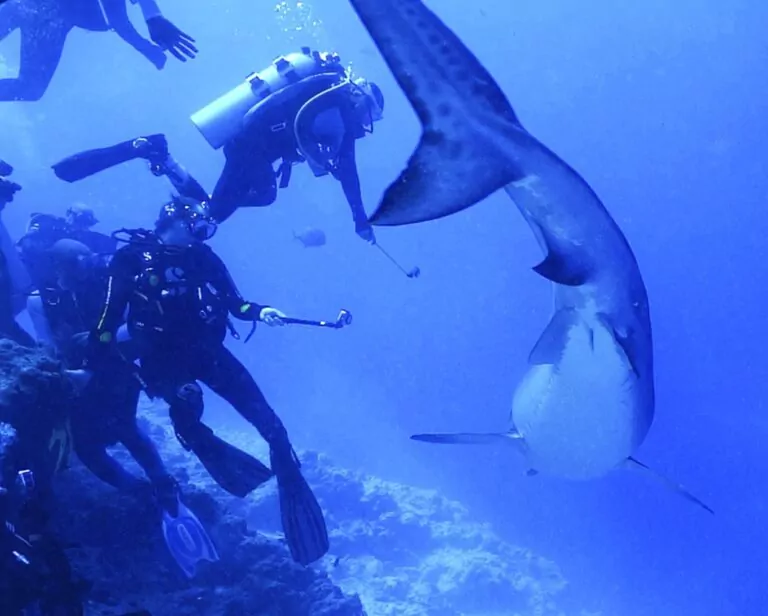
EKREM PARMAKSIZ is an underwater photographer specialising in sharks, but where he once relished the peace of the world beneath the waves, he is concerned that the easy accessibility of good-quality cameras is transforming that world into a frenzied content-mine. Is the genie already out of the box – what do you think?
Before I entered the world of diving, the ocean had always felt like a distant planet to me. During my childhood the underwater realm had been something to admire from a distance, through TV documentaries. Beautiful, mysterious and slightly intimidating.
I didn’t grow up around it, I wasn’t a swimmer by nature, but something about the silence below, the weightlessness, the world hidden just beneath the waves – it pulled at me.
The endless blue, coral gardens and schools of fish swirling like silver storms were not the sole attractions to me. I had been drawn to sharks since I was a child. Not in the typical thrill-seeking, Jaws-inspired way, but something deeper.
While other kids were terrified by movies or images of rows of sharp teeth, I was the one flipping through encyclopedias, sketching sharks in the margins of my school notebooks and begging to be allowed to watch shark documentaries on TV.
There was something about them: powerful, ancient, misunderstood. They were not just predators to me, but symbols of a wild world that had survived for millions of years. I didn’t consider them as monsters. I saw mystery.
I remember watching a scene in a nature documentary in the 1990s in which divers were surrounded by sharks. The water was still. The sharks glided around them like ghosts. I must have rewound those images a dozen times. I want to be there, I thought. I want to understand them, not fear them.
Just diving
At first, I just wanted to dive. The ocean is a world most people never truly experience. They see the surface – waves, reflections, colour – but don’t hear the silence below, or witness the small dramas of life on a reef: a clownfish defending its home, a turtle gliding through a shaft of sunlight, a reef shark slicing through the blue like a question mark.

The starting point was to feel the water close around me, to float weightless among those creatures I had seen only in books and on screens. But somewhere between my first descent and my hundredth, I realised that seeing it wasn’t enough. I wanted to picture it.
I didn’t set out to become an underwater photographer. I didn’t pick up a camera to make art, at least at first, but to remember.
Then, it became a way to translate: to take moments too fragile, too fleeting, and freeze them just long enough for others to see what I saw. Wonder. Stillness. Life.
Underwater photography was not about the perfect shot. It became a way of translating awe – a way to bring back a piece of the silence and mystery for others to see. Every image was a conversation: not just “look what I saw” but “see what we’re at risk of losing”.
Surreal blues
It has been more than 18 years since I started as an underwater photography artist. What began as a attempt to capture the surreal blues of the sea soon became an obsession around the sharks. A simple passion had soon turned into a purpose.
And somewhere in the process, I realised that I hadn’t become a diver with a camera but a storyteller, one who just happened to work in blue.
There was a time when I dived for the silence, but with the passing years something has been changing. That uninterrupted interaction with marine life started to fade and become increasingly hard to find.
The kind of stillness that once wrapped around me while suspended between water and weightlessness is being affected by something excessive: the constant use of GoPros, the red glow of record lights, the scramble for “just one more shot”.
These video cameras are everywhere I go around the world – on sticks, lights flashing, people manoeuvring not to witness the reef, but to capture it.
Not so long ago, bringing a camera on a dive was a choice – something reserved for those with training, patience or a purpose. Now, it’s almost expected. A GoPro clipped to every mask-strap, a dome-port in every hand, lights flashing as the underwater paparazzi go to work. Sometimes it feels as if there are more action-cams than fish under water.
Diving has become less about the dive and more about the content. Everywhere I look I see another camera on a stick and another diver more focused on footage than on the moment. It’s as if the reef has turned into a film set, with every turtle a celebrity, every shark a fleeting cameo, every coral head a backdrop.
Mask down, camera out
On my early dives, before I even owned a camera, everything felt sacred. Quiet. Unfiltered. I wasn’t thinking about angles or footage, I was just wide-eyed, floating through a world that didn’t care if I was watching.
Now? I’ve been on dives where people barely make eye contact with the ocean. Mask down, camera out, chasing clips like underwater influencers.
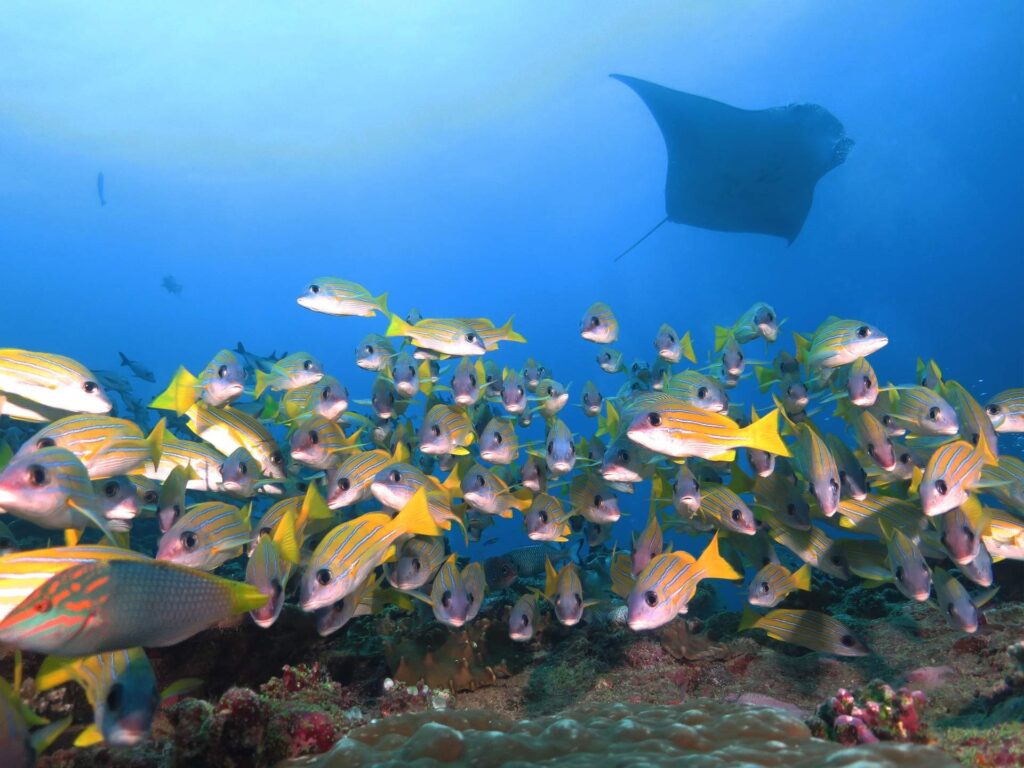
I’ve watched divers elbow their way toward a seahorse, crowd a cleaning station or drift inches above the reef just to get the “money shot”, while the reef holds its breath and the fish scatter. Where the GoPro used to be a tool, now it feels like a reflex.
I’m far from anti-camera – how could I be, when I carry a very professional full-frame one? – but the more I dive, the more I crave those quiet, unrecorded moments, the sort no-one else will ever see. The ones that don’t need editing or posting or approval, only memory.
When cameras are everywhere, presence becomes rare. Group dives have become more like floating film sets. I’ve been on dives on which divers jostled past nudibranchs without a glance, chasing turtles, hovering inches from a lionfish just to get the perfect shot.
I understand the appeal and the desire to capture that perfect moment – the turtle gliding through sunbeams, the shark sweeping in from the deep – is strong. These are memories we want to keep, to share, to prove we were there.
I’ve had those moments in which a perfect frame seems to hold all the wonder I feel. But somewhere along the way, it feels as if many of us stopped diving and started producing content.
The chase
Now I’m wondering what we’re losing in the process. What disturbs me isn’t the cameras so much as the urgency. The chase. The way it pulls us out of presence. The way it turns a quiet encounter with a shark into a staged event. The way it fragments the intimacy of a dive – how, instead of sharing awe, we compete for angles.
Dive-guides once simply led the way, pointing out the hidden things we might miss: a scorpionfish camouflaged in coral, a cleaner shrimp dancing in a sea anemone, the slow pulse of a sea cucumber beneath our fins. They were storytellers, not just leaders, interpreters of the reef.
But lately, their hands are full – not with slates or reef pointers but with GoPros. On sticks, with lights, in dome-ports. It’s not unusual now to see a guide filming every moment, flipping the camera back toward the group for underwater selfies, or chasing a turtle to get the perfect clip for the shop’s Instagram reel.
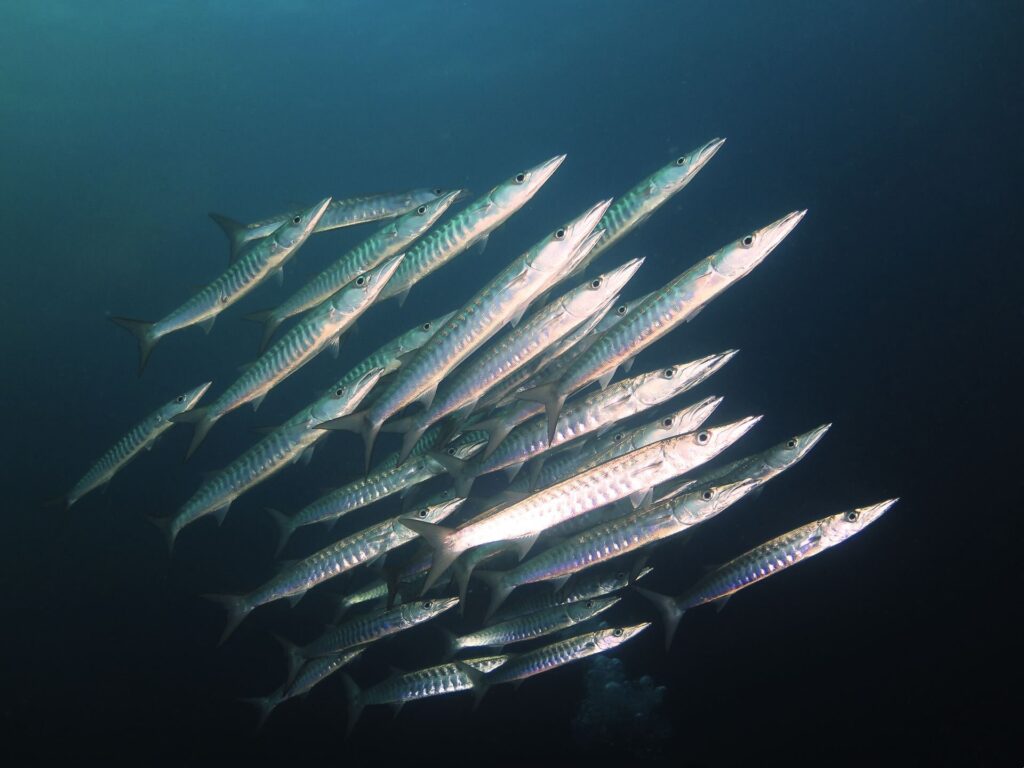
Sometimes I appreciate it. The footage is a nice souvenir, and they know the angles well. I’ve been tagged in beautifully edited highlight reels, and I’ll admit that it’s cool to see myself floating in the blue, framed by coral and sunlight like something out of a nature film.
But another part of me misses the old pace. The stillness. The personal attention. Now the guide is often more camera operator than naturalist. Sometimes, they’re ahead with the GoPro while the group drifts apart. Sometimes, they’re filming instead of pointing out that rare creature I swam right past.
It’s not their fault — it’s the culture we’ve built. Content is currency now. Shops want promotion. Divers want mementos. And guides, caught somewhere between safety, storytelling, and social media, try to do it all.
Hammerhead encounter
I remember a very bizarre situation in the Maldives when we had come across a big school of hammerheads, dozens of them.
Moving in slow formation, their bodies slicing the water like ancient relics, their heads sweeping left and right as if scanning for more than just prey — scanning for peace, perhaps.
Guess what? Two dive-guides who were supposed to stand still couldn’t help themselves but kicked toward the school, with GoPros in their palms. Hard. Eager. Too fast. Then, in an instant, the sharks were gone.
A flick of their tails, and they had vanished back into the blue as if they had never been there. The guides returned to the group sheepishly, camera still recording but empty.
Back on the boat I approached them and quoted back their own words: “The most unforgettable encounters are the ones where you stay still – and let the ocean come to you.”
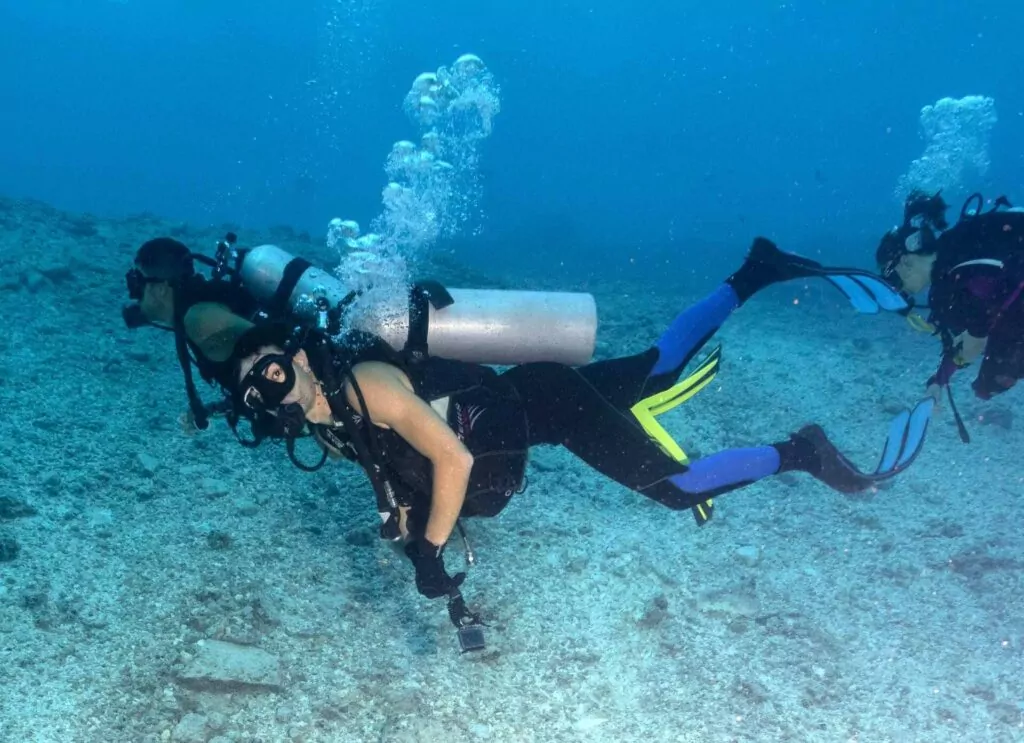
There are other important facts to consider too. Excessive use of underwater video cameras can present various environmental, ethical and practical consequences.
It can disturb marine life and cause physical damage to habitats – divers with cameras might accidentally touch or kick fragile and slow-growing coral reefs. Some species might become too accustomed to human presence, making them more vulnerable to predators or poaching.
And popular underwater photography locations can become overcrowded, leading to degradation of the ecosystem and a decline in the quality of visitor experiences.
A kind of magic
Under water, there is a kind of magic that doesn’t translate to video – moments that don’t perform for the camera. Moments that just are. And I hope we don’t forget that not everything needs to be recorded.
Some things are better felt in the moment, in the silence, in the company of a reef that was telling stories long before we ever pressed ‘record‘.
These days, I hang back. I let the camera people swarm ahead. I watch the reef behind them settle again. I listen to the silence come back.
Because for me, diving was never about what I could take home. It was about what I could leave behind – noise, rush, ego – and what I could carry in memory alone. The ocean isn’t a backdrop for content but a living, breathing world. And sometimes, I think it deserves not our footage but our full attention.”
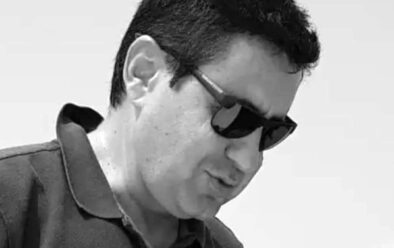
Ekrem Parmaksiz’s work can be found on his website and on Instagram @ekremcbi, and articles on Divernet include DIVING SOLO WITH THE SHARKS OF TIGER HARBOUR and ROGUE SHARKS? WHAT’S REALLY GOING ON IN THE RED SEA?