Some of the world’s best dive sites are accessible only by boat. Here are a few tips for boat diving to ensure you are safer and have more fun.
Dive Boat Briefings: What to Listen For
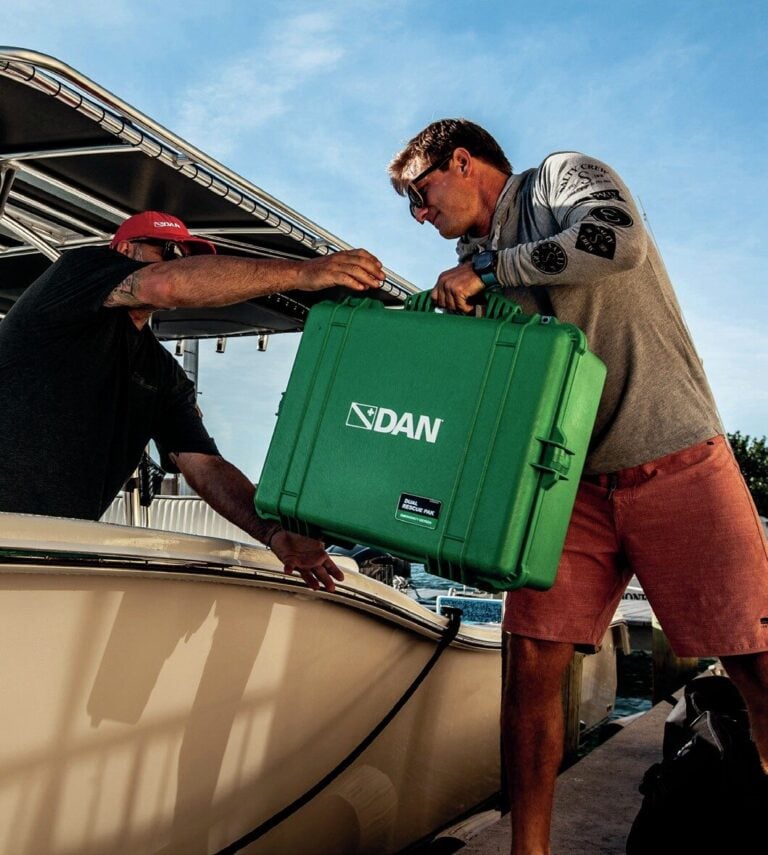
The crew should brief you and your fellow divers before or soon after you board the boat. During this briefing they will cover hazards particular to the boat as well as appropriate places to sit, stand, and stow your gear. This is important for minimising the risk of slips, trips, and other mishaps while the boat is leaving or approaching the dock or otherwise manoeuvring. This briefing will also cover emergency procedures and include the location of the oxygen unit and first aid supplies. It’s entirely appropriate for you to ask questions about the emergency procedures or to ask to inspect the oxygen unit. A dive operator who prioritises safety will be glad to show that their oxygen and first aid supplies are clean, organised, and in working order.
The dive staff should also present a briefing of the sites that you will dive. In addition to covering points of interest on the sites, site briefings will also cover entry and exit protocols, depth, expected visibility, descent and ascent protocols, and possible hazards such as currents. Importantly, they’ll also cover the recall system, which the vessel will use to signal all divers that an emergency has arisen and to return to the boat. Common recall systems include revving the engine or banging the ladder with a wrench.
Staying Safe Onboard a Dive Boat
One general piece of advice that’s useful on boats is ‘one hand for yourself and one for the ship’. This serves as a reminder to maintain three points of contact with the vessel. In general, it means holding on or having a free hand to grab a rail in the event of an unexpected bump or slip.
If you are prone to seasickness, be prepared to manage it. Use anti-nausea medication according to the package directions or your doctor’s instructions, but make sure you’ve taken it successfully on land in the past before you go diving with it. You’ll want to know that it controls your symptoms effectively and doesn’t cause any side effects that may impair your ability to dive safely.
For an extensive range of diving health and safety information and downloadable resources, research studies, incident summaries, and free e-Learning courses, take the time to explore the DAN website.
Ascending Safely While Boat Diving
If you ascend from a dive using a mooring line, look for barnacles, stinging hydroids, and other potentially hazardous growth. Avoid grabbing those parts of the line or be sure your gloves are up to the task. If you do a free ascent (without a line), use a reel and a surface marker buoy (DSMB). This will alert the crew of your dive boat to keep tabs on your location during your ascent. This is especially important in currents and choppy seas, which may separate you from the boat or make you harder to see. In addition, a DSMB will alert other boaters to your presence, giving you some measure of protection against a boat strike injury.
Live-Boat Pickup: What Divers Must Know
If the vessel uses a live-boat pickup (in which divers board the boat from the water while the engine is running), be sure you understand the crew’s instructions during the briefing, and follow them carefully.
The end of a dive involves hazards, including moving ladders, heavy seas, spinning propellers, and divers slipping back into the water on top of the next diver waiting to exit. The crew may ask you to hold onto a tagline as you wait to board the boat, especially if there’s a current. Doing so will prevent the divers from being spread out all over the place. As you exit the water, give the diver in front of you plenty of space. Take a moment to look at the ladder and identify hinges and pinch points, and place your hands carefully to avoid them. Keep your regulator in your mouth until you are safely back on board. Keep these tips in mind and enjoy many years of diving from boats.
Frequently Asked Questions
What is boat diving?
Boat diving involves accessing dive sites by vessel rather than from shore. Many advanced and remote sites are only reachable by boat.
What should divers listen for in a boat briefing?
Boat briefings cover vessel hazards, emergency procedures, oxygen location, entry and exit methods, dive-site conditions and recall signals.
Why is a DSMB important when boat diving?
A DSMB alerts the dive boat and nearby vessels to a diver’s position during ascent, reducing the risk of separation or boat strike.
What is live-boat pickup diving?
Live-boat pickup is when divers reboard a boat while its engine is running. It requires strict adherence to crew instructions.
How can divers stay safe exiting the water?
Maintain spacing, watch for ladder pinch points, hold tag lines if provided, and keep the regulator in your mouth until onboard.
This article was originally published in Scuba Diver Magazine
Subscribe today with promo code DIVE1 — enjoy 12 months for just £1!
