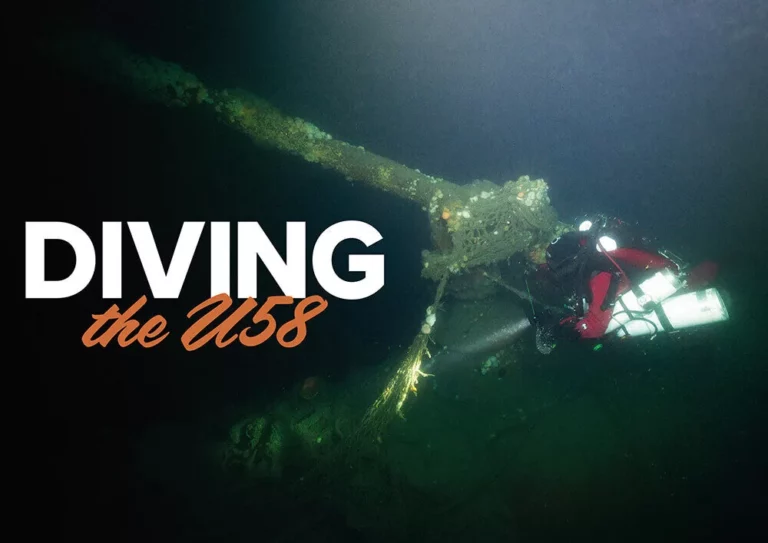
Vic Verlinden explores the wreck of the U58, off the coast of Cork. The first German submarine sunk by an American warship in World War One

Captain Gustav Amberger looked through the periscope of his submarine and fervently hoped that the convoy with code OQ would soon pass by so that he could choose a nice prey. The U58 had been waiting for several days for the convoy, which had departed from Queenstown in southern Ireland.
However, the departure date had been postponed by one day to 17 November. Captain Amberger was not aware of this. The patience of the officers and crew was being tested. But at 3.30 pm, they finally had success and saw the convoy approaching. One of the ships in the convoy was a large cargo ship named SS Welshmen. This would be a good target for the ambitious Amberger. However, he also knew that it would not be an easy job, as the convoy was escorted by several destroyers carrying depth charges.
The Encounter: How the USS Fanning Made Naval History
On board the USS Fanning, lookout Daniel Loomis spotted the periscope of the U58 at a distance of approximately 560 feet and immediately sounded the alarm. Officer on deck Walter Owen Henry of the Fanning gave the order to drop a number of depth charges at the location where the periscope had been spotted. The destroyer USS Nicholson was also called in to destroy the submarine.
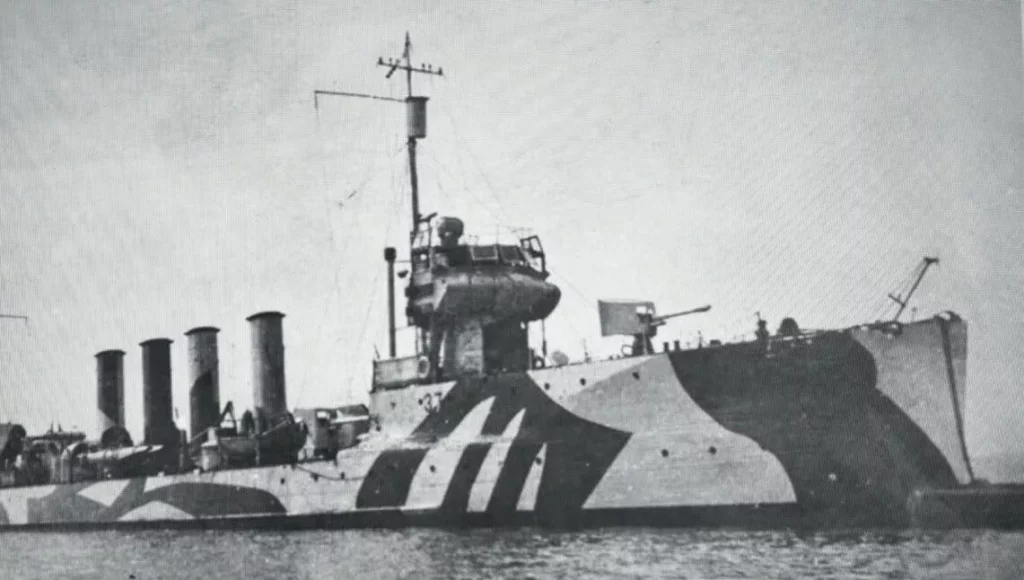
Fact file: USS Fanning
Launched: 11 January 1912 at Newport Shipbuilding Co. Norfolk Navy yard. Weight: 750 tonnes. Length: 294 feet. Beam: 27 feet. Speed: 29 knots. Armament: 5 x 76mm guns / 6 x 450mm torpedo tubes + depth charges.
On board the U58, they had of course also noticed that the destroyers were heading in their direction. Amberger gave the order to dive, but could not escape the explosions of a number of depth charges from the Fanning. The submarine suffered damage to its diving apparatus almost immediately, and the captain had to make the difficult decision to surface. This would give the crew a chance of survival. The captain did not hesitate and gave the order to make an emergency ascent.
On the USS Fanning, the bow of the submarine was suddenly seen diving out of the water at a sharp angle. Almost immediately, the hatch of the tower opened, and the crew and officers began to evacuate the submarine.
One person fell overboard and could not be rescued. Some crew members of the U58 were even rescued by crew members of the USS Fanning, who jumped overboard to help them. All were brought aboard the USS Fanning, where they were placed under guard. The USS Fanning thus became the first American warship to sink a German submarine in World War I.
Did you know?
Until World War One, use of submarines in world navies was limited. Germany made substantive improvements to its submarines, called ‘U-boats’, and began a campaign of unrestricted war against all merchant shipping.
The Expedition: Rebreather Diving the U58 off Kinsale
It was a beautiful morning in July 2025 and there wasn’t much activity yet in the harbor of Kinsale in southern Ireland. Our dive ship Seahunter was loaded with rebreathers and other equipment to dive on the wreck of the U58. Expedition leader Peter McCamley had chosen this target. Our captain John Griffin had calculated that the trip to the wreck off the coast of Cork would take about two hours. There was a light breeze and the trip went smoothly. A short time later, we had dropped the anchor on the wreck and everyone was getting ready for the dive.

My buddy Karl Van der Auwera and I would be the first team to descend to the wreck. Once we had done our final checks, I was the first to jump off the boat and swim to the buoy. Karl joined me shortly afterwards and we began our descent. The wreck was at a depth of 270ft. At half depth, we attached our name tags to the line of the decompression station. At a depth of 213ft, I also attached my strobe light to the line so that we could be sure to find the ascent line at the end of the dive.
Exploring a Time Capsule: Guns, Periscopes, and Torpedo Tubes
When we reached the bottom, visibility was about 20 feet and we realised that our grapnel was not on the wreck. However, there was a short drag mark in the sand and I decided to swim in that direction. Fortunately, my buddy had attached his reel to the descent line so that we could be sure of finding our way back. We were lucky, and after swimming several feet, we saw the hull of the wreck in front of us.
We followed the hull upwards and in front of us was the 88mm gun, standing upright on the wreck. The gun appeared to be completely intact. A little further on, we came to the submarine’s conning tower, where we immediately saw the periscopes that were still there. Just behind the periscopes was a hatch that was half open, through which the crew could have left the submarine when it was sinking. The deck of the hull was littered with ammunition and aluminium tubes with copper caps for the grenades. It was clear that not many divers had visited this wreck yet.
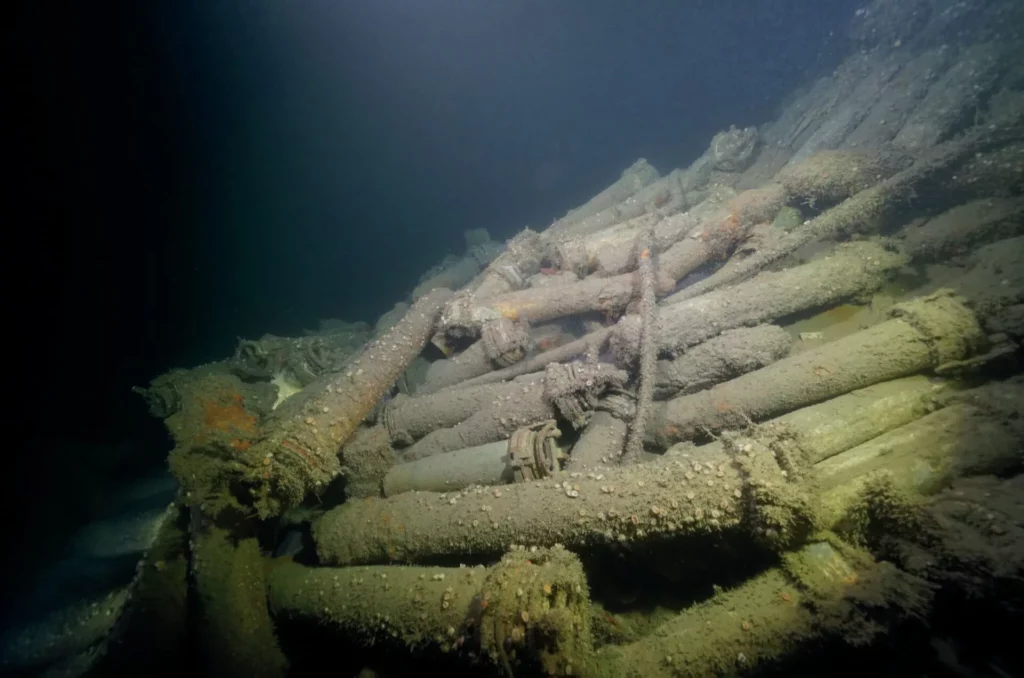
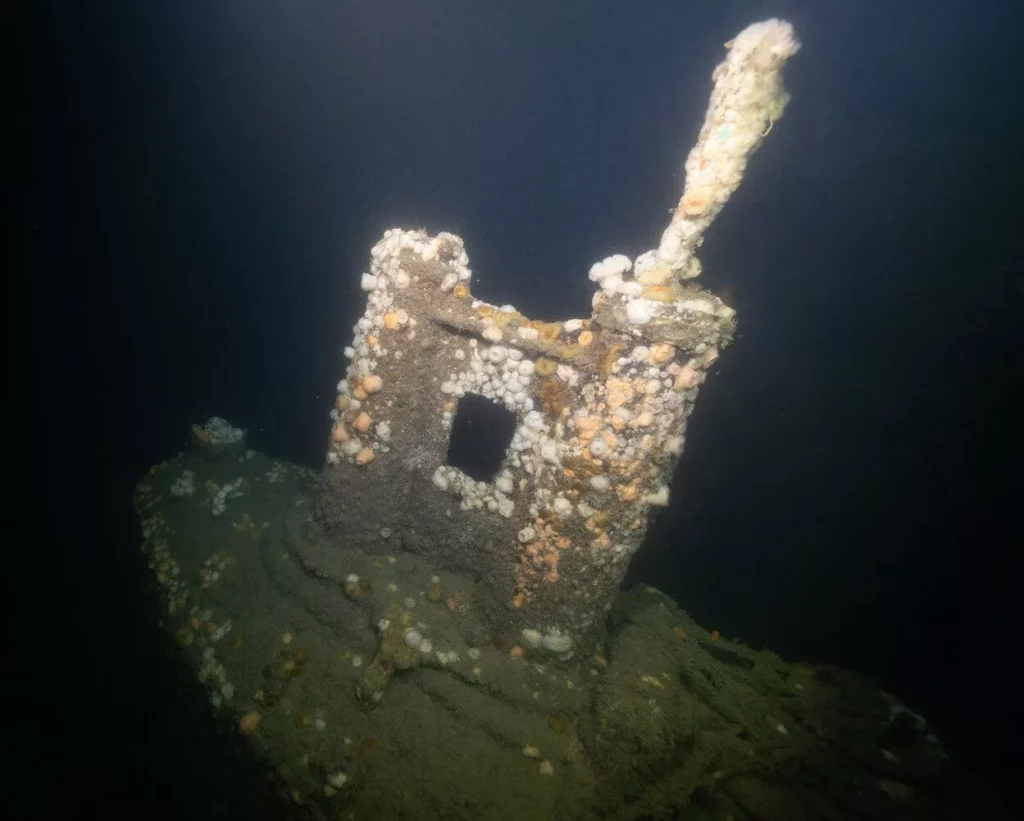

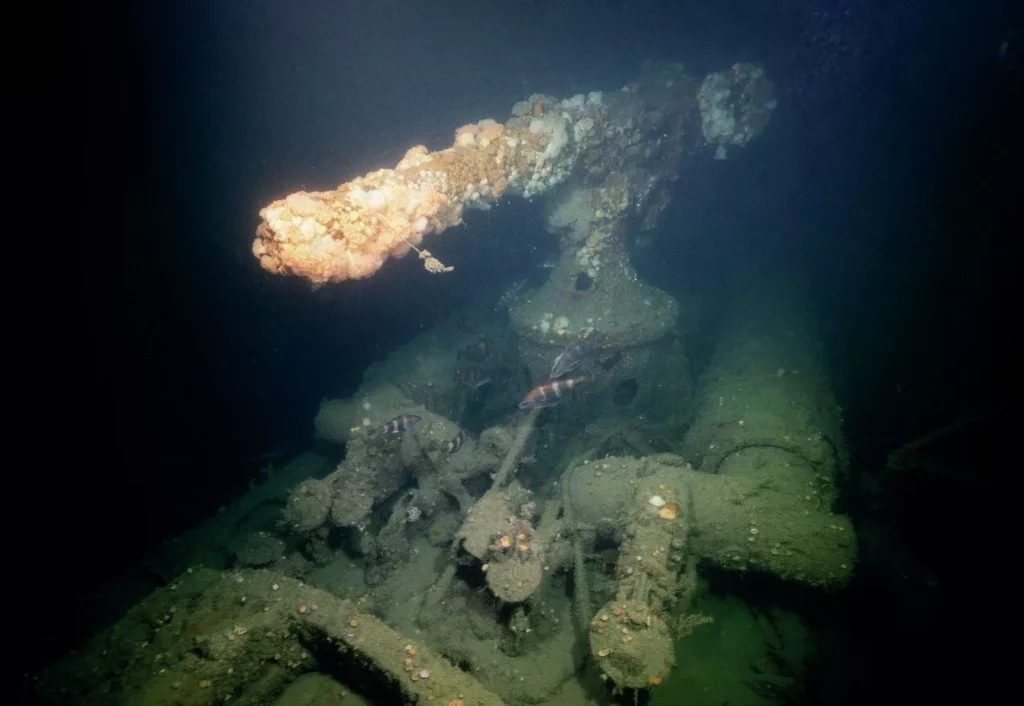
We continued our exploration and saw one of the torpedo tubes, which was easily recognisable. Nearby, there was also a second access hatch, where the locking mechanism was clearly visible. There was a third bronze hatch, but it was at a 45-degree angle to the deck and had been used to load new torpedoes during refuelling. Meanwhile, I kept taking photos because it was clear that this was a special wreck.
We swam towards the bow and soon saw the large 105mm gun, which was still standing on its base and pointing upwards at a 45-degree angle. On the deck, there were all kinds of parts that I did not immediately recognise, but which were made of copper or bronze.

Navigating the Hazards: Nets and Depth on the U58
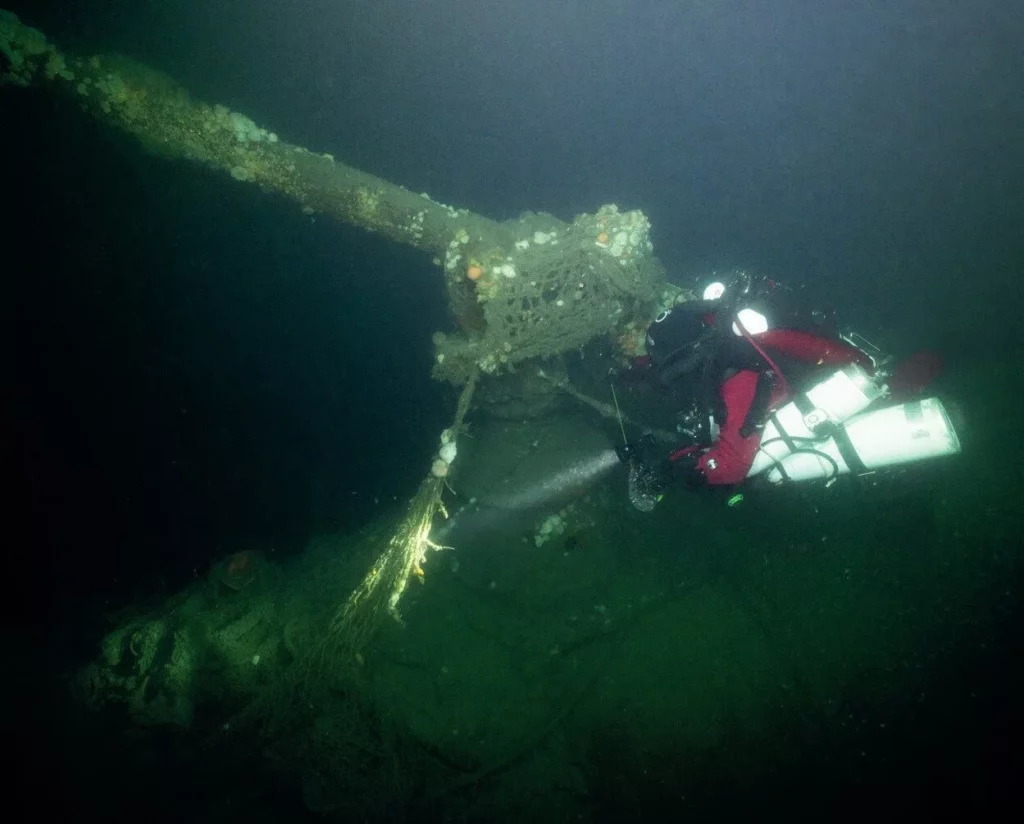
We then decided to swim back towards our ascent line because we had already spent 20 minutes on the seabed. On the way, we also saw the radio mast lying flat. When we got close to our ascent line, we decided to take a look at the rear of the submarine. Here we could recognise one of the bronze propellers, but it was difficult to take a good photo because there were many fishing nets in that area. However, bottom time was very short at this depth, and it was time to start our ascent. This went without any major problems, and a few hours later, we were back on the deck of our dive ship. Everyone in our team agreed that it was a fantastic dive on a unique wreck in the history of World War One.
Fact file: U58
Launched: 31 May 1916 at AG Weser Bremen. Length: 220 feet. Beam: 21 feet. Speed: 16.5 knots (2 x MAN diesel engines) / 8.8 knots (2 x SSW- Doppeldyn electro engines).Armament: 4 x torpedo tubes / 88mm cannon / 105mm cannon.
Frequently Asked Questions
Where is the wreck of the U58 located?
The U58 lies off the coast of Cork, near the harbour of Kinsale in southern Ireland. It was sunk in the Atlantic waters while attempting to intercept a convoy.
How deep is the U58 submarine wreck?
The wreck sits at a depth of 270 feet (approximately 82 meters), placing it firmly in the category of technical diving requiring specialised gas mixes and rebreathers.
What is the historical significance of the U58?
The U58 was the first German submarine sunk by an American warship during World War I. It was forced to the surface by depth charges from the USS Fanning and USS Nicholson in November 1917.
Is the U58 wreck intact?
Yes, the wreck is remarkably well-preserved. Divers can still see the 88mm and 105mm deck guns, the conning tower with its periscopes, and even the bronze propellers.
What level of diving certification is needed for the U58?
Due to its depth of 270ft, this dive is strictly for advanced technical divers. The expedition described utilised rebreathers and significant decompression stations.
This article was originally published in Scuba Diver Magazine
Subscribe today with promo code DIVE1 — enjoy 12 months for just £1!
