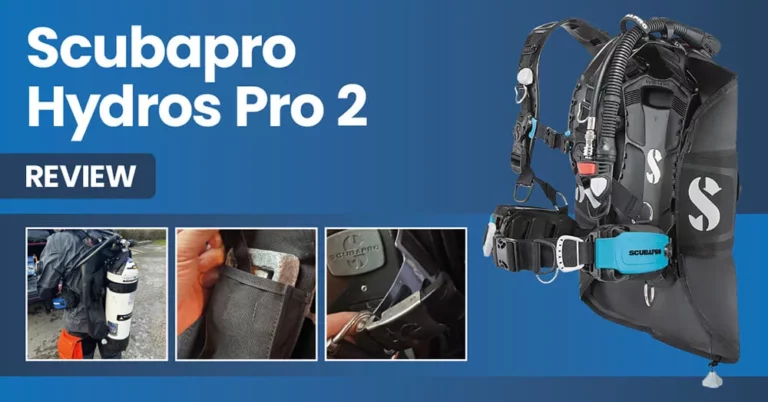

Mark Evans: Scubapro unveiled the highly anticipated evolution of its award-winning Hydros Pro 2 BCD on the opening day of the DEMA Show in Orlando in November 2025, but my test unit had arrived just before we left the UK. So I’d had a sneak peek of what all the fuss was about.
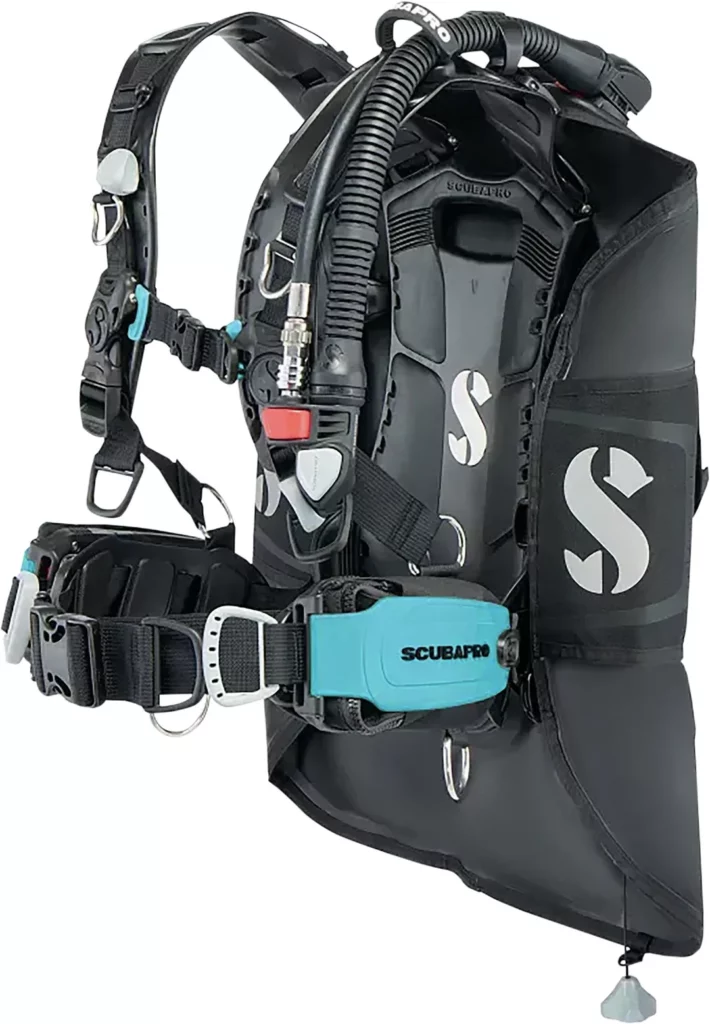
When the Hydros Pro was first launched, the back-inflate BCD was well received, with divers liking the monprene construction, the durability of the build quality, and the ability to colour-coordinate the weight pockets, etc.
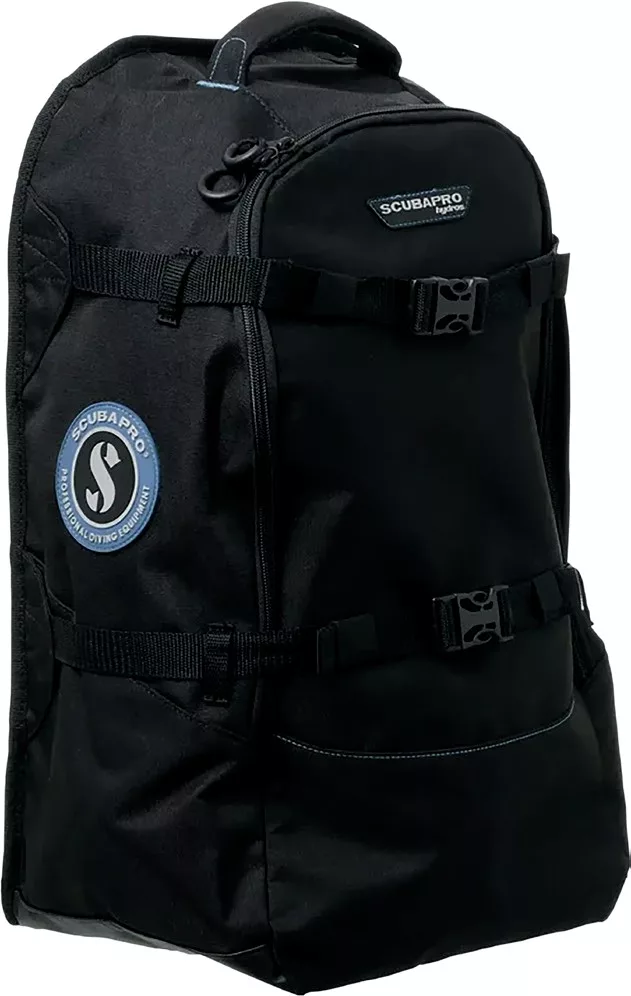
The Hydros Pro 2 builds on the success of that first version, adding some neat new features over and above the tried-and-tested elements from the initial BCD. When I first pulled it out of the box, I immediately thought ‘oh, same same, but different’, as the Hydros Pro 2 comes in a lightweight rucksack the same as its predecessor. How many people actually keep their Hydros Pro of either variant in this rucksack remains to be seen, but I take the one from our Hydros Pro (version one is my wife Penney’s preferred BCD at the present time) and use it as a day-bag when on daily dive boats, so this is a nice little extra.
So what is different on the Scubapro Hydros Pro 2?
On first impression once I took the BCD out of the rucksack, I thought, it looks much the same, and it does at an initial glance. The biggest and most-obvious change is the neat Monorail Weight System to hold the integrated weight pockets. Where on the Mk1 version, you had skeletal pouches which the standard pinch-clip integrated weight pockets slid into, with the Mk2, you have a low-profile plastic panel with ‘teeth’ running up the middle mounted on the waiststrap of the BCD, and then the integrated weight pockets simply slide on to this and lock in place – you can distinctly hear the ridges ratcheting into place as you push the pocket back. Once fully on, it is rigidly held in place, but when you need to remove it, you just grab hold of the plastic D-handle on the front and pull – this releases the grip on the ‘teeth’, and the pocket smoothly slides off. The system has been designed so you get into the jacket without the weights in-situ, and then attach them once you have the BCD on. I found it made getting all of the straps tightened up properly much easier without having the weight pockets hanging on there, and popping them in place once you were in the Hydros Pro 2 was very easy, with the rails guiding the pocket into place with minimal faff.
I was test diving it in my usual testing ground of Capernwray in December, so water temperatures were single digits, and I was in my drysuit. Even with 5mm gloves on cold hands, I was able to attach the weight pockets in place with no issues. I was using the full-size weight pockets, but optional mini weight pockets are also available. I liked this addition – if you are diving in warm waters and only need a couple of kilos, there is nothing worse than the weights moving around inside a large weight pocket. These mini pockets will securely hold a smaller weight (up to 2.25kg per pocket) and slot on in the same manner as the larger variant.
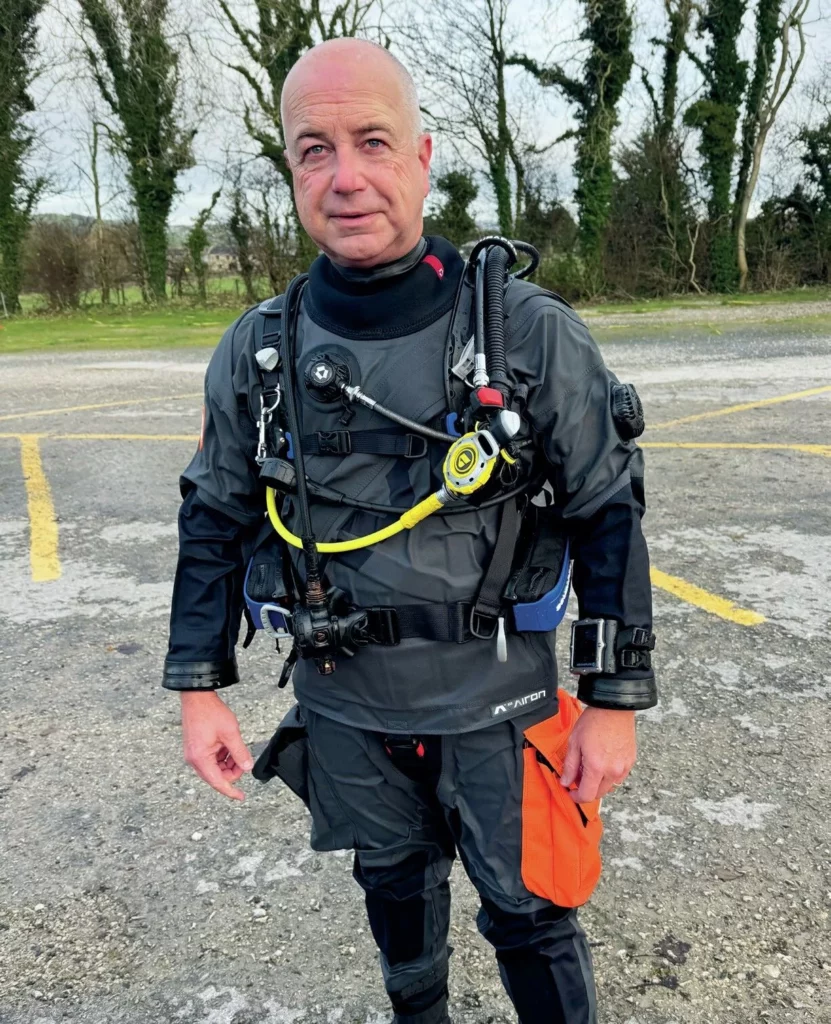
The weight pockets themselves are well designed. To access them, first you have to unclip the coloured panel – this can be colour-coordinated, with eight different colourways available, as per the original version – and flip this open, and then you can access the zipper. As you slide the weight in, the bungee cord expands to allow them in, but equally keeps them in place. Once the weights are in, you have double security of the zipper and the coloured panel keeping them in the pocket.
The full-size weight pockets, while being big enough to take a decent amount of lead (up to 4.5kg per pocket), are quite compact, and once in place they look and feel much smaller than the pouch/pocket combo on the first version. Of course, if you were diving somewhere and didn’t need any lead at all, you could simply leave the pockets off for a properly streamlined rig.
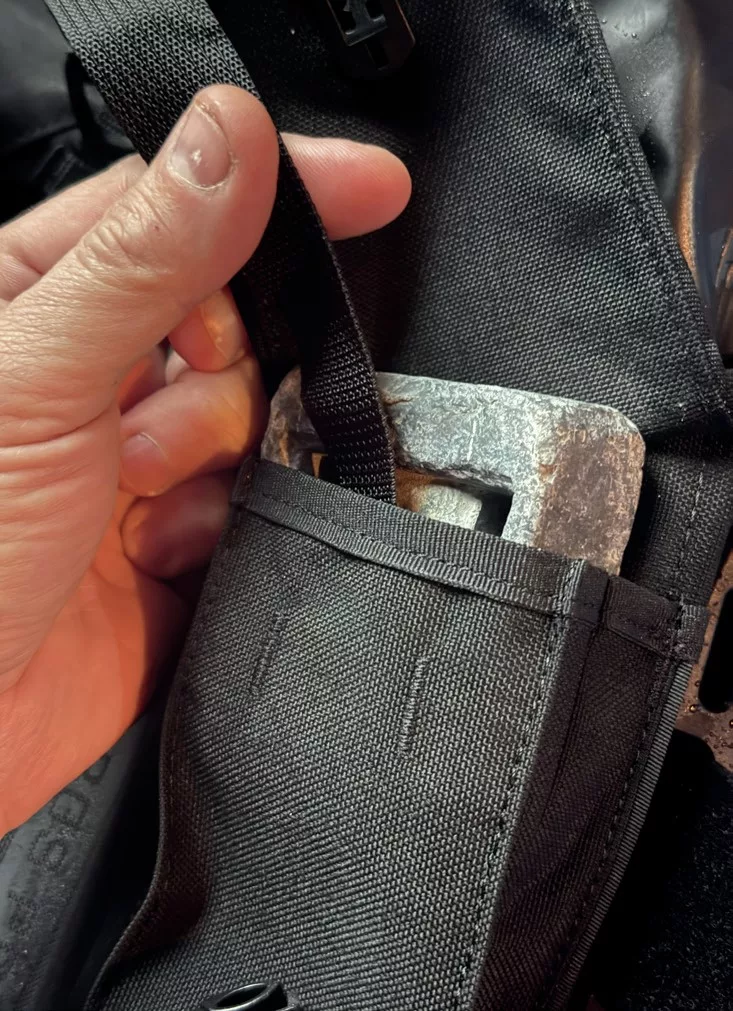
The Hydros Pro 2 also has non-dumpable trim pockets on the back, and these are longer than most trim pockets, which means you can actually get more weight in if needed. Here you find one of the neat design features which you might think ‘well it didn’t need that’, but it works well. There is a strap that goes around the weight as you slide it into the pocket. If you were just putting, say, a 1kg weight in, this would go right to the bottom of the pocket. Now getting it out is as simple as tipping the entire BCD over (if it wasn’t attached to a tank) or just fishing about with your fingers to get hold of it. With the Hydros Pro 2, you just grab this strap and pull, and the weight just effortlessly slides out.
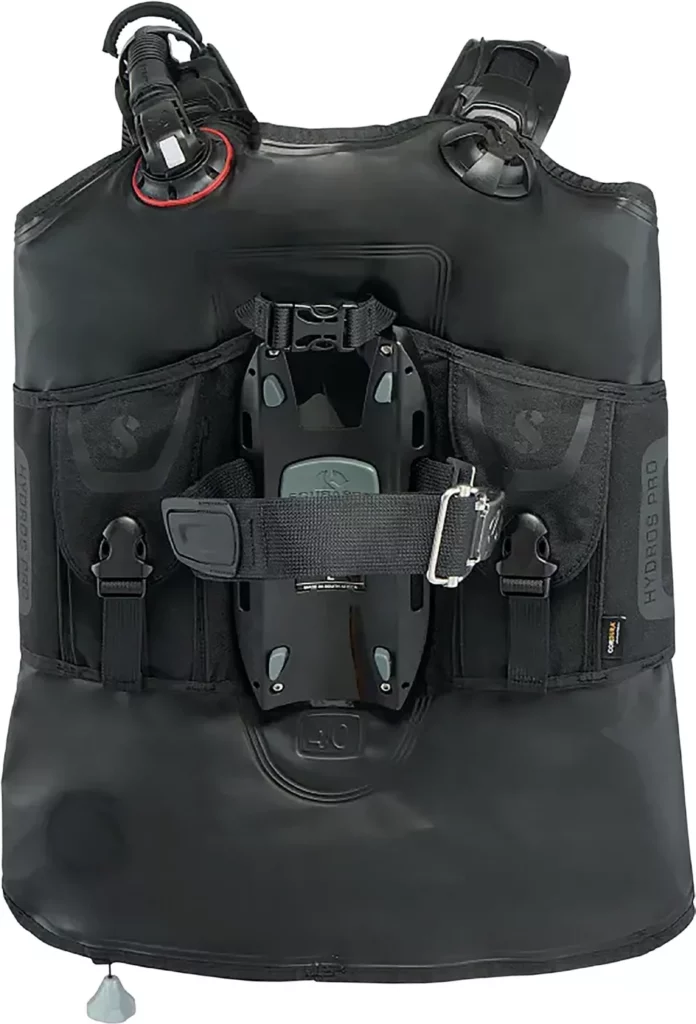
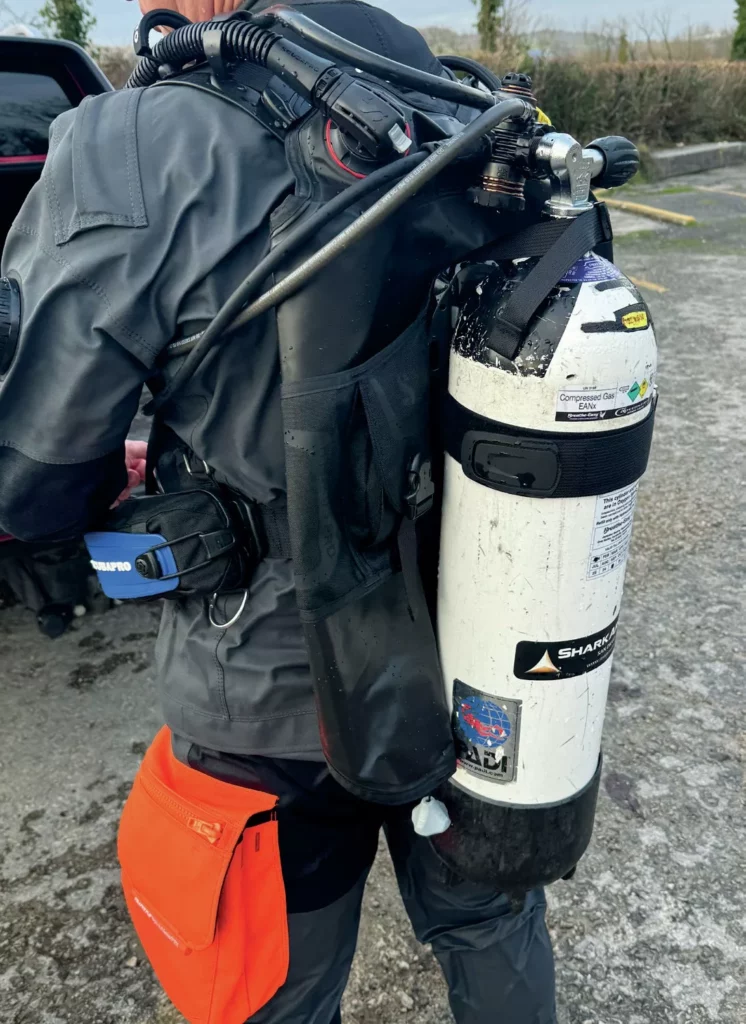
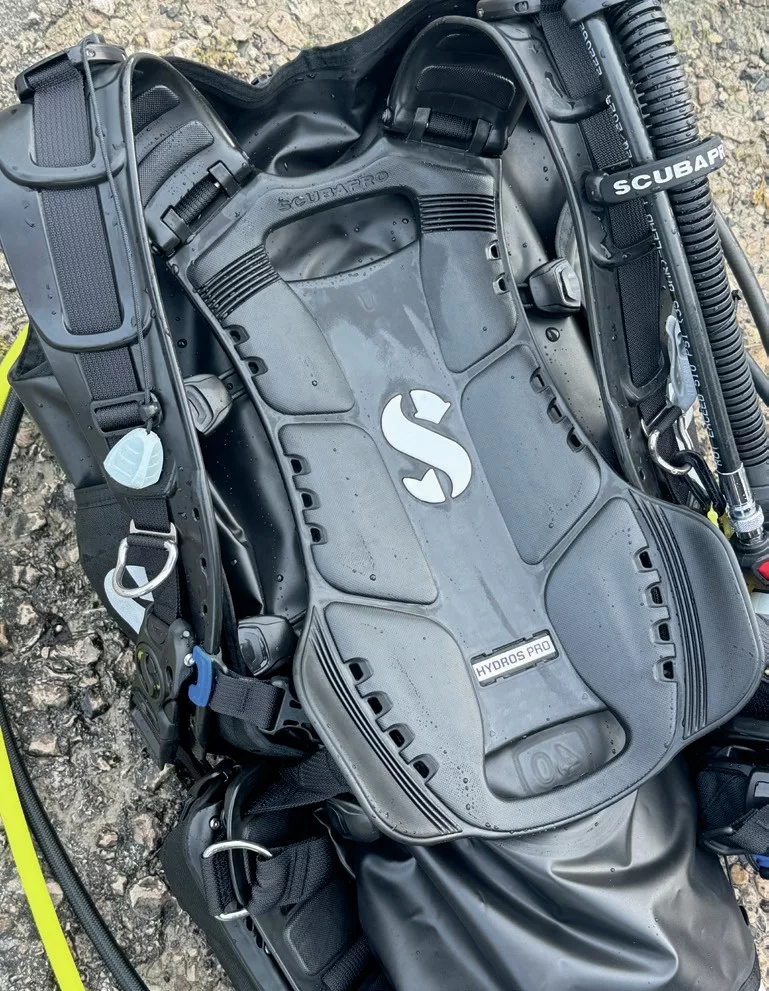
Beyond the nifty new weight system, there are other changes to the Hydros Pro 2. The monprene backplate is actually 25 percent lighter than the Hydros Pro, and it really does feel super-light when you pick it up. This monprene for the backplate and the shoulder straps is soft and supple, yet resilient to wear and is resistant to UV and chemicals. We found that getting in and out of the straps was a simple matter – you can actually ‘lock’ the shoulder straps so they pivot up while you get your arms in, and then as you tighten the webbing, the shoulders unlock and fit on to your shoulders. Once on and with the shoulder straps, chest strap (which can be mounted in several positions if you find it fouls your drysuit inflator) and waiststrap all done up securely, we found the Hydros Pro 2 fits exceptionally well and is very comfortable. There is zero tank movement, and the monprene almost seemed to ‘grip’ onto both my trilaminate suit, and my buddy’s neoprene drysuit. An additional grab handle has been added at the bottom of the backplate. Now at the DEMA demo, they said this was to make it easier to pick up the jacket with both hands – one on the top grab handle and one at the bottom – to lift the BCD when it is attached to a tank, but I am not sure how many times you would find yourself picking up your kit fully rigged in a horizontal fashion like this. However, there is that option, and this lower handle also gives you a secure mounting point if you wish to add a crotch strap.
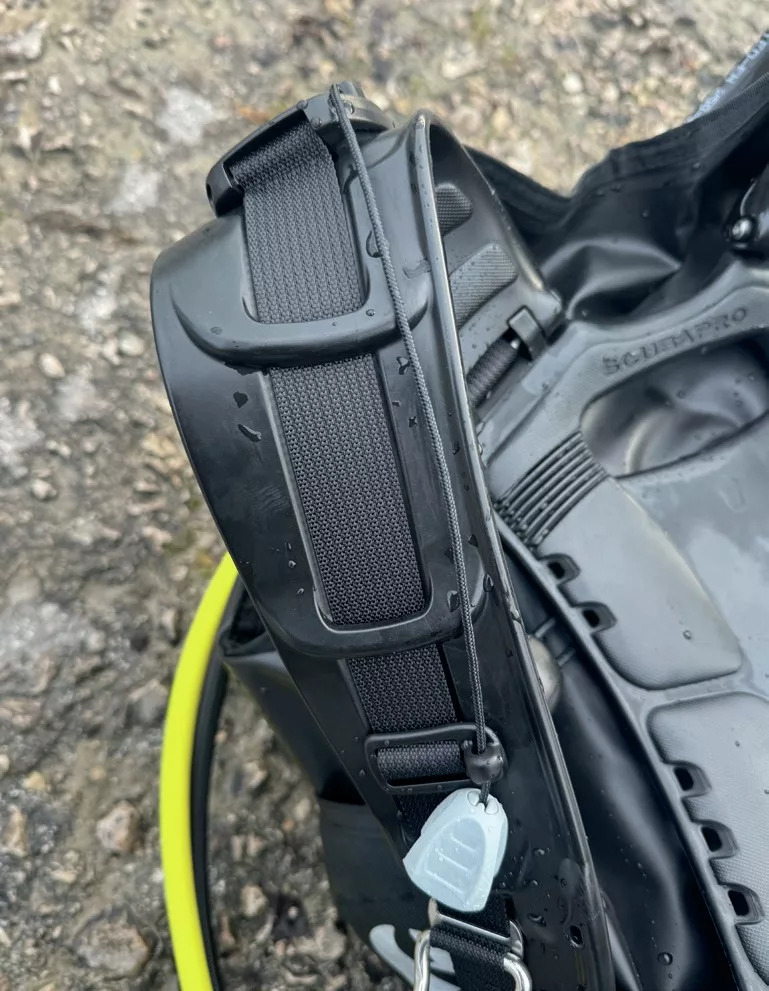
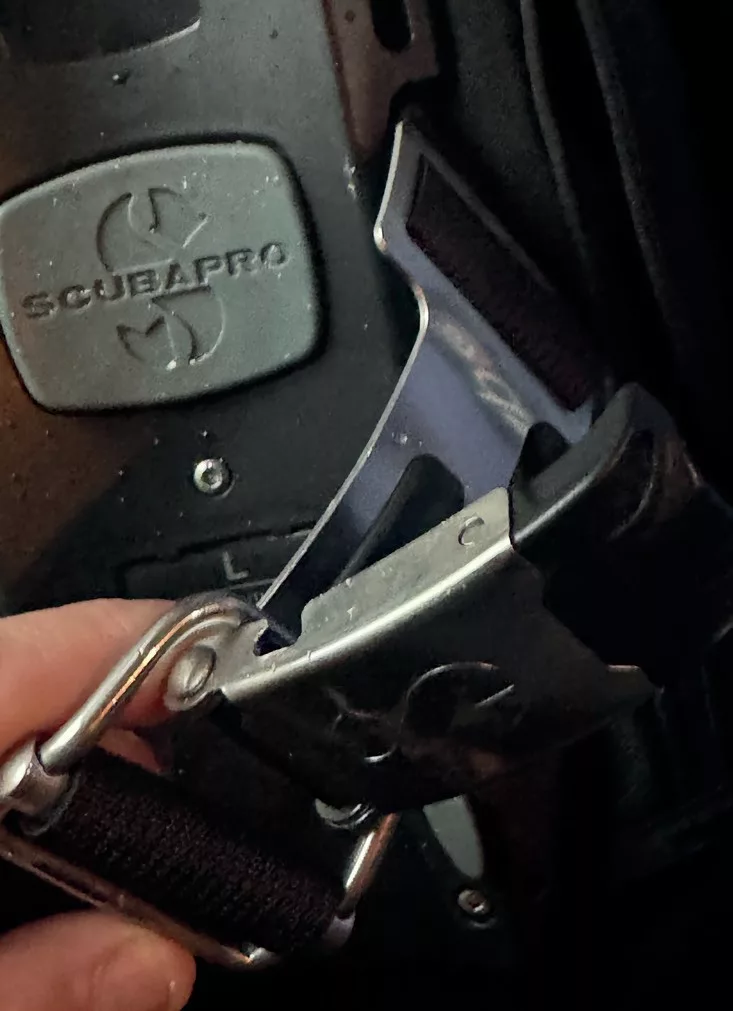
The tank is held securely on to the monprene backplate with a Super Cinch 2 tank band. I have always liked Scubapro’s method of attaching a cylinder, and this version two is even better than the version one. Once you have adjusted the tank strap to the correct size, once you lock the clip into place, that tank is going nowhere.
The bladder, which Scubapro refer to as HD-QD (Heavy-Duty, Quick-Dry), is constructed from double-coated, abrasion-resistant, ultra-durable materials. As the name suggests, it is anti-absorbent, with the ‘instant-dry’ properties making the Hydros Pro 2 ideal for travel, due to minimal water retention across the bladder and the monprene backplate/straps and thus reduced post-dive weight. You can literally see the water beading off the bladder and the monprene when you get out of the water.
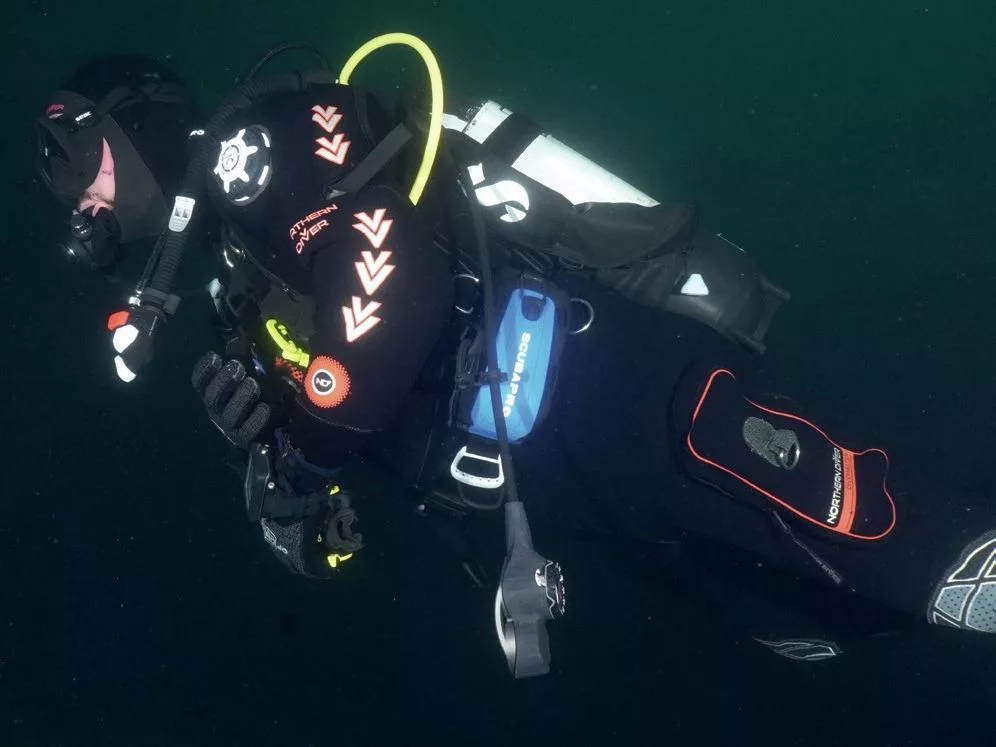
The wing is very compact, and when you are diving and only have a lower amount of gas inside, the tri-bungee system holds it all neatly in place – no excess material flapping around like a manta ray as you get on some back-inflate jackets and backplate-and-wings. I found diving in a drysuit with 6kg of lead in the Hydros Pro 2, I never needed to take the inflation beyond this point. However, in the case of an emergency – say you were dragging up someone off the seabed – you can pump in more gas and the wing will expand significantly, giving much more lift. As soon as you allow some of the gas out, the bungees will reduce it back down to the compact size once again. I deliberately inflated the wing to its max a few times, and it worked like a charm.

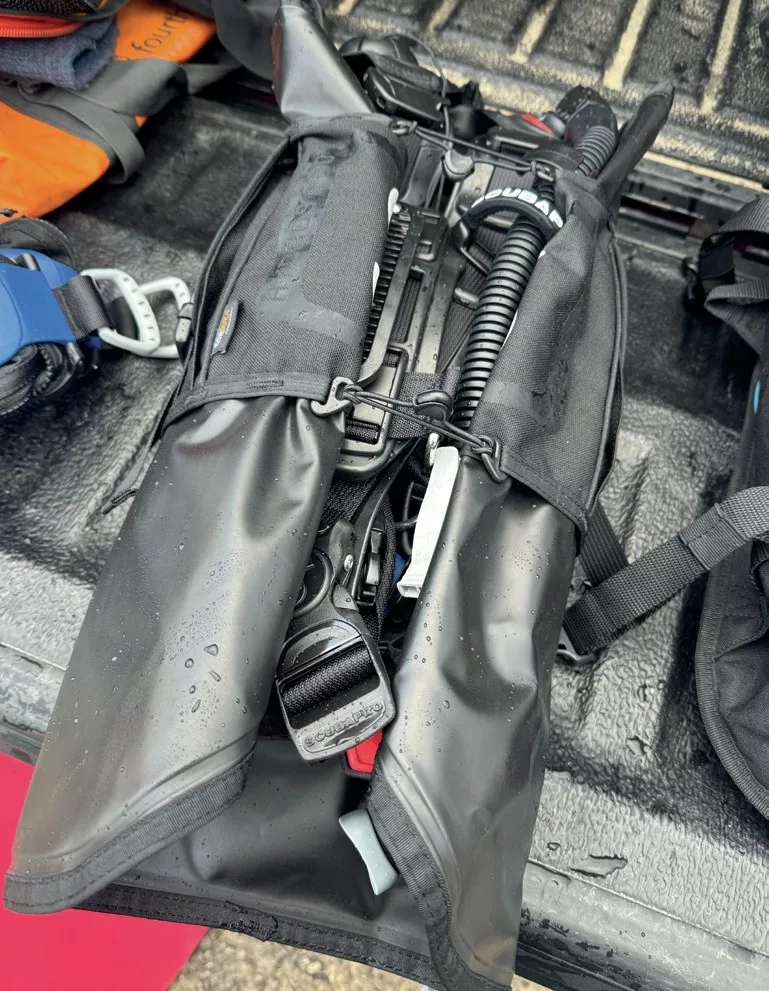
You also get a couple of little bungee cords with clips on either end. This Smart-Pack design means you can tuck all of the straps and weight pockets on to the backplate and then fold the bladder around, securing in place with the two cords. This makes the whole BCD pack up extremely compact, which is obviously another plus-point when you are travelling. Scubapro’s ergonomic balanced power inflator has always impressed me, and it was just as good as I’d remembered. The inflate button is on a pivot, and it is a simple matter to depress it just the amount you need. Press it all the way in and it inflates rapidly! Thankfully, it dumps gas just as quickly either via the power inflator, or through either of the pull dumps. The shoulder pull dump is so designed that the toggle cannot get caught under the shoulder strap when you are donning the BCD – a neat touch. There are a multitude of D-rings and attachment points, so you will never struggle to find somewhere to clip hose retainers, P-clips and so on. While the Hydros Pro 2 BCD boasts huge amounts of features, it is refreshing to note that everything falls under Scubapro’s BC-4-Life Modular Design, meaning any component is interchangeable, so if you manage to damage a shoulder strap, for instance, just that element can be swapped out. It is good to know when you have splashed serious cash on something that it has been built with longevity in mind.
As well as the aforementioned mini weight pockets, other optional extras include multi-mount plates and bungee sets for attaching knives, DSMBs, spools, dive lights, etc.
Now I mentioned the price above, and yes, nearly £900 is a lot of money for a BCD. However, the Hydros Pro 2 does have a lot of well-thought-out features, performs exceptionally well, and I really like the ability to fix any elements that do wear out over time, although my wife has dived the Mk1 version a lot, and it still looks like new, so I expect the Mk2 to demonstrate similar characteristics.
I heard a lot of people say ‘just get a backplate and wing’, but not everyone wants to go down that route. A back-inflate BCD like the Hydros Pro 2 is sort of a ‘best of both worlds’, in that it has all the inherent benefits of a back-mounted bladder, but also demonstrates lots of traditional jacket-style BCD features that some divers like and are comfortable with, namely shoulder pull dump, adjustable shoulder straps, etc. www.scubapro.com
FAQs
What are the main differences between the Scubapro Hydros Pro and Hydros Pro 2?
The Hydros Pro 2 features the new Monorail Weight System, a backplate that is 25% lighter than the original, a lower grab handle for easier lifting/crotch strap mounting, and an improved “Smart-Pack” design for more compact travel.
Is the Scubapro Hydros Pro 2 good for travel?
Yes, it is highly optimized for travel. The HD-QD (Heavy-Duty, Quick-Dry) bladder and monprene construction ensure minimal water retention, while the Smart-Pack design allows the BCD to fold into an extremely compact shape.
How does the Monorail Weight System work?
The Monorail system uses a low-profile plastic rail with “teeth” mounted on the waist strap. The weight pockets slide onto these rails and lock with a ratcheting sound. They can be released instantly by pulling the plastic D-handles.
Can I use the Hydros Pro 2 for cold water diving?
Absolutely. The BCD’s monprene material provides a secure “grip” on both trilaminate and neoprene drysuits. The Monorail weight pockets are also easily operated even while wearing thick 5mm gloves.
What is the “BC-4-Life” Modular Design?
Scubapro’s BC-4-Life concept means the Hydros Pro 2 is entirely modular. Every component, from shoulder straps to buckles, is interchangeable and replaceable, ensuring the BCD can be maintained and repaired for a lifetime of use.
This article was originally published in Scuba Diver Magazine
Subscribe today with promo code DIVE1 — enjoy 12 months for just £1!
