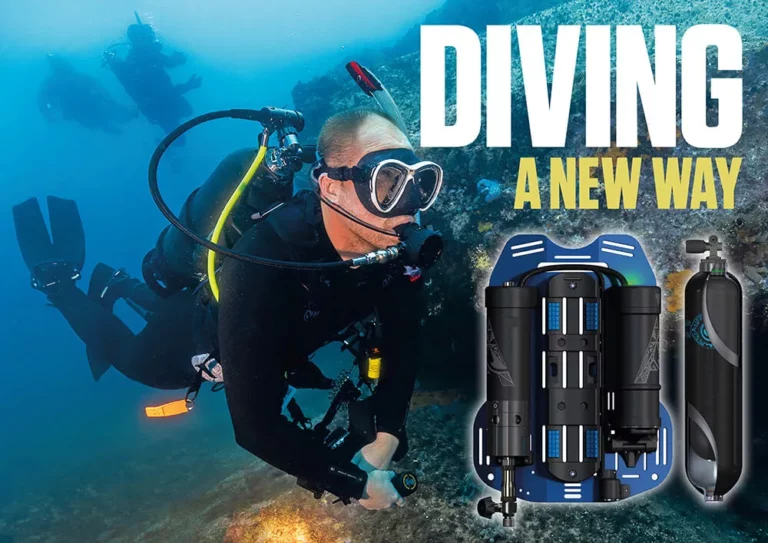
Adrian Stacey gets to grips with diving a new way: Avelo Scuba System. He discovers how this innovative, new-fangled technology delivers a liberating diving experience by replacing traditional gear with a streamlined Hydro Tank and Jetpack.
The best part of my job is getting to test new equipment and explore different locations. On a recent trip to Sydney, I managed to tick both of these boxes! Abyss Scuba Diving are based in the southern Sydney suburb of Ramsgate and is currently the only place in Australia that offers training on the innovative Avelo Scuba System. They are also conveniently located near the weedy seadragon capital of the world, Kurnell, so when I had the opportunity to take the Avelo course and dive these renowned waters, I jumped at the chance.
Avelo Scuba System
The Avelo Scuba System is the brainchild of Aviad Cahana, a scientist, engineer, and diving instructor who set out to improve the current way of scuba diving with a lightweight, streamlined, and less-cumbersome solution to the traditional scuba tank and BCD.
The system consists of two major components -the Hydro Tank, and a Jetpack. The Hydro Tank is a lightweight carbon-fibre tank with a rigid outer shell and an internal flexible bladder that contains the air. The Jetpack is comprised of a battery and a pump, which are attached to a backplate with a harness. There is an integrated pocket with SMB as standard, so if extra buoyancy is required at the end of a dive, the diver can deploy the SMB. The battery takes approximately 40 minutes to charge and, depending on the diver’s experience level, will last for between two and eight dives. DIN regulators are required, featuring a primary and alternate air source. There is also a hose attached to the tank that goes to the pump on the Jetpack.
A standard scuba rig, on average, will weigh around 32kg compared with an average weight of 20kg for the Avelo System. If I am diving with a 5mm wetsuit, I usually need around 4kg, compared to the Avelo, where I only needed 2kg. Not a huge difference, but the overall system was noticeably lighter, and for less-experienced divers who usually carry more weight, the disparity will be even greater. Weight is slotted into a shoe at the bottom of the tank, so no need for a weight belt or weight pockets.
Did you Know?
Avelo offer their Recreational Avelo Diver (RAD) course that teaches all safety scenarios, including failures. All possible failures of the Avelo System allow a diver ample time to respond and end a dive normally.
The system works on entering the water slightly positively buoyant, unlike standard gear where you enter negatively and then use your BCD to float. So, this means you can have lighter gear and then use the water during the dive as the weight. You can use a standard SPG and the slate provided, or you can use the Scubapro G2 computer or a Shearwater computer.
How the system works
The system is similar to the way submarines use ballast tanks to descend or ascend. A small button at the base of the backplate allows the diver to pump water into the carbon-fibre tank. As air is consumed, more water can be added as the tank becomes lighter. If too much water is added, a purge value, located on the other side of the back plate, is used to reduce the volume of water in the tank – simple!
Scuba tanks are typically filled to 200 bar and become lighter as the air is consumed, requiring air to be released from the BCD as the dive progresses. The Avelo tank can be filled to 300 bar and will typically only need water to be pumped in once or twice during the dive, as the air is depleted. One pump cycle takes around one minute and adds around 1kg of weight to the diver.
Avelo training
The Avelo Scuba System is recognised by all the major training agencies. To take the course, you must first have at least an Open Water Diver qualification. It is now possible to complete the PADI Advanced Open Water Diver training on the Avelo, and some agencies are exploring the possibility of running entry-level courses with the system.
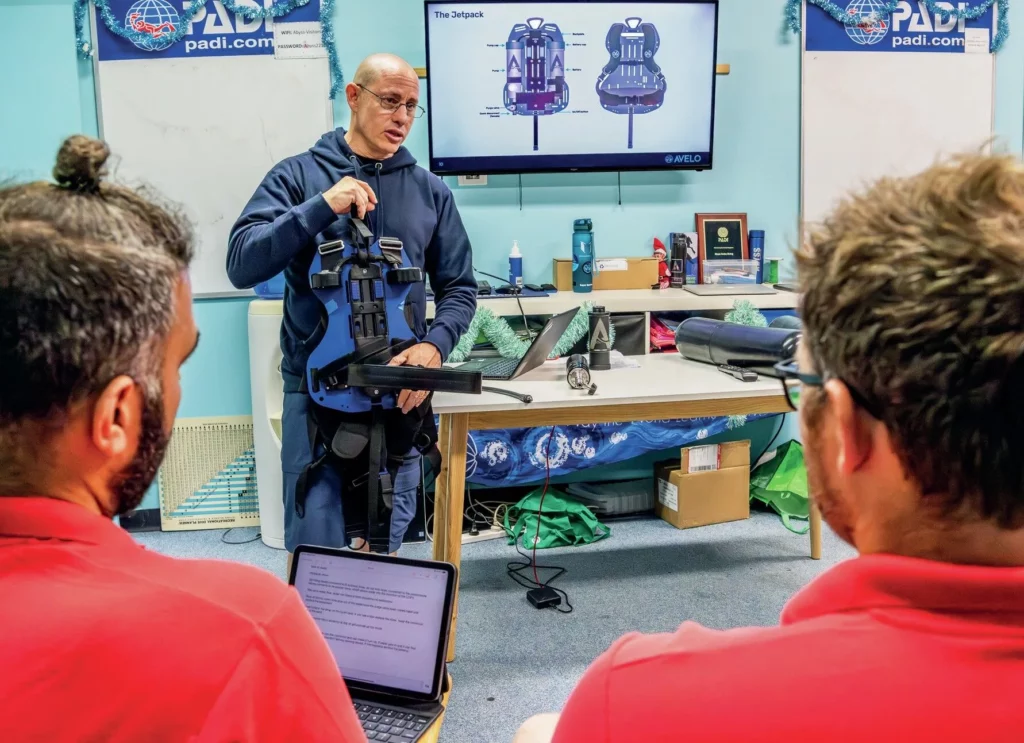
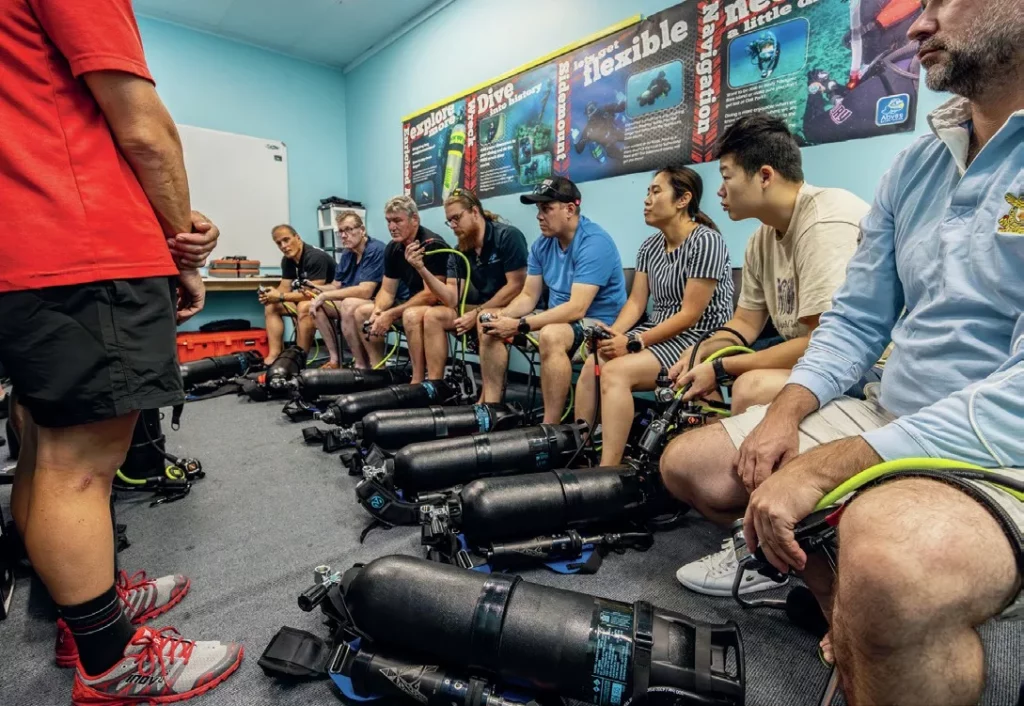
The course can be completed in one day and consists of three segments. First, there is some online theory that needs to be completed. A classroom session follows to ensure you have not skimmed over the content and taken an educated guess at the quiz questions. The classroom session also provides you with a first look at the equipment and how to assemble it. Then, there is an exam to ensure that you really have been paying attention. Finally, there are two open water dives, although a further day of diving is recommended to really get to grips with the system.
Open water dives
Before heading out for the dives, we assembled the equipment under the watchful eye of our instructor Rachael, who is also the owner of Abyss Diving and a champion of the Avelo Scuba System. Rachael explained: “The Avelo system is the perfect cross between scuba diving and freediving, allowing freedom of movement while also offering extended dive times.”
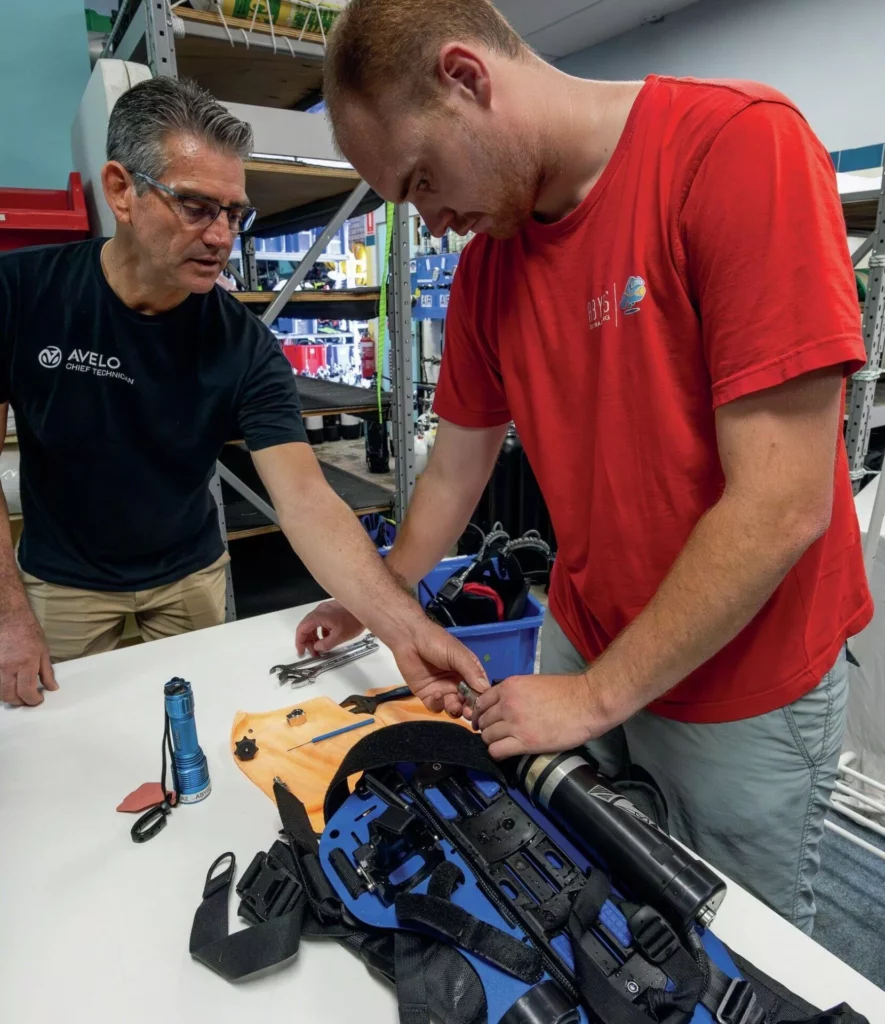
Assembling the equipment is a little different from conventional scuba and a bit more involved, but it is still relatively simple once you know how. First, a battery is inserted into the Jetpack. Then, the harness is attached to the tank, followed by the attachment of the DIN regulators to the tank. The valve faces in the opposite direction to regular scuba tanks, which means you can move your head more freely without hitting the valve. Finally, the pump is connected to the tank, and you are ready to go.
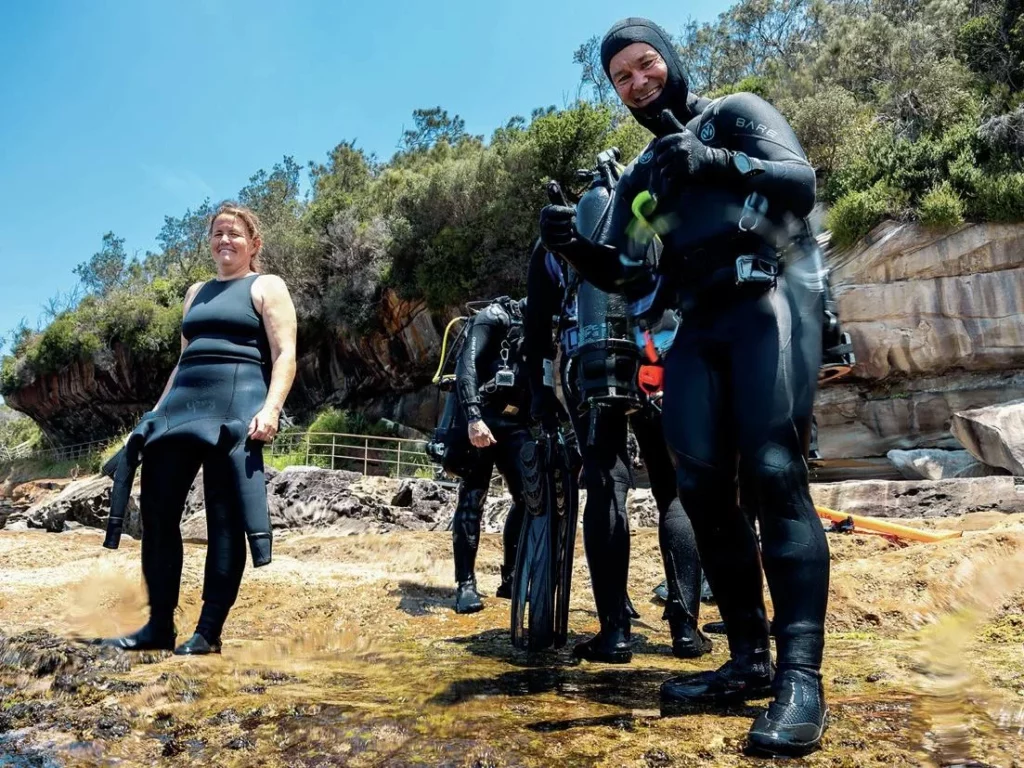
We loaded up the truck and made the 20-minute journey from the Abyss Diving shop to the shore of Kurnell. The plan was for two dives at a site called The Steps. I incorrectly assumed it was called The Steps because of the site’s topography. The name is actually derived from the numerous steps you need to descend to reach the water. The cynic in me thinks that we may have visited this site to demonstrate the benefits of the somewhat-lighter Avelo Scuba System. However, The Steps is a dive that almost guarantees weedy seadragon encounters, so that also might have been the reason for the choice of dive site.

The first thing I noticed was that I didn’t sit as high in the water as I would with a fully inflated BCD, but I was still comfortable, as the lightweight Avelo Scuba System is positively buoyant. Before descending, the pump needs to be primed, which means simply opening the valve and pressing the pump button, which allows water into the system but not the tank. After a quick check, it was time to descend. Neutral buoyancy is needed, so the valve is closed, and water is added to the tank by pressing the pump button once. Then all I needed to do was equalise and swim down!
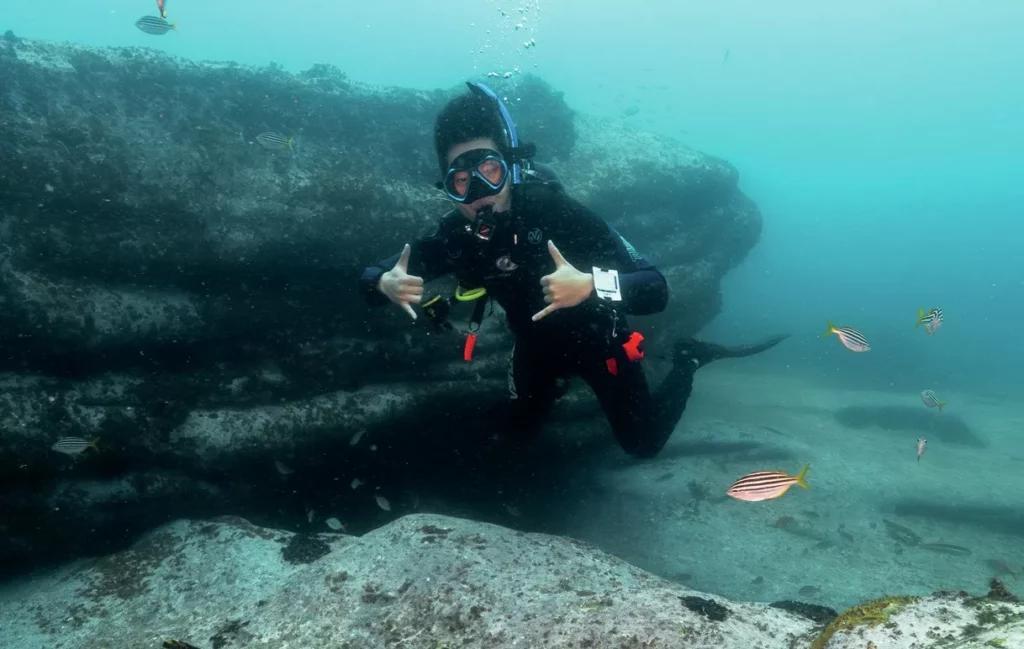
It took a little while to get my head around the fact that I could move up and down in the water col-umn without having to adjust my buoyancy, but it was a liberating feeling.

Dive one was mainly about getting comfortable with the system. I was required to hover, then swim up a few metres and down again, and this is when I realised the true advantage of this system. Not having a BCD that is sensitive to pressure changes is a massive plus! It took a little while to get my head around the fact that I could move up and down in the water column without having to adjust my buoyancy, but it was a liberating feeling. As a photographer, I found this a huge advantage. When I take my camera on a dive, I tend to use a lot more air as I am constantly having to fine-tune my buoyancy. Taking the BCD out of the equation means I can just use my lungs, and the reduced drag also improves manoeuvrability. I only had to add water to the tank once to descend, and once on the dive.
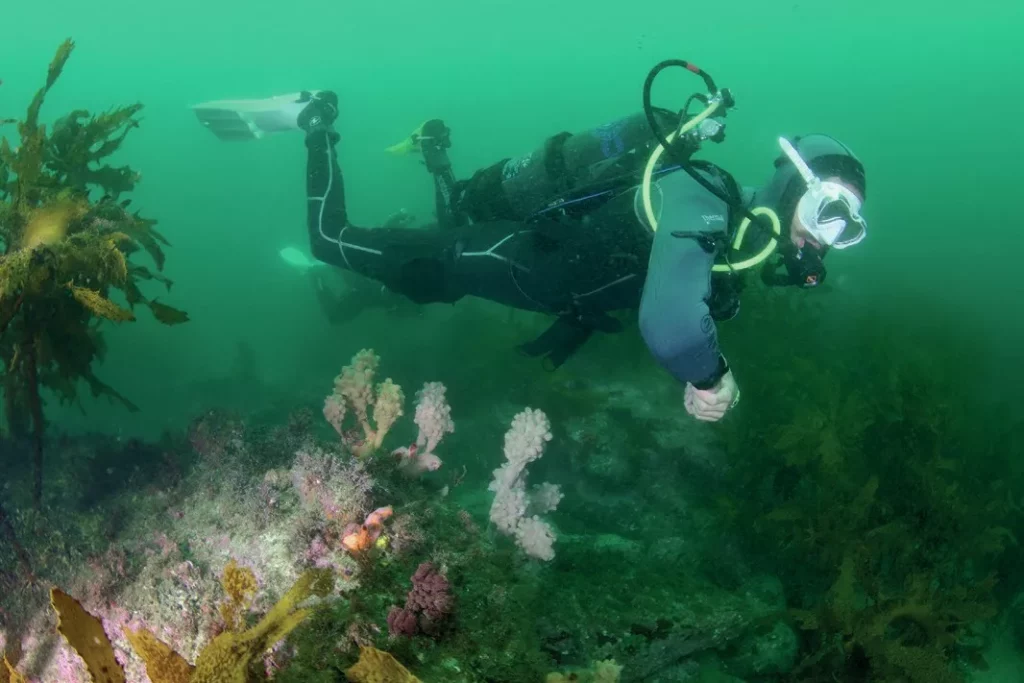
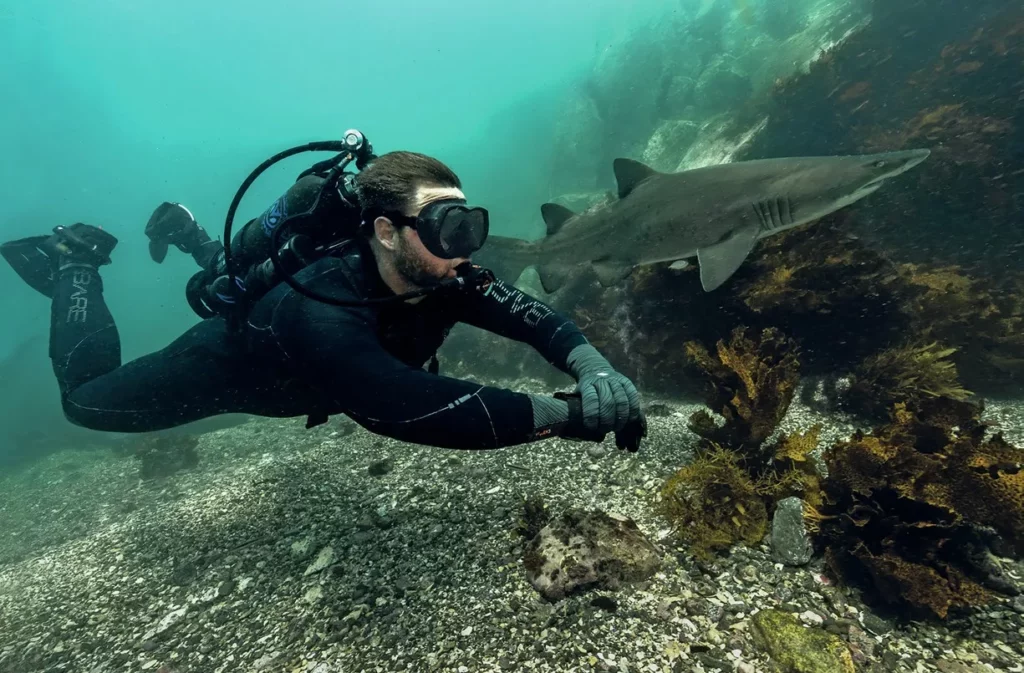
This was my first ever dive in Sydney. Although the visibility was not great on this occasion, I enjoyed hunting through the kelp forests in search of weedy seadragons; sadly, they proved elusive. Still, I encountered plenty of Port Jackson sharks and was impressed by the vibrant collection of sponges scattered throughout the site. At the end of the dive, I made a slow ascent with a safety stop at 5m. Once at the surface, I attained positive buoyancy by opening the purge valve and emptying the tank of water.
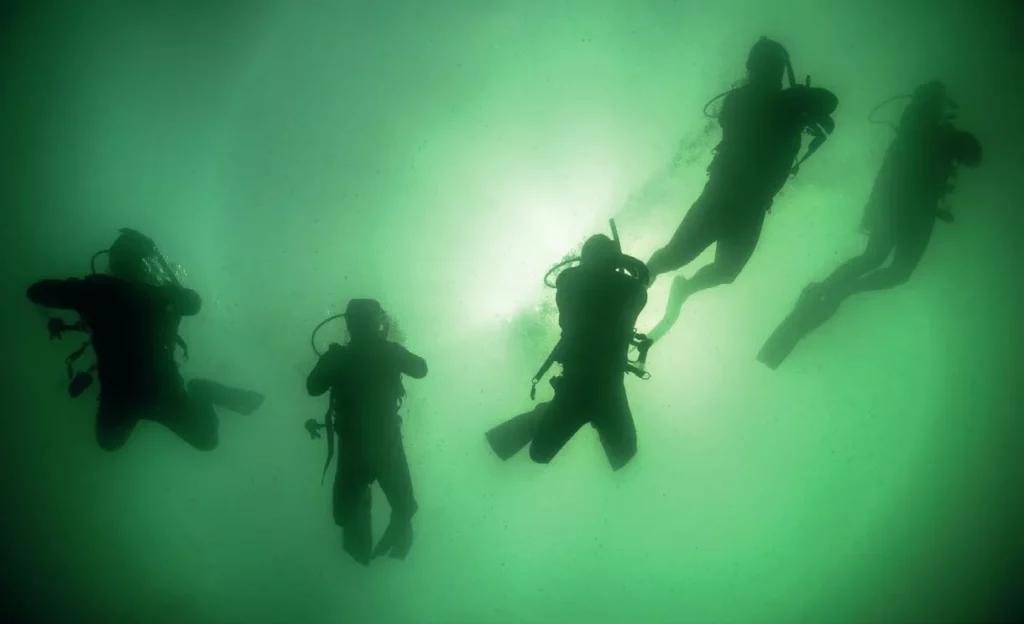
The second dive was at the same location, and this dive lived up to the reputation that Kurnell has as a weedy seadragon hotspot. We found, or rather my buddy and Rachael found, three different specimens lurking in the kelp, two large females and a male carrying eggs. In addition to searching for seadragons, I was required to perform several other skills. These included simulating the continuous flowing pump, which was achieved by opening the valve to release water from the tank. The other scenario I needed to practice was the pump value getting stuck open, which actually had minimal impact on my buoyancy and was nowhere near as dramatic as a BCD inflator button getting stuck. The final skill was a controlled out-of-air ascent.
Pros and cons

First, the benefits: The system is streamlined and lightweight, so there’s no need to lug heavy gear around. It eliminates BCDs and reduces the amount of weight required. As the diver is more streamlined and buoyancy is more stable throughout the dive, less air is consumed. The system provides consistent neutral buoyancy throughout the dive by adjusting water in the hydro tank, reducing significant, rapid buoyancy changes. The system is designed so that a pump failure does not lead to a dangerous situation; the diver remains neutrally buoyant and can still ascend safely.
Now, the cons! The Avelo Scuba System is expensive and is not really suited for travel. Currently, there is limited availability in resorts and liveaboards worldwide. Additional training is required, adding extra cost. Less-experienced divers might prefer the comfort of a BCD at the surface for added buoyancy.
Conclusion
The Avelo Scuba System is truly excellent. If I were to visit a dive centre or go on a liveaboard and they offered me a choice between the Avelo and traditional scuba, I would choose the Avelo. However, it is expensive and as most of my diving involves travelling, usually by plane, taking an entire system with me is not an option.
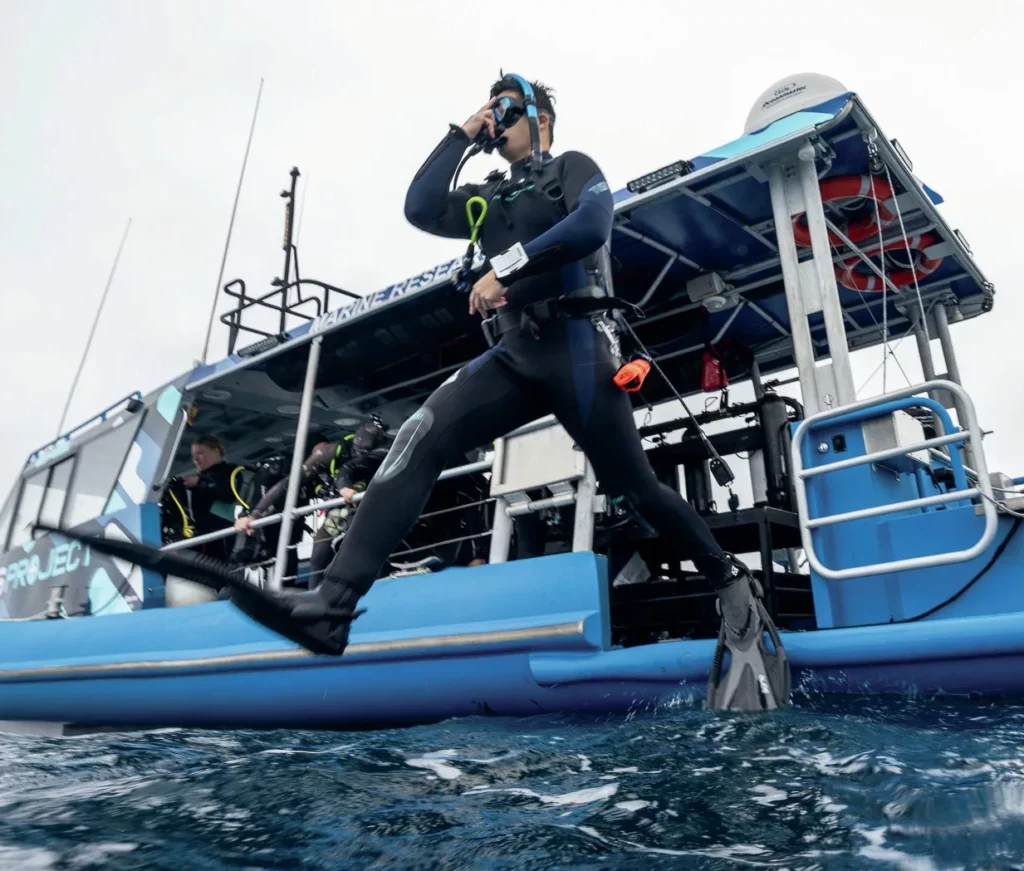
The challenge Avelo faces is getting more dive centres and liveaboards to offer the system. After a slow start, the Avelo concept is gaining traction and is being adopted by more dive centres, resorts, and liveaboards. or those looking to take this technology on the road, Solitude has partnered with Avelo to launch a unique liveaboard voyage, marking a huge step forward for BCD-free travel diving. I hope the Avelo movement continues to gather momentum, as I really enjoyed using the system and appreciated its numerous benefits over traditional scuba diving.
The system provides consistent neutral buoyancy throughout the dive by adjusting water in the hydro tank, reducing significant, rapid buoyancy changes
FAQs
What is the Avelo Scuba System?
The Avelo Scuba System is an innovative diving rig that replaces the traditional BCD and heavy tank with a lightweight carbon-fibre Hydro Tank and a motorised Jetpack. It uses water as ballast to manage buoyancy, much like a submarine.
How does the Avelo system manage buoyancy without a BCD?
Instead of inflating an air bladder, the Avelo system uses a pump to add water into a bladder inside the Hydro Tank. This increases the diver’s density to achieve perfect neutral buoyancy that isn’t affected by depth-related pressure changes.
Is the Avelo Scuba System lighter than traditional gear?
Yes, significantly. A standard scuba rig weighs approximately 32kg, whereas the Avelo system averages around 20kg. It also typically requires the diver to carry less lead weight on their harness.
Do I need special training to use Avelo?
Yes. Divers must hold at least an Open Water certification and complete the Recreational Avelo Diver (RAD) course. This one-day course covers the physics of the system, equipment assembly, and safety protocols.
Can I use my own regulators with the Avelo system?
The Avelo Hydro Tank requires DIN regulators. Your setup must include a primary second stage and an alternate air source (octopus). The system also integrates with specific dive computers like the Scubapro G2 or Shearwater.
This article was originally published in Scuba Diver Magazine
Subscribe today with promo code DIVE1 — enjoy 12 months for just £1!
