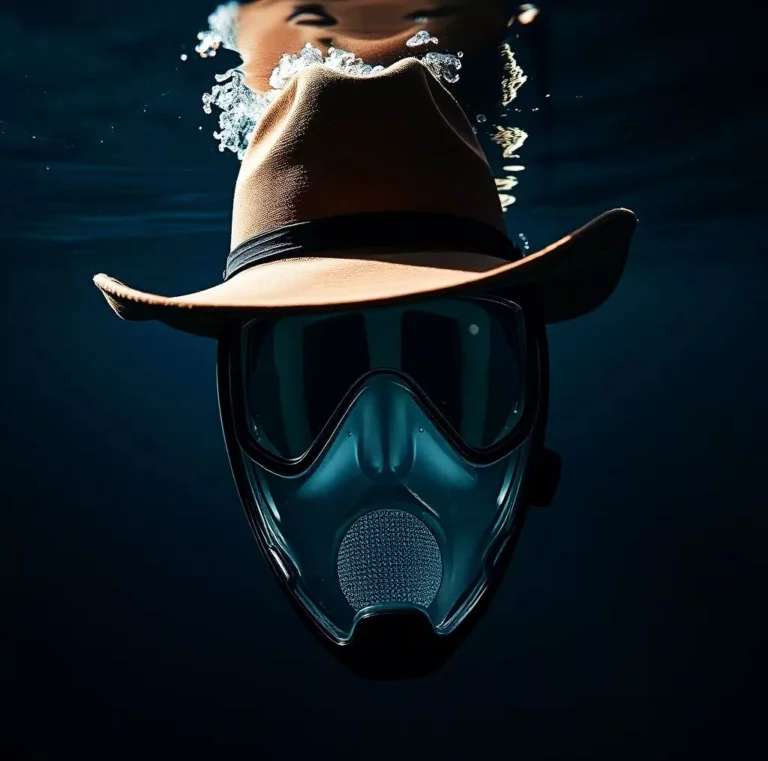
A recent warning notice on tens of thousands of full-face snorkel masks has reignited questions about whether these controversial products pose unacceptable levels of risk – but an expert who reckons the current market is a free-for-all says that a mechanism to separate good from bad already exists, in the form of a British Standard published 18 months ago.
One problem is that no manufacturers of the masks appear to have claimed compliance with the standard as yet – another is that snorkellers are built differently from one another, and it is the “CO₂ retainers” who need to be especially careful.
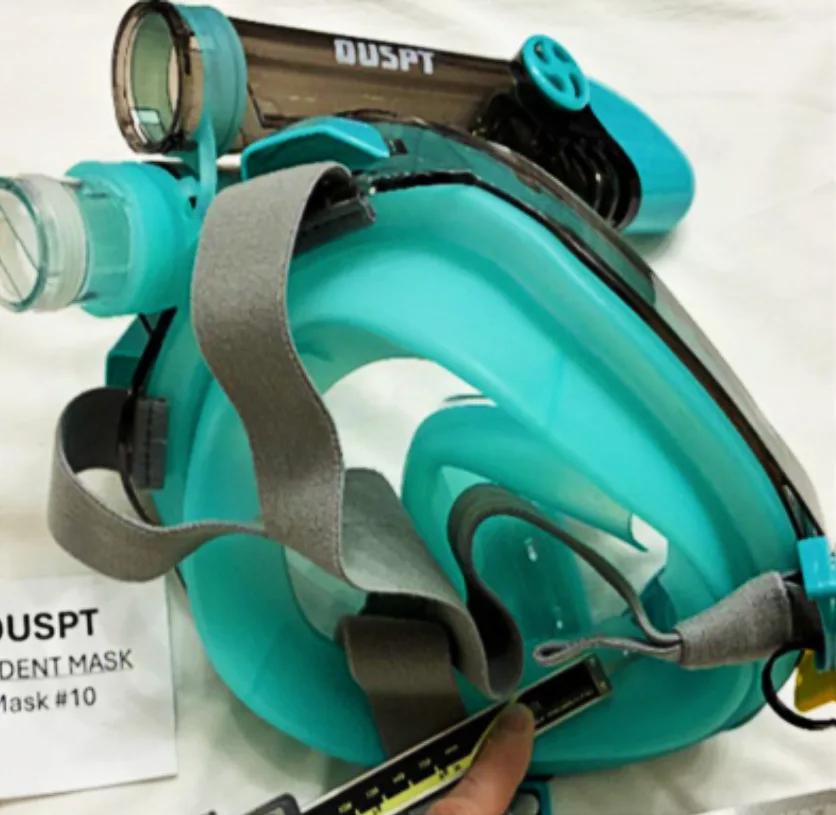
Earlier this month (March 2026) Divernet reported that the US Consumer Product Safety Commission (CPSC) had issued a warning about 84,000 OUSPT-branded full-face snorkel masks made by Field Life in China.
The CPSC was responding to five reports of users experiencing breathing difficulties, feeling light-headed or losing consciousness, with consequent risk of drowning, along with a lawsuit alleging that one of the masks had been responsible for a death.
The product had been sold for seven years on Amazon, since March 2019. Field Life was said to have ignored the CPSC’s requests for information or to issue a recall, and owners were therefore advised to dispose of the masks safely, and not to sell or give them away.
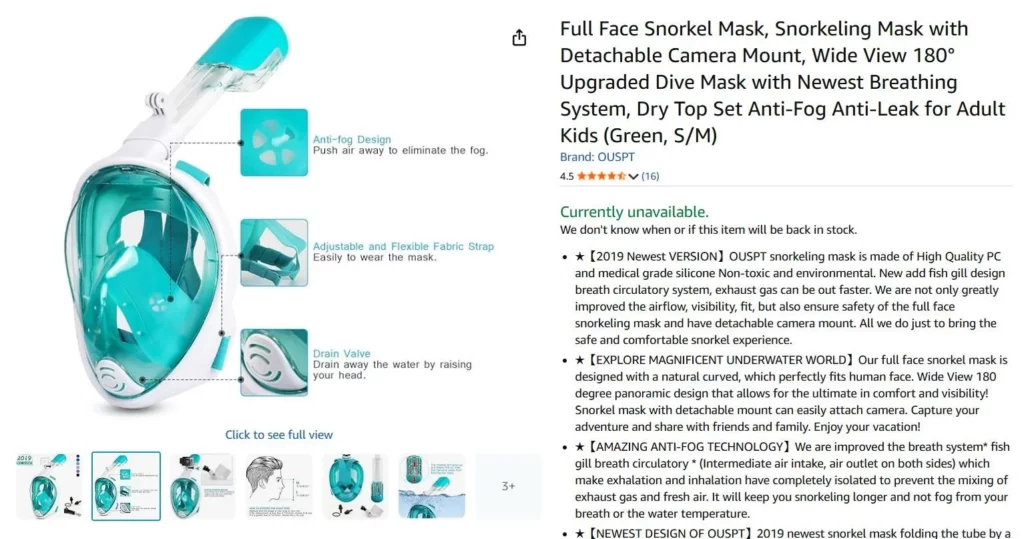
The danger with the design is that within the enclosed space snorkellers can re-inhale their exhaust breath. Research published in 2023 in Diving & Hyperbaric Medicine showed that during simulated use some full-face snorkel masks allowed such rebreathing of exhaled air, increasing CO₂ and reducing oxygen levels.
Mask market
“It’s the Wild West out there at the moment,” says Martin Parker, referring to the full-face snorkel mask market. He is managing director of Cornwall-based AP Diving and a diver and manufacturer with vast experience of respiratory equipment.
Suppliers of the masks have effectively been left to set industry standards themselves, he says: “The manufacturer can make up its own limits as to how much CO₂ re-inhale is acceptable!”

Parker wants snorkellers to be aware that a standard for full-face snorkel masks does exist. He was on the British Standards Institution (BSI) diving equipment committee that published that quality benchmark in October 2024.
A response to long-standing concerns, BS8647 sets safety and performance requirements for full-face snorkel masks. Testable safety criteria include CO₂ build-up limits, breathing-resistance thresholds, airflow-separation performance and leak-testing and dead-space evaluation, using formal laboratory tests.
“At the moment BS8647 is the only standard in existence for full-face snorkel masks but it is the first step in the creation of an appropriate European or ISO standard,” Parker told Divernet.
Oro-nasal pockets
Full-face snorkel masks incorporate an oro-nasal pocket that separates airflow to the nose and mouth from the main breathing channels. It is meant to improve airflow, reduce CO₂ build-up and minimise fogging.
“With the inherent risk of using an oral-nasal pocket instead of a bite mouthpiece, it is clear to us divers that there is a risk of the user re-inhaling a proportion of the exhaled breath,” says Parker.
“While you cannot avoid inhaling some CO₂, there are internationally recognised limits on how much you can inhale. These limits are specified in the EN14143:2013 rebreather standard and elsewhere.”
The amount of CO₂ that can be inhaled per breath is specified as the Volume Weighted Average Inspired carbon dioxide, and has a limit of 20 millibars, says Parker. Specialist test apparatus is needed to measure the VWAI CO₂.
“Following a number of fatalities using full-face snorkel masks, the BSI committee specialising in respiratory protection in underwater applications decided to create an appropriate standard which includes this 20mb limit,” he explains.
At present there are no European standards for snorkel masks, only for regular masks (EN16805) and snorkels (EN1972). These date back to the early 1990s, were updated in 2015 and specify requirements and test methods.
Masks and snorkels are category 1 personal protective equipment (PPE). “So the manufacturer can do the tests itself and, if they comply with the requirements of EN16805 and EN1972, it can apply the CE mark itself,” says Parker.
Claiming compliance
British Standards are usually voluntary unless adopted into regulations. Divernet has not found any full-face snorkel mask manufacturers as yet claiming compliance with BS8647 in their marketing or specifications. This includes well-established diving brands as well as inexpensive mass-market products.
It should however be pointed out that many products on the market will predate the standard, and product redesign, testing and certification cycles typically takes years rather than months.
Most products still rely on non-specific marketing claims such as “anti-fog”, “dry snorkel system” or “CO₂ separation channels”.
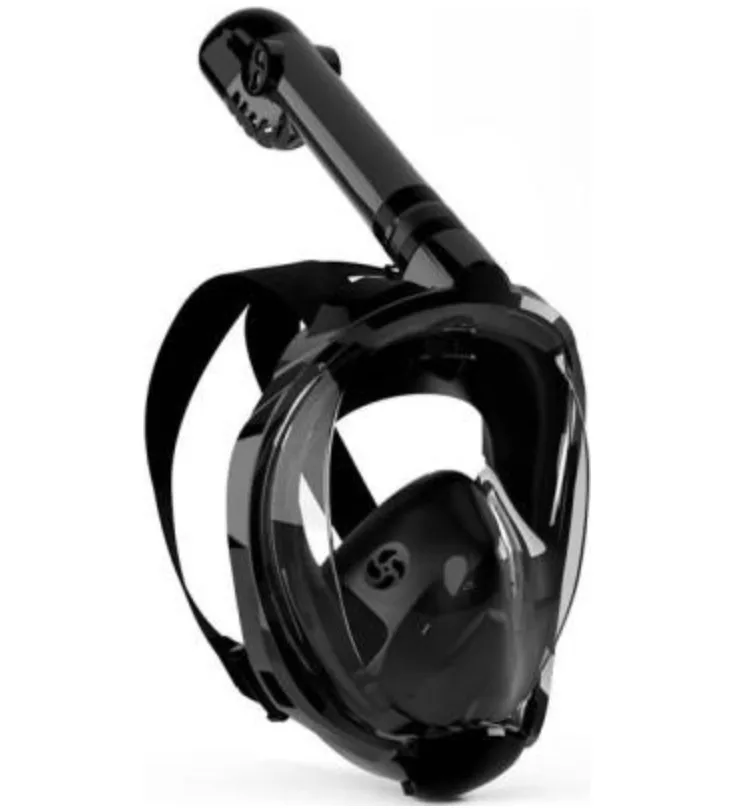
Parker says that he would expect recognised European scuba-equipment manufacturers who offer full-face snorkel masks among their offerings to have “applied sensible limits and to be testing the VWAI CO₂ level, because they’re used to dealing with CE requirements”.
But he also points out that a product that might work fine for one snorkeller could still prove problematic for others who have differing physiology, including those who might be described as “CO₂ retainers”.
Among healthy people there is a 2-3× variation in how the body responds to rising CO₂ levels. The differences might be attributable to genetics, fitness, acclimatisation, learned breathing patterns or anxiety levels.
Some people are naturally low responders, regulating CO₂ effectively until they find themselves in a situation in which breathing is constrained or altered. With the added dead space found in full-face snorkel masks, their CO₂ levels might rise more than for a high responder who compensates quickly.
The British Standard calls for tests to be conducted at various breathing rates with corresponding levels of CO₂ production, thereby allowing for all types of user.
Masks from the movies
“We tested the masks used in the movies Avatar and Mission Impossible,” says Parker. “They’re used without an oro-nasal pocket so that the actors’ faces can be seen, but they had a clever gas-injection system and we had to give very tight conditions of use.
“Oro-nasal pockets in the full-face snorkel mask have to fit and seal against the face, because if they don’t the ‘dead space’ is enlarged massively and the inhaled CO₂ per breath will be higher.
“The problem is that a large proportion of the population are CO₂ retainers. They accept a higher inspired CO₂ without any increase in respiration rate – right up until they go unconscious. This, we assume, is why the fatalities are occurring.”
For anyone determined to use a full-face diving mask or in the position of advising friends or family, the recommendation is to stick to reputable diving brands; avoid very cheap, generic masks; stay at the surface; and be aware of the products’ limitations and the risks of CO₂ build-up.
Otherwise, wait for the first manufacturers to begin announcing BS8647 compliance.