New evidence gleaned from a set of ancient shipwrecks indicates that tin was the first British commodity to be exported in large quantities right across Europe thousands of years ago – proving that Britain played a crucial role in the European Bronze Age.
A recently published international study, led by archaeologists at Durham University, has revealed that tin mined in south-west Britain up to 3,300 years ago was a key resource for major civilisations as far as 4,000km away in the eastern Mediterranean.
Also read: Cornwall gets into National Marine Week spirit
Led by doctors Alan Williams and Benjamin Roberts, the researchers used chemical and isotope analysis to trace the geological origins of tin ingots found by marine archaeologists in a number of shipwrecks dating back to around 1300 BC, including three off the coast of Israel.
The vessels had originated in south-western Britain, southern France and Israel itself and their cargos were said to provide the first direct evidence that what are now Cornwall and Devon were major suppliers of tin for bronze production in the ancient world.
The vital 10%
Bronze typically contains 90% copper and 10% tin, which was a rare element in Europe at the time. However, many experts had long argued that trade from as remote a location as Britain would have been impractical to carry out on any scale for southern European civilisations looking to produce weapons, tools and jewellery.
The tin trade was however described in classical texts by the Greek explorer Pytheas, who travelled in Britain around 320 BC to write the first-known account of the island and its people.
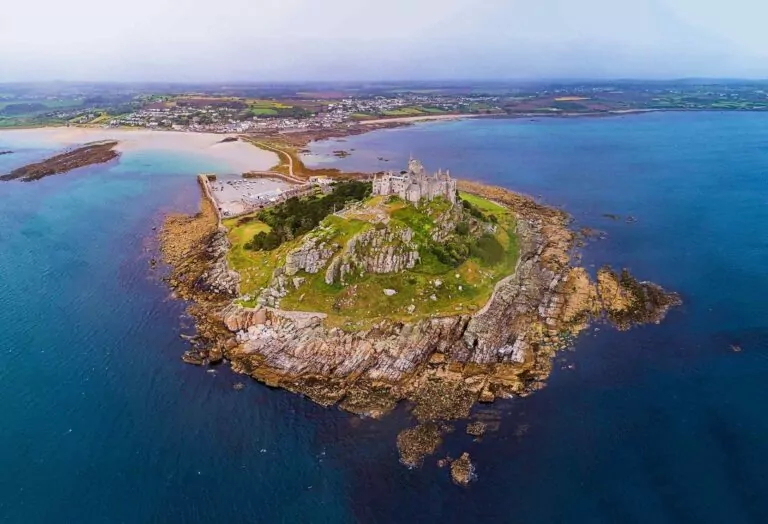
He recorded that the metal was traded off a tidal island in south-west Britain that he called Ictis – now thought to be St Michael’s Mount in Cornwall. It was then transported across the sea and down along the rivers of France to the mouth of the Rhone in the Mediterranean Sea – over the space of a month.
The shipwreck study now estimates that tens of tons would have been transported annually in stages via traders in France, Sardinia and Cyprus.
The report, which also shows that tin from the 600 BC Rochelongue shipwreck found off the south of France had originated in south-western Britain, has been published in the journal Antiquity.
Also on Divernet: DIVERS FIND DAGGER ON WORLD’S OLDEST MERCHANT SHIPWRECK, DIVER’S DISCOVERY COULD BE EARLIEST SHIP’S GUN, MINING A FORGOTTEN PAST IN CORNWALL