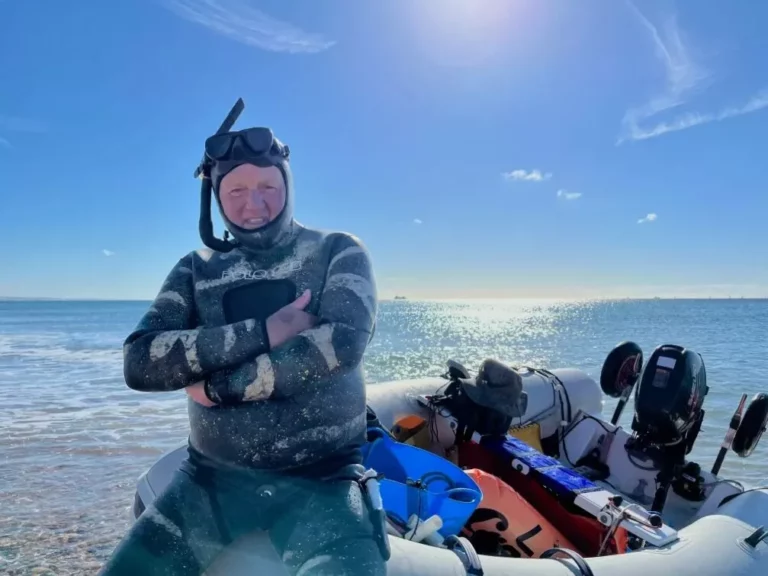
A Brighton-based diver and environmental campaigner who played a key role in securing a trawler ban off his county has been recognised for his achievements with the award an honorary science doctorate by the University of Sussex.
Eric Smith, 77, is co-founder of the charity Sussex Underwater and, following the ban, has helped to create what has been described as the UK’s largest marine rewilding project. He and the other members often freedive to monitor the seabed.
Smith told BBC Radio Sussex that he had been “quite surprised” to receive the degree, and described how he had started diving off the Sussex coast at the age of 11 in 1959, using equipment that had cost him the equivalent of 50p.
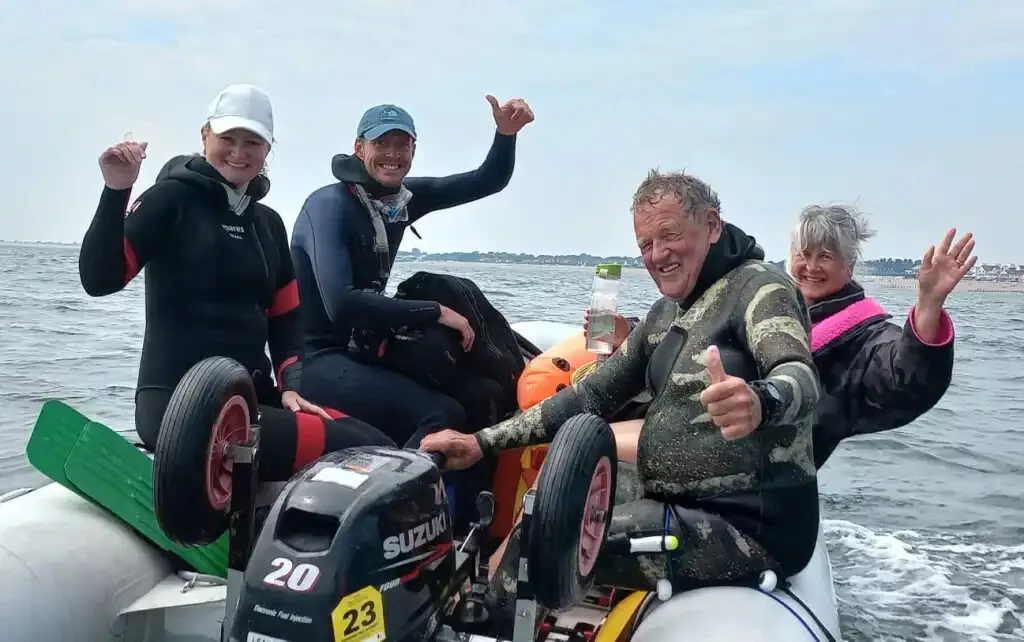
He had initially explored kelp beds, encountering squid but also the threats of entanglement, currents and tides. “It scared the hell out of us,” he said, “but we got used to it.”
As a keen local diver, Smith would later witness the effects on the seabed of destructive fishing practices. His successful campaign to get inshore trawling banned between Selsey and Hastings was showcased in the 2023 half-hour BBC documentary Our Lives; Our Sea Forest, “highlighting the profound impact one individual’s passion and drive can have to galvanise a change for the better”.
Comprehensive bans
Sussex Underwater, set up to prevent the sea becoming “out of sight and out of mind”, works with partners such as the Sussex Kelp Recovery Project to build evidence of post-trawler-ban marine life recovery. Its aim is to use the data to advocate for comprehensive bans around the entire UK coast.

“When we started talking to people five years ago, everyone thought the sea was just this grey mass out there, which occasionally got rough,” Smith told the BBC. “But we’re making films and showing people what it’s all about – and they’re stunned.”
Last year Sussex Underwater volunteer scuba divers helped to install what was described as the county’s first underwater marine-life habitat, the “Minter Hotel” at Lancing.