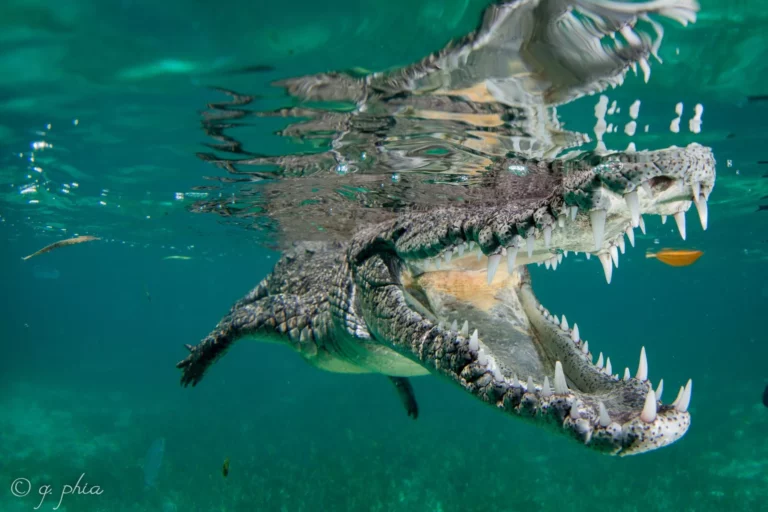
A 72-year-old American scuba diver has been bitten by a crocodile while going for a late-afternoon swim off a resort beach on the Caribbean island of Cozumel in Mexico.
Eric Greager from Richland in Washington state was about 30m out from the shore when the crocodile, which he estimated to be about 3m long, clamped down on his right arm. He was thrashed about in a way that he later described as “like a dog with a rag toy”, according to US press reports.
Greager, a personal trainer and spin-bike instructor who had been on a diving holiday in Mexico with his wife, says he was dragged 4-6m under water.
He fought to break free by lashing out at the crocodile’s head with his good arm and kicking it. He eventually succeeded in fending it off and says that after a final nip at his right hand the crocodile retreated.
Greager managed to pull himself back towards the shore along a marker rope and was assisted by a lifeguard who acted quickly to apply a tourniquet to his arm even before he was out of the water. He later said that this action had been the key factor in preventing catastrophic blood loss.
Taken to a hospital some distance away, Greager underwent six hours of emergency surgery to save his arm, including repair to severed tendons and a damaged artery. He had also sustained a leg injury.
The diver spent three days in hospital and left with no signs of infection, although full recovery was expected to take a long time. He said that although he would have to miss a scuba trip to Fiji booked for June, he was hopeful of having recovered enough by October to enjoy a planned dive-trip to Indonesia.
American crocodiles
Crocodile incidents around Cozumel are rare but usually involve American crocodiles (Crocodylus acutus), which are among the world’s most saltwater-tolerant species and native to Mexico’s Caribbean coast.
Occasional bites or encounters have been reported near beaches, lagoons and resort areas in or near brackish water zones, such as where mangroves connect to the sea.
Cozumel’s famous scuba-diving reefs are mostly offshore and are not typical crocodile habitat. The largest concentrations are inshore at Punta Sur (South End), which includes a system of protected wetlands inside a nature reserve connected to the sea; the north coast network of shallow lagoons and mangroves; and the mangrove-lined resort zones on the west and south-west coasts.
Mexican environmental agencies such as SEMARNAT/CONANP emphasise that crocodiles are protected wildlife and that people should avoid entering known crocodile habitats, especially at times of peak activity in early morning and at dusk.
Also on Divernet: British twin punches crocodile to save sister

Swim with dinosaurs, you might get bit… I’m glad the guy is okay.