This bryozoans marine life guide takes you beneath the surface to explore these moss-like colonial animals, revealing their species, habitats and role in marine ecosystems.
The name “Bryozoan” comes from the Greek bryo meaning “moss” and zoan meaning “animal”. Together with hydroids, bryozoans make up the brown “turf” found at most diving locations.
What Are Bryozoans?
Bryozoans are highly complex colonial animals constructed of individual “zooids”, all connected by living tissue. The zooids are protected within a cup- or box-shaped exoskeleton of calcified chitinous tissue. The degree of calcification governs how rigid or flexible is the overall structure. In this bryozoans marine life guide, we highlight how these structural differences impact their underwater habitats.
Bryozoans in Marine Ecosystems: A Bryozoans Marine Life Guide
Bryozoans are a very important group in marine ecosystems, filtering a lot of sea water and forming living habitats and/or food for numerous other animals.
They also have an economic importance, as fouling organisms on pipelines and ship hulls. One species, called Bugula neritina, is the source of a potential anti-cancer drug called “bryostatin”, currently undergoing clinical trials.

Bryozoans as Food for Other Animals
Bryozoans are eaten by a variety of grazing animals, such as sea urchins and various molluscs. Some nudibranchs feed only on a single particular species of bryozoan. For example, the yellow and white nudibranch Polycera quadrilineata limits itself to eating a “common sea mat” or Membranipora membranacea, a bryozoan which encrusts kelp fronds.
In late summer you can see massive orgies of these pretty nudibranchs busy mating and laying spirals of white eggs next to their sea mat prey.

Recognisable Bryozoans for Divers
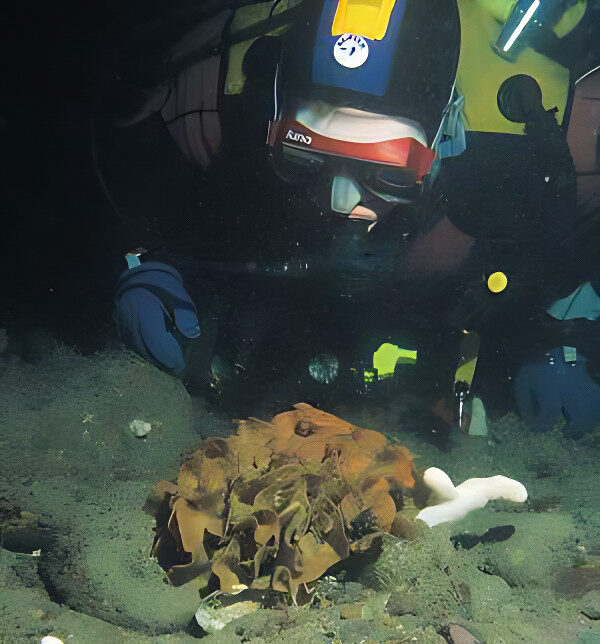
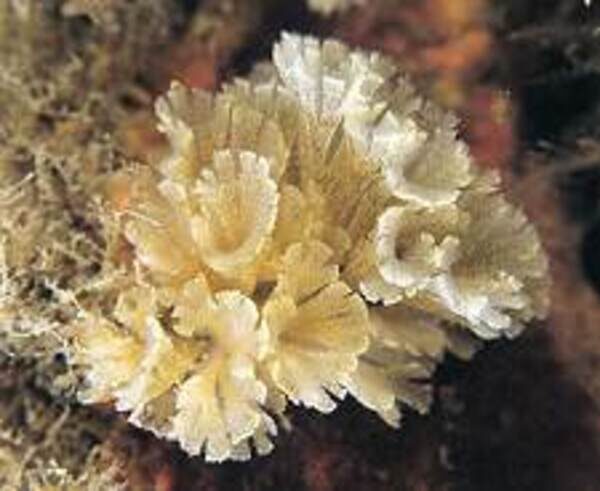
While many bryozoans are inconspicuous, one species that many divers would recognise is the cauliflower-like ross coral, Pentapora foliacea, mainly because of its size. Some colonies grow up to a metre in diameter. The coral part is, of course, a misnomer. In years gone by, ross coral was presumably confused with true corals as it was hard to the touch.
Being very brittle, ross corals are easily damaged and take many years to re-grow. As with true corals on coral reefs, damage by divers or boat anchors can be devastating.

Common Names and Confusion
Ross coral is not the only bryozoan to have a misleading common name. Flustra foliacea is called “hornwrack”, or hard seaweed, perhaps from the days before the differences between marine plants and colonial, plant-like animals were fully appreciated.
Don’t laugh too hard, there are still people out there who think a whale is a large fish! Hornwrack has a free-standing branching structure with flat rounded lobes.
Different bryozoan species have skeletons calcified to varying extents, so some colonies such as ross coral form hard structures while others are more jelly-like in texture.
Bryozoans in Shallow and Deep Water
Many of the less calcified bryozoans, like the common sea mat, live attached to seaweed in the intertidal and shallow subtidal areas.
The more calcified ones tend to live in sheltered environments or deeper water, especially the more delicate species.

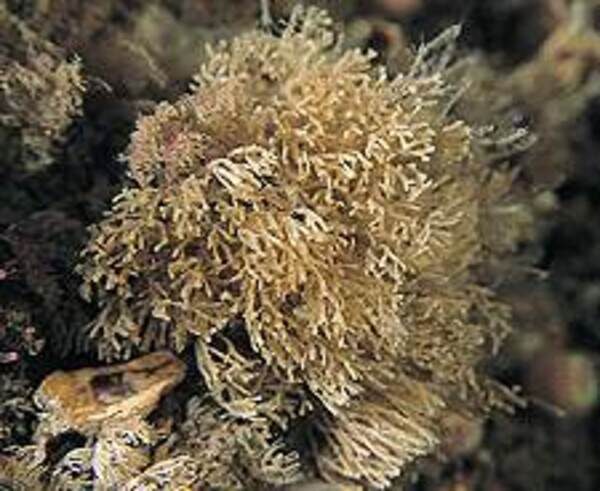
Among the kelp roots and below the kelp line, you can find fine tufts and spirals of bryozoans such as Bugula turbinata, Bugula plumosa and Cellaria fistulosa. These are less calcified than ross coral and move gently with current and wave surge.
With a leafy appearance and brown coloration, it is easy to see how such bryozoans can be mistaken for algae. But look carefully and you will see the tentaculate zooids that confirm their animal nature.
Bryozoan Structure and Polymorphism
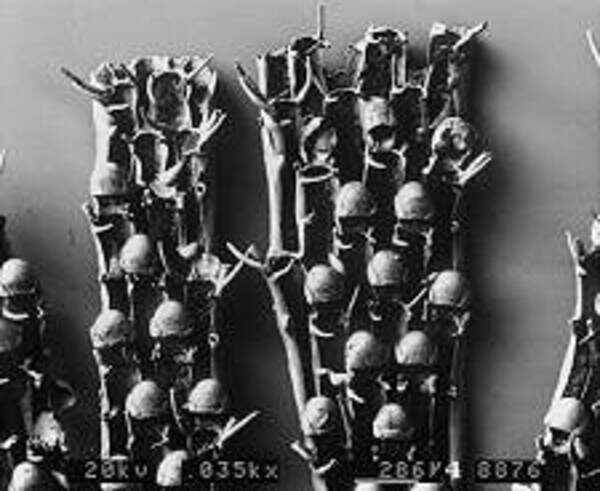
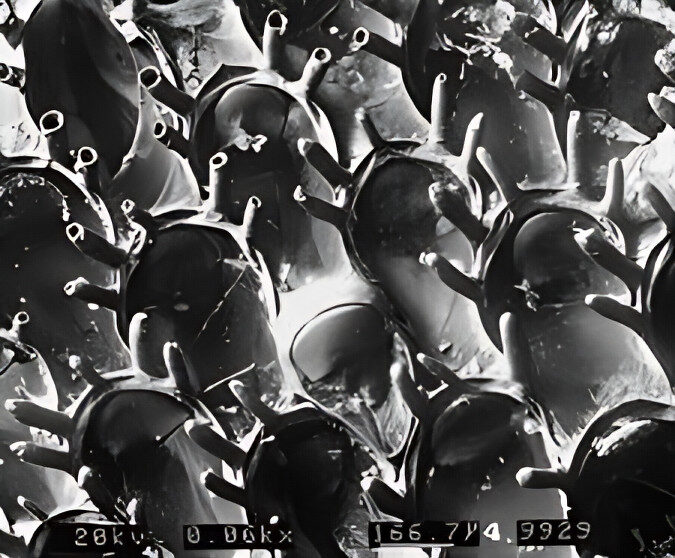
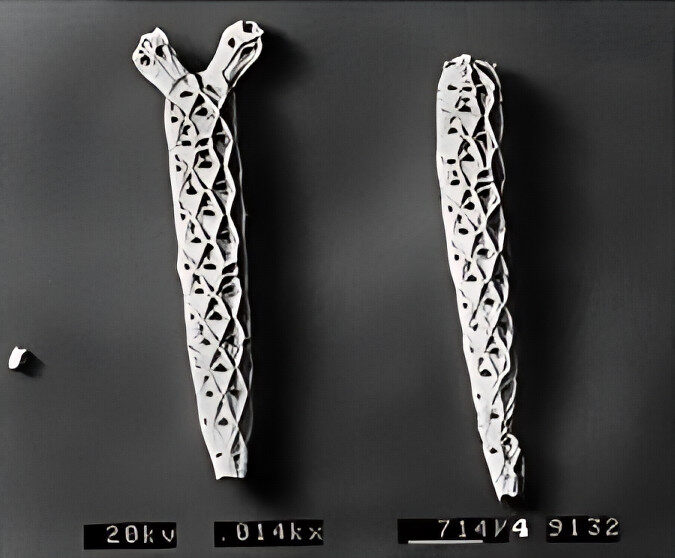
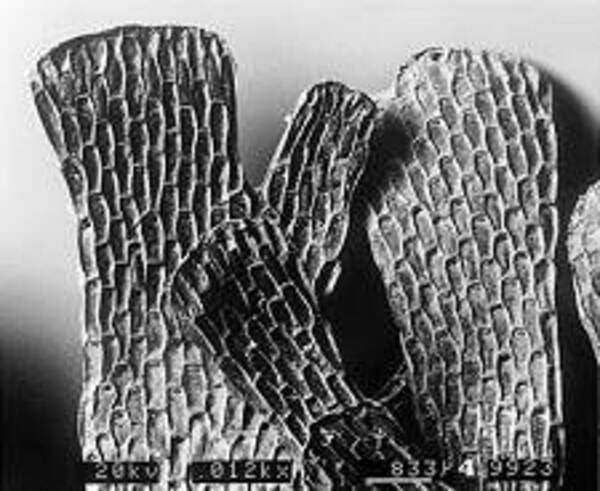
If you look closely at bryozoan colonies you will see that they often have intricate exoskeletal architecture. Some of these features are illustrated here using pictures from a low-power scanning electron microscope (SEM), but any diver can see them under water using a x15 hand lens.
Many of the 5000 or so bryozoan species exhibit polymorphism. Within a colony there will be several types of zooids, each with a different function reflected in its shape.

The basic zooid is the feeding zooid, called the autozooid. This has a feeding structure called the lophophore which is covered in ciliated tentacles and looks a bit like extended barnacle arms.
The lophophore is protruded into the sea water, and beating of its cilia creates a feeding current which draws plankton towards the mouth.
Bryozoans’ Defense Mechanisms
When threatened, the lophophore retracts rapidly into the zooidal skeleton. Each zooid has a mouth, U-shaped gut, and anus. Opercula protect some zooids when the feeding structures are withdrawn. This defensive behavior is highlighted in our bryozoans marine life guide to aid recognition of live colonies underwater.
Each autozooid has a mouth, a U-shaped gut and an anus that discharges outside the ring of feeding tentacles, hence bryozoans are also known as Ectoprocta. In some groups the lophophore is further protected when not extended by a small trap-door structure, the operculum, which seals the opening of the zooid.
The lophophore can’t be seen on these SEM pictures as they have been prepared with bleach for imaging, but the box-like skeletons of the autozooids stand out well and some of the pictures also show the operculum.
Other polymorphic zooids found in bryozoans include: gonozooids, large, non-feeding zooids which brood the larvae before their release; avicularia, defensive zooids in which the operculum is modified into a jaw-like structure; and vibracula, zooids with an operculum modified into a bristle-shaped structure, seemingly used for brushing sediment and fouling organisms off the surface of the colony.
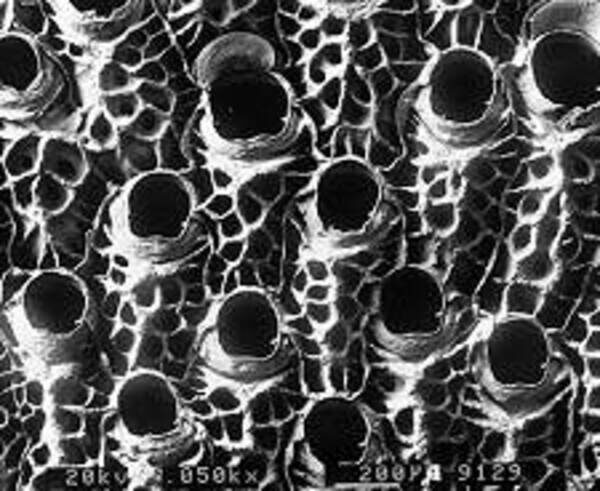
Even the spines present in bryozoans such as Flustra foliacea may be polymorphic zooids. You can see all of these zooid types in the SEM pictures. But don’t stop there, take a cheap plastic hand-magnifier under water and you’ll see these intricate structures at most UK dive sites.

Please read on How to identify bryozoans?
FAQs
What are bryozoans?
Bryozoans are colonial marine animals made up of tiny zooids. They form intricate, moss-like structures on reefs and seaweeds.
Where can divers find bryozoans?
They’re common at UK dive sites, attached to kelp roots, reefs, and hard surfaces in intertidal and subtidal zones.
Why are bryozoans important to marine ecosystems?
They filter seawater, provide habitats for other species, and play a key role in the marine food web.
Do bryozoans have any economic or medical importance?
Yes. Some foul ship hulls and pipelines, while Bugula neritina produces “bryostatin,” a compound under anti-cancer trials.
How can divers identify bryozoans underwater?
Look for moss- or coral-like colonies with delicate branching or mat-like structures. A simple hand lens reveals their zooids and exoskeletons.
Subscribe today with promo code DIVE1 — enjoy 12 months for just £1!
