Increasing ocean warmth and acidity is rapidly increasing the prevalence and spread of poisonous or venomous aquatic animals, according to a new analysis of “dangerous” species.
Those creatures likely to be shifting their range as the world’s waters grow warmer include lionfish, crown-of-thorns starfish and sea-snakes, according to the report, produced by US scientific researchers.
Also read: StingBlade skims off jellyfish barbs
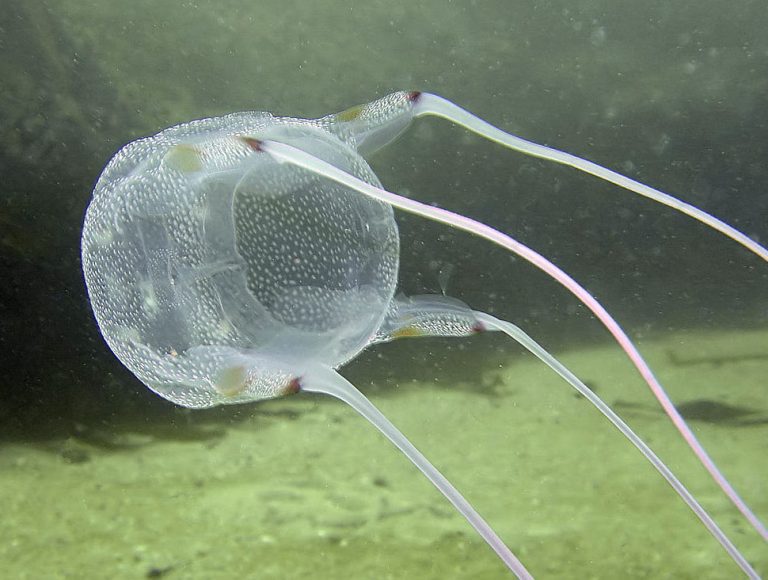
Most concerning for water-users in the Southern Hemisphere are jellyfish, the group thought most likely to increase both in range and abundance, as this includes species such as irukandji and box jellyfish that can inflict fatal wounds. They are thought likely to be moving further south towards more populated areas of Australia.
The researchers examined existing data on climate-change effects on such creatures, as well as carrying out various modelling studies. They found that although the various species would not necessarily become more abundant they would tend to push north or south as waters closer to the Equator became too warm for them.
Also read: Blue-ringed stowaway surprises snorkeller
However, the pattern would not be consistent, because some species would experience difficulties with such migrations.
Crown-of-thorns starfish have already been spreading south onto the Great Barrier Reef and causing additional problems for coral affected by bleaching as a result of ocean-warming.
Porcupinefish are also believed to be moving into new areas, but the report’s authors say that further research is required into the effects of climate change on the movement of animals such as sting rays, stonefish and blue-ringed octopuses.
The report, Environmental and Ecological Effects of Climate Change on Venomous Marine and Amphibious Species in the Wilderness, is published in Wilderness and Environmental Medicine.