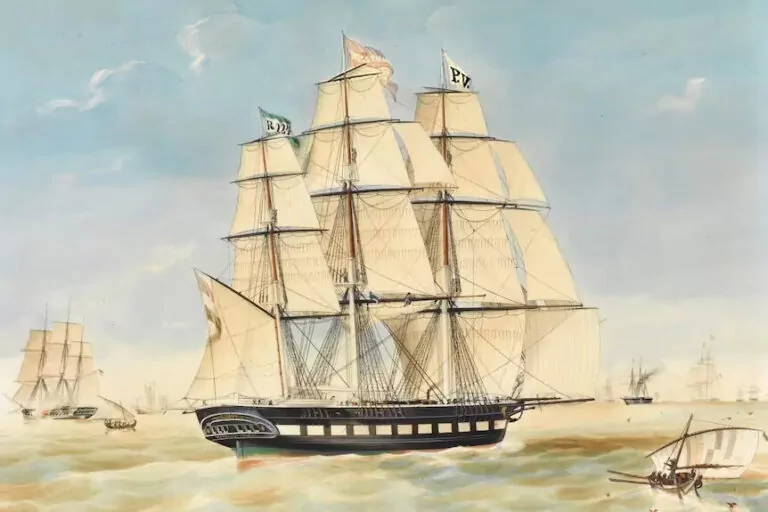
The discovery of a long-lost 19th-century Dutch merchant vessel that carried Chinese gold-prospectors to Australia has been announced after scuba divers’ finds confirmed the results of earlier magnetometer surveys, according to the Australian National Maritime Museum.
Lost off South Australia’s south-east coast in June 1857, the 800-ton, 52m Koning Willem de Tweede (King William II) had dropped off more than 400 Chinese gold-miners only days before her sinking.
Also read: Sydney divers drop 160m onto Nemesis shipwreck
What the museum calls a “significant discovery” and an “important piece of maritime history” has resulted from a project it began in 2022, supported by the Dutch Ministry of Foreign Affairs, the Cultural Heritage Agency of the Netherlands, the Silentworld Foundation, South Australia’s Department for Environment & Water and Flinders University.
The team suspected having located the Koning Willem de Tweede in 2022 after using a marine magnetometer to obtain a reading that appeared to match the dimensions of the ship in the area where she was thought to have sunk.
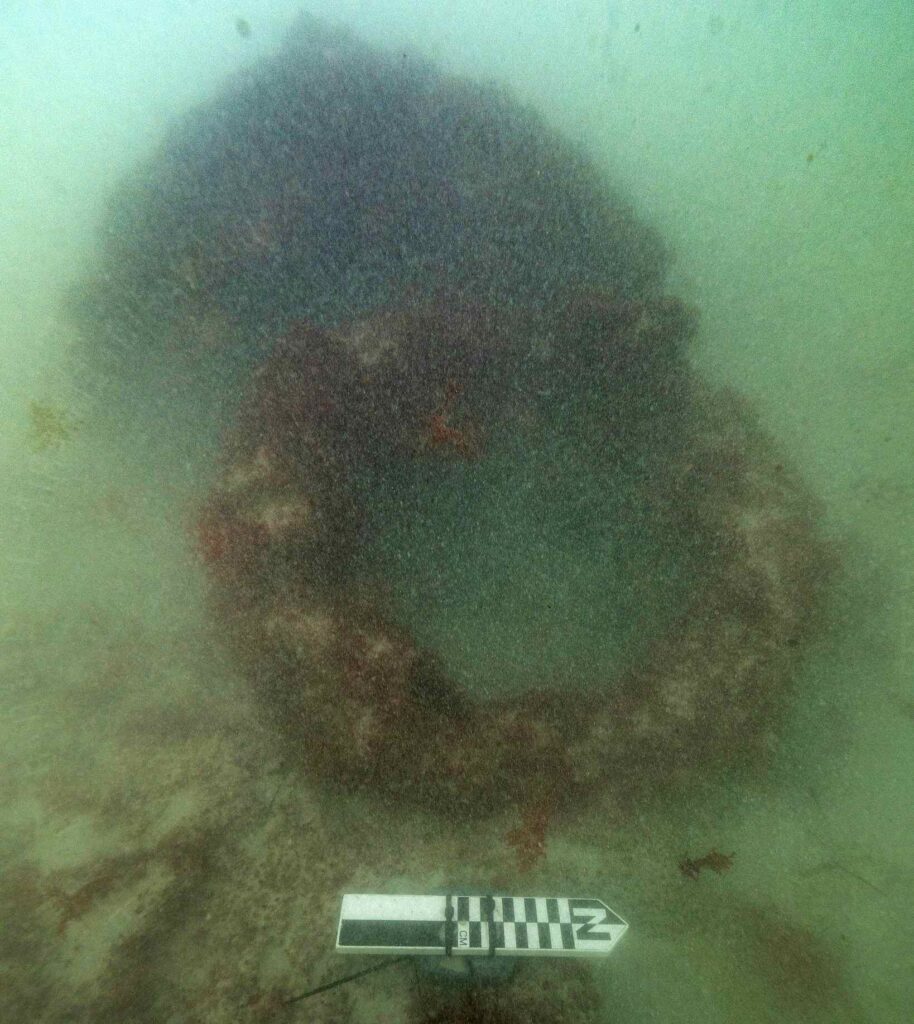
However, poor visibility in the bay caused by a constant ‘blizzard’ of fine sand – as seen in the photographs below – hindered subsequent efforts by scuba divers to find out more.
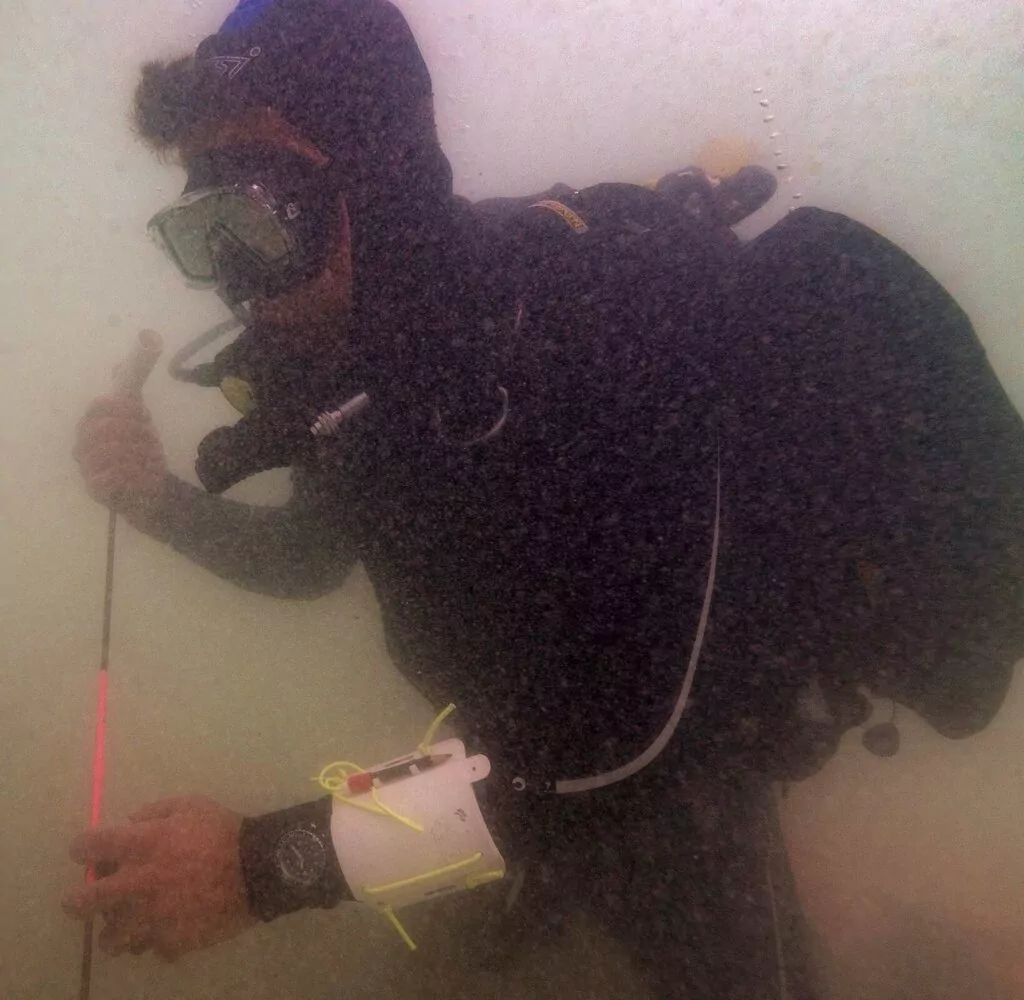
Dives during 2023 revealed nothing, and it was only this March, armed with metal detectors, that the archaeological divers were able to firm up their suspicions. They found parts of an iron winch and other ship’s components exposed – possibly temporarily – above the sand.
The team say they have confidence in their identification, and are planning to return to the site in the hope of finding further wreckage. They believe that having been quickly buried in the swirling sand after the sinking might have kept much of the ship and its contents intact.
The miners had disembarked from the Koning Willem de Tweede at the town of Robe, planning to walk from there to the goldfields at Bendigo and Ballarat in Victoria, more than 400km back east.
The hike allowed them to circumvent a £10 poll tax on immigrants arriving directly in what was then the colony of Victoria during its 1850s gold rush. The tax, equivalent to more than £1,500 today, had been Imposed two years earlier, aimed alongside boosted mining taxes at limiting Chinese immigration.
Days later the ship sank in Guichen Bay, possibly after hitting a sandbank, with the loss of 16 of her 25 crew who were later buried on the bay’s Long Beach. The Koning Willem de Tweede is classified as a protected historic wreck.
Also on Divernet: AUSTRALIAN DIVERS FIND WW2 DUTCH SUB WRECK, 80 YEARS SUNK: ANOTHER BEAUFORT BOMBER TRACED, TRAGIC NOONGAH IDENTIFIED AT DEPTH OF 170M, NEMESIS PROBE SOLVES AUSTRALIAN WRECK MYSTERY