What do you get when you combine world-class muck diving with the best of Filipino hospitality and service? You get a thrilling destination to quicken the pulse of every critter lover, and a small but immaculate all-inclusive resort that you’ll not want to leave, as Tom St George discovered
Photographs by Tom St George
Situated in the heart of the Coral Triangle, the Philippines is a hotspot for diving. It enjoys one of the most bio-diverse marine environments on the planet, so it is no surprise that the diving in the Philippines is so varied and rich.
Consult any list of top macro diving destinations and you will find Dumaguete featured. The reputation of this small slice of the Philippines has come to rival Indonesia’s Lembeh Strait in recent years and it continues to grow.
Situated on a peaceful stretch of sandy beach, the luxurious Atlantis Dumaguete is surrounded by lush tropical gardens. Despite its name, the resort is located in the Municipality of Dauin and lies about 15km south of Dumaguete.
Dauin (pronounced dar-win) offers world-class macro dives and is the epicentre of diving on the island of Negros, the third largest island in the Philippines.
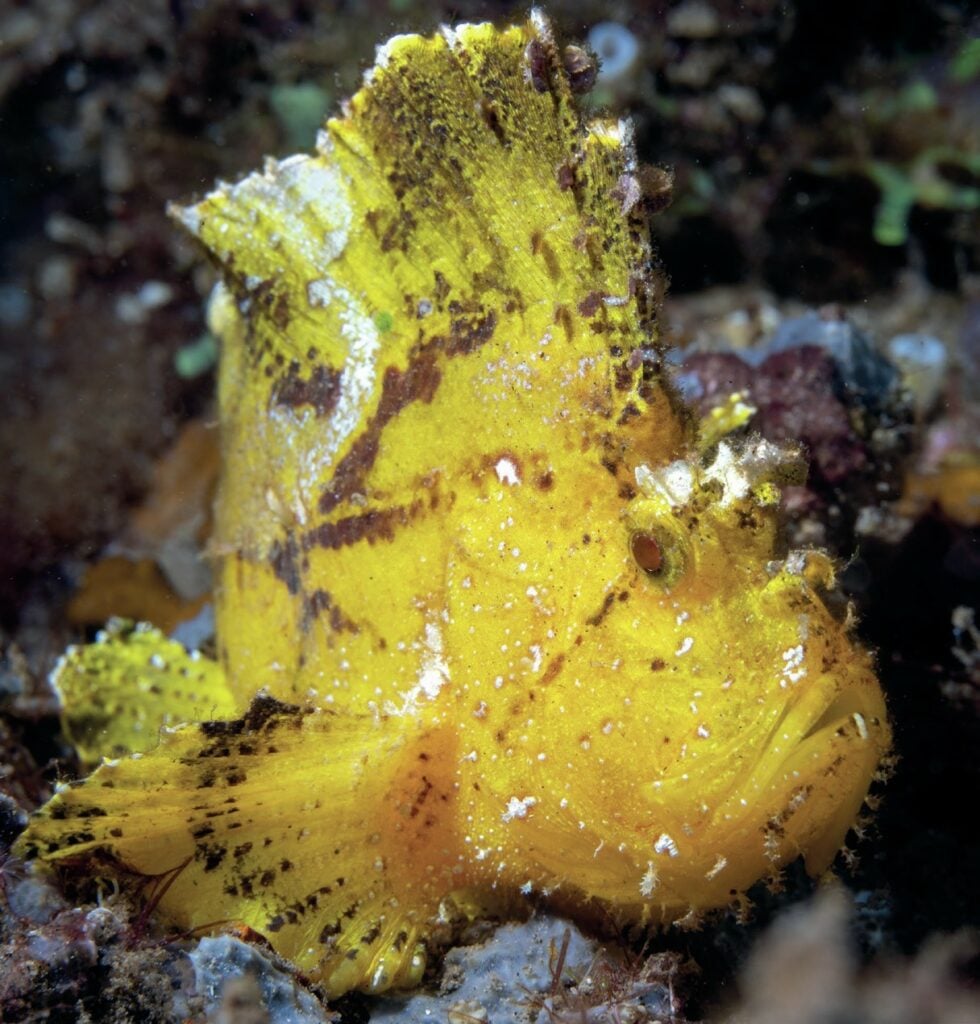
The diving in Dauin is excellent year-round, and depending on the time of year certain species such as seahorses, frogfish, and octopus can each be more prevalent. Dauin lays claim to the title of frogfish capital of the world.
On a good day, certain dive sites may be home to up to eight different species of frogfish. But it is not just frogfish that is on offer – the coastline is dotted with incredible muck diving sites with a variety and abundance of marine life that is sure to impress any diver.
The topology of the dive sites in Dauin consists of dark volcanic sand interspersed with patches of reef, rubble, seagrass, and several artificial reefs to supplement the natural reefs found here. This combination of habitats provides a home for a bewildering array of bottom-dwelling critters.
In addition, Dauin has several small but well-established marine sanctuaries. Boats and fishing are prohibited in the roped-off areas, but they are open to divers.
This protection from fishing, particularly from bottom trawling, may help explain the abundance of weird and wonderful creatures found so close to shore.
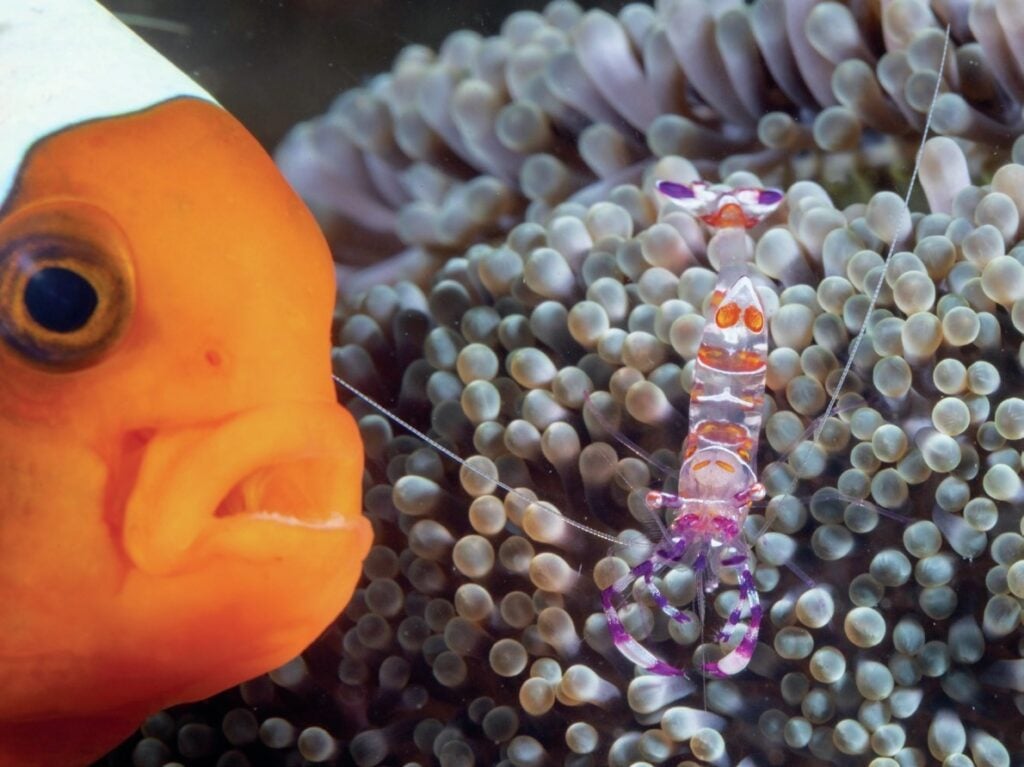
On the 30-plus dive sites available it is possible to find numerous species of seahorses, pipefish, ghost pipefish, eels, frogfish, scorpionfish, stonefish, shrimp, crabs, and many more creatures.
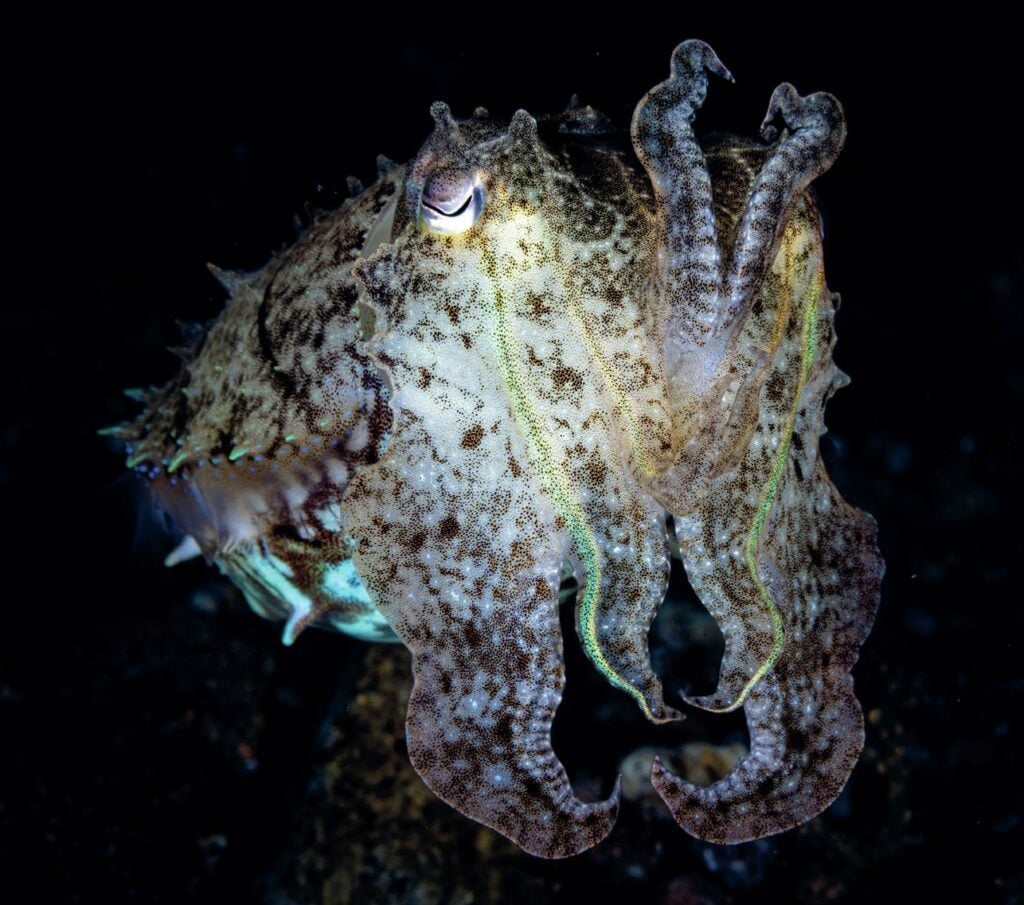
Rarer critters such as the blue-ringed octopus, wonderpus, mimic octopus, mototi octopus, Ambon scorpionfish, and flamboyant cuttlefish can also be found here.
Farther offshore are the magnificent coral reefs of Apo Island. The fringing Apo Island reef system is home to over 400 species of coral and plenty of turtles and has been a marine sanctuary since 1982. This sanctuary plays an important role in protecting corals and at-risk species such as the green sea turtle.
The dives in Dauin typically start shallow on a sloping sandy bottom, and most of the diving is muck diving in its truest form. At times you will find yourself hovering over the dark sandy bottom which appears like a lifeless underwater desert.
But don’t be fooled – before you know your guide will be showing you an unexpected bounty of macro life.
Did you know?
The best weather is from November to May, but diving in Dauin is good year-round. Different species are more prevalent at certain times of the year; October to December is particularly good for octopus, frogfish are most abundant between March and May, and ghost pipefish are most prevalent in the first half of the year.
Muck diving it most certainly is, but there is barely any trash found here, particularly when compared to Lembeh Strait. The local guides clean up any of the trash they find which is always good to see.
Punta, seemingly the most barren of dive sites, did not look like it would deliver much. A sandy bottom full of garden eels gives way to an endless slope of rubble seemingly devoid of life. But what appears empty and lifeless turns out to deliver a succession of one bizarre and beautiful subject after another.
It quickly became a favourite with so many cephalopods spotted on our dives here that I dubbed it the ‘octopus’s garden’ – wonderpus, algae octopus, reef octopus, coconut octopus, flamboyant cuttlefish, and pygmy squid.
Some dive sites start on the seagrass in the shallows, an environment rich in life and home to juvenile frogfish, ghost pipefish, and razorfish. Spotting decent-sized green sea turtles grazing here is common.
Perhaps some of the most fun dives I had were on the artificial reefs at sites such as San Miguel, Ginama-an, and the Atlantis house reef.
These feature areas with tyres, concrete blocks, bottles, and other structures that are now home to a variety of corals and critters alike.
Some of the most-rewarding encounters were to be found spending quality time with a co-operative subject.
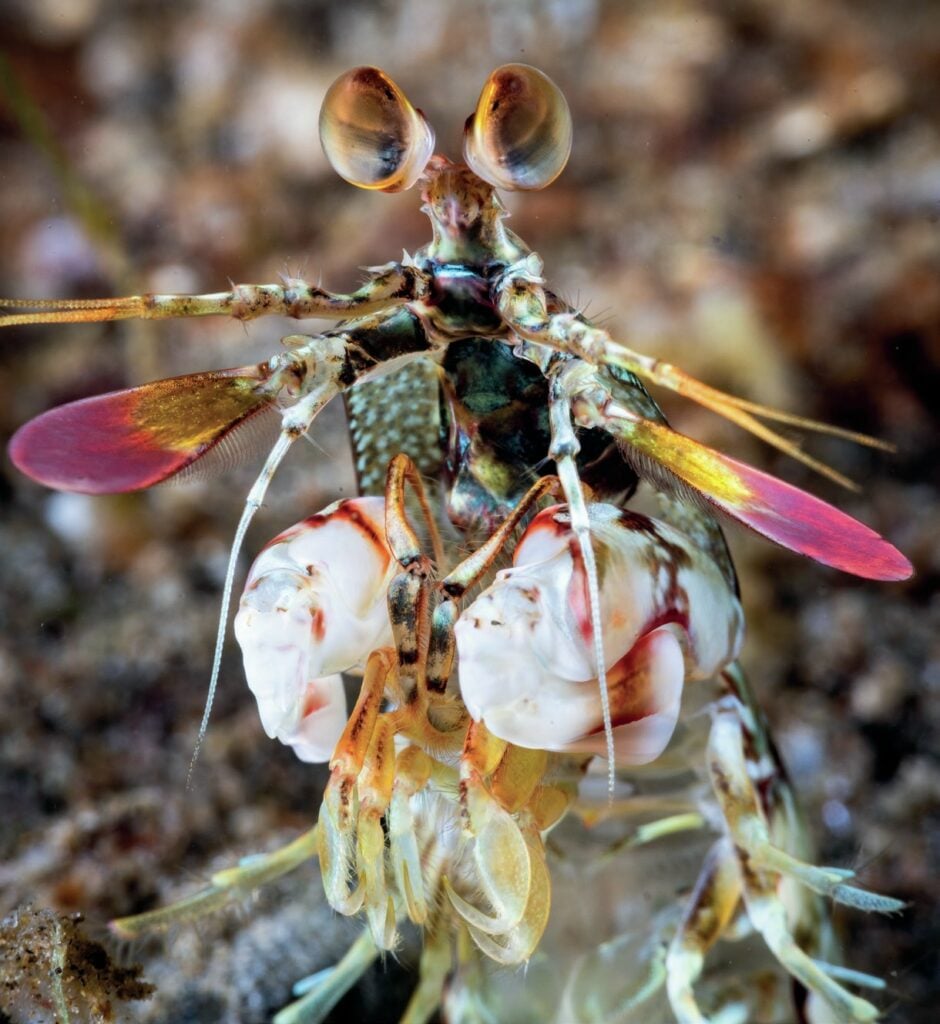
Give them a chance to get accustomed to your presence and creatures like moray eels, pink-eared mantis shrimp or jawfish will start to display their oversized personalities. It might just be me, but it sometimes feels like they are really posing for the camera!
The Atlantis guides are happy to take requests for specific dive sites or even particular critters, and you will no doubt want to return to some sites again, whether to have another attempt at photographing a particular creature or because you missed out on seeing something special – all too easily done when there is such abundance on offer.
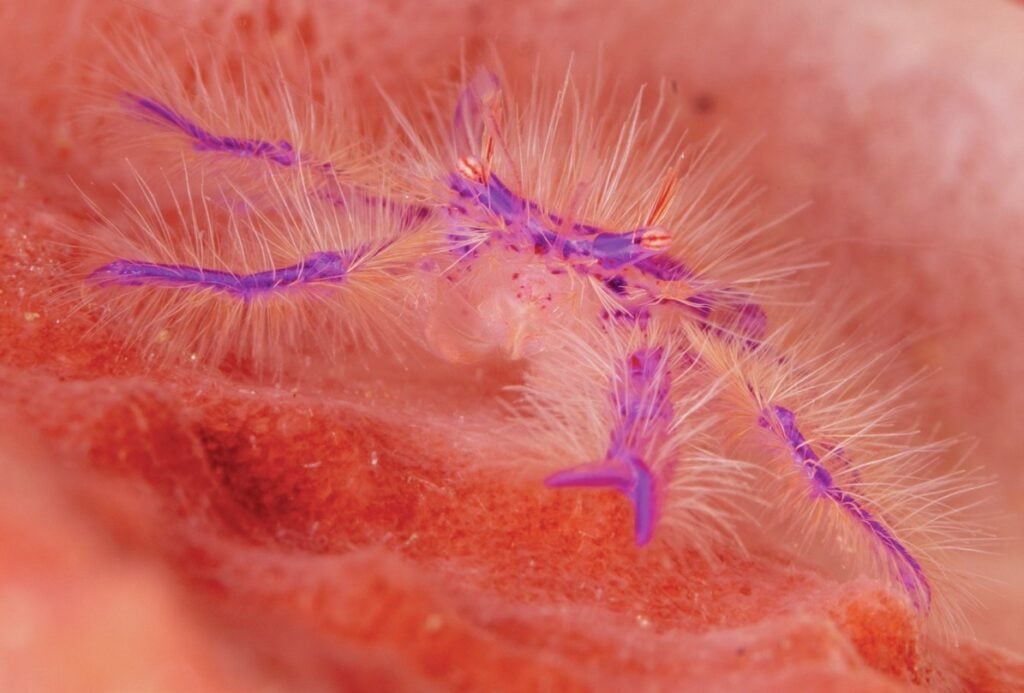
On my last diving day, I mentioned to my guide Norway that I had yet to see a hairy squat lobster or an orangutan crab on this trip. Lo and behold he managed to deliver first one and then the other on each of our two morning dives.
But it is not just below the water that Atlantis Dumaguete delivers. The resort itself is stunning with meticulously groomed grounds. The location and ambiance of the resort are relaxed and secluded, making for an entirely pleasant experience.
The real magic touch found at Atlantis is courtesy of the staff, who are extremely helpful and friendly. Somehow everyone will manage to greet you by name from day one.
The unofficial motto of ‘come as a guest and leave as a friend’ certainly seems to hold true judging by the number of guests present who were return visitors to Atlantis Dumaguete.
Non-diving activities
Dauin is limited in terms of non-diving activities, and there are no restaurants or nightclubs in the area, but the resort is perfect for those looking for relaxation.
The resort has a pool area with sun loungers and impressive spa facilities, where you can indulge yourself with a massage or a variety of other treatments.
There are several day tours available; including birdwatching, trips to Dumaguete city or the local market, and snorkelling with the whale sharks in Oslob.
How to get there
The flight from Manila is approximately 45 minutes, with multiple flights each day via Cebu Pacific and Philippine Airlines. Domestic travel arrangements can be made through the Atlantis reservations team, including an overnight hotel in Manila.
Pro tip – domestic flights only include around 20kg checked and 7kg carry-on luggage. Booking your domestic flight on the same ticket as your international will get you more luggage allowance, as well as saving any headaches over a missed connection.
A warm welcome!
Flying into Dumaguete airport you are met by a representative from Atlantis to help you with your bags and to drive you to the resort, a trip of roughly 30 minutes.
On arrival, you are greeted in the restaurant with a selection of fruits, a refreshing drink, and a complementary five-minute neck and shoulder massage; a welcome way to help rid you of the stresses and strains of air travel!
The large bar and restaurant area is open-air with a high thatched roof and an ocean view. Breakfast is offered a la carte and the coffee is excellent.
Lunch and dinner offer the ever-changing ‘blackboard menu’ consisting of soup, salad, a choice of several mains, and a tempting dessert (if like me you are watching your waistline, beware!).
In addition, there is an all-day a la carte menu with a wide selection of dishes. The food here is exceptionally good, some of the best food I have had in the Philippines, and varied enough to keep it interesting.
The rooms are spacious, clean, and well-appointed with a double bed that can be converted into two twins. The rooms come with a private bathroom, shower, air-conditioning, and ceiling fan and are furnished with a TV, desk, mini bar, and coffee maker. Outside is a small patio area with seating and a drying rack.
Wi-Fi is good and available throughout the resort. The dive shop is organised and well run with benches and tables for the briefings. A separate wet area with rinse tanks and warm showers is provided. Every diver gets a cubby for gear and a place to hang a wetsuit.
You will not need to touch your dive gear as everything is done for you. Gear is set up and taken to/from the boat and rinsed at the end of your dive day. All that is required is to analyse your tanks if you are diving nitrox. Staff can also help carry your camera to and from the boat if required.
The dive staff are friendly, fun, and professional and the dive briefings are detailed and accurate. The dive guides are very knowledgeable and exceptionally good critter spotters! Group sizes are kept as small as possible.
Never more than six divers, but usually four or less. If you are serious about underwater photography then you will appreciate the spacious, well-lit, and climate-controlled camera room.
Tables are built into three of the walls, and underneath each station are cubbyholes for storage. Each station offers power outlets in both 220 and 110 volts with a shelf above for battery chargers. Air guns are provided to dry your housing and strobes for quick battery changes.
Local dives are done from one of three outboardpowered centre-console skiffs equipped with large canvas tops for sun protection. The dive sites are all close with perhaps 20-minute boat ride at most.
For the Atlantis house reef, they don’t need to start the engine, and just let out some of the mooring line! Between the dives you’ll return to the resort for drinks, snacks, and the next briefing.
There are five dives available a day, and the schedule can vary slightly for different groups, but ours was 8.30am, 10.30am, 2pm, 4pm, and a night dive at 6pm.
As well as regular night dives you can opt for a mandarinfish mating dive, a fluoro dive, and if conditions are right, and there is enough demand, a blackwater dive.
Apo Island
Muck diving is the main attraction, but it is not the only draw card. A day trip to the neighbouring Apo Island provides the chance to dive in a very different underwater environment.
The day starts around 8am, when gear and divers are loaded into a large traditional Filipino-style banca boat with outriggers. The crossing to Apo takes just over an hour and tea, coffee, and refreshments are available aboard.
Apo Island offers stunning hard and soft corals, with the sloping profile punctuated by ledges and mini walls dropping to depths of 25m or more.
Marine life includes schools of fish, healthy hard corals, colourful soft corals, banded sea kraits, and hawksbill and green sea turtles. It is not unusual to see banded sea kraits and turtles on every dive.
Following the second dive, the on-board chef serves an excellent buffet lunch. After the third dive, the boat begins the return and is back at the resort by 4pm to 4.30pm, leaving plenty of time to prepare for a night dive.
The day trip to Apo Island is highly recommended and provides some excellent wide-angle opportunities. Make sure to bring some cash for souvenirs as after lunch several local vendors will paddle out to the boat to come aboard with a wide variety of T-shirts, sarongs, hoodies, etc, with designs featuring Apo Island and turtle motifs.
Whaleshark trip
Another day trip and a popular one for many on their last day is snorkelling with the whalesharks at Oslob. The local fishermen feed them uyap (shrimp) from small boats which provides an opportunity to see the whalesharks up close.
If you have never seen or experienced being in the water with a whaleshark this is a great opportunity. Departure from Atlantis is at 6am with the trip by road and ferry. The morning snorkel is followed by a BBQ lunch on the beach, and then back to the resort by around 3pm.
Final thoughts
Whatever dive site you visit you can be sure you will find numerous subjects on every single dive. Dotted along the coast the dive sites are close and easy to access making it possible to dive five times each day.
I found the muck diving here to be just as productive as more famous destinations, such as Lembeh, and would happily recommend diving in Dumaguete to even the most demanding macro enthusiast.
Atlantis Dumaguete is extremely well run and ticks all the boxes for me; a small but immaculate all-inclusive dive resort; five dives a day of world-class muck diving, friendly and professional staff, excellent dive centre and camera room, restaurant and bar with delicious food, spa services, and just about everything else that a diver or underwater photographer could need.
I had such a great time at Atlantis Dumaguete that I’ve already booked my next trip and I can’t wait to go back for more addictive macro action with the bottom dwellers of Dauin!
FAQ: Diving at Atlantis Dumaguete, Philippines
Q: Where is Atlantis Dumaguete located?
A: Atlantis Dumaguete is in Dauin, about 15km south of Dumaguete on Negros Island, Philippines. It’s set on a quiet beach and surrounded by tropical gardens, offering direct access to world-class muck diving.
Q: Why is Dumaguete famous for diving?
A: Dumaguete (Dauin) is regarded as one of the world’s best muck diving destinations. It’s known as the “frogfish capital of the world” and is home to rare critters like mimic octopus, flamboyant cuttlefish, ghost pipefish, and hairy squat lobsters.
Q: What kind of marine life can divers expect?
A: Divers will encounter frogfish, seahorses, pipefish, scorpionfish, blue-ringed octopus, wonderpus, flamboyant cuttlefish, mantis shrimp, orangutan crabs, and much more. Nearby Apo Island adds turtles, banded sea kraits, and stunning corals to the mix.
Q: When is the best time to dive Dumaguete?
A: Diving is possible year-round. November to May brings the best weather. Frogfish are most common from March–May, octopus from October–December, and ghost pipefish in the first half of the year.
Q: What makes Atlantis Dumaguete special for divers?
A: The resort offers five dives per day, a professional dive centre, a climate-controlled camera room, skilled critter-spotting guides, and a relaxed, all-inclusive atmosphere that’s ideal for underwater photographers.
Q: Are there non-diving activities at Atlantis Dumaguete?
A: Yes. Guests can enjoy spa treatments, poolside relaxation, city and market tours, birdwatching, Apo Island excursions, and snorkelling with whale sharks in Oslob.
Q: How do you get to Atlantis Dumaguete?
A: The resort is a 30-minute drive from Dumaguete Airport. Flights from Manila take about 45 minutes, with transfers arranged by the Atlantis reservations team.
This article was originally published in Scuba Diver UK #83
Subscribe today with promo code DIVE1 — enjoy 12 months for just £1!