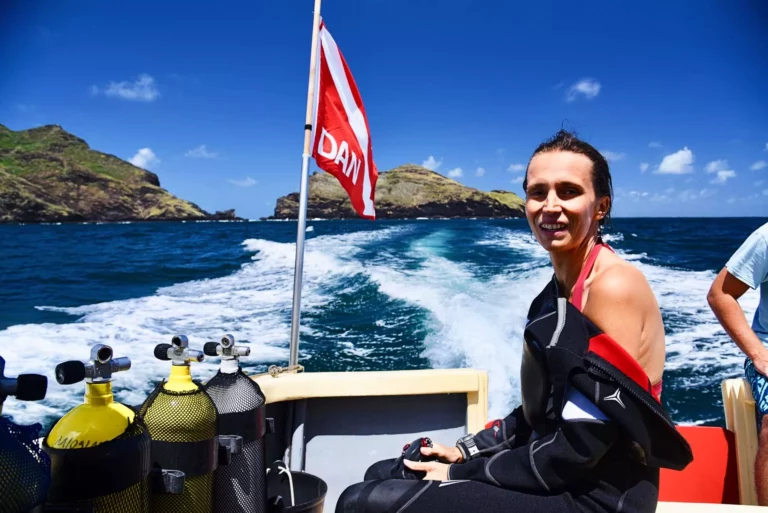
For the thrill-seeker, the thought of heading to the far side of the world to a scuba-diving hotspot with high marine biodiversity is enticing. So PIERRE CONSTANT has a question: have you ever heard of the Marquesas Islands?
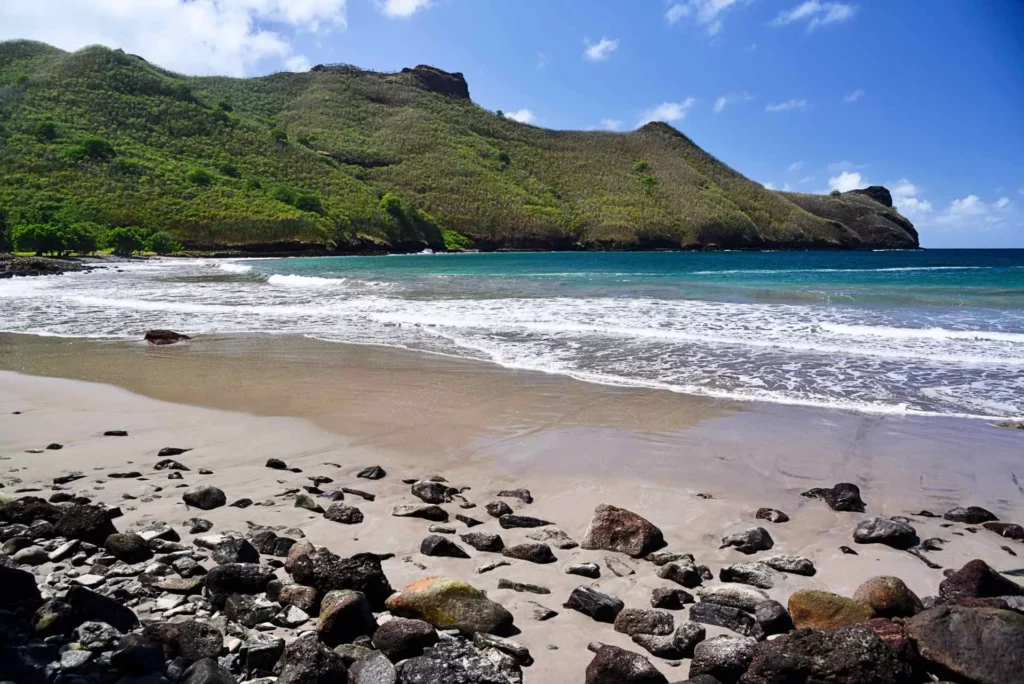
The Marquesas form a Pacific archipelago containing the specks of land furthest from anywhere on the planet. In terms of continents, these islands lie 4,700km from the tip of Baja California, 6,300km from Peru, 7,300km from Australia and 8,800km from Kamchatka.
Other islands nearby? Hawaii lies 3,400km to the north-east, Galapagos 5,300km to the east, Rapa Nui (Pascua Island) is 3,500km to the south-east and Tahiti 1,400km to the south-west.
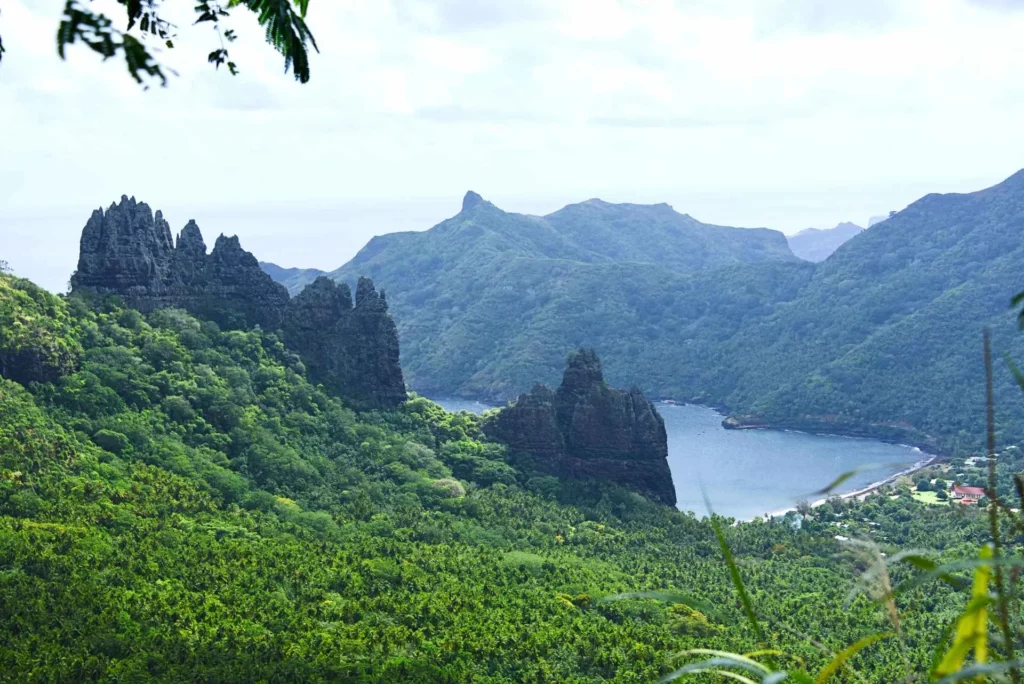
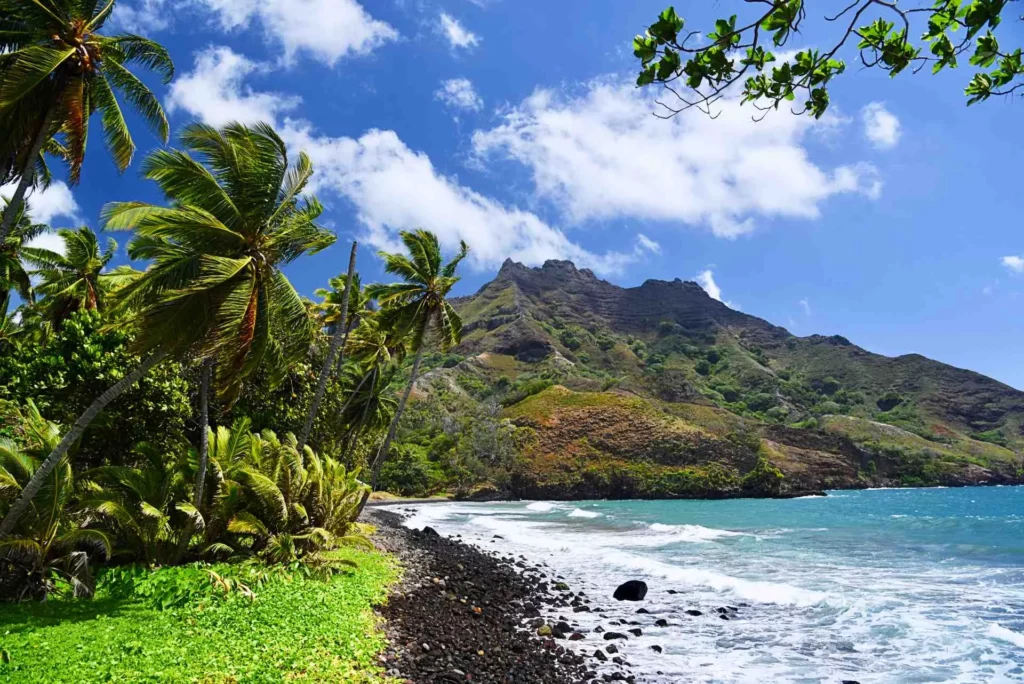
The 12 main islands represent a land surface of 1,052sq km – dispersed over a marine surface of 100,000sq km. Their ages range from 1.1 to 5.5 million years, with the oldest, Eiao and Hatu Tu, in the north-west, and the youngest Hiva Oa and Fatu Hiva in the south-east.
A northern group of six islands cluster around Nuku Hiva (Eiao, Hatu Tu, Ua Huka, Ua Pou and Motu Iti), while a southern group lie around Hiva Oa (Tahuata, Motane, Fatu Huku and Fatu Hiva). Nuku Hiva, the biggest island, covers 340sq km and its summit is 1,224m above sea level.
The volcanic Marquesas Islands are an atypical hotspot, stretching 350km from south-east to north-west and rising 4km above the seabed. Several submarine mounts have been identified in the southern part of the archipelago, and reef flats are located at depths of 40-130m around Hiva Oa.
The Marquesas are bathed by the east-west-flowing South Equatorial Current (SEC) in the north, and by the west-east-flowing South Equatorial Counter Current (SECC) in the south.
Mostly influenced by the SEC and the east tradewinds, this subtropical archipelago has waters rich in nutrients. The southern frontier is deeply subject to an Equatorial upwelling and its elevated biomass of phytoplankton has a seasonal cycle marked by the El Niño / La Niña phenomenon.

Average seawater temperatures range from 27-28°C and, with a not-so-humid tropical climate, the rainy season occurs in July-August.
People in the Marquesas
Archaeological research suggests that the islands were colonised between 150 BC and 100 AD by voyagers from western Polynesia, though populations of the Lapita ceramic culture were already present in the Fiji-Samoa-Tonga region by around 1500 BC.
The ancestors were of Melanesian origin, perhaps even from south-east Asia and Taiwan. The culture of breadfruit and irrigated taro terraces predominates and the word for food, kaikai, is also used in PNG and Melanesia.
Spanish navigator Alvaro de Mendana arrived on Fatu Hiva on 21 July, 1595 and named the islands in honour of the Marquis de Canete, at the time Spanish viceroy of Peru. American whalers visited in the 18th and 19th centuries, among them Moby Dick author Herman Melville, who arrived on the whaler Acushnet and deserted on Nuku Hiva on 9 July,1842.
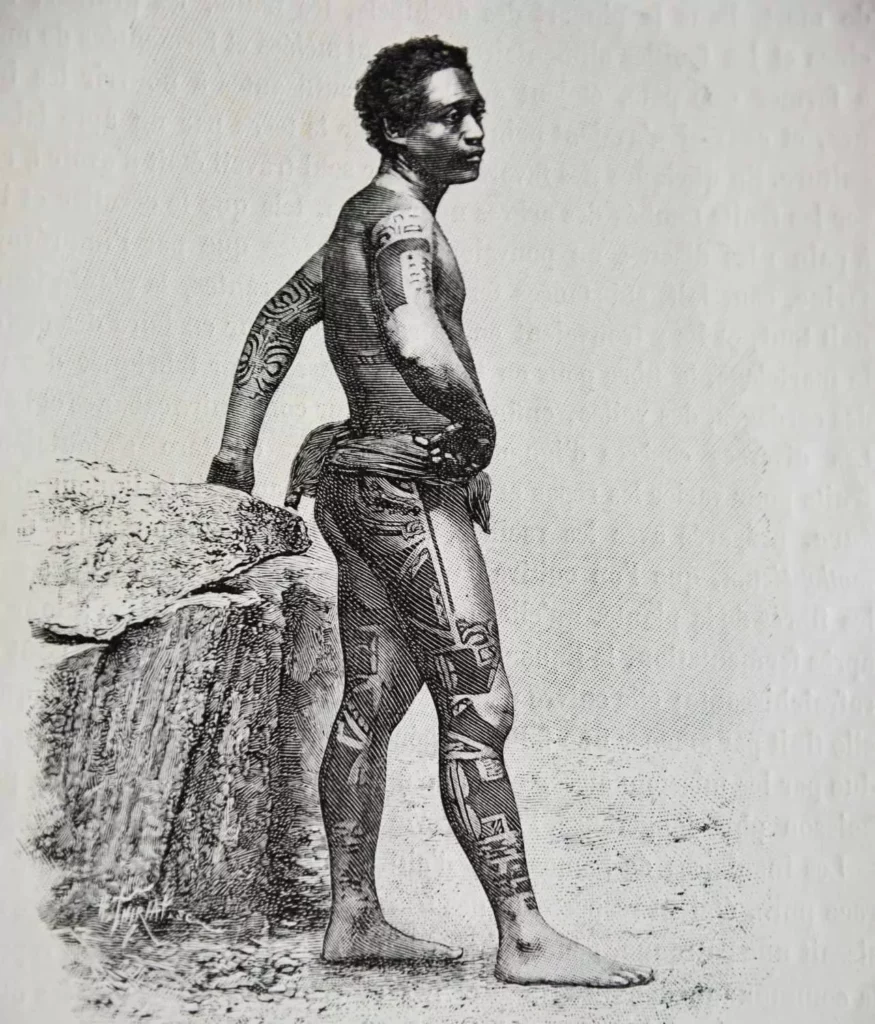
After a memorable escape with his friend Toby, he took refuge in the valley of Taipivai, where he lived with cannibals for three weeks. His adventures are related in Typee, a book with a thrilling climax.
Author Robert Louis Stevenson, who wrote In The South Seas, left a trace, as did the painter Paul Gauguin, who died on Hiva Oa in 1903. Belgian singer Jacques Brel, who penned the song Marquises, also lived on the island for three years and died there in 1978.

Looking for adventure and a new life, Xavier Curvat aka Pipapo left France in 1980 at the age of 20, booked a flight to Tahiti and met Marquesan people. He boarded a cargo-passenger boat for a memorable four-day journey on deck to Hiva Oa.
He then crossed the island on foot to reach the valley of Puamau and dedicated himself to fishing and hunting, catching turtles as well. He planted an orchard, bought a horse, sold his products around the village and ventured into lobster fishing, using a home-made dugout canoe.
Three years later, a friend invited him to sail from Tahiti to the Tuamotu and the Marquesas. This would be his first encounter with sperm whales in the open ocean. He married a Marquesan woman, and in 1990 was introduced to scuba diving.
Based in Nuku Hiva, he discovered an islet at the exit of Taiohae Bay that turned out to be a haven for hammerhead sharks. Fired up by the idea of a dive-centre, he got the necessary qualifications and opened Centre de Plongée Marquises in 1993.
The hull of an old shipwreck was transformed into a dive-boat. Pipapo organised inter-island transport for the locals and got exposure on French TV. He operated dive-charters in the northern islands and opened another centre on Hiva Oa.
When his wife left him after 11 years, he closed that operation and concentrated on Nuku Hiva. Pipapo now specialises in scientific research, millionaires’ boats, TV shoots, American groups and consultancy work.
Marine biodiversity
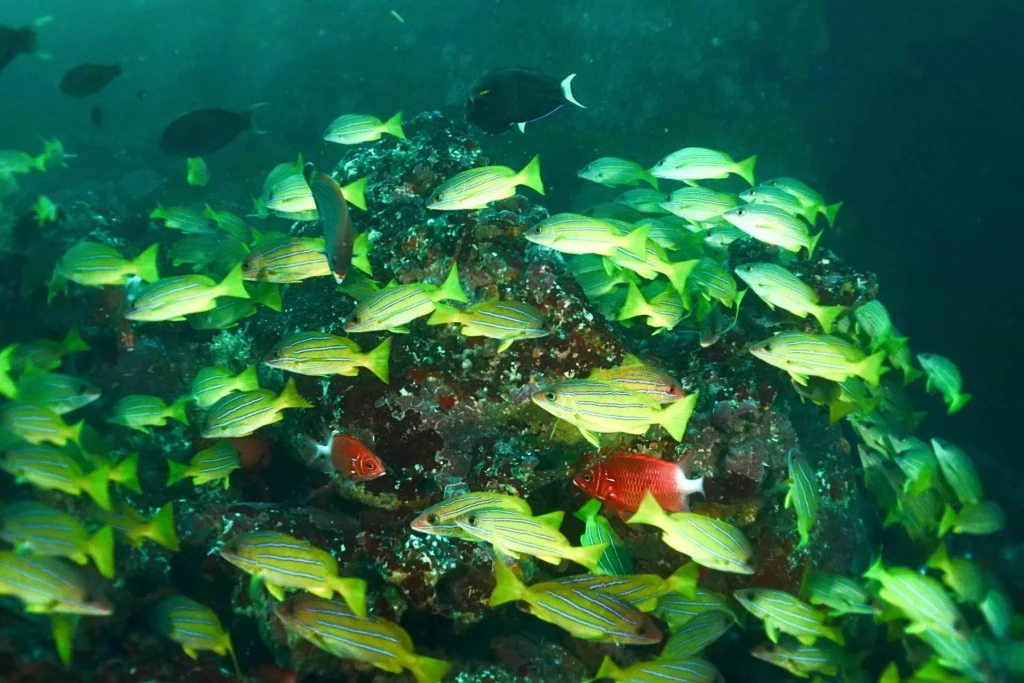
In 1973, a Museum of Natural History in Paris expedition established a list of 391 species of fish in the Marquesas. Five years later the US ichthyologist John Randall estimated the incidence of endemic species at 10% and, following their 1998-99 expedition Randall and Earle published a list of 415 coastal fishes.
Research in 2011 by the Frenchman Delrieu-Trottin brought this number up to 495 species, including 68 endemic. Twenty-four species of hard corals, 38 of sponges, 70 of echinoderms, 629 of molluscs (61 endemic) and 16 species of marine mammals have been identified in the Marquesas.
Two species of manta ray are seen: the oceanic (Mobula birostris) and the resident Mobula alfredi. The smaller sea devil (Mobula tarapacana) is also found. Until 2000 mantas were traditionally speared by Marquesan fishermen in Nuku Hiva and Tahuata, during village festivals
The dive-centre
Centre de Plongée Marquises hides behind the flamboyant clothes and souvenir shop run by Marie on the fishermen’s harbour. Its red and ochre dive-boat Makuita is moored at the dock, where I meet Jules, a 20-year-old with big curly hair. “I am the deckhand and son of Xavier,” he says, reaching out his fist Covid-19 salute-style.

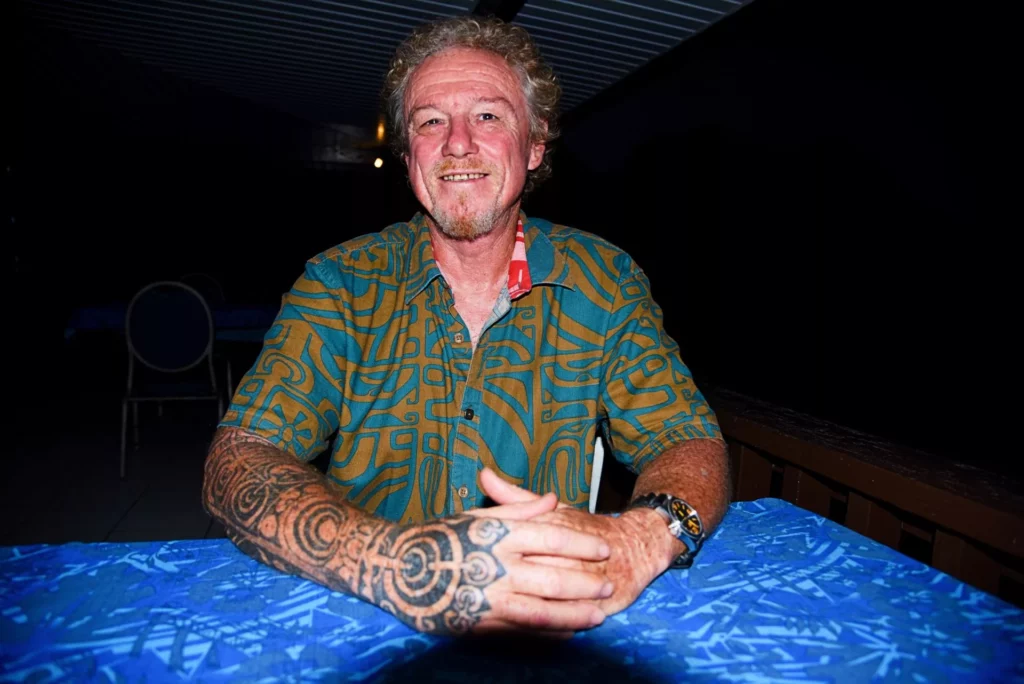
Tattooed on leg and arms, Pipapo shows up a bit later, a weathered 61-year-old mariner. Four other divers will join us to visit Cap Martin (aka Cape Tikapo), the south-eastern tip of Nuku Hiva’s caldera half an hour away.
The boat-ride is rough, with the ocean well-formed and lots of waves. The island’s rugged coast is carved into basaltic points and coves. Rising steeply behind, the interior is covered in jungle.
“The plan is to dive the protected side of the cape, although the swell is conspicuous,” says Pipapo. He gives the briefing on deck, though he will not dive.
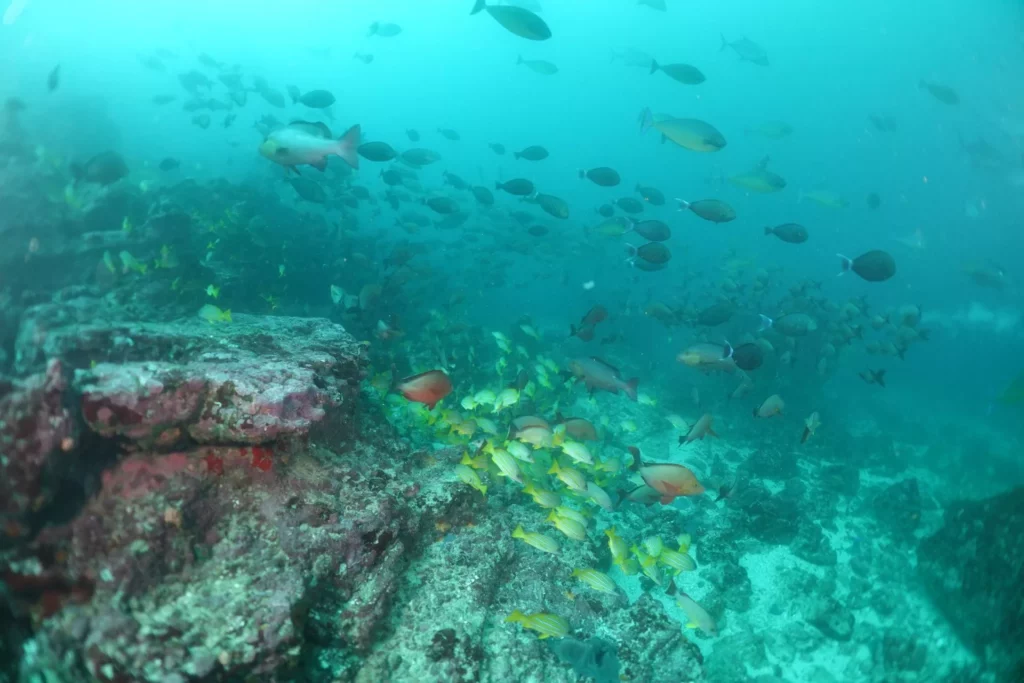
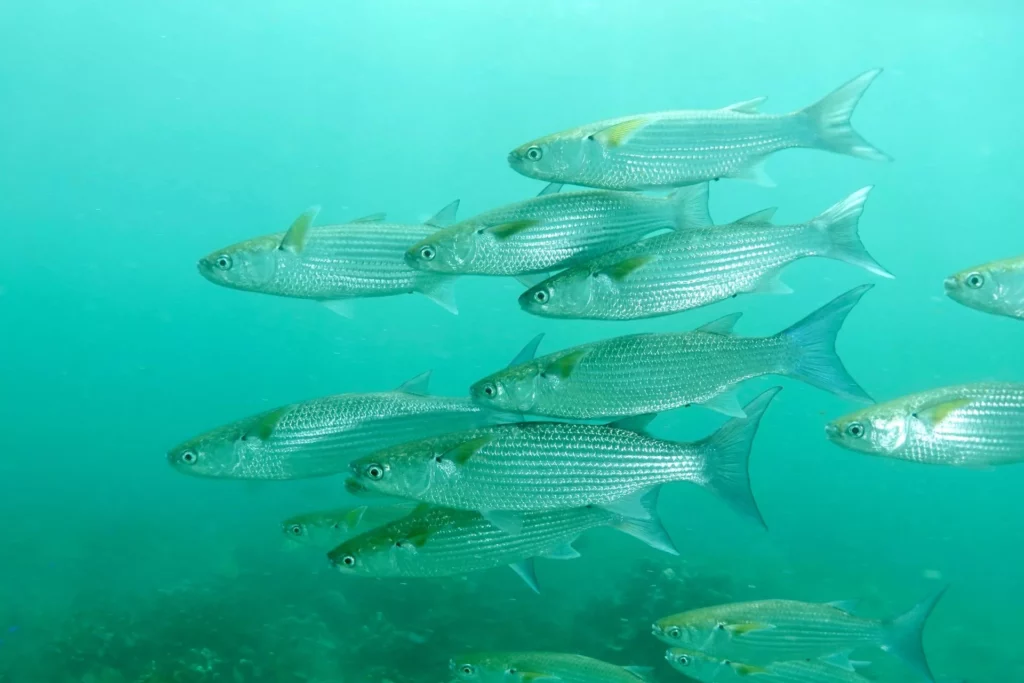
The visibility strikes me as misty, though fish life is plentiful, with large schools of paddletail snapper (Lutjanus gibbus) and sleek unicorns (Naso hexacanthus), compact shoals of bluefin jack (Caranx melampygus) mixed with giant jack (C ignobilis) and rainbow runners (Elagatis bipinnulata).
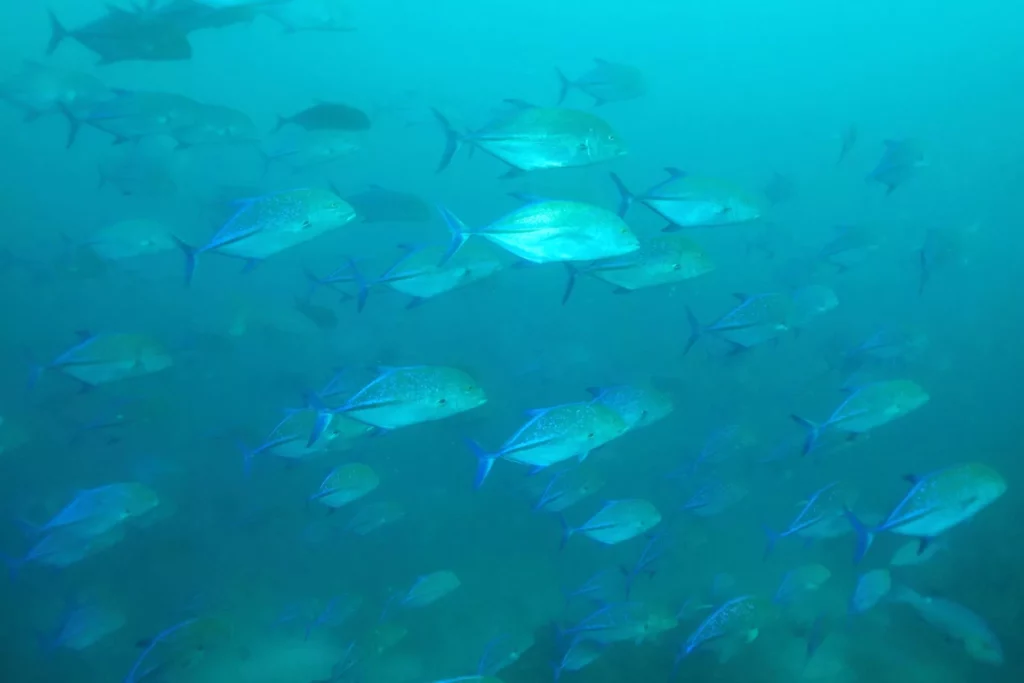
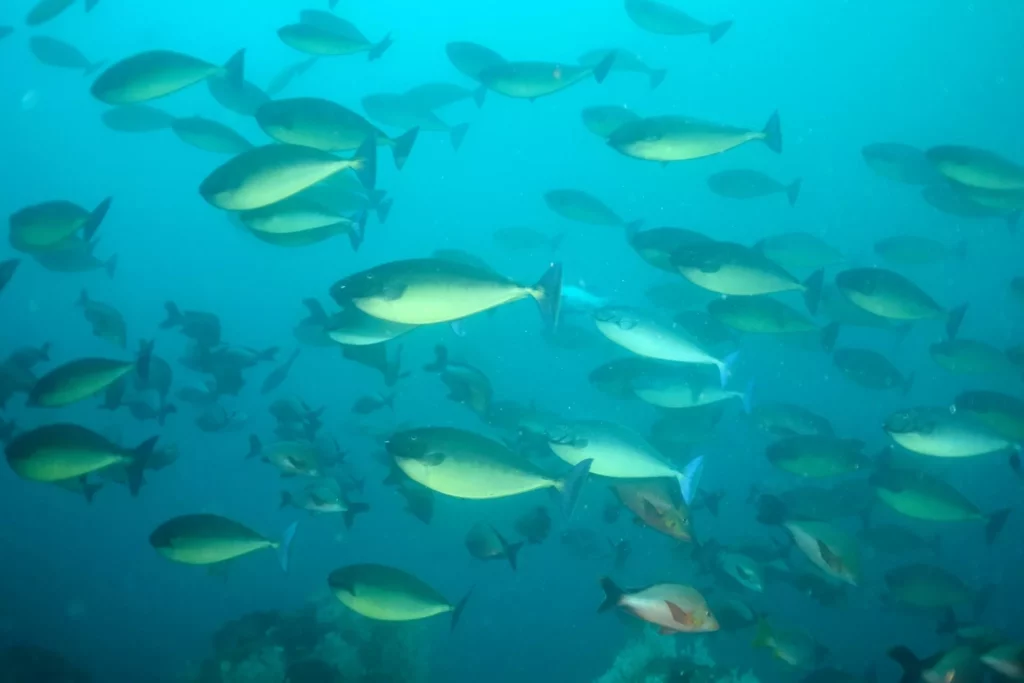
There are moving clouds of blue-striped snapper (Lutjanus kasmira) with the occasional red snapper (L bohar). A squad of oriental bonito (Euthynnus affinis) zooms past and a silver double-spotted queenfish (Scomberoides lysan) follows suit. A fountain of life indeed!
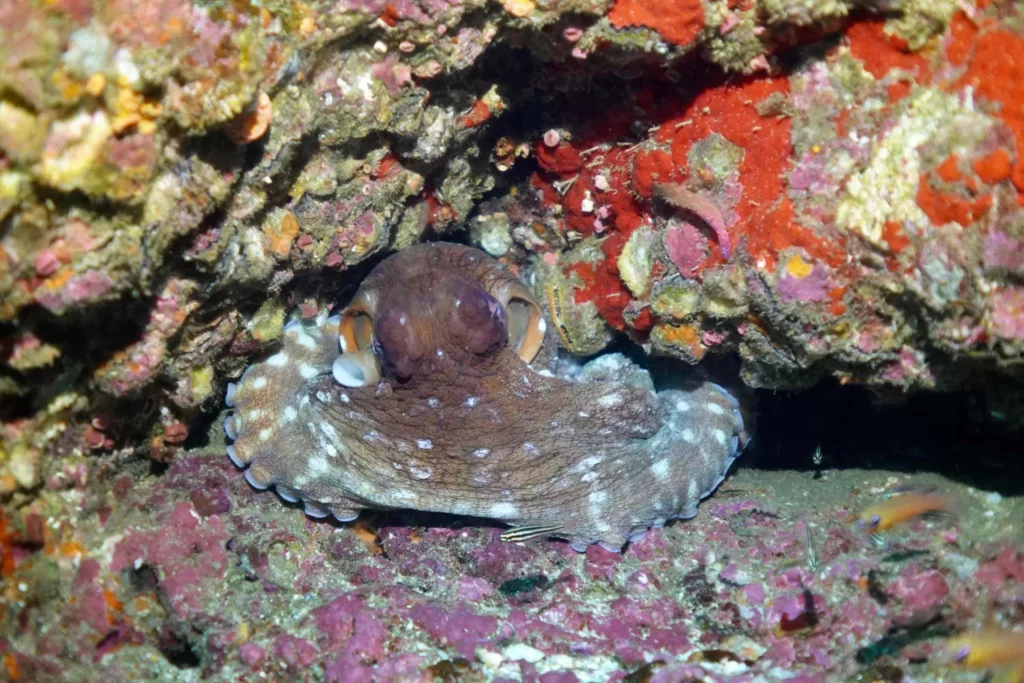
As we near the point, at a depth of 35m, I feel the current dragging us to the other side. A big octopus is staring at me from the comfort of its hole. I give the signal to turn around.
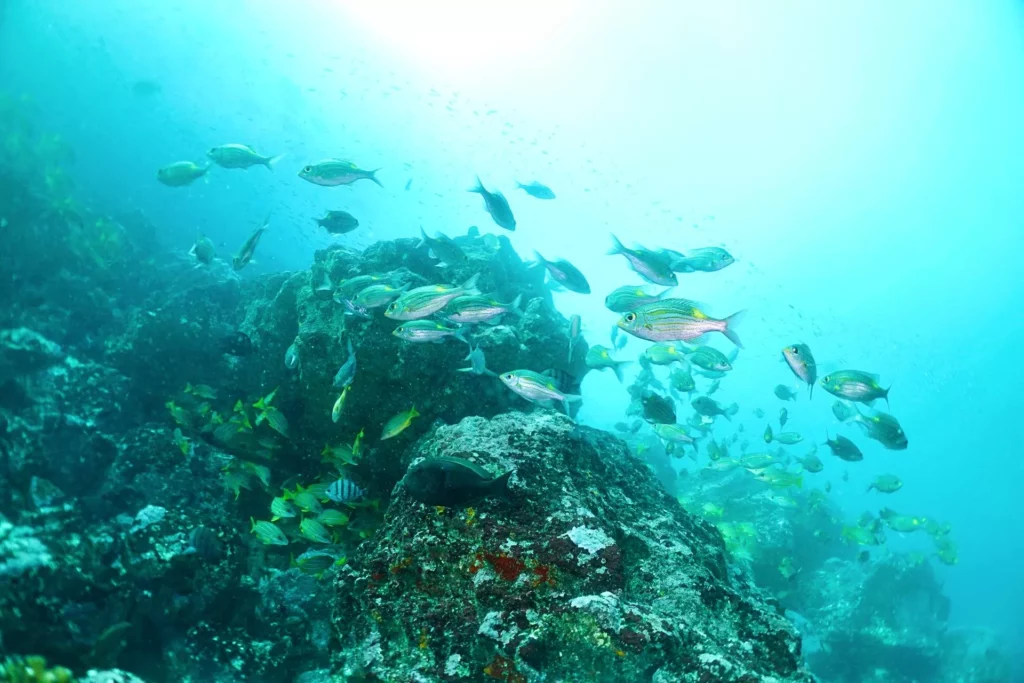
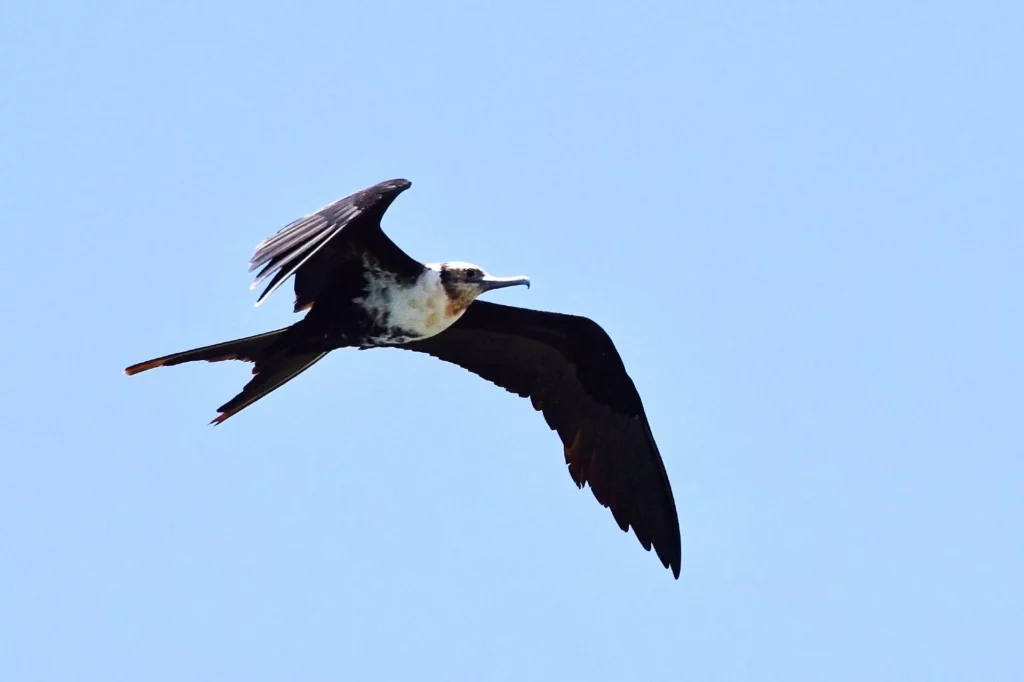
The upwelling affects the visibility because there is so much plankton. Water temperature.is a balmy 27°C so no wetsuit is necessary. Lesser frigate birds hover above as we surface. “In January-February, we may witness an important gathering of melon-headed whales at Cap Martin,” says a smiling Pipapo. back on the boat.
The Makuita heads back to the caldera of Taiohae. Our interval time will be spent on the sheltered side of Matauapuna Island. Homemade banana cake is served with tea.
The Sentinels
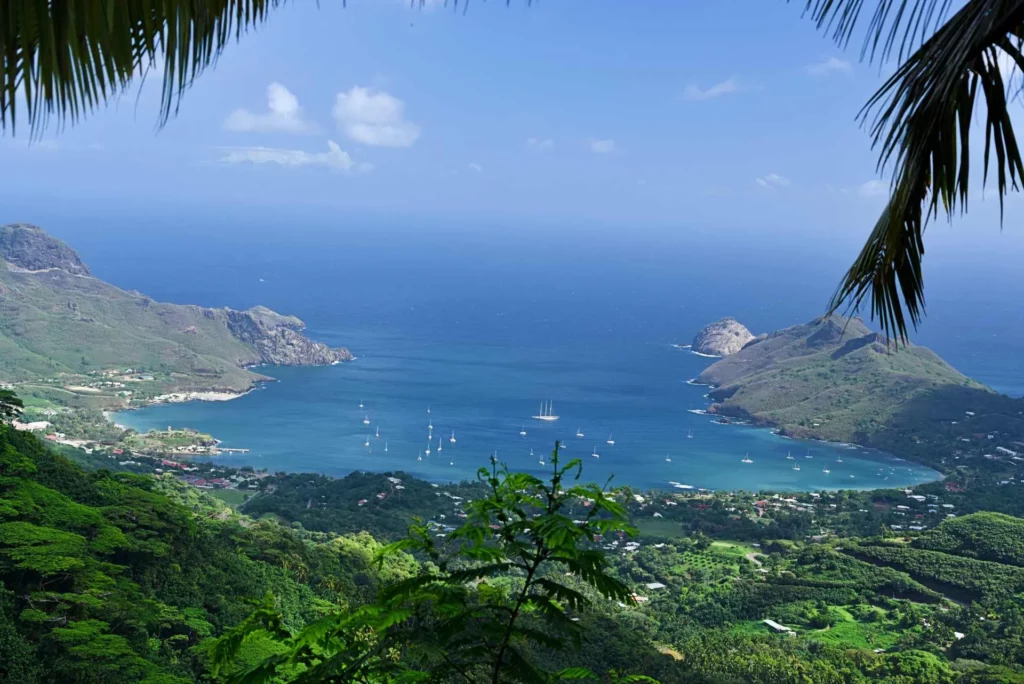
La Sentinelle Aux Marteaux is our next dive-site. The name refers to a small island that stands as a sentinel at the eastern entrance of the bay. Another sentinel, Motu Nui, stands to the west.
The visibility is no better, with a sulphur-yellow layer at 25m. Alexandra joins the others this time, and I stay on my own, happy with my camera as buddy.
I stay in the clearer 15m zone, which turns out to be a good decision, because four scalloped hammerhead sharks (Sphyrna lewini) approach me, two close enough to allow decent shots. One is a pregnant female with bite-marks on the left pectoral fin, the work of an aggressive male.
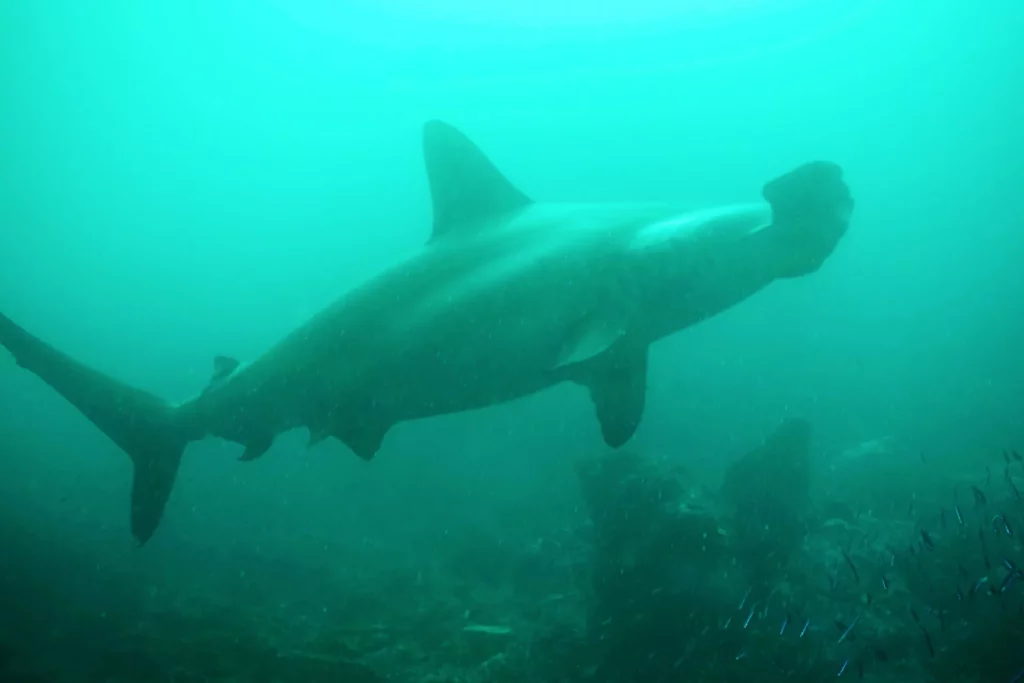
This is what the dive-site is famous for: the 70% chance of a hammerhead encounter. Other sightings include convict tangs (Acanthurus triostegus), white-cheeked surgeonfish (A nigricans), Tahitian butterflyfish (Chaetodon trichrous), tarry hogfish (Bodianus bilunnulatus) and large peacock grouper (Cephalopolis argus).
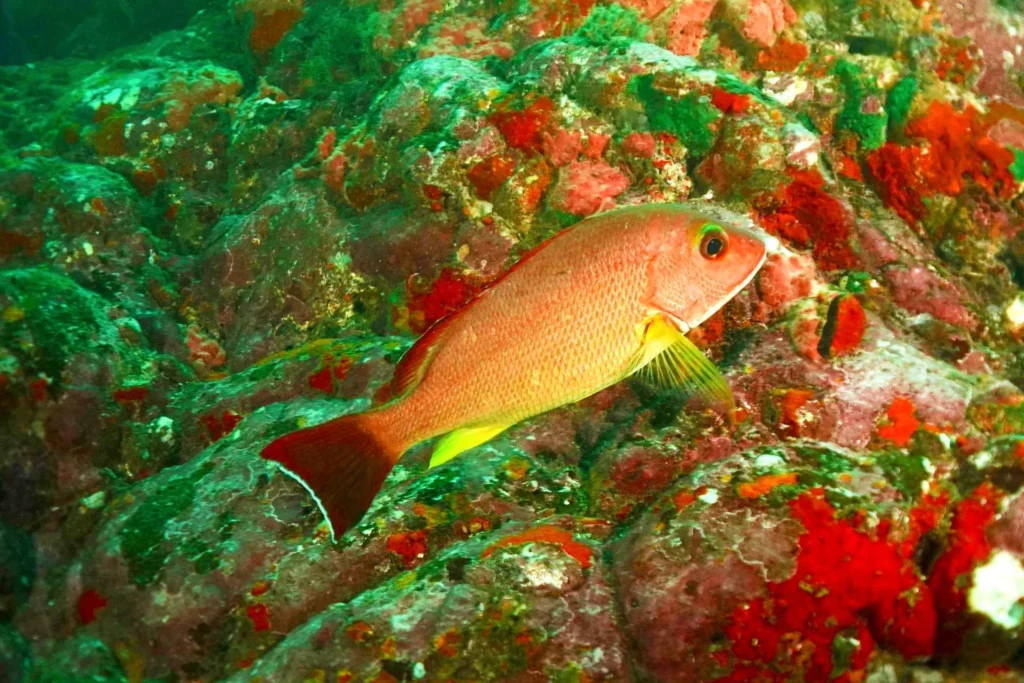
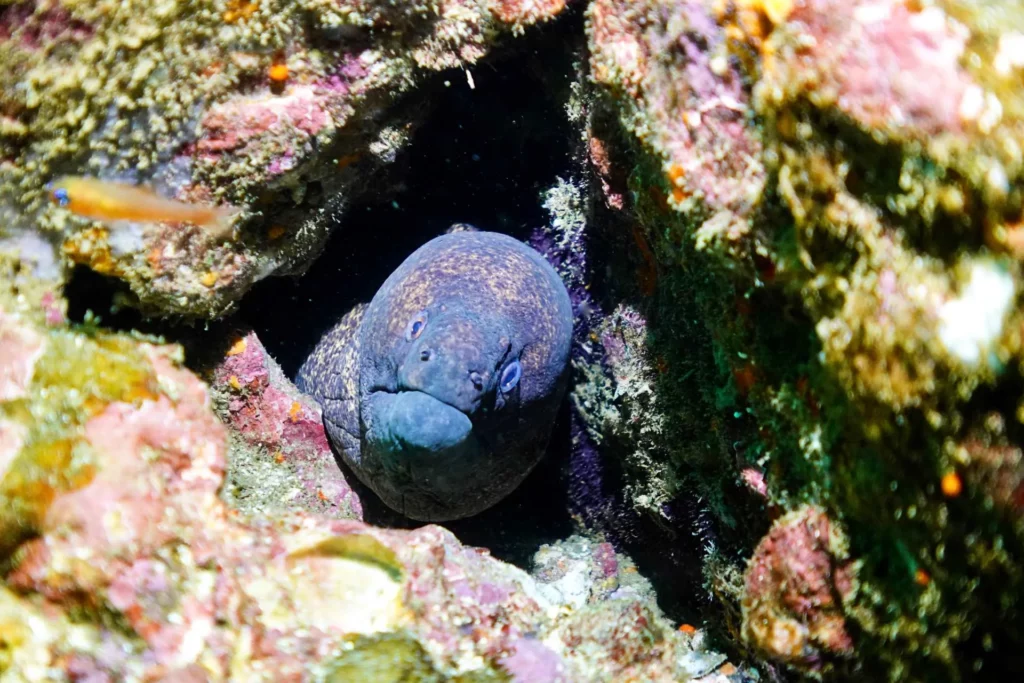
Cute red white-spotted grouper (Epinephelus fasciatus) are everywhere. An inquisitive masked moray (Gymnothorax breedeni), brown with a black stripe across the face, peeps out of its hole with a cool look. A school of barracuda swirl by, and imposing great barracudas put in an appearance.

Spectacular is the Marquesan flower sea urchin (Toxopneustes maculatus) which is globally white with concentric purple rings, sometimes imitating a star design. It is non-venomous and endemic to the Marquesas, Pipapo will confirm later. Anywhere else, the genus is highly toxic.
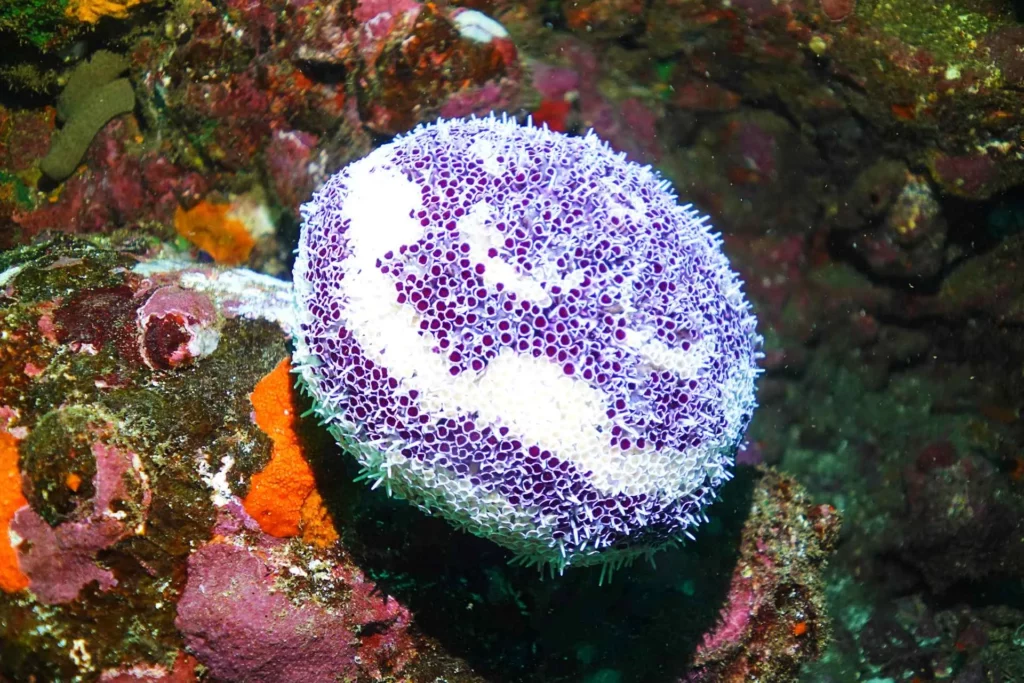
Several sea caves are found in Nuku Hiva and they can be pretty hectic because of swell and strong currents. Ekamako Cave is 7m wide, 3m high and 8m deep.
Once a hiding-place for warriors, nowadays it is known for sting rays (Himantura fei), whitetip sharks (Triaenodon obesus), three species of spiny lobsters (Panulirus femoristriga, P homarus and P penicillatus) and slipper lobsters (Parribacus scarlatinus or Scyllarides haanii)
A system of four caves is found on Nuku Hiva’s south coast. At a depth of 22-24m, these provide a refuge for marbled rays (Taeniura meyeni), grey reef sharks (Carcharhinus amblyrhynchos) and blacktip sharks (Carcharhinus melanopterus).

Local excursions
Customers are scarce, and non-diving days can be used for local excursions. A short way from Taiohae town, the Tehaatiki viewpoint overlooks Matauapuna Island, known as Sentinelle de l’Est; commanding views over the entrance of Taiohae Bay. Seabirds such as fairy and sooty terns or whitetail tropic birds fly above.
Other excursions require transport – a hire car, unless you want to hitch-hike. Hatiheu Bay, on the north-east coast, passes by Taïpivai, where Melville lived. From Hatiheu, a nice trail leads east over a pass to Anaho and Haatuatua beaches, with panoramic views.
Before Hatiheu you can stop at the archaeological sites of Kamuihei and Tahakia to marvel at ancient tohua, me’ae stone platforms for festivities; paepae religious sanctuaries; dwelling terraces and gardens for the taro culture; and petroglyphs on boulders.
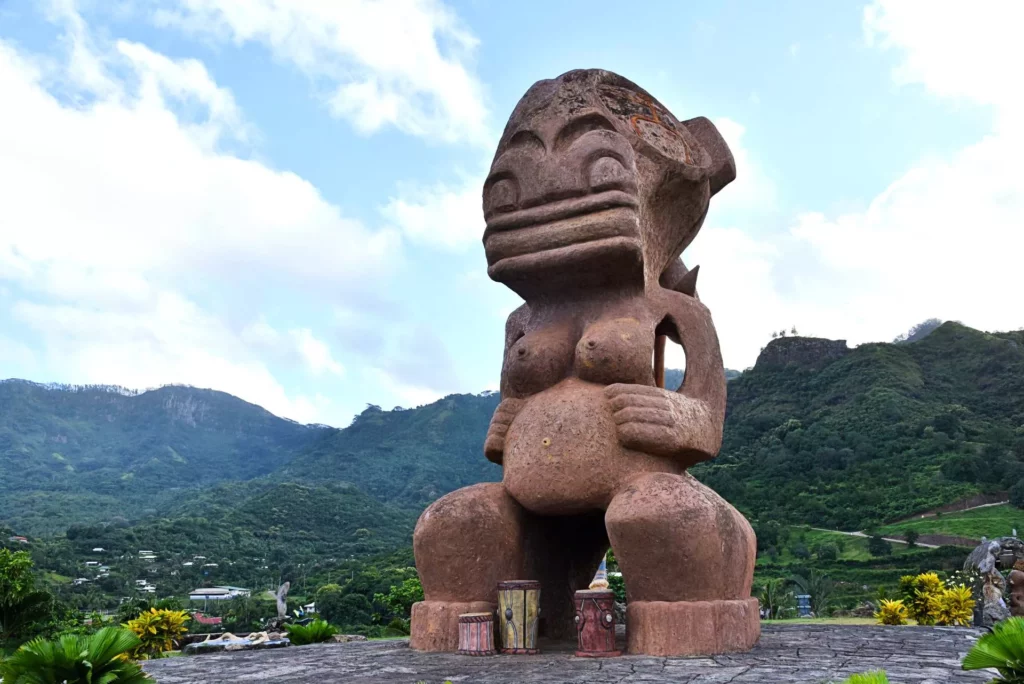
There are also tikis, anthropomorphic figures carved in stone to depict a mythical supernatural being, often a warrior or chieftan elevated to deity status.
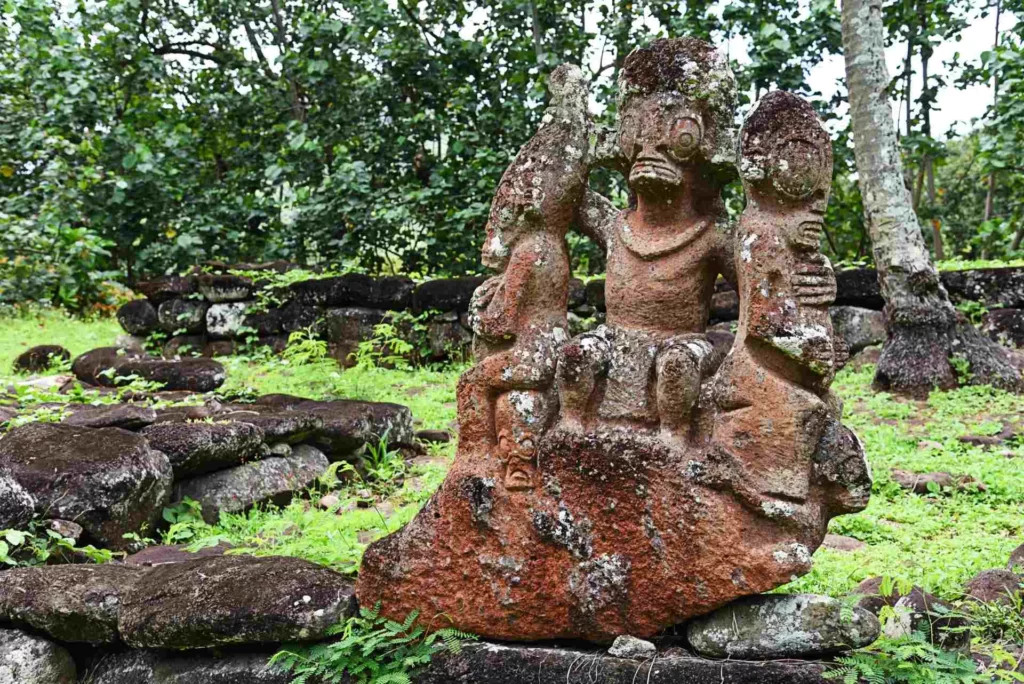
In Taaoa (Hiva Oa), a 1m tiki with huge globe-like eyes and a wide grinning mouth was offered human sacrifices during religious rituals on a me’ae. Ritual cannibalism was to follow, to absorb the mana or life-force of the deceased. Among animals found carved in stone, the sea turtle was deeply venerated.
Back to the Sentinel
Another dive-day brings me back to Sentinelle Aux Marteaux with better visibility and a chance of encounters with various species of fish: the orange-band surgeonfish (Acanthurus olivaceus), the fire surgeonfish (Acanthus pyroferus), the manybar goatfish (Parupeneus multifasciatus), blacktail snapper (Lutjanus fulvus) and endemic Marquesan parrotfish (Scarus koputea).

At Motu Nui, the Sentinelle de l’Ouest, the waters are very plankton-charged. It is like swimming through fog but I come across the also-endemic Marquesan surgeonfish (Acanthurus reversus) and the very pretty blue-spotted marginated surgeonfish (Ctenochaetus marginatus).

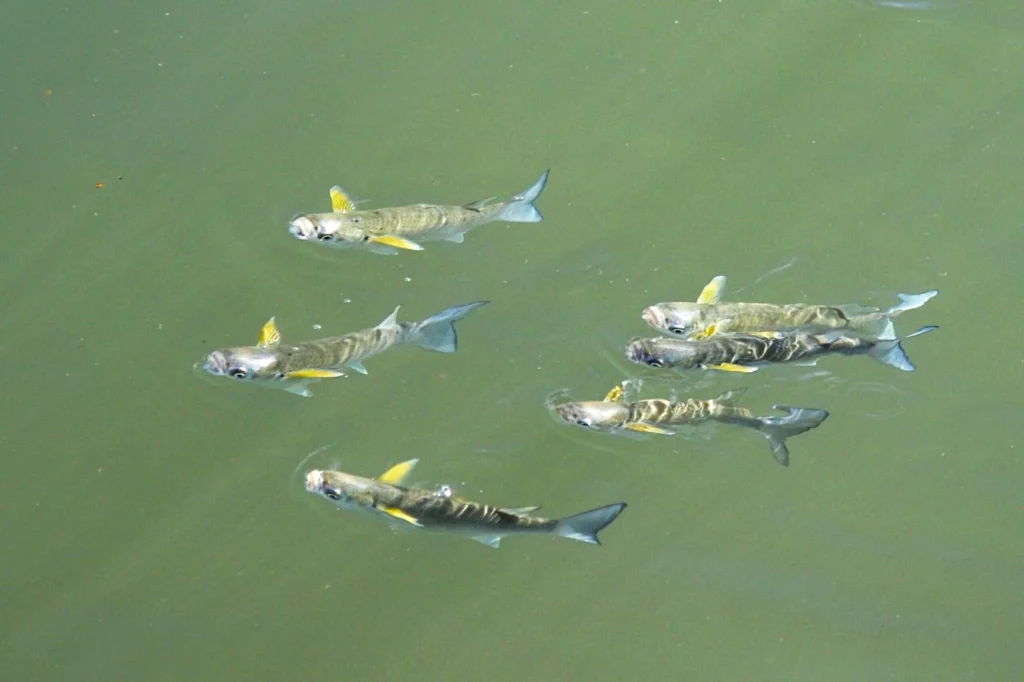
One curiosity attracts my attention in the freshwater streams of Taïpivai, Hatiheu and Aakapa Bay on Nuku Hiva Island, and that is the presence of the freshwater eels Anguila obscurus and A marmoratus.
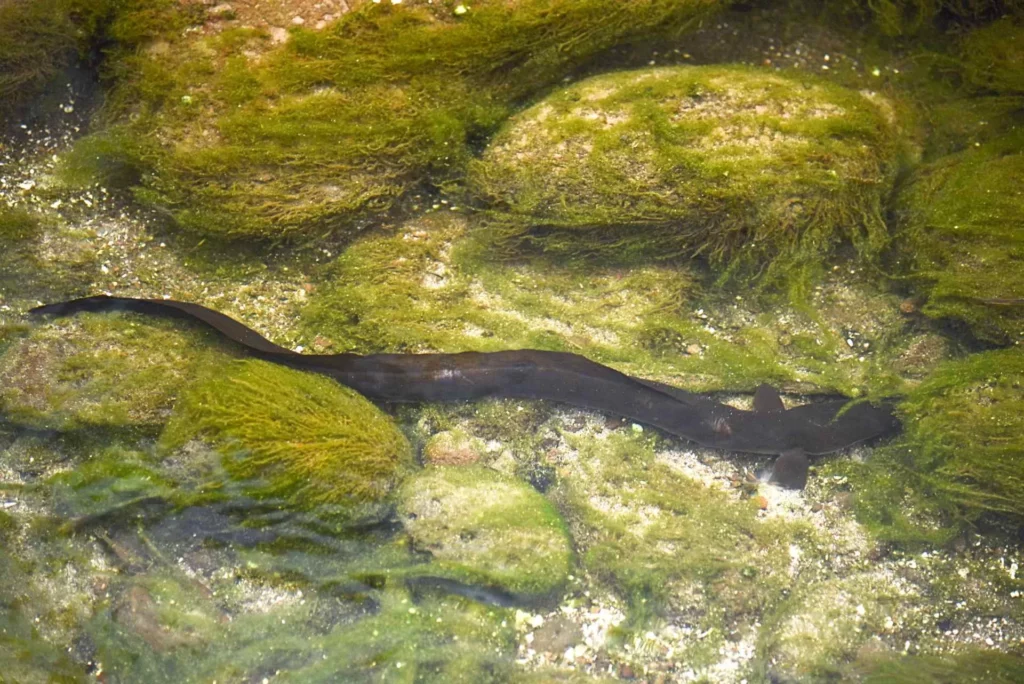
I have seen them before, much further south on Fatu Hiva island. They originate in Vanuatu in the western Pacific and migrate with the South Equatorial Counter Current.
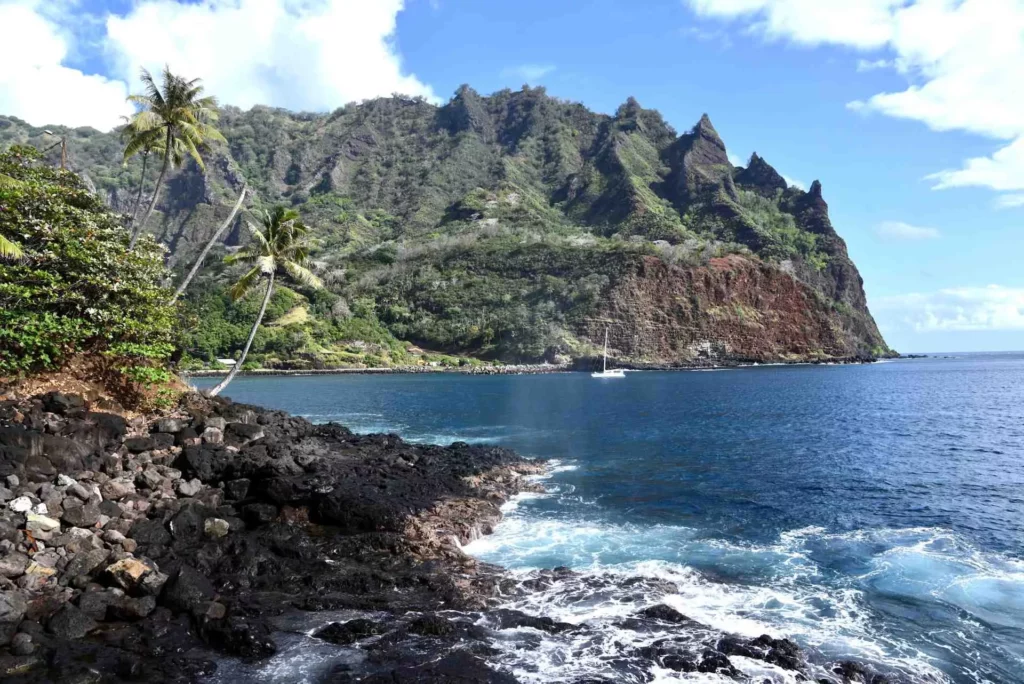
This archipelago is a trap for tourists in search of a lost Eden or an ancestral culture that values ruthless warriors with cannibalistic rituals. For the diver, the potential is enormous, with the rich and unique marine biodiversity on offer.
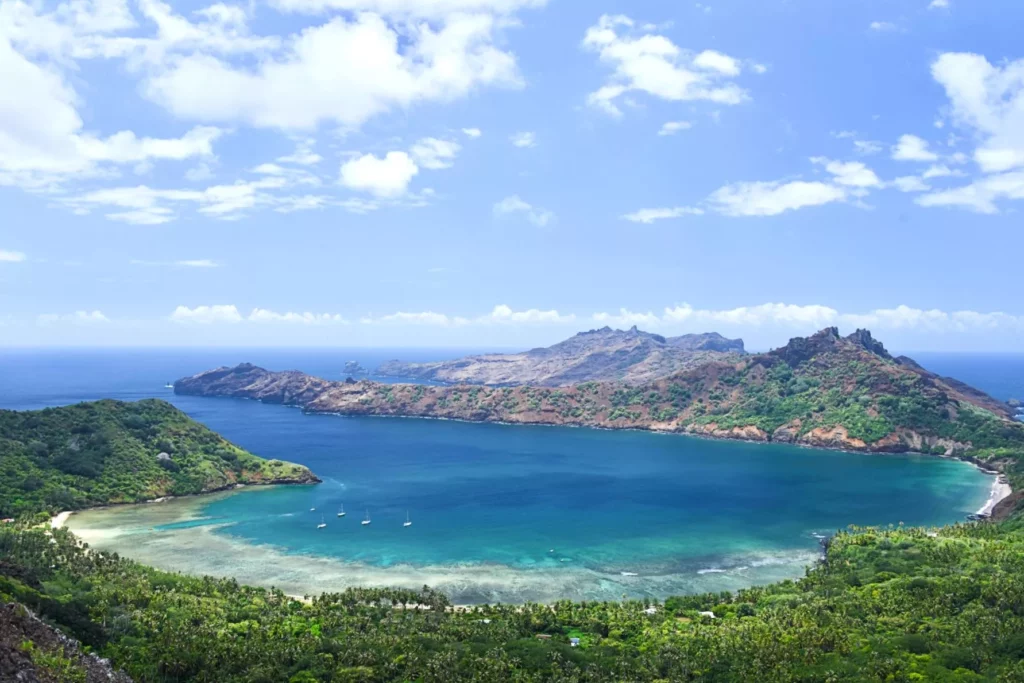
Far from the postcards of Tahiti or the idyllic, crystal lagoons of the Tuamotus, the Marquesas Islands require adaptation to the sea conditions and the lack of underwater visibility resulting from the Equatorial upwelling.
“Gémir n’est point de mise aux Marquises,” sang Jacques Brel: “There is no point in moaning in the Marquesas.”

PIERRE CONSTANT organises and leads trips with his company Calao Life Experience. Find many more of his extended dive-adventure features on Divernet.