PIERRE CONSTANT visits a volcanic island chain in Papua New Guinea on the long-established liveaboard FeBrina for some extremely unspoilt diving. He took the photographs
I first met Alan 35 years ago at the exotic bar of the Kavieng Hotel in Kavieng, New Ireland, and we had a lively chat over a couple of drinks.
Also read: Diving into Biak’s hidden world of caves
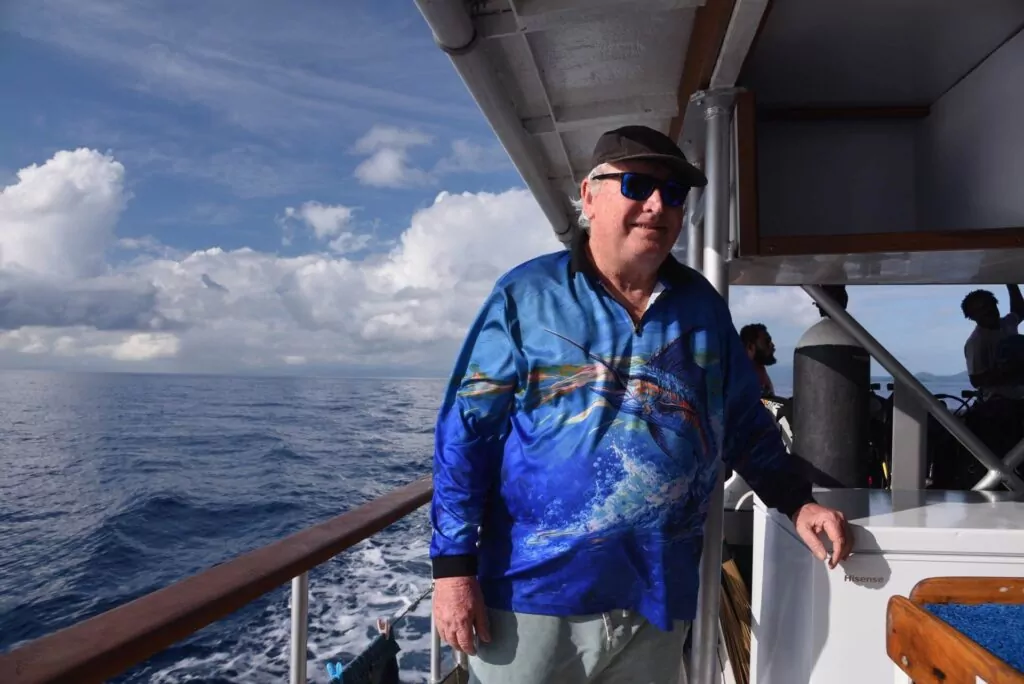
Today, I am boarding the boat of which he is owner and captain, the FeBrina. He is almost 68 and, in his colourful marlin shirt, appeared to have doubled in girth! He remembers me as the Frenchman who set up a dive-centre in Manus in the remote Admiralty Islands in the far north-west of the country. That was a quarter of a century ago.
Starting from Walindi in Kimbe Bay in the province of West New Britain province, the nine-day dive cruise is bound for the Vitu (aka Witu) Islands in the Bismarck Sea. The passengers are a cosmopolitan mix of four Australians, three Americans, a Dutch ex-marine and me.
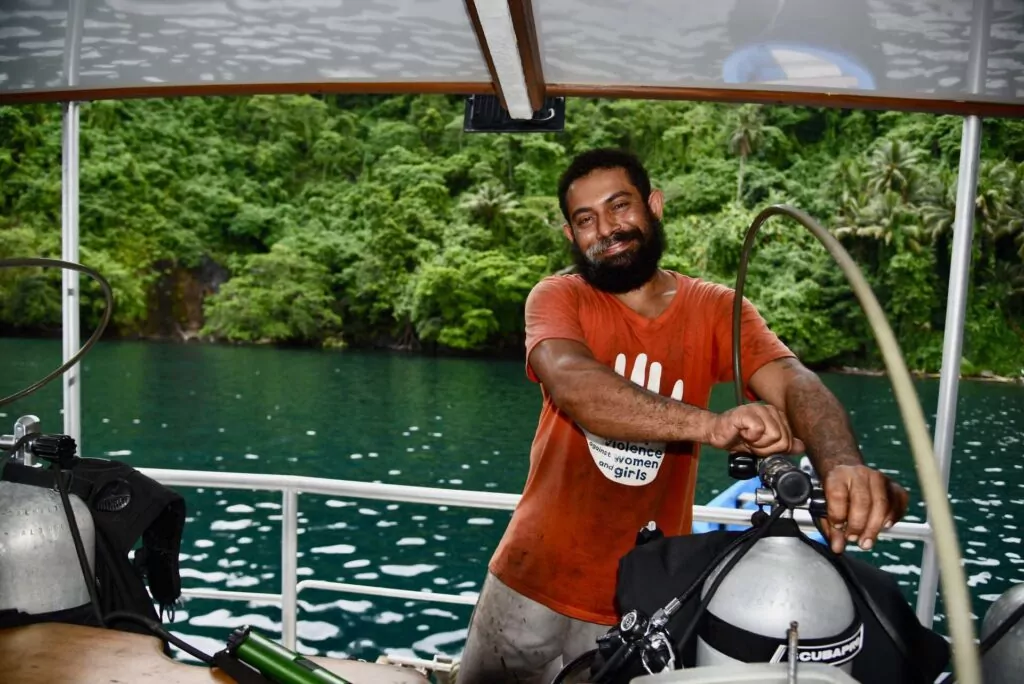
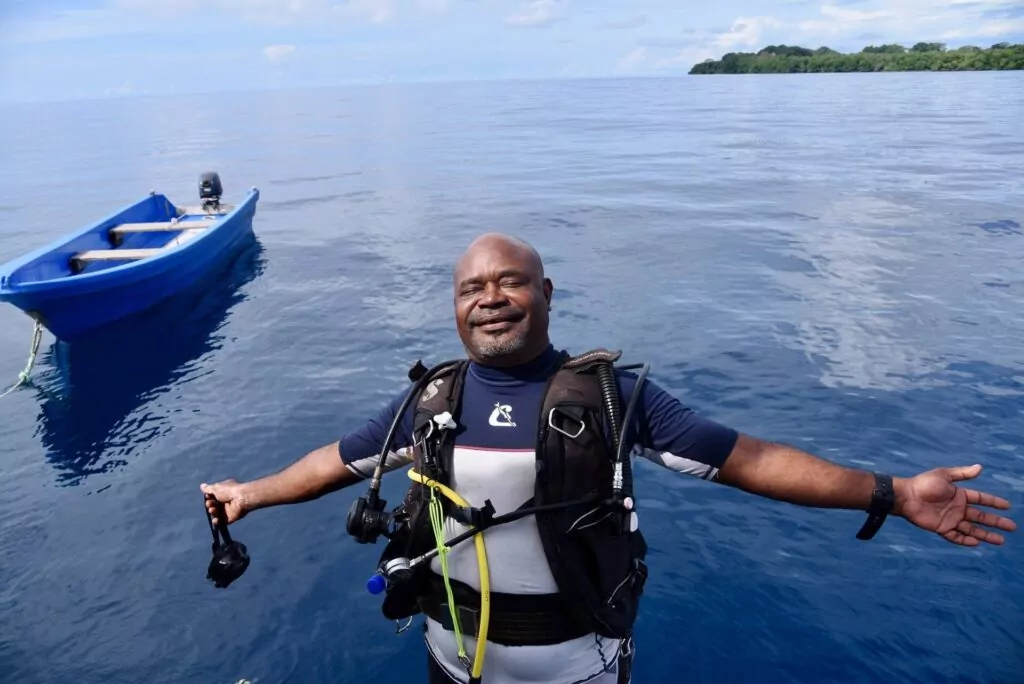
The crew from PNG includes Francis, the engineer; head cook and dive instructor Josie with her three assistants, dive-guides Lucas, Michael and Freddy; and deckhand Vincent, who meticulously hoses down the deck all day long!
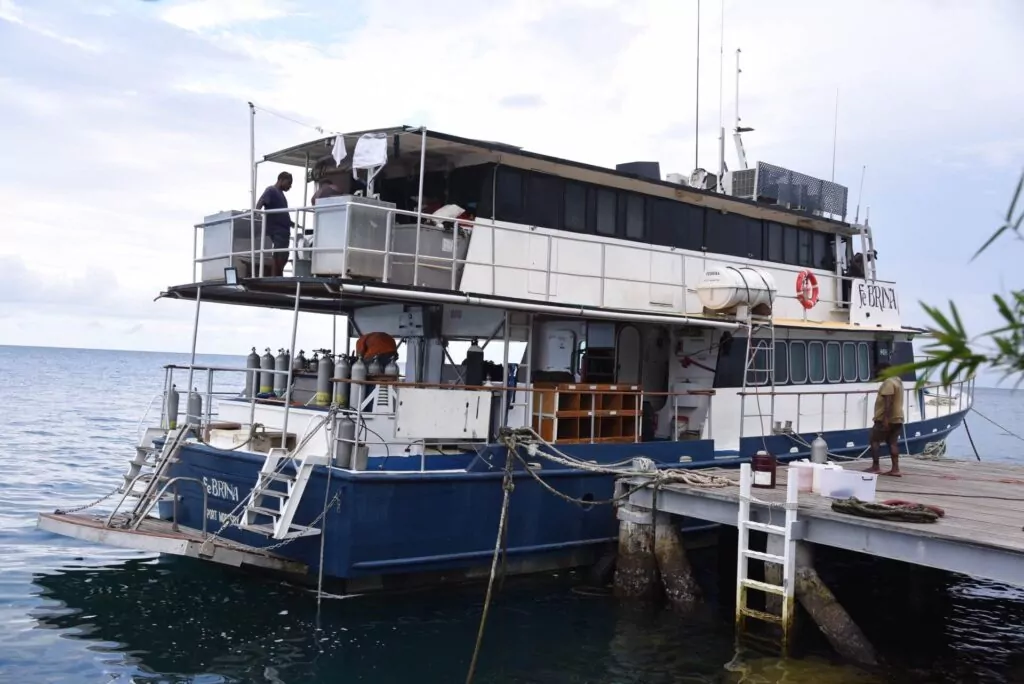
Built in Australia in 1973, FeBrina is 25m long and has seven cabins accommodating up to 10 passengers. Australian skipper Alan Raabe bought it in 1990.
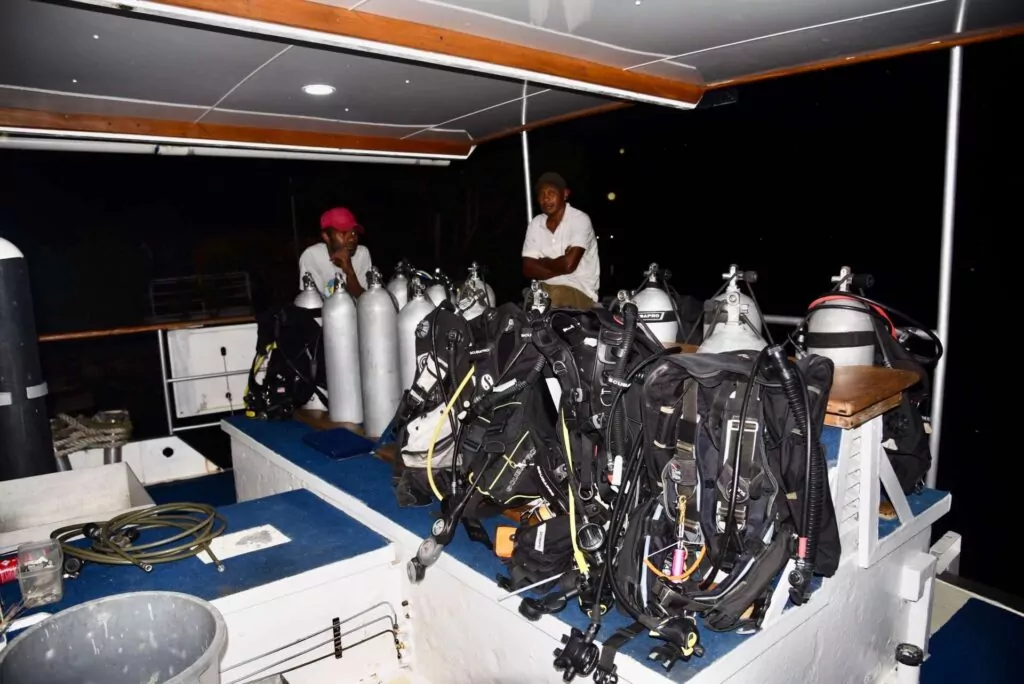
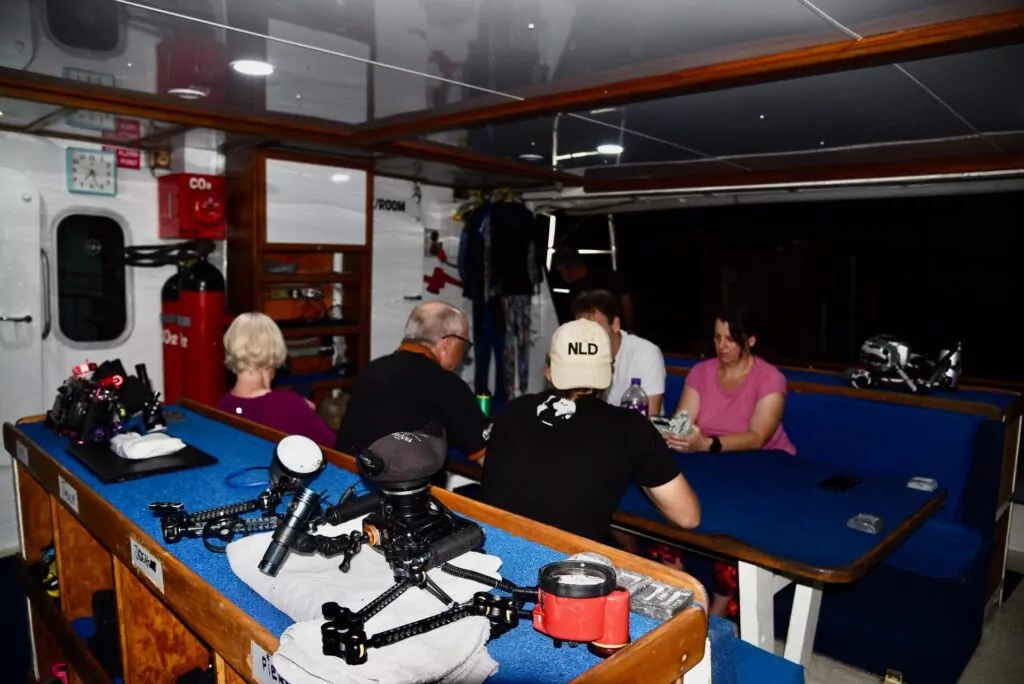
Seven days of diving with 4-5 dives a day are planned – three dives in the morning, one in the afternoon and one night dive. The passengers arrive from Port Moresby with Air Niugini, the flight schedule of which has changed at least three times in the past few months.
The first night is spent moored at the dock in Walindi. The engine roars to life at 5am, and I spring out of bed for the first dive at 6.30. Nitrox is available as a package for all dives.
Formerly called the French Islands, covering 96sq km, the volcanic Vitu Islands lie to the north-west of Kimbe Bay. The four big islands are Garove (Big Vitu), Unea, Mundua (Ningau) and Nareoa (Naragé).
The latter island is the remnant of an eruption that occurred around 1892 and created a 100m-high tsunami wave that wiped out all but two of the people living on nearby Ningau.
Of all PNG’s islands, New Britain is the most volcanically active. At 520km long and 146km wide, it is the largest island in the Bismarck Archipelago. Its chains of 27 volcanoes run its length but mainly along the north coast (around Rabaul) in the east and along the Willaumez Peninsula (around Kimbe) in the west.
The indigenous people of New Britain fall into two main groups: Papuans, who have been there for tens of thousands of years, and Austronesians, who arrived 3,000 years ago. At least 50 different languages are spoken on the island.
Inglis Reef
The first dive is at a seamount in Kimbe Bay. Visibility is great, and the fish life OK but coral-bleaching is very obvious in the high water temperature of more than 31°C. The top of the reef at 11m descends to 28m and beyond.
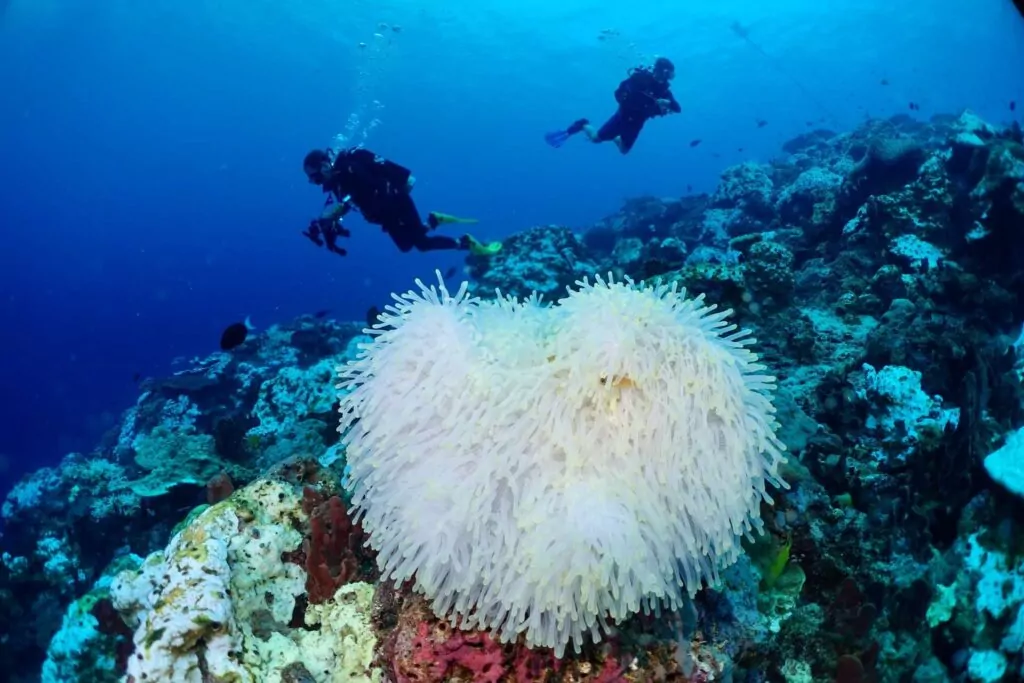
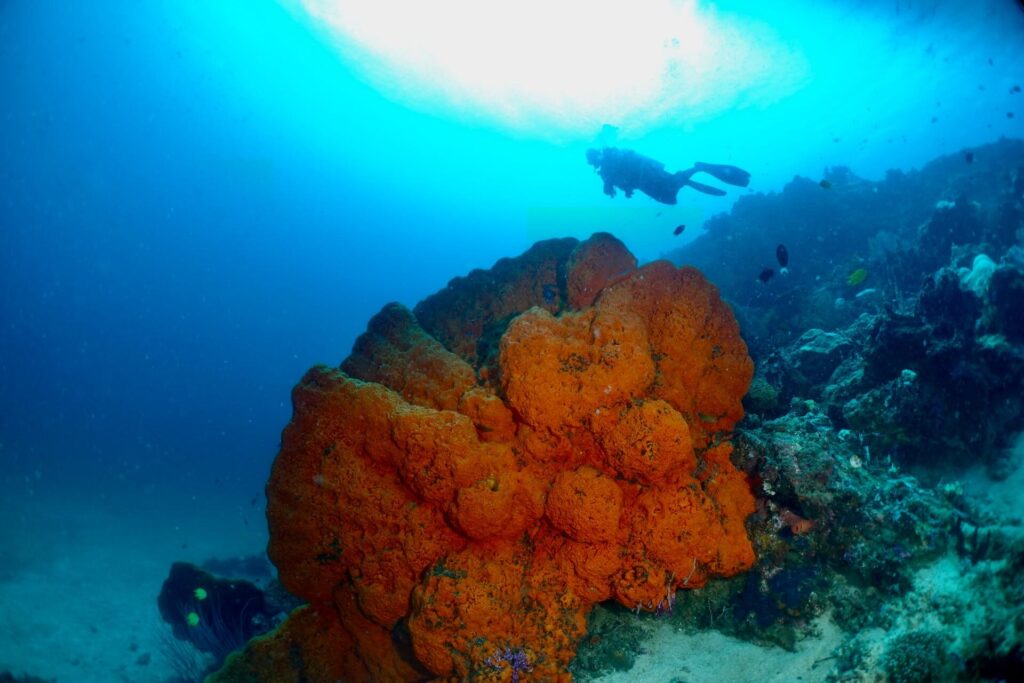
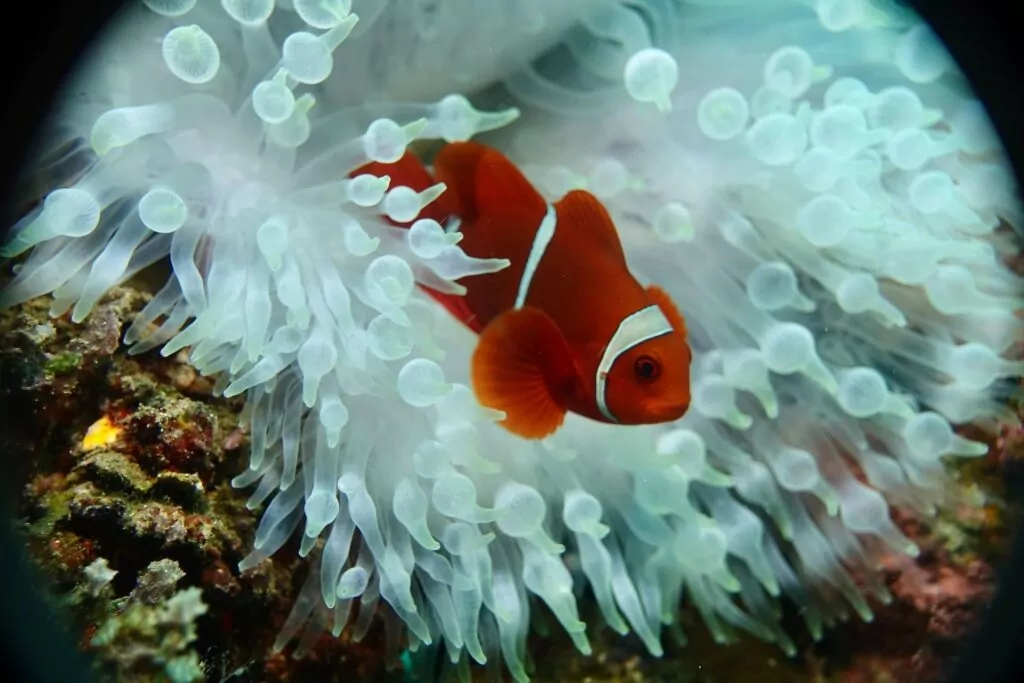
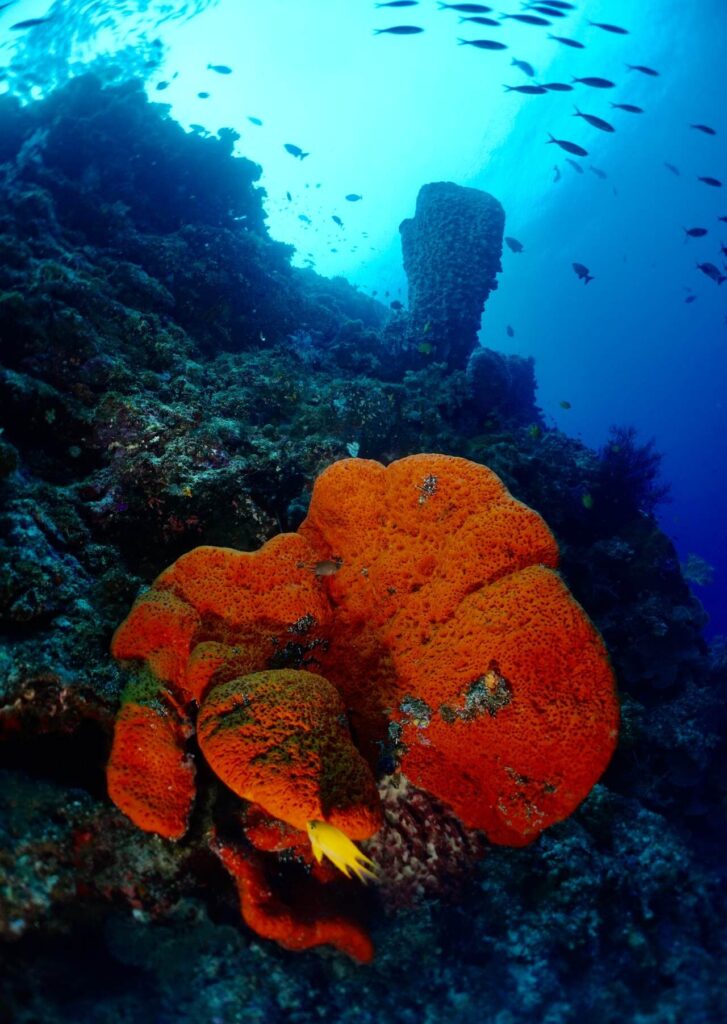
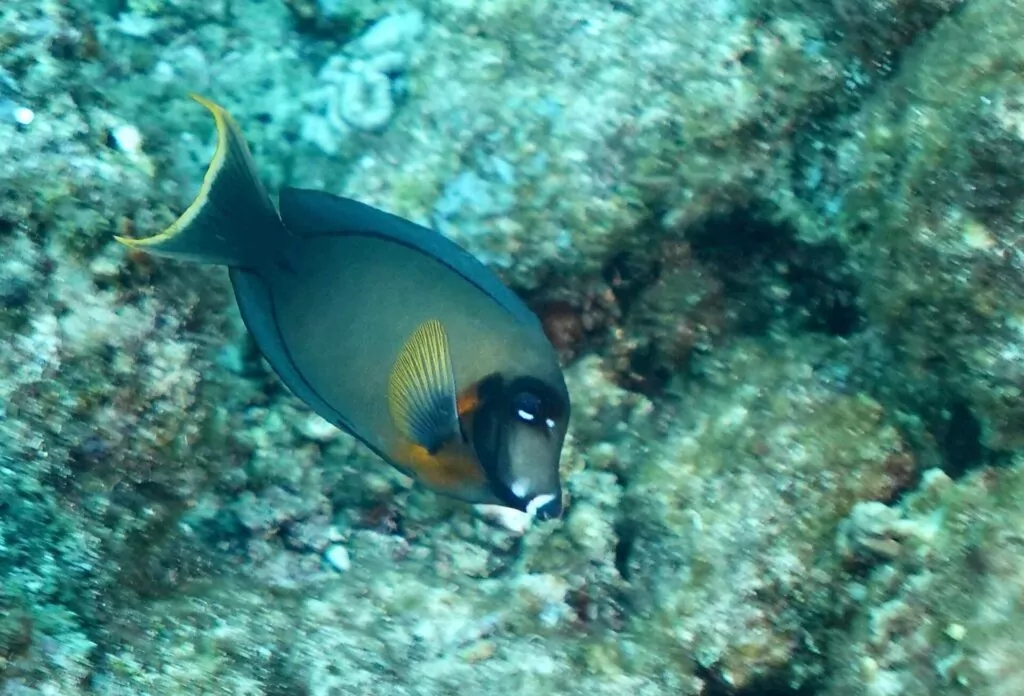
We see a small whitetip shark, schools of sleek unicornfish (Naso hexacanthus), Vlaming unicorns (Naso vlamingii), surgeonfish, coral grouper and black snapper (Macolor niger), with big ear-shaped orange sponges adding a touch of vibrant colour to the scenery. The white anemones with pink skunk anemonefish (Amphiprion perideraion) are delightful.
Joelle’s Reef, named after Alan’s daughter, is another seamount with clear water, and no current whatsoever.
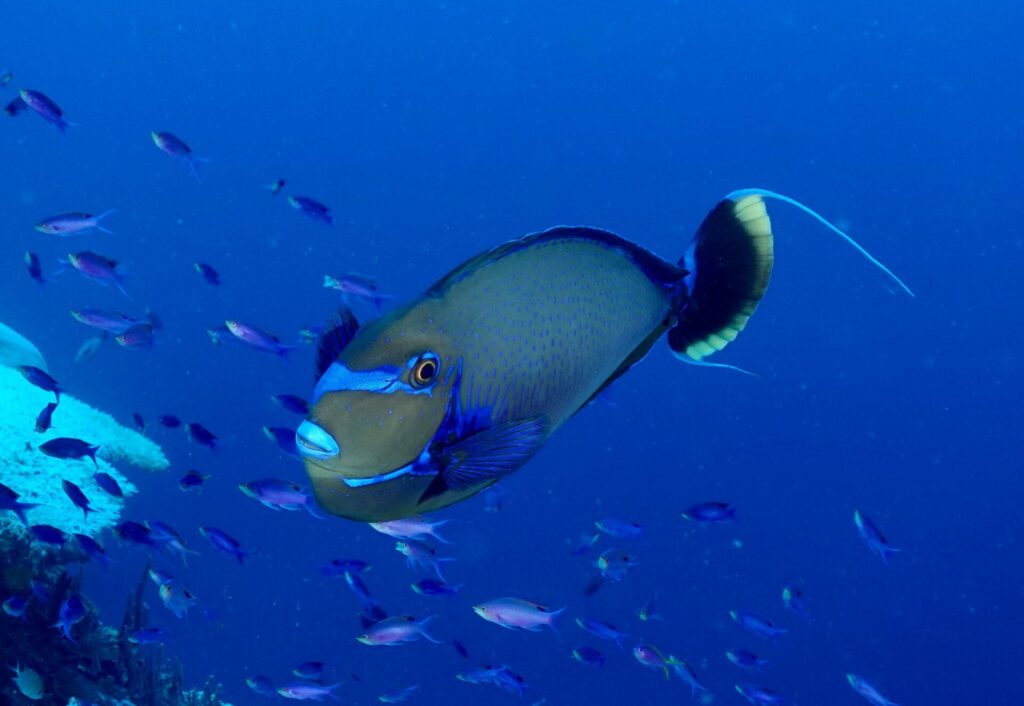
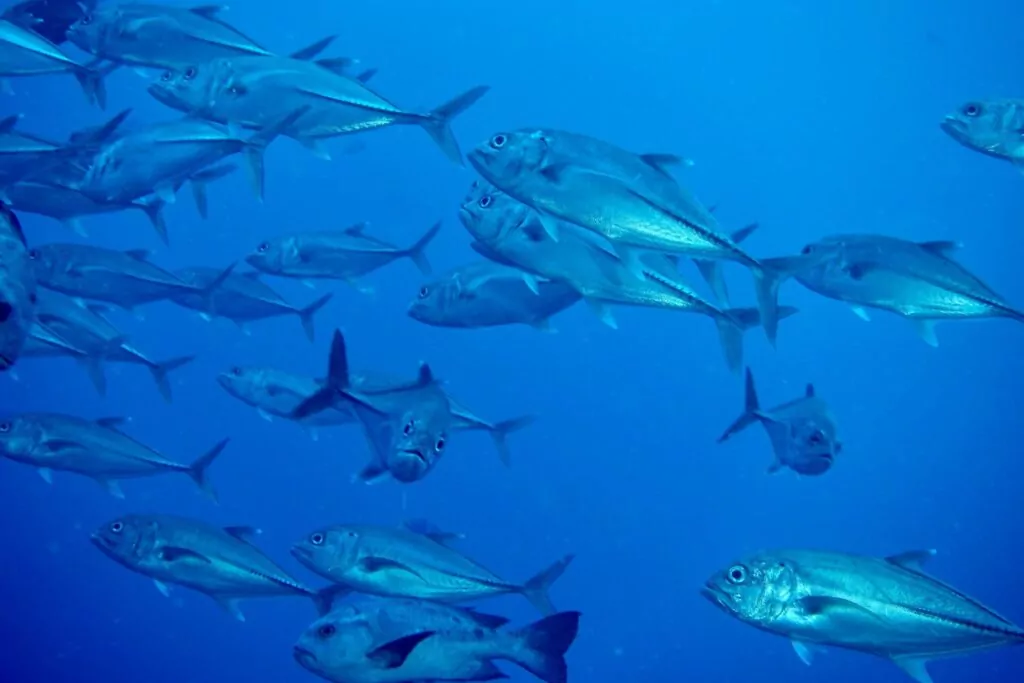
A small school of bigeye jack (Caranx sexfasciatus) hover on top of the reef. A barramundi grouper (Cromileptes altivelis), the yellowmask surgeonfish (Acanthurius dussumieri), some Teira batfish (Platax teira), a cloud of pyramid butterflyfish (Hemitaurichthys polylepis) and several large-size highfin coral grouper (Plectropomus oligacanthus) are highlights today.
After the third dive at Anne-Sophie’s Reef, we depart mid-afternoon for the Vitu Islands. The open-sea crossing is expected to take seven hours.
Mt Wangore volcano’s perfect cone rises at 1,155m to starboard in the warm sunlight. As soon as we double Cape Hollmann, the northern tip of the Willaumez Peninsula, the sea becomes rough. Dinner is an agitated affair, and some of the guests disappear swiftly to their cabins.
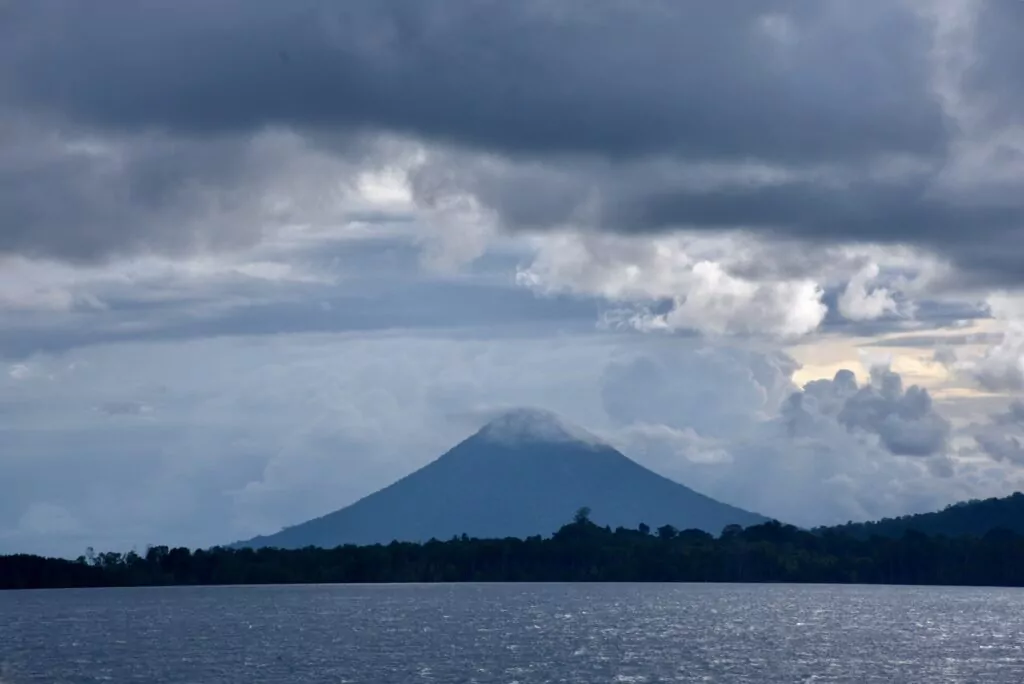
FeBrina drops anchor in a protected bay south of Garove Island, and everyone enjoys a good sleep at last. Garove, or Big Vitu, is the largest of the Vitu Islands and remarkable for its inner caldera. This is breached on the south side, allowing sea water to flood a crater that is probably 3km across.
After being occupied by the Germans before WW1, the Vitu Islands were acquired by the trading group Burns Philp for plantations. Throughout WW2 they were occupied by the Japanese. In 1952, a Catholic mission was established inside Vitu’s big caldera.
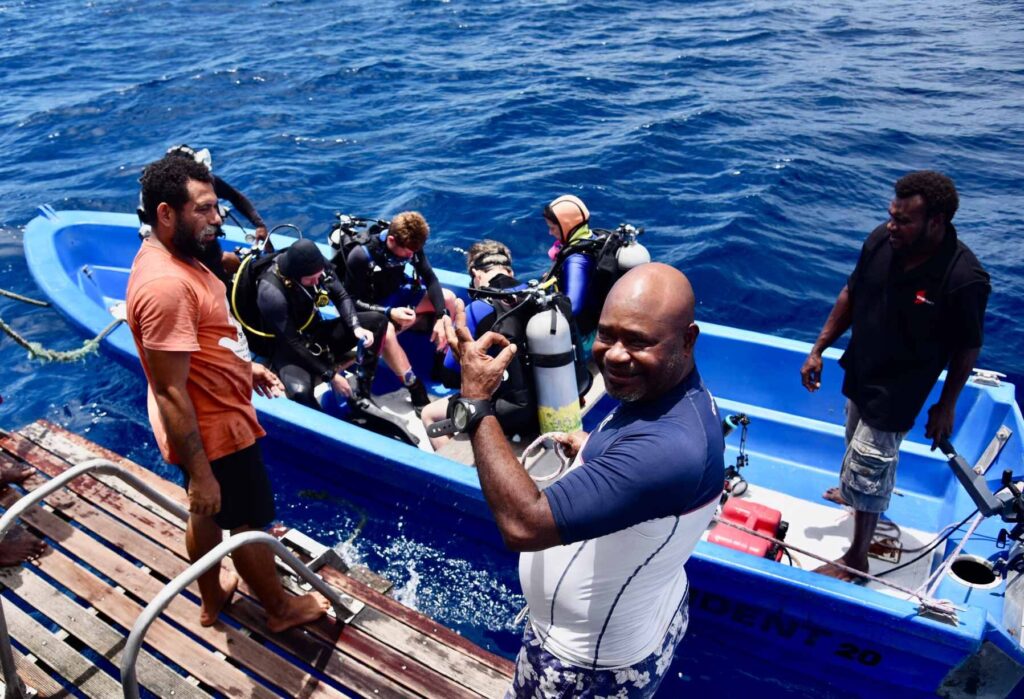
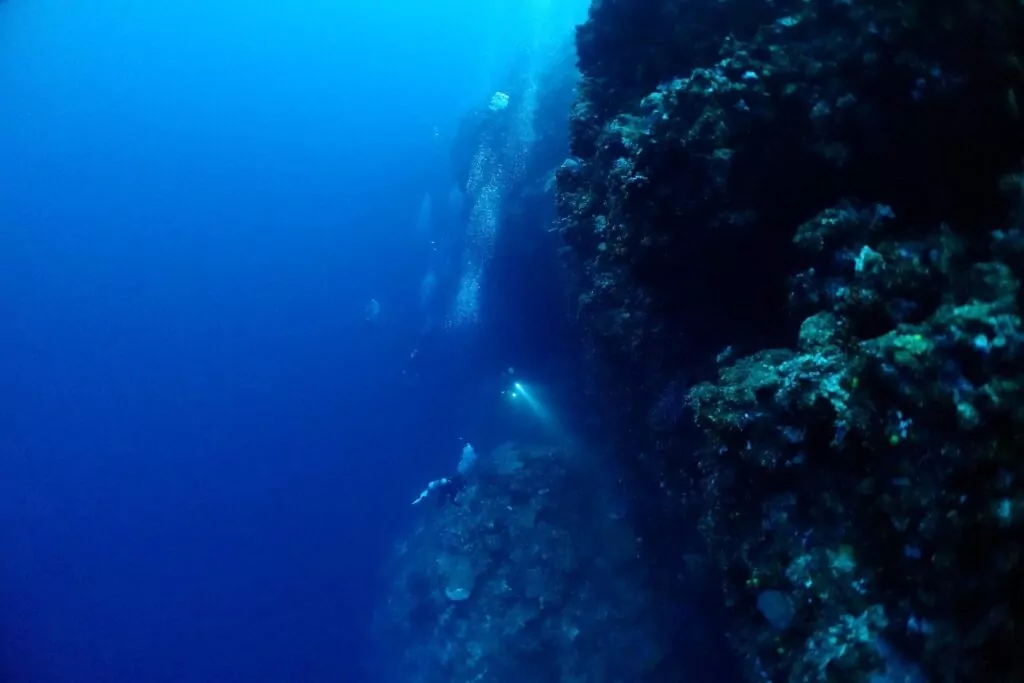
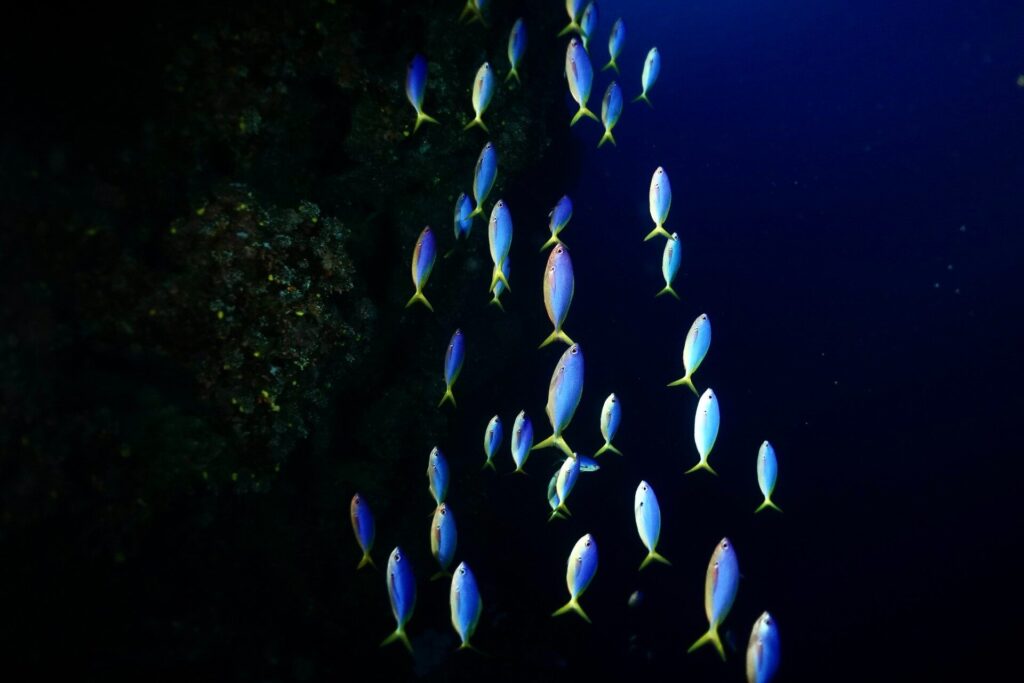
Early morning, the sky is overcast and it is raining a bit. Our first two dives are at Vitu Reef, off Garove’s west coast. The rather dark wall dive reveals few fish other than a school of blue and yellow fusiliers (Caesio teres) shooting straight up along the wall.
I come across a few orange-fin anemonefish with white tails (Amphiprion chrysopterus). Swimming around the point things liven up with a school of midnight snapper (Macolor macularis), bluefin jack, red snapper, some giant jack (Caranx ignobilis) and a cloud of pyramid butterflyfish (Hemitaurichthys polylepis).
The sun comes out at last as the boat moves east into Vitu Harbour for anchorage. An afternoon dive is planned on volcanic black sand.
Wirey Bay
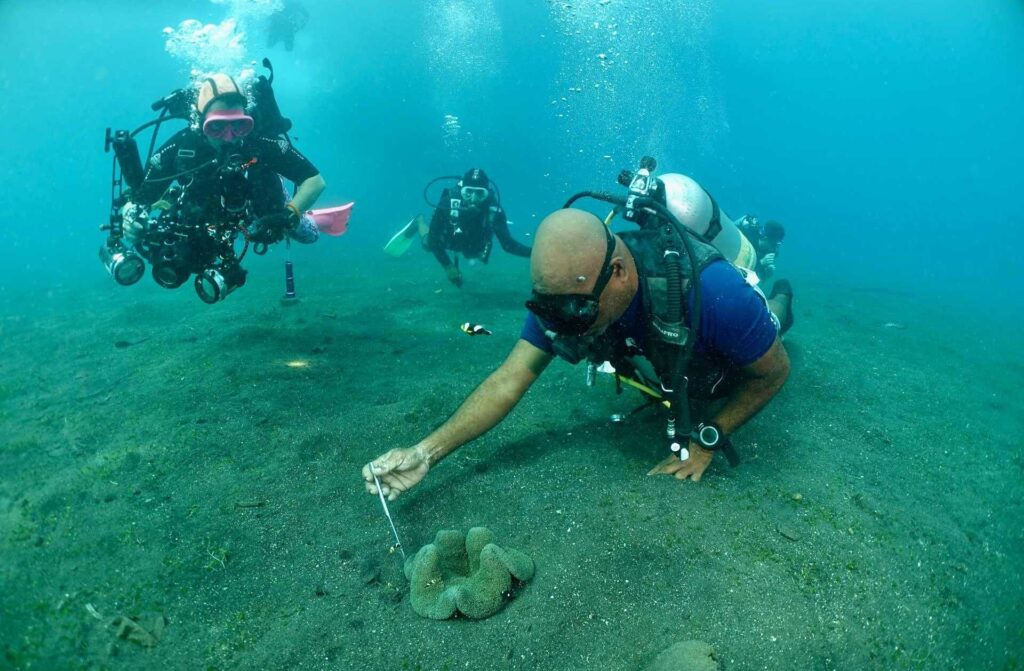
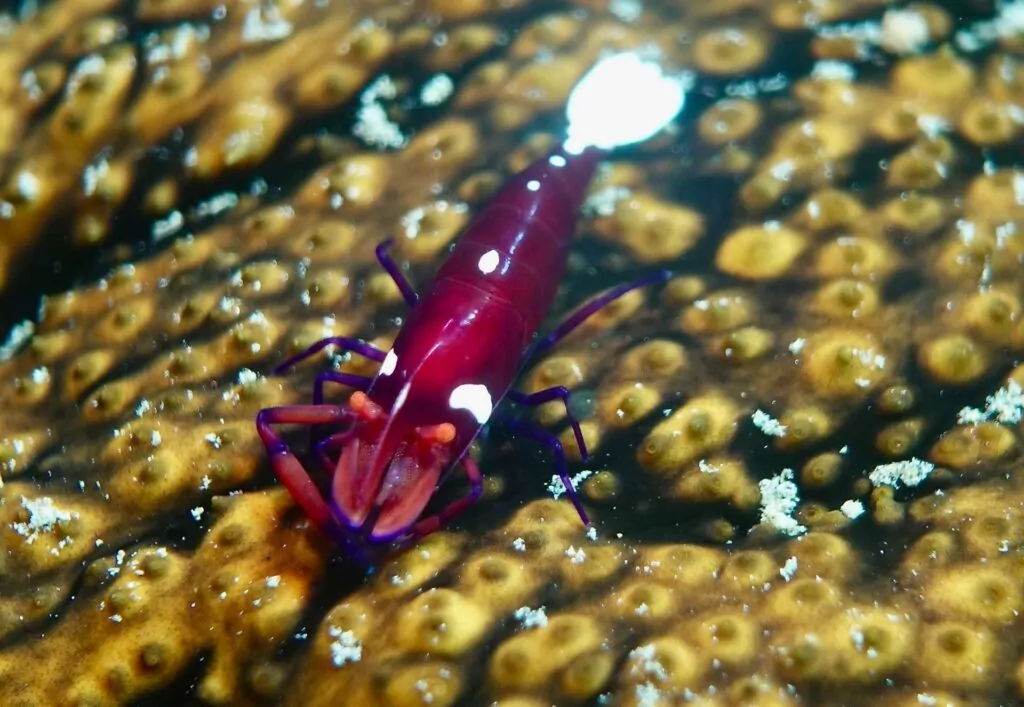
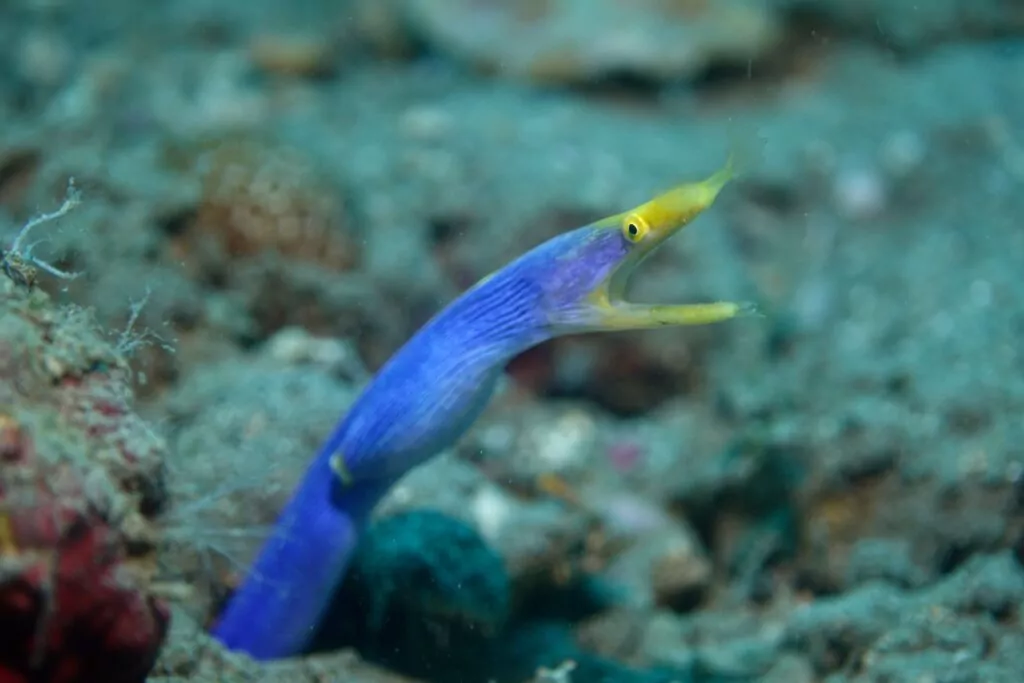
The muck-dive allows me to see an emperor shrimp (Periclimenes imperator) at work on a sandfish sea cucumber (Holothuria scabra). Sticking out of its hole, an inquisitive blue ribbon eel (Rhinomuraena quaesita) looks complacent about this photographer’s macro intentions.
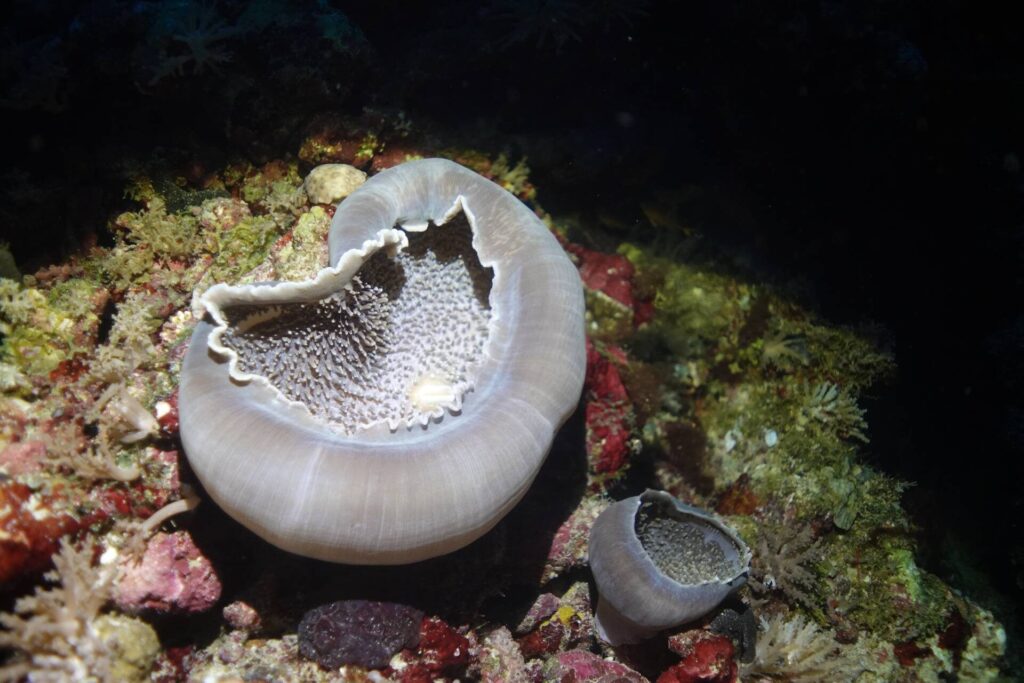
Pretty vase corals (Turbinaria peltata) host a collection of juvenile blue-lined snapper (Lutjanus kasmira). Vertical barrel sponges are impressive, and corallimorpharians draw my attention. Foraging aggressively into the sand, a large sting ray lifts a cloud of grey silt and, on my approach, turns to frantic flight.
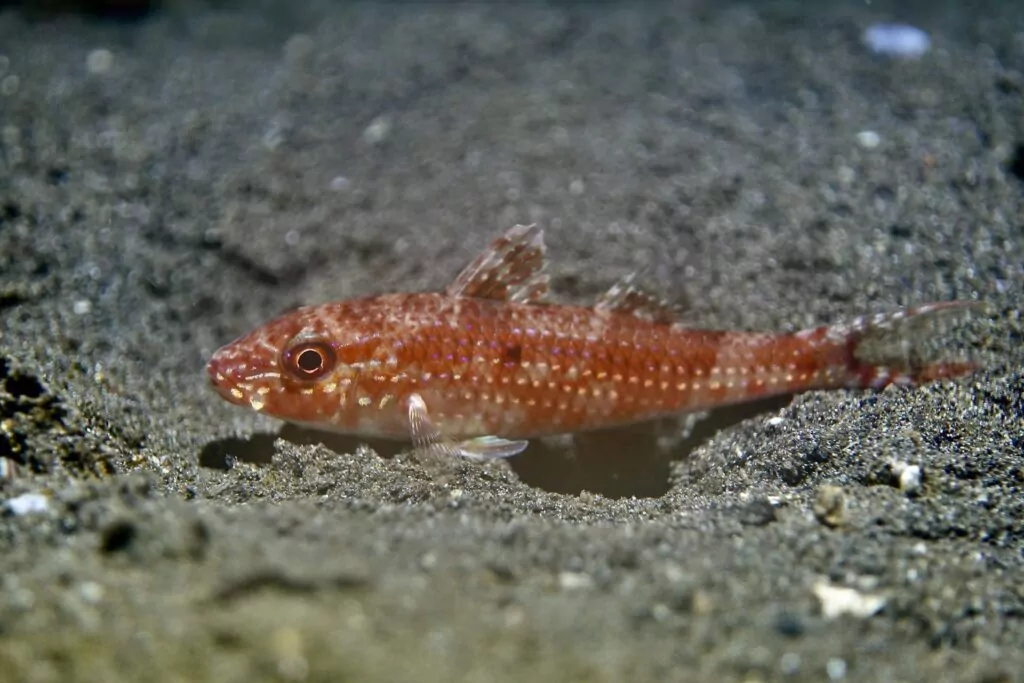
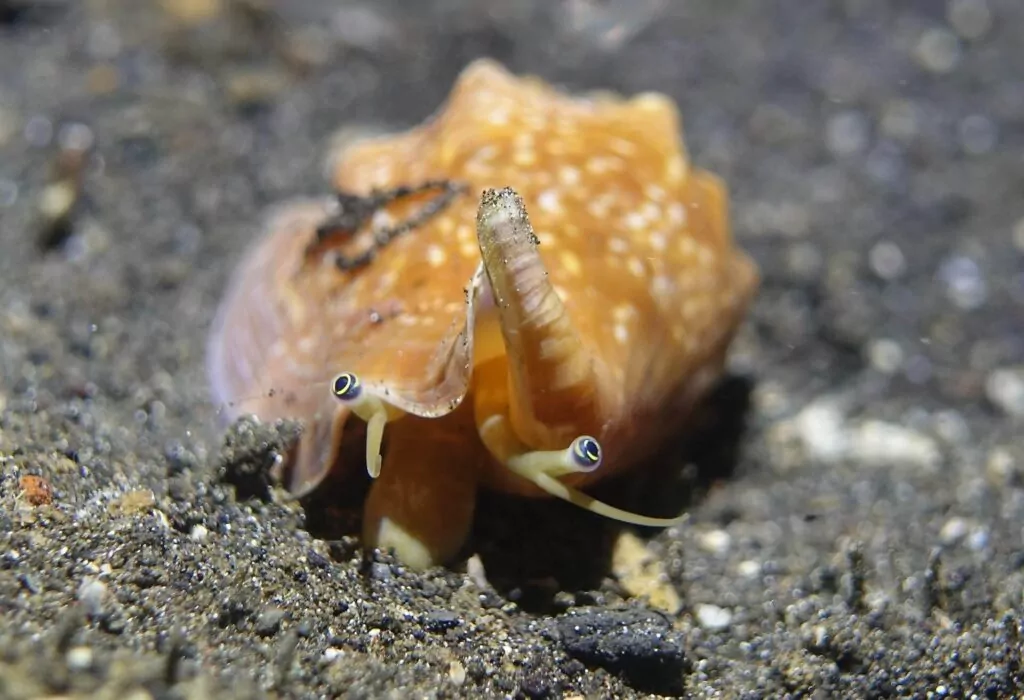
The night dive at Wirey Bay is no great deal, but I find plenty of hermit crabs, a shy blue-spotted ray and a longhorn cowfish (Lactoria cornuta) attracted to my torchlight for a macro shot. A vomer conch (Strombus vomer) slides in the muck under the boat, checking me out comically with its moving eyes.

Ningau Island is part of the Mundua Islands to the north-west. Alan plans to dive Goru’s Arches, an isolated offshore reef, but the islanders bluntly request a fee of a million kinas (£261,000) to use the site! Madness.
Eventually, Josie informs us that we are to dive Dicky’s Knob to the west of Vitu Reef. Fish there are prolific: a school of oceanic triggerfish (Canthidermis maculata), schools of fusiliers, bluefin and giant jack, black jack (Caranx lugubris) occasionally, and dogtooth tuna (Gymnosarda unicolor).
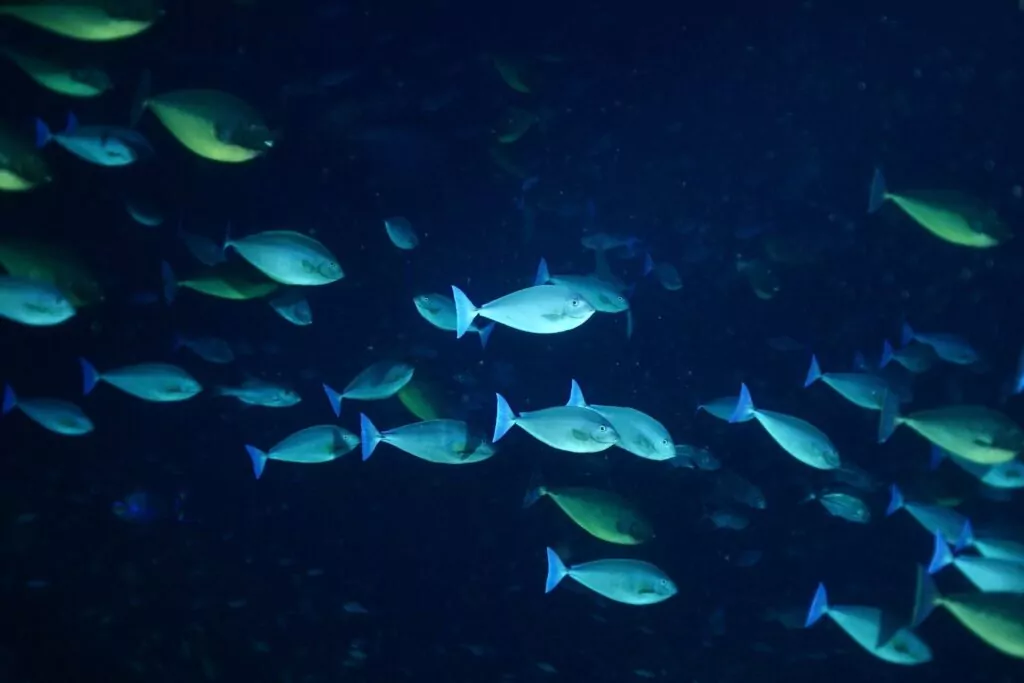
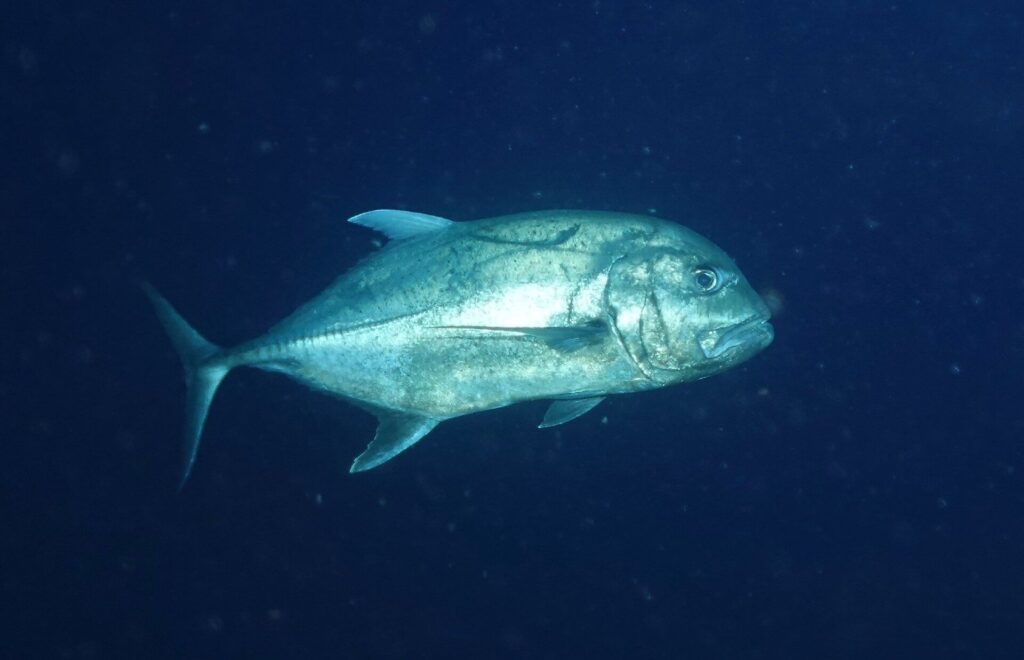
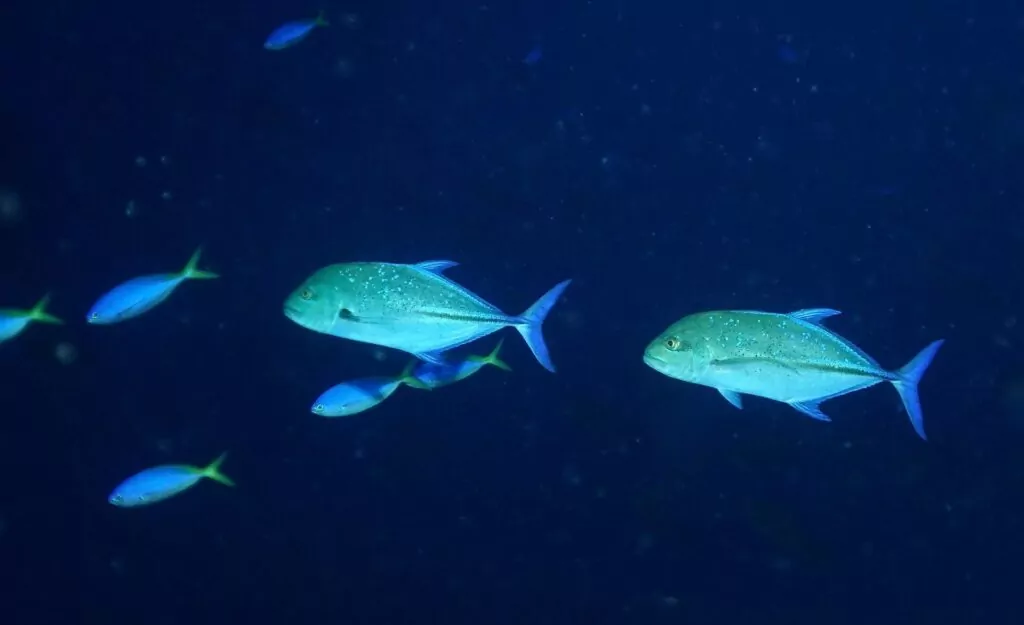
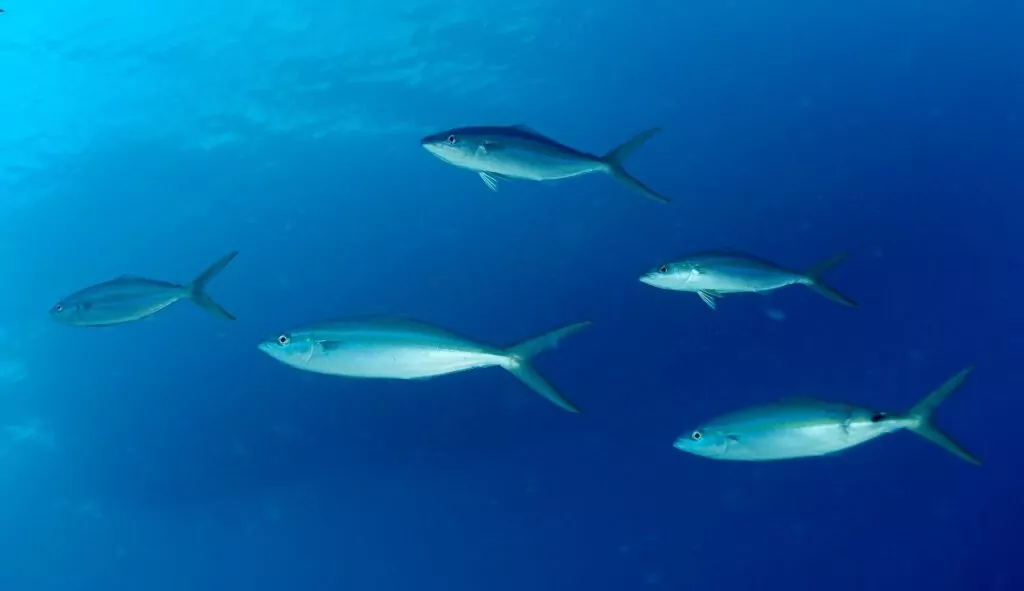
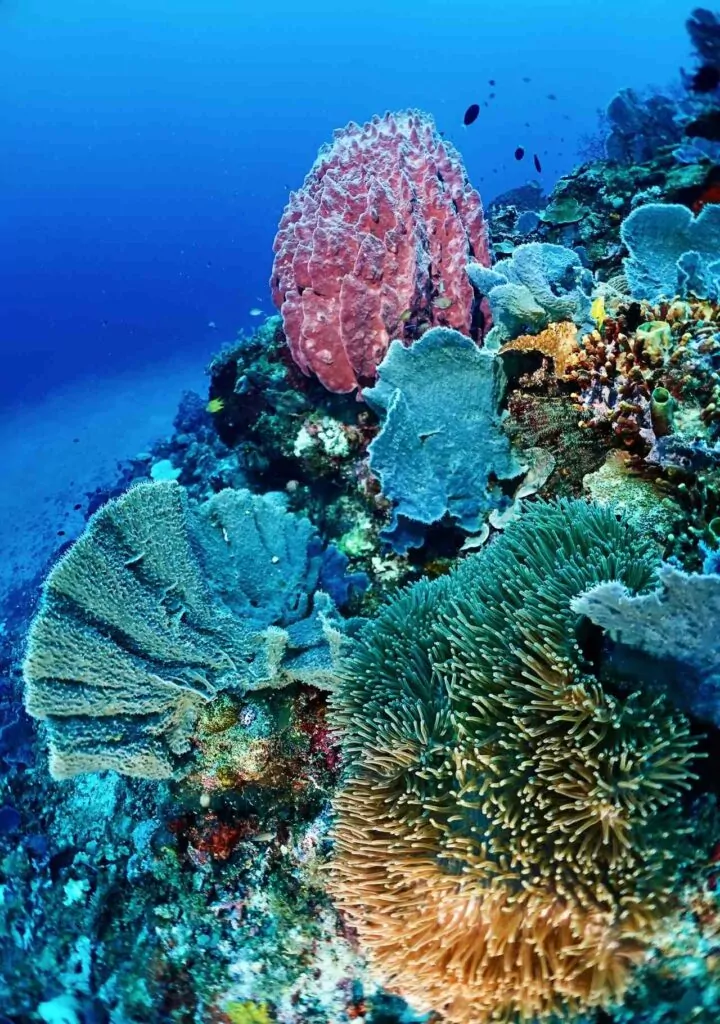
Around the seamount I am surprised by a school of rainbow runners. Gorgonians and red whip coral look good and the dome is carpeted with anemones, with some spherical spiky sponges (Oceanapia sp).
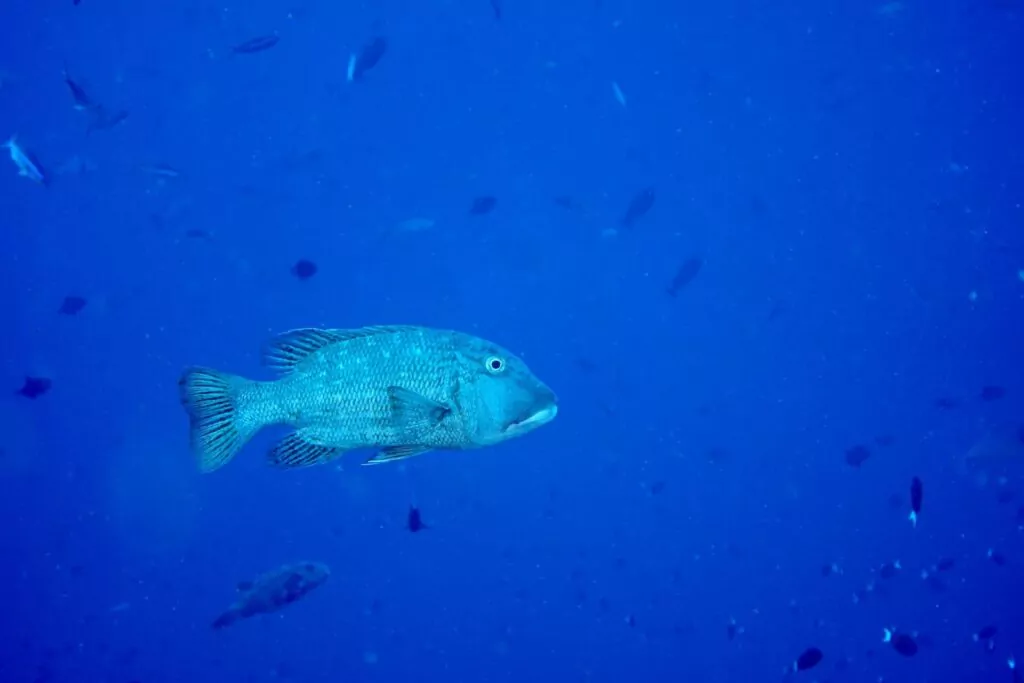
Early morning, Ningau Reef is a wall dive in a channel where a strong current comes from the north. Down to 28m all of a sudden, I come upon four superb sailfin snapper (Symphorichthys spilurus), one of my favourite species.
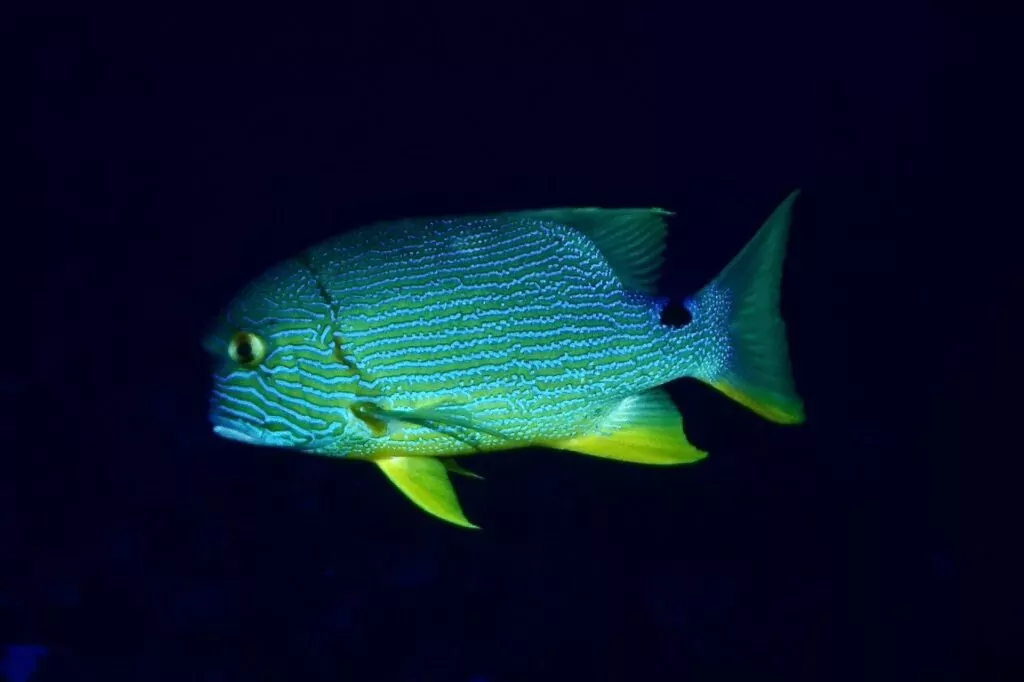
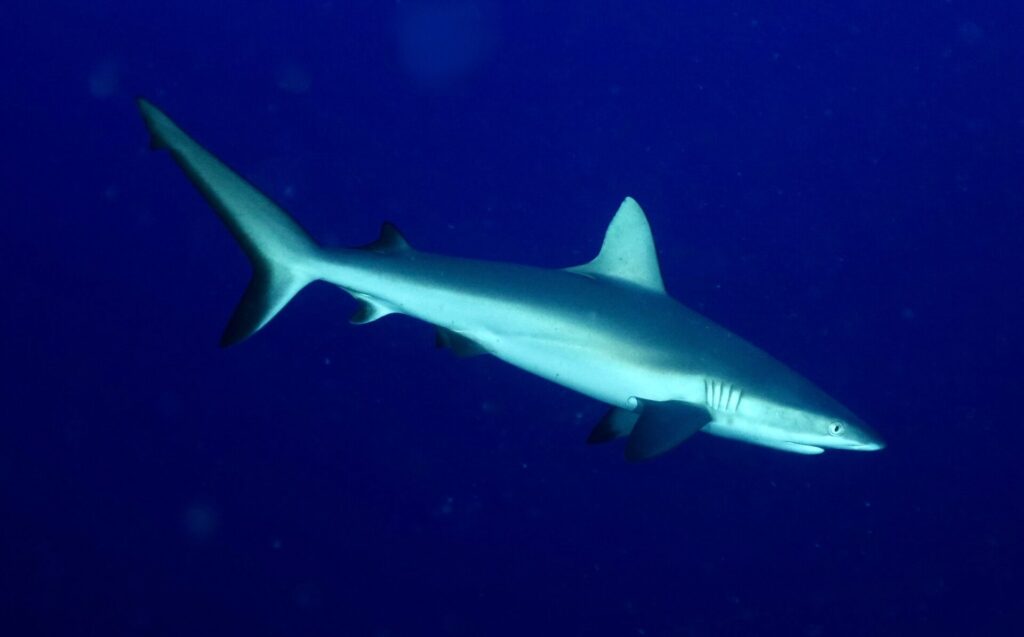
As I pivot to face the current, a grey reef shark zooms in on me out of the blue. I manage to frame it properly, which is fortunate because it will be my only shark encounter on the cruise.
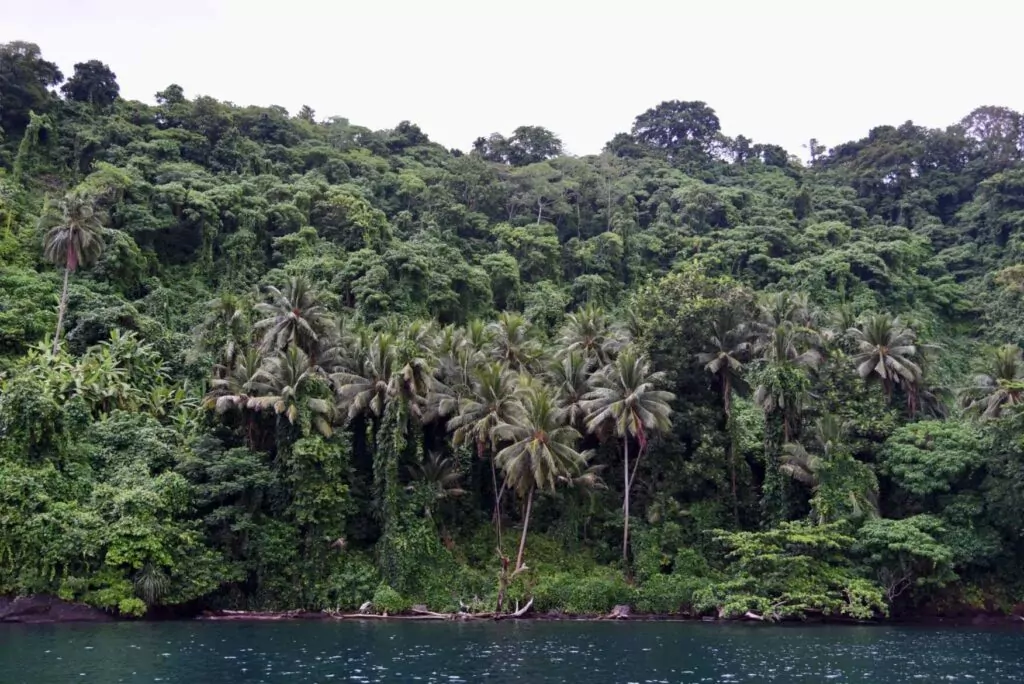
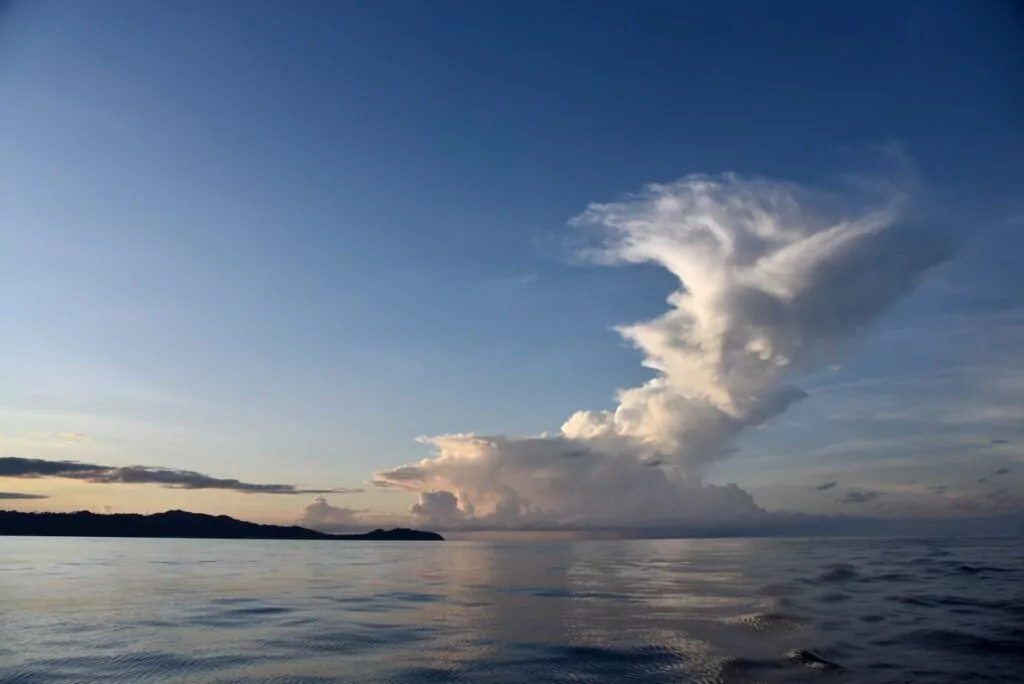
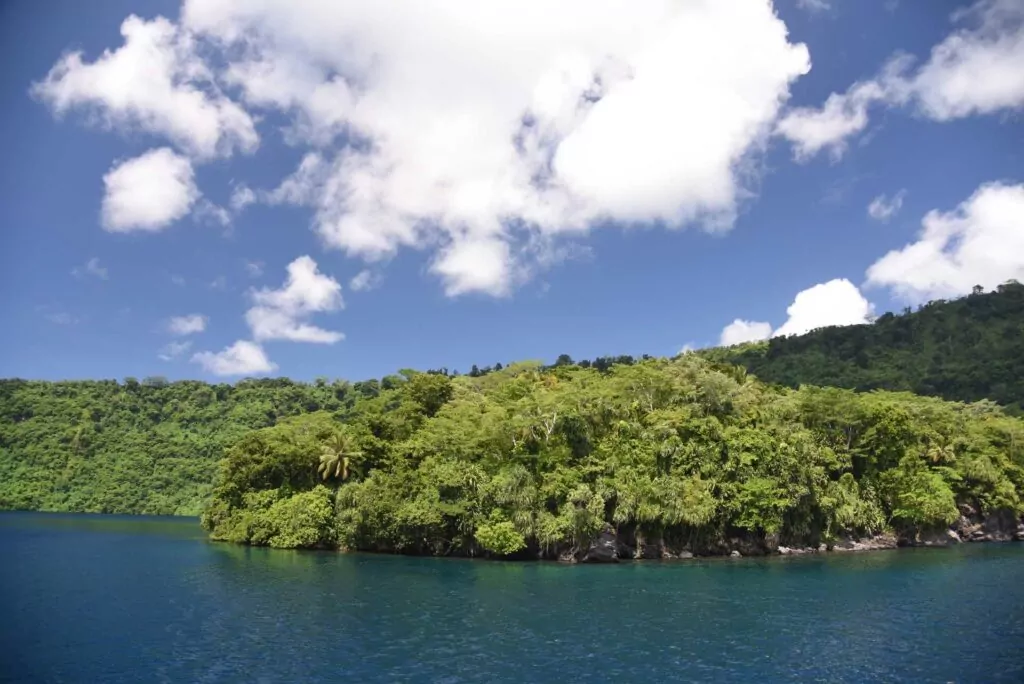
FeBrina moves into the 200m-deep channel of Garove caldera as we eat lunch, and drops anchor behind the small Peel Island. The vegetation is lush and green, with pandanus and coconut trees.
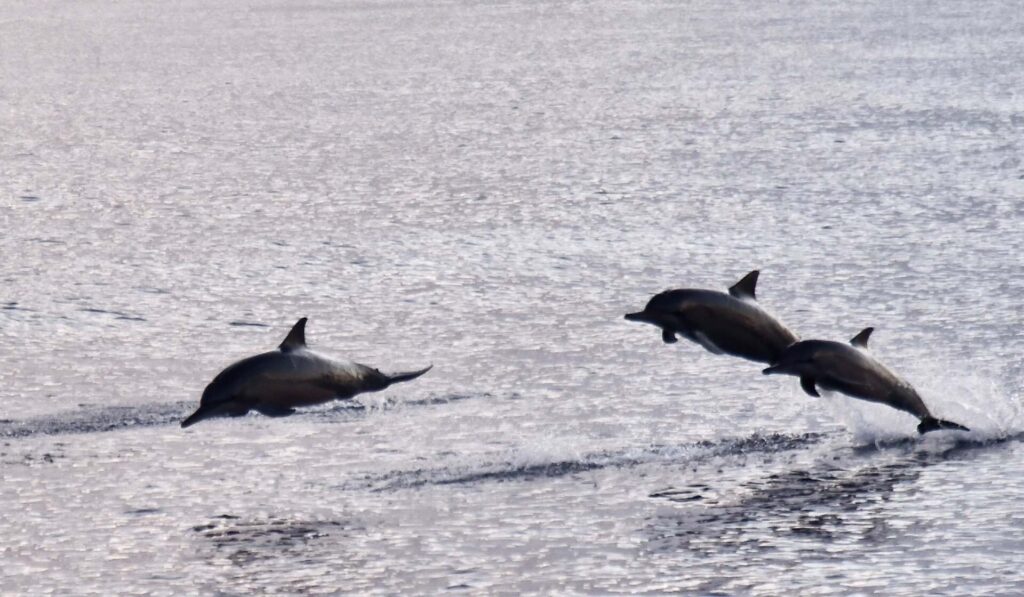
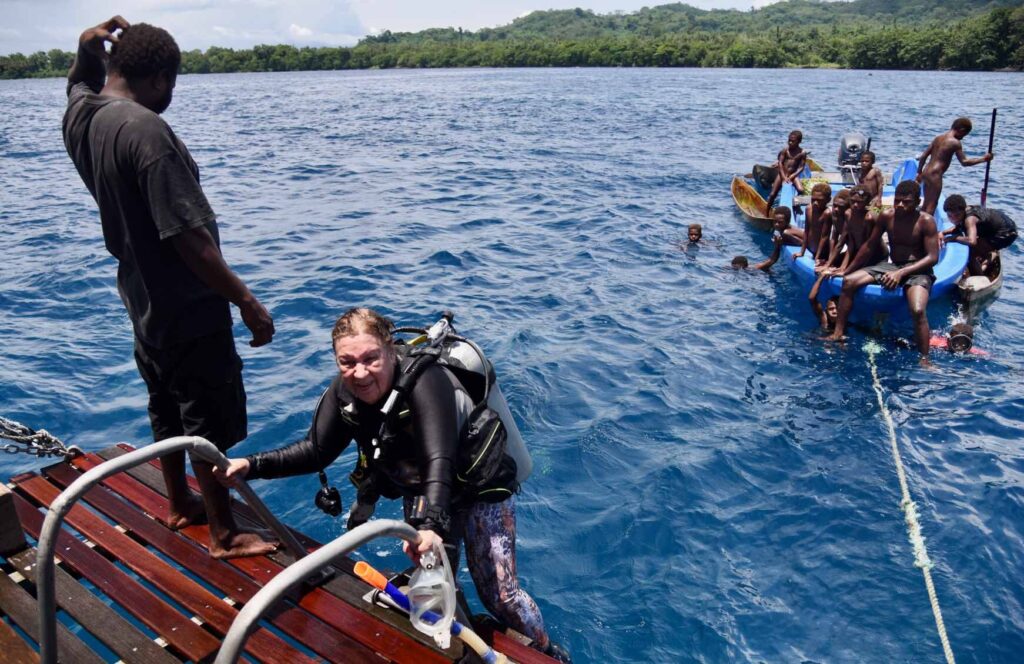
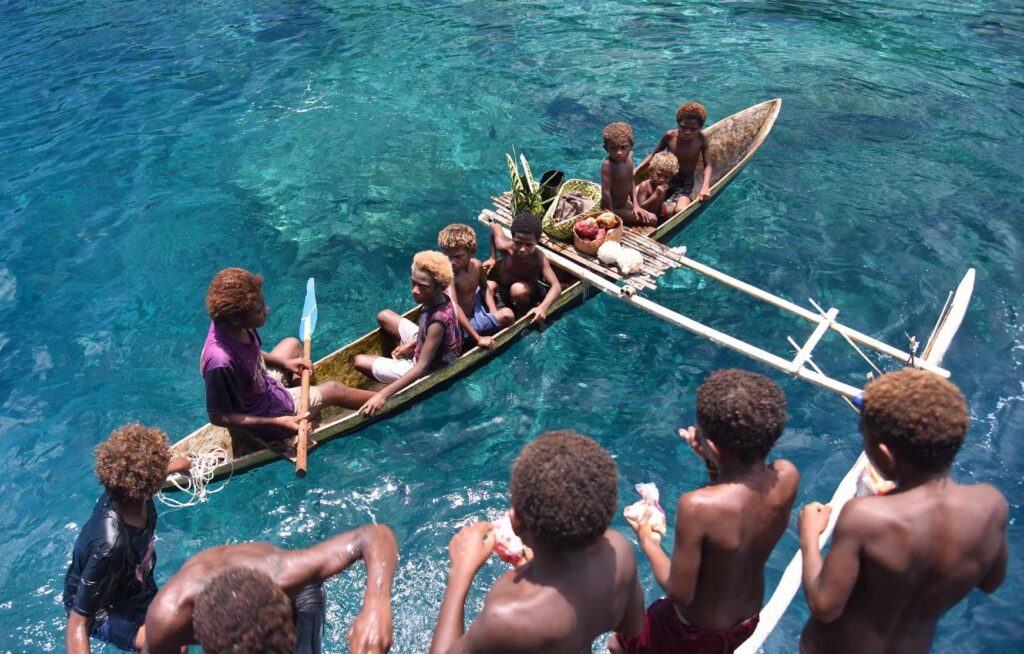
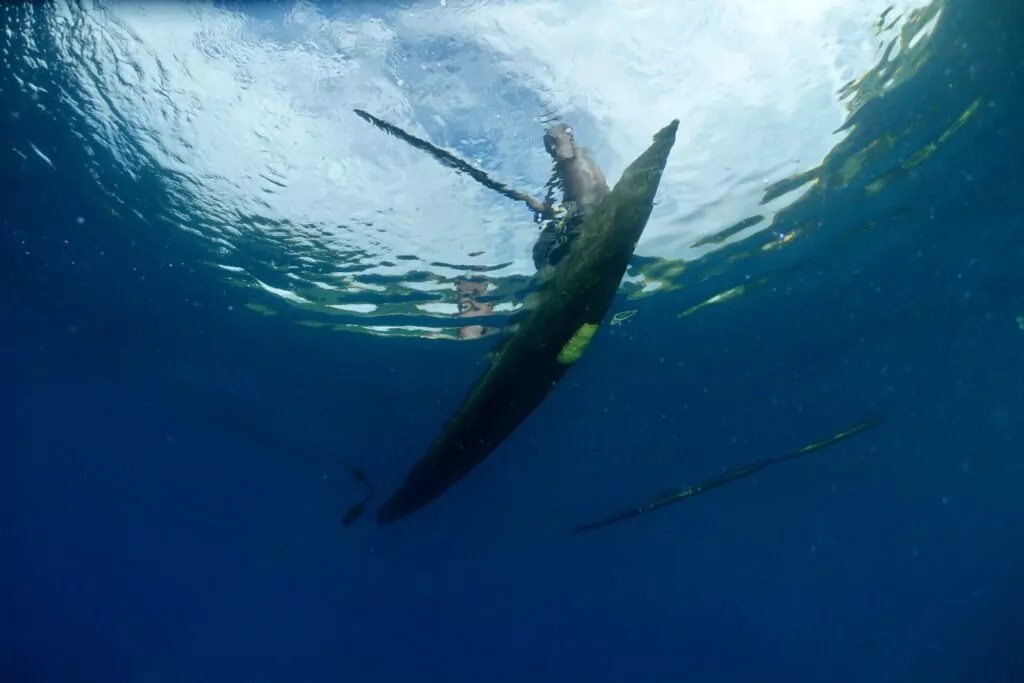
The Catholic church shines white under the midday sun on a peninsula jutting out to the west. Some young girls and kids come to trade fruits and vegetables in their outrigger canoes, also carrying pink frangipani flowers as offerings.
Peel Island
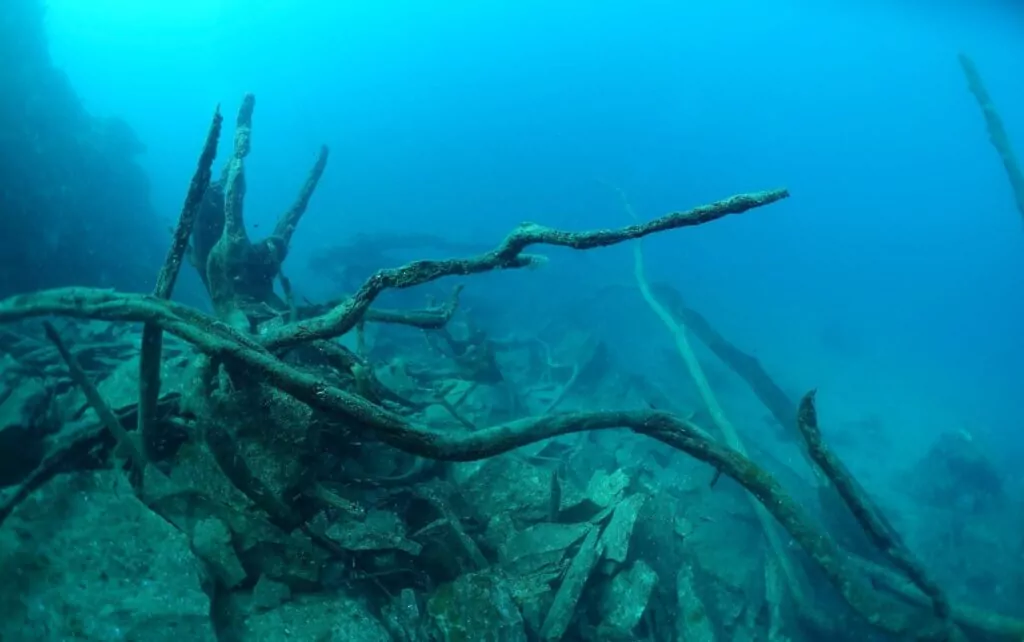
The afternoon muck-dive, on a volcanic silty bottom, averages a depth of 15m and features old tree stumps that have fallen over near shore and plenty of barrel sponges, either in a rounded shape or tall and fusiform.
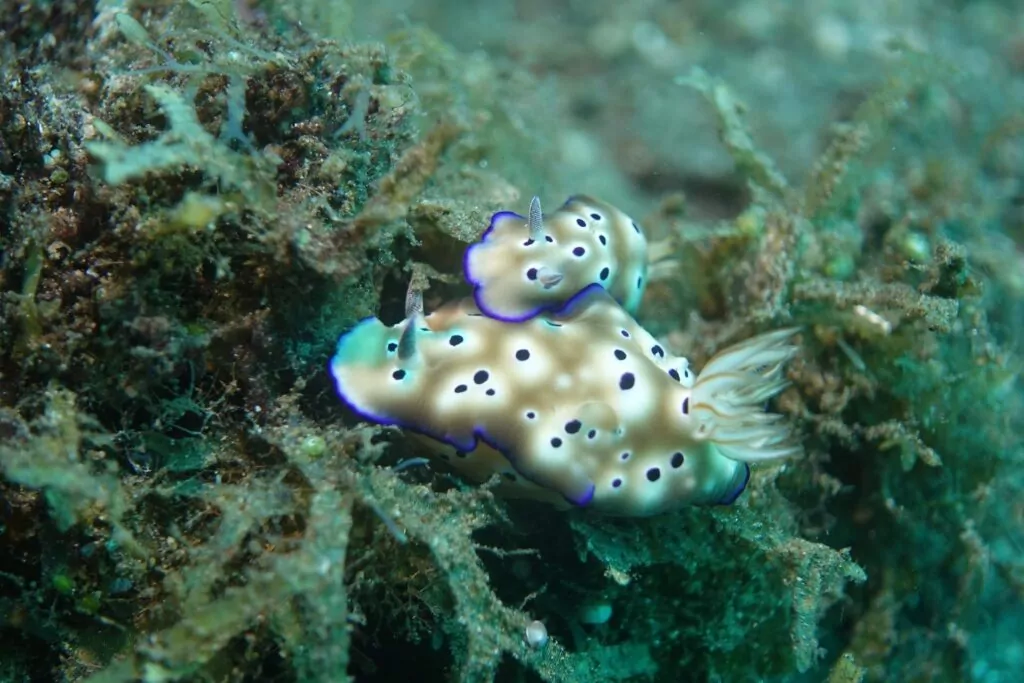
We encounter a couple of Tryon’s risbecia nudibranchs (Risbecia tryoni), cream-coloured with dark blue spots and a white aura and blue girdle. There are also Phyllidia coelestis and pustulosa, black with white pimples, and clusters of daisy coral (Alveopora gigas) forming conspicuous mounds close to shore.
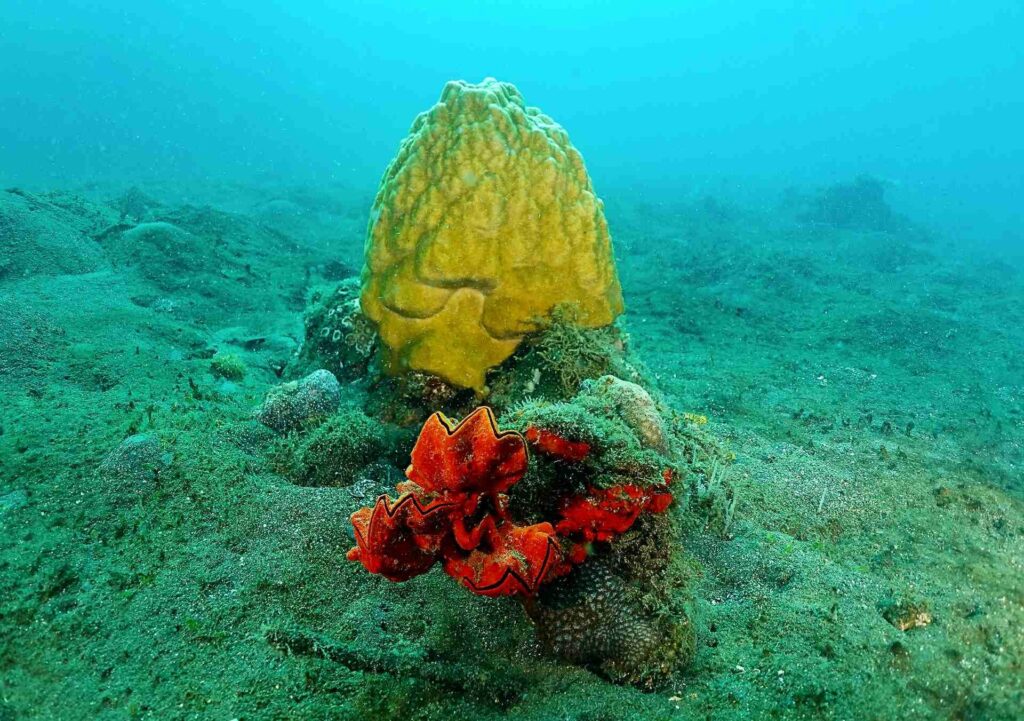
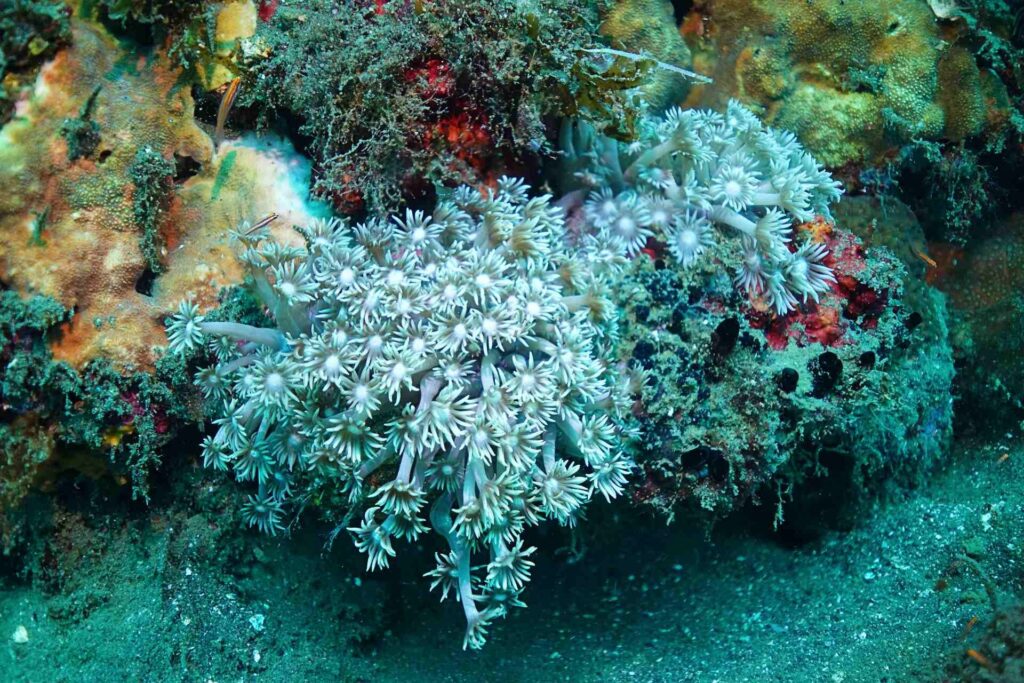
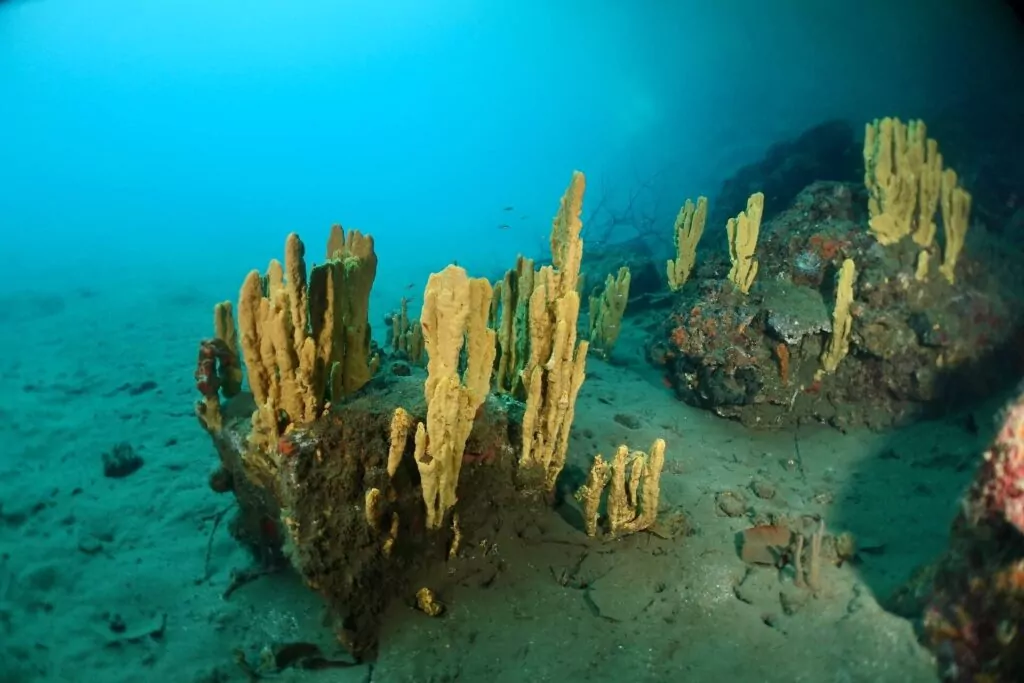
Curtains of yellow-orange sponges stand erect under a small cliff, a good place for ambience shots as sunbeams filter through.
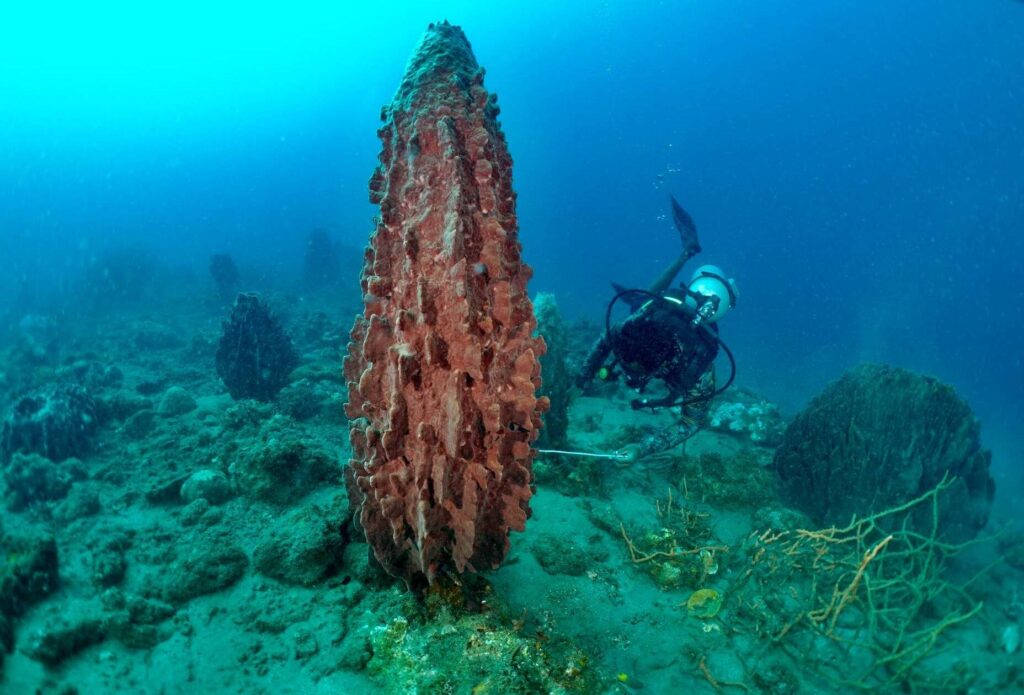
On the next dive I discover the rusty wreck of an old fishing-boat, a rounded brain-like mound of Euphyllia parancora coral and a rare white sea cucumber with tiny spikes and black blotches circled in a white halo that I have never seen before.
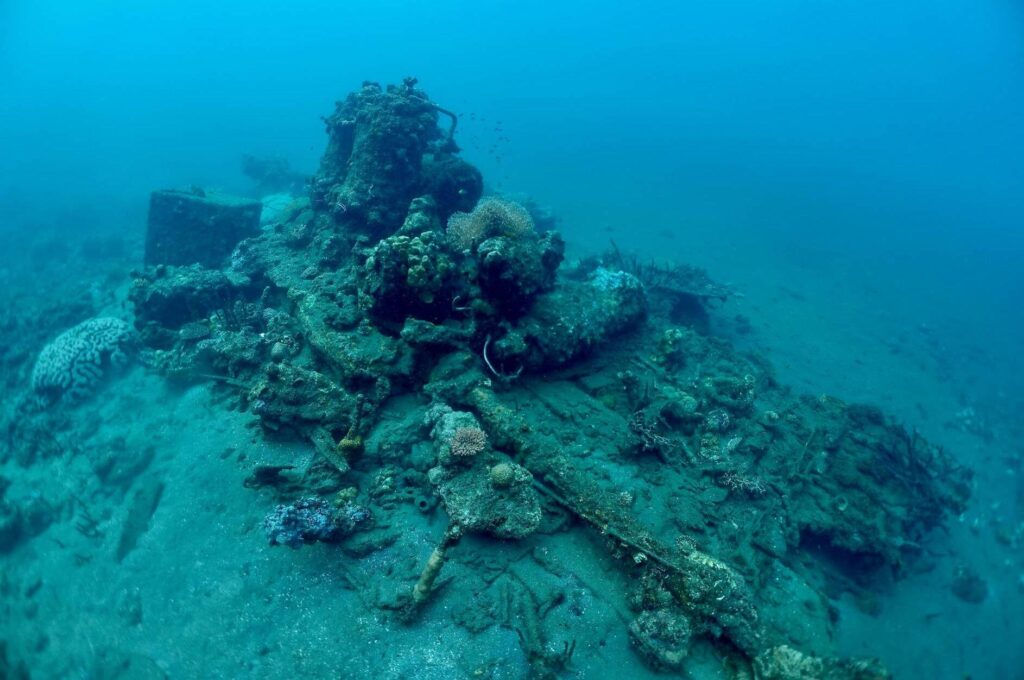
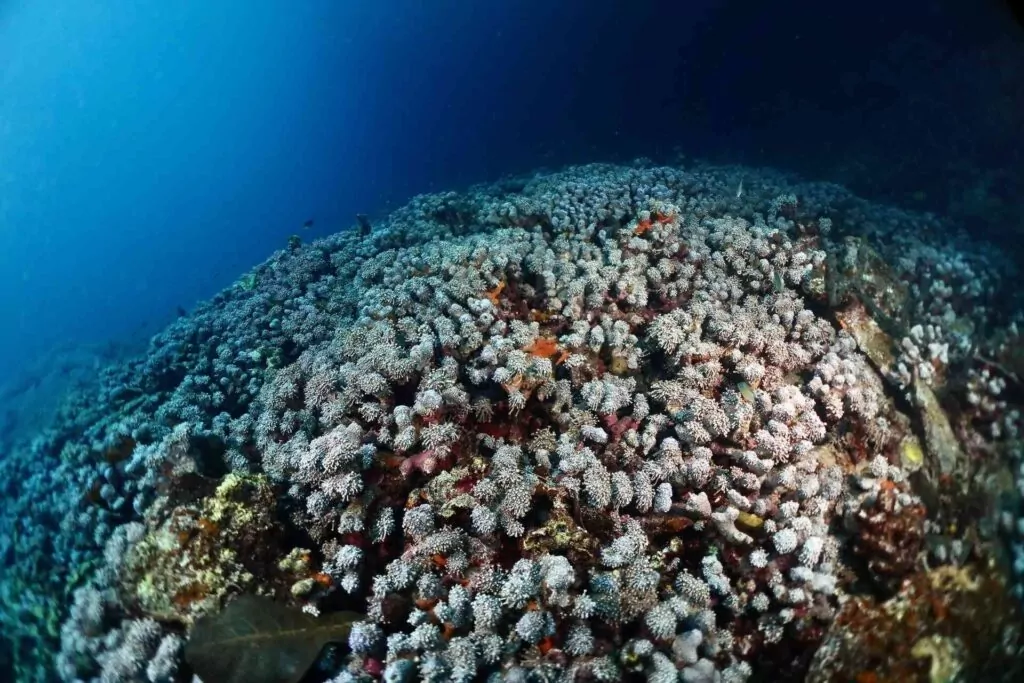
Garove Island’s east side has what I consider to be the best reefs in the Vitu Islands and are probably Alan’s best-kept secrets. He checks me out afterwards with a cunning look and asks: “How did you feel about that dive?”
Lama Shoal
Beyond Watuwabuna Cape, and offshore from an anchorage of the same name, this reef has hardly any current. It’s just after sunrise and we use torches to explore the wall.
I have trouble with my underwater camera. The zoom lens and even the shutter freeze without warning, and I am perplexed as to how to fix the problem. Back in the cabin the camera seems to be working, but then it happens again.
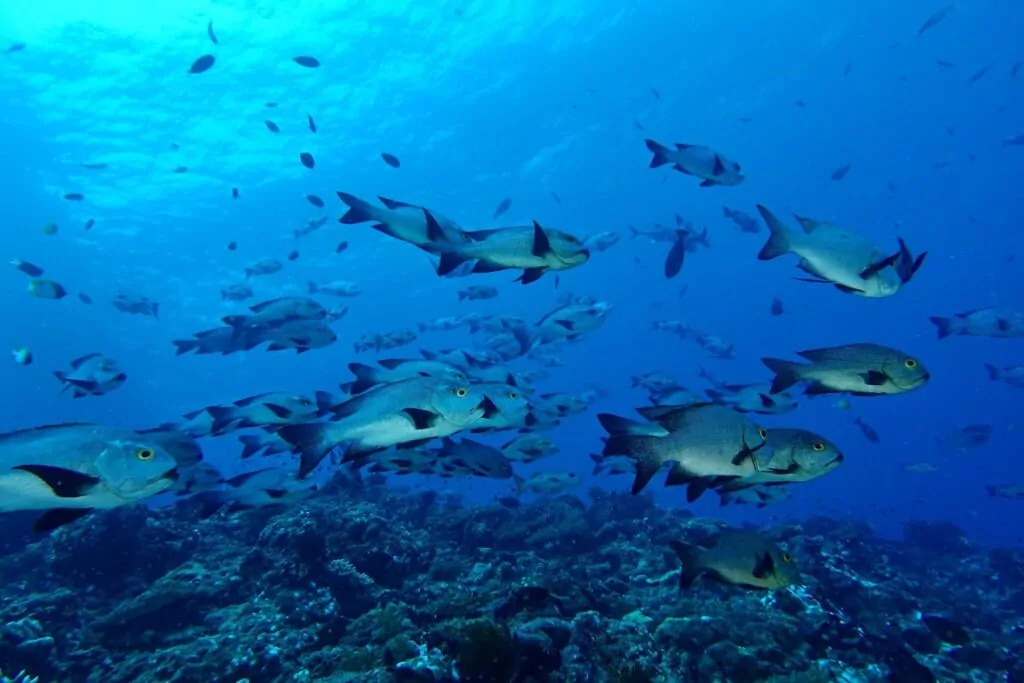
I consider spraying WD40 in the button window of the housing and, magically, the issue is resolved. I resume shooting without incident on the next dive – with a school of Teira batfish (Platax teira), sleek unicorns, rainbow runners, a black snapper school, clouds of oceanic triggerfish, bigeye jack, paddletail snapper (Lutjanus gibbus) and highfin coral grouper.
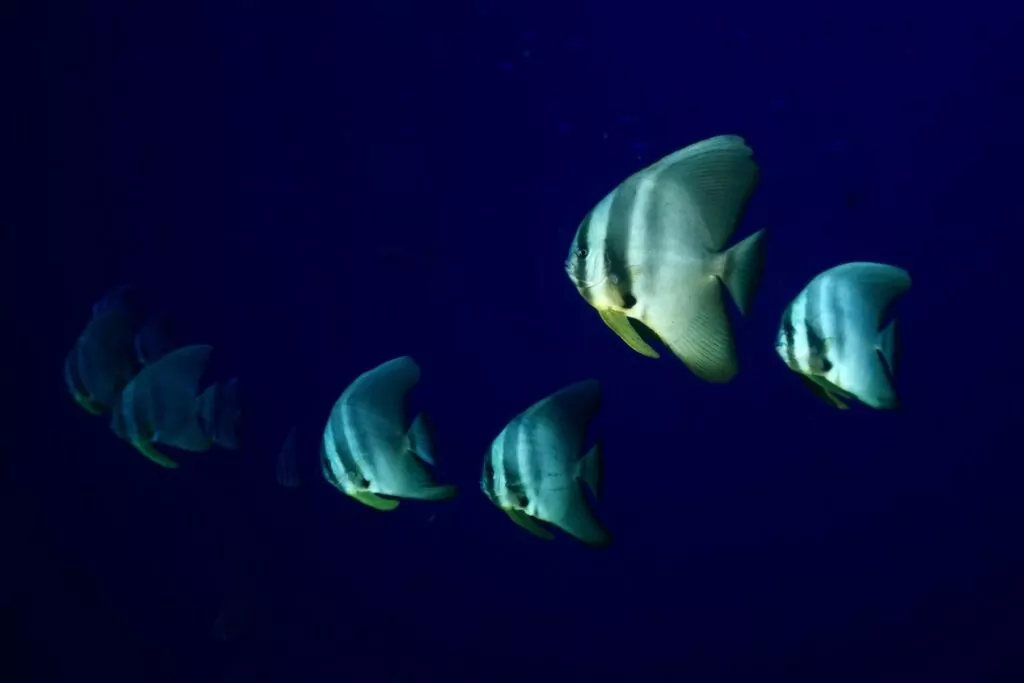
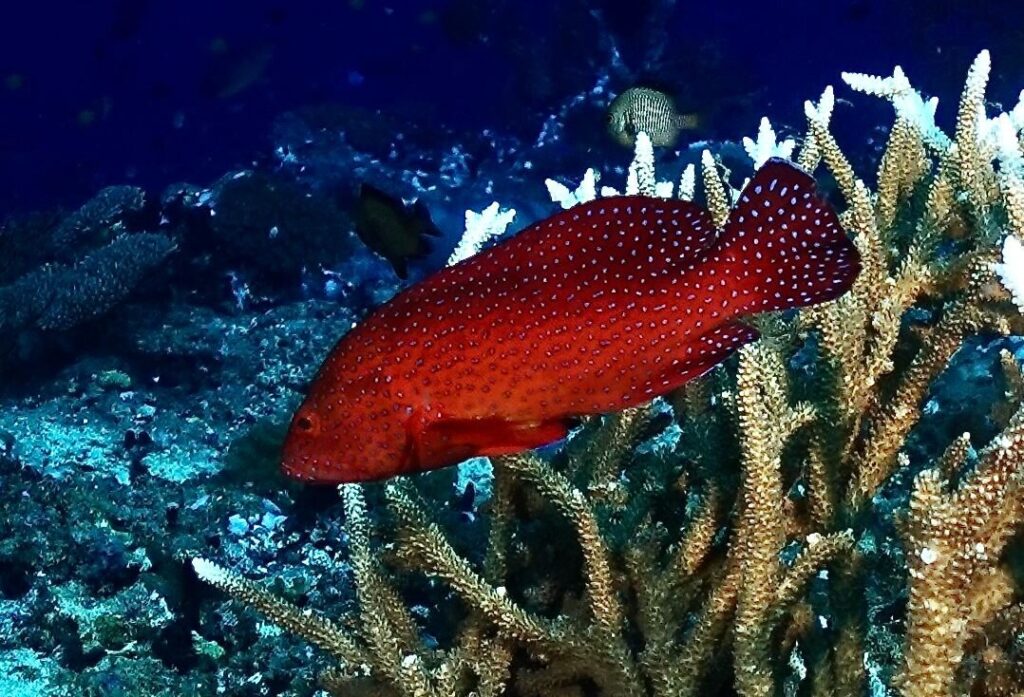
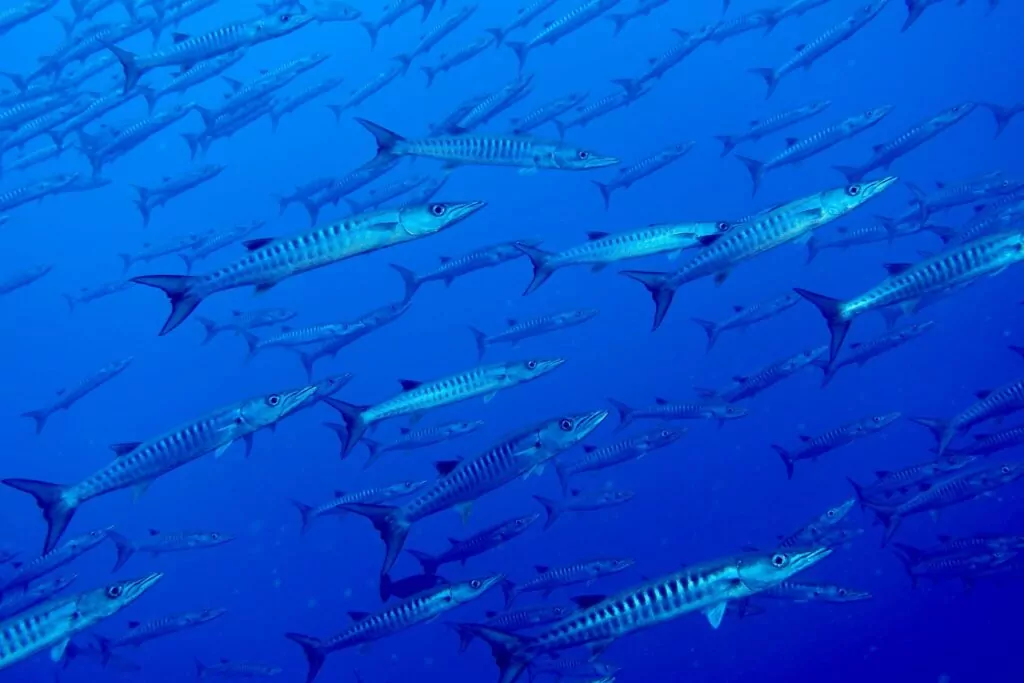
There is even a large school of blackfin barracuda (Sphyraena qenie) swirling into the blue – it’s a photographer’s heaven.
Barney’s Reef
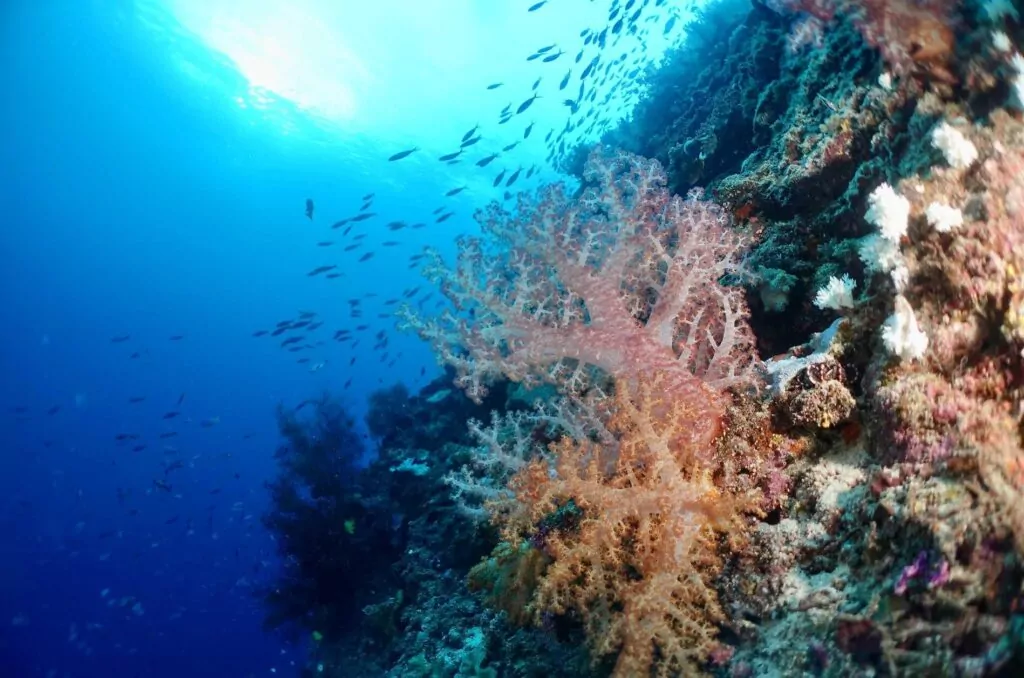
It’s an identical scenario the next morning, with a couple of dives at this square-shaped reef further north of Lama Shoal, with walls on all sides, down to 45m on sand.
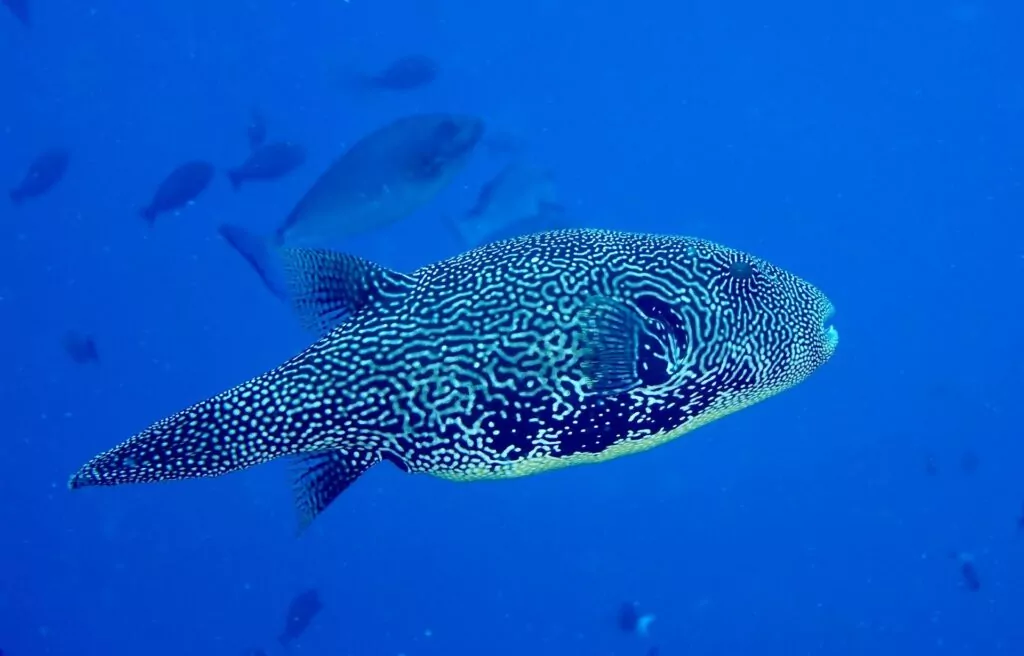
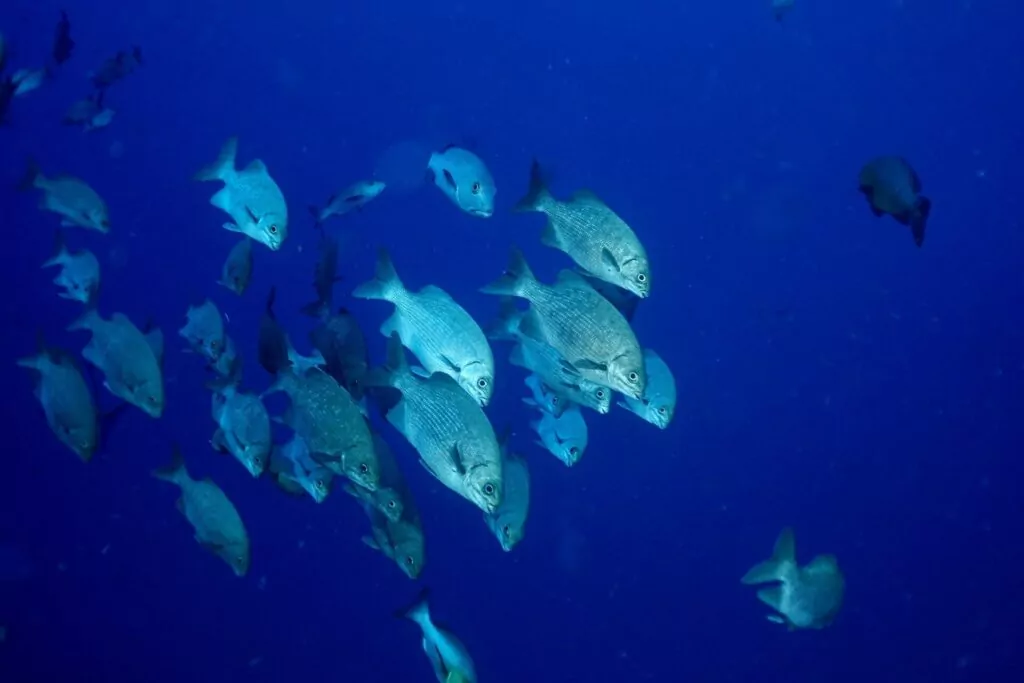
Schools of bigeye jack, red snapper (Lutjanus bohar), black and midnight snapper mixing together and a school of longfin drummers (Kyphosus vaigensis) are visible on the edge of the drop-off.
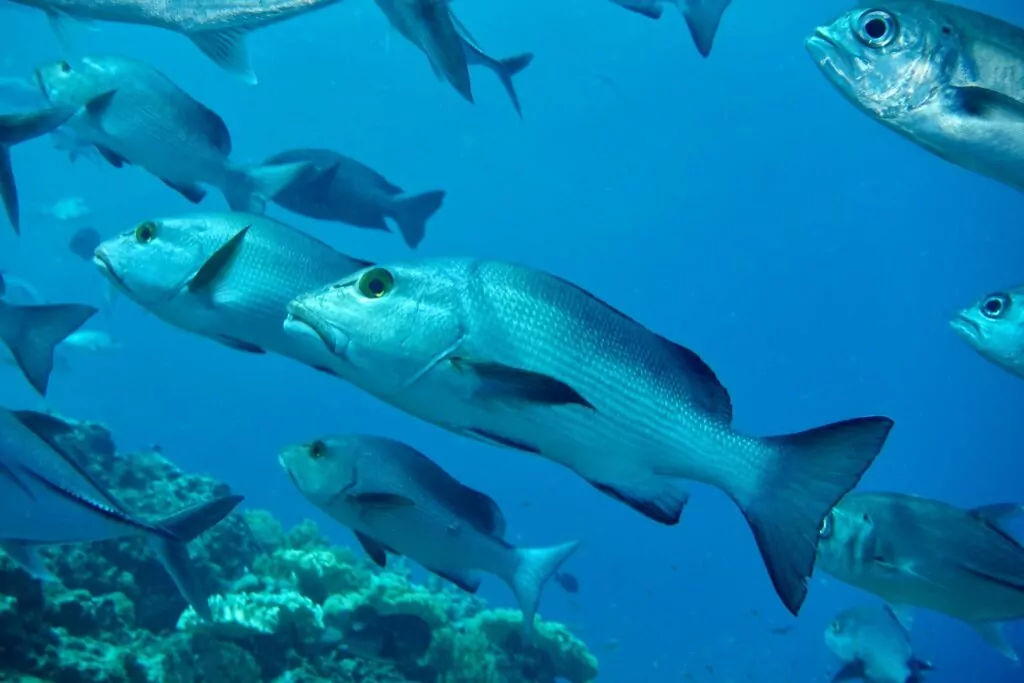
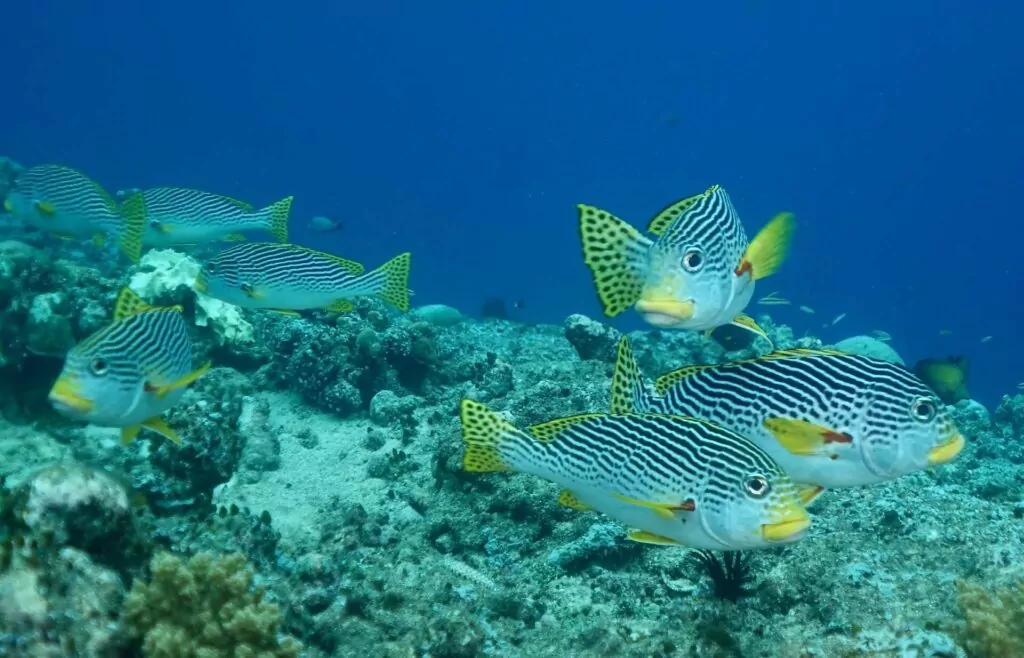
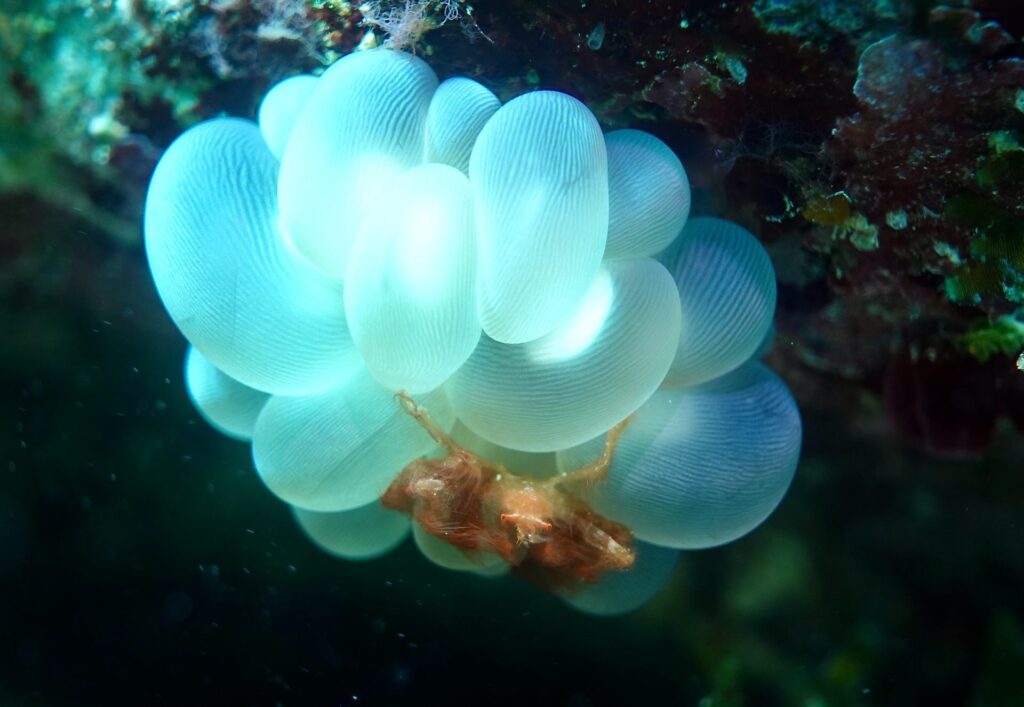
On top of the reef, a band of diagonal sweetlips (Plectorhinchus lineatus) keep a wary eye on me as I make a furtive approach. A ravishing Kunie’s chromodoris (Chromodoris kuniei), and an orangutan crab (Oncinopus sp) in bubble coral complete my photo session exquisitely – an excellent dive indeed!

The dive week draws close to an end when, mid-afternoon, Captain Alan decides to return to Kimbe Bay. We will have our last dives the next day. At 9 pm FeBrina drops anchor in a protected bay of Willaumez Peninsula’s north-east coast.
Waking at 5.15, I check my tank and gear at the dive-station. It is dark outside and drizzling. A flock of small birds that resemble storm petrels are flying around the boat. Cheerful Lucas tells me that we are diving a Japanese plane wreck this morning.
Japanese Zero
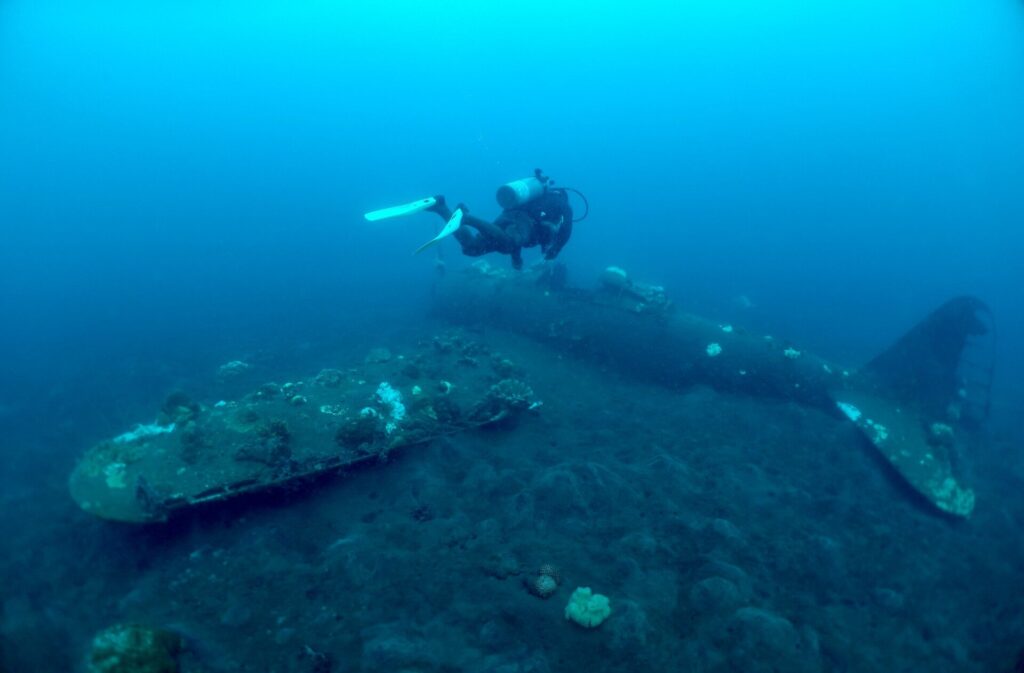
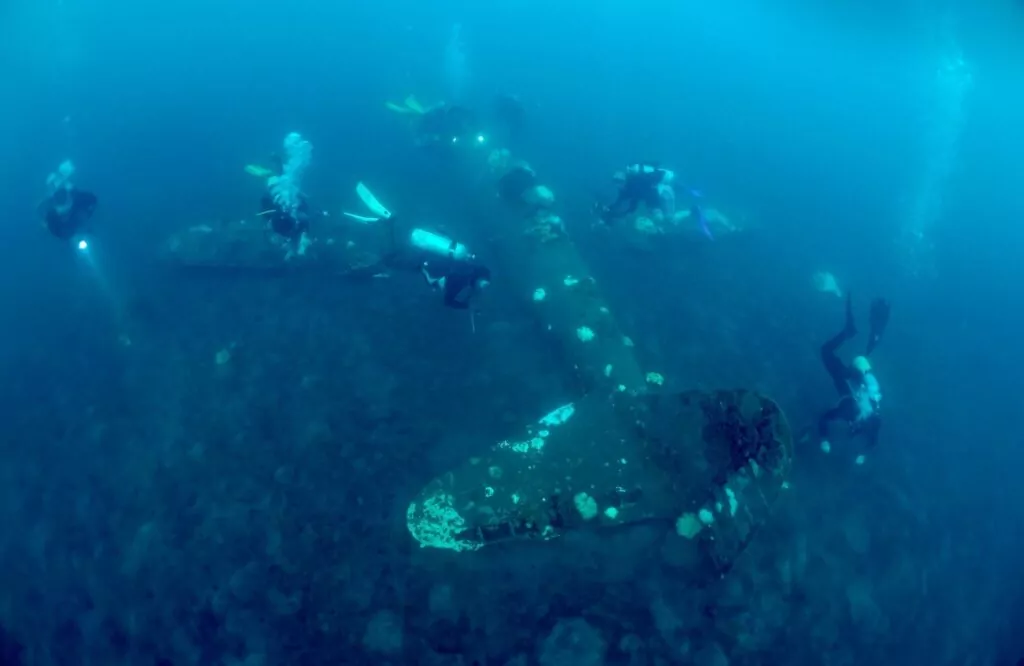
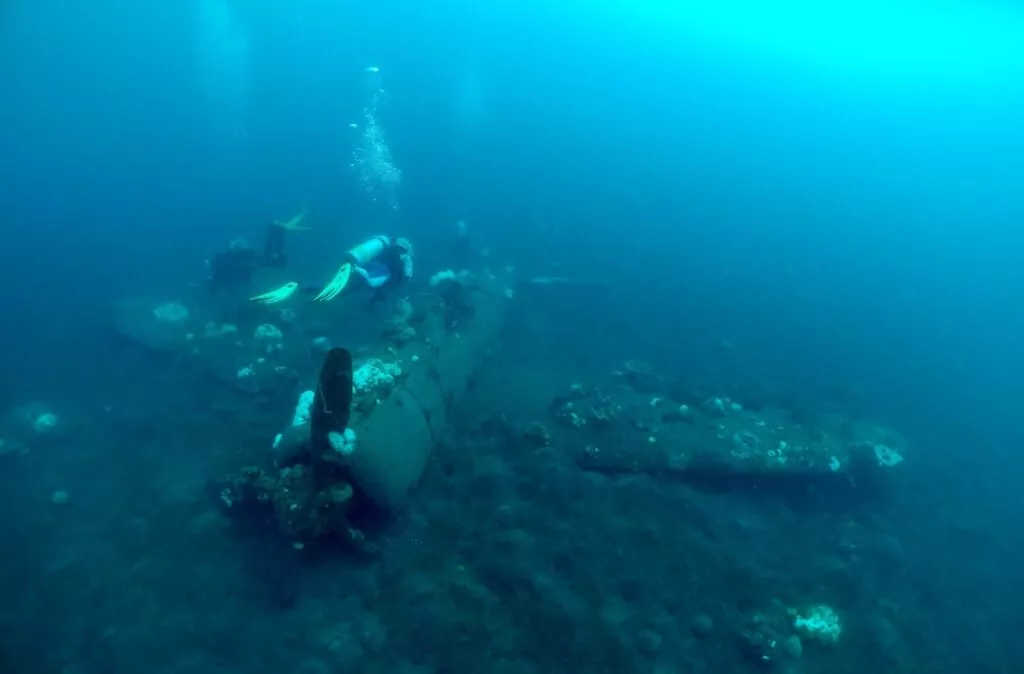
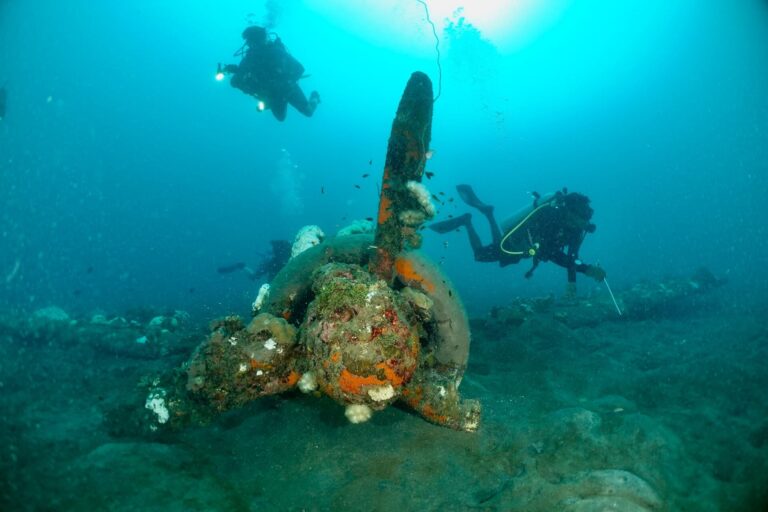
Located in a sheltered bay at the foot of Mt Wangore, an iconic aircraft discovered in 2000 by local fishermen lies on a volatile bed of brown silt at 15-17m.
Produced in August 1942, the Japanese Zero fighter was part of Airgroup 204, which left Rabaul on 27 December, 1943, as the US 1st Marine Division was disembarking at Cape Gloucester on the south-west tip of New Britain.
Because of a technical problem, pilot Tomi Haru Honda landed in shallow water near the Willaumez peninsula. The Zero lacks any markings but remains intact.
Grey encrusting sponges wrap the fuselage like a shroud. Standing erect, one of the propeller blades carries conspicuous red sponges, with three clusters of bubble coral at its base.
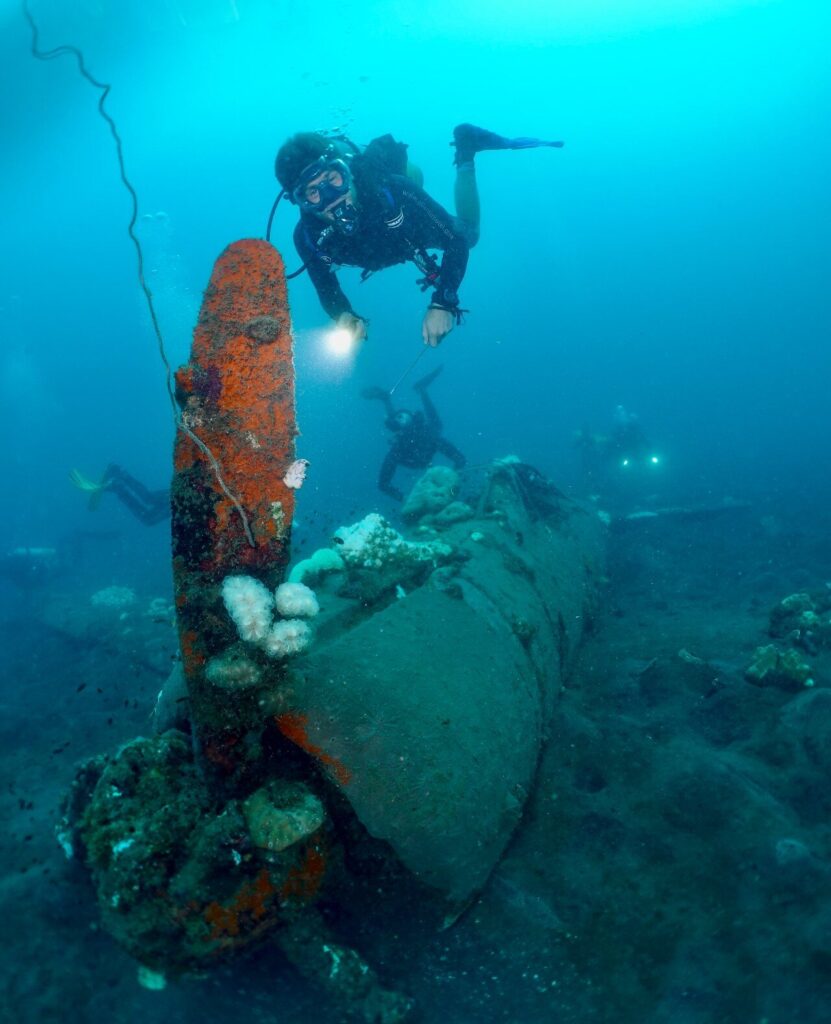
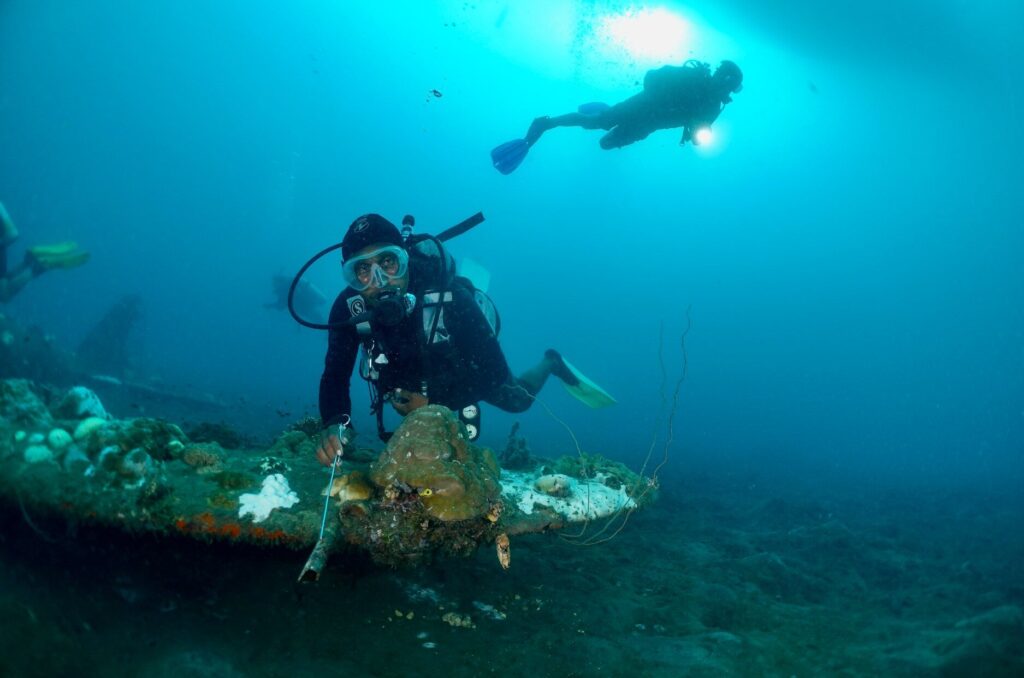
A striking white anemone complete with pink skunk anemonefish has made its home behind the open cockpit. Freddie points out the machine-gun at the tip of the left wing as painted sweetlips (Diagramma pictum) sneak about, curious about the day’s visitors.
Conclusion
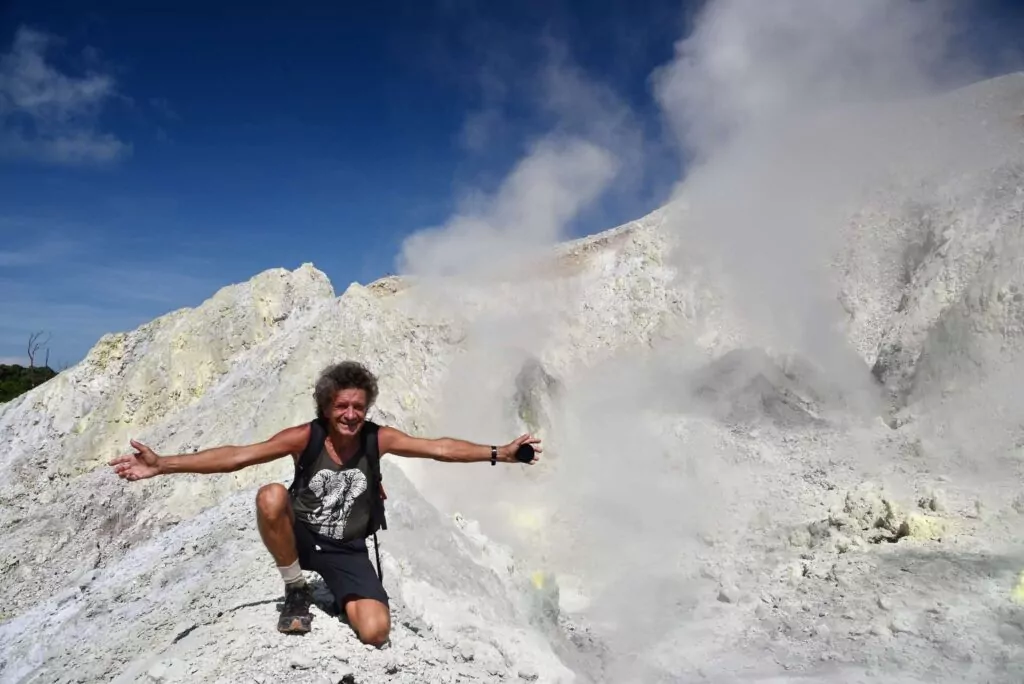
Global warming and elevated water temperatures have affected enclosed Kimbe Bay more than the Vitu Islands, which are open to the Bismarck Sea, and some hard corals have been affected substantially.
However, this is not true of all species, and soft, whip and red whip corals remain as spectacular as ever. If temperatures come down over time and conditions return to normal, corals will be able to rejuvenate – fingers crossed.
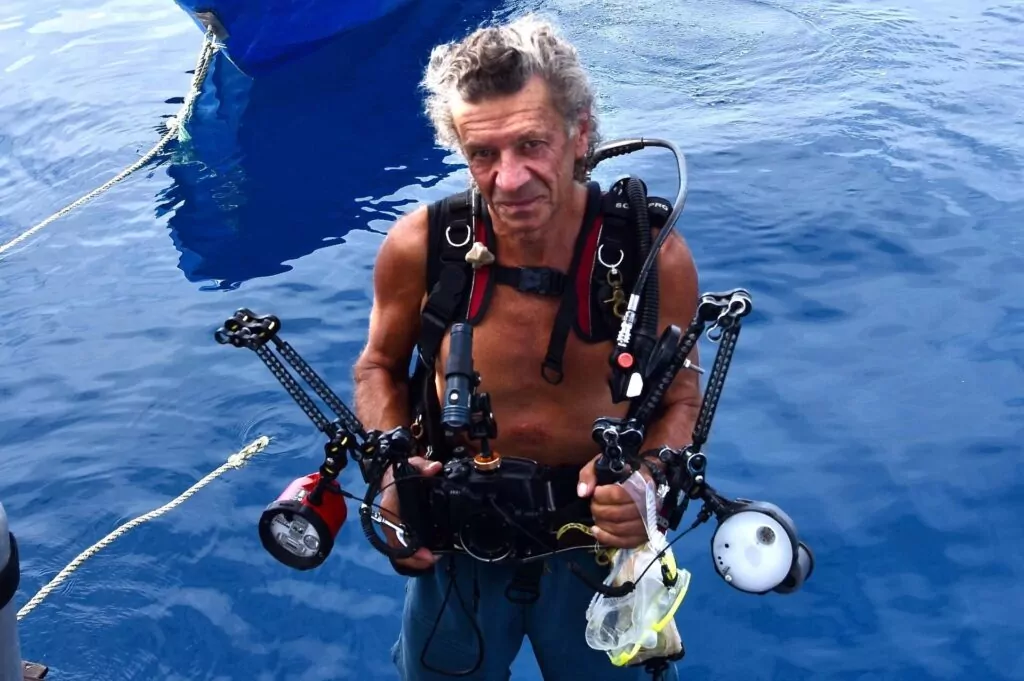
Pierre Constant is the author of the 1998 coffee-table book Manus, Admiralty Islands – Lost World Of The Titans (PNG) and runs Calao Life Experience. Contact him at calaolife@yahoo.com. Find out more about the liveaboard FeBrina.
Also by Pierre Constant on Divernet: DIVING INTO CUBA’S FAR WEST, NORONHA: AN ATLANTIC DIVING HOTSPOT, DIVING LIFOU, A FOSSIL ATOLL, FLORES, GATEWAY TO KOMODO, HELL’S BELLS AND OTHER YUCATAN CAVE SPECIALS, VANUATU BEYOND THE COOLIDGE and DIVE-TRIP: MUSANDAM TO MUSCAT