PIERRE CONSTANT explores the array of underwater wonders accessible to divers from Papua New Guinea’s renowned Tawali Resort – and it isn’t only critter diving
Diving in Milne Bay started more than 40 years ago. Back then it was all about liveaboards; the first cruises were initiated by Bob Halstead, a pioneer in the field, aboard the Telita. Regarded as the father of “muck-diving”, Halstead passed away in 2018.
Another Australian, Rob van der Loos, spent his childhood in the Solomon Islands before moving to Papua New Guinea. Initially a coffee-trader and director of a supermarket in the highlands, he became involved in tourism in the 1980s, organising camping and diving trips in Milne Bay.
In 1992, he purchased the motor vessel Chertan and initiated cruises in the region. Passionate about exploration and underwater photography, he published a guidebook.

In 2000, he created a land-based resort with two partners: Bob Hollis, founder of the US Oceanic brand of diving equipment, and a Greek businessman based in Alotau.
Three hectares of land was bought on the north coast of Milne Bay, and the right to use the dive-sites was negotiated with local clans. In PNG, marine territory traditionally belongs to the people.
The Tawali Resort opened its doors in 2004. Built on a limestone bluff overlooking Hoa Bay, its luxurious wooden bungalows with verandas could accommodate 20 guests.
Each large guest-room contained two double beds, bathroom, fan and air-conditioner, chairs, fridge and veranda. Made of local wood, a covered walkway linked the reception to the bungalows through the lush jungle.
The dining hall and observation deck overlooked the Solomon Sea, with panoramic views to adjacent bays and a little island to the north-east. The “house reef” down below plummeted to 100m.
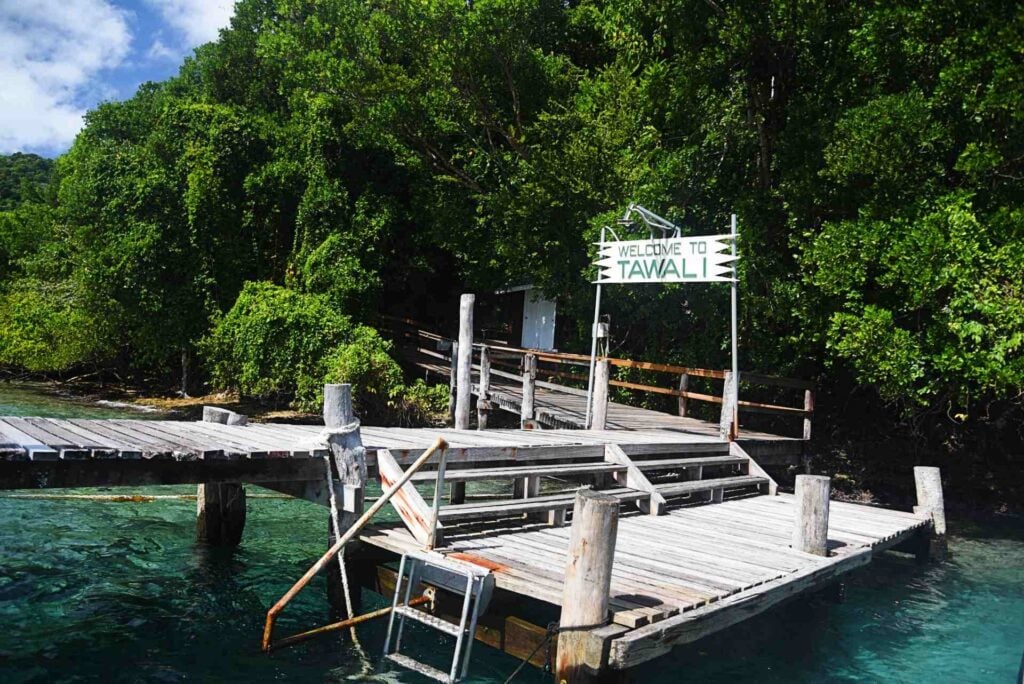
In Tawali nature is sovereign, and the feeling of peace total. There is no road access to the resort. A boardwalk comes down in a zigzag from the reception to the main jetty, where the boat brings visitors. It is a 15-minute crossing to the dirt road that leads to Alotau airport, an hour away.
Beyond the bungalows, the boardwalk continues across the jungle, past the enclosure of the cassowary – the mascot of Tawali – and climbs down to another bay, the location of the dive-centre and staff houses. I have come to Tawali for the first time in 2006 and retain fond memories of this jewel of a resort.

Rob van der Loos retired in 2010 and sold Tawali to Mike Bromly, an Australian businessman. The dive-resort is now managed by Dhoreen Gumtang, a Filipino woman who also runs the Nambis Inn in Madang.
I am picked up early one morning from the Napatana Lodge in Alotau by Tawali’s minibus for the one-hour transfer on a good tar road towards East Cape. A dirt road branches off before the end and slopes downhill to the north coast.

A motorboat takes me on a 20-minute ride to a haven of peace. On arrival at the dock, I am met by Dellah, the cheerful receptionist, who leads me up the boardwalk and a flight of steps to reception.
A welcome cocktail with a cool towel is served for my refreshment on the panoramic wooden deck. Walking over to the dive-centre on the other side of the bluff, I notice the new swimming pool with lounge chairs, a welcome addition to the existing setting.
Skull Caves
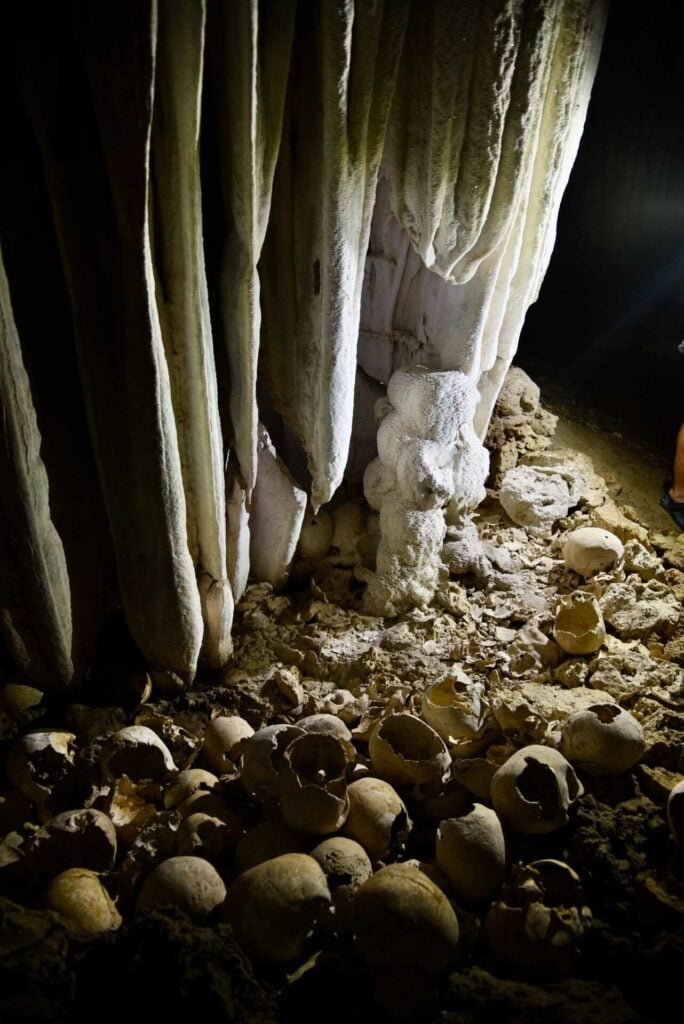
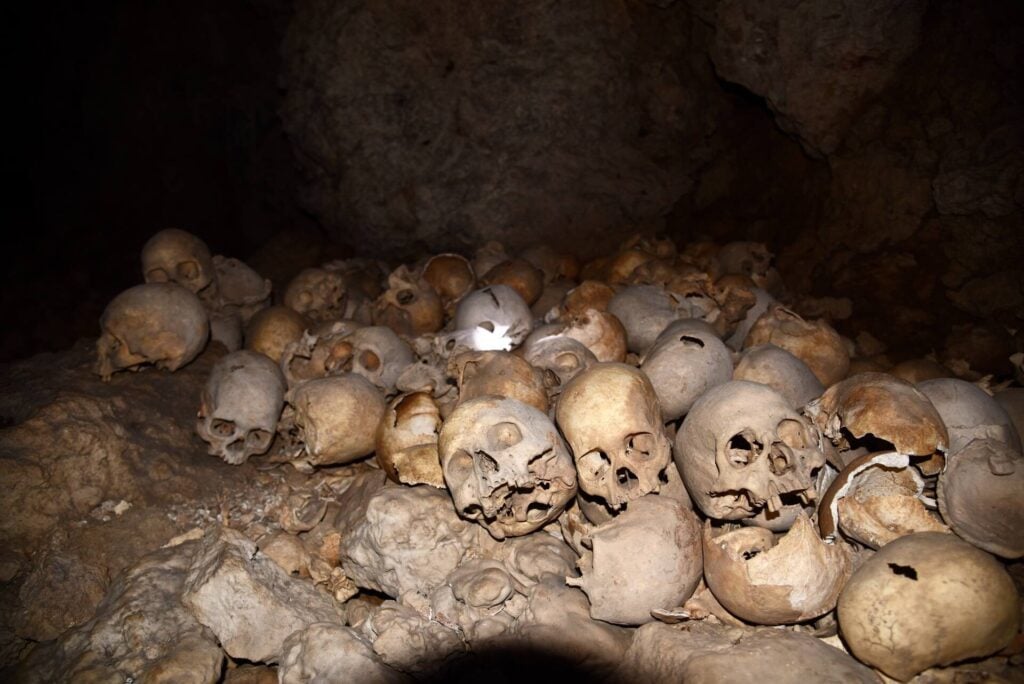
In the early afternoon an excursion to the Skull Caves is led by local resort-guide Gilbert. The short boat trip is followed by a 10-minute walk through the coastal forest to a couple of caves at the bottom of a limestone cliff.
A collection of 300-year-old skulls has been piled up at the foot of some stalactites from the gruesome time of cannibals and clan wars. Holes in a skull would indicate that brains had been extracted for consumption to acquire a warrior’s strength.

On exit, local women try to sell you seashells or beautifully carved wooden artefacts. Gilbert takes people on a hike to a waterfall in the forest, where visitors can enjoy a swim accompanied by a few friendly kids.
Tawali offers three boat-dives a day, with night-dives on the house reef available on request. Diving on the north coast is best illustrated by two types of dive.


On the one hand are reef or drop-off sites such as Wahoo Point, Sponge Heaven, Barracuda Point, Coral Garden and Deacon Reef. The reef flat, 5-7m deep, with coral bommies, Acropora, staghorn and table corals, is followed by a vertical wall with cracks, caves, overhangs, swim-throughs and ledges.
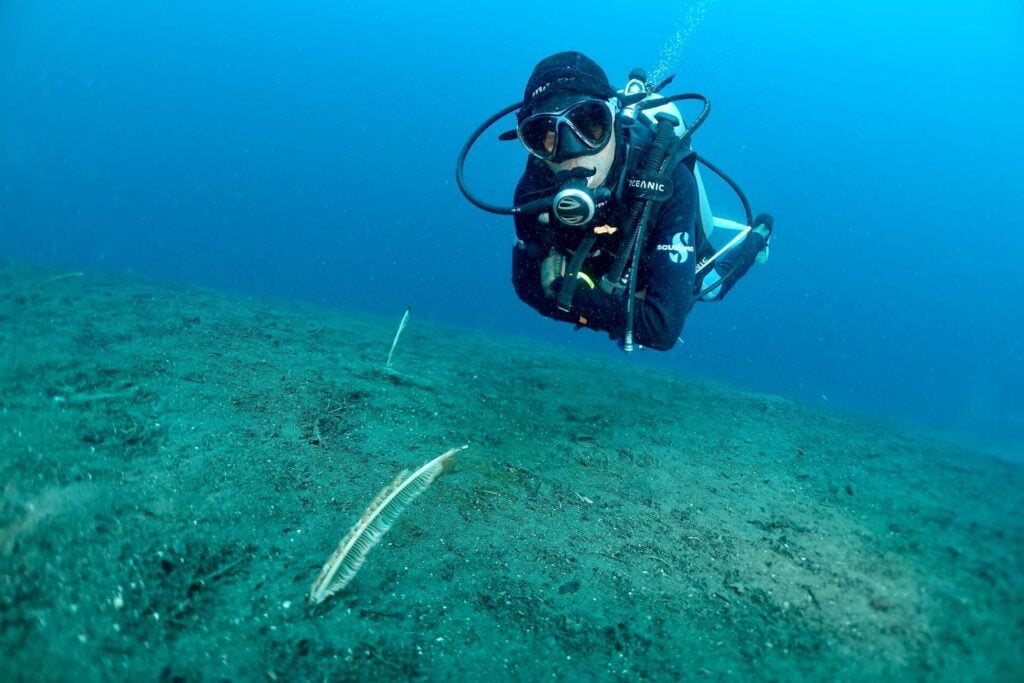
On the other hand are the muck-dives found along volcanic sandy beaches. Pebbles are present, rolled by wave action. Under the surface the scene is that of a dark sandy slope with silt and bits and pieces of organic material such as wood and leaves.
Two renowned sites are Lawadi and Michelle’s: naturalist dives where the keen photographer is on the look-out for critters, colourful nudibranchs, crustaceans and octopuses. It’s a world of wonder for macro enthusiasts and patient seekers.
Nathan, the Fijian instructor, would choose dive-sites of the day. I was introduced to Albert, the dive-guide, a real character with an expressive, humorous face – and I recalled having met him there 20 years ago!

Michelle’s
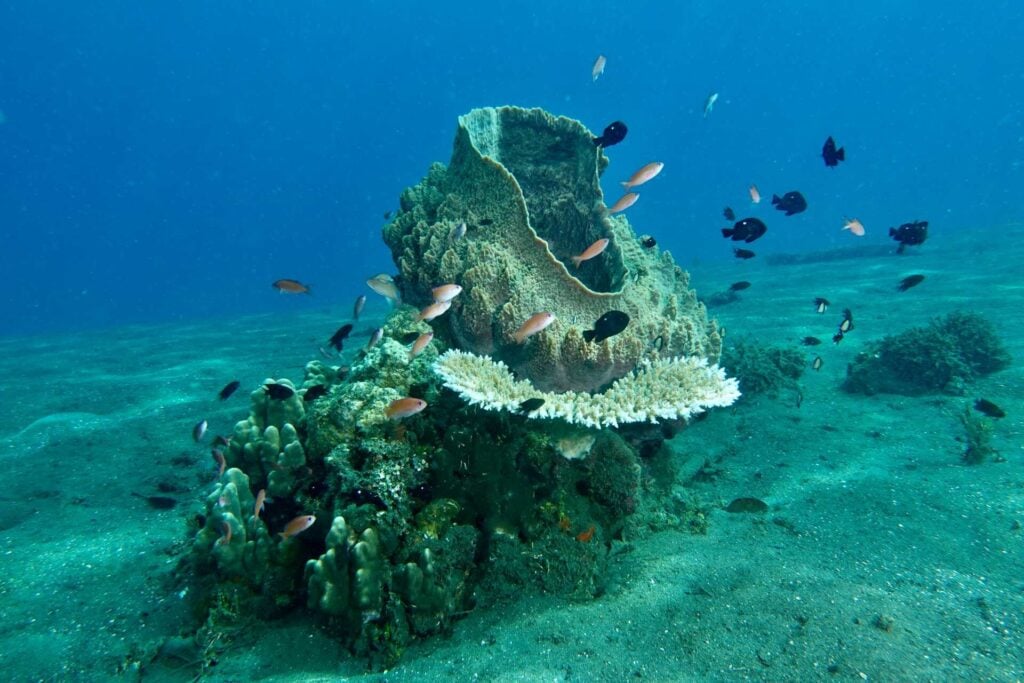
Michelle’s is a black-sand beach fringed by coconut trees. Ssaddleback anemonefish (Amphiprion polymnus) favour that dark environment in their white-beaded anemones.
I discover a white-spotted hermit crab (Dardanus megistros) in a big spindle shell; a stupendous arrowhead crab (Huenia heraldica) carrying a piece of green algae on its back; and a pale blue and white slug (Flabellina bicolor) on a piece of seaweed.


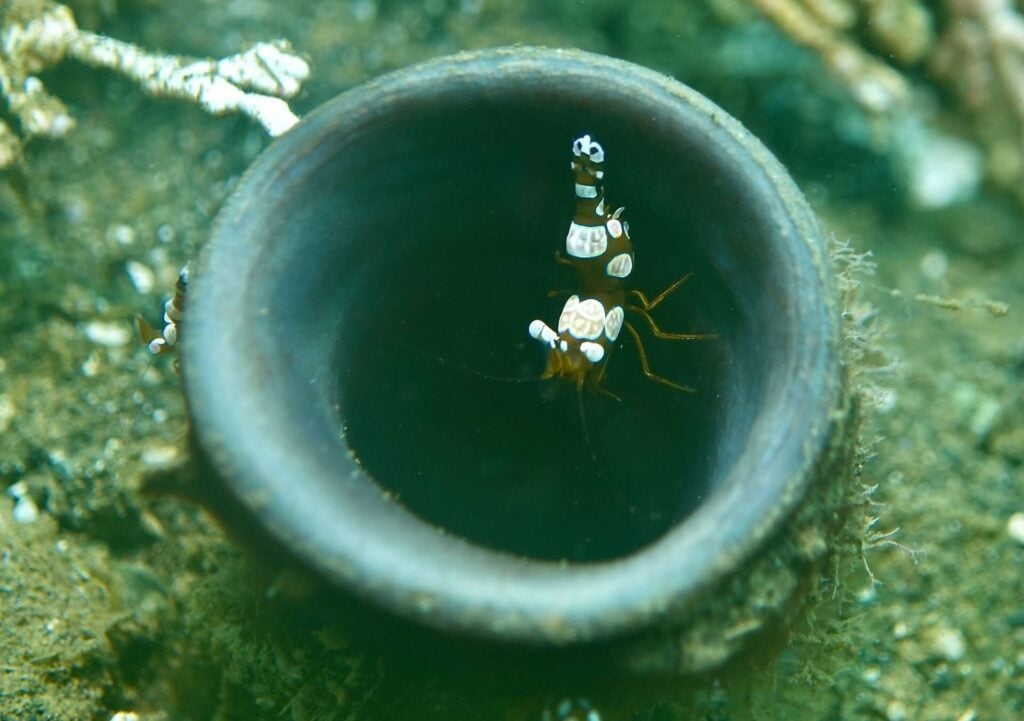
Albert points out some stunning black and blue sea-slugs (Philinopsis sp.2) crawling in the silt, and I am charmed by squat shrimps (Thor amboinensis) in the empty tube of a cerianthid anemone.

Lawadi
Lawadi is another muck-dive. Dive-guide Jona thrills me with the sight of a rarity: Cyerce nigra, which displays a succession of sails with a wavy design from the front but with yellow spots on a black background from the back. Hallucinating!


Mimetic with its background, a Caledonian devilfish (Inimicus caledonicus) leaves me intrigued. A miniature painted frogfish (Antennarius pictus), bluish-black with yellow and red spots, fascinates me.


Each of these two dives lasts up to 70 minutes with a maximum depth of 17.5m. Rain pours down heavily in the afternoon as I download and edit images in the comfort of my room.
Cherie’s Reef
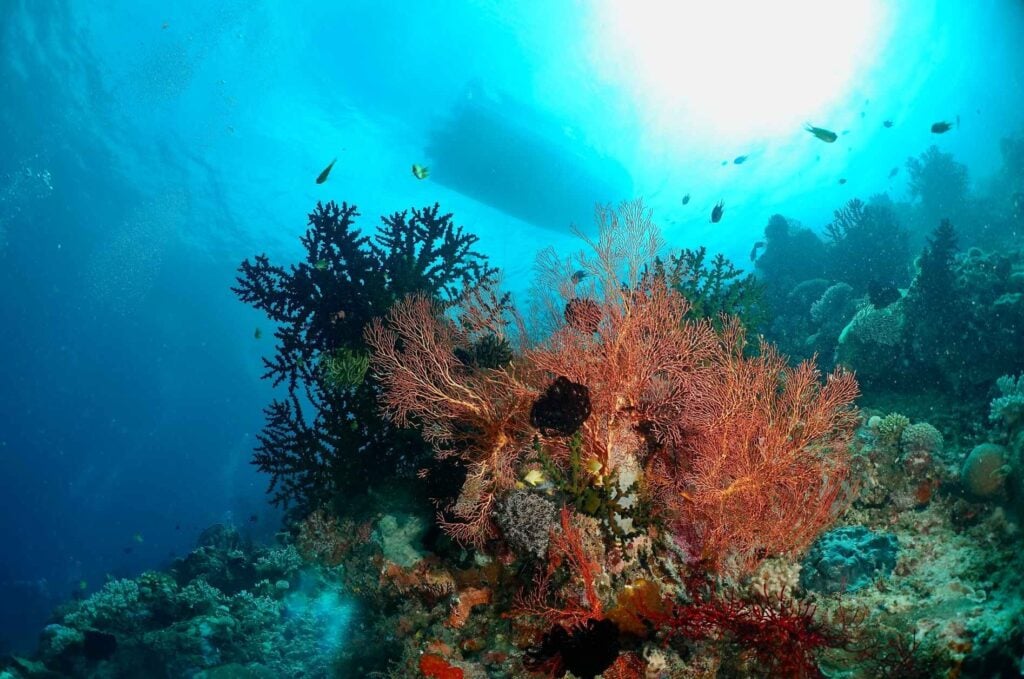
We’re off to Cherie’s Reef for a three-dive day in the care of Captain Charlie, always good-humoured and smiling. This offshore reef south of East Cape offers good visibility.
The current comes from the north, so we choose the protected south side. I get to see two species of flatworms: the starry-night flatworm (Thysanozoon sp.1), black with yellow dots, and the sapphire flatworm (Pseudoceros sapphirinus), black with a blue girdle.

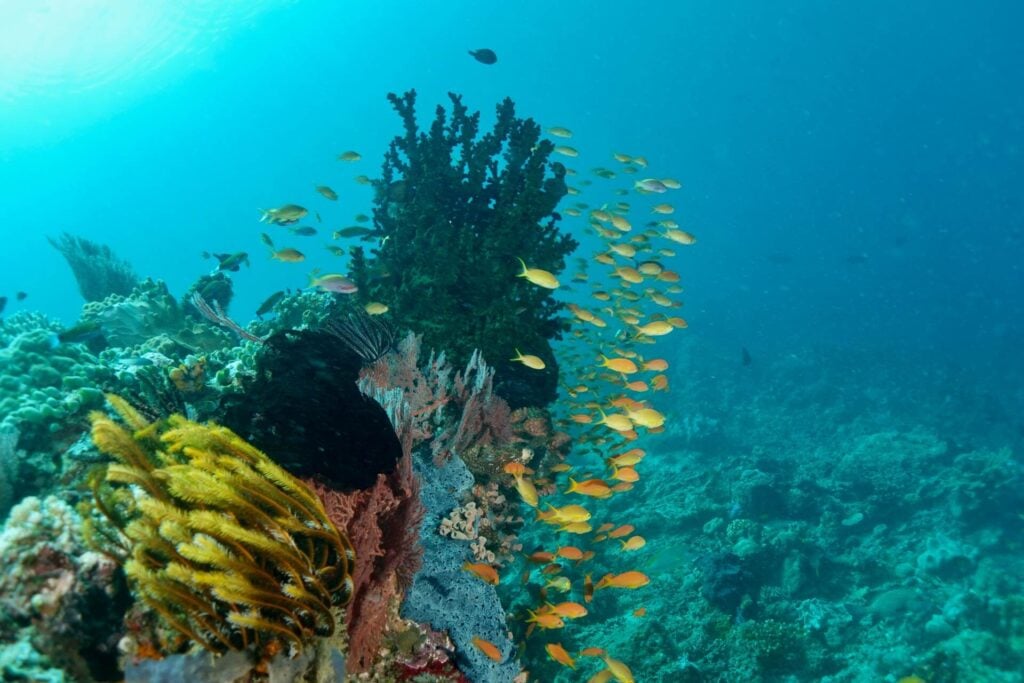
Albert finds a pygmy seahorse (Hippocampus bargibanti) on a gorgonian at 20m. A blue jellyfish in bad shape drifts over the sandy bottom. A shy Napoleon wrasse puts in an appearance. Schools of double-lined fusiliers (Pterocaesio digramma) and yellowtail fusiliers (Caesio cuning) streak across the blue screen in a hurry.


After the second dive the wind picks up and the sea surface becomes choppy, forcing us to forget about a dive at Tania’s Reef.
Wahoo Point
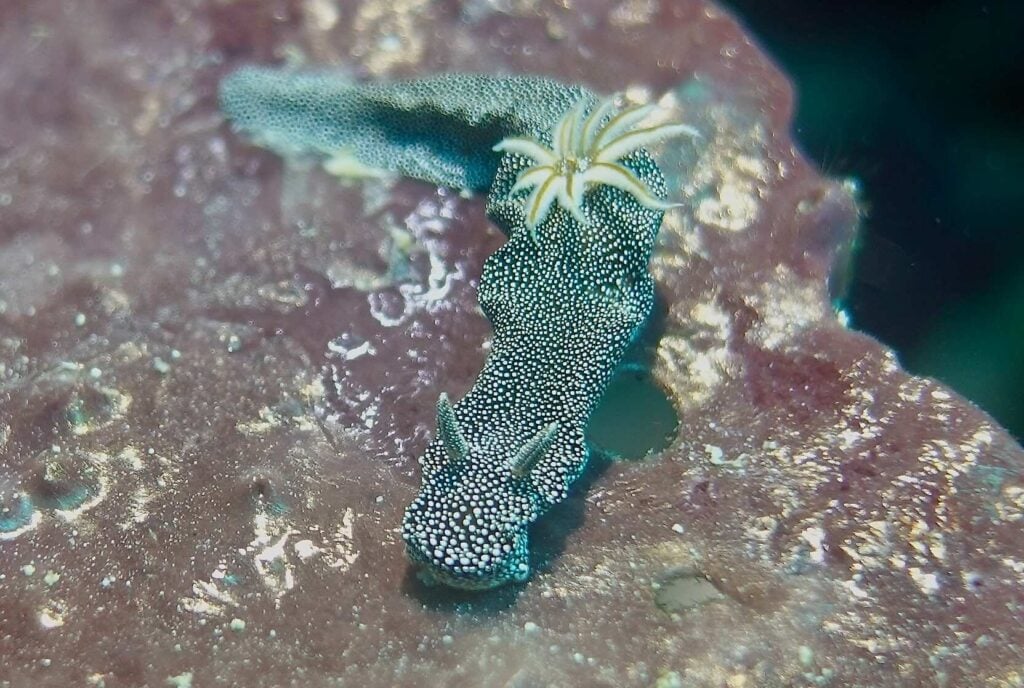
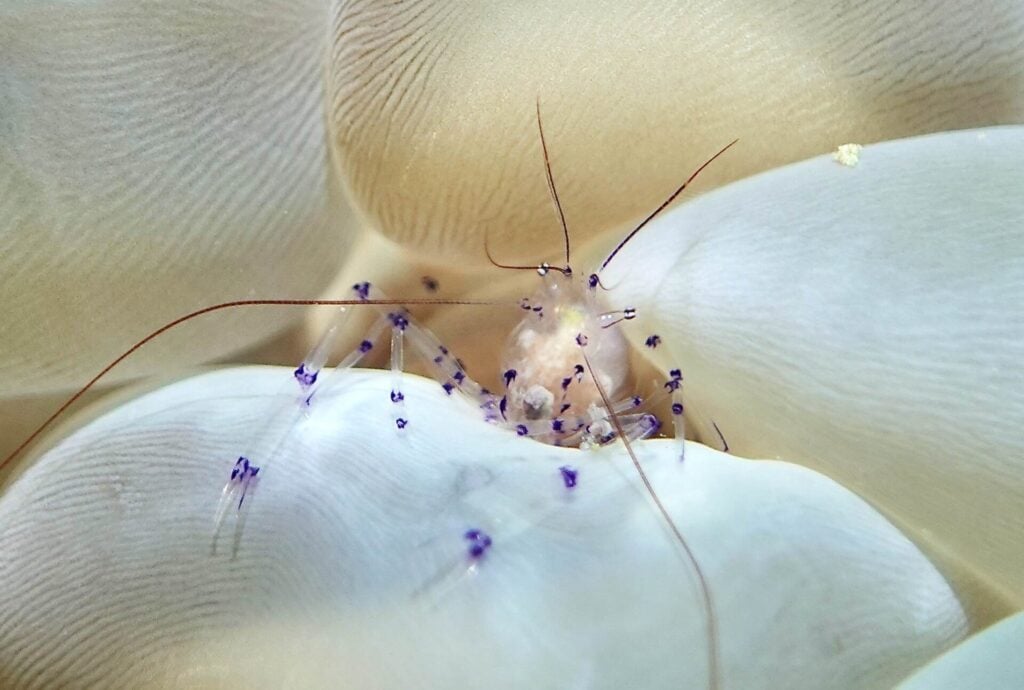
Wahoo Point turns out to be a much better location. Albert finds an exquisite Doriprismatica stellata dorid nudibranch, grey with fine white dots and silver-yellow gills. A bubble-coral shrimp (Vir philippinensis) smiles at me as I pass by.
Ascending from 22m, Albert calls frantically for my attention. Feeding into the current, a resident manta (Mobula alfredi) is doing graceful loops above, with some rainbow runners following up close.
I shoot the manta at random as it displays its white belly full-size. It takes me down into the blue before I realise that I have lost visual contact with the reef – luckily, my compass helps me to head back south.

Lawadi again
We return to Lawadi for two amazing muck-dives. Albert’s knowledge proves to be a great asset in spotting critters we had no previous idea about. In the shallows, a beige cockatoo waspfish (Ablabys taenianotus) gently sways in the light current, supporting itself between two stones.


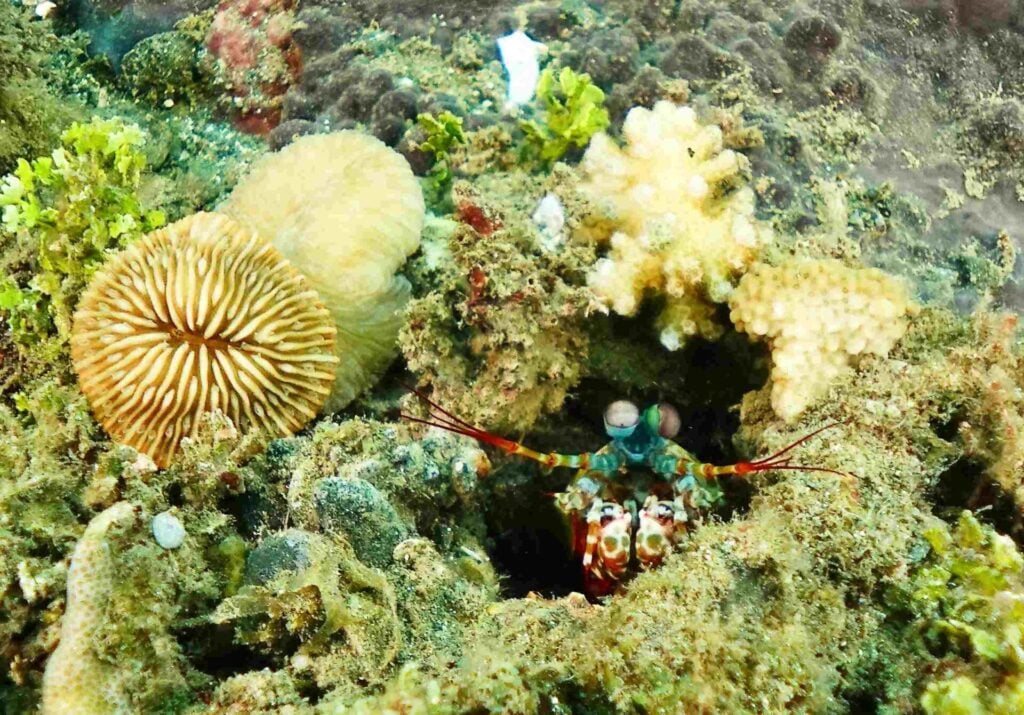
From the safety of its burrow, a peacock mantis shrimp (Odontodactylus scyllarus) watches life go by with its rotating globe-like eyes. It is known to pack a boxer’s punch on prey. By a stroke of luck I fall upon two harlequin shrimps (Hymenocera elegans), white with purple-bluish markings, feeding on the arm of a sea star.

Sometime later, I spot the multipore sea star (Linckia multifora) with a severed arm. A geometric nudibranch (Goniobranchus geometricus) also catches my attention with its black and white design, yellow gills and rhinophores.
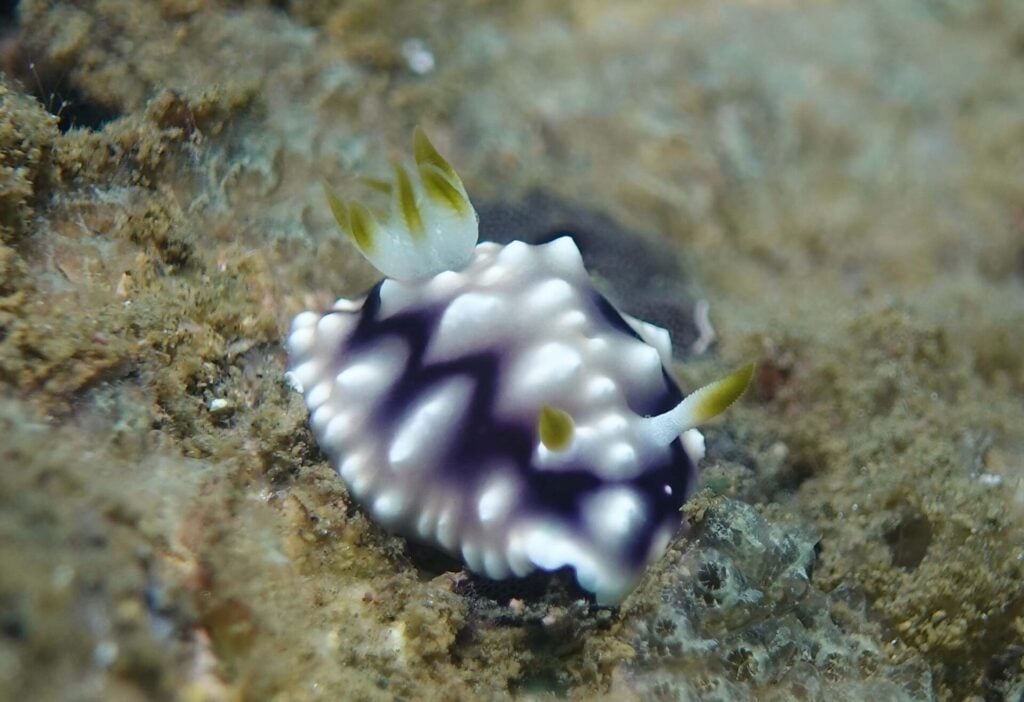
The huge Goniobranchus sp.20 is red with fine white dots, purple and yellow spots on the edge of a white girdle, with silvery gills and rhinophores.

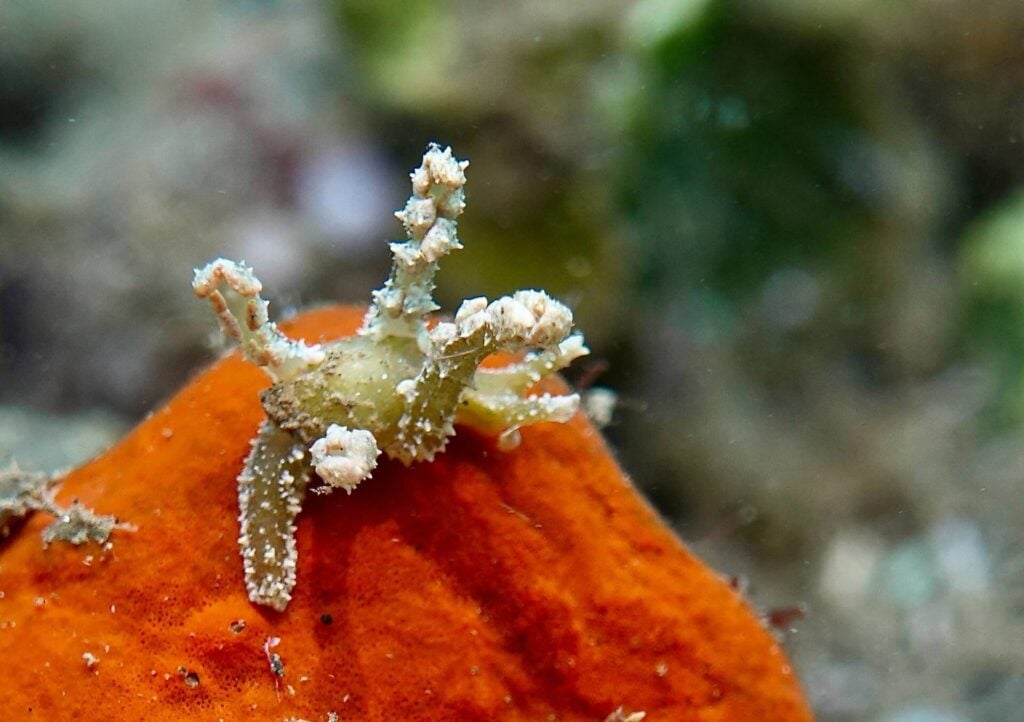
An inconspicuous sponge crab shares an anemone with some saddleback anemonefish and black three-spot dascyllus. Last but not least, Albert finds a green dendronotid nudibranch (Crosslandia sp) with four appendages on its back speckled with white cotton and green rhinophores – a species new to me.


Barracuda Point
I am the only diver the following day, so Albert takes me for two reef-dives at key spots with notorious walls.
On the way to Barracuda Point, a manta is feeding at the surface. As we enter the blue water with mask, fins and snorkel it turns, and that is the end of it!

The wall is a highlight, with a group of slate-grey bumphead parrotfish (Bolbometopon muricatum) resembling charging buffalo.
A school of rainbow runners (Elagatis bipinnulata) passes by. Albert reveals three large banana nudibranchs (Aegires minor), sulphur-yellow with black lines, caught in a mating frenzy.

On the edge of the drop-off, in 5m of water, I am graced by the sight of the endemic bonnethead anemonefish (Amphiprion leucokranos) sharing an anemone with the orange anemonefish (Amphiprion sandaracinos) and Clark’s anemonefish (A clarkii).
Deacon’s Reef
Deacon’s Reef is another wall-dive, where a hawksbill turtle makes a furtive passage at depth.
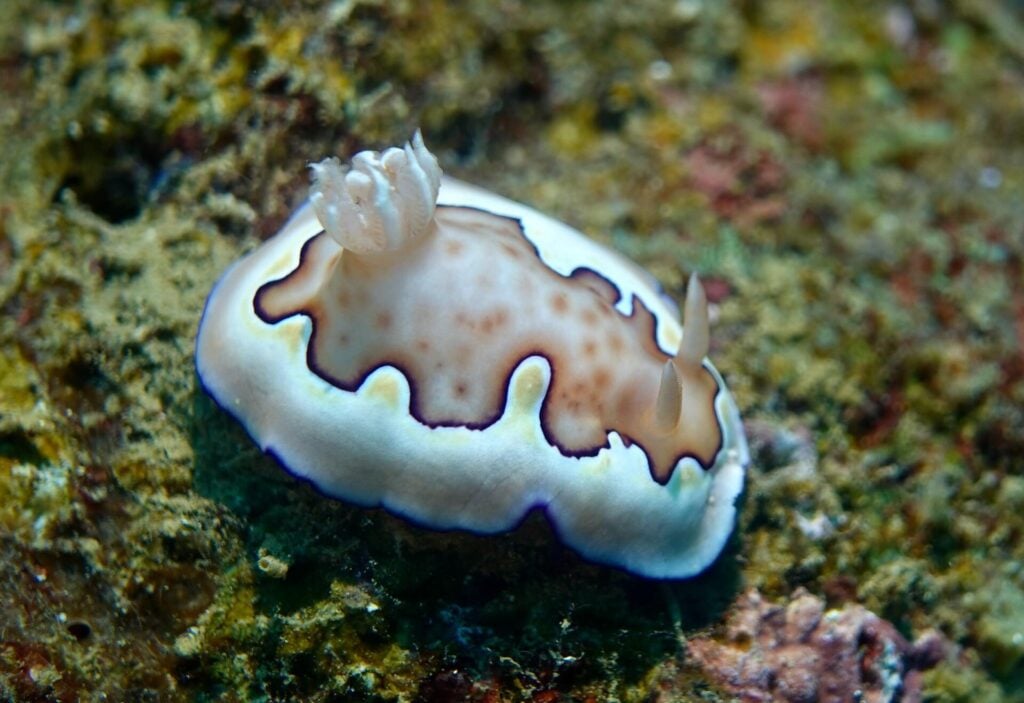
Cream-coloured with brownish spots, a white girdle with a wavy black outline and the ability to lift its mantle sideways, Chromodoris coi is a very pretty nudibranch.
The best part of the dive is coming upon a shelf at a depth of 7-10m. Almost vertical light-beams are shining under the cliff through the water column.

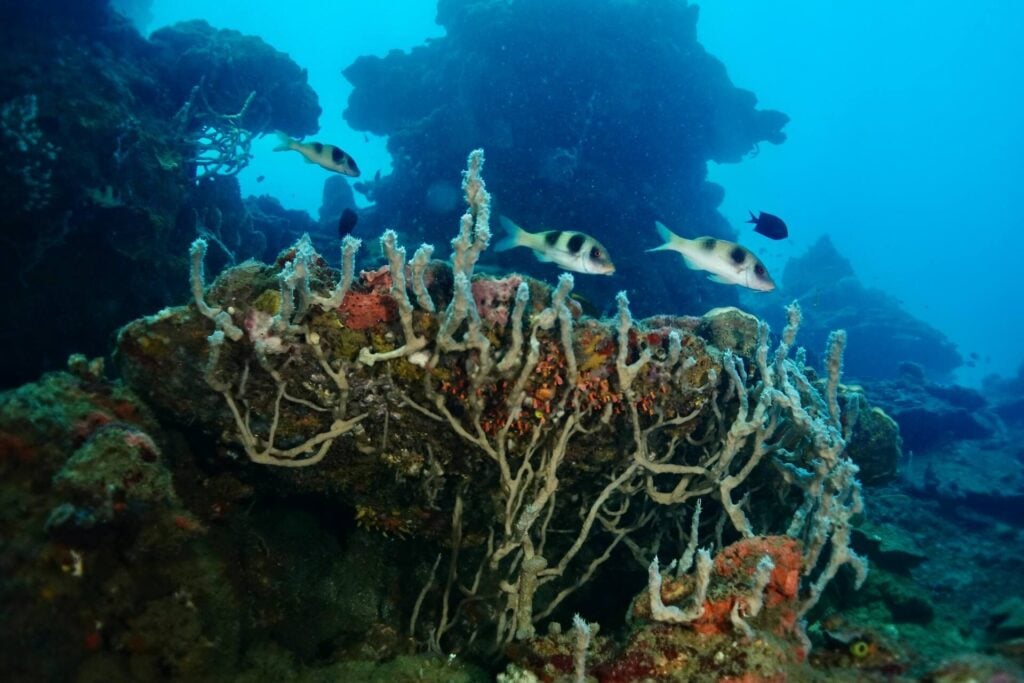

Caves and overhangs, narrow passages close to the wall, bring an atmospheric feel to the place, which features lots of gorgonians, seafans decorated with featherstars and bushes of red whip corals undulating gracefully.


The last dive at Wahoo Point does not provide any mantas but, instead, a school of 15 devil rays (Mobula tarapacana) in the blue, stimulating a furtive chase. Sadly, numerous particles in the water are incompatible with obtaining a decent photo using strobe lights.


Land excursions

Guide Gilbert leads some excursions out of the resort. A walk to Wahoo Point or even further to East Cape is recommended for dedicated hikers.

A jungle trail behind Tawali climbs up to the top of a ridge, with panoramic views of the north coast, then winds down along a creek to the main road, 45 minutes away.
There is always a chance of meeting the red and blue female Eclectus parrot or the Papuan hornbill, black with a white tail and chestnut-coloured head and neck.

On the way to East Cape, the road cuts across a savannah with pandanus trees, and I marvel at pitcher plants of the Nepenthes genus, which feed on flies and insects. It is possible to return by the north coast road to Tawali’s wharf for the resort boat to pick you up.
A perfect alternative to cruising Milne Bay, Tawali is a pristine, idyllic location in the heart of nature, with an exotic and ethnic lodge and a friendly, professional team – and it makes a wonderful centre for muck-diving.

Find out more about Tawali Dive Resort, and about PIERRE CONSTANT’s Calao Life Experience. Also find many other travel features by the author on Divernet.