Spoilsport Captain Trevor Jackson waxes lyrical about the spectacular scenes that await divers who make the epic 370 mile trek to Raine Island
Photographs courtesy of Mike Ball Dive Expeditions
The radio burst to life: “Drop what you’re doing and take ten. You’ve got to see this”. We were so close to the shore, drifting sideways at half a knot. The beach was unbelievably steep. “How do they even make it up that slope?”. Everyone was thinking that at the same time. We could see the sand getting swept aside as they clawed their way up the embankment. A silent, unstoppable march in the dying light, to lay eggs in the sand overnight.
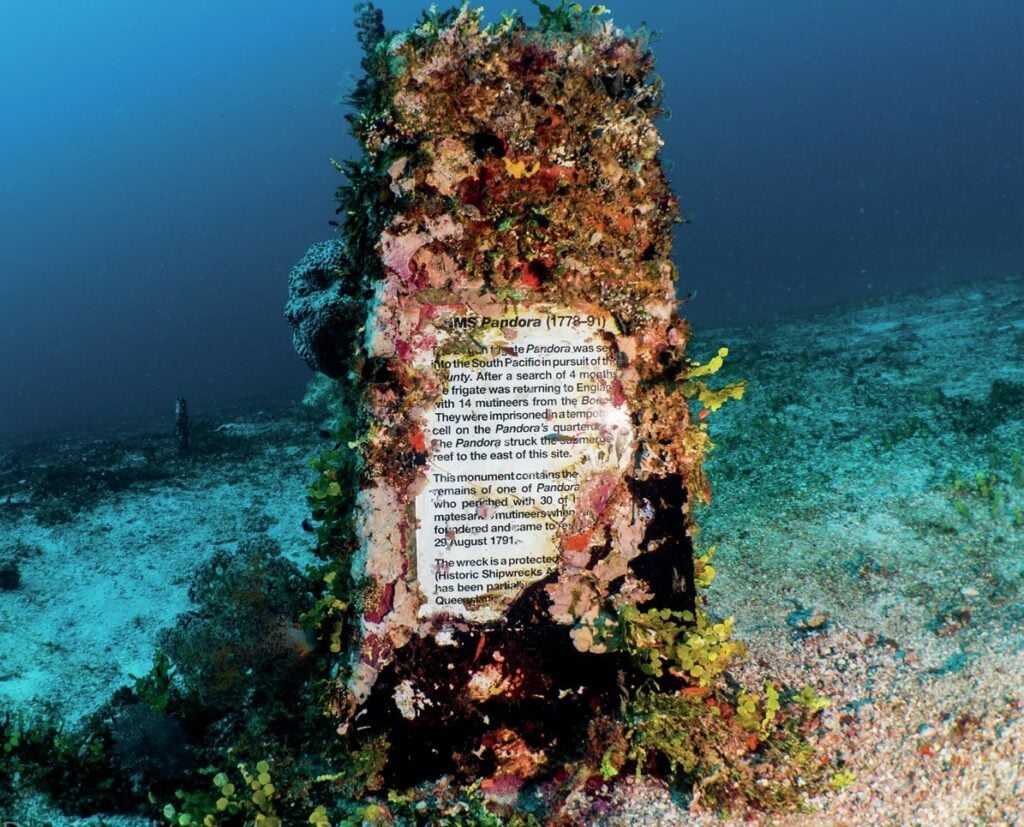
The whole day had been awe-inspiring. A dawn dive on the wreck of the HMS Pandora, then tiger sharks, great hammerheads, 130-foot vis and countless turtles.
It was our second day at the island and the turtles on both days were so thick in the water, you could play hopscotch on them. And even now, as it seemed like every single turtle in the known universe was halfway up that beach, they cloaked the sea in every direction.
Quiet fell across the decks. It was one of those moments you remember for all your days. Spears of golden light, distant tropical rain, and an unfathomable determination on the beach. A genuine wow moment!
Turtle Raine
Raine Island. Desolate. Remote. Spectacular. From Cairns Australia, it’s a 370 mile sea journey. An isolated, tiny speck of sand-drift in a vast complex coral system. The largest system in the world -Queensland’s Great Barrier Reef.
Raine Island is famous for two things. Firstly, it’s taken a few ships down over the years. In summer, the island and the reefs that surround it are virtually indiscernible from the horizon. Despite its remoteness, the island is easy to find.
Early European ships found it all the time, to their demise. Weary sailors aloft in the rigging were routinely fooled into believing there were no hazards about, only to find their screams of ‘Land Ho’ were made far too late.
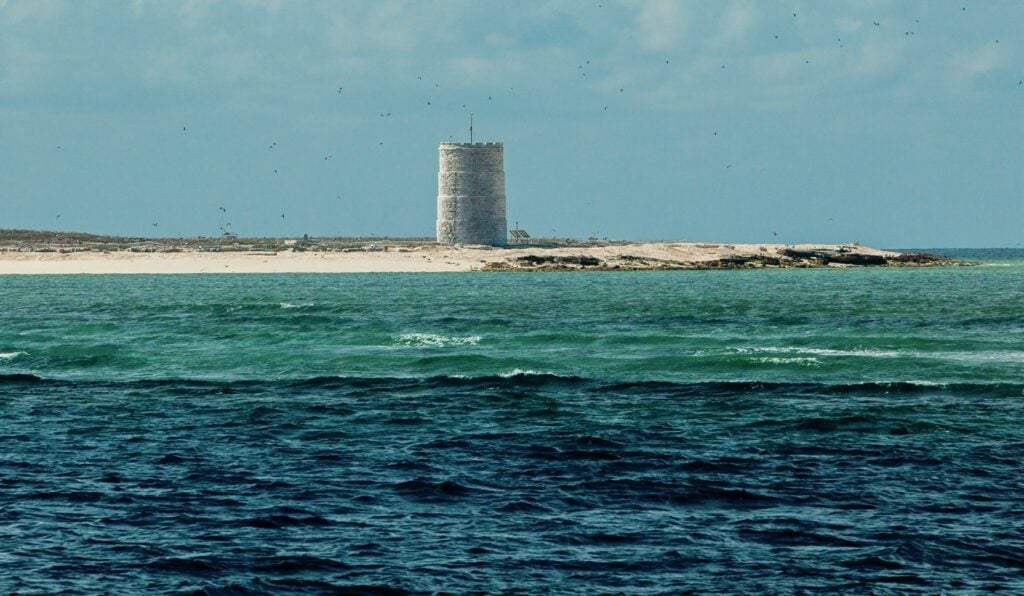
The beaches and reefs crushed the unwary. In 1844, a timber and stone tower was erected on the island as a warning beacon. The framework of the tower was fashioned from the timbers of ships wrecked and scattered along the beaches. There was no shortage of building material.
In 2019, a team of scientists traveled to The other thing its famous for, and the reason we are here, is diving. More specifically, diving with turtles. When you approach Raine Island for the first time you could easily be forgiven for being underwhelmed.
It’s really not much more than a sand bank with a few low bits of scrub. It appears flat, sitting proud of the surrounding ocean by only a few feet, except of course for the stone tower. There’s not much happening from a distance, but the remarkable thing about a visit to Raine Island isn’t the island itself, it’s what’s in the water surrounding it.
In the seas that envelop the beaches, Raine Island is a genuine wonder of the world. A serious wonder, the type that stops you talking mid-sentence. Think Mount Everest or Grand Canyon-level wonders.
Mike Ball Dive Expeditions
Mike Ball’s internationally acclaimed, award-winning Spoilsport is one of Australia’s premier liveaboard dive vessels. Traversing the northern and remote reaches of the Great Barrier Reef and Coral Sea, the Cairns-based operation runs standard and special three, four, five and seven night expeditions.
www.mikeball.com
In 2019, a team of scientists traveled to Raine with the express mission of figuring out how many turtles were gathering in the area to breed and nest. It was never going to be an easy task, but some simple ingenuity lent a hand.
The scientists painted exactly 2,000 turtles with a white ‘skunk stripe’ on their shells. After a few days, the painted turtles had completely interspersed themselves with the rest of the population.
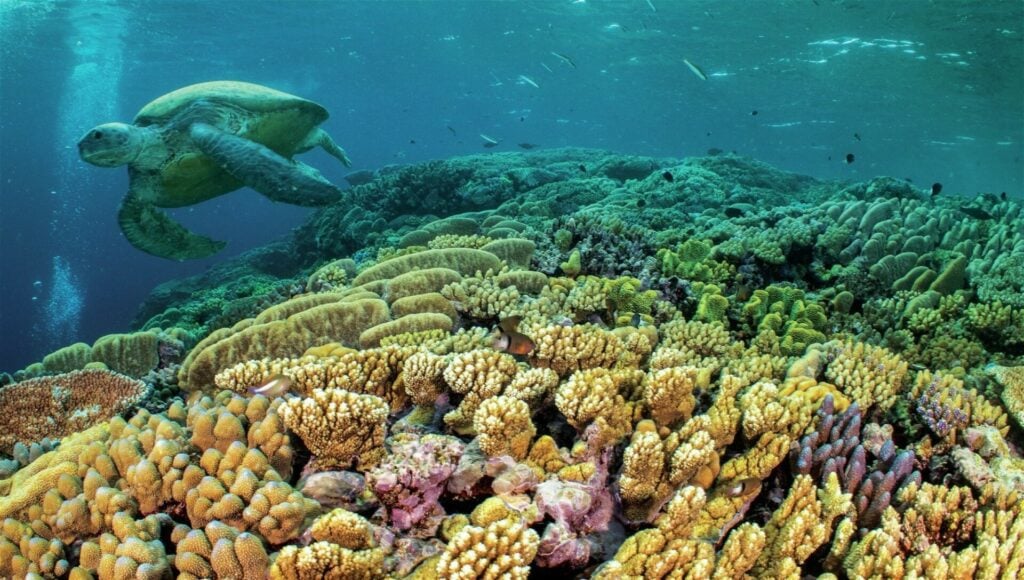
Once that was established, drones photographed sections of sea from the air and the numbers of painted turtles in a given area was compared with the non-painted turtles within that same boundary.
Some simple maths then led to the team discovering that there were upwards of 60,000 turtles in the surrounds on that single day. Twice as many as they had originally thought. With each nest averaging 100 eggs, the sheer number of potential hatchlings is mind boggling… Cue the sharks.
To spite the phenomenal efforts on the part of the turtles to reproduce, an equally effective system is in place to curb the population. Predators at Raine Island come thick and fast.
If the hatchlings make it past the seabirds on the beach, some get nabbed by crabs at the water edge. Escaping that, they then are picked off in the shallows by small reef sharks and large carnivorous fish. And the aerial attack is constant.

Did you know?
The island holds special significance as a seabird breeding and roosting site. It is considered as the most significant tropical seabird breeding site in the Great Barrier Reef.
In order for the hatchlings to be even able to attempt to prevail in this land, air and sea attack, they must, of course, first hatch. Sand erosion and rising seas have recently meant that many eggs were laid in places that were later immersed in seawater.
The eggs simply didn’t survive. To thwart this threat, the Qld government sent in the cavalry. In 2014 , the Raine Island Recovery Project used bulldozers to increase the above-water height of some of the island’s nesting areas. Dry nests have improved mortality rates in those areas by a significant factor.
This in turn meant many more tiny rubbery baby turtles now hit the sand surface and run the seemingly impossible gauntlet to the perceived safety offshore.Once there, however, it’s the turn of the big boys. Just beyond the beach threshold, nothing is safe from the tiger shark.
They don’t discriminate. Adults or hatchlings, it’s all fair game. It’s estimated that only one in a thousand hatchlings makes it to adulthood. The rest perish.
No doubt mostly in the first few days, if not the first few hours, or minutes. It’s a stunning testament to tenacity and unbelievable good luck that any of these animals make it out alive, let alone survive the wilds of the ocean for years until they are mature enough to return… and when they do, the cycle is fulfilled.
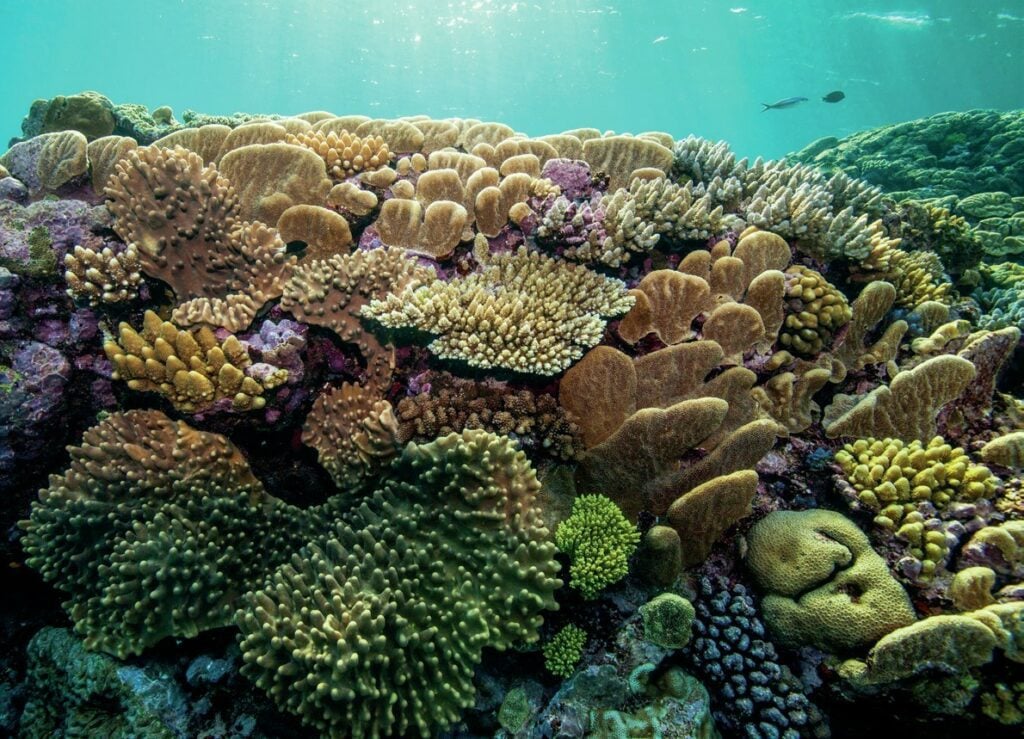
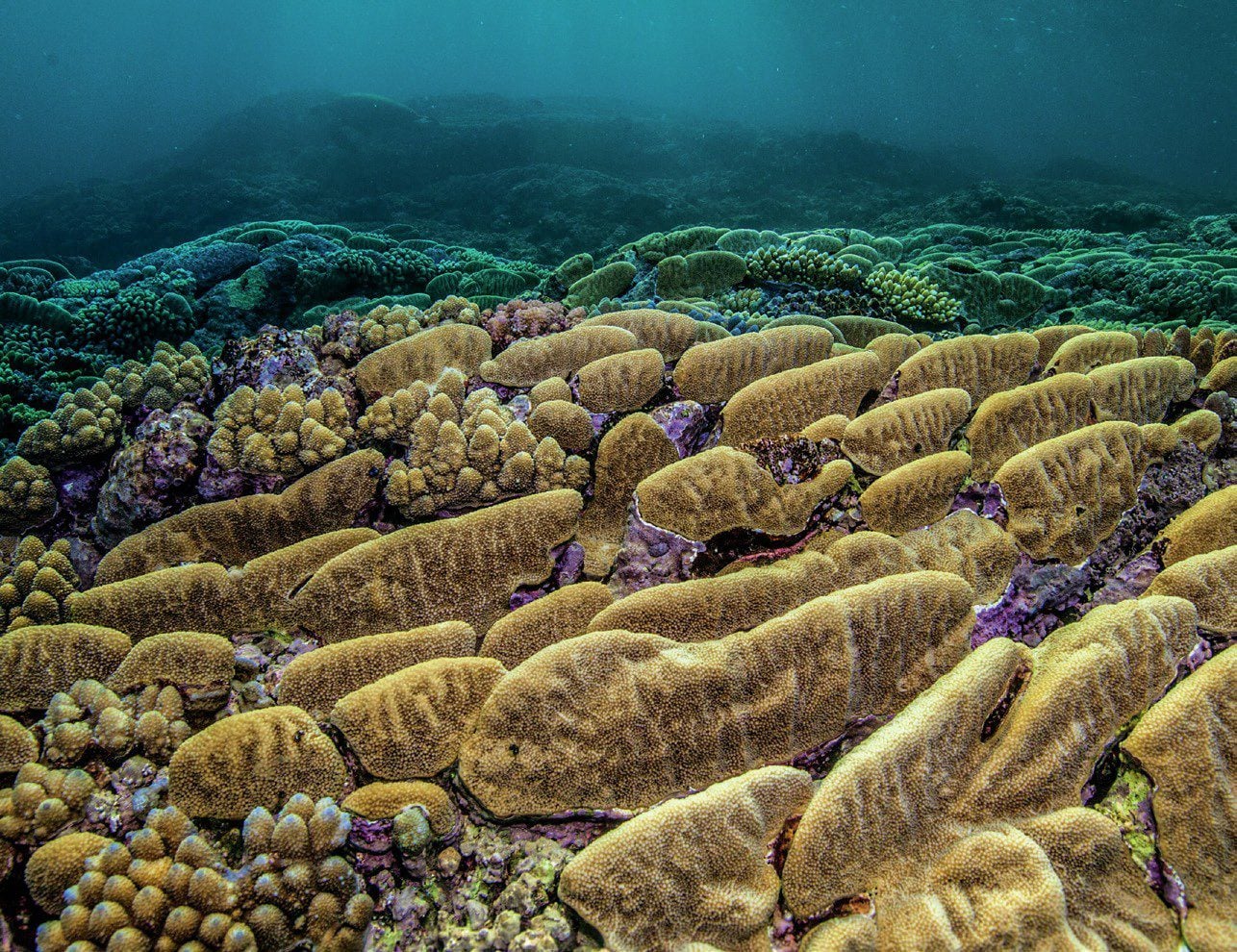
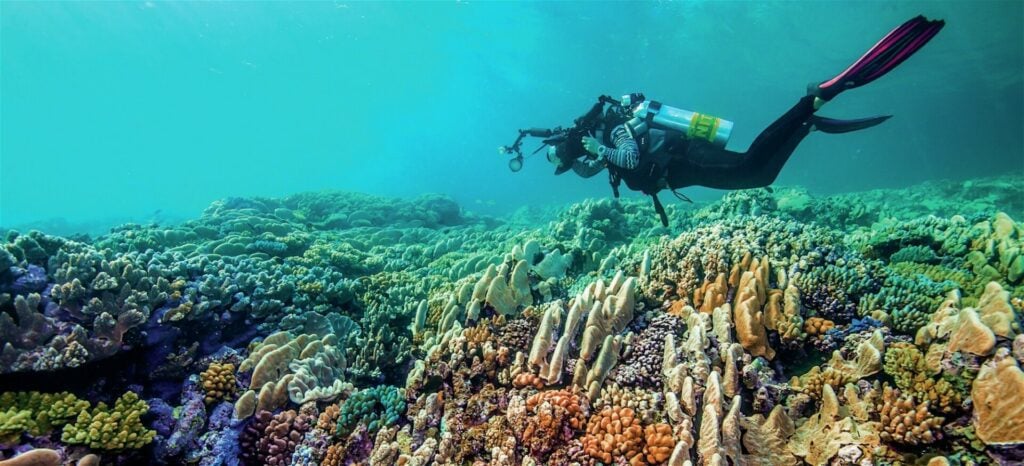
All of this, of course, is yours to witness. And that’s best done in the water. On board a well-found liveaboard, scuba divers get a pass to nature’s grand showpiece. Postcard-quality coral reefs set the stage. Impossibly clear water ensures a front row seat.

The colors are an unimaginable combination of purples and reds, blues and oranges. Tiger sharks, marauding seabirds and of course, the immeasurable legion of green turtles, make up the main cast. Beyond the shallows, cascading deep slopes boast black coral trees, sea whips and gorgonian fans.
A surround system of schooling barracuda, trevally and mackerel and, beyond the backdrops, it’s not impossible to see a whaleshark hanging out on stage left.
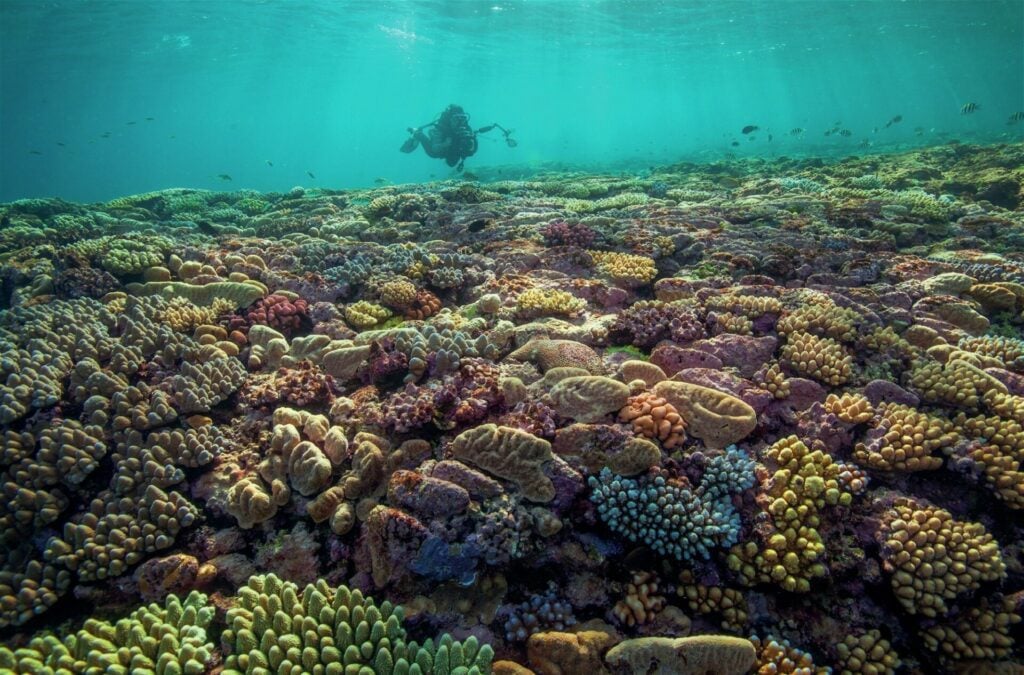
When the diving is done for the day, eyes can be turned to the late-afternoon pilgrimage onshore, where up to 20,000 turtles have been counted attempting to storm the beaches on a single evening.
Visiting Raine Island is usually done as part of a larger week-long liveaboard trip to the island and its surrounds.

Did you know?
The waters around the island were treacherous for early European navigators. More than 30 shipwrecks can be found off the coast of the island including HMS Pandora, a vessel that in 1791 was involved in the capture of a group of mutineers from HMS Bounty.
Now resting on a crisp white sandy bottom at 100ft, the Pandora is considered one of the most historically significant shipwrecks in the southern hemisphere.
Divers returning to the surface here often speak of having gained an intangible yet very real connection to the most-famous sea story ever, the Mutiny on the Bounty. The saga of the Pandora, its prisoners and its castaways is one of deprivation, sheer good luck and chance.
And, like the improbable survival of the turtles of Raine Island, the backstory will enchant you well into the balmy tropical evenings.
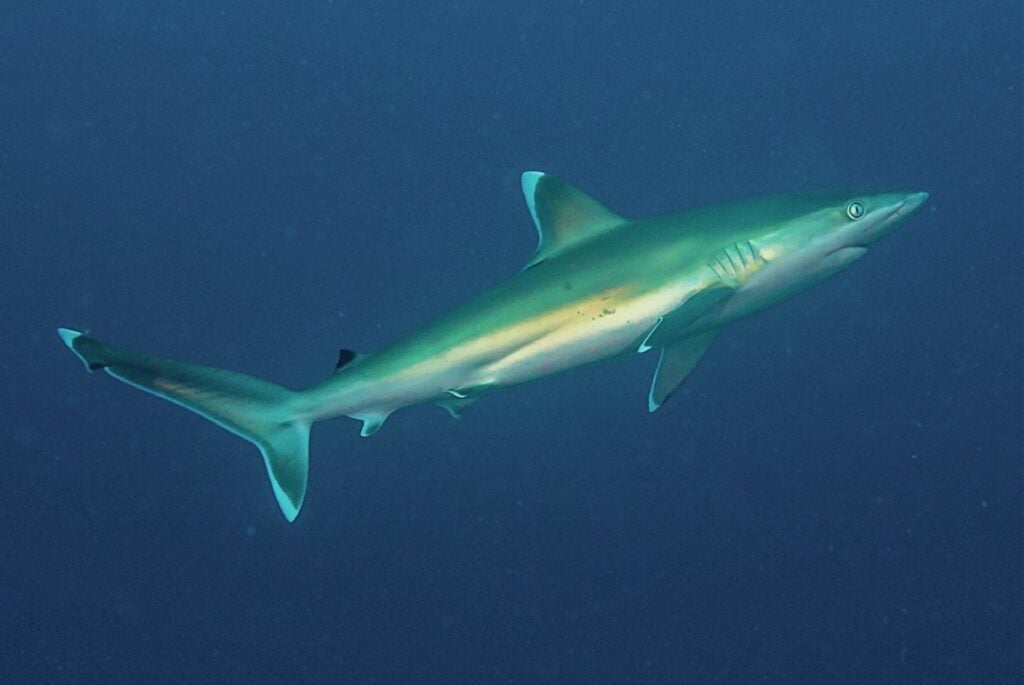
Raine Island, despite its appearance, is a whole lot more than a few dozen acres of sand and coral. The island itself, and the reefs and wrecks that surround it are a symbol of survival. A monument to tenacity, success despite the odds, daily tragedy. Nothing here, comes easy.
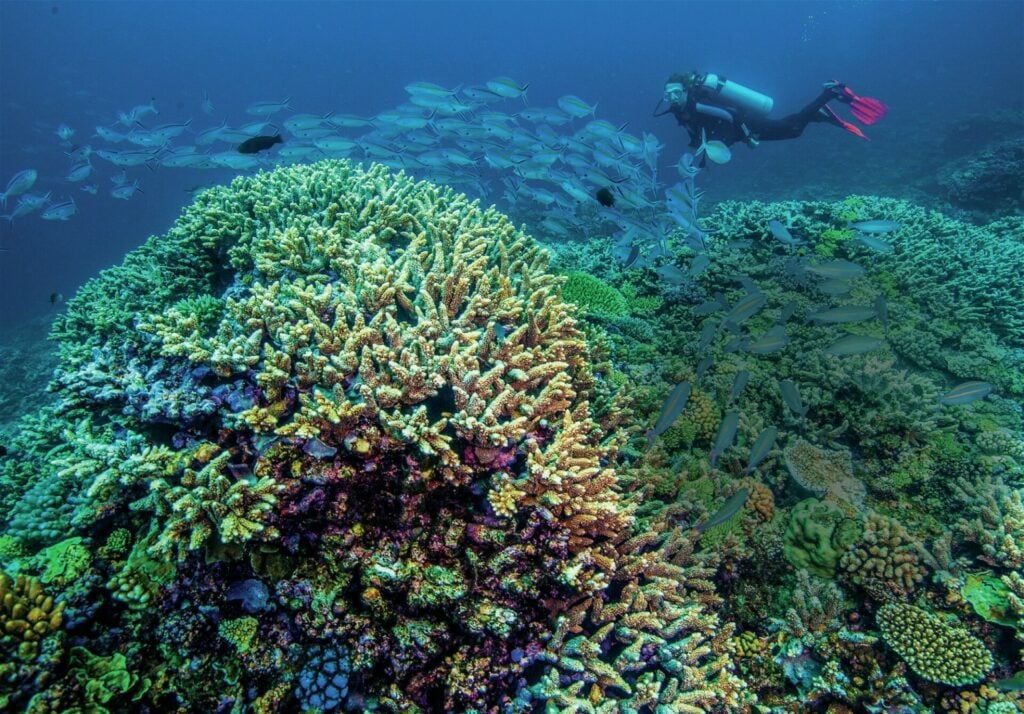
No water, very little rainfall, searing summer heat and the treacherous deception of calm waters. Massive and well-versed predators, feeble prey. Prey whose only chance of making it through to adulthood seems to be the sheer weight of numbers. And survival here really is down to the numbers…
If there’s enough hatchlings hitting the beach, the barrage of predators simply can’t keep up. Someone makes it through till the end. The beauty, the tragedy, the breathlessness of the place.
Once you’ve seen and borne witness to her sheer majesty, all else fades. Raine Island is a monarch, the queen of all dive destinations. Long may she reign.
FAQ
Where is Raine Island located?
Raine Island lies 370 miles from Cairns on the northern Great Barrier Reef, Australia.
Why is Raine Island famous?
It is the world’s largest green turtle nesting site and home to the historic HMS Pandora wreck.
What marine life can divers see at Raine Island?
Expect green turtles, tiger sharks, hammerheads, manta rays, barracuda, and pristine coral reefs.
How can you dive Raine Island?
The site is only accessible by liveaboard trips, such as Mike Ball Dive Expeditions’ Spoilsport vessel.
This article was originally published in Scuba Diver NA#18
Subscribe today with promo code DIVE1 — enjoy 12 months for just £1!