Camera at the ready, RICHARD ASPINALL kicks back in North Male Atoll, where the brilliant colours below the waterline are guaranteed to leave a lasting impression. In any case, what’s wrong with playing with fish?
There are few things finer in life than waking up to a view of the ocean, as it gently laps at a white-sand beach a few metres away and azure skies stretch to the horizon. Lush tropical foliage and palm trees overhead cast some welcome shade as they sway in the gentle breeze.
What utter pleasure it is to watch the sun rise, knowing that work is a long way away, and all you have to do is enjoy a fine breakfast and find the dive-centre. Welcome to the Maldives.
This miraculous country of islands atop a ridge in the Indian Ocean has long defined “tropical luxury”. Given that it has some of the best diving in the world, its glorious stretch of atolls just grazing the Equator make it a destination you can visit time and time again, especially when you feel that you deserve some laid-back dives and a little pampering.
When the opportunity to stay at the OBLU NATURE resort on the island of Helengeli came up I jumped at the chance. I had been on a Maldivian liveaboard a year or so ago and, while I’m
always thrilled by the high-energy, often high-current dives of one of the “Best Of” itineraries,
the thought of an island-based luxury villa sounded perfect.
It also meant that my non-diving partner could come along too. A chance to be together and to enjoy some diving: the best of both worlds.

The trip took us from Newcastle via Dubai to Male, the Maldivian capital. We had a night in a hotel close to the airport to sleep off the journey before taking the quick speedboat ride north to Helengeli. The island is a thin strip of coral sand and tropical green that forms a small part of the north-eastern rim of North Male Atoll (Kaafu).
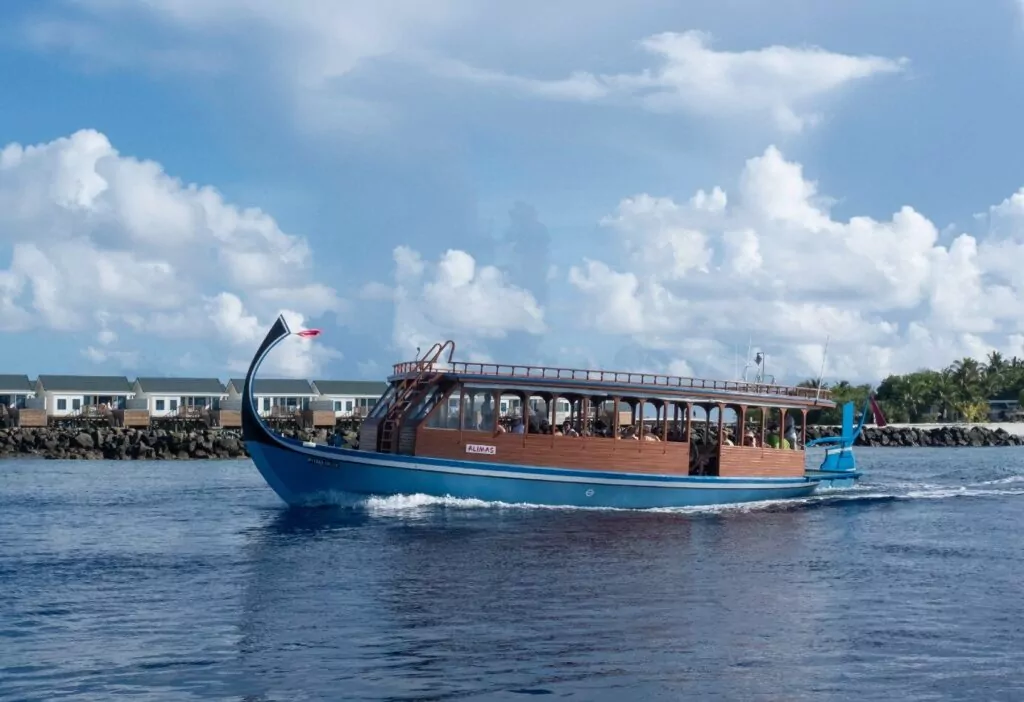
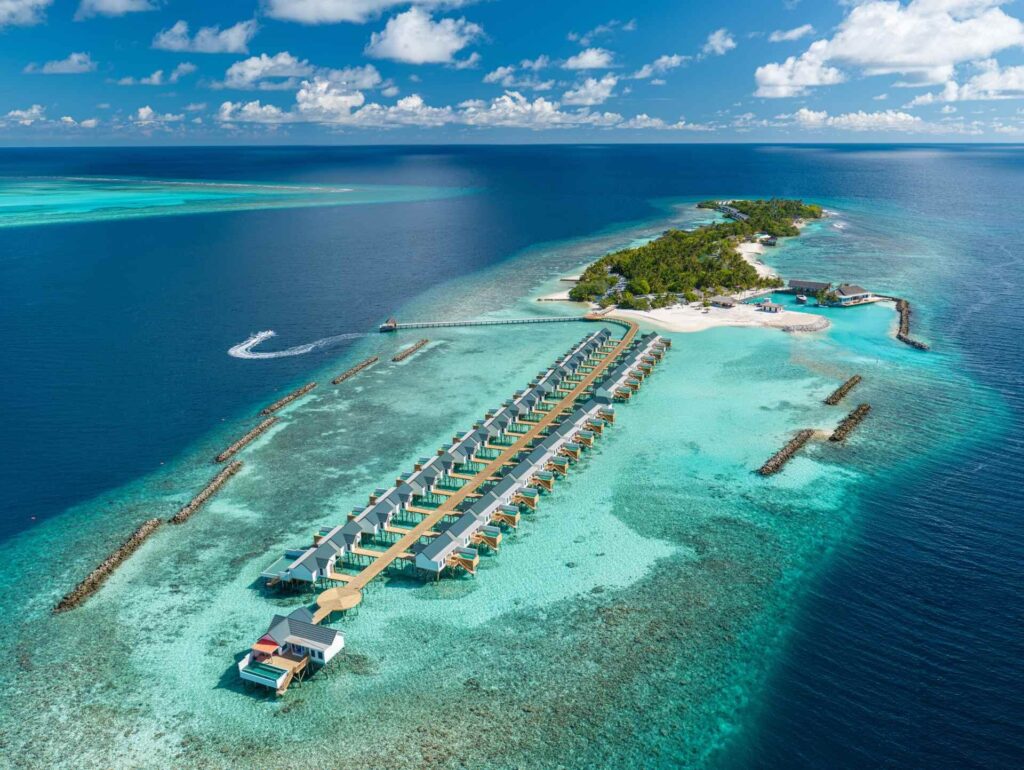
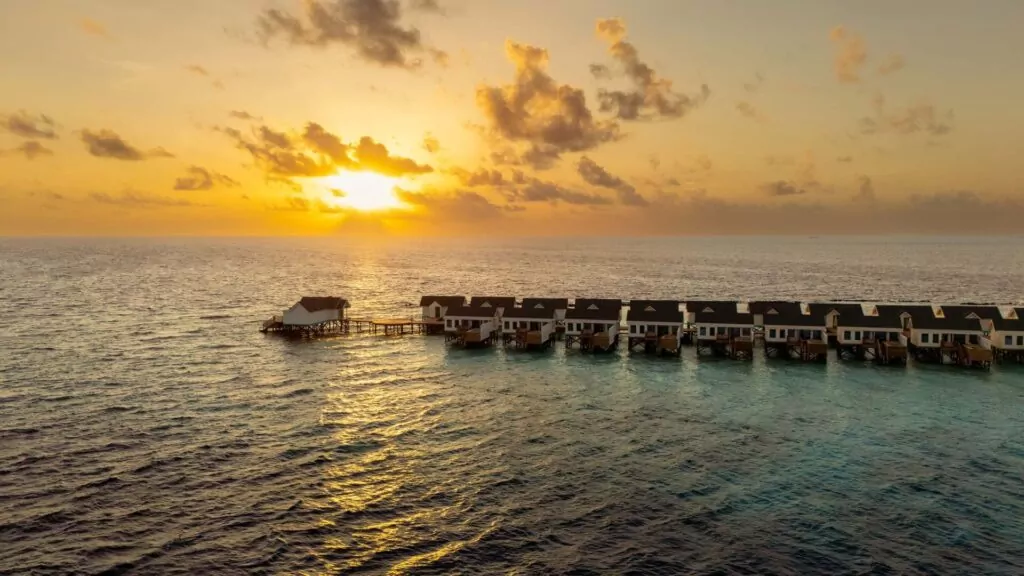
As you approach OBLU NATURE you see first the over-water villas and the small dock, where the traditional wooden workhorses of the Indian Ocean, the dhonis, rest up between dives and sunset boat trips.
A quick welcome from the staff and a suggestion that we install the resort’s app on our phones was quickly dealt with, and we were shown to our accommodation. I had asked for a beach villa, to get the benefit of the shade from the palm trees. As a redhead living in Scotland, I need to keep out of the sun.
The over-water villas enjoy the sunrise or the sunset, depending on the direction in which they face, and are a little further away from the resort’s central restaurant, bar, concierge and the dive-centre, although getting around on foot is very easy, and a golfcart-type shuttle is in operation.
The dive-centre
After quickly checking over my camera gear and carrying out a vacuum pressure test on my housing (how I love that “blinking green light of happiness”) I wandered down the palm-lined central path and found TGI Helengeli.
The centre is well-shaded – ideal for trying on dive-kit – and only a very short walk from the dock and the dhonis. The staff had a 15-litre cylinder waiting for me with a fill of 30%.
After the usual paperwork I was issued my kit – standard dive-centre fare from well-known suppliers – and was on my way for my first dive of the trip.

TGI operates a fairly standard system of two morning dives, an afternoon dive and a night dive on request. The 30 or so regularly visited sites are part of the outer chain of small islands and reefs that defines the north-east of North Male Atoll.
These sites have some wonderful names such as Kagi Kuda Kangu and Boda Gaa Faru. If you still log your dives, these are words that are a pleasure to write.
Afternoon dives are often taken closer to the resort, in more sheltered areas. Currents can be stronger in the afternoon, though season and tide make prediction very hard. Before each dive a guide checks the current, which determines how the site will be approached. Happily, going with the current is the norm.
Our first dive was a wall, forming one side of a channel or kandu. Channels can be great fun with fast currents, but are often poor for photographers, whisked away from their subjects!
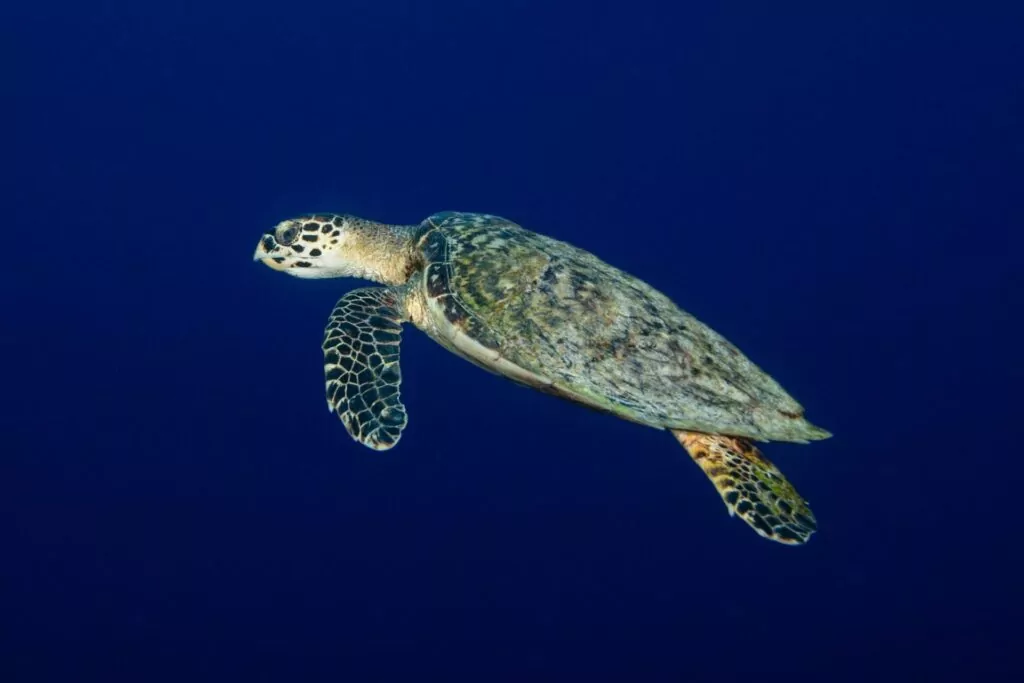
Happily, the current was minor that day and, within minutes, I had spotted my first turtle, and fell into the happy rhythm of diving.
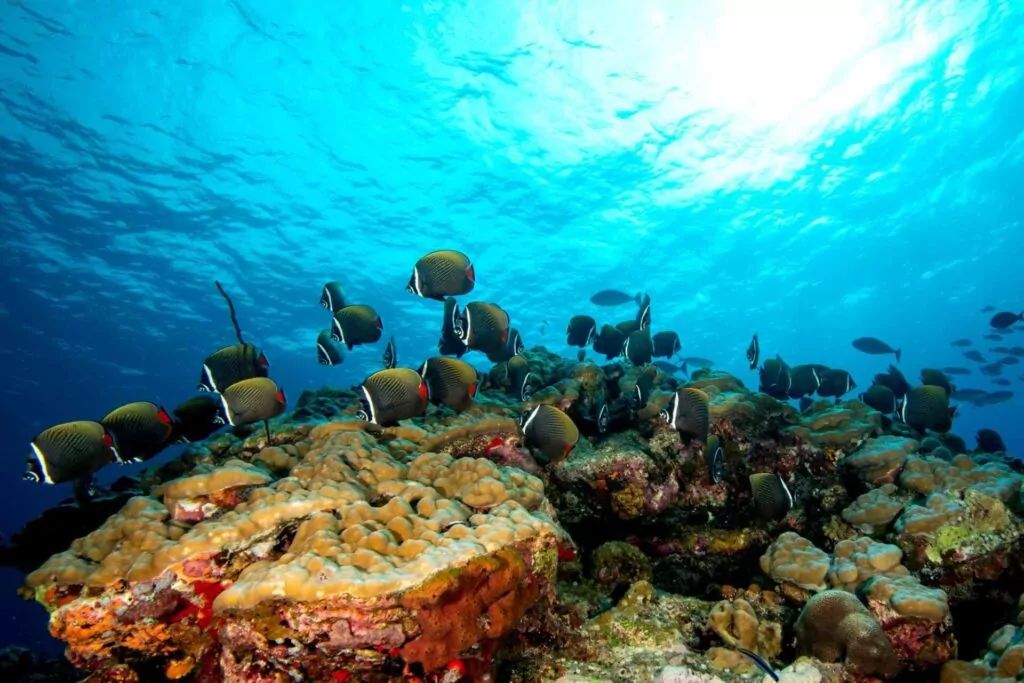
I shot away at a few coral sprays before shallowing up to enjoy shoals of fusilier, blue-line snapper and collared butterflyfish for the last half-hour of the 60-minute dive.
For me, the shallows are where the Maldivian reefs truly shine. The sandy bottom sinking away to the depths holds little interest, although it is always worth keeping an eye out, because we would see several blacktip and whitetip reef sharks passing below us.
Kandus are among the typical dive-sites of the Maldives. Even in a moderate current they can be very relaxing: keep the reef on one side of you, follow the guide and stay with your buddy.
Yes, you need to follow all the normal rules, but it’s easy-going diving. It occurred to me that if this was your first dive-trip after qualification, perhaps, or a trip to further your learning and skills-base, this dive was pretty much perfect.
I slept well that night, aided by a few mojitos at the bar, and my wife reported excellent things about the spa.
Maha Tila
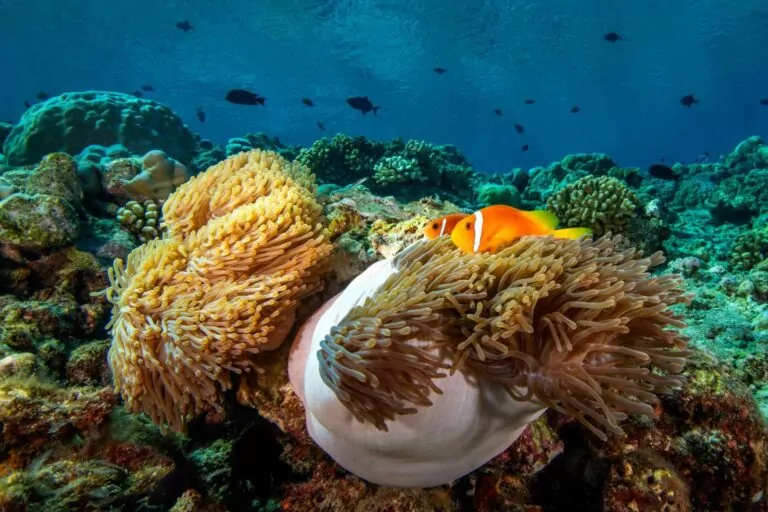
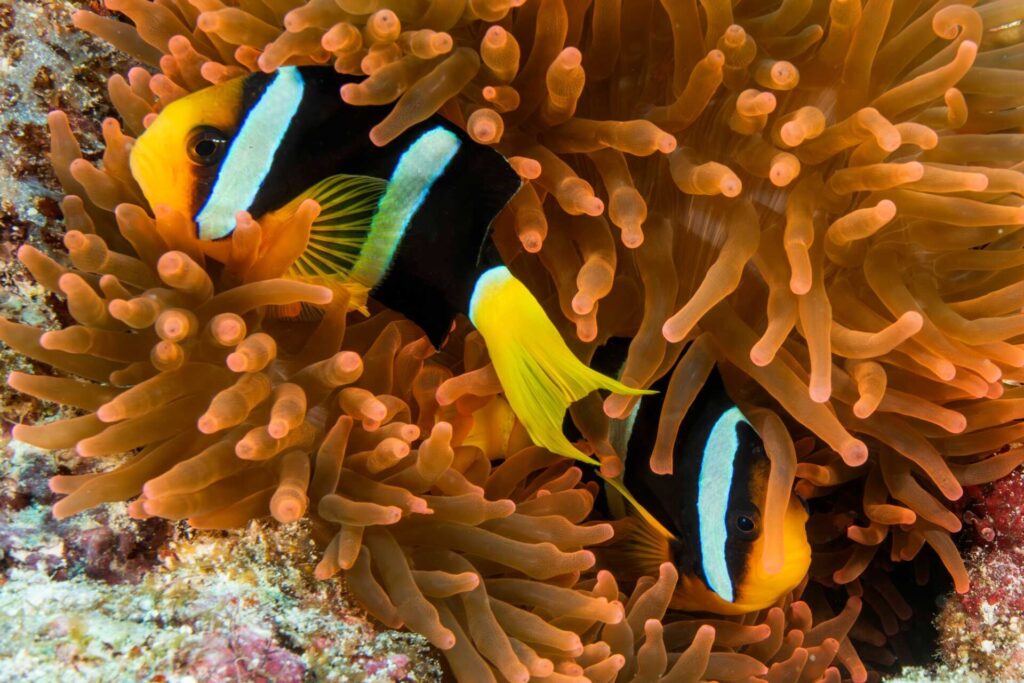
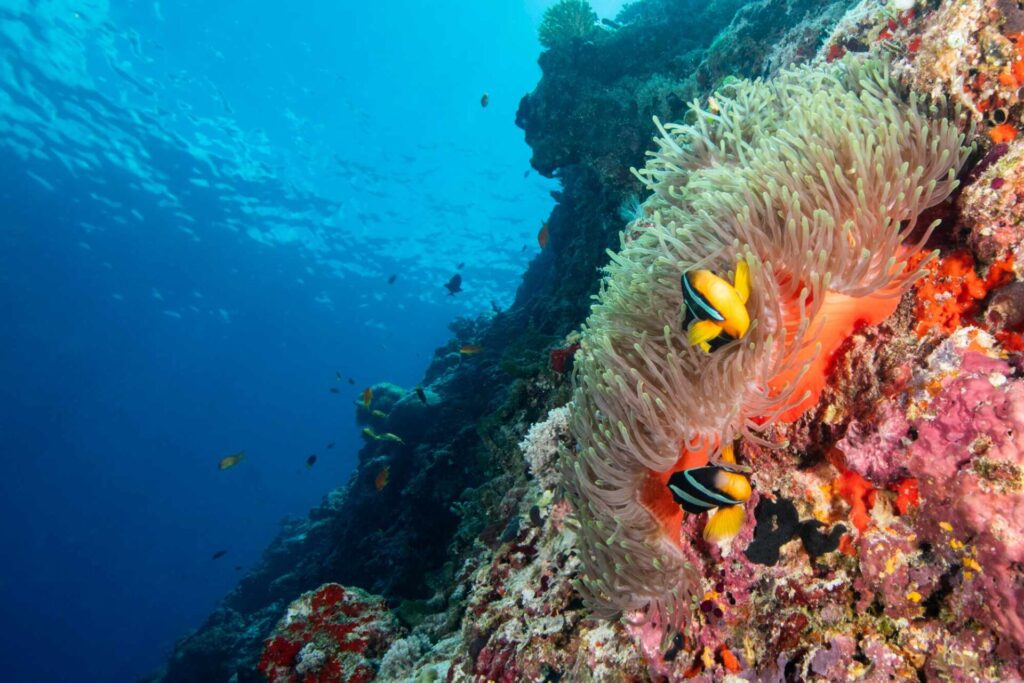
The highlight of the next day would be Maha Thila, a dive with excellent numbers of clownfish of the local black-footed species and the more widespread Clark’s clownfish. The latter are much more ebullient and make for an easy snap as they huddle down into a bubbletip anemone – in this case a splendid red specimen.
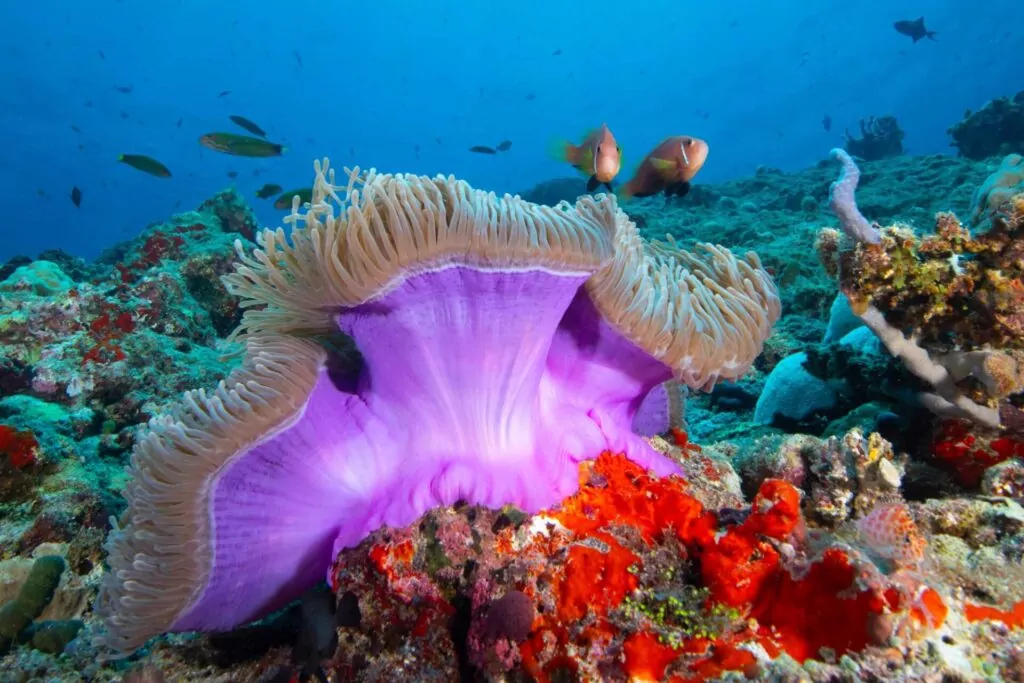
Thilas are a type of reef best described as underwater pinnacles, and distinct from a giri in that they don’t break the surface. Both make for great dives, with the smaller ones ideal for touring around before completing a safety-stop in shallows where turtles can often be seen resting.
Among the channels, corners and wall-dives of the kandus, I was keen to bring out my macro lens. The first “critter-spotting“ dive on the corner of the house reef ended up as a medium-current drift amid shoals of snapper – beautiful, but not what I wanted.
I had to wait until the next day before I could explore a local site called Trix Caves. Not really caves, more akin to deep overhangs where coral above casts a permanent shadow over what appear to be great gouges taken out of the side of the reef.
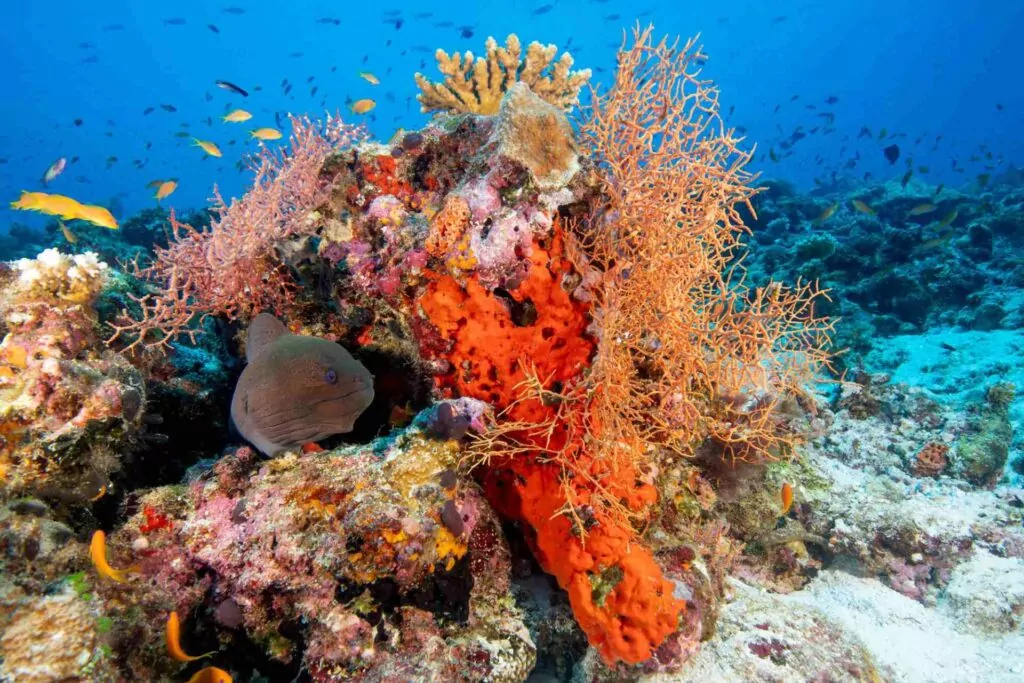
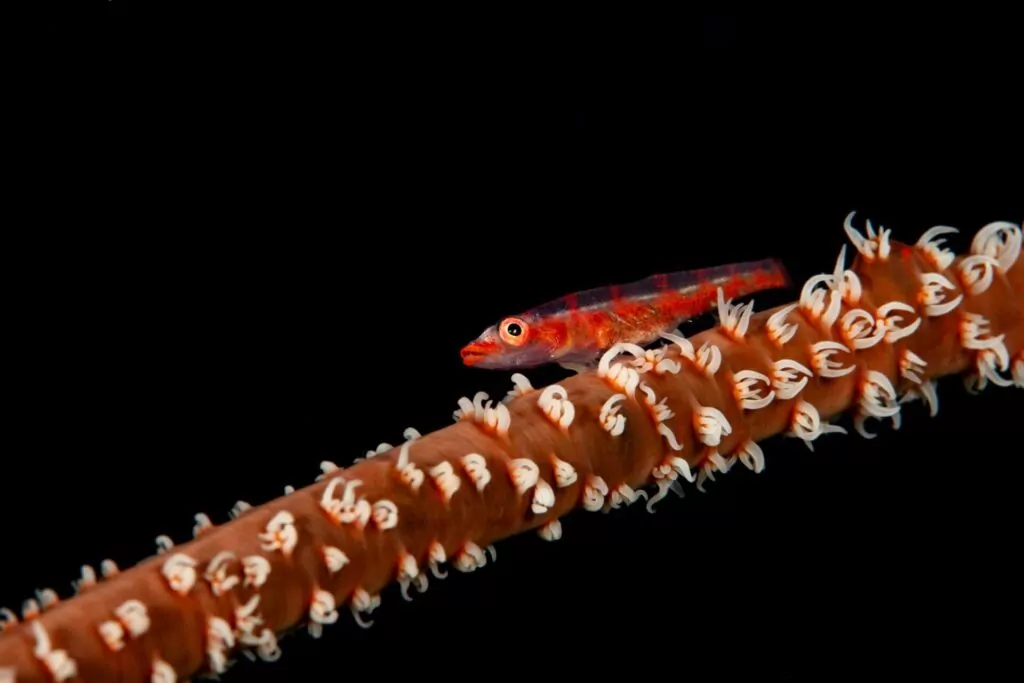
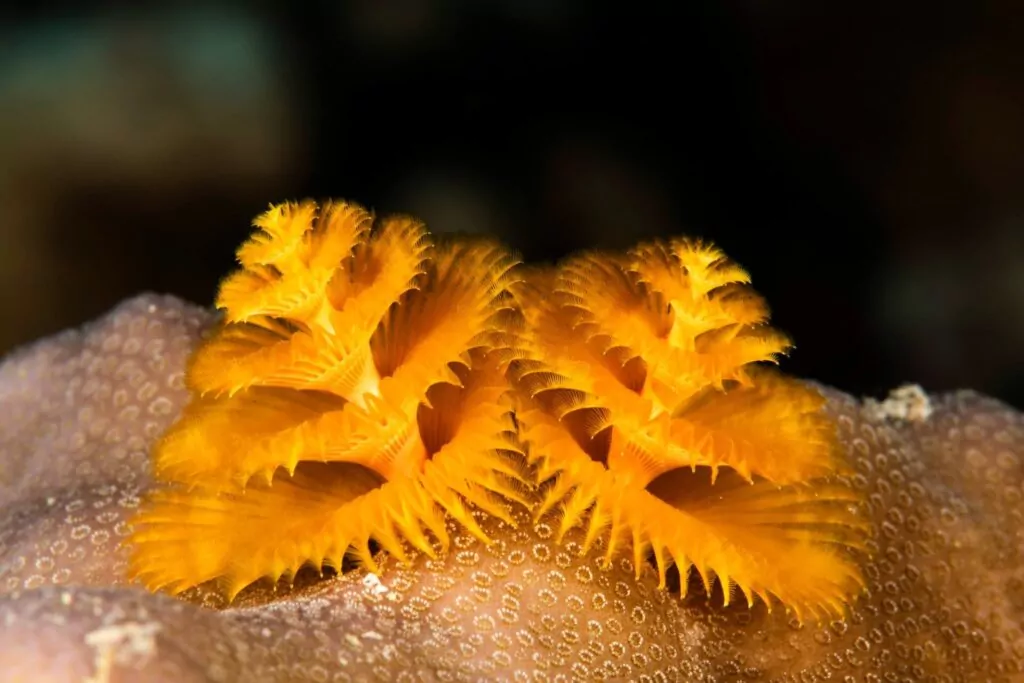
These shadowed ‘caves’ were covered in life and, amid the whip corals, hydrozoans and gorgonians. I had a great time hunting for tiny gobies and nudibranchs.
Torches are essential for sites such as this; otherwise they are dull, uninteresting places lost in the gloom of their shadows. Even a small torch reveals a wealth of reds, pinks and violets and an amazing level of detail in the shade-loving species that cover the rock.
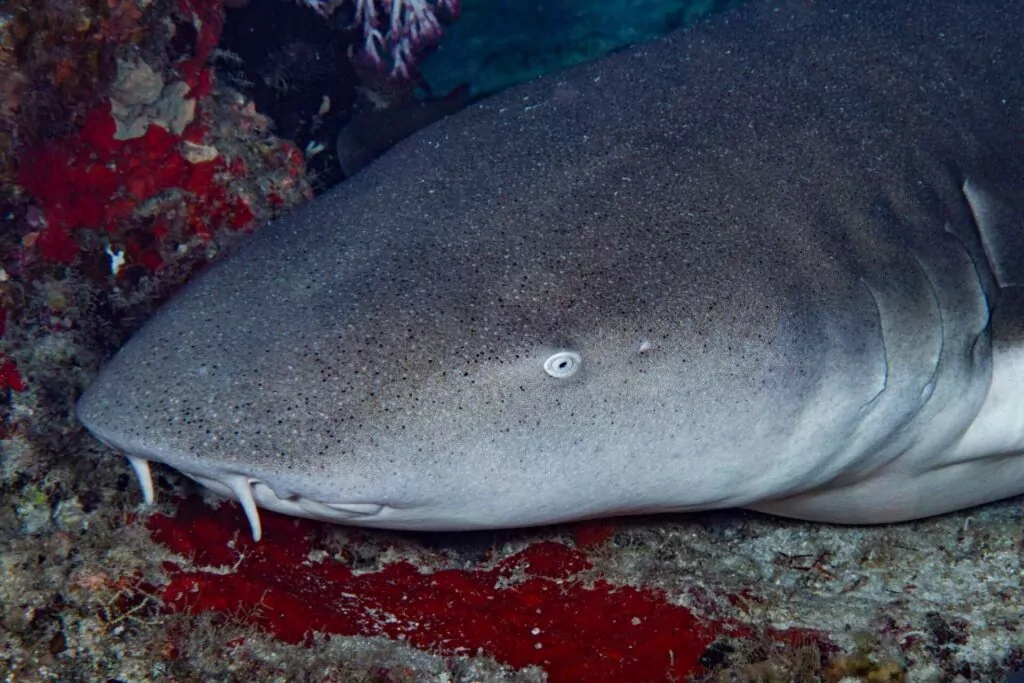
As with all Maldivian dives anything can happen, and at around 20m and halfway into the dive we found a pair of nurse sharks resting together. These tolerant fish can be approachable, but after a single photo I left them alone to snooze.
Doris Caves
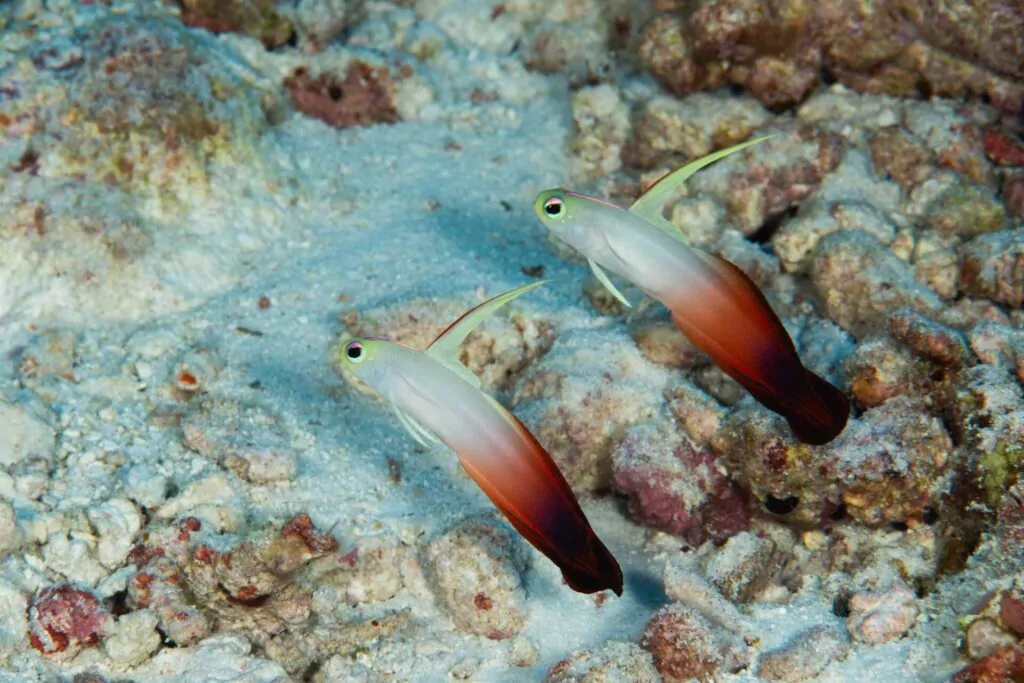
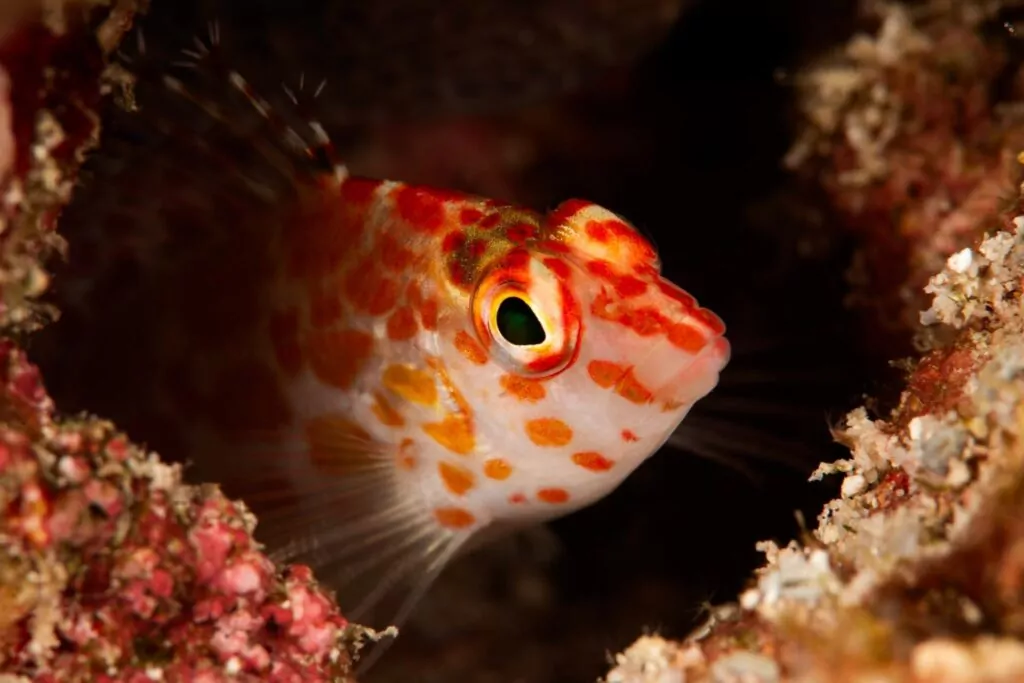
A similar dive at Doris Caves one afternoon revealed more macro life, though I was cursing my increasingly poor eyesight. I settled for some fish portraits and took on the challenge of shooting the very skittish red fire gobies that live in burrows in the coral sand.
Before I knew it, I was midway through the trip and a visit to the spa was in order. I’m not a
natural spa-goer, but I’m beginning to appreciate the spa/dive synergy and, as my achy back
was pummelled and pushed about by a tiny woman with superhuman strength, I reflected on
what resorts such as OBLU NATURE on this wonderful island of Helengeli offered.
Various treatments are available, including hot stones and Balinese massage. I booked a further treatment via the app for the morning of our departure, to make the flight home easier. It was superb!
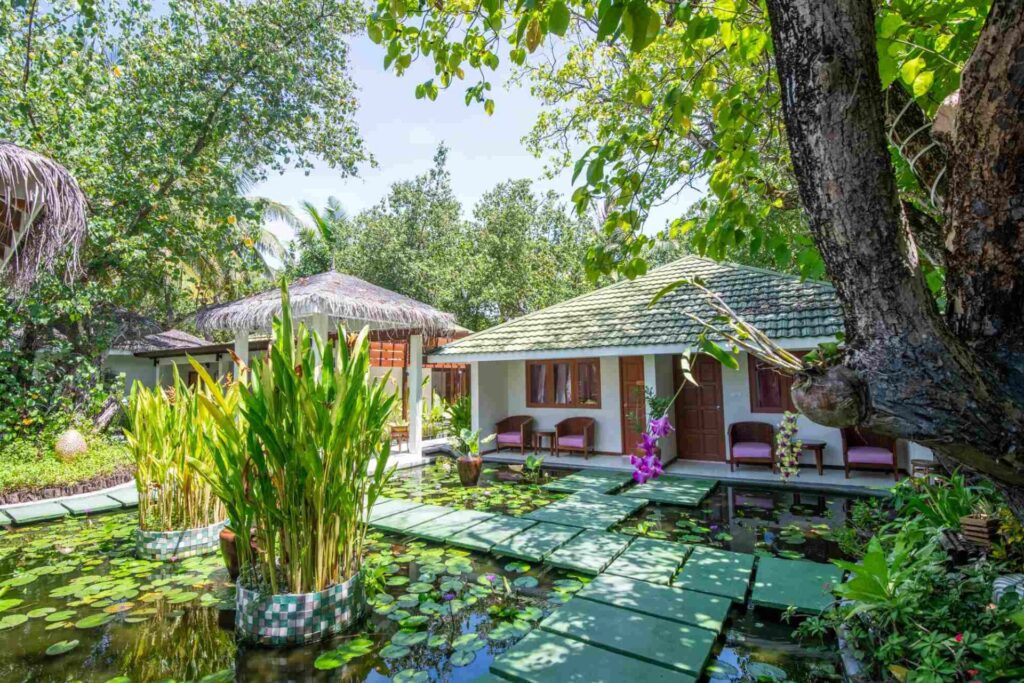
This was relaxed, gentle diving, free of stress and ideal for experienced divers looking for a little easy luxury, as well as for novices eager to branch out and gain confidence, perhaps staying with family-members or a loved one (did I say that there was a Honeymoon Villa?) and getting a good number of dives in alongside spending quality time together.
Speaking of which, I must mention the restaurants. The Grill, as it’s known, sits beside the beach, catches the best of the evening breeze and caters for all diets. If you eat fish, this is an ideal spot for you.
My favourite of the three restaurants is called Raga Route. In a way it is a little like the Maldives as a whole – influenced by Indian culture and food, but with its own twist. The food was sumptuous, delicately spiced and rich. An absolute must.
The resort’s larger, buffet-type restaurant was also excellent, with different ‘stations’ offering world cuisine. Happily, the resort’s gym will go some way to help with newly acquired calories!
The house reef
For many guests the house reef might be their first introduction to the underwater world. Guests can borrow a complimentary snorkelling set and, as long as they stay within the marked areas, can spend all day watching the underwater world go by.
The reef itself is essentially a continuation of the underwater part of the island, long and thin and between two larger reef structures. I expect many guests try their hand at snorkelling before deciding on a try-dive session with TGI. Gaining a basic certification here, for many, would certainly beat a cold UK quarry, though I’m aware that some folk would disagree.
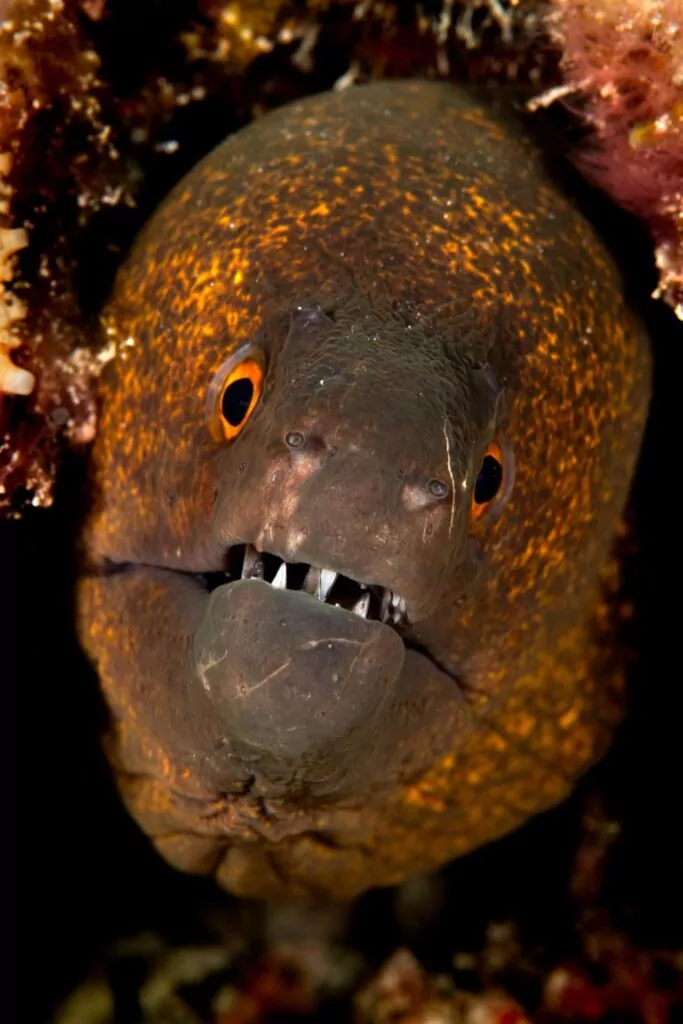
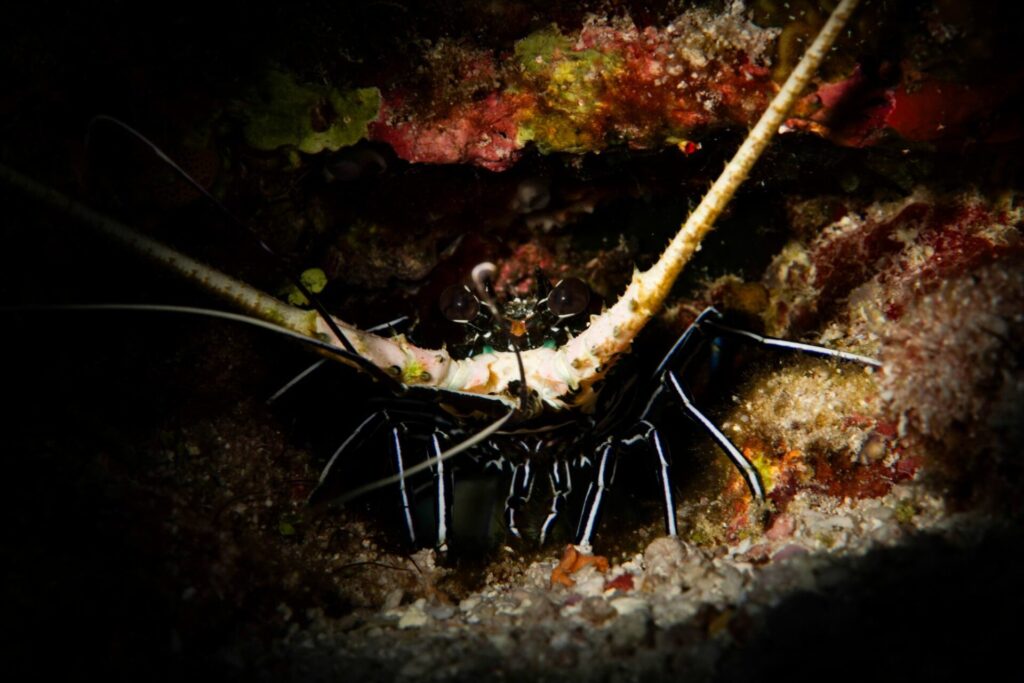
The house reef is ideal for night dives and further critter-spotting, and I would have happily spent a lot longer than the standard 45 minutes of a night dive.
I was also doing very well on gas and could have foregone the 15-litre cylinder I had requested, but it’s good to know that these are available. The week’s dive-profiles meant that hour-long dives with well over 50 bar at the surface were the norm.
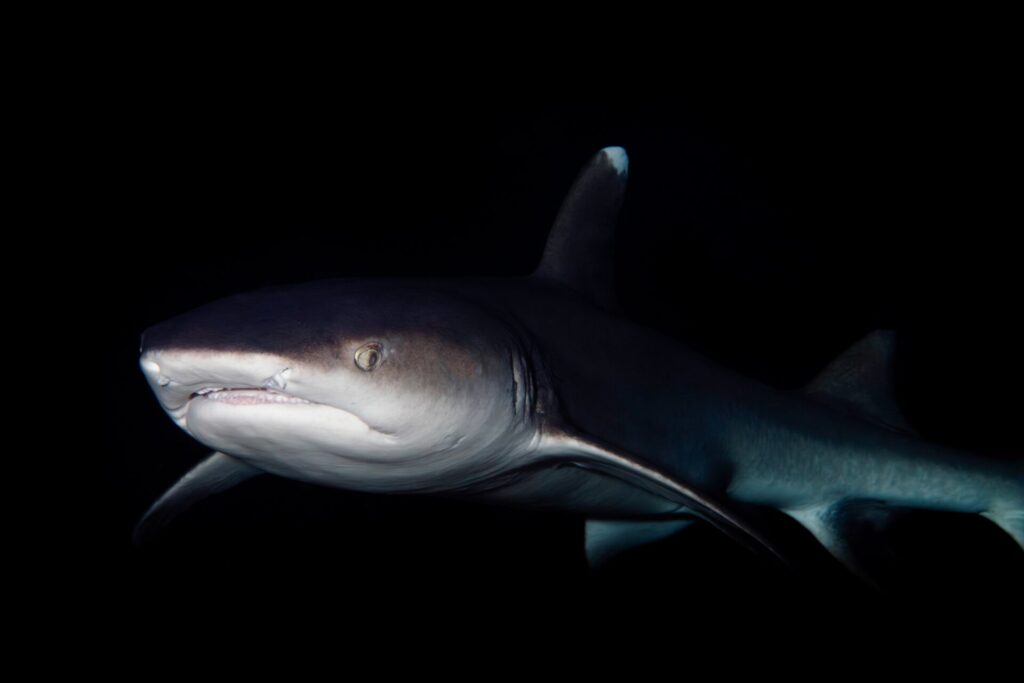
What I had not expected on a night dive was a brief but wonderful encounter with a whitetip reef shark. Normally shy, this particular fish, hunting in the dark, swam over to me and briefly checked out my camera before speeding away.
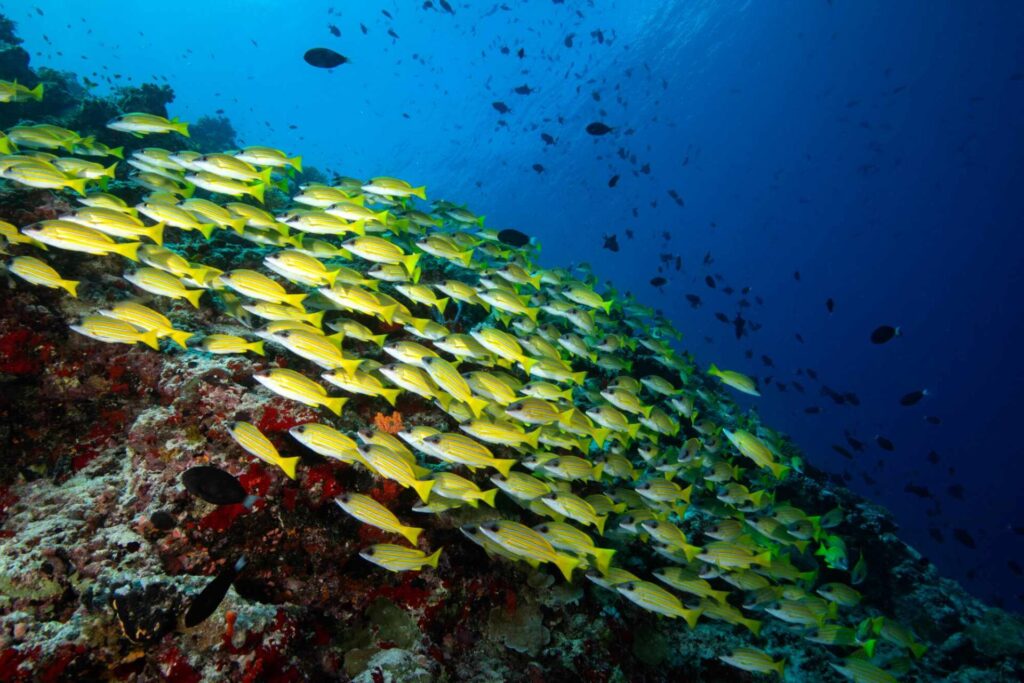
Diving the house reef in the daytime is also a pleasure and in the strong tropical light and superb visibility I spent several happy dives amid the shoals of blue-line snapper as they parted and reformed around me, not entirely trusting this ungainly interloper.
Colours of the Maldives
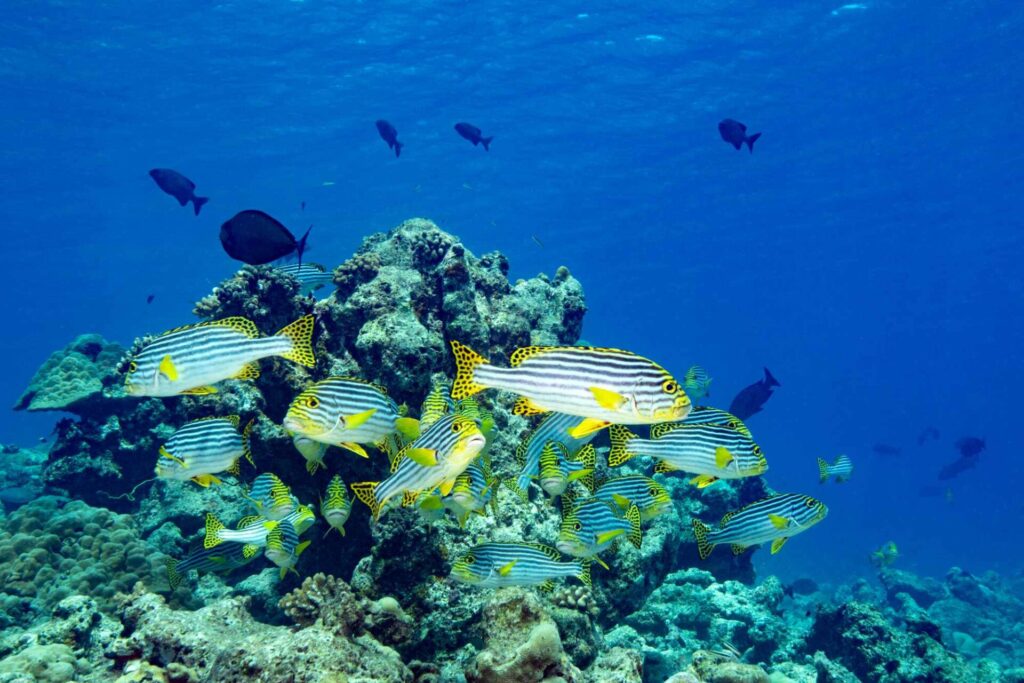
Snapper are often deeper-dwelling, so a shallow encounter is very enjoyable because they can number in the thousands. They and the oriental sweetlips are quintessential Indian Ocean fish, their bright yellow colours against the blue as powerful a combination as the turquoise ocean against the white coral sand is from the surface.
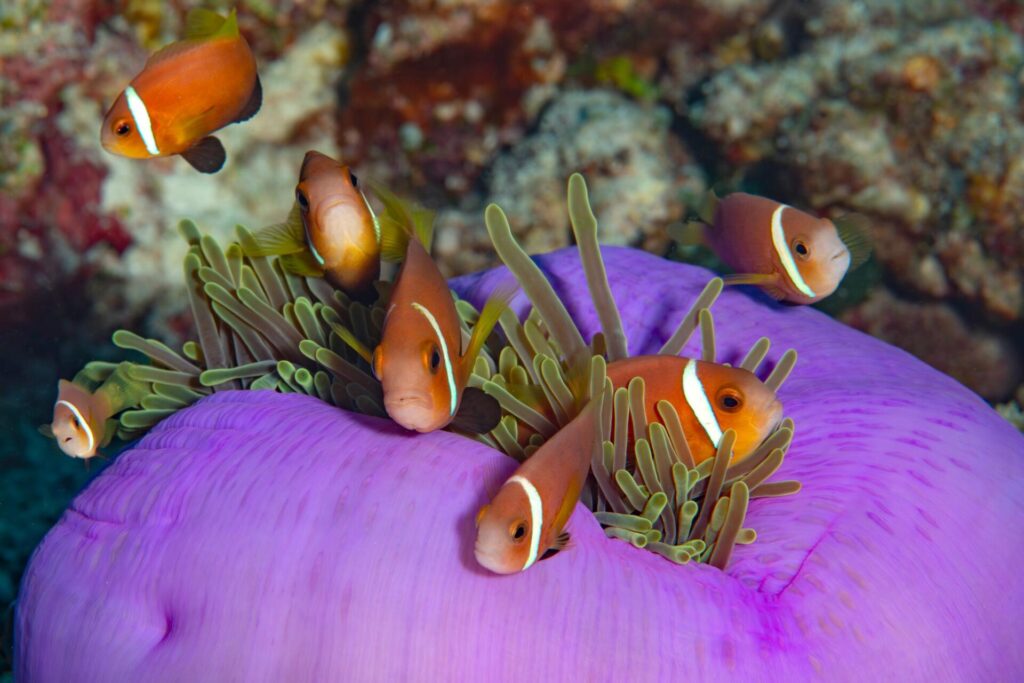
Over and above the friendliness of the staff, the excellent food, the wonderful spa and even the fruit bats that fly between islands looking for a good feed, I think it is colour that the Maldives has in abundance.
The colours of the ocean, the sand, the green of the trees against the sky are all exceptional, but get below the water’s surface and explore the reefs. Colour is everywhere.
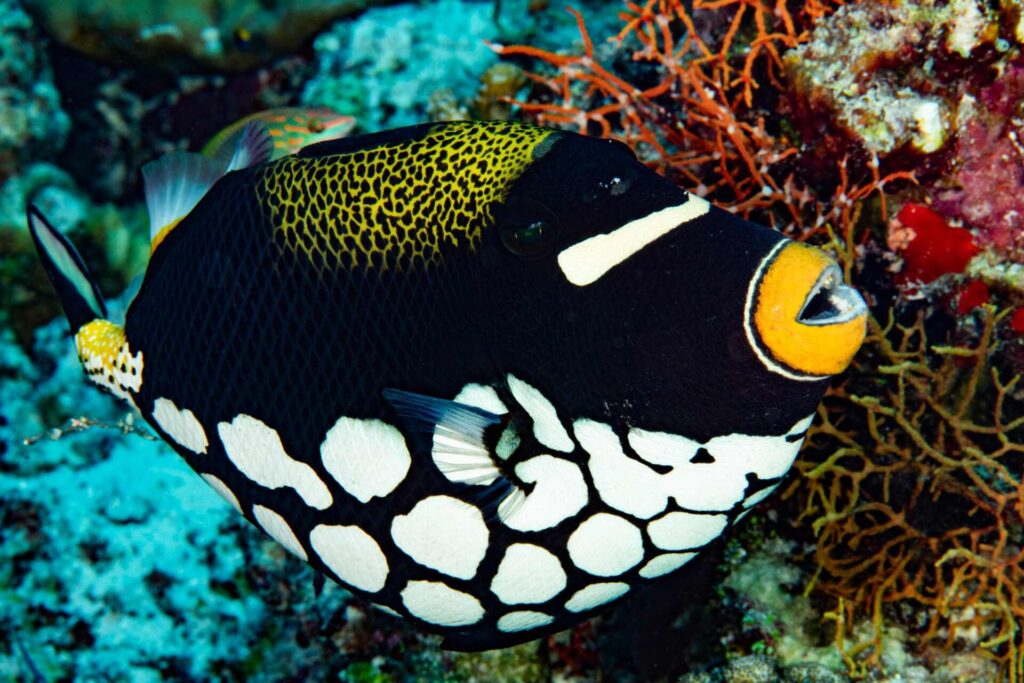
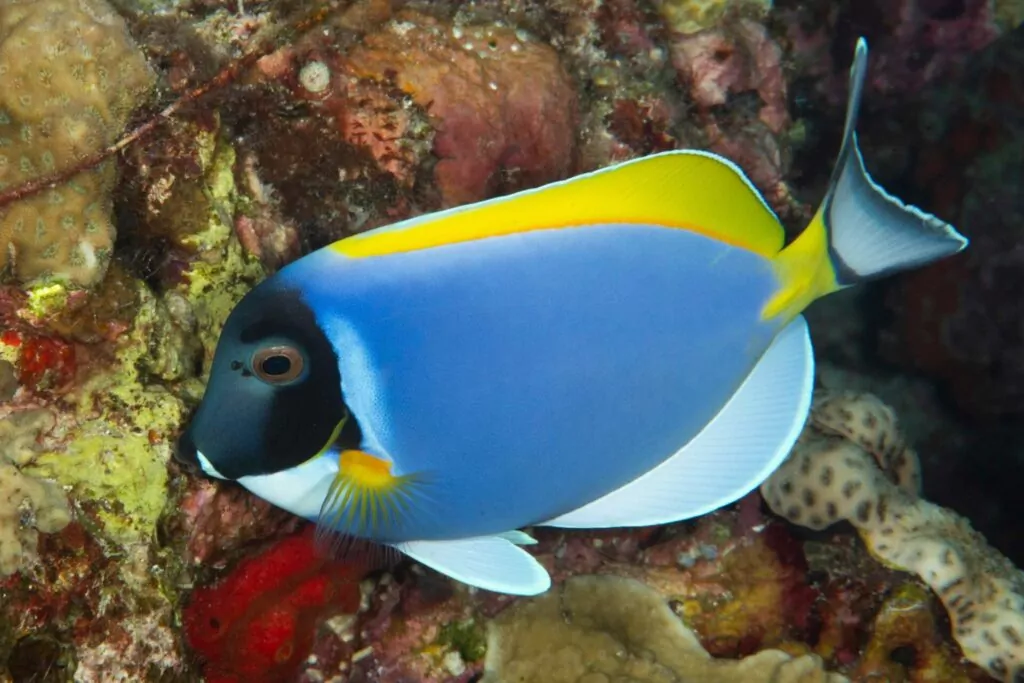
From the yellows and silvers of the fish to the reds of sponges and pinks of corals, amid that deep ocean blue – colour is everywhere.
Almost two decades ago, I told a chap in my dive-club that I was going to the Maldives. He, being a hardened wreck aficionado, dismissed it as “just playing with fish”.
The thing is, he was right, it is playing with fish. Thousands of them, of every size, colour and shape, with glorious topside tropical luxury. If you’ve not been to the Maldives, do so. It’s fabulous!

FACTFILE
GETTING THERE: Richard flew with Emirates from Newcastle to Male via Dubai. Complimentary speedboat transfers to Helengeli take around 50 minutes.
ACCOMMODATION: OBLU NATURE Helengeli by SENTIDO (Maldives All-Inclusive Resorts).
DIVING: TGI Maldives. Single dives start at US $114 (£85). Kit hire is available, as are 15-litre cylinders and nitrox. Jet-skis, kayaks and other watersports activities are also available.
ELECTRICITY: UK-style plugs are used throughout.
CURRENCY: Small denomination notes in Maldivian rufiyaa or US dollars might be useful, though most visitors use card payments for all purchases.
PRICES: All guests stay on the OBLU Island Plan, which includes accommodation, amenities, dining and unlimited beverages, activities and excursions. Richard stayed in a Sunrise Water Villa with pool, with prices currently starting from $630 (£470) per night. Expect to pay from $525 (£390) for a Deluxe Beach Villa to $1,335 (£1,000) for a Beach Suite with pool (all two sharing).
Also by Richard Aspinall on Divernet: EMBRACING THE NIGHT DIVE: ADVENTURES IN THE RED SEA, LIVEABOARDS DIVING: A FIRST-TIMER’S GUIDE TO SUCCESS, LUXURY AND ADVENTURE IN EL GOUNA: A UNIQUE DIVE DESTINATION, NUDI COLLECTOR