
Underwater photographer Mike Bartick waxes lyrical about the diving opportunities off the coast of California, which can be highly rewarding and, above all, adventurous
Photographs by Mike Bartick
By shore or by boat, California diving offers a mix of extremes. California is known for its mild weather year-round, with hot summer nights that can stretch well into winter while the rest of the nation plunges into freezing temps and snow. Yet in a strange twist, while topside temps peak, the water remains cool for California diving adventures.
Diving in California should be on every diver’s roster of locations to visit. There are few things in life that can compare to gliding through a kelp forest, getting buzzed by sea lions or being stalked by friendly giant black sea bass.
On a wider overview, California is the third largest state in the US, which makes it feel like its own country. The 800-mile coastline stretches from the US/Mexico border all the way to Oregon, with much of it accessible to divers.
The plankton-rich waters attract big animals too, and much of California is a migratory corridor for cetaceans like the majestic blue, humpback and grey whales, an occasional orca, super-pods of bottlenose dolphins and even Risso dolphins.
Of course, the macro life also has its bragging points and, although the bio-density might not be as prolific as the Philippines or Indonesia, there is certainly enough to keep a diver busy exploring for a lifetime.
California is certainly a world-class dive destination, though the cool turbid water, surge, waves and swell just don’t appeal to the masses. In fact, the prevailing conditions don’t even appeal to most of the divers that learn how to dive in California.
For those of us that are enthusiastic enough – or who are just dumb enough not to notice – diving in California can be highly rewarding, photogenic and, above all, adventurous.
Did you know?
The Pacific Ocean touches all 1,000 miles of the Californian shoreline and is the deepest ocean, reaching over 6 1/2 miles deep. It extends from the Arctic in the north to the Southern Ocean in the south, bounded by Asia and Australia in the west, and the Americas in the east.
Southern California Diving Hotspots
For the most part, the community of divers throughout the San Diego area is strong in nearly every location or beach city along the meandering coastline, generally anchored around dive shops.
Tank fills are easy to obtain, dive boats are easy to book and finding a local dive buddy is usually an easy task.
San Diego’s La Jolla shores, Point Loma and Wreck Alley all attract divers from every skillset and are well worth spending the time to explore.
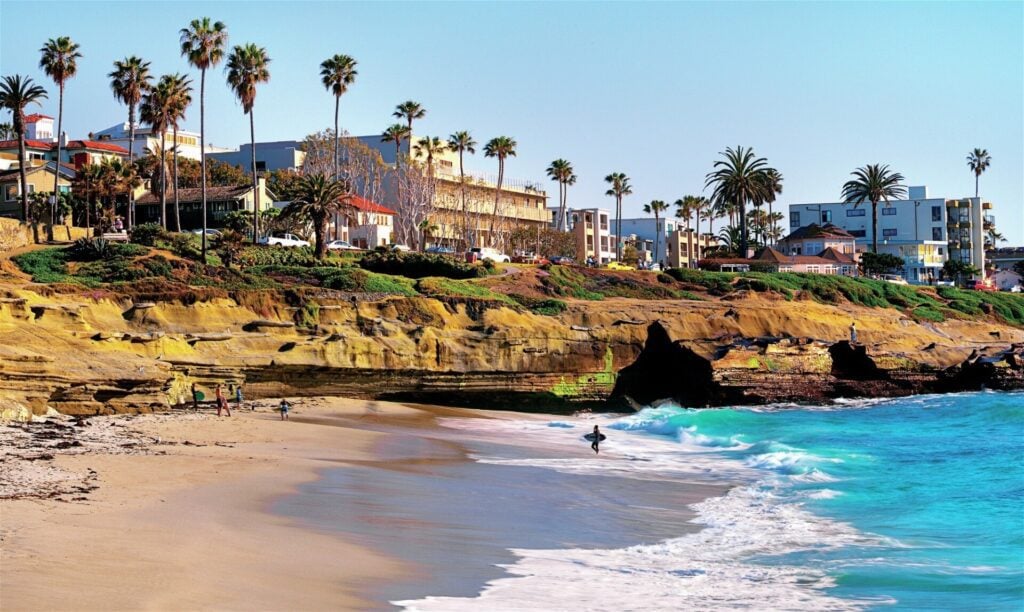
La Jolla is a local favourite for shore diving, with easy access, and is known for great macro while offshore, the Coronado Islands offer a different experience.
For the most part, the community of divers throughout the San Diego area is strong in nearly every location or beach city along the meandering coastline, generally anchored around dive shops.
Tank fills are easy to obtain, dive boats are easy to book and finding a local dive buddy is usually an easy task. San Diego’s La Jolla shores, Point Loma and Wreck Alley all attract divers from every skillset and are well worth spending the time to explore.
La Jolla is a local favourite for shore diving, with easy access, and is known for great macro while offshore, the Coronado Islands offer a different experience.
Did you know?
Diving in California can be enjoyed all year with some obvious considerations that the winter months (December-February) will be cooler than the summer months (June-August).
Unique Experiences: Offshore Platforms & HMCS Yukon
In Laguna Beach, Shaw’s Cove is synonymous for dive training and macro shooters with somewhat easy access to shore diving.
Shaw’s has a great dive shop right at the top of the street that offers dive training, rentals and tank fills in addition to local dive reports. Other hot spots for shore entry include Newport Pier and Vet’s Park.
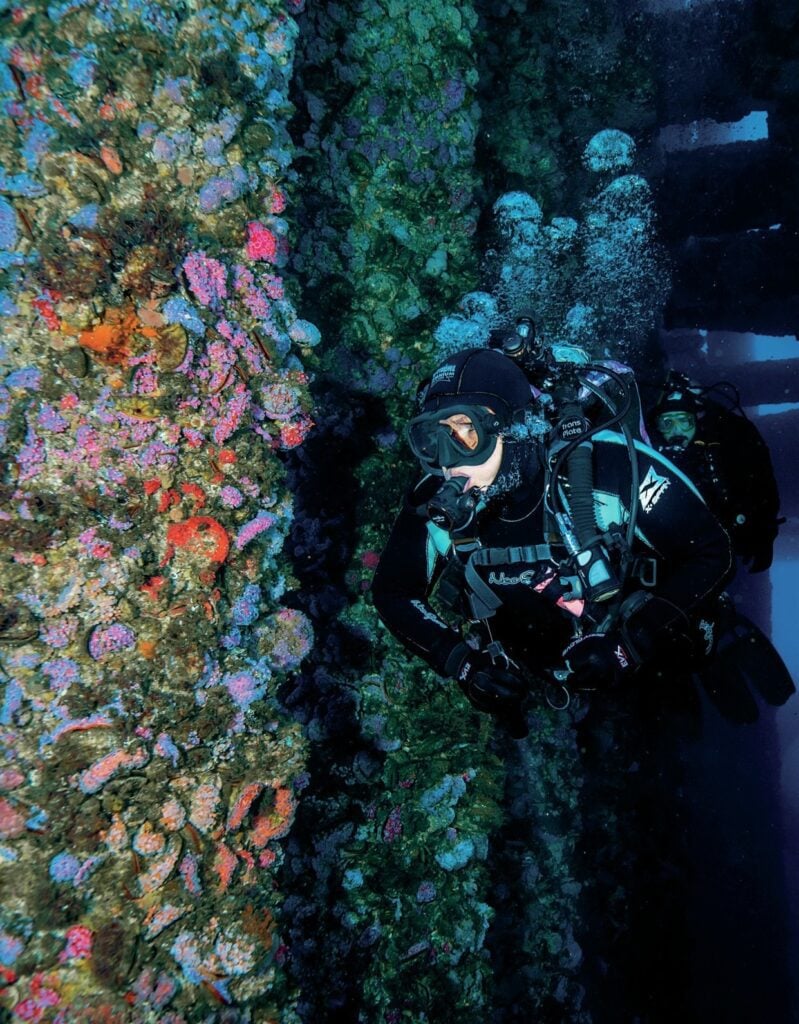
For a truly distinctive experience, the offshore oil platforms form a unique marine habitat and are one of the few places where divers can actually dive under oil platforms.
Accessible only by boat, these massive structures are basically man-made reef systems that have both macro and wide-angle options.
HMCS Yukon
The HMCS Yukon is a sunken Canadian destroyer and is one of San Diego’s more-popular dives. It was sunk intentionally in 2000, and lies about two miles off the coastline of San Diego. Almost all of the ship is within easy reach of the weekend diver, and she lies in about 30m of water.
There are three platforms that are dive-able in SoCal -Elly and Emma, which are connected, and Eureka. They bottom out at approximately 220m-300m and usually have schooling fish and baitballs under the main platforms.
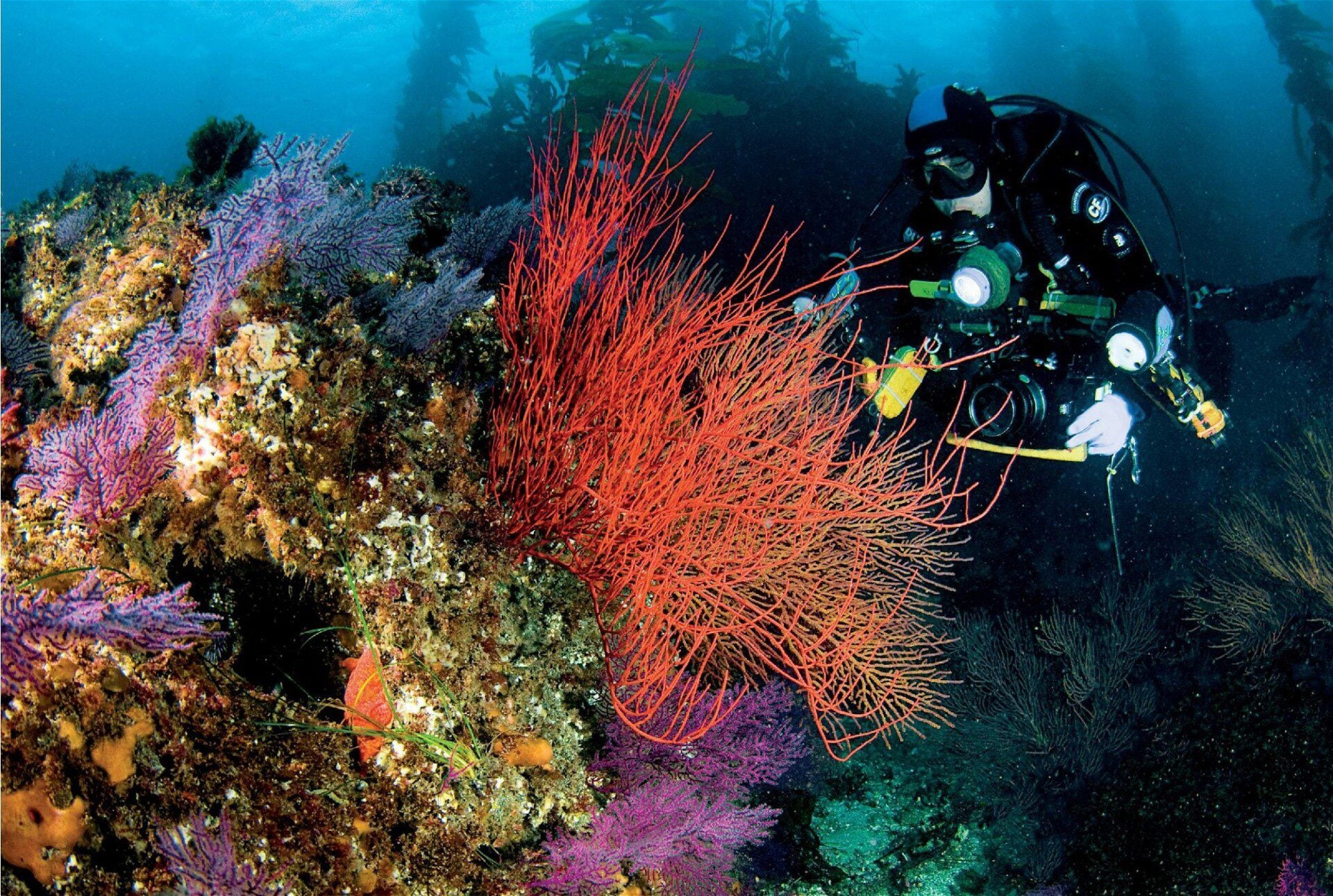
The beams and pillars are encrusted with colonial corynactis, hydroids and anything else that has found its way to this open ocean oasis, including the state fish, a bright-orange damsel called the Garibaldi.
Channel Islands Adventures
There are seven Channel Islands in Southern California -San Miguel, Santa Rosa, Santa Cruz and Anacapa to the west, and Santa Catalina, San Clemente and Santa Barbara further south. All are rugged and rocky and have their own sense of personality and marine life.
Only Catalina is inhabited year-round, while some of the other islands are used for camping, day hikes or military exercises.
San Miguel is a haunting, windblown and very exposed tiny island at the western tip of the archipelago the protrudes outward from the ‘California Bite’.
Quite often, San Miguel is a destination for overnight or weekend LOB trips that fail to reach San Mig’ due to weather, which only adds to the mystique of actually diving there.
Underwater, San Mig’ rewards its divers with pinnacles and channels, schools of rockfish, colourful reef systems and a chance to dive in an area that rarely sees divers.
Anacapa island is one of my absolute favourite places in California to dive. Much of the front of the island is protected by state ‘fish and game’ laws, which allows the marine life here to thrive without overfishing.
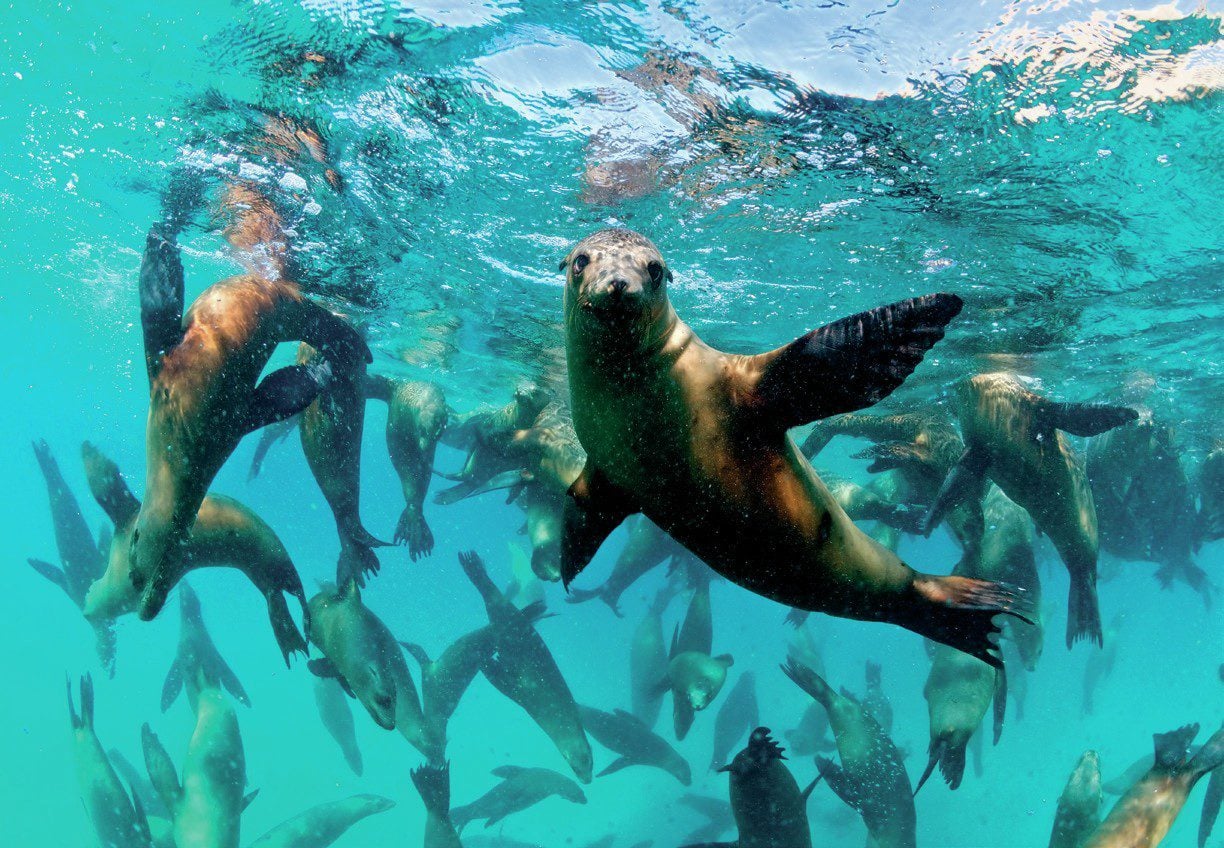
The island is home to sea lion rookeries. The sea lions have become very accustomed to divers and the boats that bring them there. The dive boat Spectre uses an underwater car alarm that signals the sea lions, which then rush the boat like a herd of puppies.
They love to play with divers, and this is one of the few places that I know of that offers this kind of experience.
In addition to playful sea lions, there are also mischievous harbour seals that love to tease divers with their aloof attitude.
They will tug on your fins, push on your head, even grab ahold of your tank or leg vying for your attention. But as soon as you turn around, they bolt away pretending it wasn’t them.
Waiting and pretending to ignore them seems to work the best to capturing photos of them. Take your time, get set up and wait for them to come to you for the best results.
Anacapa offers wonderful macro year-round as well, with a plethora of nudibranchs and other small critters to be found. Go slow, explore the seabed and rocky outcroppings and see what you can find.
Central California Diving: Monterey Bay & Beyond
I have to admit that even though I grew up diving in Southern California and cutting my teeth in the Channel Islands, Monterey has to be the most quintessential of all of California diving. Monterey Bay is in Central California only an hour south of San Francisco.
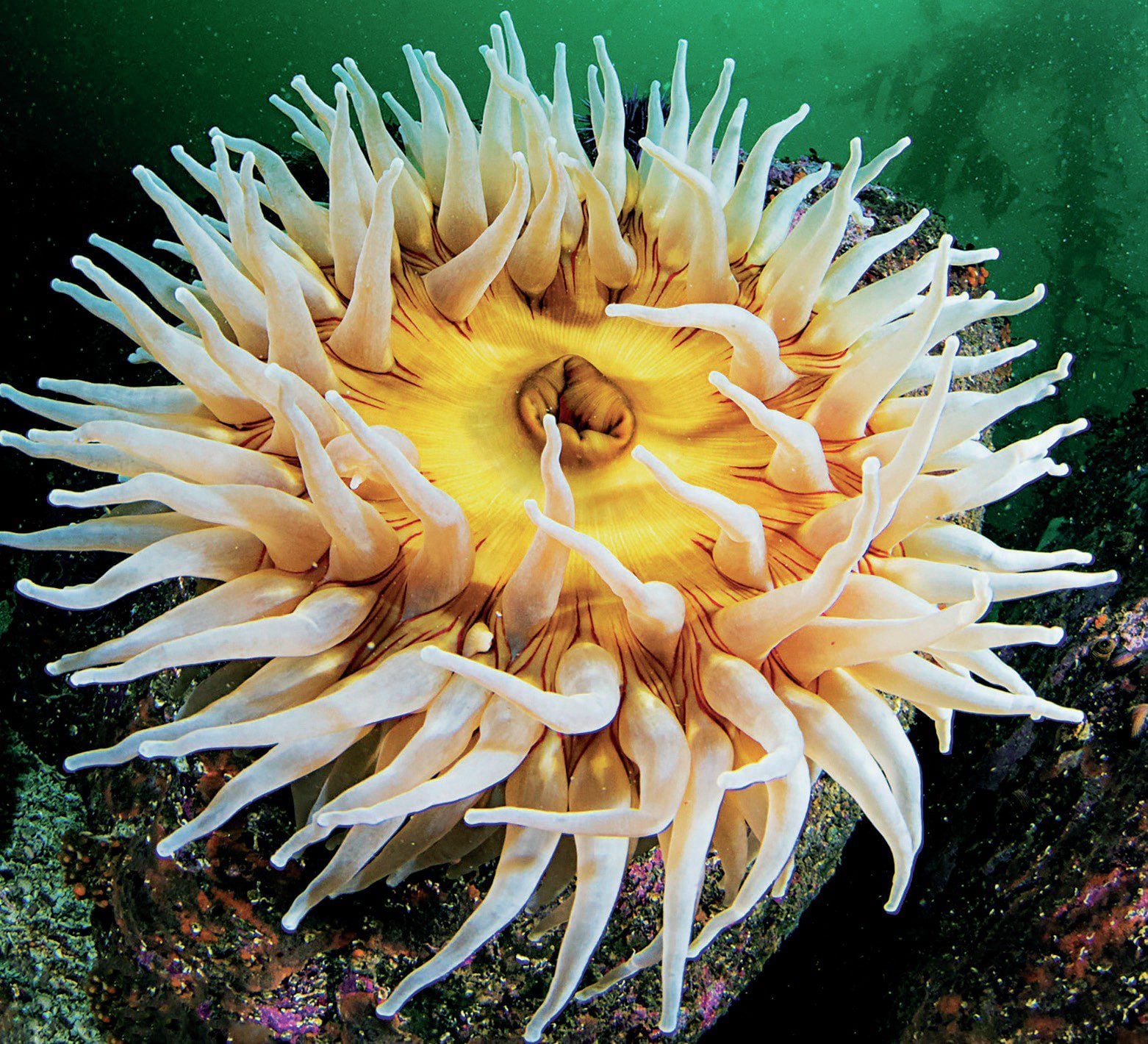
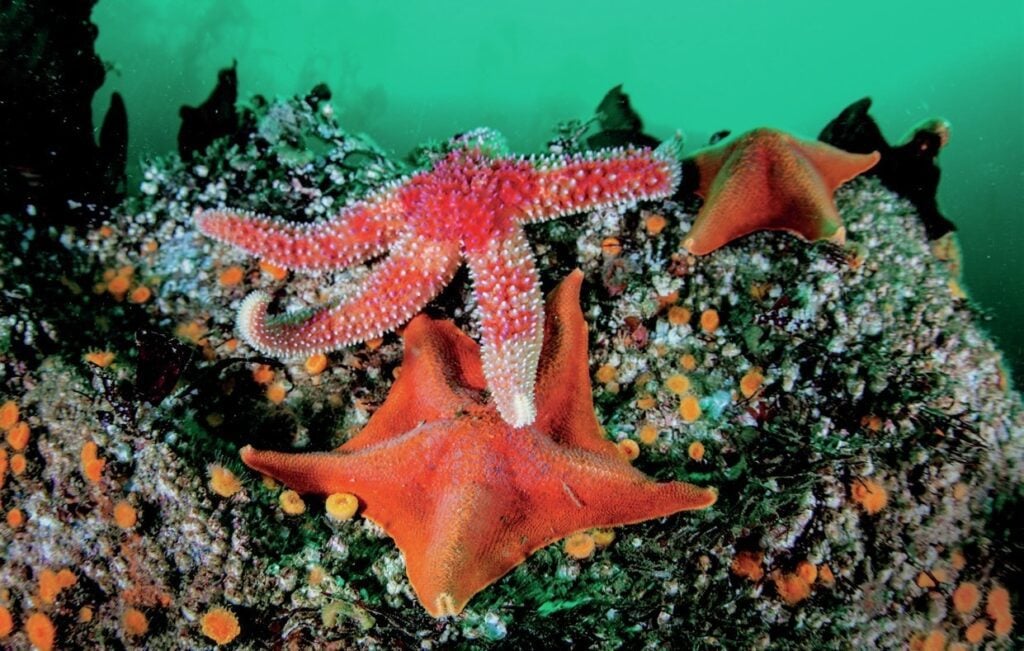
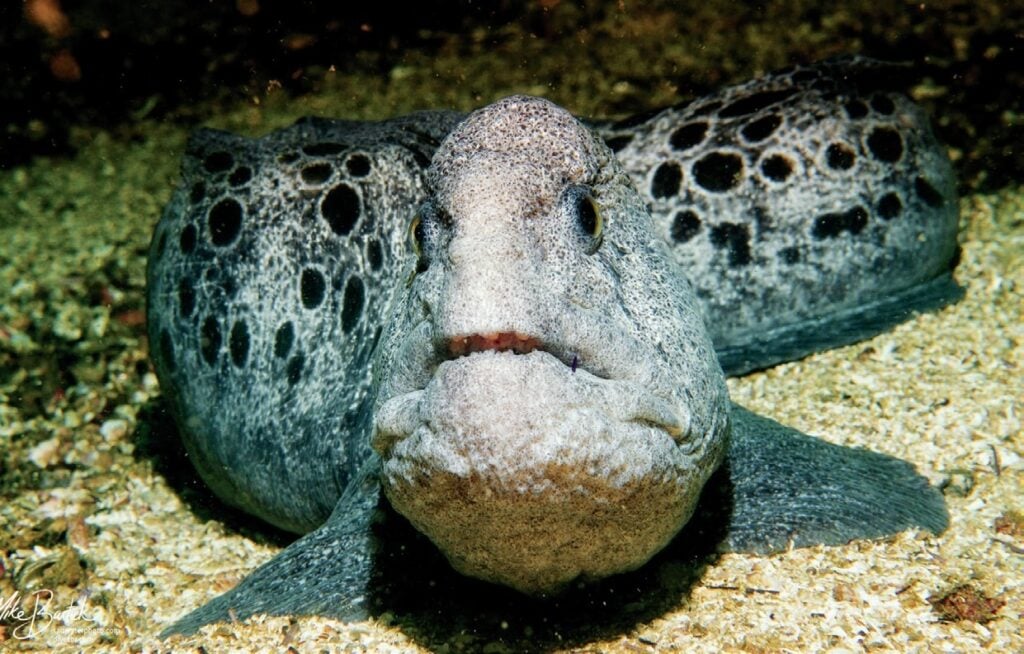
The nutrient-rich green water backdrops the kelp beds in an undersea setting that is unlike anywhere else. Massive smacks of sea nettles, wolf eels, lingcod, colourful anemones, supersized nudibranchs and blennies are typical on almost every dive site.
Despite the hea rty cold water conditions of Monterey, the dive community here is very active, with dive boats and local charters readily available.
Shore diving in Monterey is also a local favourite, with easiest of all being the breakwater. Other shore dive spots include Monastery Beach, Point Lobos and Lover’s Point. All of these are weather dependent, of course, and best dived with a local.
Conclusion
California is a huge state with several divergent microclimates. The best way to dive here is probably a ‘Drive and Dive’ style strategy that would also provide ample time to explore a little topside.
Because most boats run exclusively Thursday-Sunday, it also allows visitors the travel time to get from one place to the next, defrost, get tank fills and to get the full California experience.
Diving in California certainly isn’t for everyone but it should be on all diver’s radars.
With the proper planning and preparation, a visit to nearly any location mentioned will certainly create a memorable experience in addition to images that will certainly match the occasion. From shore or by boat, wrecks, reefs or rigs, California diving is like striking gold!
FAQs
What makes California diving unique?
California diving is unique for its kelp forests, abundant marine life, shipwrecks, and opportunities to dive with sea lions and whales.
When is the best time for California diving?
California diving can be done year-round, but water temperatures are coolest in winter (Dec–Feb) and warmest in summer (Jun–Aug).
Where are the best dive sites in Southern California?
La Jolla shores, Point Loma, Wreck Alley, Coronado Islands, and offshore oil platforms are top Southern California dive sites.
What can I see while diving in Monterey Bay?
Expect kelp forests, wolf eels, lingcod, sea nettles, colorful anemones, and supersized nudibranchs in Monterey Bay.
Can beginners enjoy California diving?
Yes, with shore diving options like Shaw’s Cove or Newport Pier, beginners can safely experience California diving while enjoying macro life.
This article was originally published in Scuba Diver ANZ #65
Subscribe today with promo code DIVE1 — enjoy 12 months for just £1!
