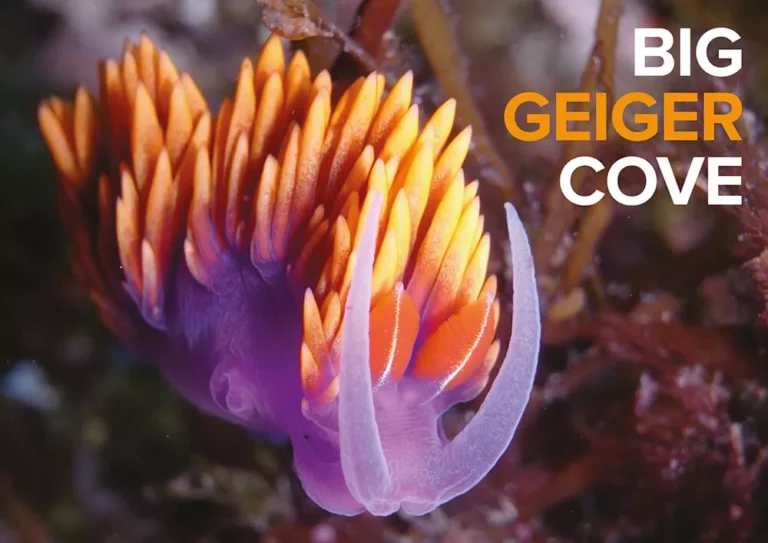
Catalina Island Dive Spotlight: Exploring Big Geiger Cove Story.
Photos by Dale and Kim Sheckler.
What diver does not like walls? California is not known for its wall diving but here and there we get some really grand ones – but they are usually high-octane, intermediate to advanced dives. How about a low-keyed wall dive with the added bonus of a great kelp-covered reef, giant sea bass, and huge bat rays? Interested? The reef off the west side of Big Geiger Cove, Catalina, is just what you want.
The Hidden Wall: A Rare California Drop-Off
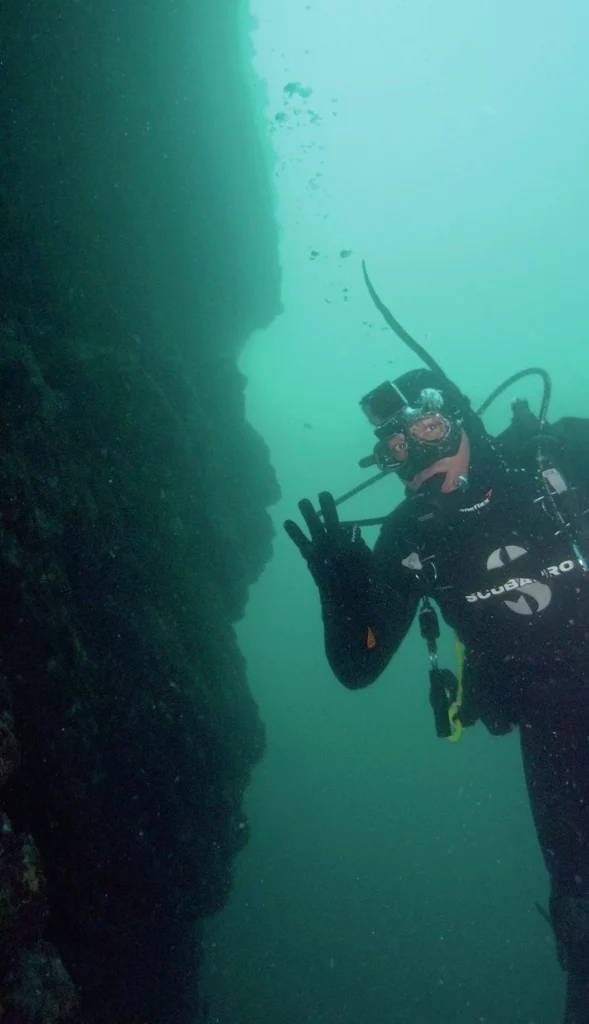
A rock and sand shelf extends off the west side of the cove out about 200 yards. This reef then peaks out at just 18ft, drops steeply to 30ft, and then vertically to over 70ft. At some points there are overhangs and deep crevices. It is not a large wall in length, but exciting just the same, both in physical drama and marine life.
Much of the wall is draped with giant blades of kelp at times almost completely concealing the rock face. Gently push them aside and you will find deep crevices chock full of critters.
Urchin spines are favorite hiding places for the tiny but very brightly colored blue-banded goby (aka Catalina goby). Although small, they are not hard to find due to their bright color and abundant numbers. Photographing them is a different matter. The trick to getting close enough to them to fill your frame is to snap your shot when they are close to or within their urchin spine shelter. They feel safer and it is easier to get a face shot. Get in real tight and you can get their sharp teeth in the photo.
A bit larger resident of these vertical cracks are lobster. There are plenty and some are good sized. At the bottom of the wall are some large boulders where, you guessed it, more lobster can be found. This dive site, however, lies within the invertebrate preserve. The taking of lobster is illegal.
The Kelp Plateau: A Sanctuary for Native Fish
Rounding the corner of the reef southward toward the cove is another section of wall, also with overhangs and steep tall faces. Further toward the cove, the bottom rises and the reef cuts inward and up to a plateau covered with kelp. This is fish city. The top of the reef is absolutely delightful with lush kelp, bright garibaldi, green opal-eyes, blacksmith, kelpfish, señoritas, loads of juvenile calico bass and an occasional barracuda. It is a great place to spend the last part of your dive or, because of its shallow depth, it is easy to spend your safety stop here.
But these are not the only places to explore here. Further to the west is a rather uninteresting bottom of gently sloping gravel with scattered boulders with isolated strands of kelp. This is giant sea bass territory. And in the sand and gravel, look for the colorful and fascinating mantis shrimp with its swivel eyes, the most sophisticated in the invertebrate world. But that’s not all.

Big Geiger Cove At-A-Glance
- Skill Level: All levels
- Location: Front side of Catalina Island, just east of Howland’s Landing. GPS N33°27.66’, W118°31.03’.
- Access: No restrictions on the point. Harbor Patrol may chase you away in the cove near the boats.
- Entry and Exit: Boat only.
- Depth Range: 10-70ft.
- Visibility: Good to excellent averaging 40 to 60 feet. 15 to 25 feet in the cove.
- Conditions: Currents moderate along wall, light or none in cove.
- Photography: Excellent on the wall and lots of macro material. For wide-angle good along the wall and fun with the big bat rays in the cove in the summer.
- Hunting: No invertebrates may be taken. Spear fishing poor.
- Restrictions: Private club ashore. No landing permitted.
- Cautions: Boat traffic.
If you have time, and the cove is not full of boats, make a second dive there. The water is shallow, 20ft or less, and the bottom is sand and mud covered with surf and eelgrass. The main event is the huge bat rays, most with a five-foot wingspan. Odds are you’ll see several. Visibility is not as good here but adequate. Head in real shallow, 10ft or so, and you’ll see smaller rays and perhaps a leopard shark.
This is a place where you’ll want to make more than one dive, so plan on it.
FAQs
Where is Big Geiger Cove located on Catalina Island?
Big Geiger Cove is located on the “front side” (leeward side) of Catalina Island, just east of Howland’s Landing. It is a boat-access-only site approximately 1.5 miles west of the Isthmus.
What is the maximum depth at Big Geiger Cove?
The dive site features a shallow shelf at 18ft that drops vertically into a wall reaching depths of over 70ft. The inner cove is much shallower, typically staying under 20ft.
Can I hunt for lobster at Big Geiger Cove?
No. While large lobsters are frequently seen in the crevices of the wall, Big Geiger Cove lies within an invertebrate preserve. The taking of lobster or any other invertebrates is strictly illegal.
What marine life can I see at Big Geiger Cove?
Common sightings include bright orange Garibaldi, giant sea bass, huge bat rays, blue-banded gobies (Catalina gobies), mantis shrimp, and schools of blacksmith and opal-eye.
Is Big Geiger Cove suitable for beginner divers?
Yes. With depths ranging from 10ft in the cove to 70ft on the wall, it accommodates all skill levels. The shallow kelp plateau is ideal for beginners or as a scenic safety stop for advanced divers.
This article was originally published in Scuba Diver Magazine
Subscribe today with promo code DIVE1 — enjoy 12 months for just £1!
