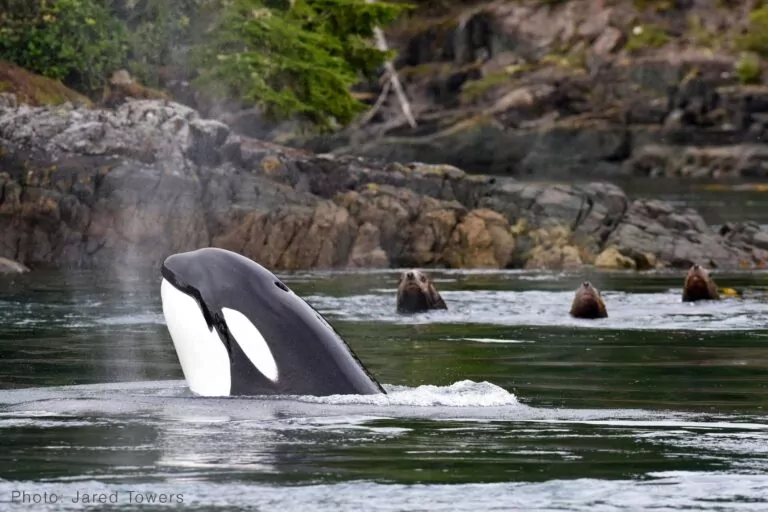
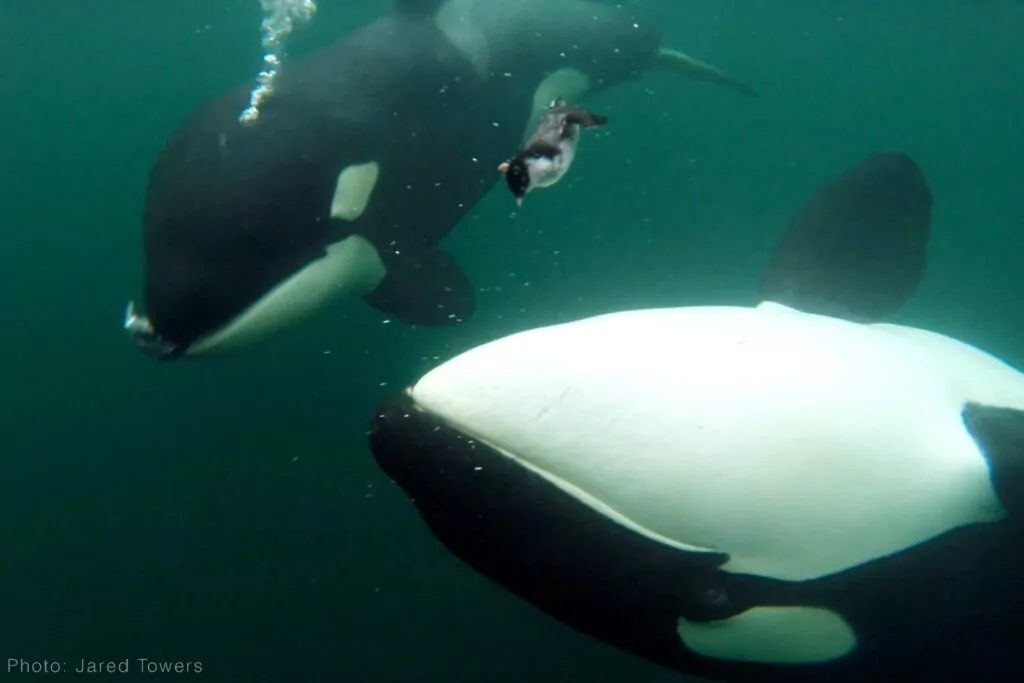
More than 30 cases of wild killer whales attempting to share their prey with human beings are the subject of a study published today (30 June). The incidents, spread over four oceans, have been documented over two decades and involved the orcas offering people a range of freshly acquired fish, mammals and invertebrates.
The orcas would approach people, drop the item and wait for a response, according to the scientists who have witnessed this behaviour for themselves – and spent time trying to explain it.
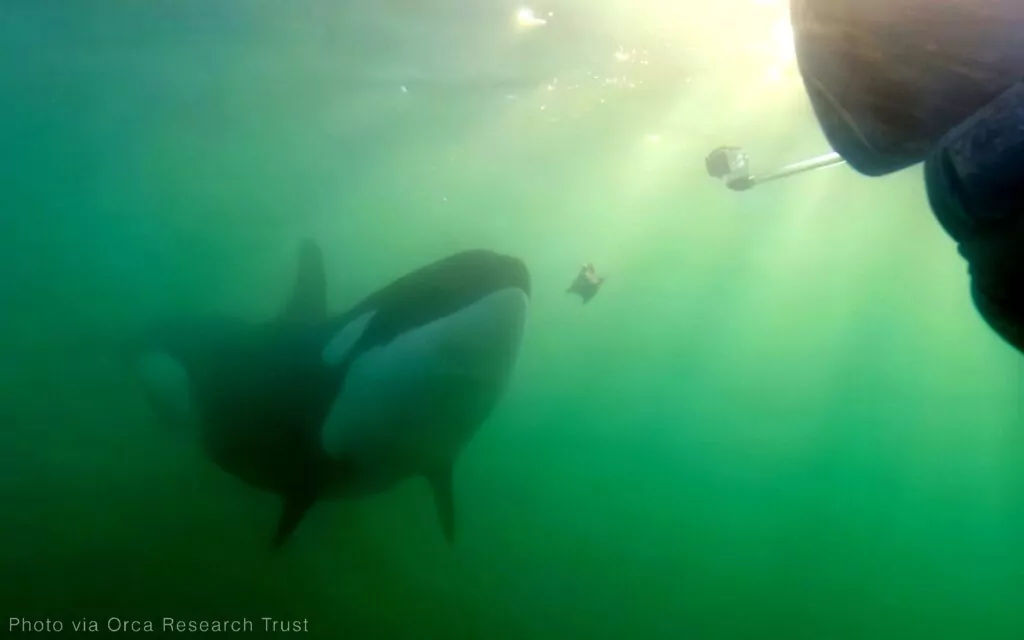
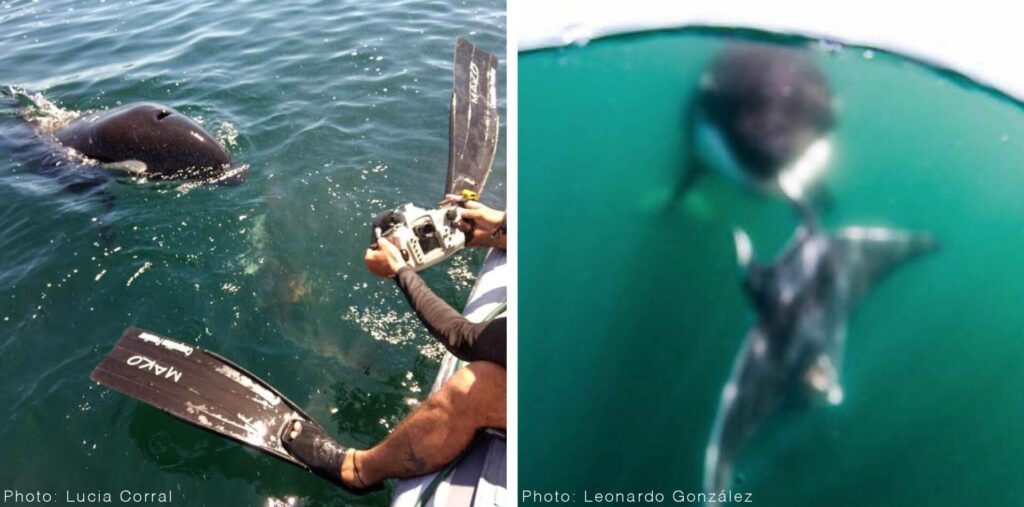
They have concluded that the orcas were taking opportunities to practice learned cultural behaviour, explore or play in an attempt to learn about, and potentially develop, relationships with people.
“Orca are very social and we frequently see them food-sharing,” said the study’s second author Dr Ingrid Visser. “To document and describe behaviour of them attempting to food-share with humans in various places around the globe is fascinating.”
“Orcas are apex predators that often eat other large mammals, but when it comes to people, they occasionally prefer to share, indicating their interest in building relationships outside their own species,” added third author Vanessa Prigollini.
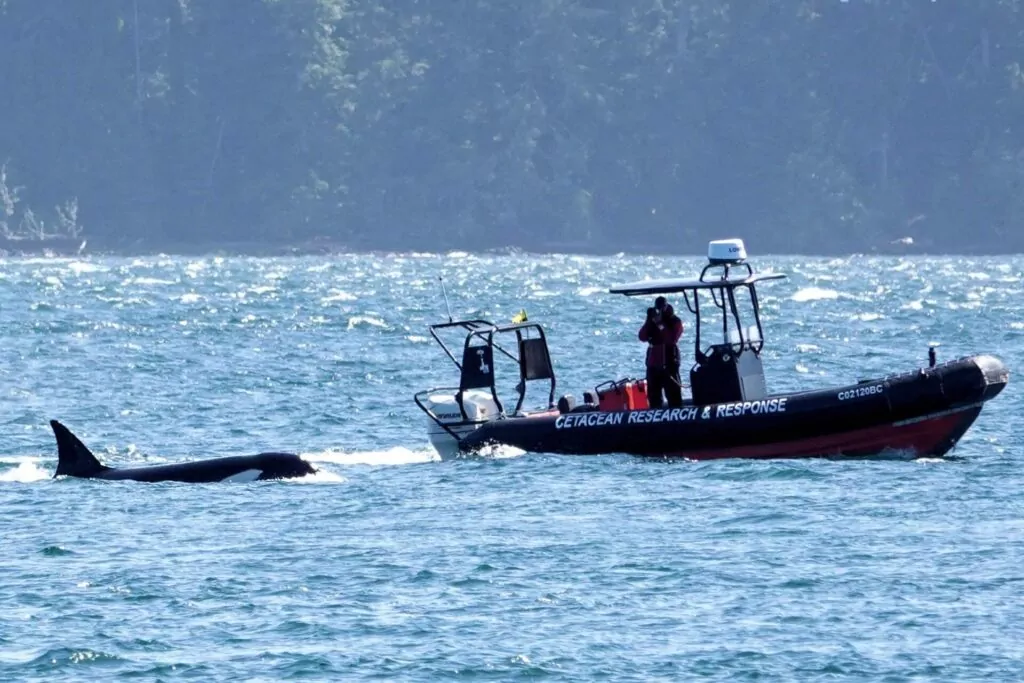
“There appears to be a prosocial element to these cases indicative of interspecific generalised reciprocity, which is extremely unusual to witness in any non-human animal and is suggestive of evolutionary convergence between orcas and people,” said lead author Jared Towers.
Theory of mind
Ecologist and author Dr Carl Safina, who was not involved in the study, commented: “Of the many and varied minds in the sea, likely the greatest are those of orcas. Casual stories of their almost surreal intelligence abound.
“But here these scientists have systematically gathered an impressive litany of instances where free-living orcas have shown that they possess ‘theory of mind’, meaning that their minds understand that humans have minds too. Psychologists have often insisted that ‘theory of mind’ belongs only to humans.
“Orcas would beg to differ. Orcas have repeatedly sought to be interactive with us, and they are curious about us. After living millions of years in the sea, to them we in our boats must seem like visiting aliens.
“And, indeed, we are strangers in a strange place we hardly know, about which we yet have almost everything to learn.” The research involved the organisations Bay Cetology, Orca Research Trust and Marea, and the study is published open access in the Journal of Comparative Psychology.
You scratch my back, I’ll scratch yours
Meanwhile, one population of orcas have been making headlines for their unexpected inclination to use kelp to massage one another – said to be the first evidence of tool-making to be recorded among marine mammals.
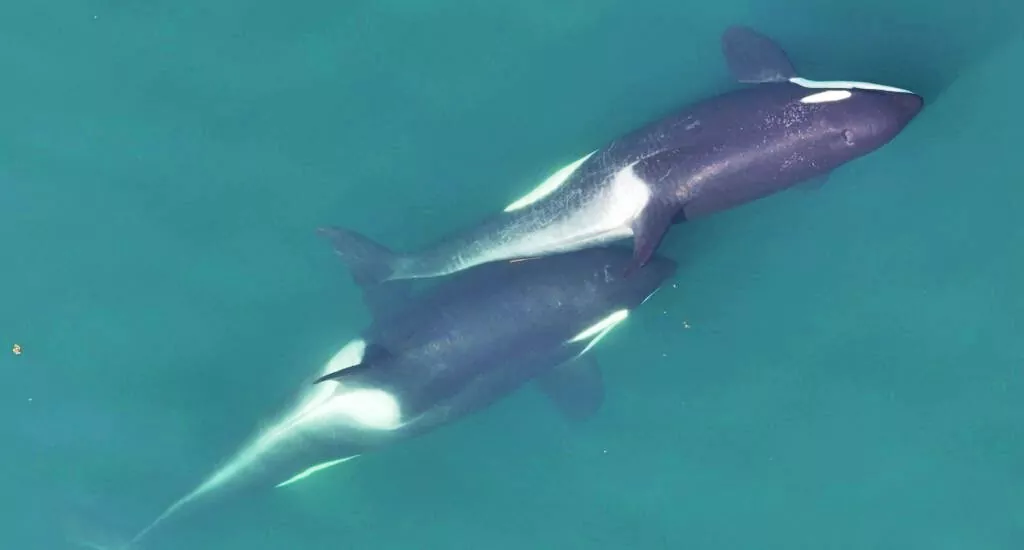
Drone footage of southern resident killer whales in the Salish Sea, in the inland waters of Washington state, revealed the behaviour. The orcas would bite off the end of a kelp stalk, position it between their body and that of a partner and roll it between themselves for extended periods.
Although the population had been formally studied for 50 years, and described as “the best-studied orcas on the planet”, the practice had not been spotted on past footage collected from aircraft because of its relatively poor definition.
Several whale species were known to indulge in “kelping”, moving kelp about with their heads, fins and bodies for play or to maintain healthy skin. However, in what has now been dubbed “allokelping” the kelp is selected, trimmed and manipulated by two orcas working in unison.
The study was led by the Centre for Whale Research in collaboration with the UK’s University of Exeter. “We were amazed when we first noticed this behaviour,” said CWR research director Dr Michael Weiss. “Bull kelp stalk is firm but flexible, like a filled garden hose, with a slippery outer surface. I suspect that these features make it an ideal grooming tool.
“What I find remarkable about this behaviour is just how widespread it is in the population. Males and females of all life stages and from all three southern resident pods were seen using kelp in this way. All evidence points to it being an important part of their social lives.”
Can’t stop allokelping
The team observed allokelping on eight of 12 days covered by the study, and believe it could be universal behaviour in this population. The orcas were most likely to choose as allokelp partners close maternal relatives, and those of similar age.
“In primates – including humans – touch moderates stress and helps to build relationships,” commented Prof Darren Croft of the University of Exeter and CWR executive director.
“We know killer whales often make contact with other members of their group – touching with their bodies and fins – but using kelp like this might enhance this experience.
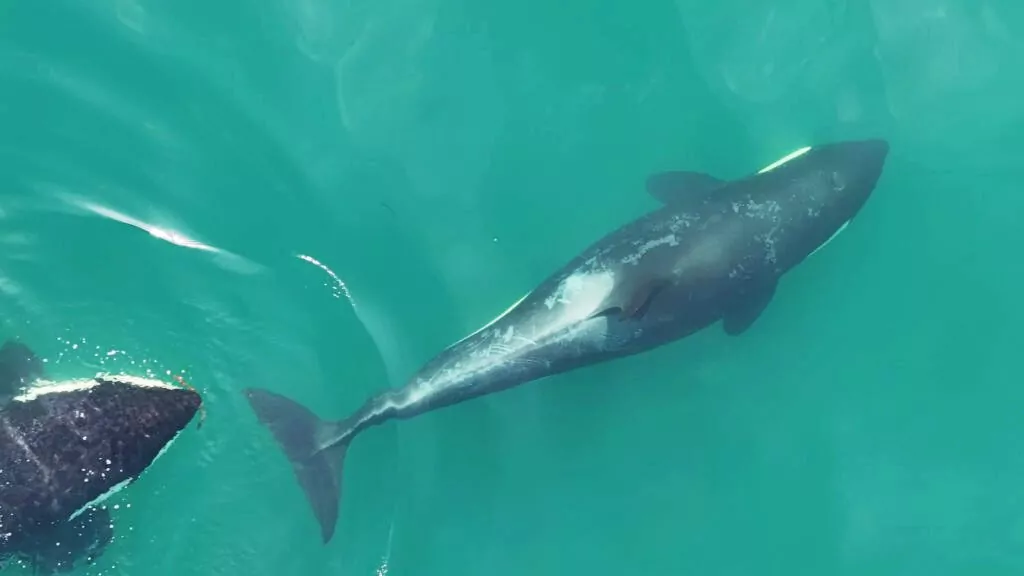
“It might also be important for skin health. Whales and dolphins have a variety of strategies to help them slough dead skin, and this may be yet another adaptation for this purpose.
“Brown algaes like bull kelp also have anti-bacterial and anti-inflammatory properties that may provide further benefits to the whales. We’re now working on more research to confirm these initial findings and investigate the social and skin-health benefits of this behaviour.”
Orcas from some populations have been observed rubbing their bodies on smooth stone beaches, possibly to remove dead skin and parasites, but the southern resident population is not among them.
Bleak future
At CWR’s last count in 2024 only 73 southern residents individuals remained, a critically low number. They face a “very bleak” future, says Weiss, aggravated by a low birth-rate.
Their main prey, Chinook salmon, are in decline because of overfishing, climate change and spawning-habitat destruction, and the kelp forest in which the orcas find their grooming tools is also in decline. Pollution and noise from human activities are further disruptors.
“Allokelping is yet another piece of evidence of the southern residents’ uniqueness,” says Weiss. “If we lose them, we lose so much more than 73 individual animals or a genetic lineage. We lose a complex society and a deep, unique set of cultural traditions.”
The study, to which Northeastern University in Boston also contributed, is published in Current Biology.
Also on Divernet: DNA PROVES IT: ORCAS KILL FOR WHITE SHARK LIVER, BEREAVED KILLER WHALE SURFACES WITH NEW CALF, ‘STUPID’ ORCA BODY-SLAMMER GETS OFF WITH FINE, LONE ORCA KILLED GREAT WHITE SHARK IN 2 MINUTES

Dinner is served.
Invited to dinner or dinner?