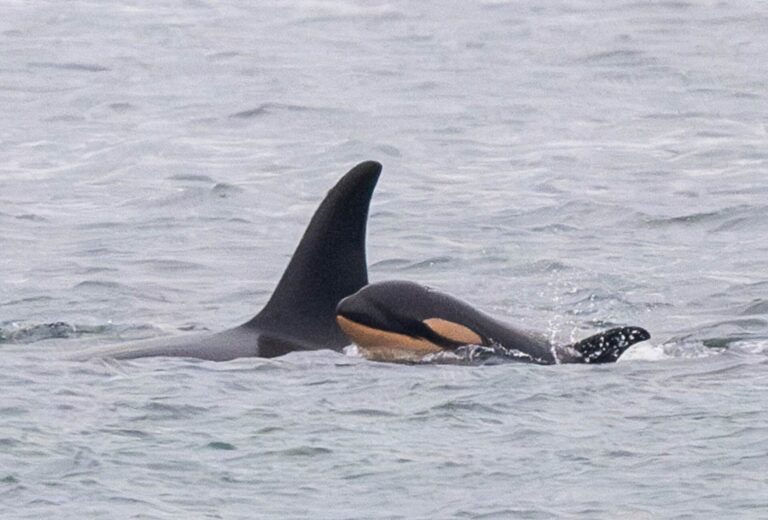
A killer whale that made headlines in 2018 when she continued to carry her dead calf over a distance of some 1,600km in an apparent 17-day mourning display has been spotted with a new calf off the USA’s Pacific coast.
Researchers from the Washington-based Centre for Whale Research (CWR) say that the orca, designated as J35 though informally known as Tahlequah, has given birth to a daughter but add that the behaviour of the pair has given the research community some cause for concern.
Also read: Orca calf death consolation – but not for J35
J35 and her calf – already designated J61, as the newest member of the J pod of Pacific North-west orcas – were first seen together in Puget Sound off Washington state on 20 December.
Three days later a team of scientists from NOAA Fisheries’ Pacific North-west science centre were able to carry out observations that confirmed the relationship between J35 and J61, and to photograph the calf’s underside to confirm her gender.
Also read: Orcas ask humans to lunch, share massages
“Early life is always dangerous for new calves, with a very high mortality rate in the first year,” points out the CWR. “J35 is an experienced mother, and we hope that she is able to keep J61 alive through these difficult early days.”
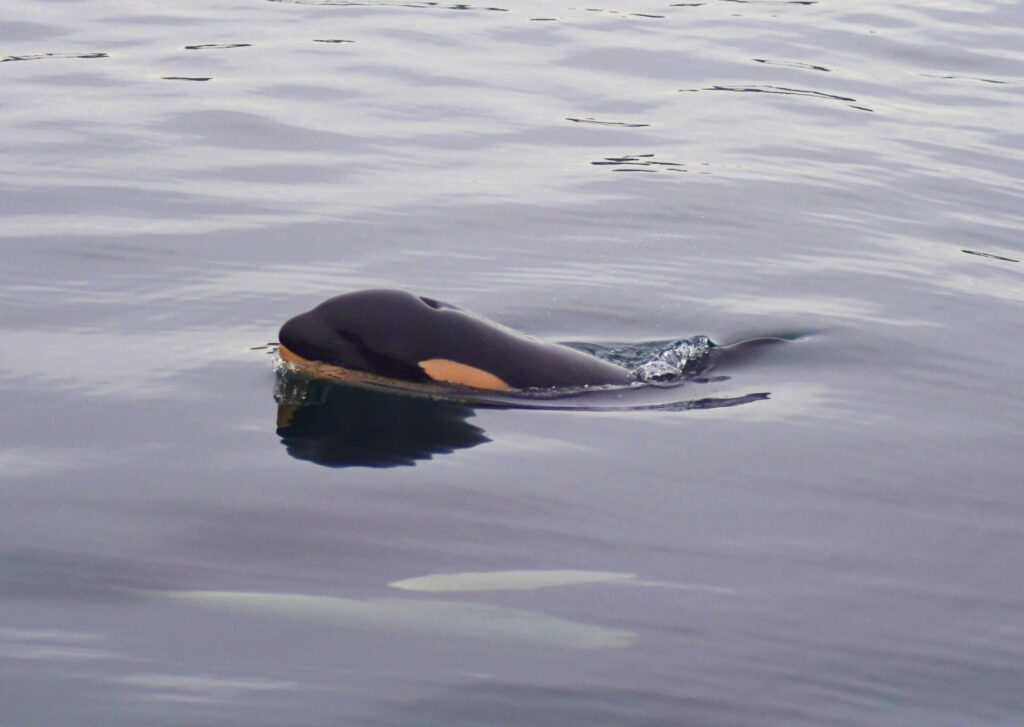
“It is difficult to tell the health of new-born orcas, as they appear to be lumpy and bumpy when first born,” pointed out Tamara Kelley, director of development for another Washington-based body, Orca Conservancy, “but over the next few weeks the calf should begin to fill out, and that is when researchers will have a clearer idea of the health status.”
‘Not looking lively’
According to NOAA Fisheries, which conducts photogrammetry and body measurements of the orca population, the calf was likely to have been born prematurely. It also believes that J35’s body condition had appeared to be subnormal when last checked in October.
“Ideally mothers need to be robust, with ample fat storage to help with the demands of lactation, which is a concern,” said Orca Conservancy.
Researchers had seen the calf remaining under water for periods of time, indicating nursing or attempts to nurse, and also being pushed around on J35’s head while “not looking lively”.
“The southern resident killer whale population needs ample access to its food supply, mainly salmon, to survive and thrive,” commented the CWR. “Every single birth counts and these whales need enough fish to be able to support themselves and their calves.
“We continue to advocate for salmon recovery through habitat restoration, removal of dams and rational management of fisheries in the Pacific North-west.”
Orca Conservancy underlined the point that “salmon stocks need to be recovered to levels that will help support population growth.”
Also on Divernet: Did orca kidnap pilot whale calf?, Orca smashes record – but at what cost?, Diver’s orca binge brings record fine, Orcas ‘like kids at a party’