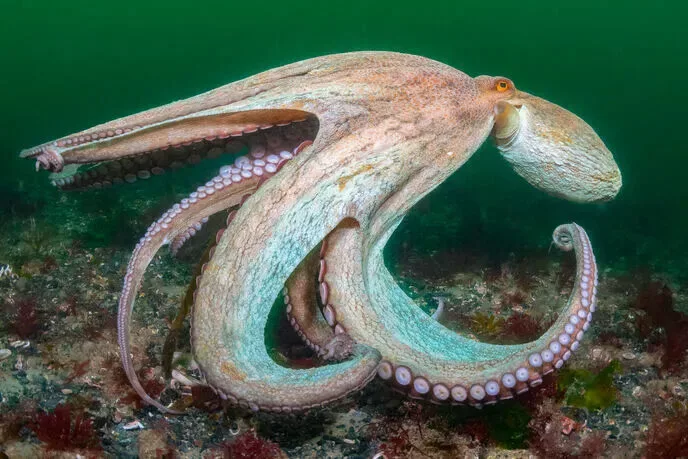
UK marine conservationists have been “flabbergasted” by the sheer numbers of octopuses recorded in 2025, according to The Wildlife Trusts.
The movement is made up of 47 independent charities, and its annual Marine Review highlights the work of more than 100 Living Seas marine ecologists supported by thousands of volunteers around the UK.
Cornwall Wildlife Trust declared 2025 “The Year of the Blooming Octopus”, following what it described as an unprecedented boost in numbers.
An octopus bloom is a rare, massive population surge triggered by mild winters and warm springs – the breeding season – that enable more larvae to survive. Blooms of the common or Mediterranean octopus (Octopus vulgaris) on the scale of 2025 had not occurred in Britain for 75 years.
‘Incredible’ numbers were reported along the South Coast from Penzance into South Devon, with Seasearch volunteers recording a 1500% increase on what in 2023 had been a “mini bloom”.
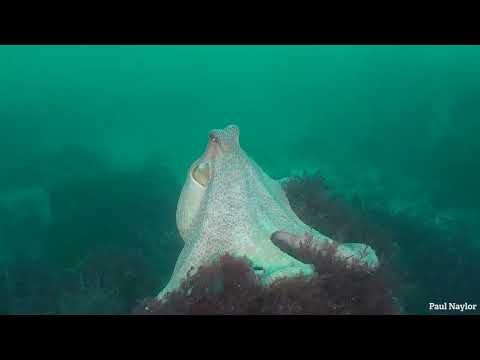
This summer the National Oceanography Centre reported that UK seas were rising faster than the global average, while the Met Office recorded a significant marine heatwave. The octopus population explosion was illustrated by divers filming individuals ‘walking’, cleaning themselves, mating and grabbing at their cameras.
With global temperatures predicted to continue at or near record levels over the next five years, leading to further ocean-warming and rising sea levels, octopus eggs appear set to continue to survive during the UK’s warmer winters.

One consequence of regular octopus blooms will be increased consumption by the cephalopods of lobsters, crabs and shellfish in British seas.
Drawn by warmer waters
“The year was bookended by environmental disasters – the North Sea tanker collision in March and in November the release of tonnes of bio-beads off the Sussex coast,” commented The Wildlife Trusts head of marine Ruth Williams.
“In 2025 we’ve recorded mussel beds forming off the Sussex coast in an area previously decimated by bottom trawling. Now the government needs to ban this horrific practice from all Marine Protected Areas.”
Invasive non-native marine species recorded in new parts of the UK included slipper limpets, Pacific oysters, pom pom and devil’s tongue weed and red ripple bryozoans.
It was also a busy year for nudibranch-spotting divers. The first UK sighting of a pink-orange “hair curler” nudibranch (Spurilla neapolitana) occurred at Prisk Cove in Cornwall, while other climate-change indicators were Discodoris rosi in Devon and the warty Doris (Doris verrucosa) off Dorset.

The first Capellinia fustifera sea slug was recorded in Yorkshire, though the species is usually associated with the South-west, while Aeolidiella alderi and the “solar-powered” nudibranchs Elysia viridis and Placida dentritica were spotted in Devon.


Fish changes

The variable blenny, a Mediterranean fish, was discovered to have ventured from the west country as far east as Sussex. With cod and haddock now found only in the north and smaller fish such as garfin, anchovy and sardine prevailing in the south-west, predators such as bluefin tuna were being increasingly attracted to southern waters.

Montagu’s crabs (Xantho hydrophilus) became the dominant crab species in south Devon and Cornwall, and unusual sightings included an angel shark in Cardigan Bay, Wales and a sunfish off Norfolk.


Meanwhile a record number of 563 grey seals were recorded at South Walney nature reserve near Barrow in Cumbria. Find out more about The Wildlife Trusts.