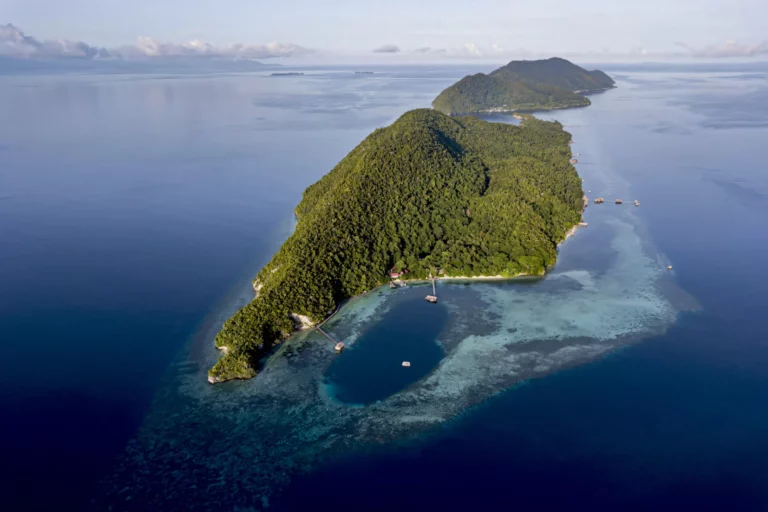
Papua Diving Resorts was the first dive operator in Raja Ampat, pioneering diving, sustainable tourism and conservation in the region.
From the very beginning, conservation and sustainability were at the heart of Papua Diving’s mission and vision. Max Ammer, founder of Papua Diving Resorts, first arrived in Raja Ampat in the 1980s to look for WWII-era wrecks. It was then and there that he fell in love with the region’s colorful biodiversity and generous community. Since then, he has been working to sustainably operate a dive resort, placing conservation and protection first.
Local Partnerships
When Max first arrived in Raja Ampat, he was met with a community that relied on shark-finning and fish-bombing for a living. Shark populations had declined, reefs were under pressure, and wildlife was increasingly targeted for trade. Together with local communities, Max worked to create sustainable livelihood opportunities that both supported families and helped safeguard the remarkable biodiversity of Raja Ampat.
Max helped create pathways for conservation and sustainable livelihoods rooted in the region’s deep traditional knowledge. Education of the need to protect the area was introduced; fish-bombers and shark-finners who already understood the winds and currents of Raja Ampat were trained as scuba divers and dive guides, sharing their underwater world with visitors and helping protect the reefs they call home.
Those who once hunted the birds of paradise became expert bird guides, introducing guests to these extraordinary and unique species while ensuring their protection.
Across the resorts, locals learnt skills in hospitality, guiding, and even boat and kayak building—knowledge that could support new employment and business opportunities within their communities.
Scientific Discoveries at the World’s Richest Reefs
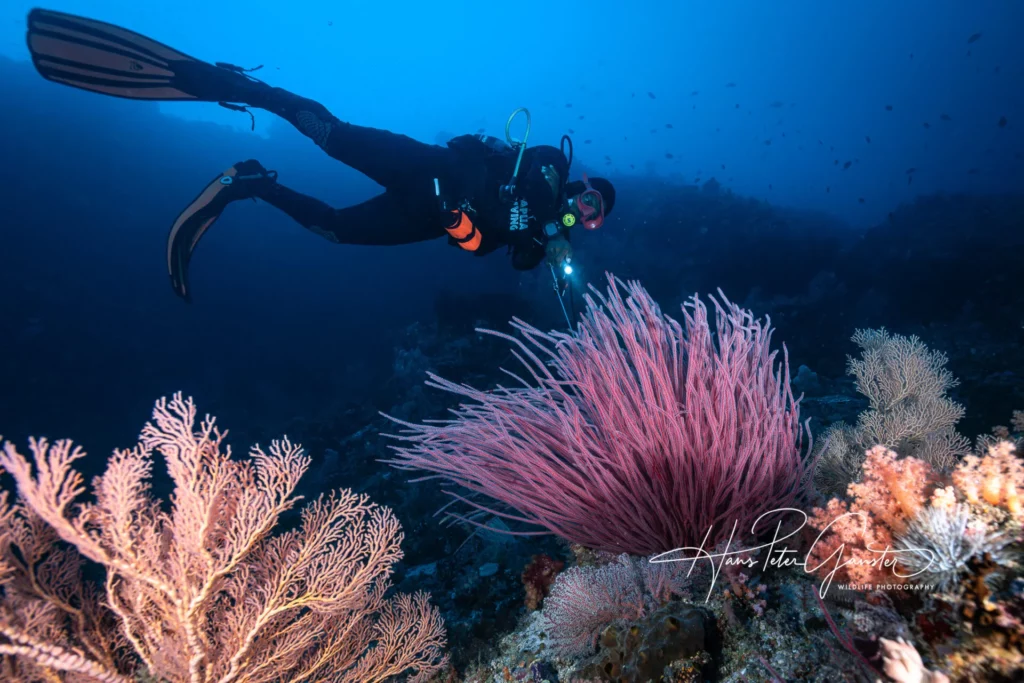
Max recognized early on that Raja Ampat was an extraordinary place, rich with life and color. He helped bring renowned scientists Gerald R. Allen and Mark V. Erdmann to the region to assess its marine diversity. During the 2002 Marine Rapid Assessment of the Raja Ampat Islands in Papua Province, Indonesia, Dr. Allen and his team identified Raja Ampat as the “center of coral biodiversity” and recorded a world-record fish count at Cape Kri—Papua Diving’s house reef.
The record was later surpassed in 2012, when Dr. Allen documented 374 fish species on a single dive at Cape Kri. The remarkable abundance of marine life reflected the health of Raja Ampat’s reefs and the growing conservation efforts in the region, with increasing fish diversity observed directly at the resort’s house reef.
As scientific expeditions continued to reveal the extraordinary diversity of Raja Ampat’s reefs—including the discovery of several new species, among them a remarkable walking shark—the findings began attracting global attention.
National Geographic soon reached out to Max for a feature on the region. Underwater photographer David Doubilet stayed at Papua Diving Resorts and explored Raja Ampat with him, later publishing a multi-page article that introduced the area’s reefs and marine life to a global audience and helped cement Raja Ampat’s reputation as one of the most biodiverse marine ecosystems on Earth.
A Conservation Success Story
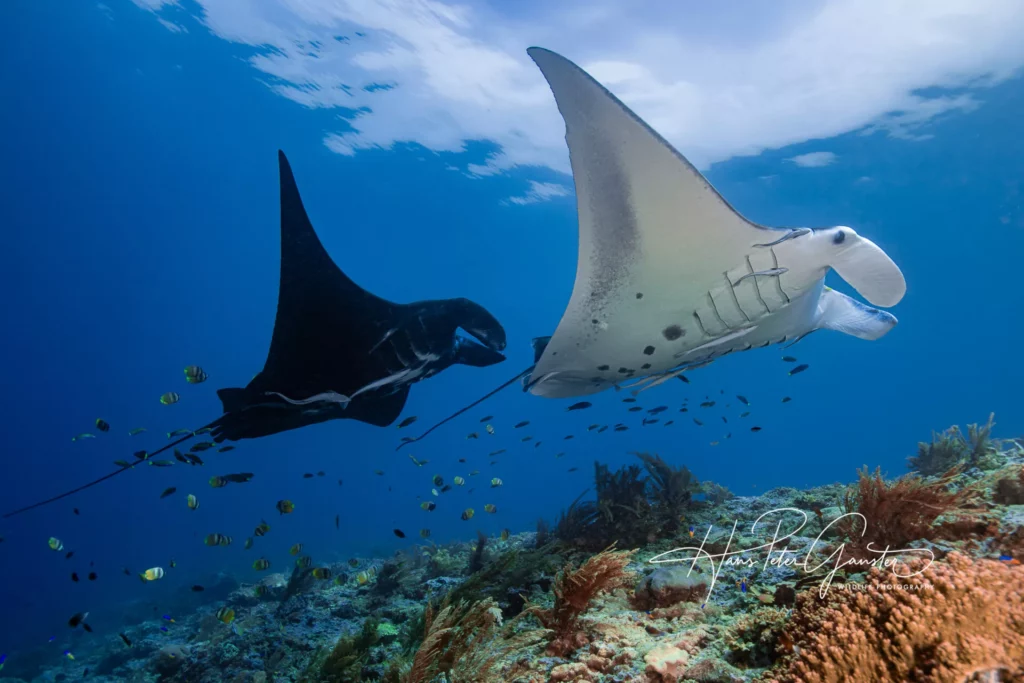
Raja Ampat continues to be a conservation success story, with shark populations increasing and manta ray numbers on the rise—one of the only places in the world where manta populations are known to be growing.
Raja Ampat is also now a Marine Protected Area (MPA), with no-take zones and guidelines, ensuring the protection and survival of the wildlife that call this region home. Raja Ampat’s MPA is also Southeast Asia’s first shark and ray sanctuary, with national level protection of manta rays. Researchers found that the resident population of manta rays in Dampier Strait had increased from 226 rays in 2009 to 317 in 2019—a 3.9% annual increase.
The Raja Ampat Research and Conservation Center
One thing remains unchanged at Papua Diving Resorts: Max Ammer and the team’s unwavering commitment to conservation and community. Max Ammer continues to play an active role—overseeing the design of more sustainable bungalows, the construction of fuel-efficient boats, and the long-term direction of conservation projects under Papua Diving’s foundation, the Raja Ampat Research and Conservation Center (RARCC).
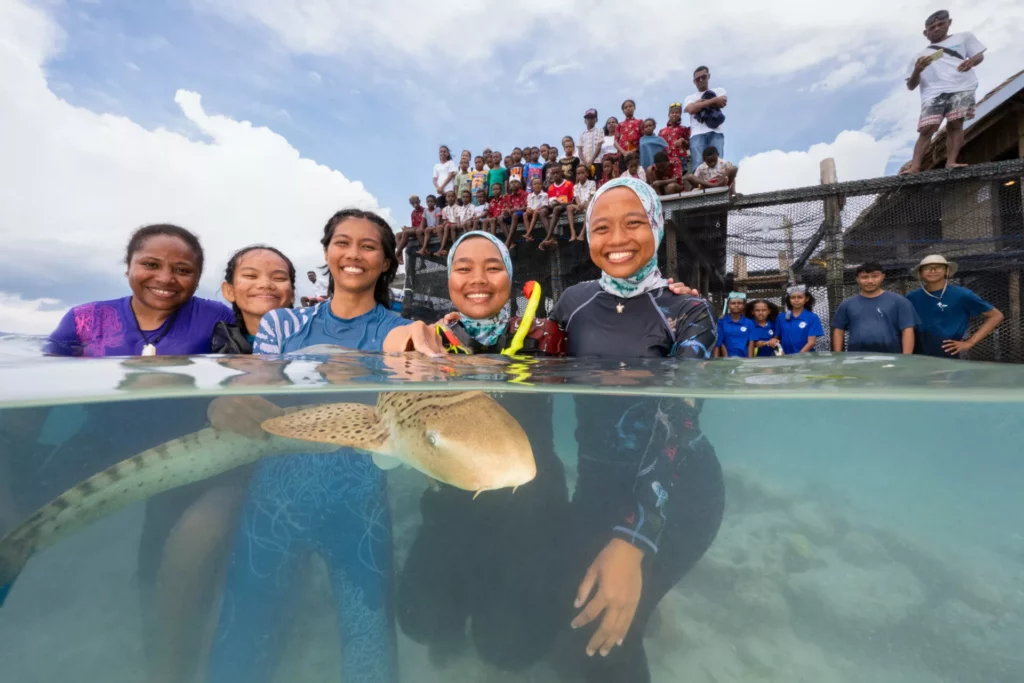
Some projects the RARCC are currently undertaking include providing education at a remote island school, reforesting damaged grasslands and rewilding leopard shark populations. As a founding parter with ReShark on the StAR Project since 2020, the RARCC houses a shark nursery with trained aquarists, where leopard shark eggs hatch, juveniles grow, and are later released into the wild. The project is a global effort, bringing together aquariums, NGOs, scientists, governments, and local communities to restore populations of the endangered Indo-Pacific leopard shark (Stegostoma tigrinum). As of 2026, the RARCC shark nursery has released 49 sharks back into the waters of Raja Ampat.
Papua Diving Resorts offers more than just access to Raja Ampat’s iconic dive sites like Cape Kri and Melissa’s Garden. It offers every guest an opportunity to participate in a larger purpose: conservation and protection.
Book your next stay in paradise with Papua Diving Resorts.
