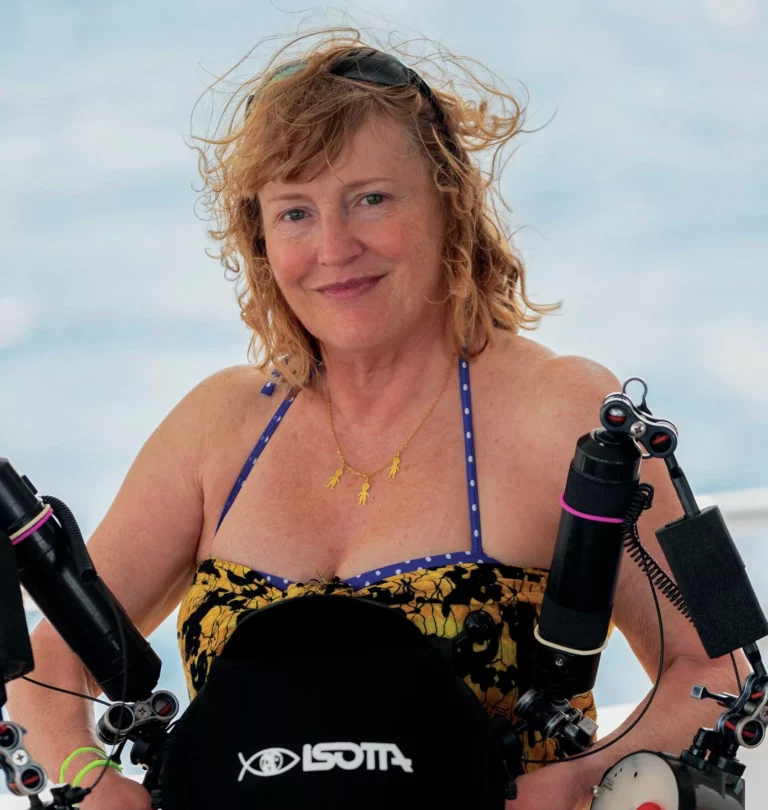
PT Hirschfield chats with the underwater photographer, Diana Fernie, about her dive life and the devastating algae blooms of South Australia.
Photographs by Diana Fernie or as credited
Learning to dive before she turned ten, Diana Fernie (aka Daisy) is an award-winning underwater photographer and former PADI Course Director, based in South Australia: ‘I became a PADI pro in 1999 and Course Director in 2003, so my rise was sharp. In that time, I worked as an instructor at Glenelg Scuba.’
‘I played hard at the diving game, trying to find my niche, including technical and cave diving. I realised that all the equipment was getting very heavy for five foot me and I wasn’t that interested.’
After 15 years as a Course Director, Diana relinquished her professional status to focus on underwater image making, frequently guiding photographers through the delights that South Australia had to offer.
From Nomad Childhood to PADI Course Director
Diana attributes the genesis of her love of diving and photography to her father, who’d been a Royal Navy submariner during World War Two. Due to his itinerant postwar engineering work, Diana’s family relocated from England to Indonesia, just weeks after she was born.
Her childhood was spent as an expat in South America, the Middle East, Russia, India and China, and Australia, following a decade on and off in Oman. It was in Oman that her father’s desire to explore the underwater world led to purchasing a hookah system in the 1960s, comprised of two hoses and full-face masks: ‘I was his dive buddy every Friday from the age of eight. He made me wear a James Bond-style weight belt and made me fins out of plywood.’ ‘My first camera was a Kodak Instamatic that my Dad bought me when I was ten. Later he gave me his underwater Nikonos II.’

Diana confesses it took decades for ‘the photographer in me’ to become truly inspired: ‘While preparing for a tech trip to Truk Lagoon, a Mares Rep shoved a point and shoot camera into my hand.’ ‘I loved it, but after two dives realised I’d outgrown it. Now, five camera systems later, I shoot a Nikon Z8 with lots of photo gadgetry.’
Evolving Into an Award-Winning Photographer
Diana’s passion and perseverance have resulted in several underwater photography awards. These include winning the Black and White Category at the Underwater Photographer of the Year 2021 awards, 360 Photo Awards Wildlife Gold Award and Capture Magazine Mono Awards winner, all in 2021. She describes the process of underwater photography as ‘developing a sense of self, finding a creative style of your own, and approaching a subject with an expectation of what you want in your image and how to achieve it. If your subject is not cooperating, move on and try another day.’

Diana’s nomadic childhood echoes throughout her adult dive life, typically travelling overseas a couple of times a year: ‘Sometimes South Australia just gets a bit too chilly! I’ve dived extensively through Indonesia, Philippines, PNG, Solomon Islands, Vanuatu and Japan. Also the Americas, Cuba, Easter Island and Galapagos.’
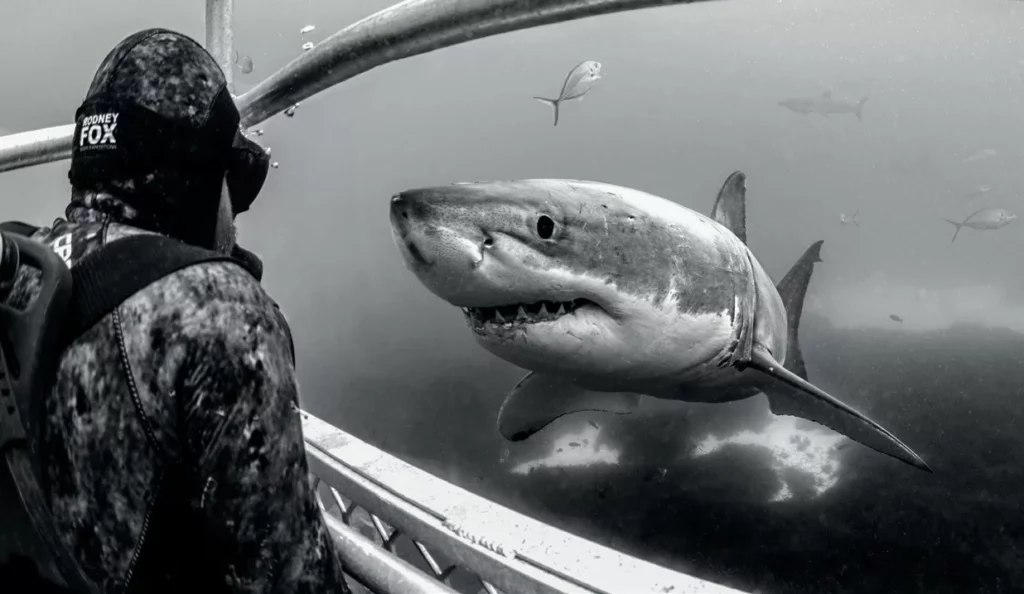
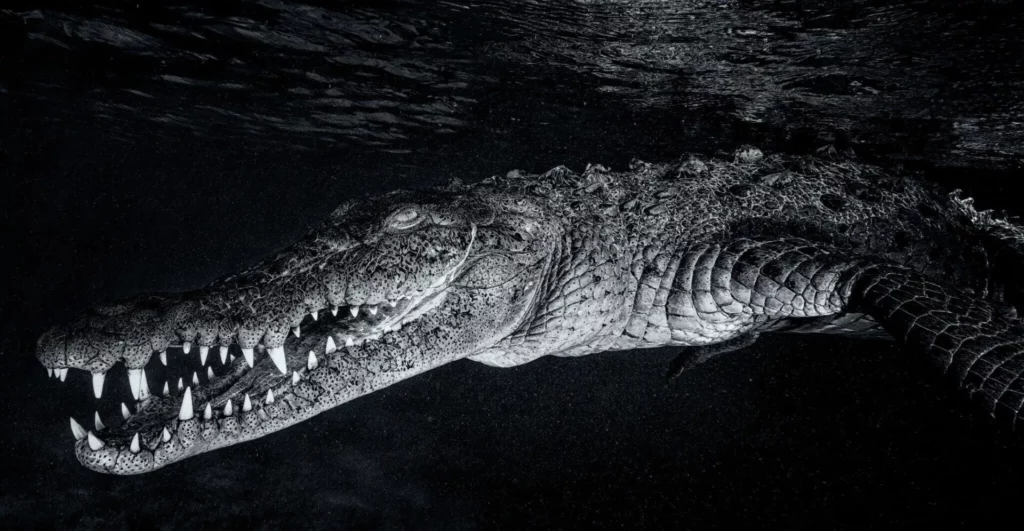
‘Probably my scariest experience was photographing crocodiles in Cuba. There were two basic rules: get out of the water if two crocs get too close to each other. And if one goes to bite you, put your camera in its mouth.’

‘The most-stunning site I ever dived was the Anemone Fields in Alor. Sadly, one day the anemones lifted the skirts and left, never to return.’
Diving Global Hotspots and South Australia’s Jetties
While Diana enjoys shore diving in Victoria and New South Wales closer to home, her interview takes place soon after harmful algae blooms (HAB) have wreaked devastation on her beloved local diving: ‘In the magical days of South Australian diving, we had special everything.’
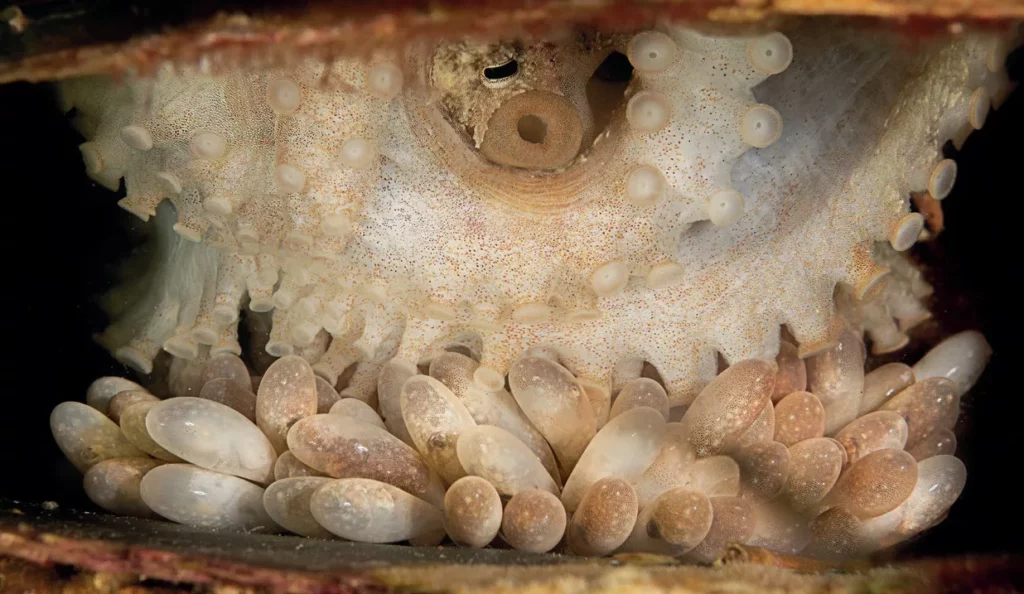
‘To be able to drive from Adelaide to so many unique dive sites was remarkable. Easy driving, no traffic, no parking restrictions. Then to be blessed with free jetty diving to depths of only 5m-9m!’ ‘The jetties with sunbeams and schooling fish. Macro muck diving with critters that were the envy of the world. Leafy sea dragons, pyjama squid and angler fish. I once spent four hours under Edithburgh Jetty, just hunting for critters and photographing them. I should have taken a bigger tank!’


The Devastating South Australian Algae Bloom Crisis
Diana laments the impact of the algae bloom: ‘Recently, there’s been little diving left in South Australia. I’m far from an expert on the algae bloom. But it first appeared in an area close to the Murray River mouth, first noticed by surfers complaining of respiratory and skin conditions after surfing.’ ‘I think it first came to the attention of divers early April 2025, when a couple jumped into green foamy water at Edithburgh Jetty, noticing the bottom was littered with dead blue rings and other dead creatures.’
‘Hoping for cold water and storms to clear the algae, we were disappointed that storms appeared to make no difference. It appears that vast amounts of Murray River nutrients, a cold water upwelling and warmer waters created “the perfect storm”.
‘Great white sharks, rays, fish, dragons and a host of other unidentified aquatic life started washing up on beaches. And this continues.’ The SA Marine Mortality Events project on iNaturalist has recorded over 540 species impacted across more than 52,000 observations of dead marine life. ‘Photos from divers pop up on social media frequently. It appears that dive sites on the Spencer Gulf side of the York Peninsula are less affected. Occasionally someone will find something alive at Edithburgh and get excited about it.’
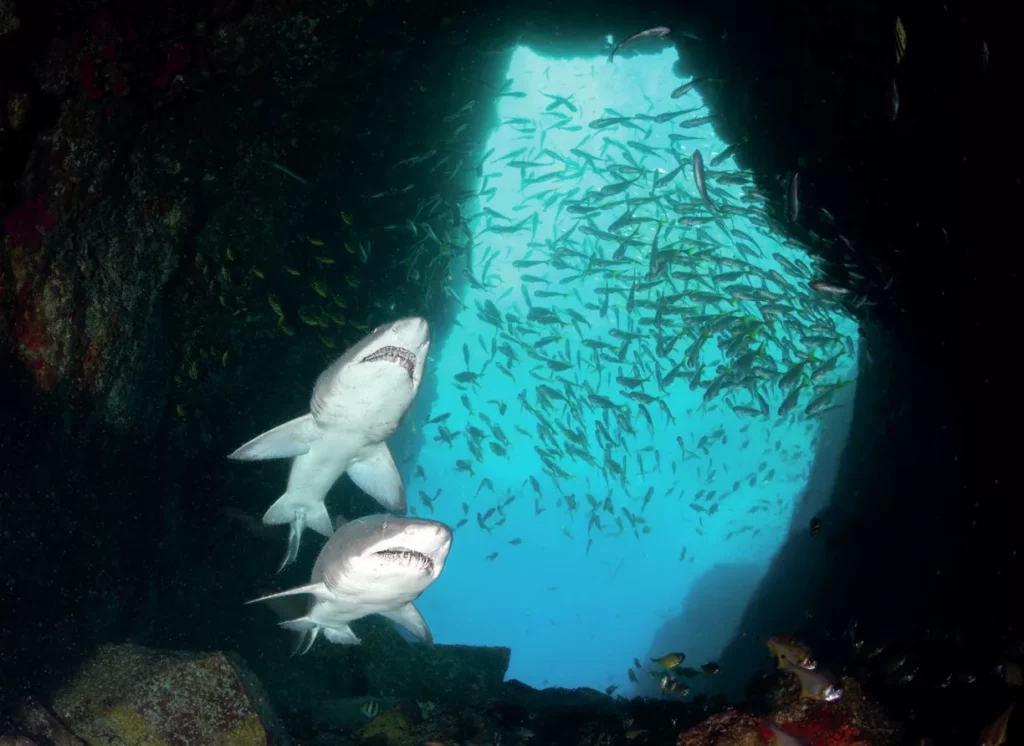
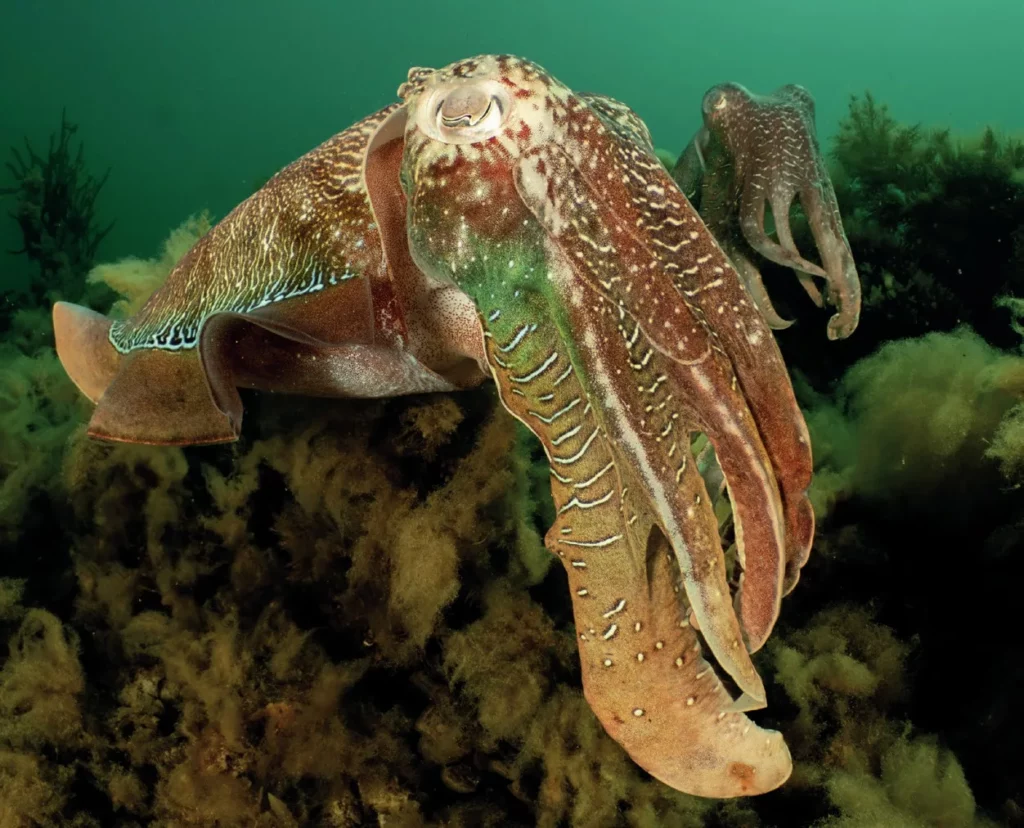
In addition to great white and leafy sea dragon encounters, South Australia is celebrated globally for mass aggregation of giant cuttlefish at Whyalla: ‘Naturally we’re worried. The bloom’s creeping up the Spencer Gulf. As yet, it’s not known where the cuttlefish come from and go to outside the Whyalla cuttlefish season. This year the numbers were certainly down.’
Industry Frustrations and Government Response
Diana’s frustrated, asserting that : ‘During this devastating algae bloom, lack of government care and help were obvious. Little was done on an official level to support the dive industry through this crisis.’
‘On tv, the government wrote it off as climate change. Certainly our water was warmer this year. Some financial help was handed to the fishing industry. But the diving industry seems to have been been largely ignored.’
Adding to the frustrations of South Australian divers, Diana says: ‘While it appears that the bloom by-passed Rapid Bay, the jetty was hit badly during a storm. As a result, diving there was banned.’
Diana ponders: ‘Is this the end of our incredible diving? No one knows. Could it come back in the future? Maybe. Hopefully summer will prove the doom and gloom to be wrong.’
Reflecting on what the ocean has taught her, she says: ‘It’s taught me the ocean is its own boss. Losing the health of our ocean in South Australia has taught me that grief for the environment is real.’
You can discover more of Diana’s underwater photography at oceanincolour.com.au

FAQs
Who is Diana Fernie?
Diana Fernie (also known as Daisy) is an award-winning underwater photographer, former PADI Course Director, and technical diver based in South Australia with decades of international diving experience.
What awards has Diana Fernie won for her photography?
How have harmful algae blooms (HAB) affected diving in South Australia?
The 2025 algae blooms have severely impacted South Australian marine ecosystems. Runoff nutrients and temperature shifts created a “perfect storm,” causing massive die-offs of local marine life—including blue-ringed octopuses, leafy sea dragons, and giant cuttlefish—and leaving iconic dive sites like Edithburgh Jetty covered in green foam.
What are the most famous dive sites in South Australia?
South Australia is globally celebrated for its shallow jetty diving (such as Edithburgh Jetty and Rapid Bay) which feature world-class macro critter encounters, as well as the annual mass aggregation of giant cuttlefish at Whyalla.
What camera gear does Diana Fernie use?
After progressing through five different camera systems from her early days with a Nikonos II, Diana Fernie currently shoots with a Nikon Z8 mirrorless camera paired with specialized underwater photo gadgetry.
This article was originally published in Scuba Diver Magazine
Subscribe today with promo code DIVE1 — enjoy 12 months for just £1!
