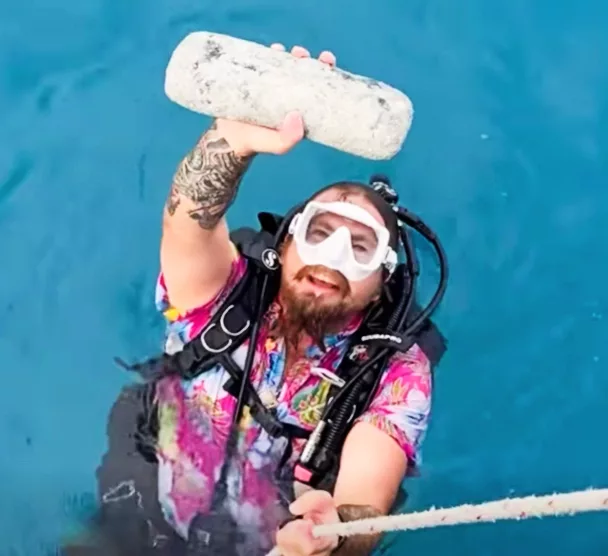
A scuba-diving team have recovered a 10kg silver ingot from the Spanish galleon Nuestra Señora de Atocha in the Florida Keys after it had spent more than 400 years under water – the first such bar to be found in the 21st century.
Divers from the Mel Fisher’s Shipwreck Expeditions salvage team, which has been scouring the famous treasure-site for more than 50 years, say that the last time a silver bar was recovered there was in 1999.
The ingot was brought to the surface on 11 June by Drake Nicholas, captain of the salvage vessel Dare, who had been diving with others in an area giving off multiple metal-detector signals.
He reported that the target had been the deepest and that, after using a blade to expose part of the bar, he had been able to recognise tell-tale markings.
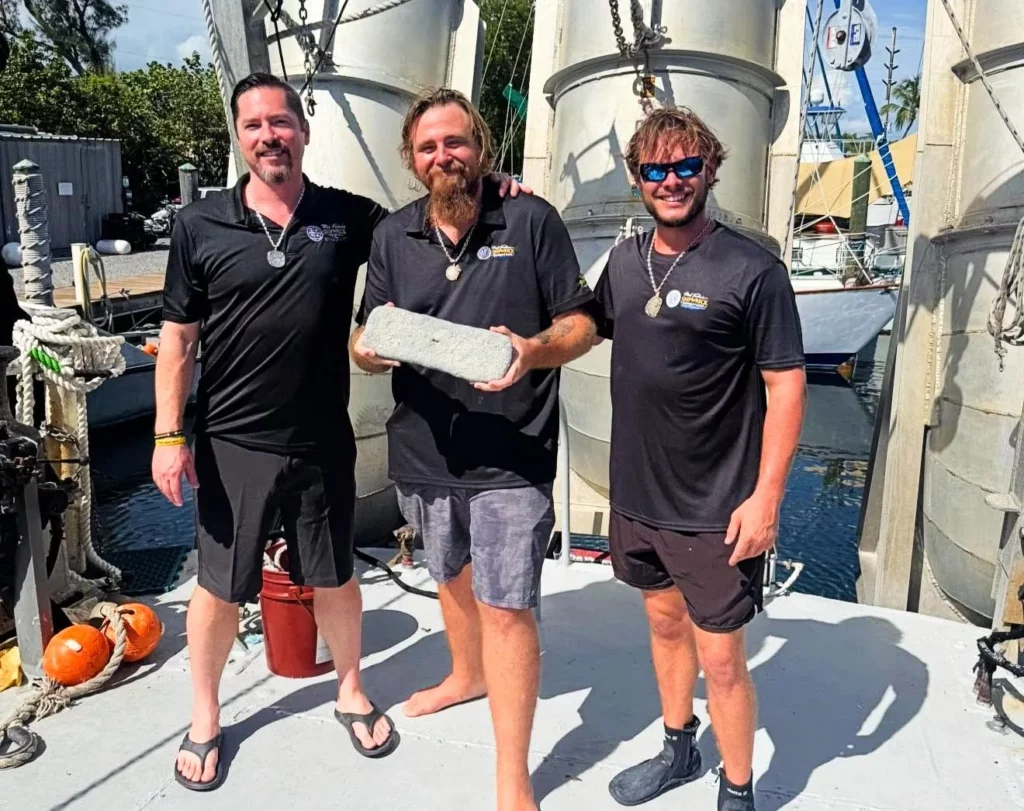
The ingot is now being conserved in a laboratory, with the find fuelling hope that further substantial discoveries in the wreck’s extensive debris field might follow.
First bars in 1973
The Atocha sank in a hurricane in September 1622 while carrying large quantities of treasure from colonies in the Americas to Spain.
Mel Fisher’s team first found silver bars at the site in 1973 and, two years later, came across the five bronze cannon that identified the wreck as the Atocha.
Debris had been scattered widely on the sandy seabed by successive storms since the 17th century, but in 1985 the divers located the “motherlode” of treasures at 17m, the depth in line with contemporary Spanish accounts of the sinking.
Some 40 tonnes of gold and silver, more than 100,000 silver coins and around 1,000 silver ingots were recovered along with Colombian emeralds and many gold and silver artefacts. The manifest had recorded more than 900 silver ingots, though the document is not necessarily a reliable indicator of what was onboard, and some 255,000 silver coins.
While the salvage team has continued to make periodic discoveries at the site, they believe that part of the sterncastle where the captain’s cabin, passengers’ possessions and high-value cargo would have been stored has yet to be located.
What an ingot reveals
Atocha ingots tend to contain more than 99% pure silver and were often cast at Potosi in what is now Bolivia. Valuable information is likely to be revealed once marine deposits have been removed from the bar to reveal all surviving marks.
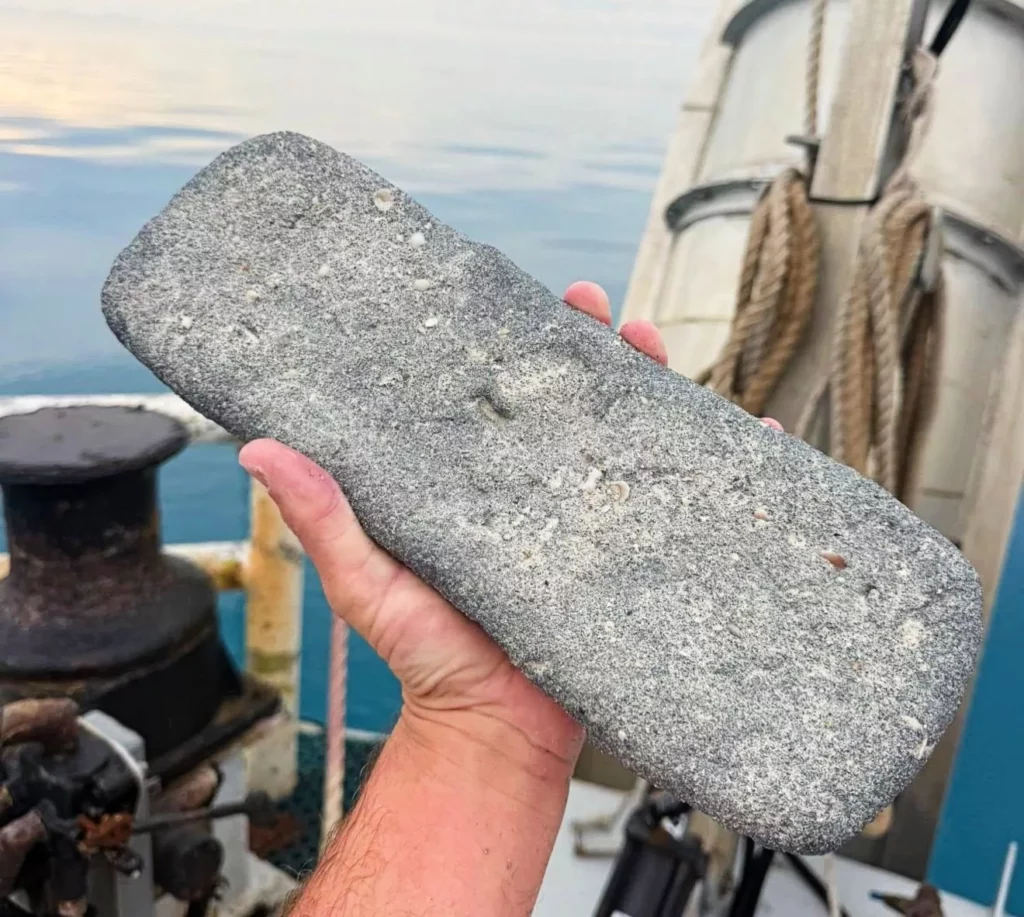
Conservators will look for purity markings made by the assayer; royal tax stamps or quinto marks showing that the Crown’s share had been paid; serial or manifest numbers and marks identifying the merchant who owned the silver.
While the metal value might be in the low thousands of dollars, larger 36kg ingots from the Atocha have been estimated at $25-35,000 or more in the past because of their provenance.
Large collections of Atocha discoveries form the core holdings of the Mel Fisher Maritime Museum in Key West, where visitors can see silver bars, gold artefacts, emeralds, ship equipment and other finds.
Historically important artefacts such as jewellery, religious objects, navigational instruments, weapons, rare indigenous American artefacts and significant ship components have tended to be retained for research and display.
Ownership rights
Because the salvors won legal ownership rights to the wreck and its cargo after a long court battle, it is legal for them to sell authenticated artefacts. Silver coins or “pieces of eight”, gold coins, smaller silver artefacts and some silver ingots and ingot fragments have been sold over time to help fund continuing search operations.
Hundreds of millions of dollars’ worth of treasure has been recovered from the shipwreck, and some experts say that the collection is worth well over $1 billion at today’s rates.
In 2014 the Atocha was named the most valuable shipwreck ever recovered by Guinness World Records, though the following year it was superseded by discovery of the San José off Colombia.
“While no guarantees can ever be made in treasure-hunting, discoveries often occur in clusters,” points out Mel Fisher’s Shipwreck Expeditions in connection with the new ingot find. “Historic artefacts that were once part of the same cargo deposit can remain buried together for centuries beneath shifting sands.
“The recovery of a single silver bar has renewed excitement surrounding this search area and strengthened hopes that additional silver bars, coins and other important artefacts may still remain hidden nearby.”