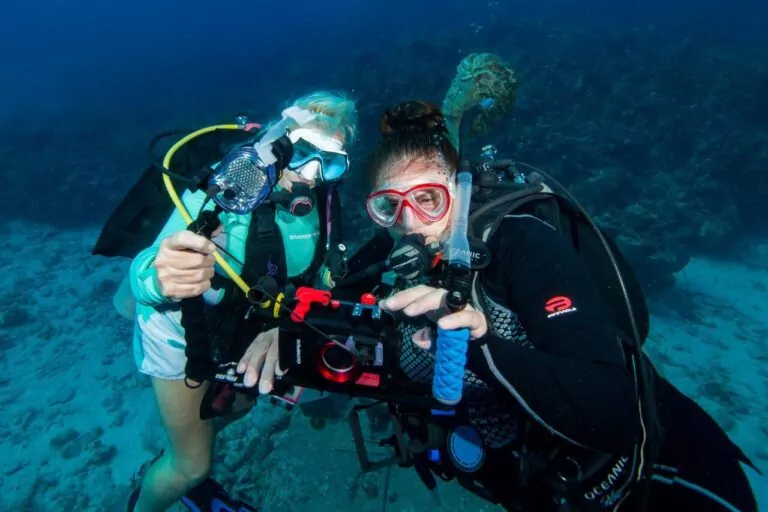
What is it like to work as an independent diving professional? LISA COLLINS is sitting pretty as the go-to underwater photography instructor on Grand Cayman, but her road from the UK wasn’t always easy, as she explains
“Wow! You do what? It must be a dream job!” I hear this so often – almost on a weekly basis – that I kind of discount it and answer automatically: “Yes, I am very lucky!”
But sitting here writing this, with a perfect blue sky, surrounded by tropical plants and the beautiful calm, clear sea a few hundred metres away, I am taking the time to really think about my life as an underwater photography instructor.
I remember walking into the Ocean Optics store in London’s Strand almost 30 years ago, feeling very nervous but excited at the prospect of buying my first underwater camera. Little did I know at the time how important that day was to be for my future.
Having qualified as a PADI Open Water Diver at Thurrock quarry in Essex, I had decided that I would love to show my two young daughters the beauty of the underwater world when we went on our holidays.
Steve Warren at Optics sold me my first camera and got me hooked. Diving and underwater photography very quickly became an addiction, with holidays decided according to where I could dive in the clearest, warmest waters with lots of marine life.
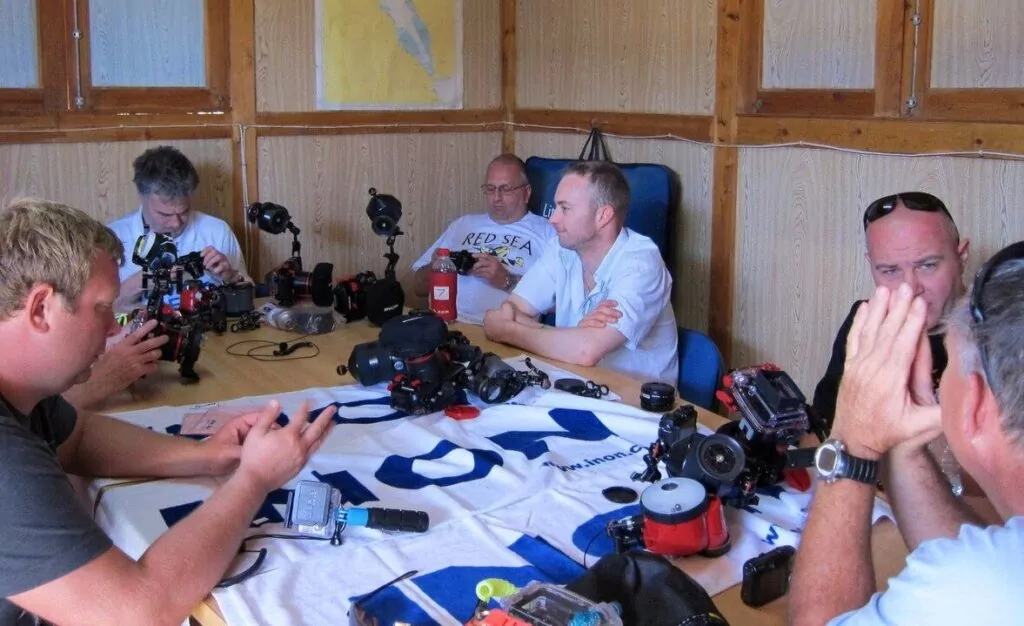
Fast-forward 15 years – after being lucky enough to travel and dive all over the world, increasing my skills and knowledge of underwater photography, I took the INON UK Underwater Photography course followed by its instructor course and began to teach the subject in the UK.
I also had my PADI Digital Underwater Photography Instructor rating, but had found that the course taught me more about diving with a camera than about taking photos under water, something the INON UK courses had addressed.
Many clients requested longer courses and more advanced techniques, so I began overseas workshops, with trips to Egypt, Lanzarote, Philippines and Indonesia – all while working a ‘normal’ job at a university in Surrey.
I was regularly told that “underwater photographers never make enough money to work full-time!”. I was determined that, one day, I would prove those doubters wrong, one way or another.
Uprooted my life
I was teaching underwater photography part-time in the UK but hankered for more, so when I was asked to move to the Cayman Islands to join Cathy Church’s Photo Centre as one of its underwater photography instructors, it took barely a day to decide to uproot my life and that of my partner and for us to move there on a three-year contract.
At last, my dream of working full-time as an underwater photography instructor had come true!

In reality, once installed at the Photo Centre, famed for years as one of the top places in the Caribbean to learn underwater photography, I would teach students a couple of times a week but spent most of my time working in the shop, selling photo equipment.
Located at the Sunset House Hotel south of the Cayman Islands’ capital George Town, all my classes were taught on the beautiful house reef there, during shop opening hours.
After an hour or two of ‘classroom’ instruction, my student and I would proceed on a shore-dive during which I would teach them under water with the help of a white slate.
My heart would sing when I looked at my daily schedule and realised that I had a class that day. My passion for underwater photography and for sharing that knowledge made me so happy. And doing it in the clear, warm waters of the Caribbean made it even more special.

Then Covid happened. I had moved to Grand Cayman in June 2019, and by March 2020 the island had shut down to visitors. A long 18 months of closure ensued.
Luckily I was in charge of marketing, and was able to teach locals and international clients using Zoom. Many people, unable to dive, took up land photography, and booked lessons with me to learn about photographing landscape, birds, insects and flowers.
The diving industry was forcibly closed for six months but, once it reopened, I was able to teach many local divers underwater photography.
A group of them started CaySoup (Cayman Society of Underwater Photographers), which is still going strong. It felt good to be able to pass my knowledge along to them.
Now, every weekend and sometimes on weekday evenings, you can find underwater photographers congregating at most of the shore dive-sites in Grand Cayman, sharing their marine-life discoveries of the day.
Many go diving in packs of four to six, searching the seabed for macro critters in algae patches growing on the white sandy bottoms of some of the dive-sites, the idea being “the more eyes the better”.
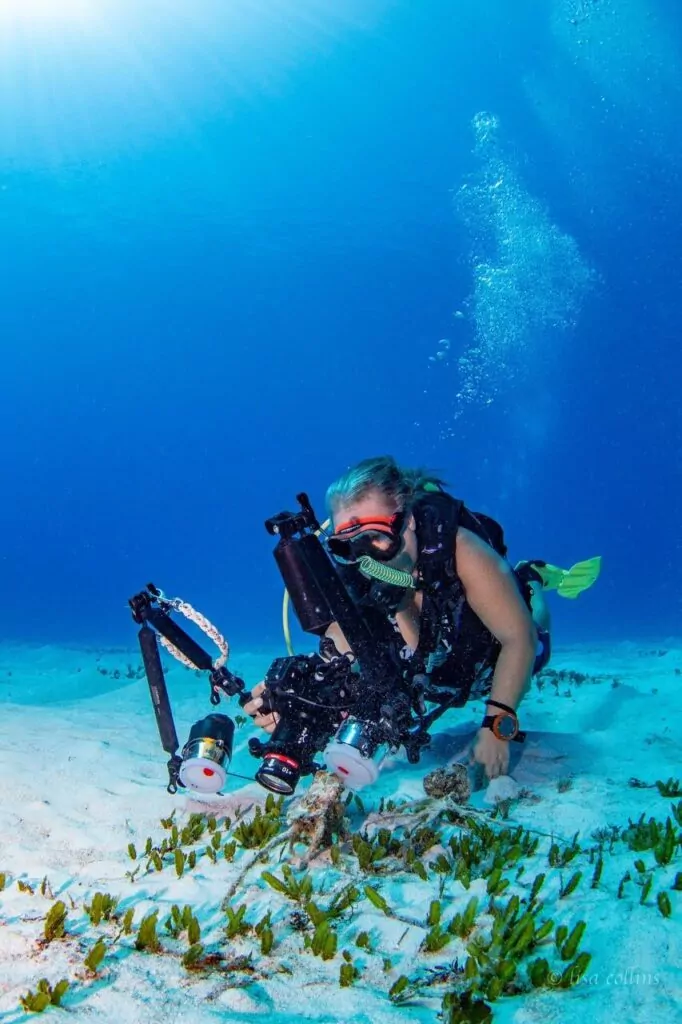
I feel very strongly about good buoyancy and observation of underwater photography etiquette and teach this to my students, so it’s great to see this happening when diving with a ‘pack’.
Out the other side
Once the islands re-opened to visitors, things got back to a relative normal. With my contract due to expire, I began to think about how I could teach more, and in a better way. Luckily I was approached by a Caymanian to set up a company offering all types of photography.
The main focus of Capture Cayman Ltd would be on teaching underwater photography, but with land photography and photoshoots as a sideline. I have a sleeping partner but am effectively working by myself, so have much more freedom to teach whenever and wherever I want, and as my students request.
Not having to be stuck in a shop, or limited to shop hours and a single shore-dive site, I was free to expand. From diving in my spare time, I knew there were certain sites around the island offering different topography and subjects, so could offer clients a far more comprehensive experience.
From beautiful reefs to swim-throughs and caverns, to sting rays, turtles and eagle rays, to extreme macro life, to wrecks and underwater statues, Grand Cayman has a lot to offer underwater photographers – in easy conditions with its warm, clear waters.
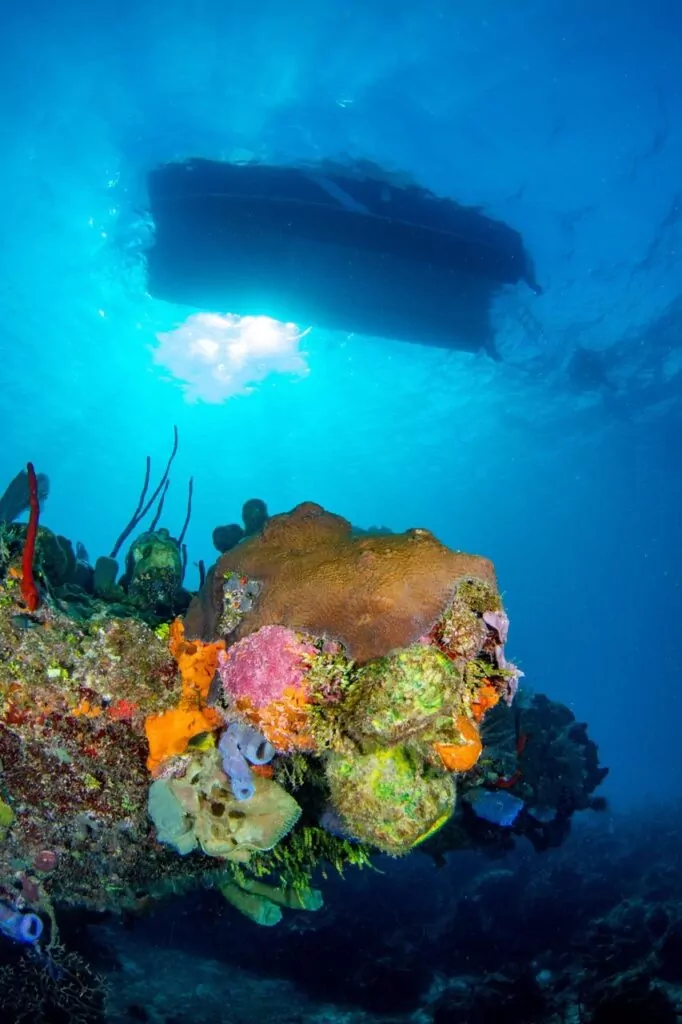
I now have clients who come every year, some several times a year, to spend a week taking underwater photographs with me.
There is always something new to learn, techniques to tweak, different subjects to find and the latest equipment to master, and sometimes it might just be about providing help with lighting and focusing. Another frequent demand is for post-processing instruction, learning to enhance photos with Lightroom or Photoshop.
One client comes from Canada for three months every winter as a “snow-bird”, avoiding the extreme cold to bask in the perfect Cayman climate, and booking 3-5 classes with me a week.
He started with me four years ago with a point-and-shoot compact camera, and has progressed to a top-of-the-range DSLR with various lenses and strobes.
This past winter, we spent a lot of our dives finding critters, shooting macro with a snoot. I can find myself learning almost as much as my students. Jay Goldman’s underwater photos from this year can be viewed here.
No pressure
I understand that teaching techniques are very important, and try to teach in a friendly and informative way, without overwhelming students with technical terms. Many students, in my experience, just want to be able to take consistently good photos, and I try to simplify the process for them and explain in a way that they can remember and take forward.
There is no pressure to get the perfect photo when I teach – after all, you can have a technically perfect photo that is terrible because the composition isn’t good. What I teach is to have consistently pleasing photos with which my students feel happy.
Understanding the skills level and progression of students is key – people pick up the skills at different speeds, and that is absolutely fine. No pressure.
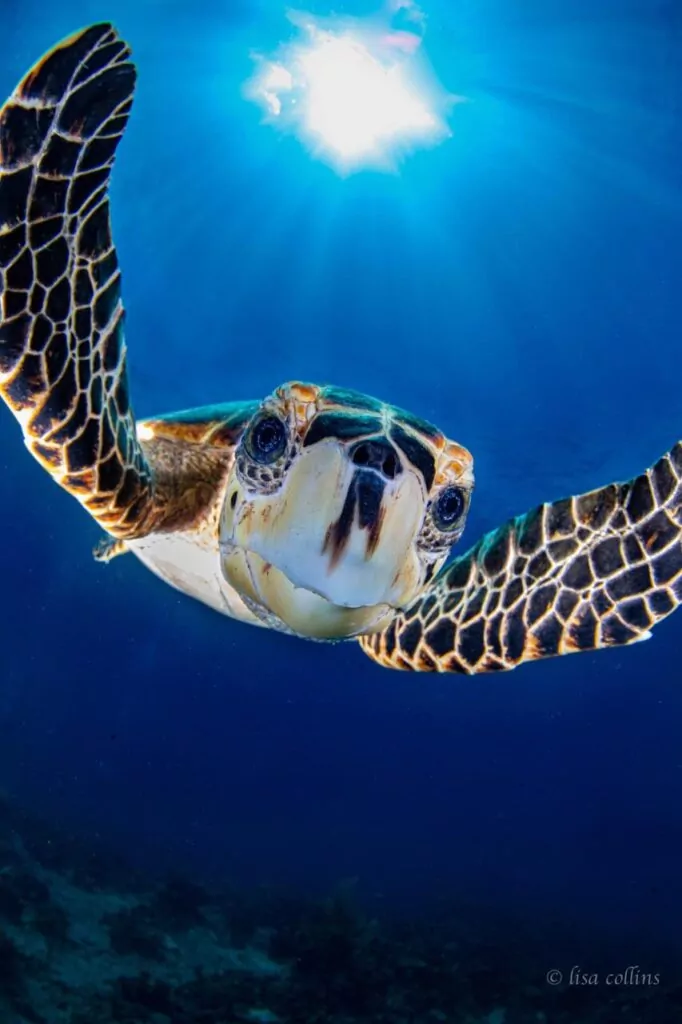
Underwater photography is about enjoying diving in a relaxed way, creating memories you can share. It’s not all about competition and who has the biggest and baddest camera. Each student is different but if they all come away from my classes taking photos that make them happy, then I’m happy.
Typically I can choose from seven shore-dive sites, one of which I can almost always dive apart from odd occasions when north-west winds bring waves to the shore. After discussing what my clients would like to do, I normally check on conditions and decide on the best dive-site for subjects, visibility and current.
Working at any time on any day, from early mornings to night-dives, seven days a week, provides the flexibility to make classes the best they can be around the students’ schedules.
If required, I also go on boat dives with them and work with local dive-charters who are underwater photographers themselves to ensure the best possible sites for the purpose. This allows me to take in blackwater photography tuition as well.
An individual student might book me for a 4-5hr beginner’s class but most clients come to Grand Cayman for a week of diving and underwater photography with me. They range from new GoPro users (I teach a two-hour GoPro course) through compact-camera users to mirrorless and DSLR advanced photographers.
I love to see the faces of students who had previously struggled not to end up with blurry, grey or blue images when they suddenly not only have clear and colourful photos but find themselves able to repeat the feat – and later send me beautiful photos of their later dive-trips.
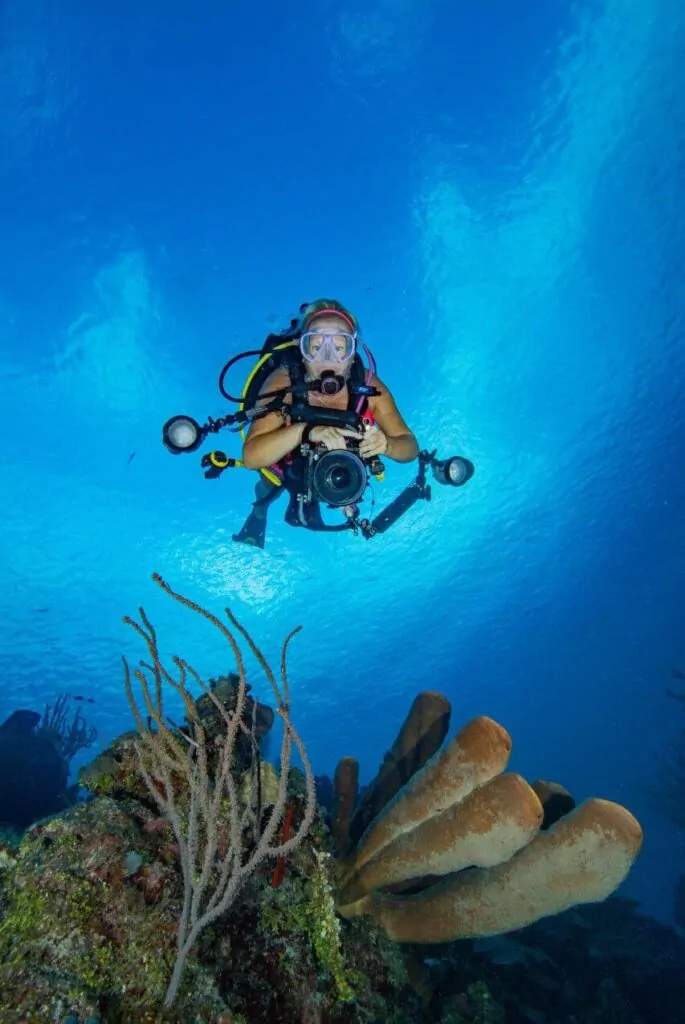
Or for a client to feel ready for the next step on the journey by buying a bigger or more advanced camera. Most are nervous at spending a large amount of money and being intimidated by all the “buttons and wheels”, but seeing them learn about their new babies and start producing images worthy of competitions and publishing gives me so much satisfaction.
Dream job?
In the end, teaching is about sharing the beauty of the underwater world to bring awareness to others of how important it is to protect and cherish our reefs and marine life.
So when I’m next told that mine is a dream job, I can wholeheartedly agree that I’m lucky. It has taken many years of hard work, learning, striving and sacrifice but it was worth every moment.
As of now, with the sad permanent closure of Cathy Church’s Photo Centre, I am the only underwater photography instructor in Grand Cayman. With 15 years’ experience, six years of which have been spent diving thousands of times in Cayman waters, and teaching hundreds of classes, each day is a blessing for which I am truly thankful.
Also by Lisa Collins on Divernet: How we found a critter new to Cayman, Weather Windows, Chain of Women, Sardinian Surprise, Alor Aquamen, Driving North of Tobago, Join Lisa Collins at Capture Cayman