Don Silcock continues his guide to the diving on offer in Papua New Guinea, this time turning his attention to the often overlooked Fathers Reefs
Photographs by Don Silcock
The large crescent-shaped island of New Britain is almost uniquely located on the interface of some unbelievably powerful forces of nature.
Physically, it sits on the south-western arc of the infamous Pacific Ring of Fire and is characterized by the exceptionally high mountain ranges that traverse its spine – together with its many volcanoes!
But that location also positions it on the epicentre of the eastern lobe of the renowned Coral Triangle – the world’s richest known area of marine biodiversity.
And, in a roughly rectangular area about one-third the size of Tasmania, the north coast of New Britain hosts three of the best diving locations in all of Papua New Guinea.
The most well-known of those three is incredible Kimbe Bay, while to the north-west of Kimbe are the wonderful Witu Islands and last, but not least, to the north-east is Lolobau Island and the Fathers Reefs.
While often in the shadow of the Witu’s and Kimbe, the Fathers – as the area is generally known – has some excellent diving with several locations that are simply world-class.
The common denominator…
New Britain is the largest of PNG’s many islands and it sits about 5 degrees south of the Equator. Far below it is where two of the world’s tectonic plates collide in what geologists call, somewhat prosaically, a subduction…
Subductions are where one tectonic plate is forced under the other, producing volcanoes, mountain ranges and earthquakes in the process…
Kimbe Bay itself is bounded by seven significant volcanoes plus the huge Dakataua caldera at the northern tip of the Willaumez Peninsula, while the epicentre of the Witu Islands is the huge caldera on Garove Island.
Kimbe Bay itself is bounded by seven significant volcanoes plus the huge Dakataua caldera at the northern tip of the Willaumez Peninsula, while the epicentre of the Witu Islands is the huge caldera on Garove Island.
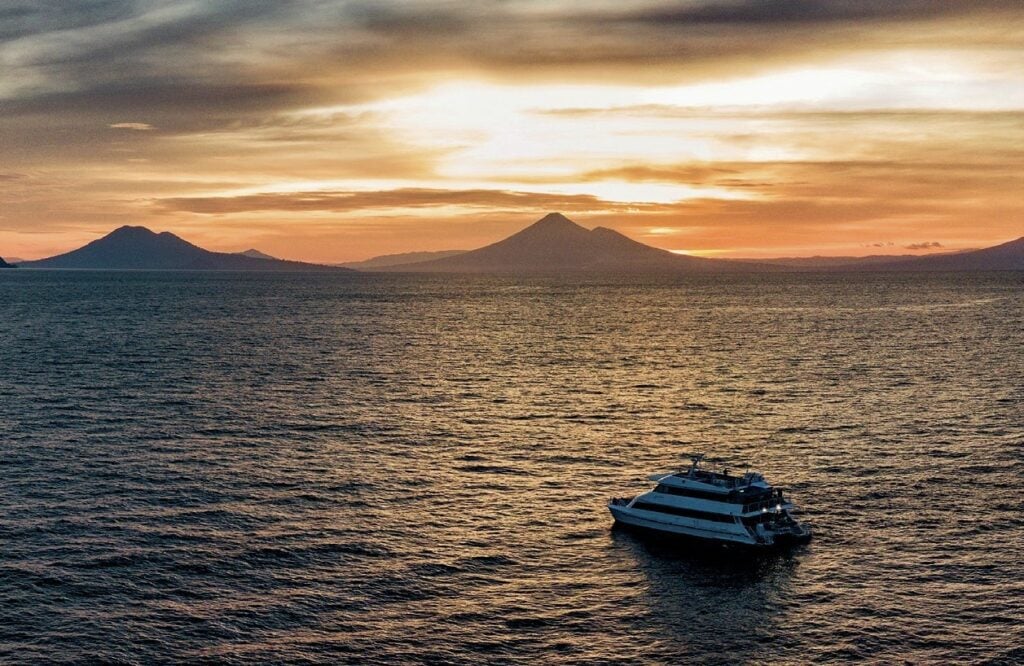
And Lolobau is dominated the large volcano on the western rim of the 6km wide caldera that forms the island. While in the distance, on the coast of New Britain, is the massive 2,300-metre-high Ulawun (Father) volcano.
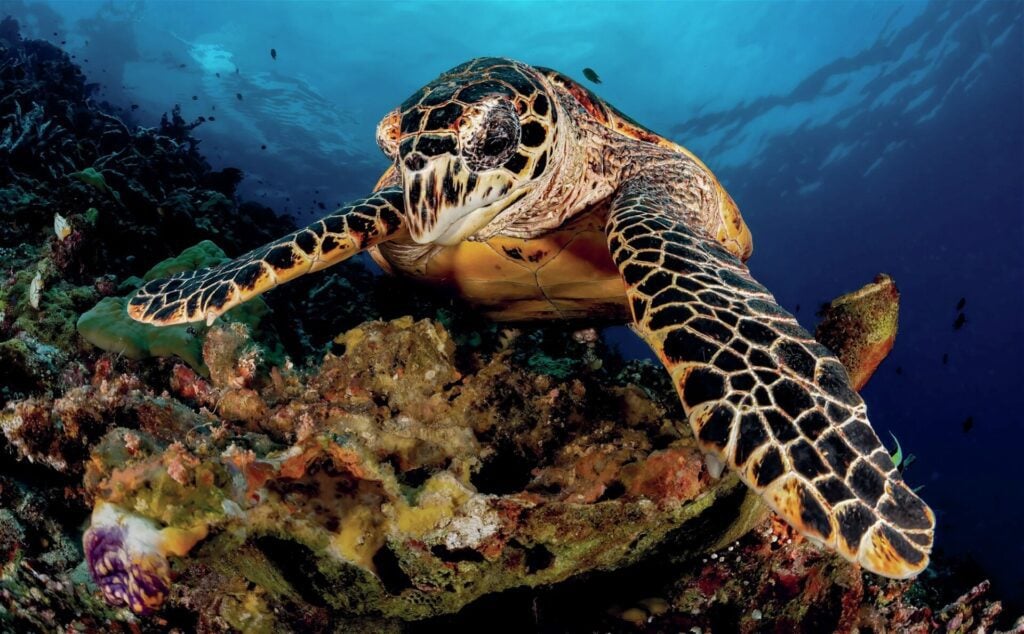
You probably get the picture… there is some pretty amazing scenery along the north coast, which is both visually spectacular and a constant reminder of the powerful ancient forces deep beneath in the earth’s core.
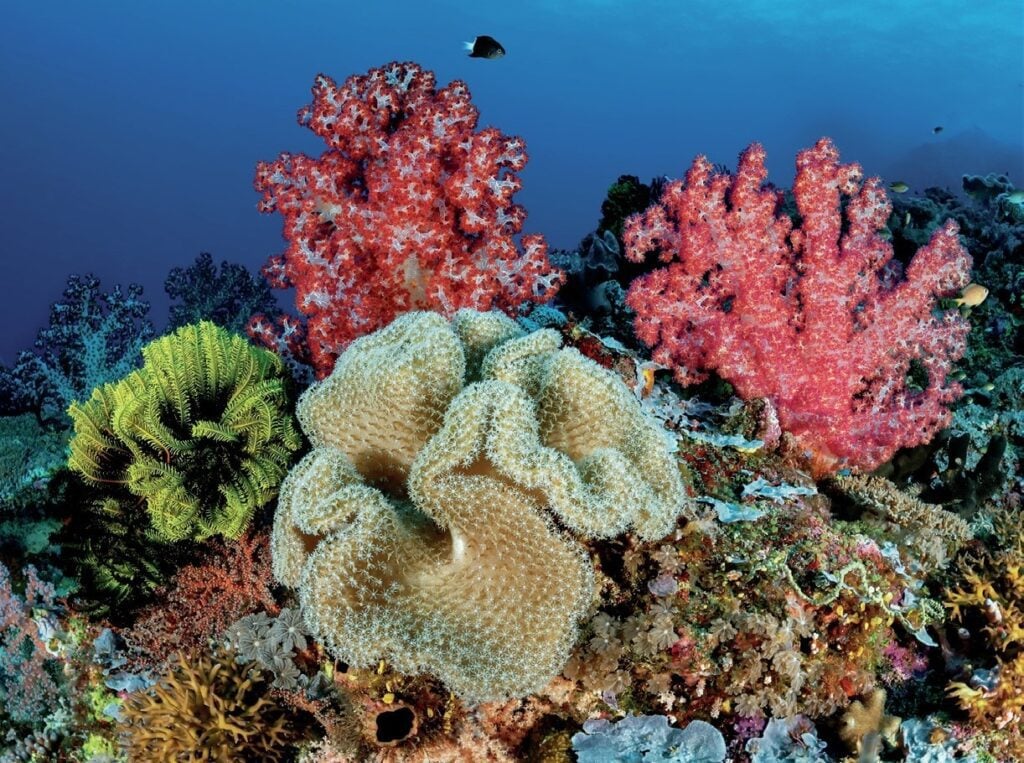
Underwater
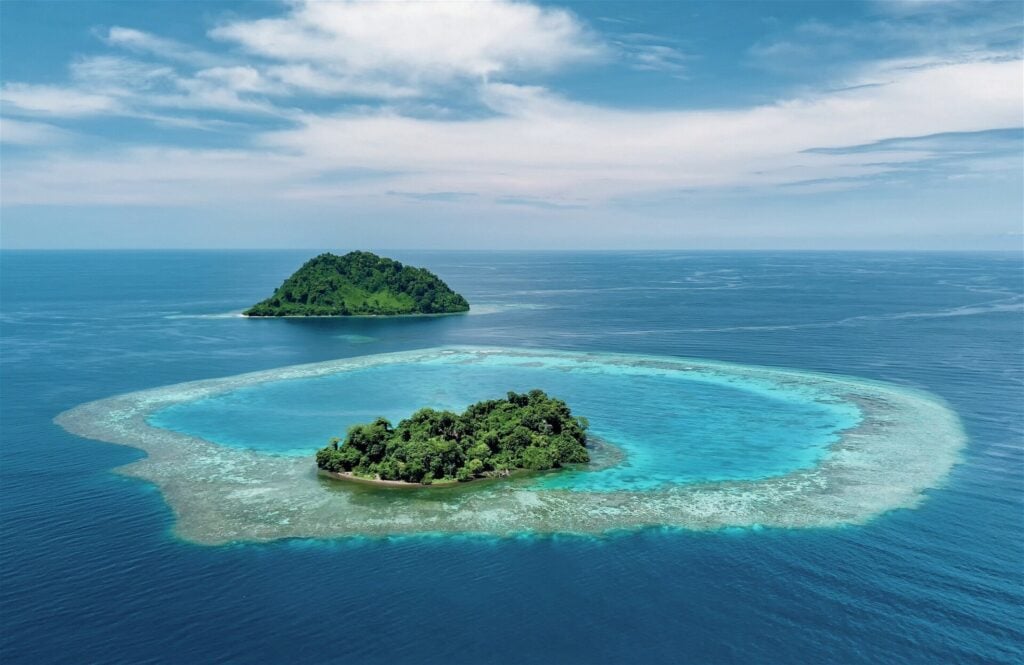
Beneath the water at Lolobau and the Fathers the scenery is equally impressive with the diving focused on the seamounts and coral-topped pinnacles that rise up from the depths of the Bismarck Sea.
Physically the area is located at the north-eastern tip of greater Kimbe Bay and, like the Witu Islands, is directly exposed to the nutrient-rich currents that circulate the Bismarck Sea.
Which means those seamounts and pinnacles are very well-nourished and able to sustain their own eco-systems, all of which means some really excellent diving!
There are numerous sites to pick from in the overall area and some 14-16 of them are dived regularly – here are some of my favourites:
The Archway
Located at the western edge of the Fathers Reefs, this is for me the signature dive of the area… It consists of a large bommie that rises up from a deep shelf in 50m plus, with its top in 24m – so it is a potentially deep dive.
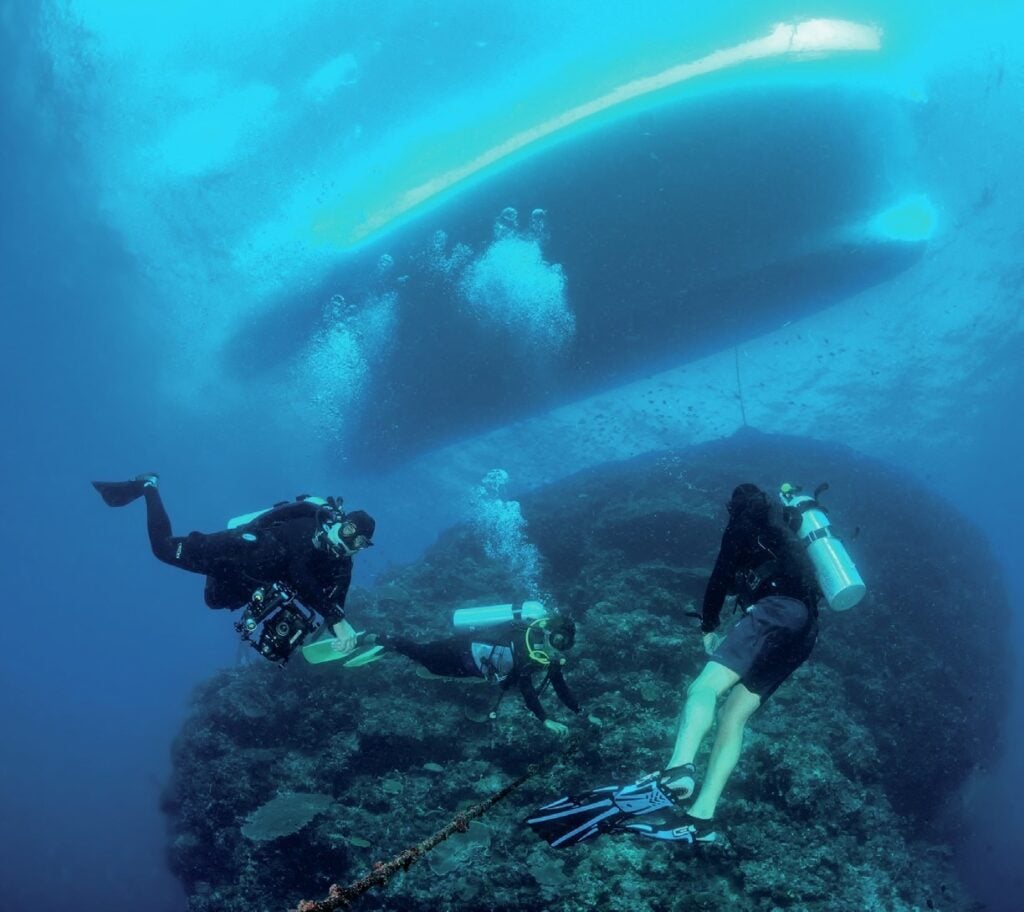
There is a permanent mooring on a nearby shallow reef and the bommie is accessed via a rope that leads down to it, so that you don’t get caught in the current and can maximize your time on the site.
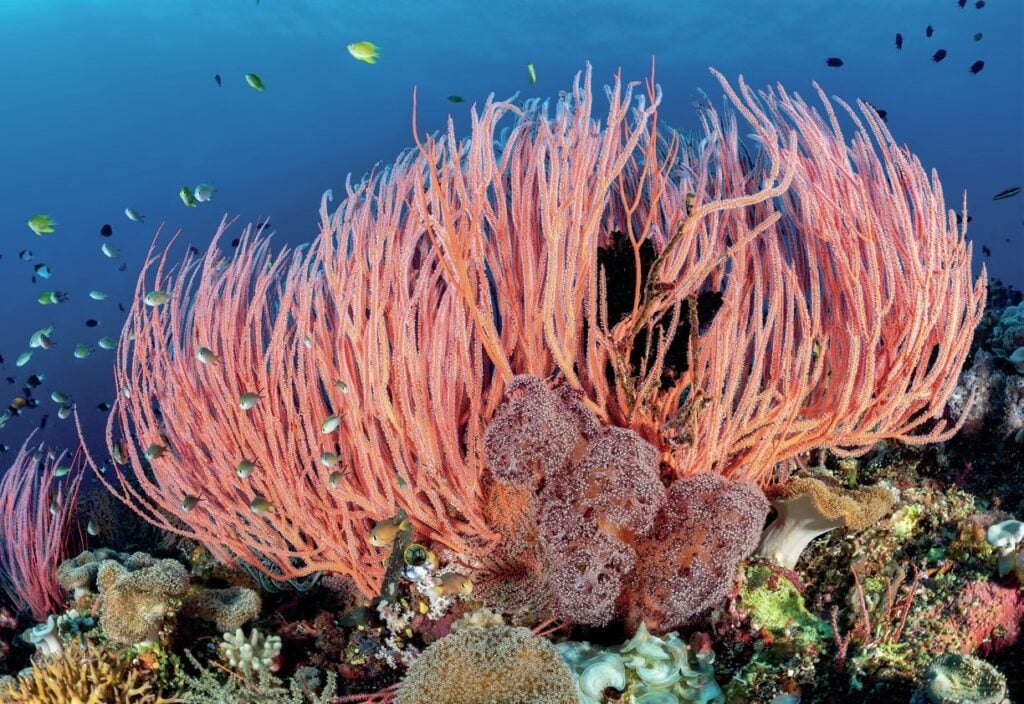
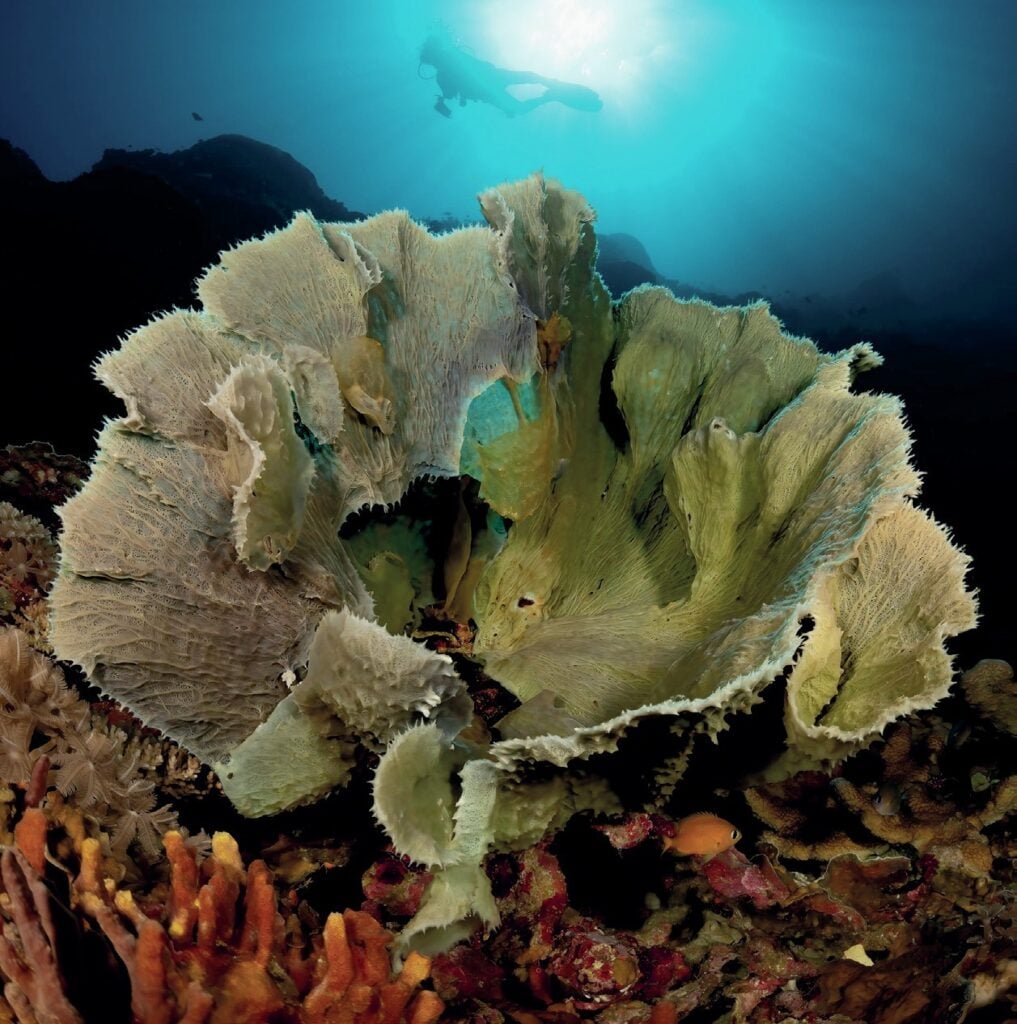
The highlights of the Archway are the large oval window in the bommie and the arrays of beautiful sponges, soft corals and red sea-whips that add such dramatic colour to the site.
All told, the Archway is an adventurous and exciting dive that will stay in your memory for a long time to come!
Elaine’s Reef
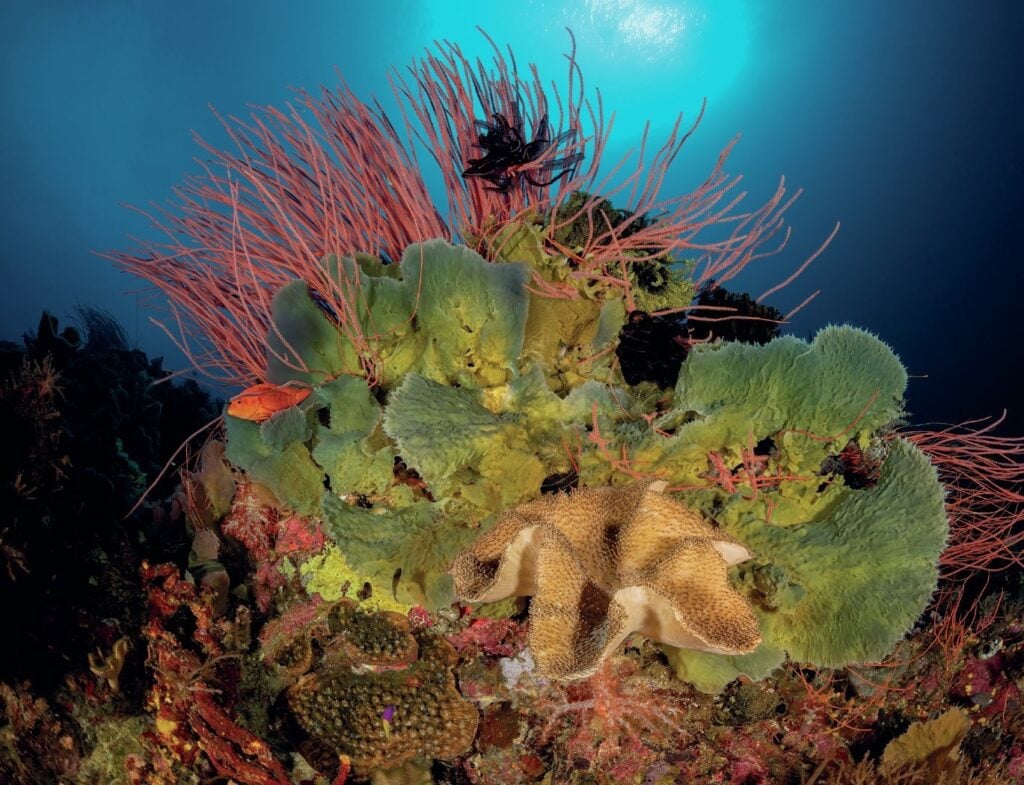
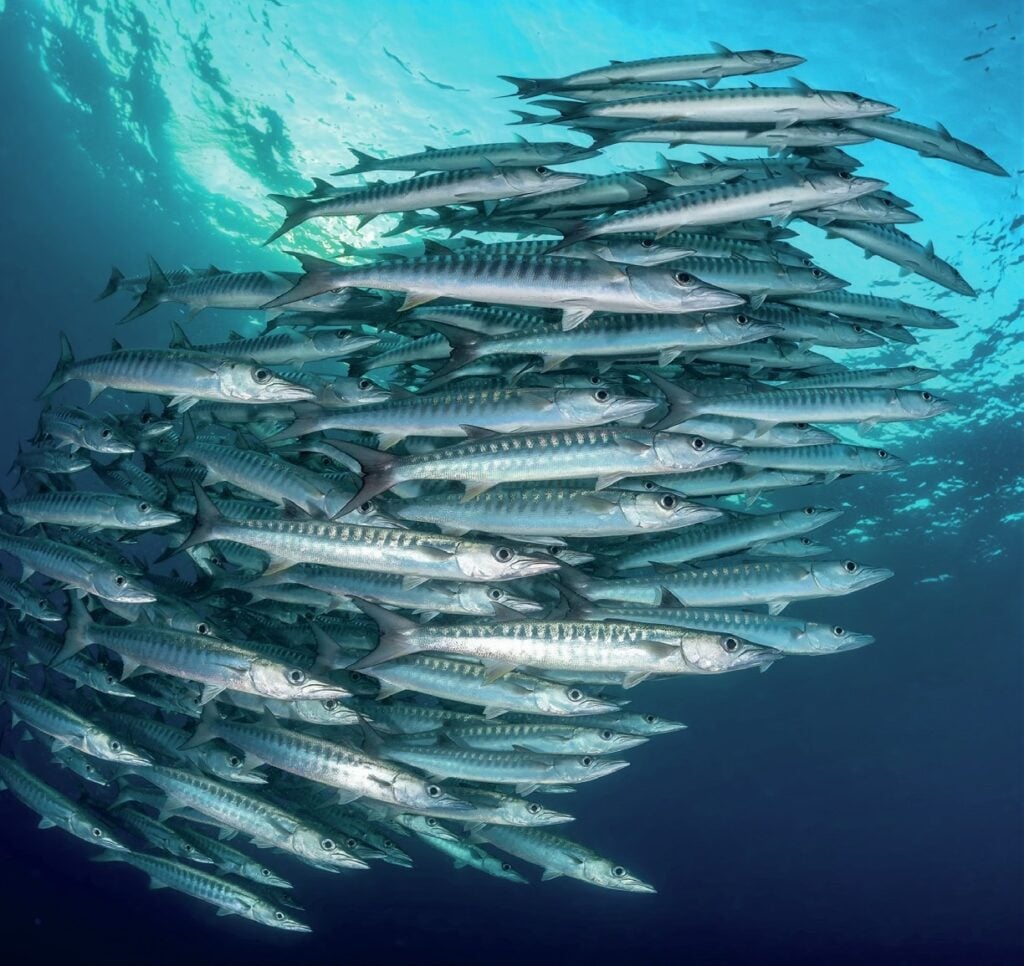
Also located at the western edge of the Fathers and close to the Archway, this site is a joy to dive and offers wide-angle photographers a great selection of subject matter, from superb soft corals and sponges, rich patches of vibrant red sea-whips and a huge resident school of barracuda.
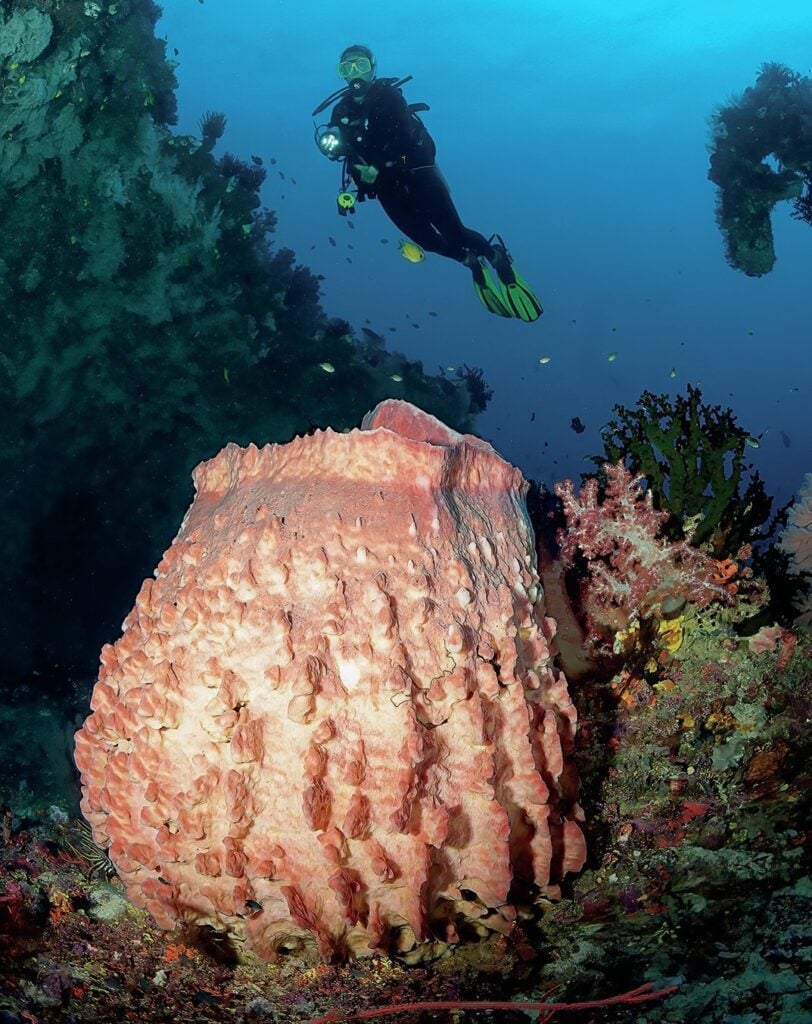
The site is basically a ridge between two reefs, with the permanent mooring on the top of Elaine’s Reef in just 6m. From the reef flat the ridge drops down to about 24m and on the way down there are numerous patches of intense marine growth.
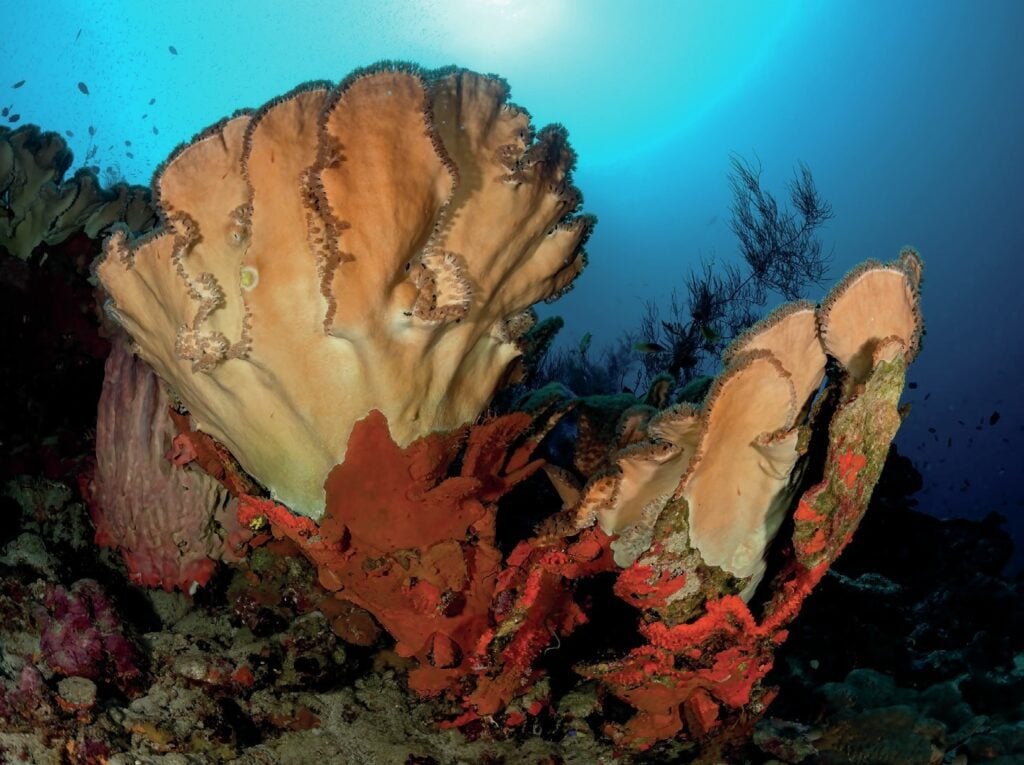
Along the ridge itself and either side of it are more examples of just how rich those Bismarck Sea currents really are, while in the blue above the ridge the barracuda perform their synchronized swimming routine to the delight of their brief visitors.
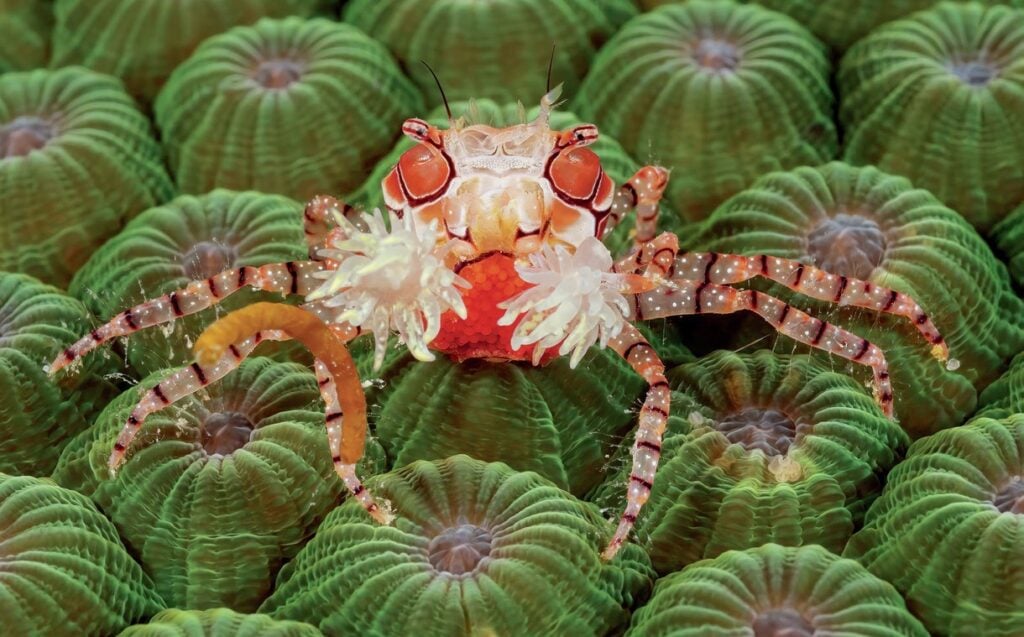
How to Dive Lolobau Island and the Fathers
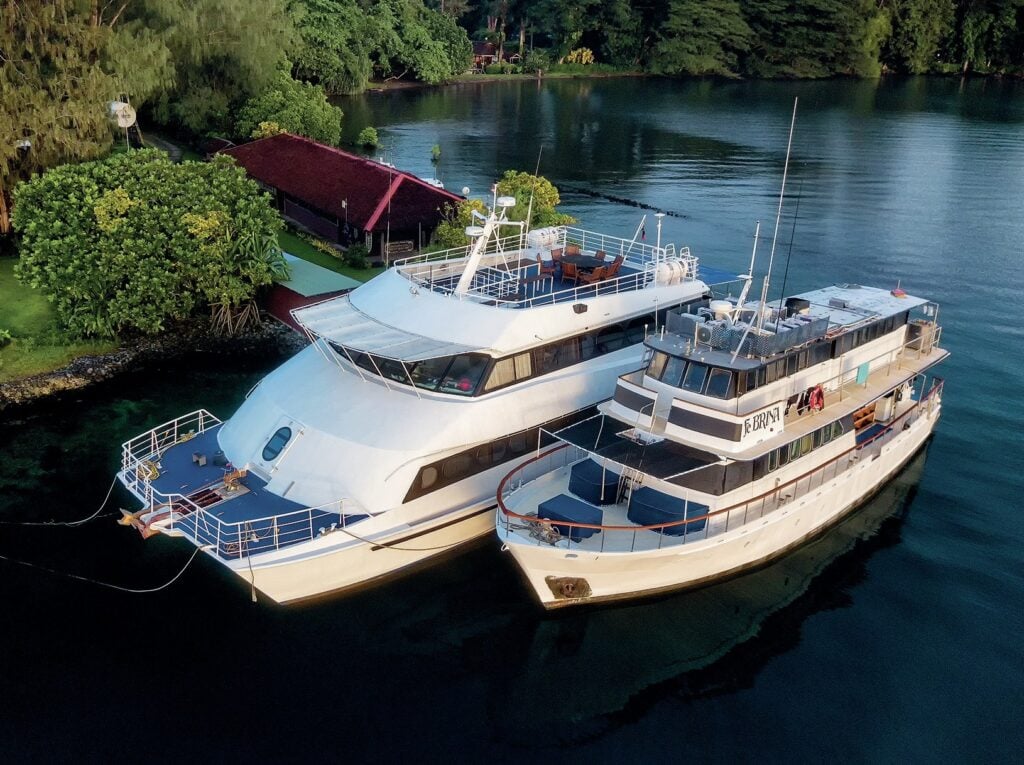
MV Oceania and MV Febrina both offer exceptional, but different experiences. Oceania is skippered by Dan Johnson, who organized and ran the complete refurbishment of Oceania before it went into service in 2019. Dan knows the north coast of New Britain very well having ran the diving at Walindi for 5 years.
Febrina is owned and skippered by Alan Raabe who pioneered the offshore diving around New Britain and knows all the sites better than anybody. Basically, you cannot go wrong with either boat – simple as that…
Norman’s
This site is a quite spectacular large, and roughly round, seamount that rises up almost vertically from the deep seabed some 40m plus below.
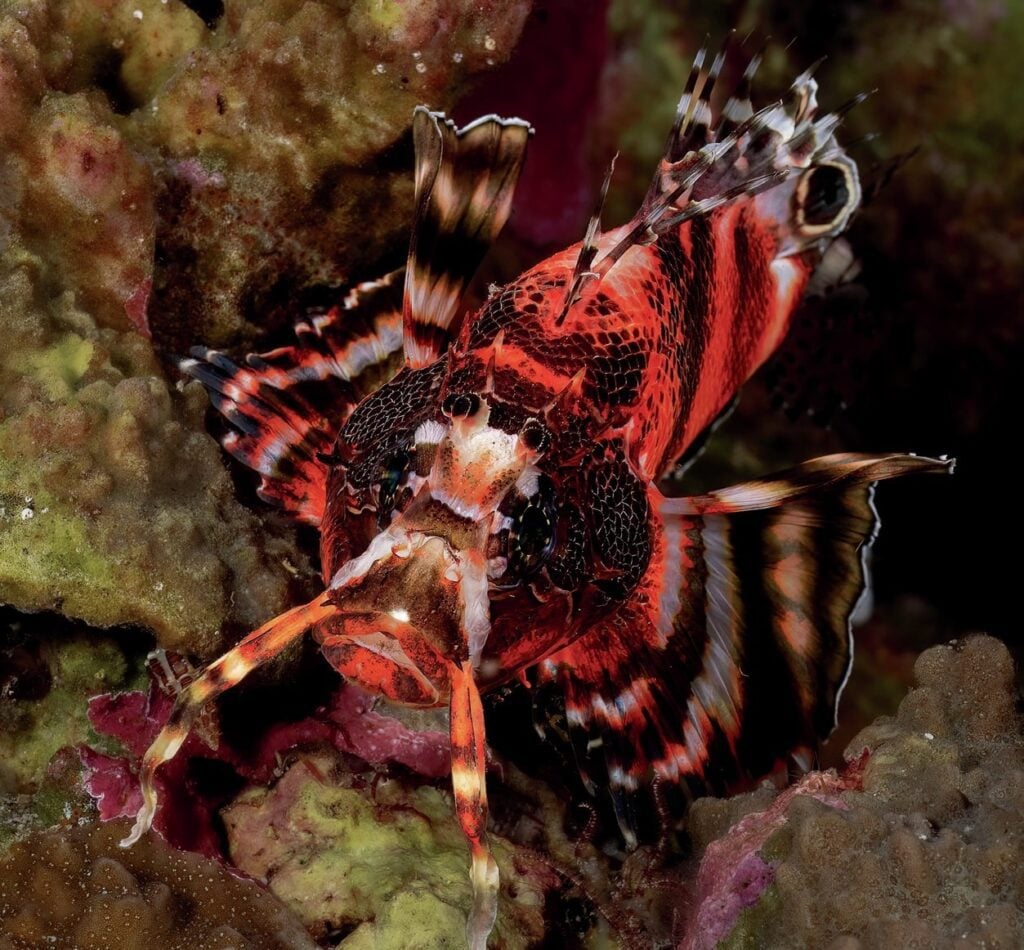
The top of the seamount is a flat plateau in about 9m that is richly covered in marine growth and hosts a large population of small to medium size creatures like nudis, cuttlefish and moray eels plus lots of small reef fish.
During the day Norman’s is a great wide-angle dive with schooling jacks and barracuda in the blue and lots of sponges, corals and sea-whips around the sides of the seamount. But at night it really comes alive as all smaller stuff emerges to feed.
Leslie’s
Located close to Norman’s along the northern edge of the Fathers Reefs is this site which is another seamount rising up from the depths.
The main part of the seamount is a smallish and roughly circular pinnacle that comes up to 8m below the surface, which is where the permanent mooring is situated.
Schooling barracudas are a permanent fixture at Leslie’s and the site is known for regular visits by large silvertip sharks.
To one side of the pinnacle is a ridge that starts at around 24m and runs down to about 35m, which is host to lots of colourful soft corals and barrel sponges. It is also the area where the silvertips like to hang out.
Don Silcock
Don is Scuba Diver’s Senior Travel Editor and is based from Bali in Indonesia. His website has extensive location guides, articles and images on some of the world’s best diving locations and underwater experiences.
In summary…
Lolobau Island and the Fathers Reefs are one of the ‘mustdo’ locations in Papua New Guinea and the overall area offers a tremendous selection of sites to dive.
Their position in the Bismarck Sea at the north-eastern tip of greater Kimbe Bay means they are swept by the rich currents that are the lifeforce of this part of PNG, but they also enjoy a much greater degree of protection from the weather than the Witu Islands.
Not quite a year-round location, the area is best dived from mid-September through to the end of November and from early April to late June.
Only accessible from a liveaboard, the islands, reefs and seamounts are dived regularly by both MV Oceania and MV Febrina – both of which are based from Walindi Plantation Resort in Kimbe Bay.
Both boats alternate their routes so you can be 100% sure there will be no queuing up at the best sites as happens in so many other locations these days. It also means their skippers can pick the sites when the conditions are optimum, and you will experience them at their very best!
This article was originally published in Scuba Diver ANZ #66
Subscribe today with promo code DIVE1 — enjoy 12 months for just £1!