Returning to dive what he reckons could be the best wreck-dive in the British Isles, LEIGH BISHOP fires up his new scooter for a cruise down Memory Lane
AT A DEPTH OF ALMOST 70m some 21 miles north-west of Malin Head off Northern Ireland lies what has to be one of wreck-diving’s best-kept secrets. At 32,234 tons, the awesome Justicia is as big as the famed Lusitania and, as such, one of the largest sunken liners in the British Isles.

Visibility is as stupendous as I ever remember it being; equally stupendous is the vibe this wreck gives off. Justicia is both massive and perfect! Quite possibly I’m even more excited than I was the first day I dived her.
Justicia is almost 240m long, so is best explored using a DPV. Not many wrecks lend themselves to the use of a scooter in home waters but this grand old lady is one, if not the one!
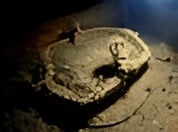
I’ve returned armed with the latest in scooter technology, my new Suex Xjoy, and jeez, have I got a smile on my face!
Making my way from that most impressive bow, I power across the foredeck, where chains, capstans, winchess and derricks make their presence felt on a scale beyond that to which UK wreck-divers are accustomed.
Scootering across the bridge, I note that the wreck drops low and is somewhat collapsed to seabed level. At this point it becomes quite broken, and I see that access can easily be gained, if required, to the spacious forecastle compartments below the bow foredecks.
I park the XJoy and proceed on foot, or should I say fin? Inside, all manner of massive machinery can be seen, machinery that once operated the capstans and the big winches on the decks above. The chain and lamp locker-rooms can also be explored here.
As I light up the going ahead, I discover toilets and a small workshop that was perhaps once used to maintain the heavy working machinery surrounding me.

I fire up my scooter again and make headway towards the stern. Dropping the speed a little, I glide across the decks in the brilliant rays of sunlight that penetrate the crystal water.
By easing up the speed of the prop on the fly I’m able to enjoy the sightseeing, and I note the considerable number of windows and scuttles.

NOWHERE BEFORE HAVE I SEEN SUCH a collection of differently designed windows on a single wreck, and big ones at that.
There are classic circular portholes, oval windows with a pivot opening mechanism and several letterbox ventilation-type openings, designed specifically for ships that would operate in hot climates.
With a lithium battery powering the scooter on this return dive I’m able to circumnavigate the wreck several times and explore it all. The advanced technology has made this return visit a special dive, one that I’ll remember as vividly as I remember the first, almost 15 years earlier.

For many years rumours had floated through the then-small technical diving community about this fine dive-site. Friends in the North-west would make their annual visit and tease us “Channel wreckers” in the South about their “jewel in the crown”.
With more virgin wrecks in the Channel than we could cope with, the years seemed to fly by, but each one brought more intriguing whispers from the North concerning the fine wreck on which we were supposedly missing out.
Each year I would stop by to say hi to Salutay charter skipper Alan Wright on his stand at the Birmingham Dive Show. Each time Alan would repeat in his strong Irish accent: “You boys should get yourselves up to Northern Ireland and dive some proper wrecks!”
Alan was an authority on the wrecks off Malin Head and had often regaled me with stories of amazing rides on his old Aquazepp scooter across the Justicia.
Quite why I didn’t respond to all those early calls I don’t know, other than that Channel wrecks and international projects took up all my time and money.

Another man reluctant to let facts spoil a good rumour was Richard Stevenson. He too had heard rumours of Northern Ireland’s fabulous wrecks, so he was delighted when an independent group chartered his company’s dive-boat to visit the area.
He took time out to drop on the wreck of Justicia himself and was soon on the phone: “You boys should get yourselves up to Northern Ireland!”
I could wait no longer. Richard assured me that his boat would operate in north Irish waters the following season – my trip to Justicia was booked.
2001 turned out to be a vintage year in terms of exploration, with successful deep projects such as the gold ship Egypt, Flying Enterprise and many more. Looking back now, my adventure to Ireland that same year was the icing on the cake.

I had booked a week’s diving, and was content to relax and follow the “tourist dives” on offer. There were no ferry bookings to consider; the trip across the North Channel was all part of the service on offer from Richard’s Deep Blue Diving.
All we had to do was drive to Girvan on Scotland’s west coast, load our gear on Loyal Watcher and enjoy the ride.
Loyal Watcher, an ex-Naval fleet tender, used Lough Swilly on the north Irish coast as a base for easy access to the nearby wrecks.

Used as a natural harbour by the Allies during both world wars, it was an ideal place to shelter from the more than occasional local storms.
ONCE OUT OF THE ENTRANCE a journey out to Justicia is at the mercy of the weather. The exposed coastline can be battered hard by treacherous Rockall storms, not to mention some big Atlantic swells that follow them up.
On that first dive in brilliant visibility, I discovered the wreck resting on its port side, something that only really becomes apparent once you have circumnavigated the majority of the wreck.

From the bridge foredeck and aft the skeleton structure lies reasonably broken, but in the exceptional visibility the clean white sand and rock seabed reflect the sunlight even 70m down, and a torch is seldom required.
A service tunnel runs centrally the length of the wreck, a passage once used by the engine-room workers. It makes for an excellent navigation reference, with some sections large enough to penetrate even with a scooter.
Back in the day and using a film camera I shot flash-assisted colour images that did little justice to the scale of the wreck. Fluctuating over a shutter speed of 1/60th of a second on an aperture of around f5.6, the images were dark and the strobes struggled to light up the wreck.
I needed another plan! Built alongside Titanic’s sister-ship Britannic and launched in July 1914, the then Statendam entered the war straight away.

She was requisitioned by the government and put into managed service by the Cunard Line. Because of outrage over the Germans’ sinking of the Lusitania she was renamed Justicia (Latin for justice).
Cunard struggled to assemble a crew for so big a ship, so Justicia was reassigned to the White Star Line. It had a crew available – from the recently sunken Britannic.
Working as a troopship with a dazzle camouflage scheme, Justicia made successful ocean voyages through most of the Great War.
On 19 July, 1918, her luck ran out when she was torpedoed by the German type-III coastal U-boat UB64, commanded by Otto Von Schrader.
The watertight doors were successfully closed in time, and Justicia remained afloat even after UB64 fired a further three torpedoes into her!
Attacked and damaged by Justicia’s escorting vessels UB64 fled, leaving UB124 to finish her off the following day with a further two torpedoes.
By noon of 20 July, having now been struck by six torpedoes, the massive ship rolled over on her starboard side and eventually sank. Sixteen crewmen died.
UB124’s crew also paid a price. Hunted down by the escorting vessels HMS Marne, Milbrook and Pigeon, the U-boat was attacked with depth-charges, forced to surface and sank immediately under serious gunfire.
I returned to Ireland in 2002 with a simple new photographic plan. I set up a newly built tripod and attached housing system on the seabed and banged off “big time” exposure shots, something no-one had tried before, at least not at this depth.
I chose to shoot fast black & white film, which I felt would give a far better idea of how Justicia presents itself. The visibility that year was easily on a par with that of Truk Lagoon, if not better – everything was in place.
IT WAS ANOTHER OF those classic dives you never forget. We descended an anchorline secured to the seabed close to the bow, and were soon able to make out the wreck.
The sun high in the sky, from almost 50m above we could see how the bow sat twisted in relation to the bridge, and how its broken sections had collapsed to the port side of the huge service tunnel.
We went on to explore the wreck at an average depth of 68-70m, and discovered a huge section of what looks like and can easily be mistaken for starboard hull, but is in fact bridge castle – a demonstration of the sheer size of this wreck.
But the real treat came when we swam around the bow, which lies broken off, a little aft of the forecastle, in one complete intact section. We passed a huge housed anchor in the starboard side of the bow, dwarfing us.
Then, moving a short distance from the wreck before turning back, we saw one of the most awesome sights we will ever see on a wreck.
The bow, presented with a list to port, was remarkable – almost fully intact, rising tall from the seabed and with the remaining safety-rail running around the very tip of the deck to give the wreck that Titanic feel.
I just had to set up my tripod camera system on the seabed to capture some seriously long exposure images at this point. Back in that pre-digital era I was one of the few underwater film photographers and certainly the only one shooting deep wrecks.
My choice of film was Agfa Scala, a black & white transparency E6 film that I was able to push to 1600 speed to get the best effects from the light available at depth.
By experimenting with exposure values I was able to capture images that would tell the story of Justicia in the way the wreck wanted me to tell it.

Now, on my recent return to the wreck, as I scoot towards the stern Justicia doesn’t look that different.
Navigating openly among not one, not two but at least 12 gigantic and exposed double-ended Scotch boilers lying in rows of three, I can see that they are separated by collapsed bulkheads, and this makes my progress through the wreck easier.
Although twisted in sections, most of the wreck rests directly on its port side, as does the stern. Unlike the bow, the stern has no unusual buckling within its structure, so the portside propeller lies under the wreck as would be expected.
The centre prop, however, appears buried, its blade-tips protruding, while the starboard prop rises proud and clear of the seabed.
The scooter’s handy electronic fuel gauge indicates that the tank is still full, so it’s time to notch up a little speed and take another cruise or two around this fabulous wreck, still with that big smile!
Get yourself up to Northern Ireland – you don’t know what you’re missing.