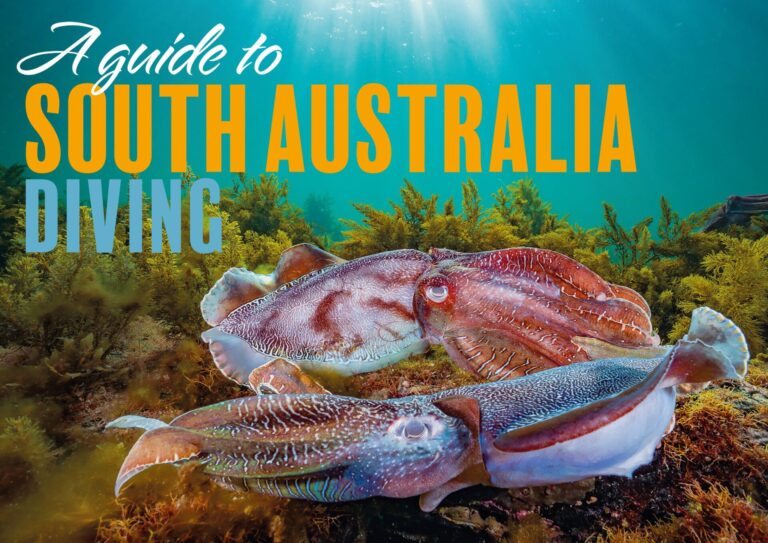
This month we continue our State-by-State guide to diving the magnificent and diverse waters of Australia with a closer look at what South Australia has to offer. Australia boasts stunning reefs, kelp forests, a vast array of wrecks, humpback whale migrations, whaleshark aggregations, great white encounters, sea lions, weedy and leafy sea dragons, macro dives galore, a staggering number of endemic species and much, much more. Australia has it all, from thriving tropical warm waters in the north to the abundant cold waters of the south, which is where we are headed this time with CHELSEA HAEBICH
Photographs by Chelsea Haebich
Travel is back in a big way with COVID restrictions now eased. Many of us have already packed bags and jetted off to warmer climates. But during restrictions many of us learnt that looking locally for unique experiences holds many rewards. We’ve been rediscovering a love of travel in our own backyards and the cool temperate waters of South Australia has been one of those destinations.
Living in South Australia, I’m often met with looks of surprise when I tell non-divers that I dive most weekends. “How?” and “Where can you dive around here!?” are the most-common questions asked.
Honestly, there is so much diving here in South Australia -Ioften reply, “Anywhere I can get in!” Seriously. SA has very accessible diving and while it’s impossible to cover all the diving the state has to offer; I’d like to share some of its unique highlights with you.
South Australia has world-class diving and snorkelling within minutes of its capital city Adelaide. It’s also a diverse place for these activities with 3000km of coastline offering snorkellers and divers tidal reef systems, coastal drift dives, drop-offs, shipwrecks and big animal experiences, as well as creatures you’re not likely to see anywhere else.
The state also offers extensive freshwater diving including spring fed ponds and complex cave systems.
Diving the cooler waters of Southern Australia can be done year-round with a quality 7mm wetsuit or drysuit. The warmest, calmest dive months are February, March and April.
Water temps can reach 23 degrees C during this time but quickly drops away to between 9 and 13 degrees C in the winter months of July and August – definite drysuit diving season.
Most well-known diving in South Australia is self-catered shore diving – meaning you bring all your own gear and provisions for the day and dive the Jetties at your leisure from the carparks.
Many of the dive shops and diving clubs also offer boat dives and frequently schedule offshore reefs and shipwrecks on their itineraries each week.
While there’s some fantastic metropolitan diving in Adelaide, South Australia’s coastline is mainly divided into three distinct areas for diving: Fleurieu Peninsula, Yorke Peninsula and Eyre Peninsula, and looking at each of these regions is perhaps the best way to start exploring the many highlights this state has to offer.
FLEURIEU PENINSULA
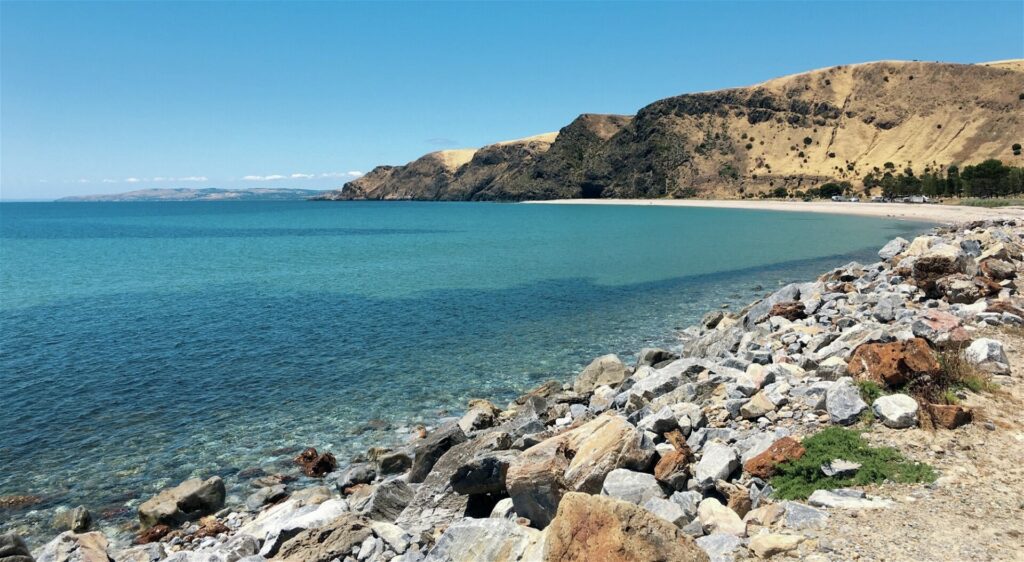
The Fleurieu is where the Mount Lofty Ranges meets the sea. It’s about an hour’s drive south of Adelaide, and is popular on weekends for its scenic drives, wineries and microbreweries. It’s the gateway to Kangaroo Island and its picturesque rolling hills massage out the weekday stresses for many families on weekends.
Diving the Fleurieu is all about slowing down and taking it in. From reefs, kelp-covered walls, sponge encrusted Jetty pylons to seagrass beds and iconic creatures such as the magical leafy sea dragon.
You can pack a macro camera for the tiny critters or go wide to take in the dappled light between pylons and the swaying kelp on reefs. There’s much to choose from when exploring the Fleurieu as a diver or snorkeller.
The most popular and accessible sites are Rapid Bay Jetty, Second Valley, the Bluff at Victor harbour and Port Noarlunga Jetty – all of which are suitable to snorkellers too.
Offshore there is the historic and epic wreck of the ex-HMAS Hobart, a 140-metre missile destroyer. Also offshore is Lassiters Reef and Rapid Head and closer back towards Adelaide are the beautiful sites of Aldinga Pinnacles and Aldinga Drop Off.
THE HIGHLIGHTS
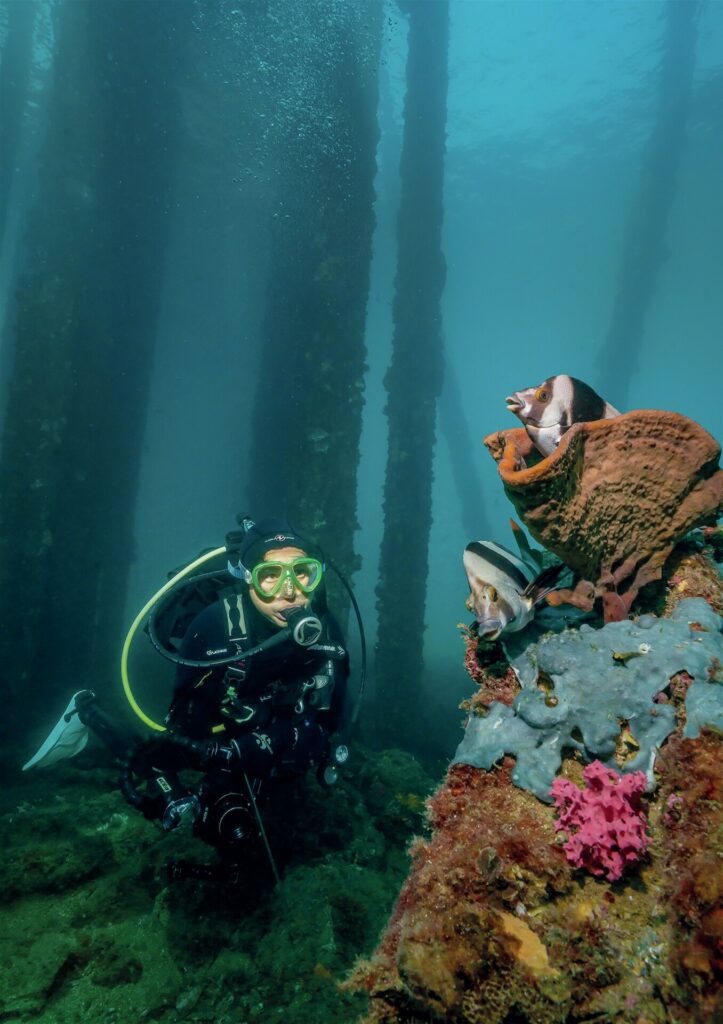
Rapid Bay. This iconic jetty is fast decaying as the winter south-westerly storms pummel it. But the sturdy T section holds fast and is a spectacular dive.
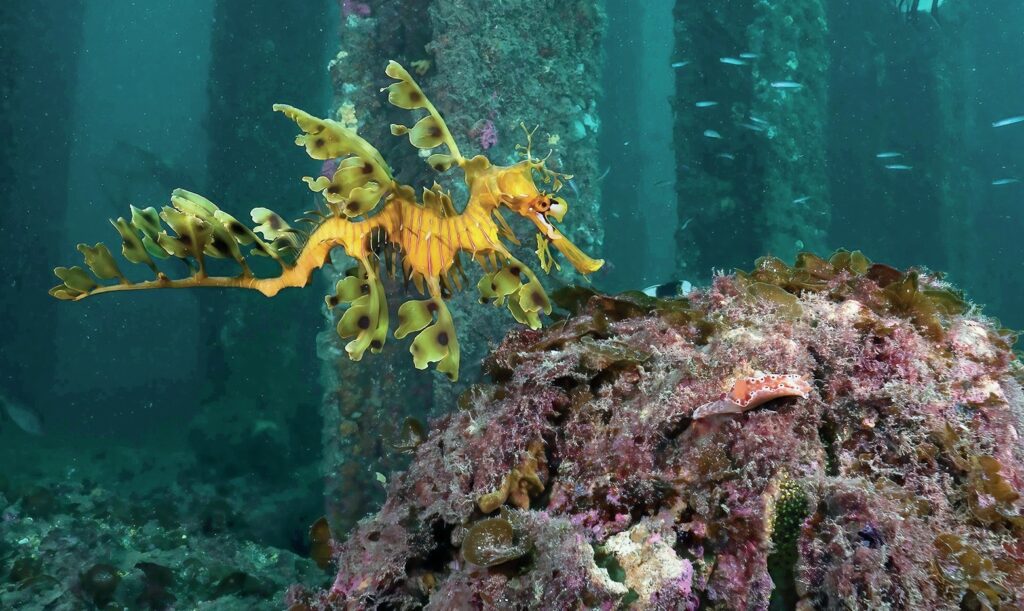
Sunny days, as the rays streams between the metal pylons, large schools of temperate fish species gather in the calm. Known affectionately as ‘the Aquarium’ or Gallery, it’s also the known lair of the leafy sea dragon and sightings here are reliable.
Second Valley. If rusty pylons aren’t your thing and getting back to a wilder nature is, then Second Valley’s your site. Where the Mount Lofty Ranges meets the ocean, the hard granite rocks make for a rugged underwater landscape.
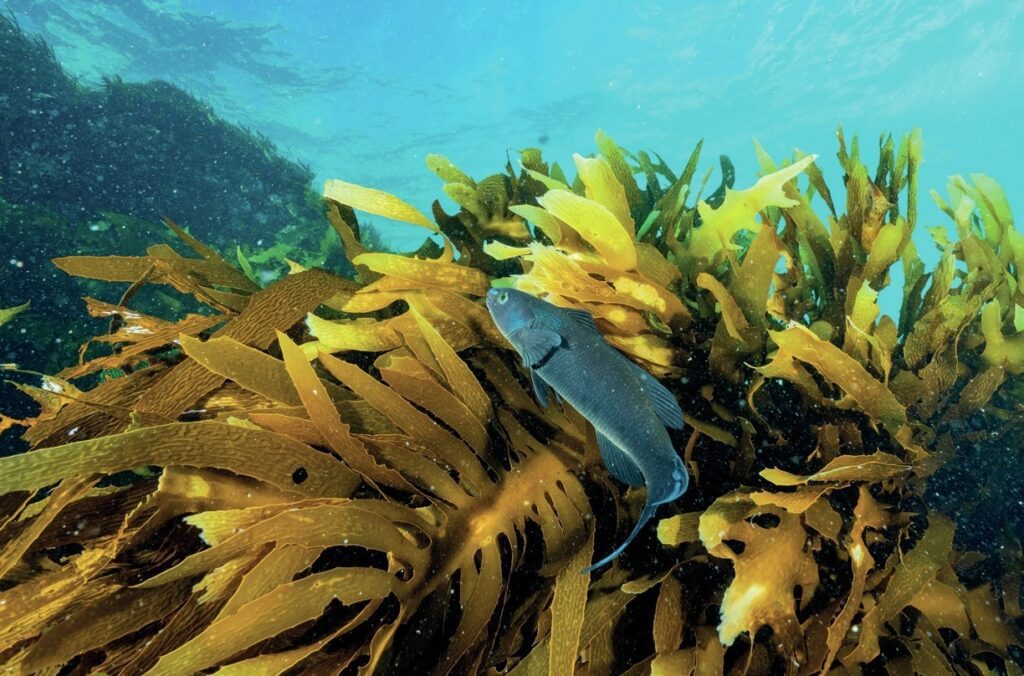
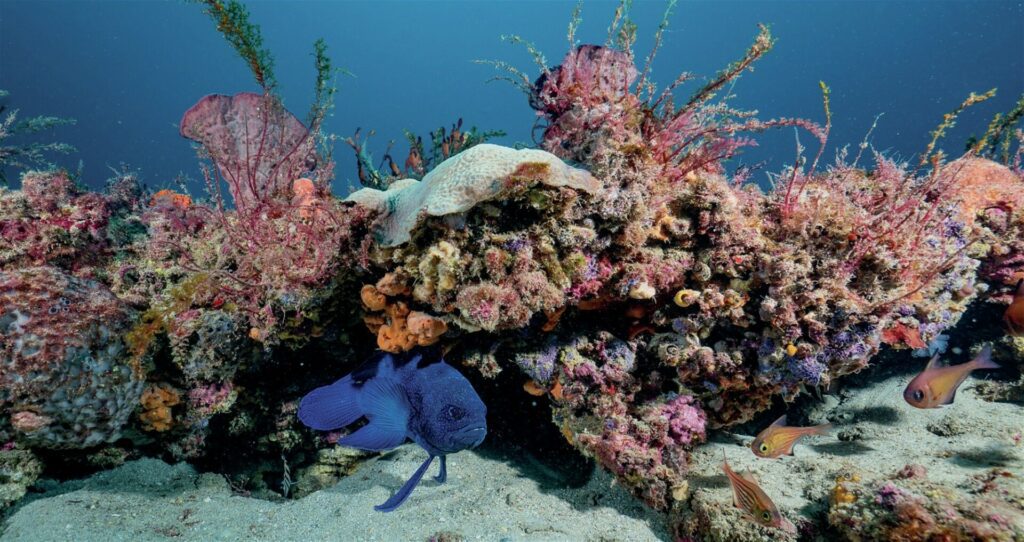
Kelp, algae and sponges cover the black rocks creating spectacular and dynamic walls to dive along. Blue devils make their homes here, reef fish and leafy sea dragons drift the walls. A short swim after an easy Jetty entry has you feeling you’re somewhere remote, private and unexplored in no time.
The Bluff. This distinctive headland was historically used as a lookout by whalers in times past. Located southwest of Victor Harbour, the distinctive granite dome extends below the sea line and creates a fantastic and dynamic wall to explore.
Usually dived when prevailing winds prevent entry to Rapid Bay and Second Valley it’s a very reliable spot for finding leafies floating through the golden habitat.
Noarlunga Jetty. Closer to Adelaide and the most metropolitan of the Fleurieu’s sites. The 300-metre Jetty takes you out to a man-made reef running parallel to shore with an underwater aquatic trail that leads you through the Port Noarlunga Reef Sanctuary Zone.
A haven for breeding Port Jackson sharks and a great macro site too. There is much to explore under the Jetty and along both sides of the Reef.
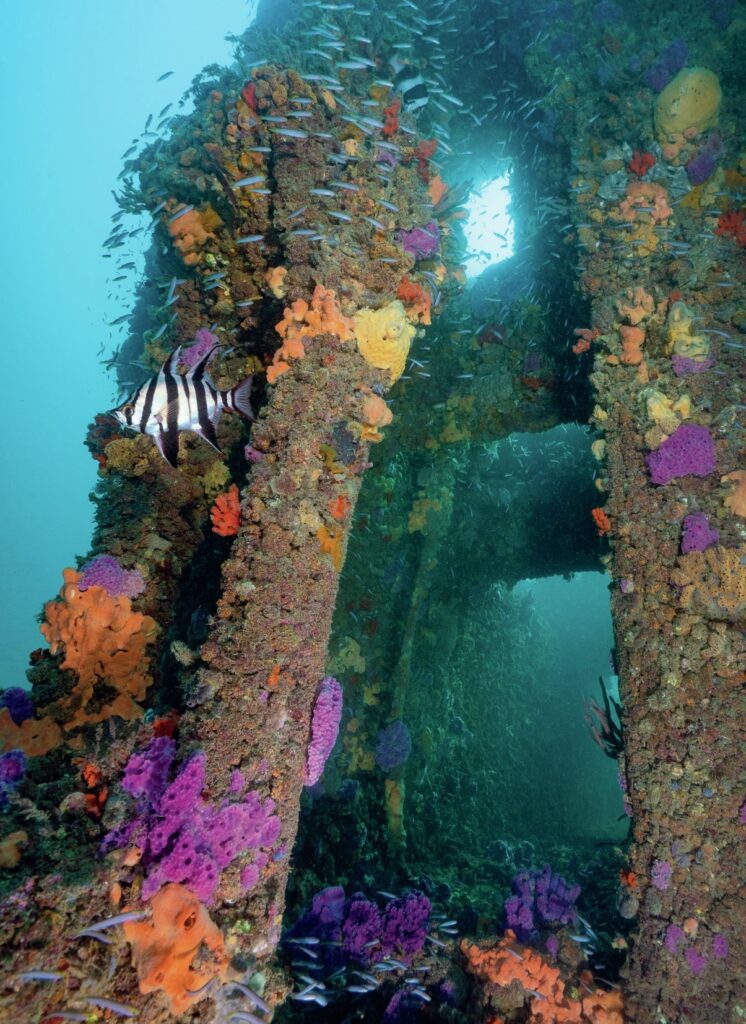
Ex-HMAS Hobart. The highlight of wrecks in SA must be the ex-HMAS Hobart – a134-metre missile destroyer sitting in 30m of water – is teeming with fish life.
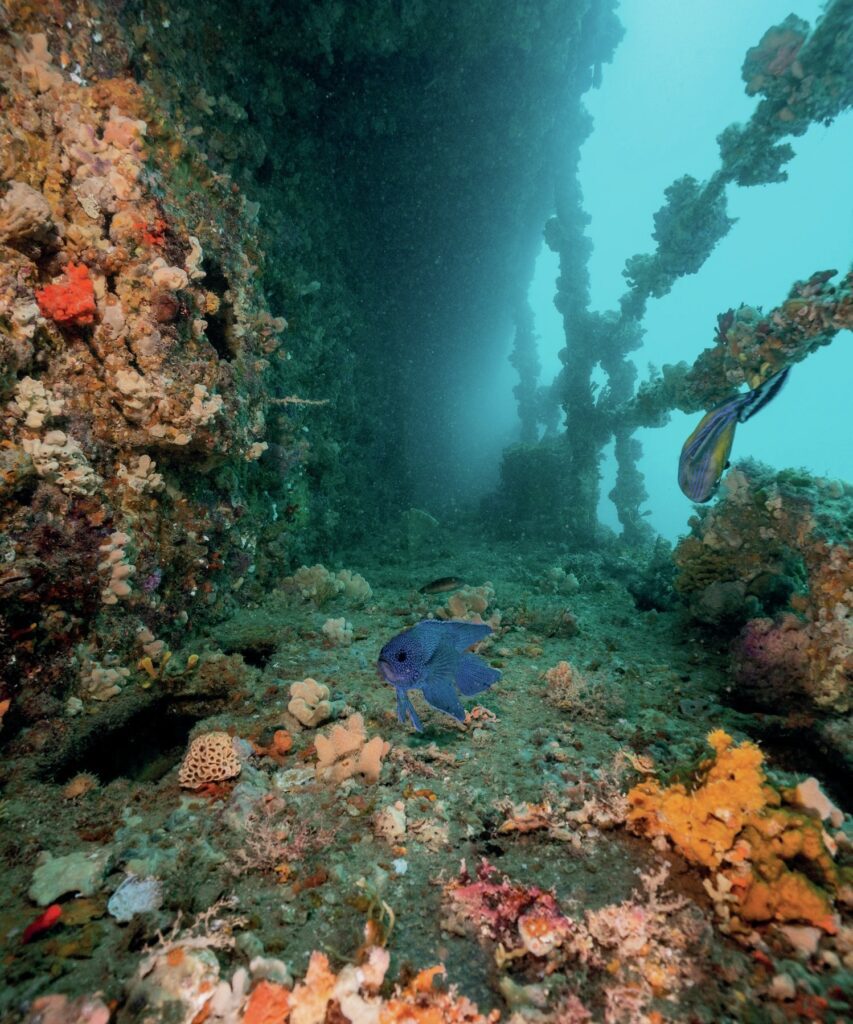
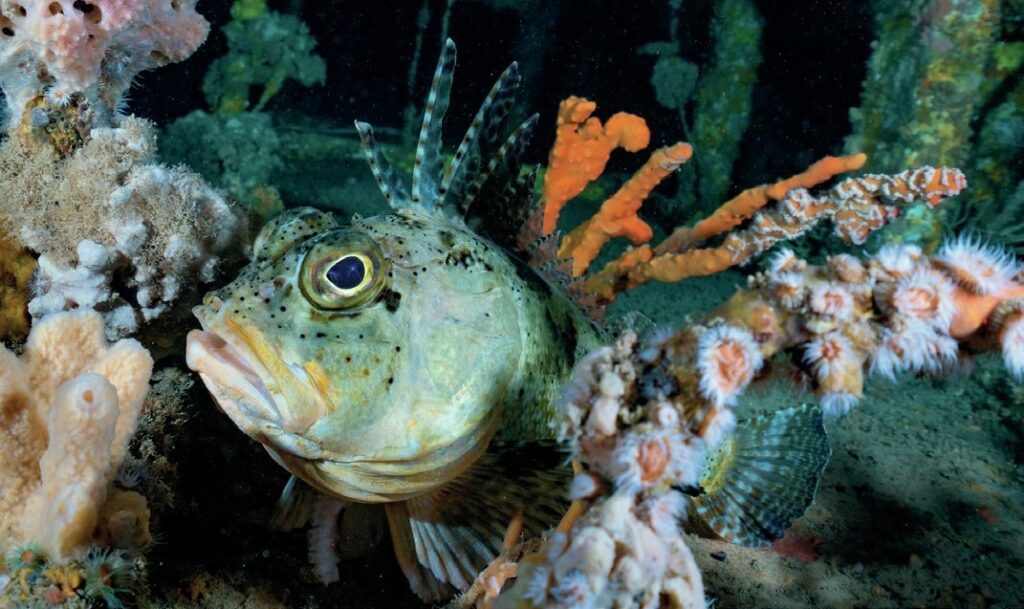
A must-do if the tides are in your favour when visiting. An imposing site to descend upon, and it’s getting more spectacular and colourful as the years pass.
Star of Greece. An historic three-mastered iron ship with a tragic story and loss of many lives in 1888. This wreck is accessible from shore – this is a great snorkelling site on calm days with plenty of fish life attracted to it for refuge.
Aldinga Drop Off and Pinnacles. Two offshore sites that benefit from being a part of the Encounter Marine Park. Healthy gorgonians, sponges, larger fish and great variety of species all thrive at these two colourful sites.
Lassiters Reef. Offshore from second valley is a domed bommie covered in golden kelp. Herring Cale gathers here as well as leafy sea dragons and its rocky terrain is the perfect habitat for Port Jacksons to hide the next generation of eggs.
Rapid Head. Further south from Rapid Bay is a spectacular coastal cliff face where long nosed fur seals and endangered Australian sea lions haul out after a night feeding.
Drop in here for a relaxing drift in the currents created by the walls and if you’re lucky you’ll be joined by some playful pinnipeds.
YORKE PENINSULA
West of Adelaide lies the Yorke Peninsula – amacro photographer’s dream. Topside its history is farming and mining – mostly wheat, barley, sheep grazing and copper. Now it’s a sleepy area of the world but was once a busy hub.
Transporting the peninsulas produce was often done by ship so around the coast small Jetties catered for this trade. Some are still in use today but most stand aging and are a mecca for fishermen, holiday makers and, of course, scuba divers.
The pylons of these jetties have created amazing underwater worlds of colour, vibrance and diversity like nowhere else.
Exploring this area can mean some reasonable ‘windscreen time’ driving to various sites and it’s good to have a ‘home’ base of accommodation in places like Port Hughes or Edithburgh to make the most of your time on the Peninsula.
Most of the diving is shore diving, but for those with a boat and the opportunity, Wedge Island, Wardang Island and Althorpe Islands offer some wild and remote dive destinations and historic shipwrecks.
But for most people visiting there’s more than enough under the Jetties to keep you occupied and seeing something new.
THE HIGHLIGHTS
Edithburgh Jetty. Arguably the most iconic of all the Jetties on the peninsula – if not the state! Extending close across the water creates a low light environment where filter feeding sponges and ascidians flourish.
It has some of the highest biodiversity and range of endemic species such as smooth anglerfish, frogfish and southern pygmy pipehorse. It’s a shallow site with easy access so you can get lost for hours under the Jetty exploring and finding something new every dive.
Port Hughes. Located at the top of the Peninsula’s ‘leg’ is a very unassuming Jetty and a personal favourite. Always filled topside with fishermen, below the colourful pylons are home to sponges, kelps and algae.
Much of the seafloor under the Jetty is seagrass. Looking closely, you’ll see many species of pipehorse entwined around the grass blades. There’s also an abundance of frogfish, nudibranchs, octopus and seahorses.
A great dive when Edithburgh blows out as it faces the opposite direction. Best in a South-easterly before the afternoon sea-breeze picks up.
Wallaroo Jetty. Still in use today as a shipping terminal. Near the end you can find up to 18m depth. Most of the diving is done inshore where depth ranges between 6-10m. With lots of creaking and thudding of the old construction materials it’s an atmospheric dive.
Old wooden pylons are encrusted with sponges and hard corals. Diversity of marine life is high. Frog and anglerfish, ornate cowfish, leather jackets, stingrays and the occasional schools of pelagic fish gather under the Jetty for food and shelter.

Wool Bay. In a sheltered bay near Edithburgh this picturesque Jetty is surrounded by shallow water with a healthy abundance of seagrasses. This reduces turbidity and sand disturbance so often the waters here are incredibly clear for a temperate dive.

Once a renowned spot for leafy sea dragons however, sighting here are rare these days. There’s still plenty to see in the grasses. Juvenile fish gather, there’s often squid and long nosed fur seals will zip by to check you out. Low tide this site is sometimes only 4-5m in depth allowing for long slow dives in warmer months.

Stenhouse Bay. This Jetty is in approximately 10m of water. It’s infrequently dived due to its location and accessibility but well worth it if you have access by boat or don’t mind a steep ladder entry/exit in dive gear!
The Jetty is right at the southern end of Yorke Peninsula in the Dhilba-Guuranda Innes National Park. It dips its pylons into rich waters allowing for large gorgonians to grow on the tall pylons as well as sponges and the abundant fish life it attracts.

Point Turton Jetty. A relatively shallow dive in only 4-5m of water. It’s sheltered and quite a small Jetty, so divers tend to extend their dives into the whole bay area.
Crayfish and abalone can be found along the rock wall west of the Jetty and seagrasses attract Port Jacksons and eagle rays. Smooth rays also often glide into the shallow waters to rest and interact with snorkellers under the Jetty itself.
EYRE PENINSULA
While Eyre Peninsula may be the most remote of the destinations in South Australia, its wild and rugged nature is fast gaining it a reputation as a fantastic food, wine and wildlife destination. More than 65% of the nation’s seafood comes from this region – abalone, prawns, tuna, oysters.
There’s so much abundance that it’s a haven for large animals. You can snorkel with dolphins and Australian sea lions, cage dive with great white sharks and watch humpback whales migrate and calve the next generation.
You can also see one of the most unique wildlife aggregations on the planet that of the giant cuttlefish.


THE HIGHLIGHTS
Neptune Islands. From Port Lincoln several operators travel regularly to the Neptune Islands taking punters out to cage dive with great white sharks. Sea lion pupping colonies attract sharks to the region to feed, and the winter months bring the big female sharks.
For divers and snorkellers the surface cages will bring you eye to eye with this apex predator and nowhere else in the world allows you to encounter them from the bottom of the ocean totally immersed in their domain, 20m down in a cage. A formidable experience if you get the chance.
Baird Bay. Is one of the best places to go swimming with one of the most charismatic marine mammals – the Australian sea lion.
Tours will have you out rolling in the turquoise waters with these aquatic acrobats and engaging with this endangered pinniped on its own terms, in its own environment, totally wild and free.
Shark cage tour operators will also seasonally add sea lion swims to the itinerary around Hopkins, Grindal, Langton or Blyth Islands.
Whyalla. If you’re brave enough to take on chilly ocean winter temperatures during May, June and July you’ll be rewarded with experiencing one of the most unique wildlife aggregations on the planet.
In the shallows at Point Lowly, just outside Whyalla, tens of thousands of giant cuttlefish gather to compete, mate and create the next generation. You can wade in from shore and right at your feet this spectacle unfolds, reaching its peak in June and July.
Either bring the toastiest of all your dive and snorkel gear or visit the local dive shop for everything required – including a guide if you need.
Tumby Bay. Well, if whales, sharks, cuttlefish and sea lions weren’t enough to get you over to Eyre Peninsula there is also a Jetty located down the east side of the Peninsula where you can dive and see leafy sea dragons. A great stop off if you are driving to Port Lincoln for cage diving.
SOUTH-EAST SOUTH AUSTRALIA
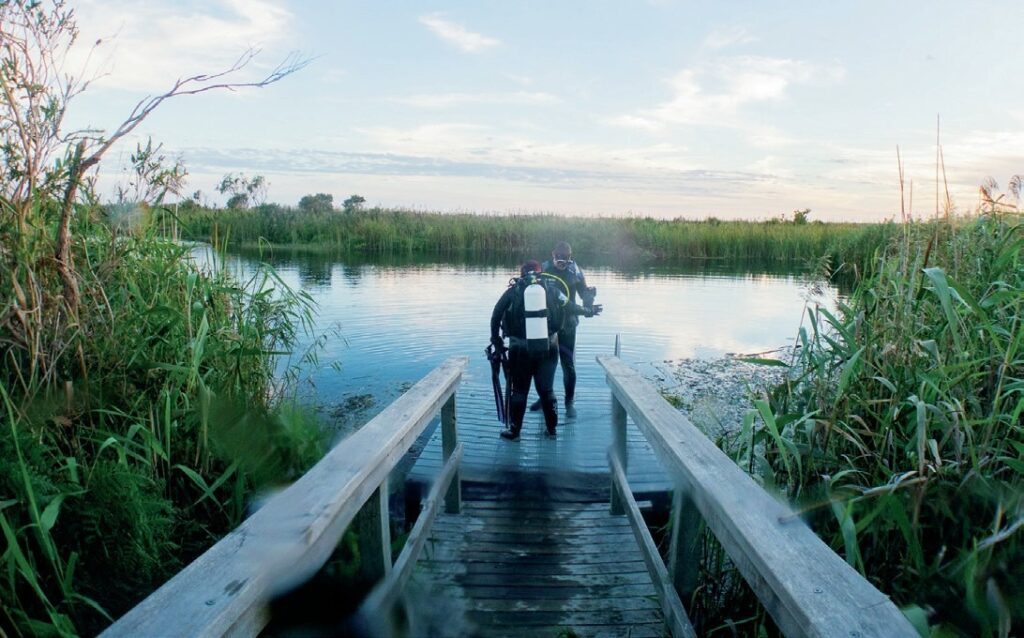
Diving in South Australia isn’t all salty oceans. Mount Gambier, located in the south of the state, just near the Victorian border, has a unique geological landscape of limestone, lava caves and sinkholes offering the best freshwater and cave diving on the continent.
While a lot of cave diving may seem intimidating and out of reach, here in the green landscape of Mount Gambier a few of the sinkholes and freshwater ponds are accessible to snorkellers and open water divers. Gin clear water filled with endemic water plants and animals create and amazing wonderland to explore.
THE HIGHLIGHTS
Ewens Ponds Conservation Park. Ewens is a spring fed chain of ponds connected with flowing channels if icy, gin clear water. Snorkelled or dived you’ll see aquatic plants, fish and invertebrates that are unique to this area.
Ewens is one of the few places you can see the protected Glenelg spiny crayfish and pygmy perch. To help preserve this habitat permits must be obtained, and seasonal closures occur allowing habitat recovery – so worth planning your trip ahead to avoid disappointment.




Piccaninnie Ponds. While closed until further notice this wetland of international importance is worth mentioning. While permits for snorkelling and diving aren’t currently being issued you can still pay a terrestrial visit.
Freshwater forced up through the limestone has created The Chasm and the beautiful white walls known as The Cathedral bring cave divers from around the world. Most of us without appropriate certifications can make do with snorkelling where encounters with freshwater eels and fish are common.
Kilsbys Sinkhole. Through a few paddocks and past a few curious cows lies Kilsbys Sinkhole. Located under the Kilsbys Family farming properly, only 15 minutes from Mount Gambier, this serenely beautiful sinkhole has crystal clear water that leaves you feeling like you’re floating in space.
Sunny days create an ethereal site as the rays penetrate the depths. Booking is essential as it is the only site of its kind to allow free divers, snorkellers and certified divers access – but it must be under supervision of a qualified guide. Kilsbys Sinkhole.
Through a few paddocks and past a few curious cows lies Kilsbys Sinkhole. Located under the Kilsbys Family farming properly, only 15 minutes from Mount Gambier, this serenely beautiful sinkhole has crystal clear water that leaves you feeling like you’re floating in space.
Sunny days create an ethereal site as the rays penetrate the depths. Booking is essential as it is the only site of its kind to allow free divers, snorkellers and certified divers access – but it must be under supervision of a qualified guide.
ADELAIDE CITY DIVING
Not all diving in South Australia is just for the intrepid or those liking road trips. There’s plenty to see and do along the coastline and offshore in metro Adelaide. Several dive operators and clubs run chartered boats to popular reefs and wrecks only a short boat ride away from the Marinas.
There are the wrecks of the Norma, MV Seawolf and The Lumb and the deeper wreck, The Claris, with its resident wobbegong, as well as Milkies Reef, Devils’ Elbow and many more reefs. Too many to mention all the sites here.
THE HIGHLIGHTS
The Dredge. Purposely scuttled 6km off the coast from Glenelg in 20m waters is arguably one of the most popular wrecks in the state. A decommissioned dredging vessel, this perfectly sized hulk is an oasis in the gulf for schooling fish and a highlight is to swim up through the suction cutter amongst them.
On a clear day and courtesy of a picket trail you’re also able to navigate to its accompanying Barge 80 metres away.
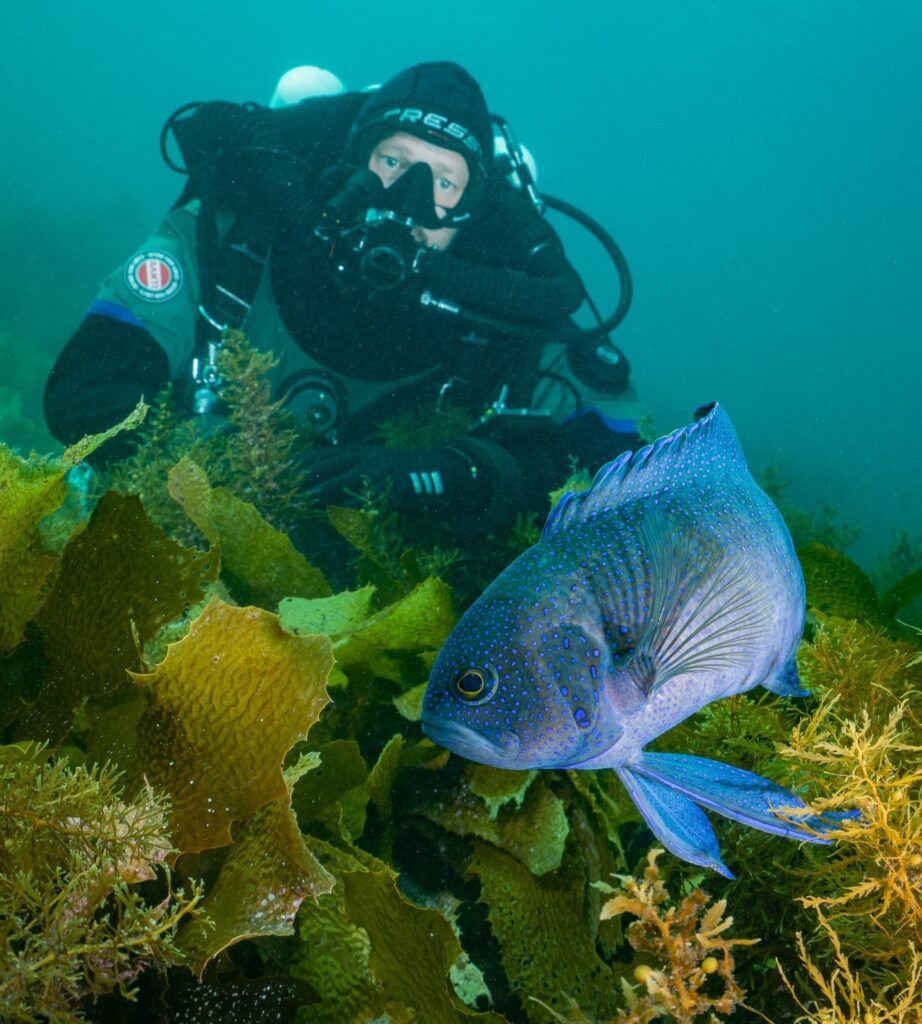
Seacliff Reef. This small drop-off is home to a very charismatic fish – the southern blue devil. Popular at this site as they have become habituated to divers and make great photo subjects as they inspect the dome port of your camera and defend their lairs.
You can go back year after year and see the same fish. Many of them have names and have been studied over the decades. Seacliff Reef. This small drop-off is home to a very charismatic fish – the southern blue devil.
Popular at this site as they have become habituated to divers and make great photo subjects as they inspect the dome port of your camera and defend their lairs. You can go back year after year and see the same fish. Many of them have names and have been studied over the decades.
Northern Outer Reef. This underrated reef system is always full of surprise and colour. Deeper than other well dived reefs the lower light levels allow weird and wonderful sponges to dominate. There’s always something different to spot too – weedy sea dragons have been a frequent sighting here as well as the unique Hutchins boarfish.
Northern Outer Reef. This underrated reef system is always full of surprise and colour. Deeper than other well dived reefs the lower light levels allow weird and wonderful sponges to dominate.
There’s always something different to spot too – weedy sea dragons have been a frequent sighting here as well as the unique Hutchins boarfish.
SUMMARY
So, while the Great Barrier Reef might be the most iconic reef to visit, the Great Southern Reef brings life, energy and uniqueness to a diver’s experiences when they explore this part of the world.
With a little planning where else can you dive with great white sharks, snorkel with sea lions, watch the most unique breeding aggregation of the giant Cuttlefish or daydream a dive away with a leafy sea dragon under some of the best Jetties?
Nowhere but South Australia! With a little planning where else can you dive with great white sharks, snorkel with sea lions, watch the most unique breeding aggregation of the giant Cuttlefish or daydream a dive away with a leafy sea dragon under some of the best Jetties? Nowhere but South Australia!
FAQ
Q: When is the best time to dive South Australia?
A: You can dive year-round. Warmest, calmest conditions are Feb–Apr (~18–23°C). Winter (Jul–Aug) drops to ~9–13°C—prime drysuit season and peak Whyalla giant cuttlefish aggregation (May–Jul).
Q: What exposure protection should I bring?
A: A quality 7 mm wetsuit (hood, gloves) works most of the year; a drysuit is ideal for winter and longer bottom times.
Q: Where can I see leafy sea dragons?
A: Rapid Bay Jetty, Second Valley, The Bluff (Fleurieu), and Tumby Bay (Eyre) are reliable spots. Move slowly, maintain distance, and avoid touching kelp or seagrass.
Q: What are the top shore dives near Adelaide?
A: Rapid Bay and Port Noarlunga jetties (Fleurieu), plus metro boat-access sites like The Dredge, Seacliff Reef, and Northern Outer Reef.
Q: What’s special about Yorke Peninsula jetties?
A: Macro heaven. Edithburgh, Port Hughes, Wallaroo, Wool Bay, Point Turton, and Stenhouse Bay boast sponge-laden pylons with anglerfish/frogfish, pipehorses, seahorses, nudibranchs, and octopus.
Q: Can I do wreck diving in SA?
A: Yes—headline wreck is ex-HMAS Hobart (missile destroyer) in ~30 m off the Fleurieu. Also Star of Greece (snorkel on calm days) and multiple metro wrecks by charter.
Q: Where can I encounter great white sharks and sea lions?
A: Neptune Islands (Port Lincoln) offers cage diving with great whites (big females in winter). Sea lion swims run out of Baird Bay and seasonally from shark operators.
Q: When and where is the giant cuttlefish aggregation?
A: Point Lowly, near Whyalla, May–Jul (peak Jun–Jul). Shore access; expect cold water—bring warm gear or hire locally.
Q: Are there freshwater/cavern dives?
A: Yes—Mount Gambier region. Ewens Ponds (permit required, seasonal closures) and guided dives/snorkels at Kilsby Sinkhole offer crystal-clear spring water; Piccaninnie Ponds is currently closed to diving/snorkelling.
Q: Do I need a boat, or can I shore dive?
A: Much of SA’s iconic diving is accessible from shore (especially jetties). Local shops/clubs also run regular boat charters to reefs and wrecks.
Q: Any conservation or safety tips?
A: Check marine park zones and permits (e.g., Ewens). Practice excellent buoyancy under jetties to protect sponges and ascidians; avoid disturbing sea dragons and nesting Port Jackson sharks; plan for cold-water conditions.
This article was originally published in Scuba Diver Magazine
Subscribe today with promo code DIVE1 — enjoy 12 months for just £1!