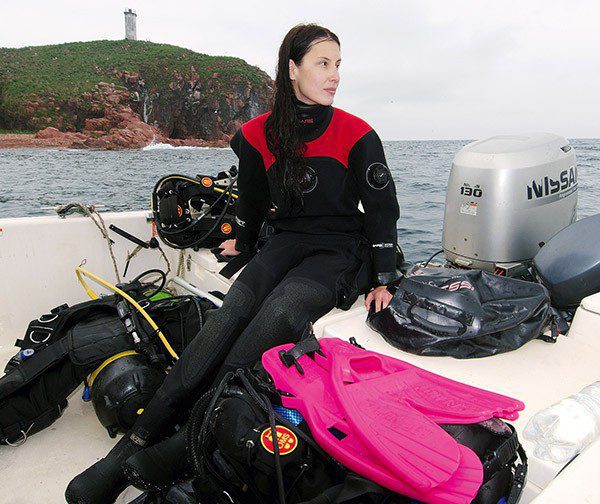
Do women get a fair crack of the whip in diving? Louise Trewavas – and who would dare deny her a fair crack of the whip? – takes a look at the profile of women in our favourite sport.
Ask the average person if they have heard of any scuba divers, and most will look a bit blank and go ‘um… French bloke… Cousteau?’ And that’s pretty much it. Diving is not a particularly high-profile sport.
If you ask the average person to name any women divers, they’ll probably just snort with laughter. A few years ago, I set myself the task of compiling an A-Z of women divers.
At the time it was a toss-up between that, and a diving version of Rock Family Trees – showing who knows/sleeps with, and therefore currently dives with, who.
The second project started to get way too scary once I had placed myself on the map, so I threw my energies into the first. I deliberately included characters such as Ocean Barbie and Xena Warrior Princess to convey that the list shouldn’t be taken too seriously.
After the A-Z of women divers was published, I received angry emails and complaints from a couple of men demanding to know why I hadn’t put their girlfriends on the list. Perhaps the two projects weren’t so entirely different after all.
Show me the women!
Is there a really a problem with the profile of women in diving? Diving used to be an overwhelmingly male sport, but it has come a long way.
Women diving instructors are far more common, and there is definitely a female presence and influence in the world of diving.
But are women treated with equal respect and regard? A quick flick through a selection of diving magazines shows that very few women write the articles, and even fewer women divers are written about.
Women mostly appear as ‘models’ in ads and diving features. An entire page of what
I thought was an advert for a push-up bra turned out to be a feature on BCs.
The beauty contest
So how do we determine which divers, women or not, deserve a high profile? There’s a fundamental problem here: unlike in freediving, we don’t have ‘champions’ in diving because we don’t hold competitions or championships.
The nearest thing we have is depth records, and even these are distinctly dodgy. There are no formal rules, nobody can agree on the categories and there is no authorising body.
Unlike Cousteau, today’s divers are not necessarily high-profile because they have achieved anything. Profile is determined largely by media presence, so those divers who come to our attention are often the ones who are good at exploiting media opportunities.
Of course, it helps if you have done an amazing dive, discovered something new or solved some mystery, but all too often the situations being filmed or written about are commissioned – created for the media.
So they need to be presented by someone suitably appealing, and not by some hairy-arsed tekkie. Ironically, while this requirement to look good and perform could be seen as an opportunity to promote the profile of women in diving, the impact is questionable.
There are, for example, a plethora of attractive young women in skimpy bikinis presenting travel features about diving in the Caribbean on cable TV.
Good on them. But does it really assist the average woman diver struggling to get a diving project together, or to advance in her qualifications, or just to be given a bit of respect within her sport?
Imagine that we’d like to make a TV programme about ice-hockey, so we find someone who scrubs up well in front of a camera – preferably a presenter with a bit of experience – then give them a few ice-hockey lessons and expect them to take part and hold forth.
I suspect that ice-hockey fans would be less than impressed! This is why most football or tennis programmes, for example, are presented by people with a track record of achievement in that sport.
The US solution
Americans have their own particular take on this issue, and have set up the Women Divers Hall of Fame. Which is fine, but as I guarantee that you will never have heard of 90% of the people in there, it seems like a bizarre and rather arbitrary exercise.
The criteria are confused, it’s very US-dominated, and it often seems to mark ‘worthiness’ rather than achievement.
But however imperfect, it’s still an attempt to raise the profile of women divers using some kind of rationality. A shame then, that nobody pays any attention!
So what really makes a difference to a woman’s profile in the world of diving? I can tell you from experience how various people have got ahead, sadly, but it is likely to resemble the diving version of Rock Family Trees – so I refer you to the Top Tips panel below instead.
A Brief Who´s Who (and Why)
There are and have been a number of prominent women divers – this is my own, non-exhaustive choice of some of those who have, or should have, earned a place in the public consciousness.
The A-Listers
The Pioneers
- Dr Sylvia Earle – Marine biologist, oceanographer, former chief scientist at NOAA, and founder of Mission Blue, advocating marine conservation globally.
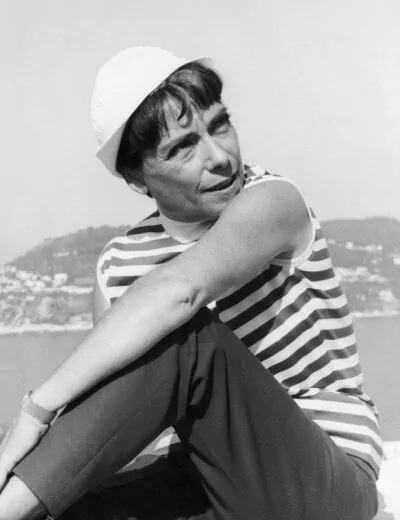
- Lotte Hass – The “First Lady of Diving,” Lotte co-founded one of the first underwater film companies with her husband Hans Hass. Her pioneering dives and films inspired generations of women divers. ‘I was originally given a job as his secretary, and I went off and learned to dive secretly,’ Lotte explained when she was honoured at a British Sub-Aqua Club conference in 1998. ‘Then, when the opportunity arose, I revealed that I could dive.’
- Tanya Streeter – While not strictly a scuba diver, Tanya is the most high-profile woman in a wetsuit, and a genuine achiever. Record-breaking freediver and media personality. Tanya has consistently set world records and now uses her platform to inspire women in diving and water sports. However, women who break records don’t always manage to establish the profile that Tanya has achieved. Looking amazing, and having an assertive husband for an agent, has undoubtedly helped her career.
- Dr Ann Kristovich – This diver became a legend after her cave-diving exploits and women’s depth record were featured in the long-defunct US magazine AquaCORPS. Ann Kristovich specialises in decompression medicine and has been an indispensable member of Jim Bowden’s team; in fact, it is her partnership with Bowden that enabled her to come to the fore. She is highly respected and has been around long enough to gain the status of quasi-diving royalty.
- Simone Melchior Cousteau – Played a key role in underwater exploration alongside Jacques Cousteau, contributing to the Calypso expeditions.
- Dottie Frazier – First female certified scuba instructor in the U.S., founder of the first women-owned dive shop, and designer of wetsuits for women divers.
- Zale Parry – Set women’s deep diving records and contributed to the development of civilian hyperbaric chambers; also a TV stunt diver.
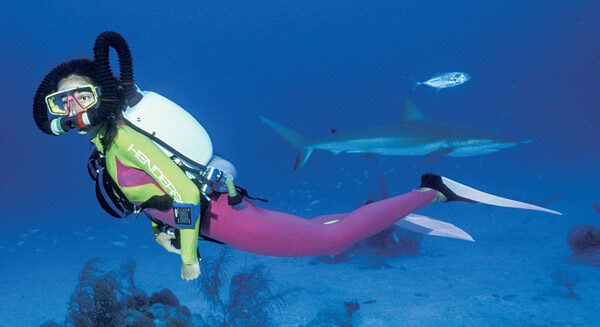
- Dr Eugenie Clark – Known as the “Shark Lady,” Eugenie Clark was a pioneering marine biologist and scuba diver who revolutionized the study of sharks and marine life. She conducted groundbreaking research on shark behavior, inspired conservation efforts worldwide, and encouraged women to pursue careers in marine science and diving. Her legacy continues to influence divers and scientists today.
Contemporary Leaders
- Andrea Marshall – Marine biologist known as the “Queen of Mantas,” recognized for manta ray research and conservation.
- Michelle Cove – 2025 International Scuba Diving Hall of Fame inductee, celebrated for contributions to dive tourism and safety.
- Anne Hasson – Promotes women’s involvement in diving and advances safety standards in the industry.
- Rosemary E. Lunn – UK-based diving educator and advocate for women divers worldwide.
- Hidy Yu Hiu-Tung – Recognized for her contributions to diving education and safety in Hong Kong.
- Joanna Wyrebek – Cold-water technical diver, inspiring women in extreme technical and cave diving.
- Manuella Ghabriel – Open circuit technical diver advocating for advanced diving skills among women.
- Susie Coombes – Up-and-coming UK diver, pushing depth records and making a name in technical diving.
- Girls That Scuba Members – Collective group empowering women through diving expeditions, mentorship, and community adventures.
- Maya Kelly – 2025 World Aquatics Championships bronze medalist in high diving, representing women in competitive diving.
The Tekettes
Teresa Telus
One of the hottest woman in technical diving after her talks and presentations about diving the Britannic and other famous liners, Teresa is certainly helped by the fact that her partner, Kevin Pickering, is an established videographer and she has access to film footage of many of her spectacular wreck dives.
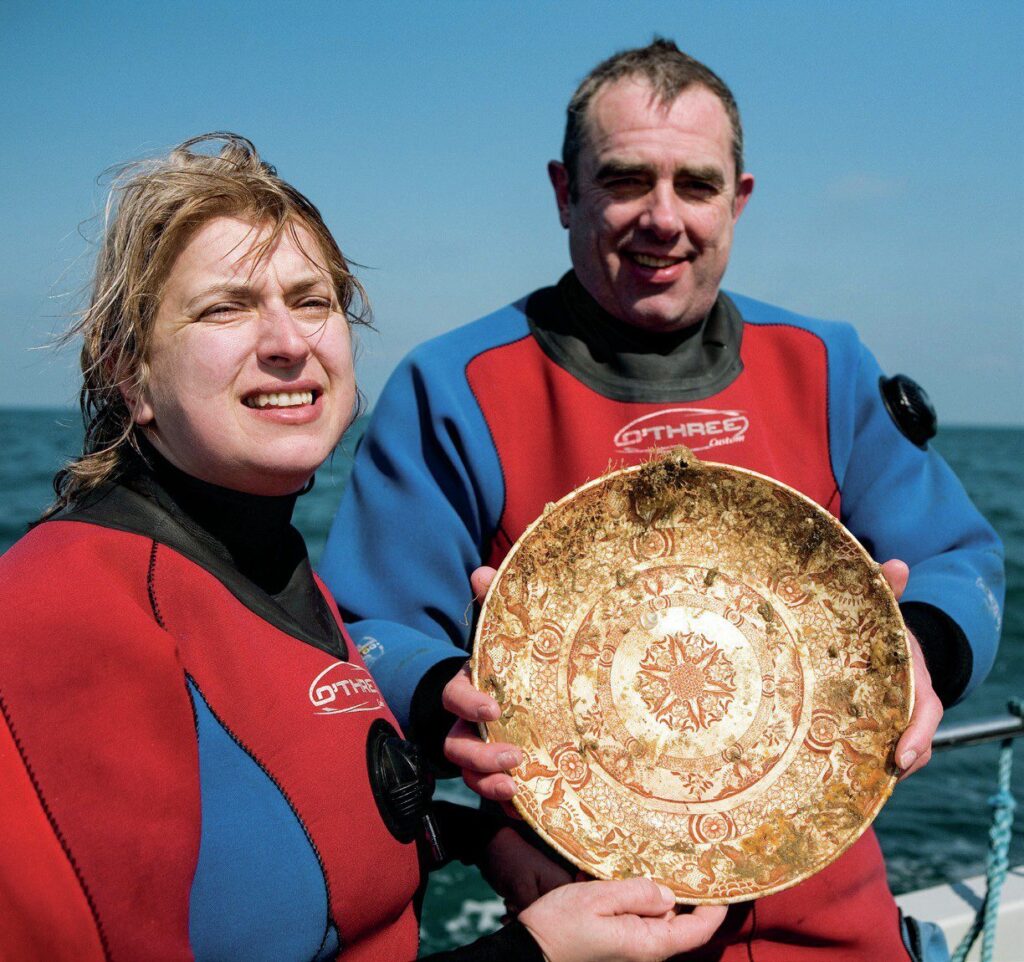
However, this in no way takes away from the fact that she is an outstanding diver. Teresa has been a figure within the UK technical diving community for several years, and has an established track record of achievement upon which to draw.
Not unpredictably, she received little recognition in technical diving publications before being brought to public attention through DIVER and its Dive Shows.
Adina Ochert
Adina has set a women’s depth record with a 144m dive on the wreck of HMS Victoria off Lebanon. Her independent expeditions, including dives on the submarine Vandal and the SS Maidan, showcase her determination and skill. Despite facing challenges, Adina continues to push boundaries in technical diving.
Frustrated by being side-lined on projects by other divers, Adina and her partner Nick Gilbert set out to initiate their own diving expeditions with remarkable success.
She has claimed the women’s deepest wreck dive record with a 144m dive on Victoria. Adina shows no signs of slowing up, and has overcome serious injuries to continue with her diving projects. Top girl.
Emma Barrow
Based in Finland, Emma transitioned from sport diving to technical diving, drawn by the challenging conditions of the Baltic Sea. She specializes in wreck exploration using a JJ-CCR rebreather and is passionate about maritime archaeology. Emma’s approach emphasizes safety, teamwork, and mental resilience.
Manuella Ghabriel
Operating out of Dahab, Egypt, Manuella is an advocate for open-circuit technical diving. She emphasizes the importance of mindset, confidence, and continuous learning in technical diving. Manuella encourages women to pursue diving, highlighting that the sport is not limited by gender.
Gemma Smith
An experienced expedition leader, Gemma was the first woman to dive the famous Antikythera Shipwreck. She is a passionate advocate for women in diving and has explored numerous deep-sea caves and shipwrecks.
Maria Bollerup
A certified rebreather instructor from Denmark, Maria is a dedicated cave and wreck diver. She actively promotes women’s participation in technical diving and encourages female explorers to challenge themselves safely.
Jill Heinerth
A world-renowned cave diver, technical diver, filmmaker, and author, Jill Heinerth has explored some of the most challenging underwater cave systems on the planet. She is a strong advocate for women in diving, safety in exploration, and environmental stewardship. Jill has also produced award-winning films and books that inspire both divers and non-divers alike.
The Record-Breakers
Karen van den Oever
Hailing from South Africa, Karen holds the current world record for the deepest scuba dive by a woman at an astonishing 246.56 meters (808 feet) in Boesmansgat Cave. Completed in October 2022, her dive lasted over eight hours and involved complex decompression planning due to the cave’s high altitude.
Karen’s achievement surpassed the previous record held by Verna van Schaik and firmly places her among the most accomplished women in technical and cave diving today. Her record-breaking dive is celebrated not only for its depth but also for the precision, skill, and courage required to accomplish it safely.
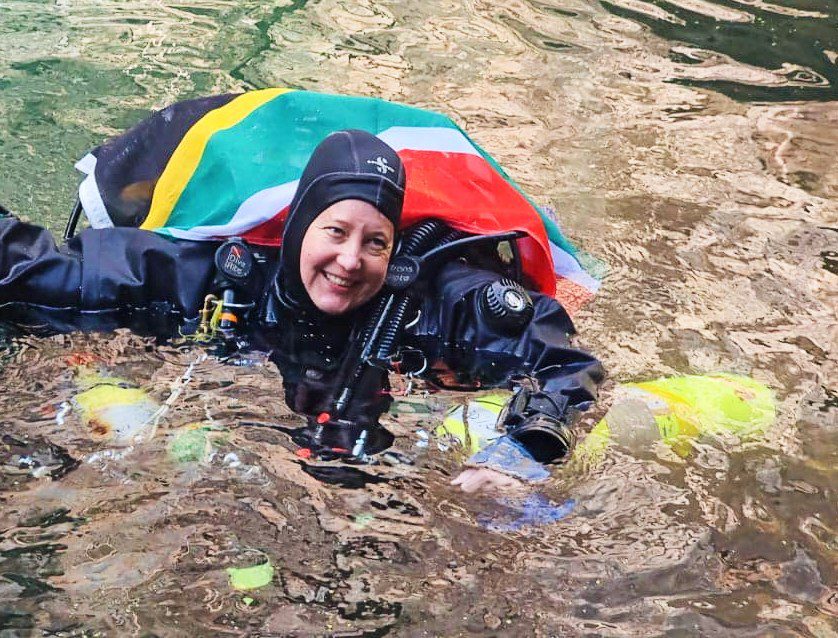
Verna van Schaik
A pioneering figure in deep cave diving, Verna van Schaik set a Guinness World Record on October 25, 2004, by descending to 221 meters (725 feet) in Boesmansgat Cave, South Africa. This remarkable achievement not only marked the deepest scuba dive by a woman but also broke her own previous records for cave and altitude diving. The dive took 5 hours and 34 minutes, with the ascent requiring over 5 hours of decompression, underscoring the technical and physical demands of such an endeavor. If only she had taken an ironing board, she could have had the extreme ironing record as well. She has also dived with Nuno Gomes and David Shaw.
Verna’s record stood for nearly 17 years, inspiring countless divers worldwide. Her journey into deep diving began in the early 2000s, driven by a passion for exploration and a commitment to pushing the boundaries of human capability. Beyond her diving accomplishments, Verna has been a vocal advocate for women in diving, emphasizing the importance of mentorship, safety, and continuous learning in the diving community.
Rizia Ortolani
After diving 140m on a submarine in the Mediterranean, Rizia was surprised to learn that she had achieved the deepest wreck dive by a woman (since claimed by Adina Ochert). Did the Italian technical diving fraternity celebrate?
No! She was thoroughly slagged off on the Internet forums as being pushy and undeserving.
She seems to have made the mistake of organising the trip herself, and had no male partner to lend ‘credibility’ to her efforts.
In reality there are plenty of women diving in the 100m-plus range on wrecks, and it’s probably a mark of how little regard women pay to these kinds of diving records that nobody can be bothered to make a claim for it.
The presenters who dive
Miranda Krestovnikoff
She crashed onto our collective horizon in the series Wreck Detectives, and we’ve certainly watched Miranda progress in her diving career.
She’s also written a fabulous new book telling us all how to dive! A regular and popular speaker at the Dive Shows.
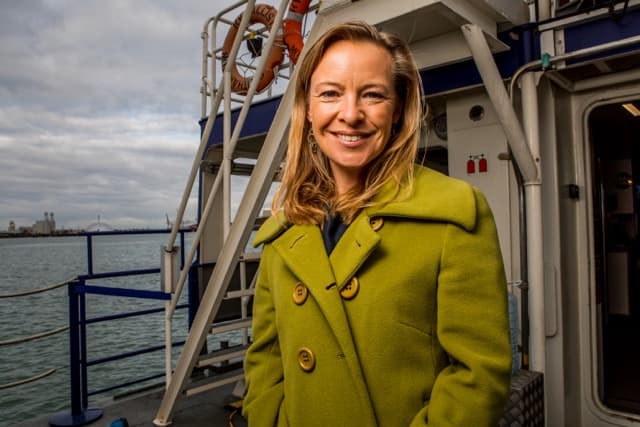
Kate Humble
Lovely, lovely Kate – living proof that being posh and enthusiastic are far more important than actually having something interesting to say. She does look smashing in a wetsuit. Noteworthy recently for having battled it out with a cod on TV. The cod won.
Lucy Blue
A marine archaeologist and TV presenter, Lucy has combined her passion for underwater exploration with presenting. Her work highlights shipwrecks and ancient maritime history, inspiring audiences to see the ocean as both a playground and a laboratory.
Nia Owen
A rising star in UK adventure television, Nia regularly features on diving segments exploring coral reefs, marine wildlife, and underwater archaeology. Her approachable style makes diving accessible and fun for viewers of all ages.
The Scientists
Marguerite St Leger Dowse
The first woman to point out that you should actually carry out some scientific research and have some data to back up your argument before telling women that their bodies aren’t suitable for diving and that they are 400% more likely to get bent than a man (authors of Diving and SubAquatic Medicine: take note).
Marguerite is the pioneer of scientific studies around diving and the menstrual cycle. She has had to face being undermined and ridiculed by the many misogynists in this field and has maintained her composure and good grace throughout. Respect.
Steffi Schwabe
She’s scary, German, and was the partner of the late Rob Palmer. Steffi is a highly motivated cave-diver and scientist who speaks her mind and does not suffer fools gladly.
She works in tough conditions and has a reputation for fearlessly taking on challenges – whether in her diving, or in taking on corrupt bureaucracies to protect the environment. A fighter.

Edith Widder
A renowned marine biologist and deep-sea researcher, Edith has pioneered the use of bioluminescence studies to explore ocean life. She’s known for developing specialized submersibles and imaging technology to study deep-sea organisms in their natural habitats.
Samantha Joye
An oceanographer and expert on deep-sea ecosystems, particularly hydrocarbon seeps and oil spill impacts. Samantha has conducted extensive research on the ecological effects of deep-water drilling and is a leading voice in marine environmental science.
Ellen Prager
Marine scientist, author, and communicator who bridges scientific research and public outreach. Ellen has conducted research on coral reefs, marine mammals, and climate impacts, and she works to make scientific knowledge accessible to divers and the general public.
The Fallen
Polly Tapson
Spare a thought for the woman who pioneered technical diving in the UK. Polly Tapson’s groundbreaking expeditions to the liner Lusitania in 1994 and ’95 set both the UK and US diving communities alight.
After a serious bend, she had to abandon deep diving, and went into film-making, producing Swept From The Sea with Vincent Perez and Rachel Weisz in 1997.
It’s a romantic story with a shipwreck – but no, it’s not Titanic.She died in hospital in 2000 after a suicide attempt. For someone who contributed so much to the advancement of diving in the UK, she has been all but expunged from history.
Audrey Mestre
A French free diver who held multiple world records and tragically died during an attempt to set a new world record in 2002. Her death highlighted the extreme risks involved in competitive deep diving and sparked discussions on safety standards in the sport.
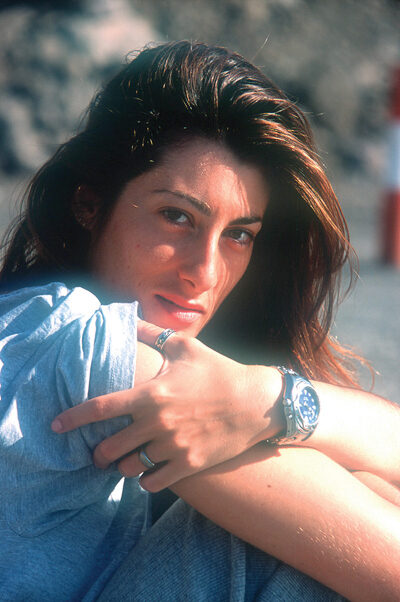
Natasha Goldsworthy
A cave and wreck diver who passed away in 2015 after an accident during an expedition. She was remembered for her pioneering spirit in European technical diving circles and for mentoring young women divers.
Faith Zieske
An early advocate of mixed-gas and rebreather diving in the US, Faith suffered a fatal accident in the mid-2000s while exploring deep wrecks. Her legacy continues in training programs she helped establish.
Further Information
- Women Divers’ Hall of Fame: US-based initiative to recognise the achievements of women in diving (www.wdhof.com).
- Neutral Buoyancy by Tim Ecott: Contains great interviews and analysis, and includes many pioneering women divers.
- The Darkness Beckons by Martyn Farr: A comprehensive and useful book that includes many details about the contribution of women cave-divers.
- Cenotes of the Riviera Maya by Steven Gerrard: Comprehensive guide that includes many of the women who discovered and mapped these Mexican cave systems.
- Girls That Scuba: he world’s largest scuba diving community for women
FAQs
Who are some notable women in diving?
Notable women divers include Lotte Hass, Tanya Streeter, Dr Ann Kristovich, Teresa Telus, and Adina Ochert, who have achieved records and media recognition.
How has the profile of women in diving changed over time?
Diving has historically been male-dominated, but women are now more visible as instructors, expedition leaders, scientists, and media presenters.
What challenges do women in diving face?
Women divers often face underrepresentation in articles, media coverage, and professional recognition, and must navigate a male-dominated sport.
How can women raise their profile in diving?
They can gain visibility by excelling in diving achievements, media presence, TV/film, publications, and networking within diving communities.
Are there organisations supporting women divers?
Yes. The Women Divers Hall of Fame recognises the achievements of women in diving, while communities like Girls That Scuba celebrate female divers.
What is the role of media in shaping the profile of women in diving?
Media exposure often determines public recognition, with women sometimes highlighted for appearance rather than achievement, though this trend is slowly changing.
Subscribe today with promo code DIVE1 — enjoy 12 months for just £1!
