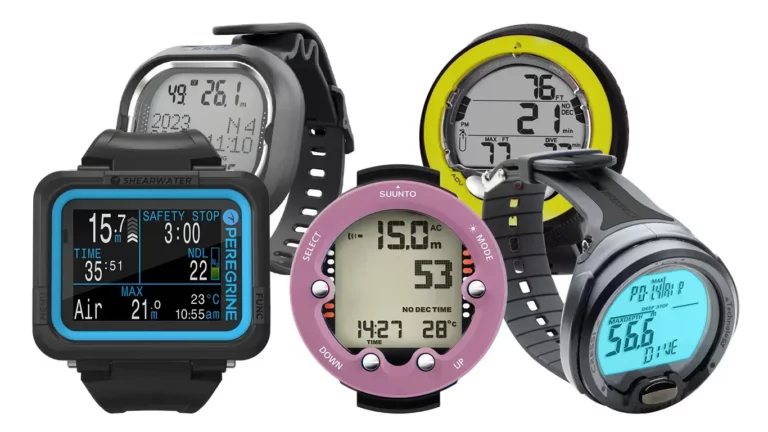
Dive computers have evolved from being extravagantly priced, cumbersome contraptions, into sleek, intelligent companions that redefine safety and convenience underwater. Originating in the 1980s, early models were often unreliable and imprecise, as well as being, well, pretty large. Fast-forward to 2025, and today’s dive computers deliver real-time depth, deco status, ascent rate, and gas-mix info as a minimum! Things only get more complicated and exciting from there and it’s all on compact, wrist-mounted screens.… sometimes in full technicolour glory.
It’s worth highlighting that this list of best dive computers under £500 puts us at the sharp end of the recreational scuba diving market. Most manufacturers have multiple models available at this price and so we have tried to cover the spread and take the best of the bunch in their specialties. All dive computers in this list are priced under £500/$650 so you don’t need to break the bank for peace of mind. And while you certainly get peace of mind, how much bang can you get for your buck?
Suunto Zoop Novo – £235 / $300
The Suunto Zoop Novo is a classic entry-level dive computer that continues to earn praise for its dependability and ease of use. With a bright backlit display and a single-button interface, it’s ideal for new divers or as a simple backup for more advanced ones. The unit supports Nitrox mixes up to 50%, includes a user-replaceable battery, and can store up to 140 dives in its memory.
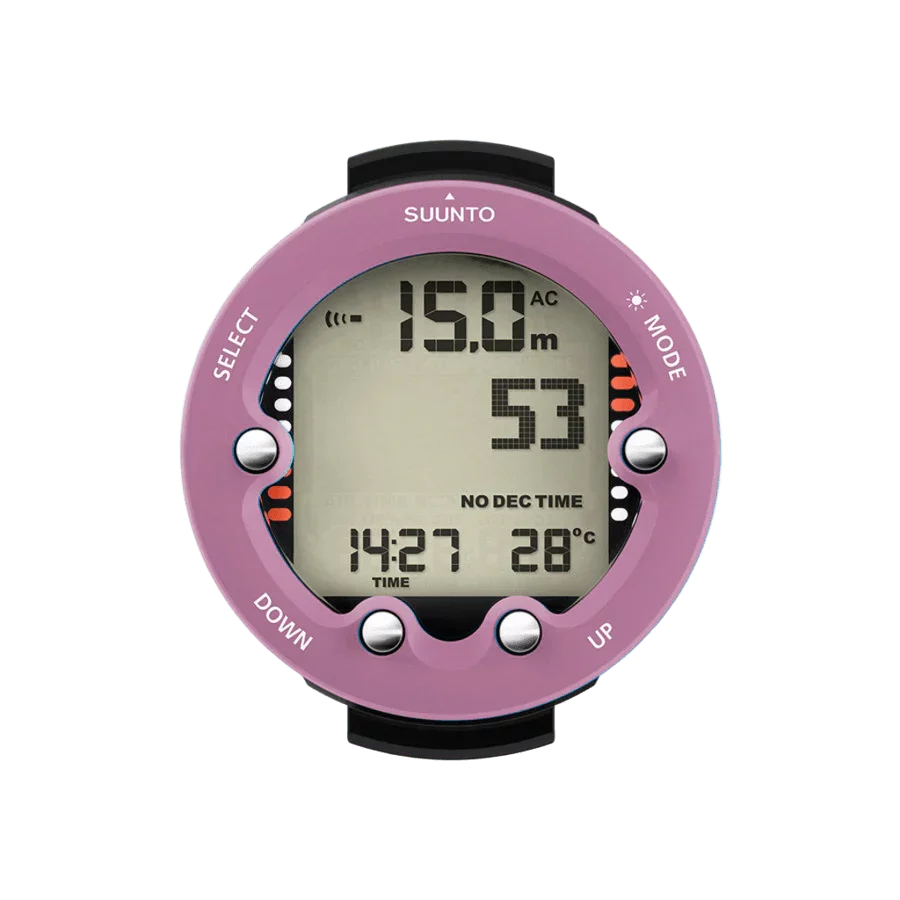
While it lacks air integration and Bluetooth connectivity, what it does offer is rock-solid reliability and a no-nonsense approach to decompression tracking. You also get a clear visual and audible ascent rate indicator, key for helping minimise the chances of DCS. One feature, often ignored by recreational divers, is its Gauge mode. This makes the Zoop Novo suitable as a bottom timer for tech divers.
If you’re after a straightforward, bulletproof device without breaking the bank, the Zoop Novo remains a top contender in 2025.
Pros:
User-friendly & bulletproof
Great entry-level price
Nitrox and Gauge modes
Cons:
No Bluetooth or air integration
Bulky compared to watch-style computers!
Shearwater Peregrine – £500 / $575
OK, so this is right at the top end of the price band, but the Peregrine is a high-performance, full-colour dive computer designed primarily for recreational divers who crave clarity, power and a foot in the door to tec. Featuring a bright 2.2-inch full colour LCD screen, vibration alerts, wireless charging, and multiple customisable display modes, it’s intuitive yet packed with pro-level DNA that you would expect from Shearwater..
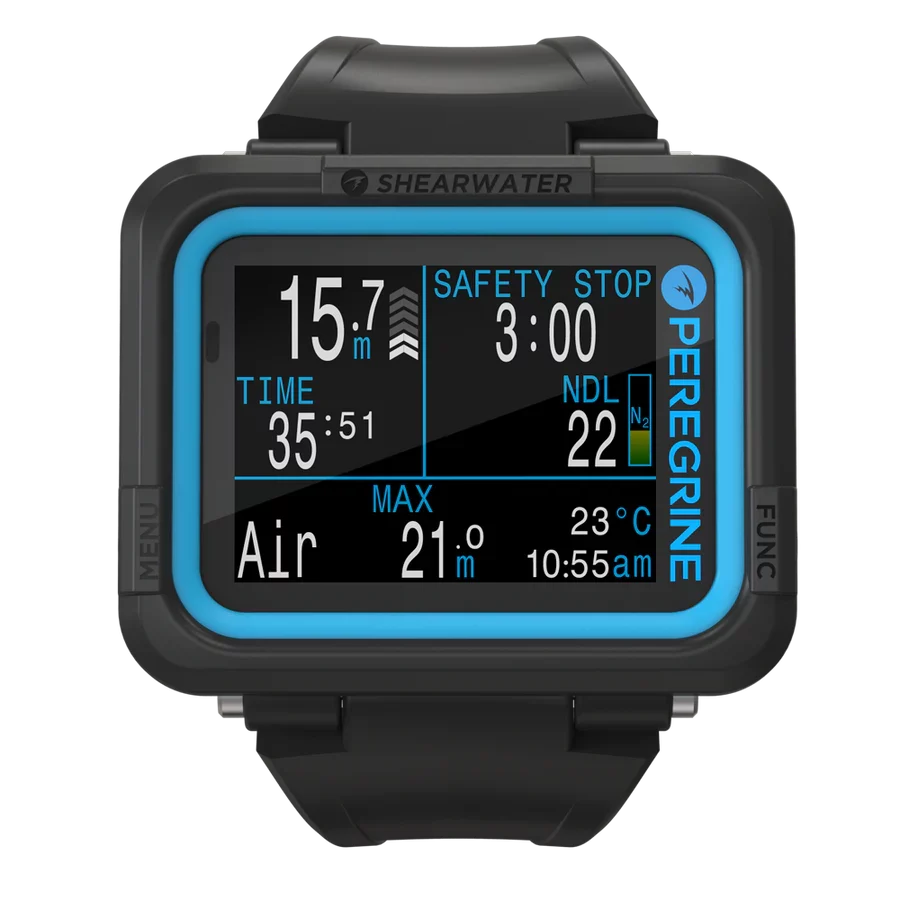
It runs the Bühlmann ZHL-16C algorithm with gradient factors, allowing advanced conservatism tuning, a rarity at this price. Air and Nitrox up to 100% are supported, as well as a three-gas nitrox mode. This is not a beginner’s dive computer, but it is ideal for anyone looking to dip their toes into entry level tec without over-spending. Dives are logged with Shearwater Cloud via Bluetooth. There’s no compass or air integration, but for most non-tech divers, that’s an acceptable trade.
Pros:
Brilliant screen and intuitive interface
Rechargeable and Bluetooth-enabled
Tech-grade algorithm for recreational use
Cons:
No compass or air integration
Pretty bulky for recreational use
Garmin Descent G1/G1 Solar – £399 / $549 or £499 / $649
A smartwatch that moonlights as a dive computer, or is it the other way around? The Descent G1 options bring GPS, dive logging, and multi-sport features into one durable package. Built for action, the Garmin Descent G1 tracks depth, time, deco status, and surface intervals, with the added bonus of also serving as your everyday fitness tracker.
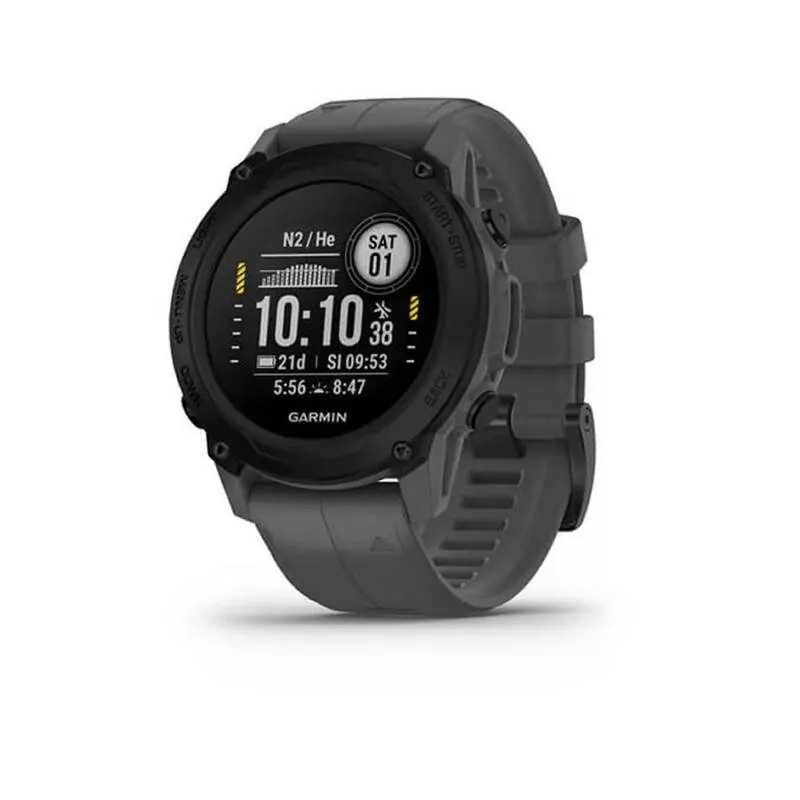
Both models support Air, Nitrox, Gauge, Apnea, and CCR modes. Battery life stretches to 25+ hours in dive mode for the standard G1 and this can be pushed way beyond this by upgrading to the Solar model. The screen is simple monochrome and not to everyone’s taste, but if you’re old enough to appreciate the ‘retro Casio’ look then you also get the bonus of ‘big numbers mode’ while diving. While not always the easiest to navigate, the Descent G1’s versatility is unmatched for under £500.
Pros:
Fitness + dive + smartwatch combo
GPS & Bluetooth connectivity
Excellent for travel and surface tracking
Cons:
Small, monochrome screen
No air integration
Suunto D5 – £455 / $649
Another wristwatch dive computer, the Suunto D5 blurs the line between lifestyle accessory and serious scuba tool. The full-colour screen is sharp, sunlight-readable, and customisable. Underwater, the D5 supports Air, Nitrox, Gauge, and Freedive modes, including being able to switch between gases during dives. Post dive it has wireless syncing to your phone via the Suunto app and will record the location (though it should be noted that the app records the phone location and not the D5’s location).
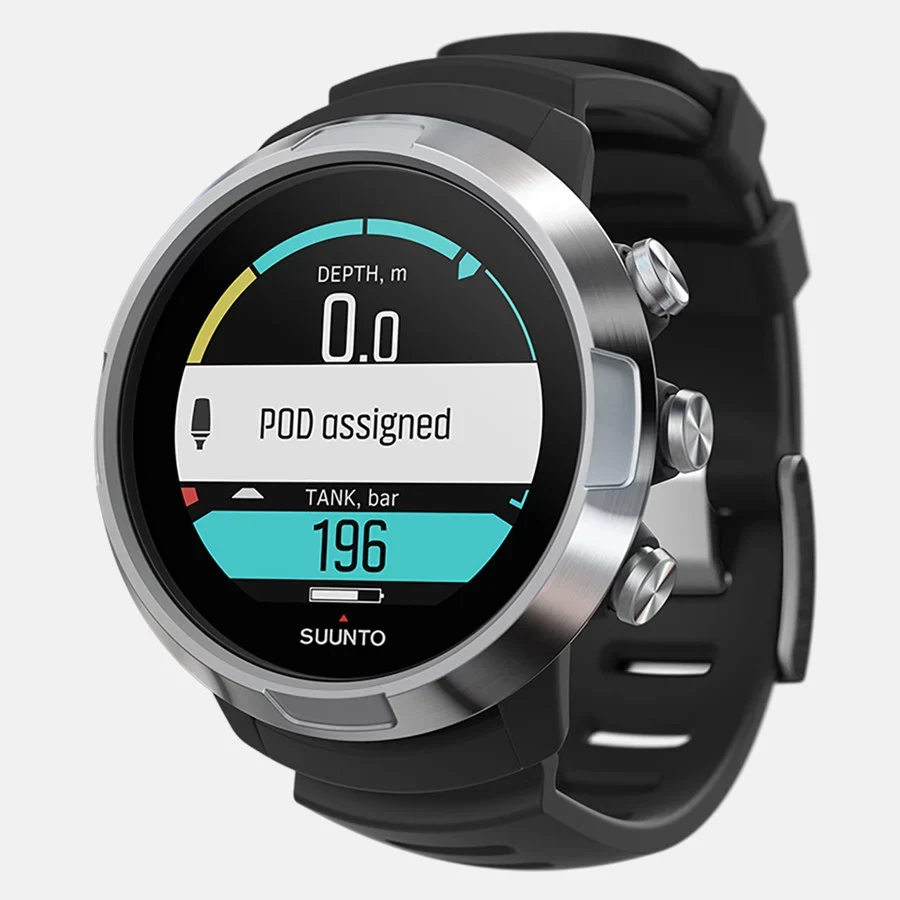
While air integration is optional via transmitter (sold separately), it lands comfortably under budget without it. The rechargeable battery lasts six to 12 dives per charge. The polished design means that you can wear it to dinner post-dive.
Pros:
Full-colour, wristwatch form factor
App-syncing and rechargeable
Stylish and travel-friendly
Cons:
Transmitter adds almost doubles cost for air integration
Lower battery life than simpler models
Oceanic Veo 4.0 – £360 / $380
The Veo 4.0 blends sleek aesthetics with serious brains. Featuring a high-contrast display and Bluetooth syncing, it also supports dual algorithms – DSAT and Pelagic Z+ – letting you match profiles with your dive buddy or instructor. Two gas mixes up to 100% oxygen make it ideal for Nitrox divers and even mild tec.
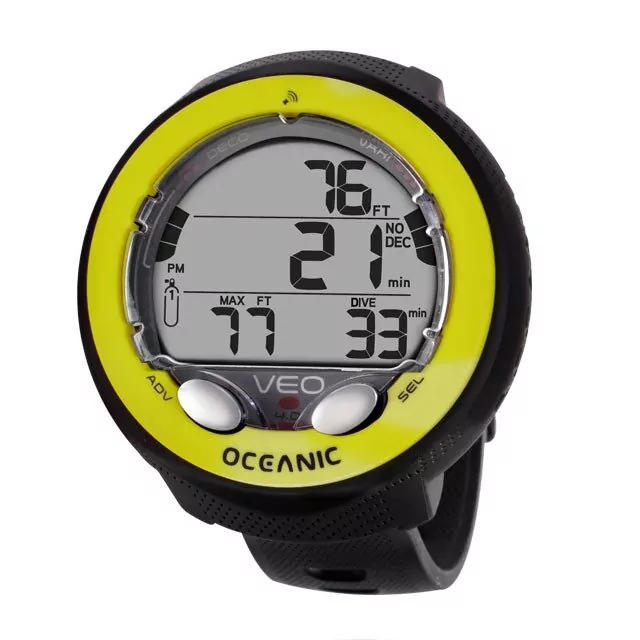
You can log and update firmware via the DiverLog+ app, and the user-replaceable battery is good for 200–300 dives. While this dive computer doesn’t offer air integration or a compass, it’s incredibly flexible for multi-level divers.
Pros:
Dual algorithm flexibility
App support and gas switching
Slim for a dedicated wrist-mounted computer
Cons:
No air integration or compass
Interface takes a moment to learn
Cressi Leonardo 2.0 – £210 / $260
Simple, affordable, and effective. The Cressi Leonardo is an ideal dive computer for divers who value practicality over bells and whistles. The edge-to-edge segmented LCD display is clear and readable, as well as being back-lit. Underwater, the Leonardo supports Air, Nitrox (up to 50%), and Gauge mode while also allowing an optional deep stop for extra conservatism.
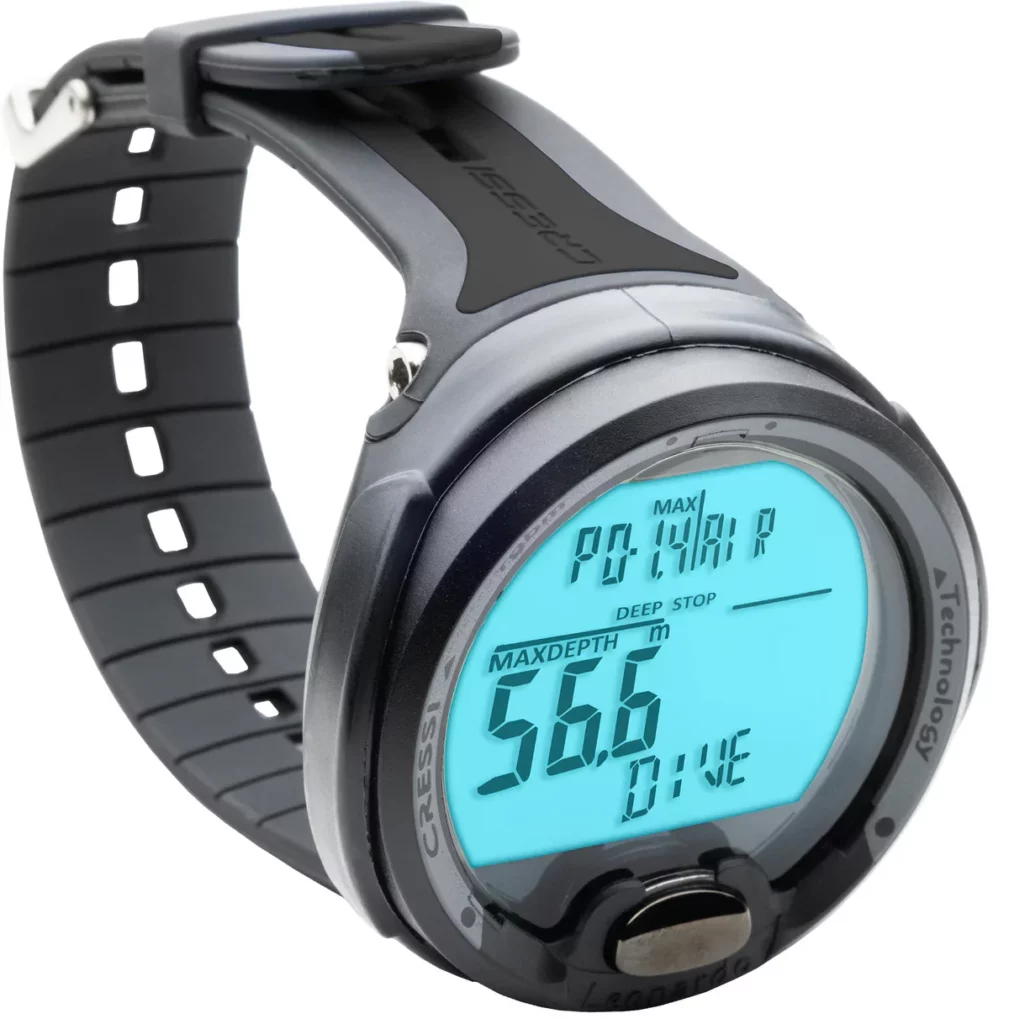
Cressi uses a modified RGBM algorithm that can be customised for ‘safety factor’. It also has clear visual and audible alarms. As with most entry level dive computers these days, the Leonardo has a single-button interface and a straightforward dive log. There is no Bluetooth, GPS, or compass, but that shouldn’t be expected at this price point. This computer simply excels at being a durable, easy-to-use workhorse for new divers, or as a back-up unit.
Pros:
Incredibly simple interface
Great screen clarity
Excellent price
Cons:
No wireless features
Limited feature set
Aqualung i330R – £308 / $399
The i330R delivers one of the best screens at this price point: a bright, full-colour TFT that stays visible in all conditions. In the water it supports four modes: Air, Nitrox, Gauge, and Freediving. You can also switch up to three gas mixes during a dive. The i330R is rechargeable via USB and offers Bluetooth syncing to Aqualung’s DiverLog+ app.

With a rugged, practical build, this is a favourite among cold-water and night divers who appreciate clear visuals. There’s no air integration or digital compass, but it packs more features than many competitors. It also has what we think is the best out of the box strap on the list, something that is not talked about enough!
Pros:
Crisp, full-colour screen
Rechargeable and Bluetooth-enabled
Multi-gas capable
Cons:
No compass or air integration
Less sleek than watch-style designs
Mares Puck 4 – £240 / $350
The Mares Puck 4 is the latest evolution of the beloved Puck series, retaining the single-button simplicity, but adding a sleek, high-contrast dot-matrix display and modernised internal tech. The Puck 4 supports Air, Nitrox (up to 99%), and Gauge modes, with deep stop capabilities and multi-gas switching.
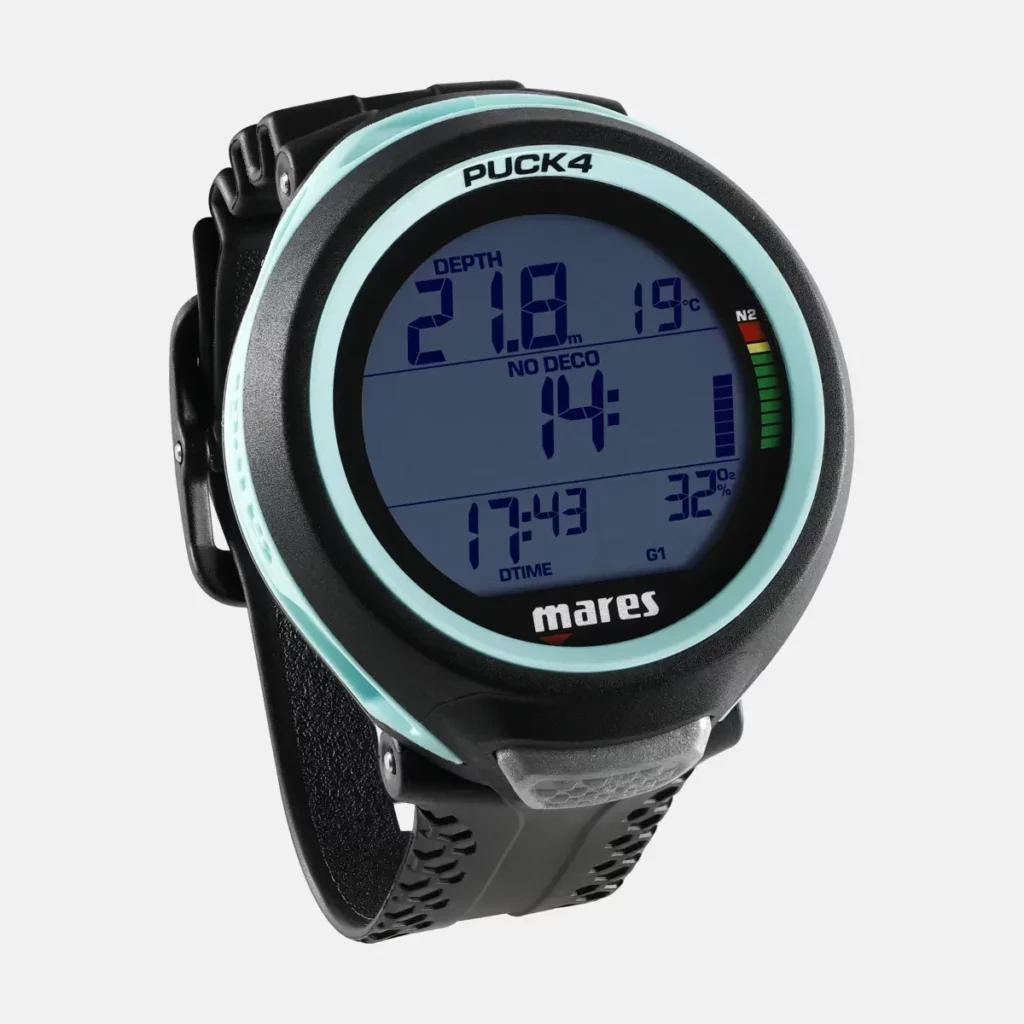
New for the Puck 4 is Bluetooth connectivity, allowing you to sync dives via the Mares app, so no more fiddling with cables. The layout is clean, easy to read even in low viz, and built to last. The user changeable battery also has a solid 100 dive lifespan. And while it’s not a fashion statement, it’s a solid functional, reliable dive tool that’s hard to beat in this price range.
Pros:
Bluetooth dive log syncing
Long battery life (user-replaceable)
Simple, tough, and efficient
Cons:
No air integration or compass
Not the best looking of the bunch
SEAC Screen – £265 / $335
The SEAC Screen is a modern looking, no-fuss dive computer designed with readability and simplicity in mind. Its wide rectangular LCD display offers a high-contrast layout that makes dive data easy to absorb at a glance. It is also backlit, helpful for low visibility or night diving. As a bonus, this is a refreshingly modern looking computer. Once you hit the water, the Screen supports Air, Nitrox (up to 99%), and Gauge mode, and includes visual and audible alarms for depth, ascent rate, and decompression stops.
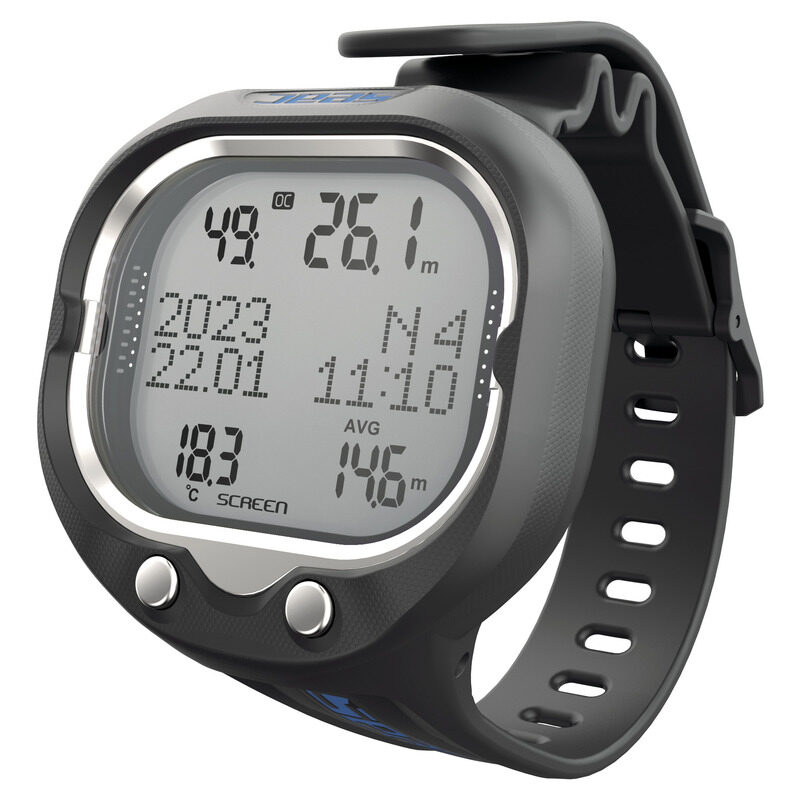
You won’t find air integration or Bluetooth here, but the user changeable battery is a nice touch, and claims up to three years use for the average diver. The interface is controlled with two front facing buttons, offering easy control, even if wearing thick gloves in cold water.
Pros:
Large, ultra-clear display
Well designed for cold water divers
Easy-to-use interface
Cons:
No app or wireless connectivity
Dedicated USB cable not included
Scubapro Aladin A2 – £400 / $480
Designed for divers who want compact power, the Scubapro Aladin A2 packs serious features into a streamlined wristwatch format. It supports Scuba, Gauge, Apnea, Trimix, Sidemount, and CCR, making it incredibly versatile. The full-dot matrix display is crisp and clear, and the user interface is intuitive once you get familiar with the layout.
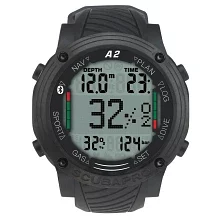
It includes a 3D tilt-compensated digital compass, which is rare at this price point, and while air integration is possible, it requires an optional transmitter. Talking of integration, it is also compatible with the Scubapro HRM belt to read heart rate and skin temperature. The A2 is also Bluetooth-enabled for easy syncing to Scubapro’s LogTRAK app. Tec divers might want more customisation, but for serious rec and sport divers, the Aladin A2 hits a sweet spot.
Pros:
Built-in compass and Bluetooth connectivity
Multiple dive and freediving modes
Sleek and compact wristwatch form
Cons:
Multiple transmitters required for extra integration
Steeper learning curve for new users
Summary – Standout Picks
Best Overall Dive Computer: Scubapro Aladin A2 – loaded with dive functionality for a solid budget
Best Value Dive Computer: Mares Puck Pro – tough, simple, and student-ready
Best Dive Computer for the Experienced Diver: Shearwater Peregrine – full colour well laid out screen and tech-grade clarity
Best Crossover Dive Computer: Garmin Descent G1/G1 Solar – smartwatch meets dive computer, a genuine daily wear with solid dive functionality
Final Word on Dive Computers
Your dive computer should reflect your diving style, not just your budget. Whether you want a no-fuss dependable option, modern tech with all the bells and whistles, or a crossover device you can wear every day, the ten models above deliver reliable safety and functionality, without breaching £500.
Of course, dive computers do not control the dive for you, they simply give you the facts. Even as a recreational diver, they are a tool and so you should already understand pressure, buoyancy, and decompression basics to get the most from them. Once you’ve got the basics of the instructions then you can dial in your Nitrox mix, dive into reefs, or pootle around wrecks with confidence and your dive computer will do the tracking for you.
And remember… if you haven’t learned how to use it, your dive computer is really no use at all, especially when those informative alarms and flashing numbers come into play. Always read the manual and have a quick refresher if you haven’t used it in a while.
FAQs – Buying a Dive Computer Under £500
1. Do I need Bluetooth on my dive computer or is USB fine?
Bluetooth offers wireless sync to phones, which is super convenient. But USB syncing works fine too and almost always saves cost.
2. Is air integration worth it?
Connecting to your tank gives real-time gas pressure, great especially for technical dives. But for recreational divers, a console SPG is generally more than sufficient.
3. How important is algorithm type (e.g., Bühlmann vs DSAT)?
The million dollar question. Conservative models (like DSAT) err towards safety, i.e. shorter NDL’s and less deep time on repeat dives. Bühlmann-based and customisable algorithms (Buhlmann GF) tend to offer longer NDLs at base and let you tune conservatism from there. The choice really depends on how liberal or cautious you like to dive and exactly what level of control you want from your dive computer.