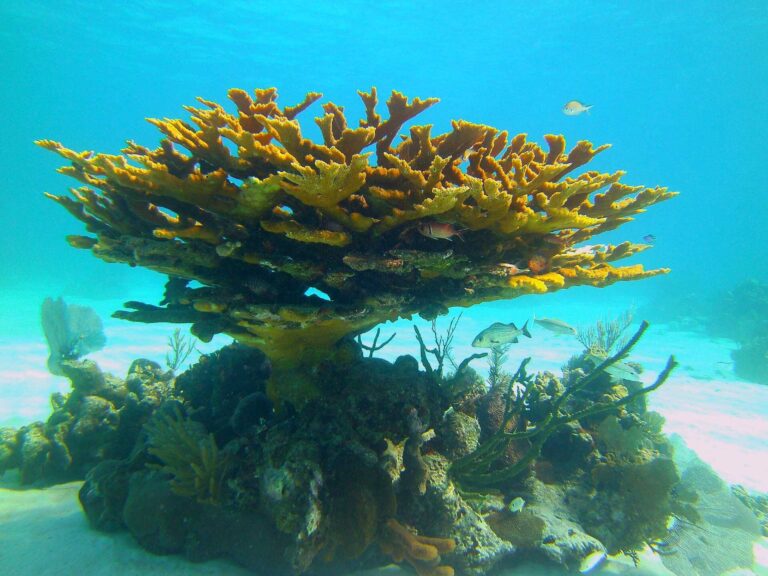
With a 2°C water temperature rise enough to cause many corals to bleach, and greater increases crumbling corals’ reef-building skeletons, the Florida Keys’ acropora corals have struggled for many years to survive – despite intensive conservation efforts, not least by the state’s divers.
However, in 2023 normal sea-surface temperatures were exceeded by 2.5°C for many weeks, rising to around 31°C and leading to the extinction not only of wild but also replanted corals.
In a new study, a National Oceanic & Atmospheric Administration (NOAA) team led by oceanographer Derek Manzello has examined patterns of heat exposure along the 560km length of the Florida Coral Reef, the continental USA’s only extensive living barrier reef.
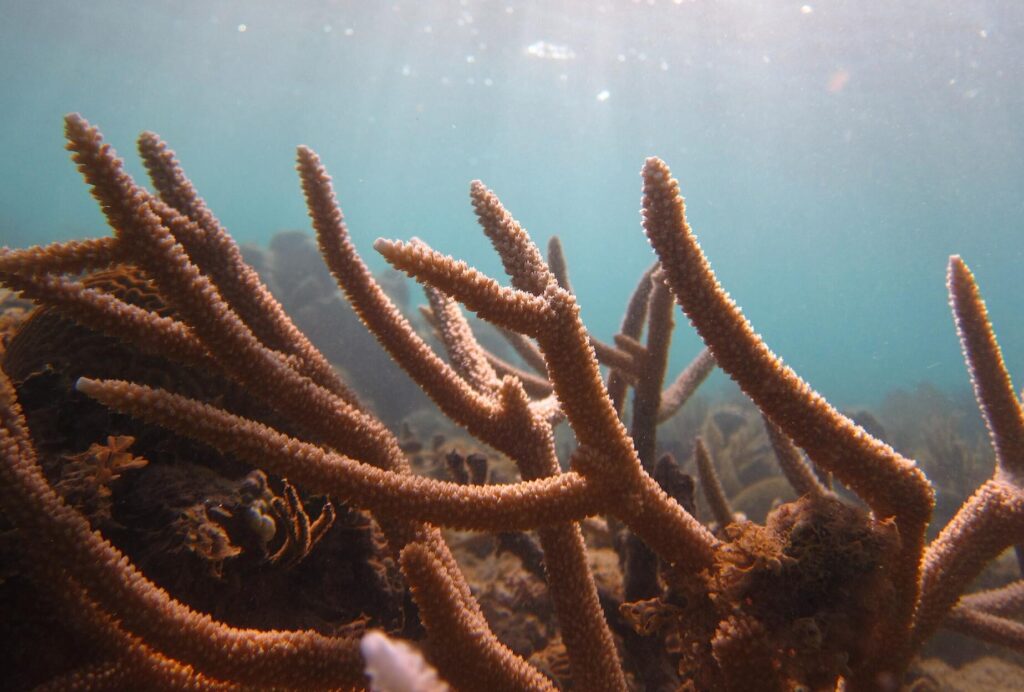
Between 6-7km wide and extending along the 20m depth contour off the Keys, the system encompasses more than 6,000 individual reefs. However the study has recorded the demise there of two key reef-building corals, elkhorn (Acropora palmata) and staghorn (Acropora cervicornis), both classed as Critically Endangered.
In the Florida Keys and the Dry Tortugas national park to the west, 97.8 to 100% of the coral colonies are reported to have died, compared to just under 38% off south-eastern Florida, where water temperatures are cooler.

The two species are now functionally extinct on the Florida Coral Reef, according to the report, meaning that while some colonies survive, they are no longer abundant or healthy enough to build reefs, cannot reproduce fast enough to maintain their populations and no longer provide the habitat, coastal protection or ecosystem services they once did.
Unable to recover naturally or sustain a growing population without human intervention, reefs become flatter and less complex and fish and invertebrate species lose their habitat.
“Since the late 1970s, multiple stressors had already reduced the ecological relevance of acropora in Florida, but the 2023 heatwave marks their functional extinction from the Florida Coral Reef,” concludes the study, which has just been published in Science.