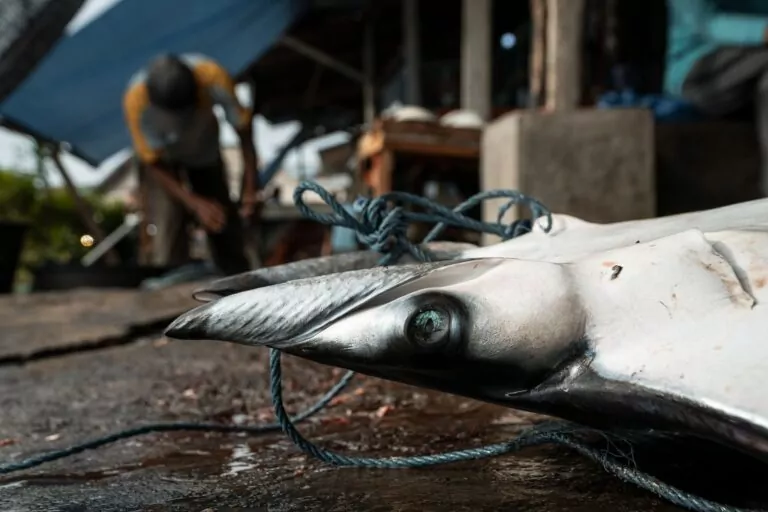
A new campaign called #SaveTheMantas, calling for a full ban on international trade in manta and devil rays, has been launched by UK-based marine-conservation charity the Manta Trust and its global partners – and they are hoping for strong support from divers.
The #SaveTheMantas call comes at a time when the trust believes that genuine impact can be made – in the run-up to the 20th Conference of the Parties (CoP20) to CITES (the Convention on International Trade in Endangered Species), which takes place in Uzbekistan this November.

If adopted, a proposal to uplist all manta and devil rays to CITES Appendix I, the highest level of international protection, would prohibit all commercial international trade in mobulid products –a critical step toward ending unsustainable exploitation.
“Manta and devil rays are among the most iconic and revered marine species, yet they remain incredibly vulnerable to overfishing,” said Manta Trust chief executive Dr Guy Stevens.
“After over a decade of global protections under CITES Appendix II, it is disheartening to see unsustainable international trade in these species not only continuing but increasing. Stronger action is urgently needed.”

Particularly vulnerable
Mantas and devil rays were listed under Appendix II in 2013 and 2016 respectively, yet mobulid populations continue to crash, says the trust. All nine known species are now listed as Threatened on the IUCN Red List, with seven classified as Endangered. In some areas, populations have fallen by more than 90%.
The main threat comes from overfishing, driven by the trade in gill-plates, which are sold as a traditional remedy in parts of Asia, as well as meat consumed locally or exported.

Manta and devil rays are caught worldwide, mainly in coastal fisheries. A Manta Trust-led study revealed that mobulid products are traded across at least 22 countries, often with little regulation or accurate reporting.
Mobulids take about 10 years to mature, and give birth to only one pup every few years, leaving them particularly vulnerable. “Our study shows that current protections are not enough,” said Dr Marta D Palacios, lead author of the recent trade assessment. “Without urgent action, we risk losing these extraordinary species.”
Closing the loopholes
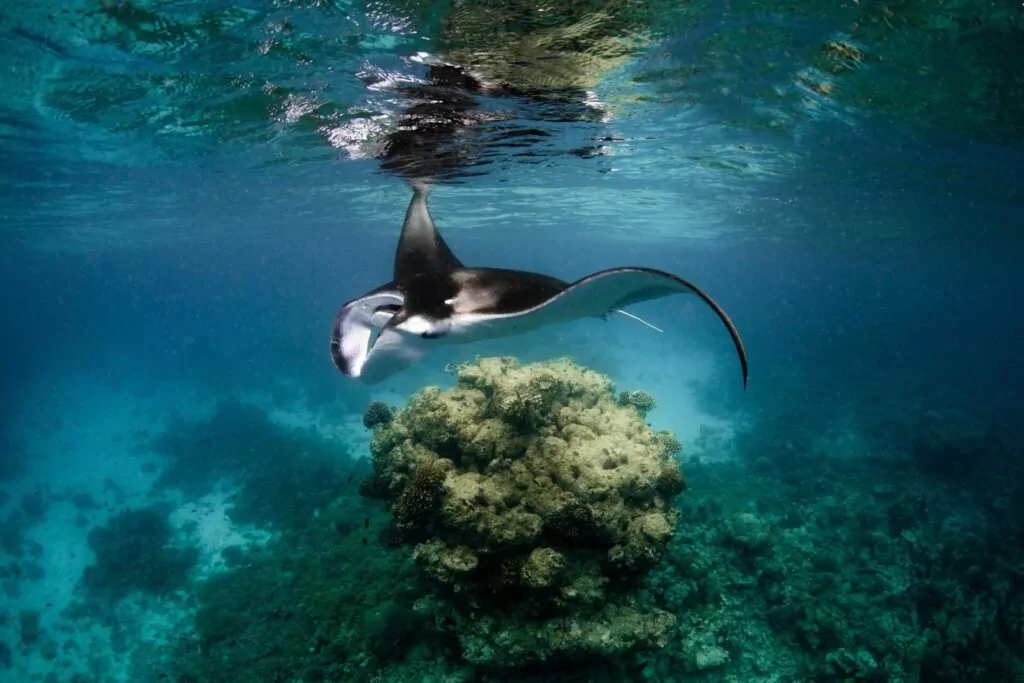
An Appendix I uplisting would close loopholes that allow exports under questionable “sustainable” quotas, says the trust. It would also simplify enforcement, which at present can be stymied by requirements to identify species and verify documents.
The uplisting proposal, spearheaded by ray-hotspot Ecuador and backed by a coalition of governments and NGOs, is grounded in the most comprehensive trade analysis to date and offers a practical path to protection, says the Manta Trust.

It is calling on divers and other ocean-lovers to join the #SaveTheMantas campaign by buying and wearing the campaign T-shirt, tagging posts with #SaveTheMantas and taking and uploading a photo to social media and the campaign page. These images will become part of a powerful visual mural at the CITES CoP20 conference, says the Manta Trust.
Also on Divernet: SHARK & RAY CITES LISTINGS GET A BOOST, TALK THE BOSS INTO FUNDING YOUR MANTA DIVE-TRIP!, PERFECT STORM: CYCLONING MANTA RAYS, WHERE TO FIND 22,300 GIANT MANTAS