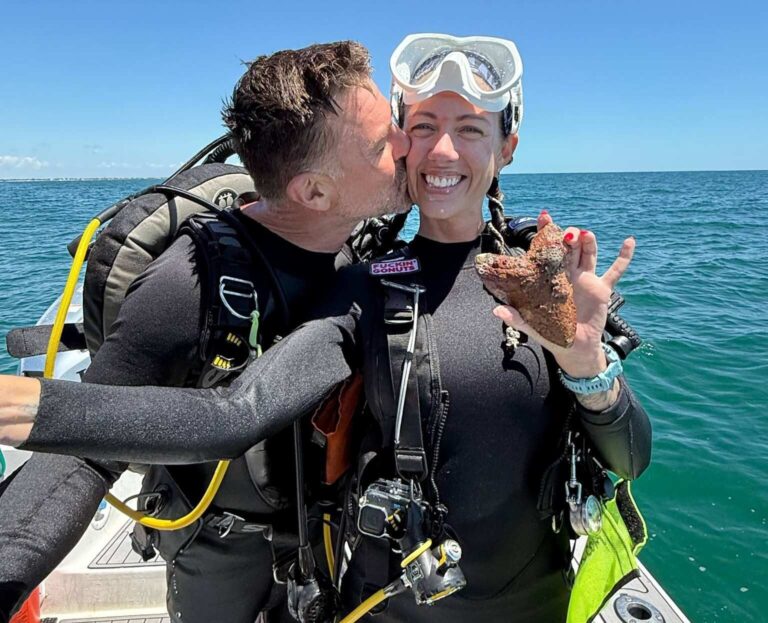
Florida-based couple Kristina Scott and Chris Tidwell wrote a guide for scuba divers seeking prehistoric shark teeth in the Gulf of Mexico, and during a charter-boat trip off Venice on 14 May found what they consider an outsize example even by megalodon standards.
Visibility was poor on the day, but at a depth of about 9m Scott recognised the shape of a barnacle-covered tooth-root, and was able to pull it intact out of the sediment. It turned out to be some 16cm long.
Though megalodon sharks are thought to have grown as long as 18m, and tooth discoveries are not unusual in the area, specimens that big are only rarely found, according to the couple. In the 18 years in which the charter-boat they used had been operating, Scott said that only three meg teeth of that size had been found before the latest discovery.
Megalodons became extinct some 3.6 million years ago, though the oldest fossils found date back some 20m years. Recent research suggests that these ancient sharks were more likely to have resembled lemon sharks than the great whites with which they have traditionally been compared.
Scott and Tidwell co-wrote the booklet A Diver’s Guide To Finding Megalodon Teeth In Venice, Florida. Based in St Petersburg, Scott is a healthcare professional but also produces Coral Anchor diver logbooks and other merchandise designed mainly for women.
Mortar bomb in the Lakes
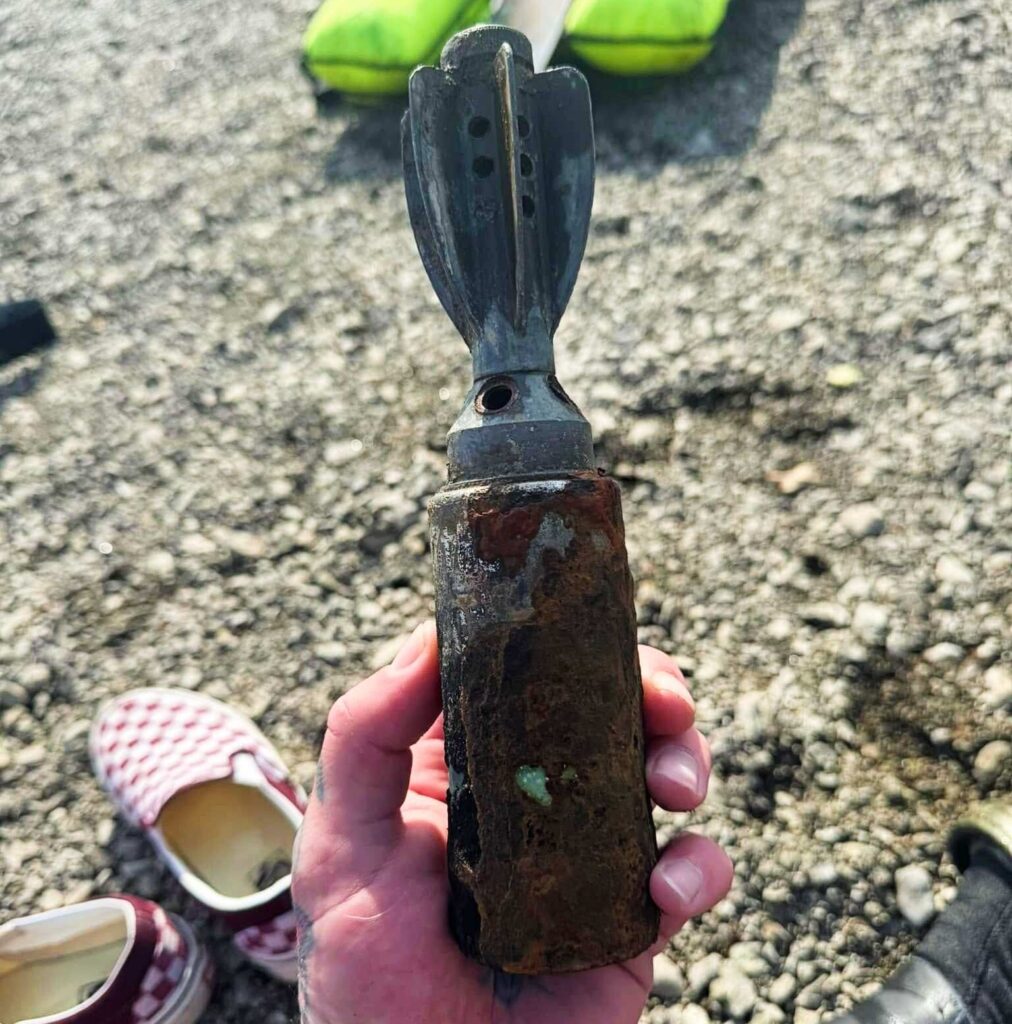
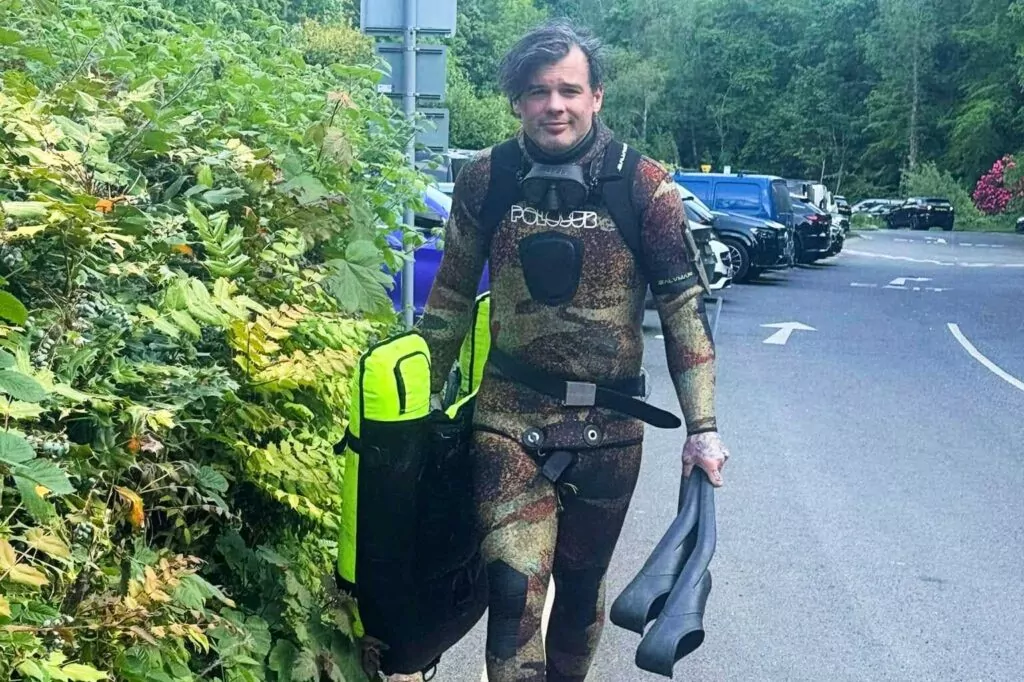
In the UK, meanwhile, a WW2 mortar bomb has been discovered in Lake Windermere by freediver Michael McGoldrick, part of the team featured in the recent BBC’s Lost And Found In The Lakes daytime series, in which local divers try to locate lost property under water.
The 40-year-old from Barrow was called in with other divers by the TV production team while he was spearfishing off the Cumbrian coast on 11 May, and drove over to the lake still wearing his wetsuit.
The small bomb was an incidental find he made near Cockshott Point on the east side of the lake, rather than part of the programme-makers’ quest for their upcoming second series. It was confirmed to pose no danger after an explosive ordnance disposal company had checked that it was hollow inside.
McGoldrick was later able to identify the model and to obtain a Free From Explosives (FFE) certificate in order to keep the device in his collection of underwater finds. He believes there are probably more such mortar bombs to be found in the area.
Divers are warned not to touch any suspected explosive devices and to report such finds to the police.
Ure bomb was still armed

Another, much bigger WW2 bomb was found recently by a former scuba diver who had to give up the sport because of ill-health. Unlike the Windermere find, this device had remained armed for more than 80 years.
Adam Makewell from Ripon explores North Yorkshire rivers with his 14-year-old son Cameron using an ROV and sometimes a small boat, sharing their experiences on YouTube as RC Xploration.
While testing some new lights on the River Ure near Bishop Monkton, Cameron came across what he took to be a propane tank.
His father sent his ROV down and realised that the object, which was lying around 4m deep, was a bomb. The Royal Engineers were known to have used that section of the river for diver training during the war.
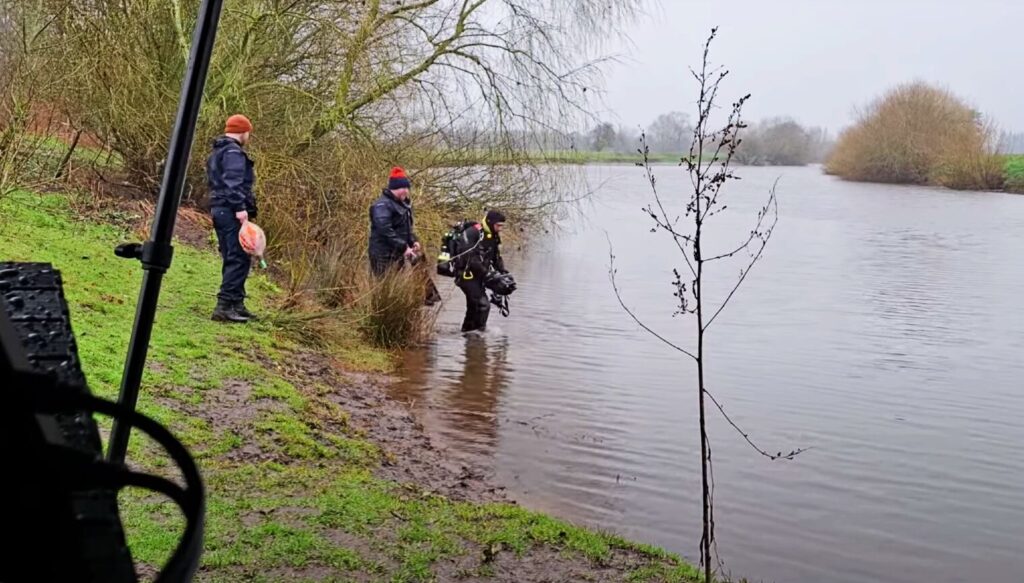
The discovery was reported to the police and a Royal Navy Explosive Ordnance Disposal (EOD) team watched the pair’s footage and dispatched a team from Glasgow. Unable to locate the bomb, they called in the Makewells to help but in reduced visibility brought on by heavy rain they were unable to pinpoint the location.
The EOD team returned later with more sophisticated location equipment and found the 500kg device, which turned out to contain some 200kg of live explosives. Because it lay close to an inhabited area they used a shaped charge to crack open the casing and defuse the explosives.
The casing was taken away for further inspection, though it could end up in a local museum.
Also on Divernet: BOY FINDS RARE INTACT MEGALODON TOOTH – IN ESSEX, MEG DIVER: BILL’S BIG TOOTH ADVENTURES, MISSING DIVER CAME UP WITH SHELL, NAVY DIVERS DETONATE WW2 BOMB OFF GUERNSEY

Just one 500 kg bomb? what about the wreck of the SS Richard Montgomery off Sheerness, Kent, with 1400 tonnes of high explosive still aboard, some of it live.
Plus, live unknown type of munitions scattered around the wreck?
https://www.ssrichardmontgomery.com