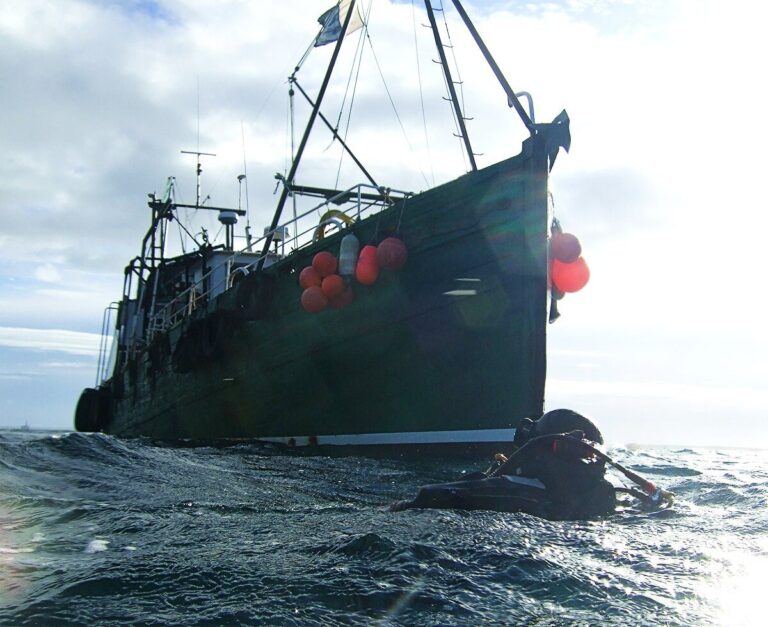
Lack of dive-boat look-outs and unsafe DSMB practice meant that the death of experienced wreck-diver Paul Smith in Orkney two years ago was avoidable, according to a detailed new incident report issued by the Marine Accident Investigation Branch (MAIB).
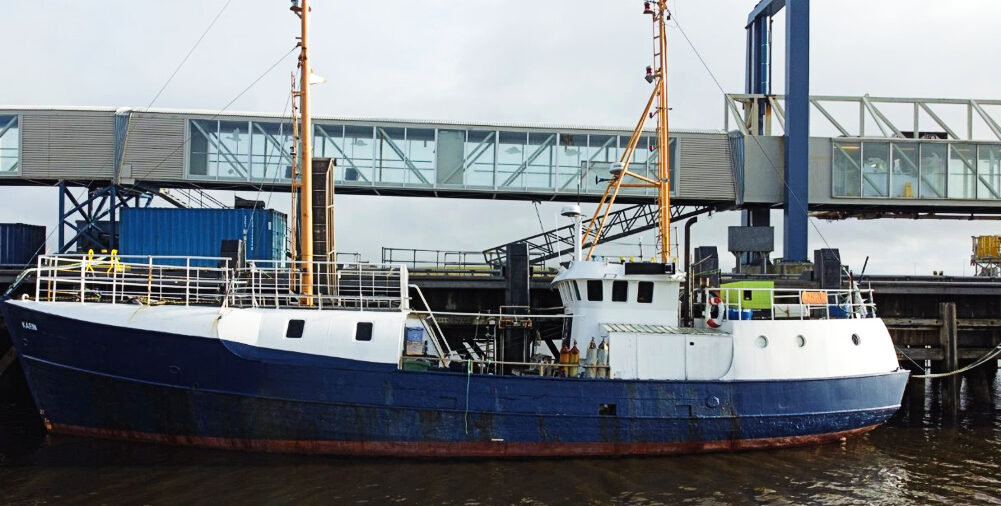
Smith, 70, from Greater Manchester, was struck by the propellor of the Scapa Flow dive-boat Karin, but he had been diving from another charterboat, Jean Elaine, on the morning of 28 September 2023. The two vessels had both brought groups out from Stromness to explore the wreck of the German battleship SMS Markgraf.
Smith and his buddy were completing a drift decompression ascent and had released a delayed surface marker buoy which, according to the report, Smith had clipped to his BC.
As Karin’s skipper engaged the engines and turned to port to compensate for wind and tide effects Smith and his buddy were about 110m away and 3m below the surface, Smith suspended from his DSMB. When his circling buddy spotted the approaching vessel he quickly dived to 9m, later reporting hearing a ‘twang’ as he did so.
Jean Elaine was 180m away from Karin when its crew saw the other boat pass over a DSMB, and noticed a pair of blue fins momentarily surface before disappearing. The buddy resurfaced and swam to the DSMB but the line had parted and there was no sign of Smith.
‘No structured safety management’
Immediate search and rescue efforts proved unsuccessful, as reflected in an initial report on the incident on Divernet. Smith’s body was located on the seabed during a sonar search three weeks later and recovered on 16 October, showing signs of severe blunt-force head injuries.
Later analysis of his dive-computer revealed a sharp spike in depth from 3m to 1m within eight seconds as Karin passed over him, followed by a rapid descent of 41m to the seabed recorded almost a minute later.
It was possible that the DSMB line had snagged on a part of Karin or its diver-ladder and drawn Smith into the path of the propeller blades, according to the report. It also states that the DSMB was probably not seen by Karin’s crew because it was within a forward-visibility blind spot from the wheelhouse, and no lookout had been posted at the bow.
“There was no structured safety management system in operation on either Jean Elaine or Karin,” states the report. “Consequently, divers were at risk while on board and when diving.”
MAIB had already issued a safety bulletin in July 2024 based on the fatal incident. Now its investigation has concluded that Karin’s skipper was not maintaining a sufficient lookout, and that the risk to divers was increased by the simultaneous operation of two dive-boats on the same wreck, with existing harbour authority controls insufficient to provide a “robust safety barrier”.
“Posting a dedicated lookout in an appropriate location is essential to make sure the person at the helm/skipper receives timely warnings of surfacing divers and allows for effective avoiding action,” states MAIB, also emphasising the need for “detailed and frequent” communication between operators when more than one dive-boat is operating in the same area.
Onus on divers
However, MAIB also places responsibility on divers to follow guidance for the correct handling of DSMBs.
“As recommended by the British Diving Safety Group, divers should hold a DSMB reel in their hand rather than attach it to their person,” says MAIB. “This practice ensures that if the DSMB is snagged by a passing craft, the diver can release the line to avoid entanglement and the risk of being pulled to the surface or into contact with the vessel.”
The report also recommends that Orkney Islands Council Harbour Authority carry out a further risk-based review of recreational diving operations for dive-boat operators.
This should include the effectiveness and enforcement of permits; control and monitoring of diving-support operations by Orkney vessel traffic services; engagement with local stakeholders; and the development of a local code of practice for recreational diving operations.
The dive-boats now
Johns Diving Charters, the owner of Karin at the time of the incident, has since sold the vessel to a local operator and retired from the industry. Chief Inspector of Marine Accidents Andrew Moll has written to the new owner of the 24m converted fishing-boat to highlight the safety issues contained in the MAIB report.
“The basic principles of good watch-keeping: vigilance, clear communication and adherence to operational procedures for the activities undertaken are well tried and tested,” says Moll. “Had they been followed during this event, particularly with two vessels operating in close proximity to submerged divers, this tragic accident could have been avoided.
“As highlighted in both our previous safety bulletin and in the final report, DSMBs play a crucial part in diver safety by enhancing a diver’s visibility and indicating their presence to surface craft.
“However, divers must ensure that they can quickly release the DMSB should it become snagged or the line jammed, and not attach it to their person at any time.”
MAIB says that the Maritime & Coastguard Agency has undertaken to extend the requirements of a previous recommendation and include in its new Sport & Pleasure Vessel Code that all small commercial vessels must implement a safety management system.
Demise of Jean Elaine
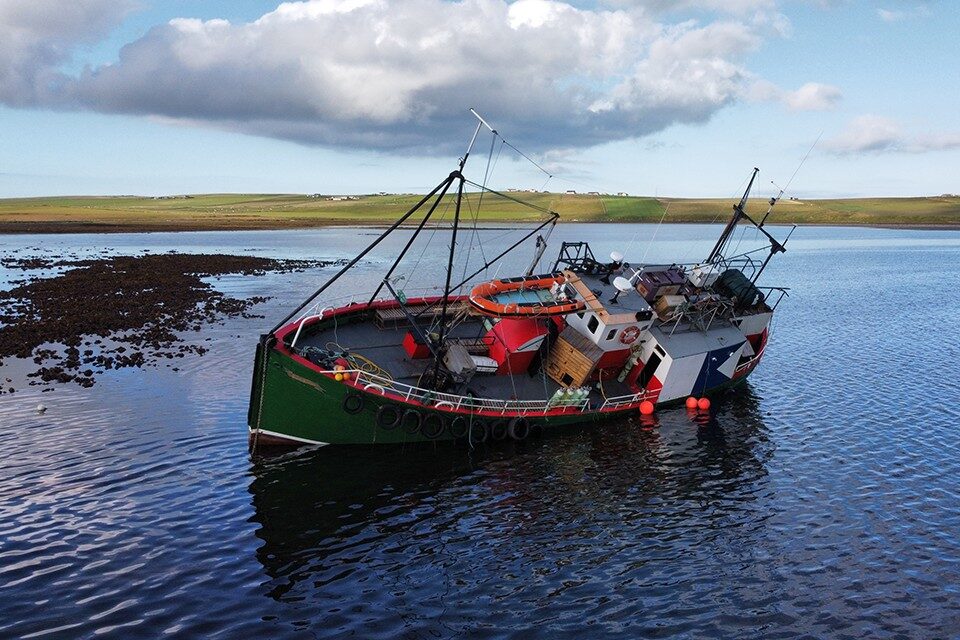
The Jean Elaine grounded on 22 July, 2024, and MAIB has also published a report into that incident this month, stating that the 22m vessel developed a severe list and took on water while manoeuvring in Orkney’s Deer Sound before being abandoned.
The boat had not been certified for operation and the skipper’s certificate of competence had expired at the time, but researchers from Heriot-Watt University had chartered it for a seagrass project without checking that it was fit for purpose, says MAIB.
Jean Elaine was later declared a total loss, with its owner Scapa Flow Charters ceasing operations.

NEVER clip your signal buoy to your BCD when deploying it – that’s basic. We used to teach deploying a submersible buoy as part of Open Water, which I always felt was too advanced as we didn’t even teach proper flag placement at that stage. It’s so easy to get tangled in the string and get pulled to the surface too quickly- I would teach people to work together at this stage.
The only other course that requires it is Boat for Advanced, something most students eschew for a more interesting course but one I’d always advocate for its essentials like boat safety and proper terminology AND the deployment of a submersible safety signal buoy (as opposed to one released at the surface, which is what is required teaching today).
The buoy needs to be deployed several minutes before ascending to give ample time for boats to see it before the divers ascend to the surface. Besides the possibility of the signal marker being caught up and tangled in something on the surface, one NEVER attaches the deployed buoy to one’s self because it can so easily pull that person to the surface too quickly.
I’ve seen it many times – a diver 30feet deep stops to add extra breath to the marker buoy and suddenly finds they have been pulled near the surface as that partially inflated buoy begins rising while they continue to hold it.
This is why proper training AND practice in safe conditions are so important.
Even professionals need to be reminded of these simple guidelines.