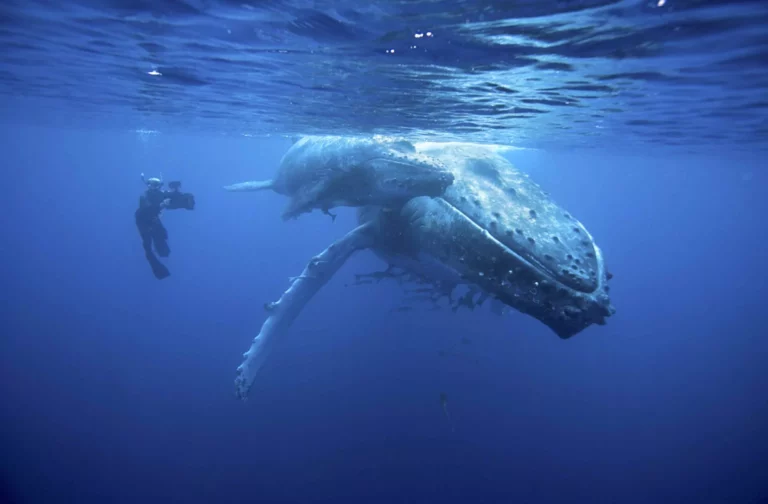
Doug Allan, the celebrated wildlife cinematographer and photographer who brought extremes of both the underwater and topside world to mass audiences, died at the age of 74 yesterday (8 April) while on a climbing trip in Nepal.
Allan was principal cameraman on acclaimed TV series such as The Blue Planet (2001) and Blue Planet II (2017) and his award-winning work featured in numerous other programmes seen by millions, including Planet Earth, Frozen Planet, Life, Human Planet, Expedition Iceberg and Forces of Nature.
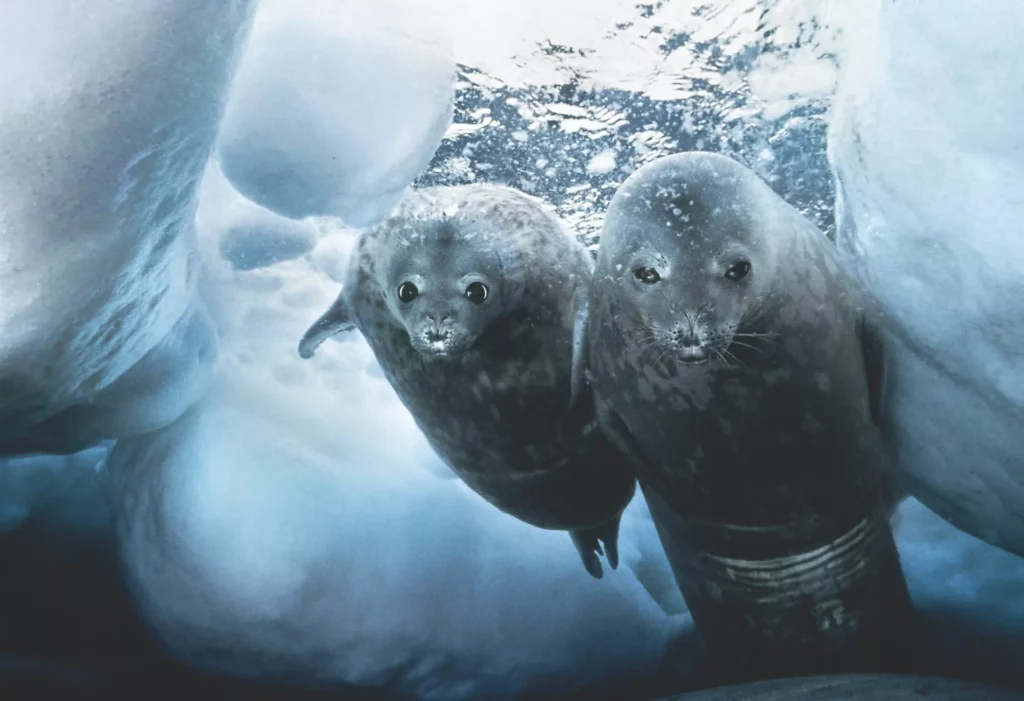
In the course of his career Allan made more than 100 documentary-filming trips, capturing such memorable on-screen firsts as orcas attacking grey whales off California, polar bears trying to capture belugas in a frozen hole in Arctic Canada and killer whales washing seals off ice-floes in Antarctica.

The SSI Platinum Pro Diver had logged more than 8,000 hours under water, some 500 of which were spent working under ice.
No details of the circumstances of Allan’s death have yet been issued. His ex-wife of 15 years Sue Flood, also a wildlife film-maker and photographer, stated: “It is of comfort to know that he was doing something adventurous with a dear friend of ours, with whom he’d shared many adventures over several decades.
“Doug was a brilliant and incredibly determined cameraman and photographer, who will also rightly be remembered as the passionate conservationist he was, whose legacy is the incredible body of work which has inspired so many.”
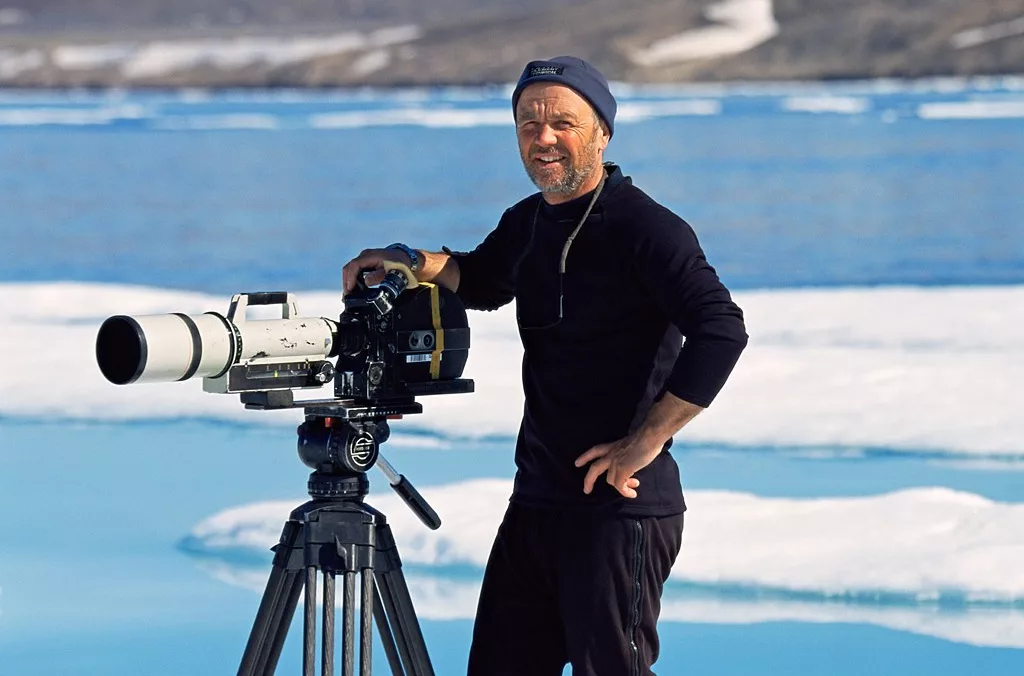
Influenced by Cousteau
Doug Allan was born in Dunfermline in Scotland on 17 July, 1951 and was inspired from an early age to take up snorkelling and scuba diving after seeing Jacques Cousteau’s ground-breaking 1956 documentary The Silent World.
He graduated with an honours degree in marine biology from Stirling University in 1973 but decided at that point that it was being “underwater anywhere” that would be his main driving force.
For the next three years he worked on jobs ranging from freshwater pearl-diving in Scottish rivers to underwater video work and canal-rebuilding in Germany.

He travelled as a research assistant on marine-biological expeditions to the Red Sea with Cambridge University, and in the summer of 1975 ran Bouley Bay Underwater Centre in Jersey in the Channel Islands.
His break came the following year when the British Antarctic Survey took him on as a research diver at its base on Signy island in the South Orkney Islands. He would dive there from boats in the summer seasons and through holes cut into the ice in winter.
Allan spent four winters and nine summers in Antarctica over the next 10 years, and was awarded the Fuchs Medal and then the first of two Polar Medals for his work there.
His first commercial success using a film rather than a stills camera came while he was base commander at Halley Station and his footage of Emperor penguins was bought by the BBC.

This and his ice-diving experience led him to propose two Antarctic-based films for the Anglia TV series Survival, which he spent ten months making.
Allan had met renowned naturalist and TV personality David Attenborough in 1981, and their chance encounter led to him working on the Antarctic sequences for the BBC documentary series Living Planet and starting to gain his reputation as an extreme-environment specialist.
When filming under water he would scuba dive, snorkel or freedive, depending on the circumstances. One of many polar experiences he recalled involved a hungry walrus thinking he was a seal and grabbing his legs while he was under water, forcing Allan to scare it off by hitting it on the head with his camera.
Other activities
As a freelance film-maker, Allan worked not only for the BBC but Discovery, National Geographic and other channels. He would later appear in front of as well as behind the camera, both filming and presenting for the BBC whales series Ocean Giants in 2011 and the following year for Operation Iceberg.
Allan ran his film company Tartan Dragon from his Bristol base from 2002. He contributed to many radio broadcasts and in 2012 his book Freeze Frame: A Wildlife Cameraman’s Adventures on Ice was published.
He also wrote two children’s books and numerous articles, as well as touring regularly to give presentations on wildlife, diving, film-making, photography and environmental issues.
As a long-time eco-campaigner, earlier this year Allan had called for the Scottish government to introduce new legislation to deter companies that he accused of damaging nature.

The winner of eight Emmy Awards, five BAFTAs and numerous other accolades, he was made an OBE for his services to broadcast media and environmental awareness in 2024. He was also an honorary fellow of the Royal Photographic Society and a member of the Explorers Club.
Immersed in nature
“Doug died immersed in nature and surrounded by friends,” stated Allan’s management company Jo Sarsby Management, describing him as “a true pioneer of wildlife film-making” who had “captured some of the most breath-taking and intimate moments in the natural world” to leave a visual legacy that few could ever match.
“When we think of Doug, we will always remember his unforgettable kindness and his extraordinary talent,” it continued. He was a true gentleman and he will be profoundly missed
“Our thoughts are with his family, friends, colleagues across the wildlife film-making industry and the many people around the world who admired his work.”
Freeze Frame
“My memories of diving for the British Antarctic Survey more than 40 years ago were frozen into my mind and captured for posterity with my trusty old Nikon F2 in my Oceanic housing,” Doug Allan recalled for Diver magazine in 2021.
“A 10mm wetsuit, twin-hose Mistral regulator and Fenzy lifejacket was the height of chic for us back then.
“The ice by the end of winter could be 75cm thick and you needed a long blade to cut all the way through it. Two parallel cuts about 1m long and 75cm apart, then three cuts at 90° to the first two left you with two free-floating blocks in the hole.
“Blocks were too heavy to lift out, so we just pushed them down and to the side of the hole, where they refroze to the underside of the ice.
“The diver was on a safety-line with an apple float about 1m out from him to keep the line off the seabed.
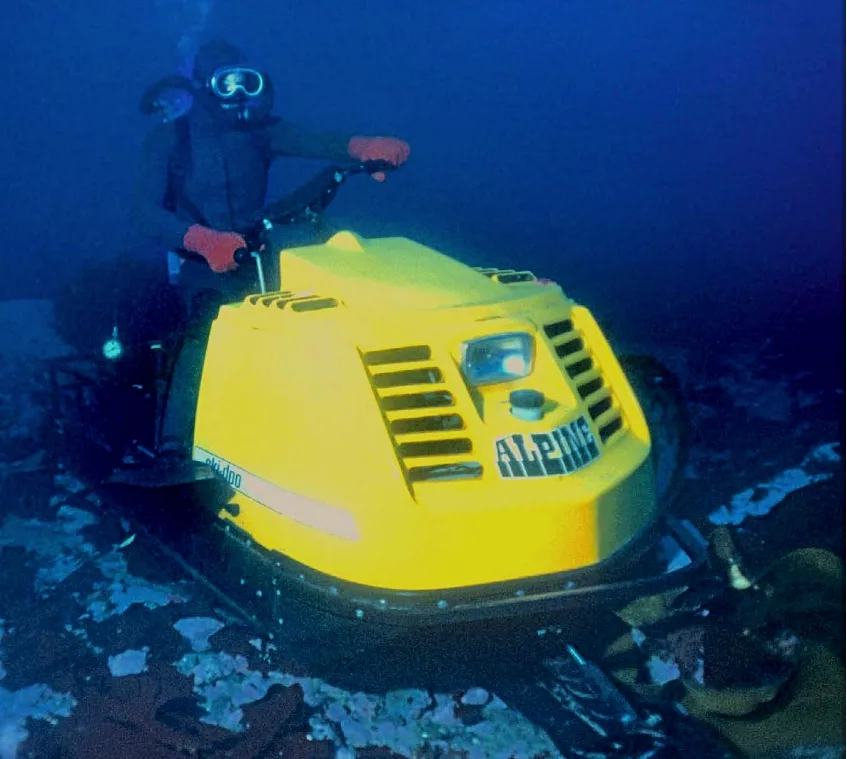
“Life was not without its risks, and we were often on thin ice, both figuratively and literally – resulting in rescue missions to retrieve lost equipment, or even the odd snow machine. We recovered this one [pictured above] using oil-drums as lifting bags.”