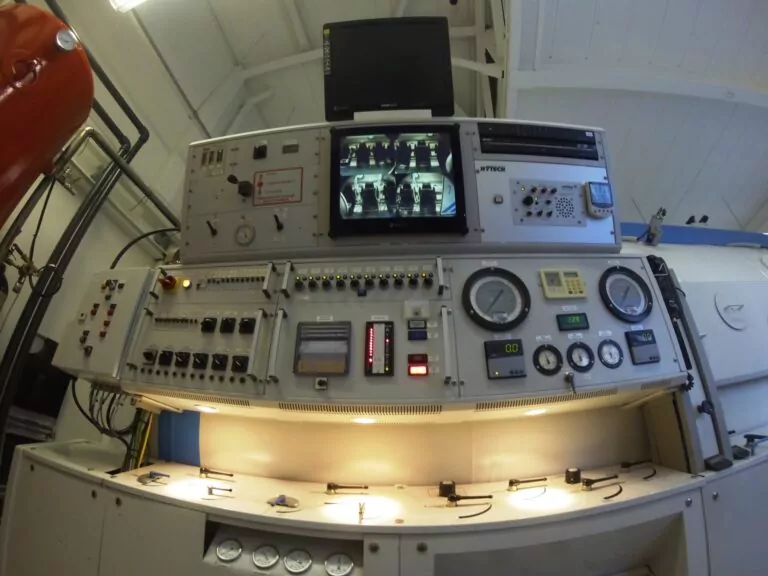
The number of emergency hyperbaric-treatment centres in England appears set to be cut from eight to only three this autumn, raising concerns about diver safety and emergency medical care.
“For any recreational divers in the northern half of the UK, this could be critical,” stated the British Diving Safety Group (BDSG) as it announced that only three NHS England-commissioned units would be available to treat divers from October unless alternative arrangements were made before then.
Also read: Dive-boat loses power with divers down
The group, formed in 2002 to bring sport-diving bodies together on safety issues, is chaired by the RNLI, and includes the Maritime & Coastguard Agency, Health & Safety Executive and diver-training agencies.
Asked for comment, an NHS England representative told Divernet that the BDSG had “got its wires crossed” and that an original plan to retain six hyperbaric units for England remained in place. It has not elaborated on this assertion, however, and a tendering document published by the government would appear to back up the BDSG’s position.
Also read: DCI and how to avoid it: Free online book
“NHS England has confirmed that, following the recent procurement process, contracts for Hyperbaric Oxygen Therapy (HBOT) services have been awarded for three of the six planned regional centres (East of England, London & South-east, and South-west). At this time, no contracts have been awarded for the North-east, North-west or Midlands regions,” stated the BDSG.
“This decision affects four existing hyperbaric chambers – LHM Healthcare (Whipps Cross), Midlands Diving Chamber (Rugby), North England Medical Hyperbaric (Hull) and Hyperbaric Treatment & Training Services (Wirral) – which, unless alternative arrangements are made, will no longer be under NHS contract as of 1 October, 2025.”
“This decision will leave divers across the Midlands and Northern England without timely NHS-funded access to vital recompression facilities – a critical component of emergency treatment for decompression illness.
“This move raises serious concerns over treatment inequality and regional discrimination. While facilities in the South remain available, divers in the Midlands and North will be left with limited access, significantly compromising diving safety and emergency-response capabilities across large geographic areas.”
NHS consultation
Last September NHS England launched a consultation on proposed partial withdrawal of funding, though at that time it was suggesting closing no more than two recompression chambers.
It stated that commissioning HBOT services cost it £8.2 million annually and that the units treated some 150–200 DCI and 10 gas embolism cases a year. The units were also used to treat non-diving cases such as carbon monoxide poisoning, burns and other injuries.
NHS England claimed that after removing funding for two units a diver with suspected DCI anywhere in England would still be able to reach a pot by road within four hours of the onset of symptoms.
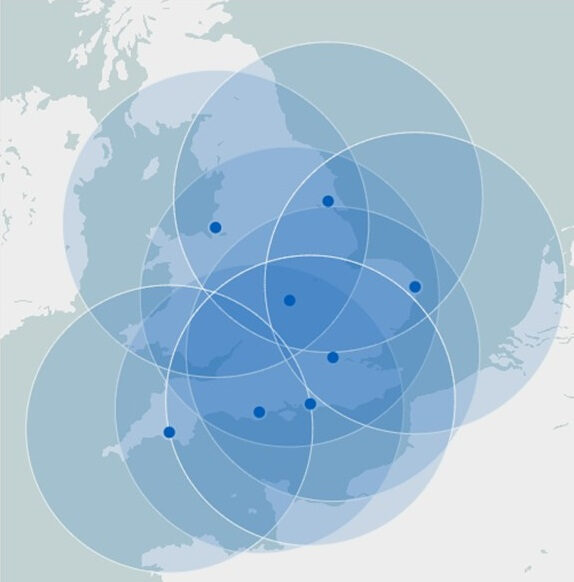
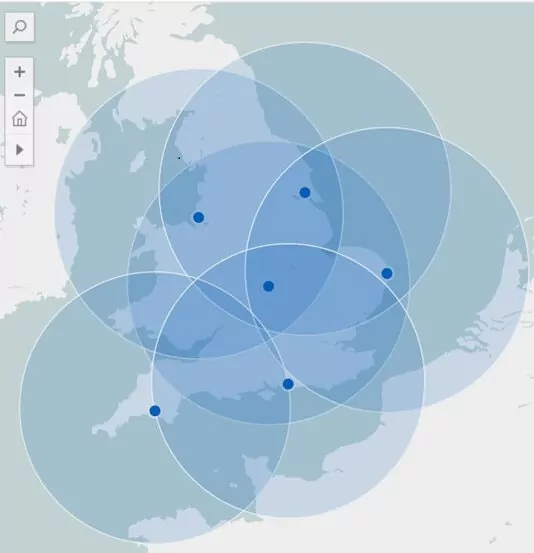
It also stated that some of the existing facilities were treating comparatively low numbers of patients, making it difficult for staff to keep in practice, and that not all were equipped to treat critically ill patients.
The three English coastal units in the south and east that have been recommissioned are DDRC Plymouth, the Hyperbaric Medicine Unit in Chichester and LHM Healthcare East Of England Hyperbaric Unit in Great Yarmouth. Poole Diver Clinic had already closed at the end of January this year.
“This isn’t just about geography – it is about fairness, safety and survival,” said the BSDG. “Diving emergencies cannot wait and removing access will not save money in the long term. It simply shifts the cost to lives lost, prolongation of treatment and illness. It will also unnecessarily tie up blue-light emergency services.”
The group points out that a stricken diver in the North-east faced with a full chamber at Great Yarmouth might have to travel the length of England to DDRC for treatment. Also, the Chichester chamber is manned by Royal Navy medical staff required to give priority to naval patients – but now apparently expected also to cover NHS patients from the entire London area.
There are only two NHS National Services hyperbaric units in Scotland, both in the north – at Aberdeen Royal Infirmary and on Orkney. The West Scotland Centre for Diving & Hyperbaric Medicine near Oban had its funding withdrawn by NHS Grampian in April last year.
Stretched services
“Reducing operating hyperbaric chambers by over 60% and confining coverage to only the east and south of the country places divers who find themselves in difficulty across the Midlands and North at significantly larger risk to their health, forcing them to travel far further and longer for appropriate medical attention and placing an unnecessary amount of strain on an already stretched ambulance service,” commented Stoney Cove director Matt King.
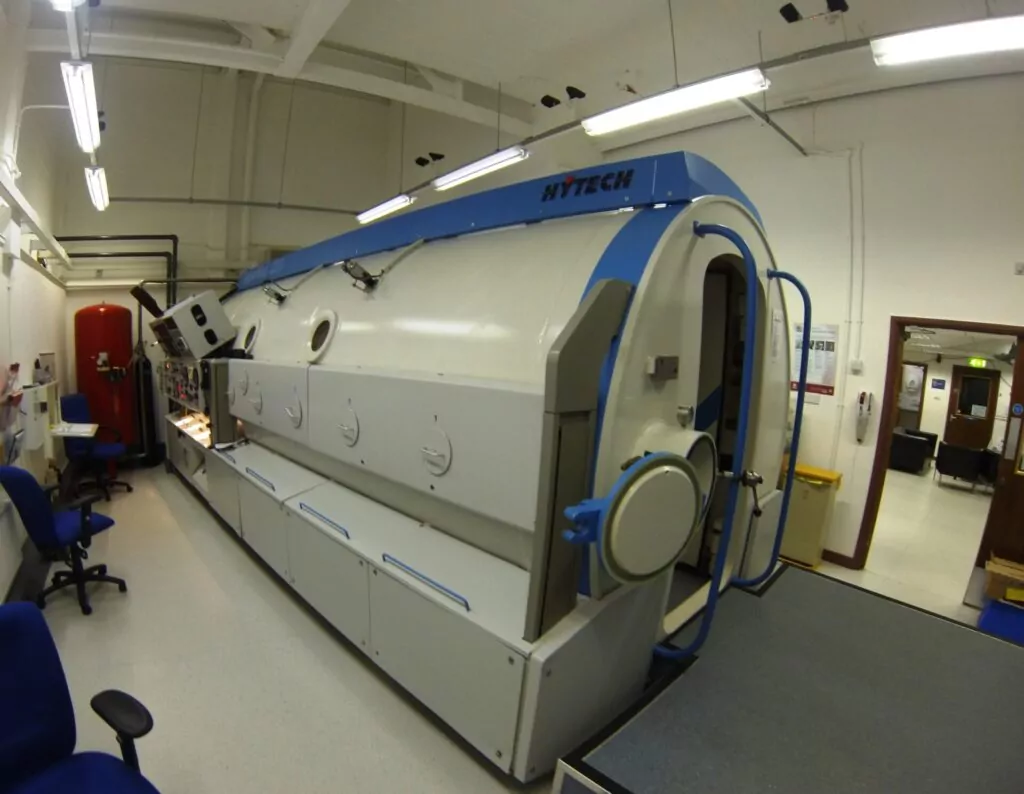
Jen Tibbs, manager at the Wirral hyperbaric unit that covers the North-west but now faces closure, said that the news had come as “a great shock”.
“We have provided this facility for nearly 30 years and I can assure you we are going to fight this all the way,” she stated. “Any support will be greatly appreciated. Rest assured that we are still available for any diving emergencies or advice 24/7 up until 30 September 2025 but fingers crossed we can turn this decision around.”
The British Sub-Aqua Club told Divernet that it was “deeply concerned” about the situation. “The 60% reduction in HBOT facilities in just 12 months compromises not only the health of individuals but also fair access to treatment services across the country,” said head of diving and training Sophie Heptonstall.
““As national governing body for scuba and snorkelling in the UK, diver safety is paramount to us. The imminent significant decrease in NHS-funded HBOT provision in England is unacceptable for the UK dive industry.
“BSAC will be working closely with BDSG and all other dive-industry representatives and key stakeholders to lobby the government for the restoration of HBOT in the three areas of concern – the Midlands, North-west and North-east.”
“HM Coastguard will continue to engage with medical partners to ensure people are delivered safely into the appropriate onward medical care,” an MCA spokesperson told Divernet.
“The decision highlights a growing inequity in NHS service provision and has been met with alarm by diving safety advocates, emergency responders and the wider diving community,” says the BDSG. “Stakeholders including the dive training agencies are today urging NHS England to reconsider this move and engage with diving and medical communities to develop a more equitable model of care.”
The group says that it plans to launch an awareness campaign and raise a petition in hopes of reversing the decision. Divers are also asked to raise the matter with their MPs.
Also on Divernet: Will 25% fewer English pots boost service for divers?, Poole’s Diver Clinic to close doors shortly, Chamber Diaries: Key insights from BDSG & Defence Diving Symposium – DCI recognition & safety updates, Stay safe on your dive trips: Midlands Diving Chamber tips and updates