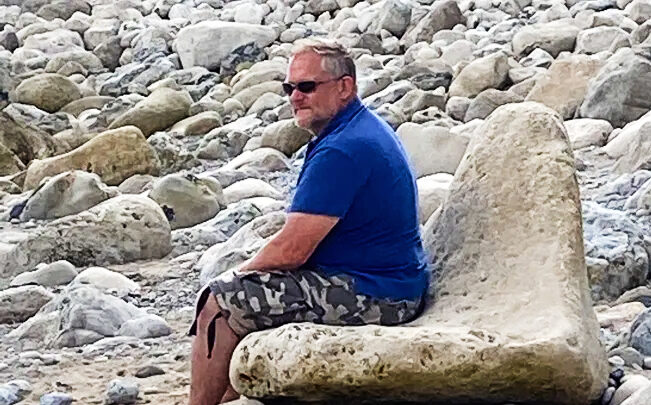
A former scuba diver whose husband was lost while diving off the Dorset coast in 2024 has launched an appeal for the RNLI to be better equipped with sophisticated deep-search equipment.
Vivien Clowes’s 57-year-old husband Steve disappeared following a deep wreck-dive almost 30km off the coast in May last year, as reported at the time on Divernet. Now she hopes that her fund-raising appeal will win support especially among the divers who depend on the safety net provided by lifeboat volunteers.
A PADI Master Instructor and TDI Instructor who had been training divers for more than 25 years, Steve Clowes was a regular explorer of the sea around Portland.
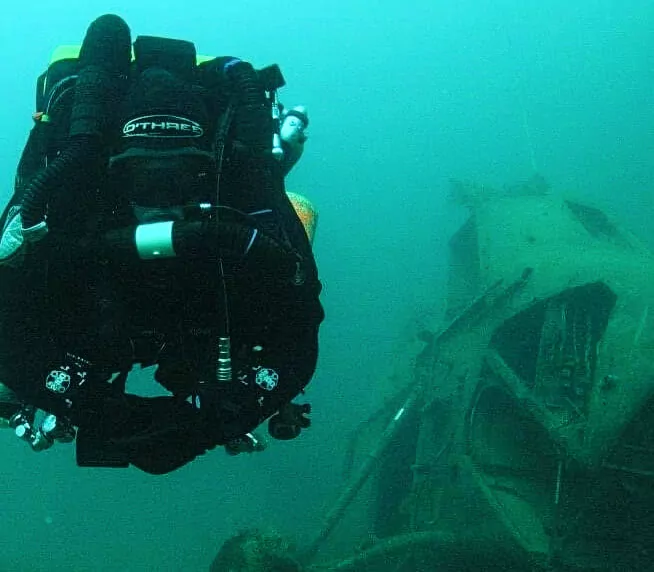
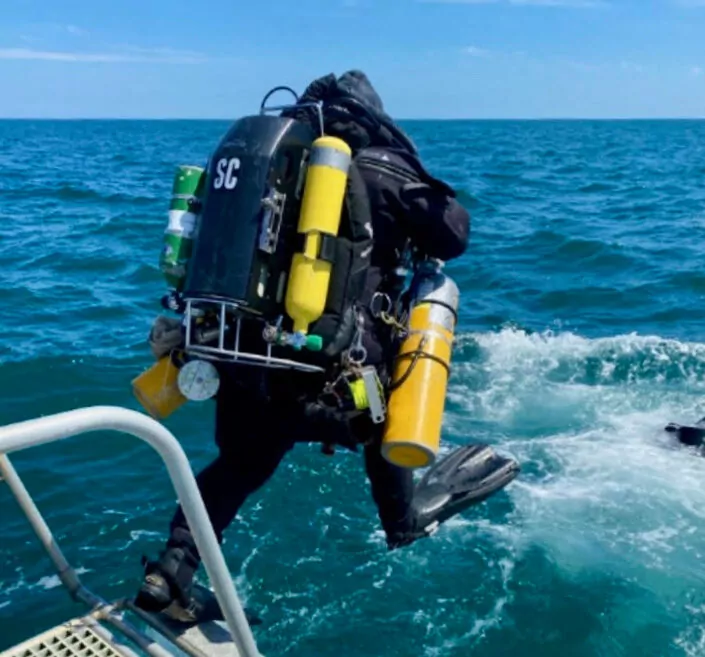
After diving the 56m-deep wreck of the 19th-century sailing ship Aracan with a regular buddy he had ascended to his 15m safety stop, sent up a DSMB and locked off his reel, but after that was not seen again.
When the alarm was raised a full-scale search involving Coastguard helicopters, aircraft, lifeboats and other vessels in the area had been mounted.
“Despite the extraordinary efforts of the RNLI, police and volunteers, Steve was never found,” says Vivien. “The search was vast and determined, but the technology available – including sidescan sonar – wasn’t strong enough to scan the seabed effectively in the conditions we faced.”
Advanced search tools
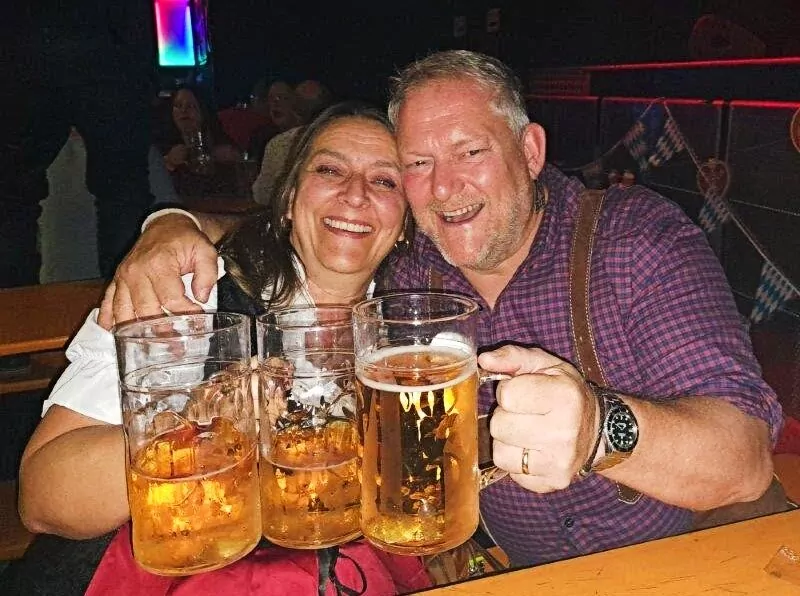
The couple had been together for 40 years and had five children, the youngest of whom was 15 when Steve vanished. Vivien, who had been a Master Scuba Diver until she gave up diving in 2010, was well aware of the challenges facing the emergency services when a diver goes missing.
Even the RNLI might lack ready access to the most advanced underwater search tools, she says, especially those capable of scanning the seabed in deep or complex marine environments.
“There are technologies that can help: sonar-equipped ROVs, AI-powered underwater scanners and autonomous mapping systems. These tools exist but they’re expensive, and not yet widely available to the RNLI,” says Vivien
“Funds raised will support the RNLI Innovation Team in trialling or acquiring seabed-scanning technology. They may help fund a pilot project or equipment partnership with the UK Centre for Seabed Mapping or university researchers.
“This campaign also aims to raise awareness of the need for better tools in search and recovery at sea, and to honour Steve’s memory by helping others find closure. No one should have to live with the pain of not knowing.”
Distressing red tape
Exactly a year after her husband’s disappearance, Vivien told Divernet that she still checked the news every day, hoping that his body might eventually come home to the family.
After the incident she said she had been forced to struggle with the distressing red tape and costs involved in obtaining a presumption of death certificate, because without it she would have been unable to settle her husband’s estate and risked losing their home.
“This is for the RNLI crews who go out in all weathers, risking their lives to save others,” she says of her GoFundMe campaign. “It’s for the families who wait for news. It’s for the future – so that when someone is lost at sea, we have the best possible chance of bringing them home.”

It is always sad when a diver never returns to the surface and extra stress never to be found, I have been diving over 50 years constantly never had a break looked at technical diving some say I am a technical diver but I am open circuit Diver.
If open circuit and close circuit divers go to Dive these deep sites I feel they should have a type of tracker that could be used on a dive to the Dive boat then the responsibility is then on the person taking these risks and risking others at sea.
The RNLI just fantastic job given him this type of search would be equally as complicated as having to do the deep dive so I feel for people lose a loved one due to diving incidents but I feel the responsibility is us the divers.
I apologise to anybody that may be offended to my comment none was intended and not to have closure is a terrible thing I understand my heart goes out to the family
I could not agree with you more, well said. We must, as divers, hold ourselves to a very high standard so that we do not risk our lives or those who might be called to help us.
Last year I lost a good friend in a diving accident in Indonesian waters.
Dive deep but dive safe.
Steve held the highest standards and took every possible precaution. He was a very conscientious diver who meticulously planned his dives and always carried multiple SMBs and an electronic personal locator beacon.
But even with vast diving experience and when every precaution is taken, the sea is unpredictable and in this instance a Master Instructor with thousands of uneventful dives behind him was lost to the sea at a mere 15 metres. This fund raiser aims to help improve search and rescue technology to strengthen the safety net for everyone. It’s to give rescuers better tools and to give families hope, should the unthinkable ever happen.
This is about working together — responsible divers and well-equipped rescue teams — so that when accidents occur, no one is left without the best possible chance of being found and brought home. It’s not about blame.